博客

  • Prince Harry and Meghan moving back to UK later this month

    Prince Harry and Meghan moving back to UK later this month

    After six years of living abroad following their 2020 exit from senior royal roles, Prince Harry and Meghan, the Duke and Duchess of Sussex, are preparing to move back to the United Kingdom, multiple UK media outlets have confirmed. Citing sources familiar with the couple’s plans, the BBC first reported the planned relocation, which was initially broken by the Daily Telegraph and The Sun.

    According to insiders, the couple will leave their current California home later this August and take up residence in a private, non-royal property located outside of London. Their two young children, 7-year-old Prince Archie and 5-year-old Princess Lilibet, have already been enrolled in a local British school set to open its doors for the new academic term in September.

    King Charles III, Harry’s father, was only notified of the couple’s relocation plans this past Sunday, and no adjustments to the pair’s current royal status are on the table. The couple will remain private citizens, with no intention of returning to full-time working royal duties. This update comes as a surprise, as the family’s July 2024 visit to the King at his private Highgrove Estate in Gloucestershire did not include any discussion of a permanent move, and the King had no advance knowledge of the plan before last weekend. Buckingham Palace has confirmed that Charles welcomes the move, as it will give him more opportunities to spend private, personal time with his son, daughter-in-law and grandchildren.

    William and Catherine, the Prince and Princess of Wales, have also been formally notified of the couple’s plans. For context, the Sussexes stepped down from their official royal roles and left the UK in early 2020, completing their relocation to Southern California that March. Tensions between the couple and the rest of the royal family have run high in the years since, with July’s meeting marking a major turning point in their fractured relationship. That meeting was the first time King Charles had seen Archie and Lilibet in person in more than four years, and the first joint visit by Harry and Meghan to the UK since the 2022 state funeral of Queen Elizabeth II.

    Security arrangements have been one of the most persistent points of conflict between Prince Harry and UK officials since the couple stepped down. Last year, the duke lost a high-profile legal challenge against the UK government over his bid to retain the same level of personal police protection he received as a working royal, a benefit that was withdrawn after his 2020 exit. Ahead of July’s visit, Harry nearly canceled the trip after his request for police security was rejected, and he has repeatedly stated in past interviews that safety concerns have prevented him from bringing his family to live in the UK. After news of the planned return broke, a Home Office spokesperson confirmed that all royal security decisions are made by the Executive Committee for the Protection of Royalty and Public Figures (RAVEC), and noted that the UK’s protective security framework remains “rigorous and proportionate.”

    For Invictus Games Foundation, the veteran sports charity founded by Prince Harry, the move is unexpected but welcome. The 2025 Invictus Games for injured service members and veterans will be hosted in Birmingham, and foundation chief programmes and strategy officer David Wiseman told the BBC that having Harry based in the UK ahead of the event is excellent news. “I will be really pleased to have him back in the country. Moving is stressful for anyone so I hope it all goes well and the children settle well at school,” Wiseman said, adding that the relocation “took everybody by surprise” but will deliver significant benefits to the foundation’s work.

    The surprise announcement has sparked widespread speculation across UK political and royal circles, with many senior figures noting they had no advance warning of the plan. Ailsa Anderson, former press secretary to Queen Elizabeth II, described the move as “a bolt out of the blue” in an interview with BBC Radio 4’s *Today* programme. She noted that the relocation raises a host of unresolved questions, particularly around the future of the strained relationship between Harry and his brother William, the future of the couple’s security, and their dynamic with the British tabloid press. Anderson also suggested Harry’s July 2024 visit, which included a trip to his late mother Princess Diana’s ancestral home in Northamptonshire, may have shifted his perspective on returning. “I wonder whether that made a shift in his views and he really wants to come back because he’s missed his life here for the last six years,” she said.

    UK Education Secretary Lucy Powell welcomed the couple’s move, noting that the enrollment of Archie and Lilibet in British schools is a “great endorsement” of the UK’s education system. Powell also confirmed that she learned of the plans via social media and news reports Wednesday evening, just like the general public, and had not received any advance notification from Downing Street. She added that it is not expected the children will attend a local state school, a detail that has not been confirmed by the Sussexes’ representatives.

    As of Thursday, the Sussexes have not yet released an official statement confirming the relocation plans or their long-term intentions following the move.


  • Edmonton Marathon route was 674m too long

    Edmonton Marathon route was 674m too long

    One of Canada’s popular long-distance running events, the annual Edmonton Marathon in Alberta, is facing widespread criticism after organizers confirmed the 2026 edition of the race featured a course that was incorrectly measured, coming in more than half a kilometer over the standard marathon distance.

    Known widely among competitive distance runners as a key qualifying event for the world-famous Boston Marathon, the 2026 race left dozens of participants frustrated and confused immediately after they crossed the finish line. Multiple runners took to social media and running community platforms to share data from their GPS running watches, which all recorded a total distance exceeding 26.22 miles — the official standard marathon distance is 26.2 miles (42.195 kilometers).

    Organizers initially pushed back on these complaints, dismissing the concerns as minor inaccuracies common to consumer GPS devices. However, in an official public statement released this Wednesday, event leadership reversed that position and confirmed the error: a total of 674.7 meters, equal to 0.41 miles, was accidentally added to the full marathon course.

    “We do not take this mistake lightly,” said Tom Keogh, the event’s race director, in the statement. “We welcomed the country’s top athletes to compete here, and the finishing times they earned this weekend do not truly reflect how incredible their performances actually were.” Keogh acknowledged that event organizers failed to meet the quality standard that all participating runners had every right to expect from the official race.

    Organizers explained that construction work on the city’s Wellington Bridge forced them to adjust the traditional course route with a last-minute detour, and that adjustment resulted in the accidental extra distance.

    The error carries significant consequences for many runners. For those aiming to hit the strict qualifying time standards for the Boston Marathon, the extra half kilometer adds extra time to their official chip time, which is the official time used for Boston Marathon qualifying. Many runners now face the possibility of missing out on a qualifying spot they would have otherwise earned on a correctly measured course. Even runners not chasing Boston qualifying times missed out on the chance to hit long-sought personal best times due to the extra distance.

    Unlike the informal distance readings from personal GPS watches, Boston Marathon qualifying rules rely exclusively on official chip times recorded at certified qualifying events like the Edmonton Marathon. Currently, event organizers are working closely with Athletics Canada and other relevant governing bodies to figure out a path forward for recognizing 2026 participants’ results fairly. BBC Sport has reached out to the Edmonton Marathon organizing committee for additional comment on the ongoing review process.

  • Verstappen extends Red Bull deal to 2030

    Verstappen extends Red Bull deal to 2030

    After months of swirling transfer rumors linking him to top rival teams, four-time Formula 1 world champion Max Verstappen has put all speculation to rest, penning a new contract extension with Red Bull Racing that will keep him with the team through the 2030 season.

    The announcement, timed to align with this weekend’s Dutch Grand Prix at Zandvoort – Verstappen’s final home race before the venue drops off the F1 calendar – resolves months of uncertainty around the 28-year-old driver’s future. Verstappen was originally under contract with Red Bull through 2028, but existing clauses in that deal would have allowed him to exit the team at the end of the 2026 campaign if he chose to pursue opportunities elsewhere. Mercedes and McLaren had both emerged as reported suitors for the star driver, even after his long-time race engineer Gianpiero Lambiase confirmed he would move to McLaren by 2028.

    Verstappen’s decision to stay comes amid a rocky start to F1’s new regulatory era, which introduced revamped car and engine rules at the beginning of this season. Red Bull has struggled for pace in 2026, with Verstappen managing only two second-place finishes so far, in Austria and Hungary. This downturn follows a nail-biting 2025 season, where Verstappen mounted a dramatic second-half comeback from a 100+ point deficit to come within just two points of beating McLaren’s Lando Norris to the world title. Despite multiple public expressions of frustration over the team’s lack of performance this year, Verstappen emphasized his deep emotional connection to the only F1 team he has raced for at the senior level.

    “This team is like a second family for me, and I feel very at home here,” Verstappen said in his official announcement statement. “I came to the team hoping to be able to win races. What we went on to achieve together has been simply lovely, and we have shared many incredible moments and won four World Championships. To continue this journey with the same team that I have been with my whole career is really special, and something I have always wanted.”

    The Dutch driver also voiced his confidence in current team principal Laurent Mekies, who took over the role in July 2025 following the dismissal of former boss Christian Horner after a turbulent 18-month period marked by on-track decline. “Getting to work with Laurent now for over a year has also been great; I see a clear vision he has for the team,” Verstappen added. “Everyone at Red Bull’s base in Milton Keynes believes in what we are building, and I am looking forward to the next chapter, fighting for more victories and competing for championships as we continue to shape the future of this team.”

    Red Bull’s leadership framed the contract extension as a major vote of confidence in the team’s rebuild. “Having Max continue with us and retaining the best driver on the grid is fantastic news,” Mekies said. “Very few partnerships in sport achieve what Max and this team have. Since the very beginning, Max has embodied everything that makes Red Bull Racing special: uncompromising competitiveness, relentless determination and the courage to challenge convention. His impact on our team and Red Bull’s motorsport story has been transformational, and he has been fundamental to everything we have achieved together. The decision to continue our journey together is rooted in the trust Max and the team have built over many years, as well as Max’s confidence in our people, our culture and our vision for the future.”

    While the new contract locks Verstappen in through 2030, it retains standard industry exit mechanisms that would allow him to depart if the team fails to deliver competitive performance, details of which remain private per team policy. Beyond his commitment to Red Bull, the extension also confirms Verstappen’s ongoing dedication to Formula 1 as a whole, after a year of public criticism from the driver over the sport’s new technical direction. Verstappen has been open about his dislike of the 2026 hybrid power units, which require extensive energy management that limits drivers’ ability to push for full power throughout races. F1 has since acknowledged flaws in the new regulations and confirmed plans to adjust rules to allow for more traditional racing, a shift that insiders say played a key role in convincing Verstappen to extend his stay.

    For Red Bull, the news delivers a much-needed boost amid a difficult season, even though the risk of Verstappen’s departure remains if results do not improve. Verstappen, already the highest-paid driver on the grid, received a small pay rise as part of the new deal, but team insiders note the extension was rooted in long-term trust rather than financial incentives.

    Verstappen’s F1 journey with Red Bull dates back to 2015, when he made his debut with the team’s junior outfit, then named Toro Rosso. He was promoted to the senior Red Bull team after just four races of his second season in 2016, and marked the move with an immediate victory – the first of 71 Grand Prix wins to date. That tally puts him third on the all-time F1 win list, behind only Lewis Hamilton and Michael Schumacher.

    With Verstappen’s future resolved, the focus of the Formula 1 driver market now shifts to Aston Martin veteran Fernando Alonso, as speculation grows over whether the 25-year F1 veteran will extend his stay in the sport.

  • Mushroom killer must stay in jail forever for ‘truly dreadful’ crime, appeal court told

    Mushroom killer must stay in jail forever for ‘truly dreadful’ crime, appeal court told

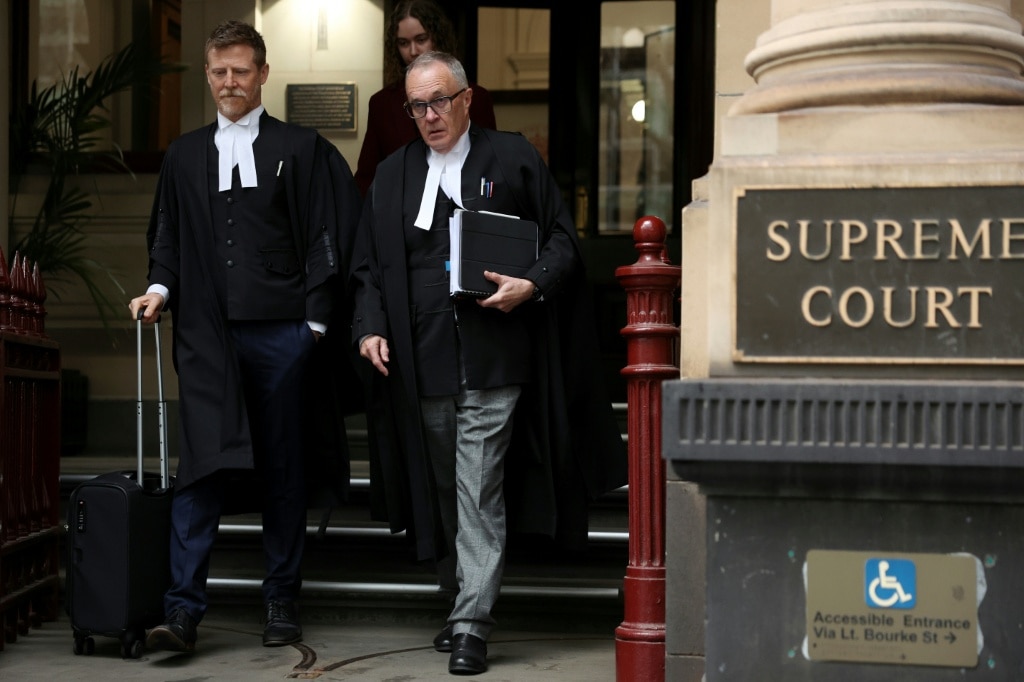
    One of Australia’s most high-profile homicide cases has returned to the courtroom this week, as two separate appeals over the conviction and sentencing of Erin Patterson, the woman convicted of poisoning three family members with toxic death cap mushrooms, are heard by Victoria’s Court of Appeal. The 51-year-old appeared before the court via video link from her prison cell, as both state prosecutors and her own legal team pushed for competing outcomes that could reshape her lifetime behind bars.

    In 2023, Patterson hosted a family lunch at her regional Victoria home, where she served a beef Wellington laced with deadly foraged death cap mushrooms. Three of her guests – her in-laws Don and Gail Patterson, both 70, and Gail’s 66-year-old sister Heather Wilkinson – died days later after suffering acute poisoning. The fourth guest, Heather’s husband Ian Wilkinson, survived the attack but has never regained full health after the ordeal.

    Patterson was found guilty of three counts of murder and one count of attempted murder late last year, and sentenced to life in prison with a minimum non-parole period of 33 years, meaning she could apply for release once that term is served. Now, Crown prosecutors have launched an appeal against that sentence, arguing it is “manifestly inadequate” and that Patterson’s crimes are so severe she should never be granted an opportunity to leave prison.

    In court on Thursday, prosecutor Brendan Kissane laid out the extreme gravity of the offenses, describing the killings as “truly dreadful” acts of calculated betrayal. Prosecutors told the court the murders were the end result of a months-long plot Patterson orchestrated: she sourced and prepared a lethal quantity of death cap mushrooms, invited trusted family members who had supported her and her children for years to the lunch, and constructed an elaborate cover story to conceal her plans before the attack.

    Worse, prosecutors argued, Patterson sat idle as her guests ate the toxic meal, even joining in small talk before the gathering ended with a prayer for her, after she falsely claimed she had been diagnosed with cancer. As victims fell critically ill in the days after the lunch, Patterson never admitted to serving foraged poisonous mushrooms, instead maintaining her lies to police, medical workers, and investigators even after multiple guests were placed on life support.

    When handing down the original sentence in September last year, Justice Christopher Beale ruled that Patterson would be eligible for parole after 33 years, noting that he was granting a small possibility of release solely due to the “harsh” conditions of her imprisonment. Beale explained that for her own safety, Patterson would likely spend years in solitary confinement, a reality that justified leaving open a glimmer of eventual release.

    But prosecutors pushed back against that reasoning this week, arguing that the judge had overstated the severity of Patterson’s long-term prison conditions. They noted that Patterson already has access to a range of prison activities, including time in an exercise yard and opportunities to pursue hobbies such as crocheting, and that conditions will likely improve as her notoriety fades over time. Court reporters noted that Patterson closed her eyes and shook her head as Kissane outlined these prison privileges in court.

    Prosecutors argued that the original 33-year minimum term, just three years above the statutory 30-year minimum for the offenses, “utterly fails to reflect the gravity of the offending or vindicate the dignity of each of the four victims.” If the Court of Appeal declines to order a full life sentence with no chance of parole, they said, the court should at minimum extend the non-parole period to properly reflect the harm of the crimes.

    Alongside the prosecution’s sentence appeal, the court is also hearing a separate challenge from Patterson’s legal team, who are asking to have her convictions entirely overturned. Patterson’s lawyers argue that her 2024 trial was compromised by a “catastrophic” procedural error: the jury was housed at the same hotel as the prosecution team and a key prosecution witness, creating an unacceptable risk of improper contact that undermined the fairness of the trial. They also claim that some evidence presented during the trial was overly speculative and should never have been put before the jury, amounting to a miscarriage of justice.

    After both sides completed their arguments this week, the three appeal judges announced they would reserve their decisions on both appeals. A final ruling is not expected for several weeks or months, leaving the final outcome of the high-profile case uncertain for the time being.

  • New One Nation MP David Farley opens up on party’s ‘scarce knowledge’ of agriculture, migration needs

    New One Nation MP David Farley opens up on party’s ‘scarce knowledge’ of agriculture, migration needs

    Australia’s right-wing populist party One Nation has long positioned itself as a vocal advocate for regional communities and a leading critic of Australia’s current migration levels. But its newest lower house Member of Parliament has made a startling admission: before he joined the party, One Nation had virtually limited, scarce understanding of the two core policy areas it now prioritizes – agriculture and the role of migration in regional farming sectors.

    David Farley, who secured the hyper-regional seat of Farrer in May to become only One Nation’s second sitting MP in Australia’s lower house, confirmed the party’s gap in expertise in an interview with News24. Farley flipped the seat previously held by one-time opposition leader Sussan Ley, joining former Nationals defector Barnaby Joyce, the sitting MP for New England, in One Nation’s parliamentary ranks.

    When asked about the party’s high-profile policy to cut Australia’s net annual overseas migration to 130,000, Farley confirmed he was specifically recruited to address the party’s knowledge gap. “I joined One Nation when they had virtually limited or scarce knowledge of agriculture and the requirement of immigration,” Farley told reporters. He also acknowledged his own past gaps in understanding migration dynamics in Australia’s major urban centers, but argued that today, One Nation has a stronger grasp of Australia’s migration landscape than any other major political party.

    Farley clarified that his push to cut overall migration numbers is rooted in amplifying regional communities’ needs, and emphasized that existing temporary migration programs critical to agricultural operations would remain untouched under the party’s plan. Seasonal farm workers from Pacific Island nations participating in the Pacific Australia Labour Mobility (PALM) scheme would face no changes, he said, noting that long-standing temporary visa models have worked effectively for more than a decade for agricultural processing sectors, which rely on consistent, timely labor to bring crops to market.

    On working holiday visa holders, Farley added that rather than adding new restrictive conditions to their visas, the priority should be better education to connect these young workers with existing seasonal labor hire systems in regional areas. When pressed on how the party would implement stricter caps to reach the 130,000 net migration target without disrupting critical agricultural labor supply, Farley noted that many long-term temporary migrants already build settled lives in Australia over two to three year periods, and are not new arrivals exiting the international education system, a key category targeted for cuts by many migration restriction advocates.

    The interview also touched on the controversial media ban policy implemented by One Nation leader Pauline Hanson during the Farrer by-election campaign, which saw Hanson block a number of critical media outlets – including public broadcaster ABC and national outlet The Guardian – from party events. When asked if he would continue this practice, Farley said he had so far been treated fairly by most media across the political spectrum, and would only consider banning outlets if a breach of trust occurred. He added that any ban would depend on the quality of journalism from the outlet in question, joking that he had no interest in sharing meals or drinks with satirical outlet Betoota Advocate, while acknowledging that all politicians need to be prepared for so-called “gotcha” questions during interviews. The interview was cut short early when a parliamentary division was called, ending the discussion before further questions could be asked.

    The admission from One Nation’s newest MP shines a light on the party’s policy development process, as it continues to build its parliamentary representation and push its anti-immigration, regional-focused agenda ahead of the next federal election.

  • Australian prosecutors demand life in prison for mushroom killer

    Australian prosecutors demand life in prison for mushroom killer

    One of Australia’s most sensational true crime cases, the so-called “mushroom murders,” has returned to the courts this week, as state prosecutors have formally called for convicted triple killer Erin Patterson to spend the rest of her life behind bars with no chance of parole, rejecting the original 33-year non-parole period set by her trial judge.

    The 51-year-old was found guilty by a jury in July 2024 of poisoning three members of her husband’s family with lethal death cap mushrooms, which she hid inside a homemade beef Wellington served at a 2023 lunch gathering at her home in the rural Victorian farming village of Leongatha. The victims were her husband Simon’s parents, Don and Gail Patterson, and his 66-year-old aunt, Heather Wilkinson. Patterson was also convicted of attempted murder for the attack on Heather’s husband Ian, a small-town local pastor who spent weeks in intensive care after the meal before making a full recovery.

    After the conviction, the trial judge handed down a life sentence but ruled Patterson would become eligible for parole after 33 years behind bars, when she would be 83 years old. The original sentencing took into account claims that the high notoriety of the case would likely force prison authorities to hold Patterson in isolated conditions for most of her incarceration.

    But in closing arguments for a two-day appeal hearing at Melbourne’s Court of Appeal Thursday, Director of Public Prosecutions Brendan Kissane pushed back hard against the original non-parole ruling, arguing it does not match the gravity of Patterson’s crimes. Kissane told the panel of appeal judges that the 33-year non-parole period is “manifestly inadequate” given the nature of the offences, which he described as premised on shocking betrayal and qualifying as the worst category of criminal offending.

    “Indeed, our submission is that for this offending the respondent should be sentenced to life without parole,” Kissane said. “We of course know it’s a harsh submission to make, but we submit it is demanded by the nature of the offending in this case.” Prosecutors also rejected the core justification for the original parole ruling, telling judges there is no concrete evidence to confirm Patterson will be held in long-term isolation for “many years to come.”

    The appeal hearing comes as Patterson’s own legal team is seeking to have her entire triple murder conviction thrown out entirely. Appearing via live video link from Melbourne’s maximum-security Dame Phyllis Frost Centre on Wednesday, Patterson’s lawyers argued their client suffered a “substantial” miscarriage of justice during her original trial, citing a long list of alleged procedural irregularities and improper use of evidence to secure the guilty verdict. A court sketch from the hearing showed Patterson watching proceedings remotely, and Australian national broadcaster ABC reported she could be seen shaking her head and closing her eyes as Kissane delivered the prosecution’s arguments Thursday.

    The “mushroom murders” case sparked an unprecedented global media frenzy when it went to trial last year, drawing true crime podcasters, documentary film crews, and curious curious from across the country to the small rural courthouse in Morwell, Victoria — a quiet town best known for its annual award-winning rose festival. Audiences across the world, from New York to New Delhi, followed every twist of the proceedings, and the case still retains huge public interest for one key unconfirmed detail: the prosecution has never outlined a clear confirmed motive for the killings.

    After two days of legal argument from both sides, the Court of Appeal judges announced they will reserve their decision on both the appeal against conviction and the prosecution’s push for a full life sentence, releasing their ruling at a later, unspecified date.

  • Four workers dead after being hit by train in Japan

    Four workers dead after being hit by train in Japan

    A devastating workplace accident has claimed the lives of four railway maintenance workers in Japan, after they were struck by a high-speed limited express train at Shin-Kanuma Station, located just north of Tokyo, according to official authorities. The collision occurred at approximately 10:46 a.m. local time on Thursday, while the crew was carrying out routine vegetation removal work along the active train tracks, local media outlets have confirmed.

    Japanese police reported that when first responders arrived at the accident site, three of the workers were found trapped underneath the train carriages, while the fourth victim was located on the adjacent station platform. All four workers were pronounced dead at the scene.

    Tobu Railway, the operator of the Tobu Nikko Line where the crash took place, has suspended all passenger services along the route indefinitely as investigators work to determine the exact cause of the incident. A passenger on the involved limited express train told Japan’s national public broadcaster NHK that they heard an unusual, jarring noise moments before the driver initiated an emergency stop. Passengers were held on board the train for an extended period while railway staff conducted an initial inspection of the train and tracks, the witness added.

    NHK confirmed that the train involved in the crash is classified as a limited express service, the second-fastest category of passenger train in Japan’s extensive rail network, outpaced only by the world-famous Shinkansen bullet train.

    Japanese daily newspaper Asahi Shimbun noted that standard railway safety protocols require a dedicated lookout employee to be stationed near track work zones to alert maintenance crews of approaching trains and prevent just such collisions. As of Thursday, it remains unclear whether this safety measure was properly implemented at the time of the accident.

    Fatal railway incidents are extremely uncommon in Japan, a country that depends on a vast, nationwide rail network carrying millions of passengers daily, and which has a global reputation for rigorous rail safety standards.

  • ASX snaps six-day losing streak as miners, tech stocks surge, strong company earnings defy Trump’s ‘economic D-Day’

    ASX snaps six-day losing streak as miners, tech stocks surge, strong company earnings defy Trump’s ‘economic D-Day’

    After six consecutive days of declines, Australia’s primary stock market reversed course on Thursday to close in positive territory, even as escalating geopolitical friction between the United States and Iran sent oil prices climbing and raised global market uncertainty. U.S. President Donald Trump amplified tensions this week, warning Iran of what he called an “economic D-Day” and the “most crushing economic operation” ever enacted against the Middle Eastern nation, a escalation that rippled through global commodity and equity markets.

    The benchmark S&P/ASX 200 closed Thursday up 30 points, or roughly 0.33%, at 9083.80, while the broader All Ordinaries index gained 43.3 points, or 0.47%, to hit 9298.50. Market analysts attributed the turnaround to a wave of stronger-than-expected corporate earnings results that offset investor jitters over geopolitical risk, alongside mixed domestic labor data that tempered expectations for imminent interest rate hikes. The Australian dollar held steady, ending the trading session flat at 71.22 U.S. cents.

    Of the 11 major market sectors, five finished the day in positive territory while six closed with losses. Materials stocks led the rally, driven by surging commodity prices and safe-haven demand triggered by the U.S.-Iran standoff. Miners posted particularly strong gains, as growing geopolitical uncertainty and shifting U.S. Treasury policy stoked inflation expectations, boosting the appeal of gold as a long-term store of value.

    Major diversified miners BHP and Rio Tinto climbed 3.2% to $65.75 and 1.81% to $173.04 respectively, but gold mining operators outperformed the broader materials sector. Northern Star Resources rose 6.21% to $23.94, Evolution Mining surged 10.16% to $15.07, and global gold giant Newmont gained 6.94% to $177.10. Even with a marginal 0.53% pullback, spot gold held near multi-week highs at $4493.89 on Thursday.

    Billy Leung, investment strategist at Global X, linked the materials sector rally to growing investor unease over U.S. economic outlook following the U.S. Treasury Department’s announcement of expanded long-term bond purchases. “People are getting more angsty about the long-term outlook of the U.S.,” Leung explained. “Because of the U.S. Treasury action, it stoked inflation expectations, and that’s why gold was actually up. There was also an element that there is declining credibility with the U.S. which gives gold a stronger standing as a reliable store of value.”

    Beyond materials, the technology sector notched a solid 2.5% gain, while the healthcare extended its recent upward streak to close higher. A handful of prominent tech firms posted double-digit gains: military technology provider Codan jumped 12.42% to $48.88, logistics tech firm WiseTech Global gained 9.12% to $34.19, and cloud accounting platform Xero rose 2.35% to $85.29.

    The banking sector was the day’s biggest laggard, with all four of Australia’s major lenders closing down 1% or more. Commonwealth Bank of Australia led the losses, dropping 2.66% to $156.44, followed by Westpac at 1.8% down to $33.82, ANZ at 1.62% lower to $37.01, and National Australia Bank, the least affected of the group, down 1.26% to $38.43.

    Domestic unemployment data also influenced market momentum on Thursday. Leung noted that a small uptick in jobless claims tempered investor fears of imminent interest rate increases from the Reserve Bank of Australia, opening space for risk-taking in high-growth sectors. He added that seasonal factors tied to school holidays likely distorted the latest employment reading, making a near-term policy shift less likely, a development that supported equities.

    Corporate earnings season dominated individual stock movement, with several major companies posting outsized gains after releasing solid full-year results. Buy-now-pay-later fintech Zip saw its shares surge 18.22% to $3.05 after reporting annual revenue of $1.336 billion and a statutory net after-tax profit of $116.4 million, beating analyst expectations. Super Retail Group, the parent company of outdoor retailer BCF and sporting goods chain Rebel, rallied 15.05% to $14.45 after reporting group sales growth of 3.2% to $4.2 billion, even as normalized net after-tax profit slipped 2.8% to $226 million.

    Not all earnings reports landed positively, however. International education services provider IDP Education plummeted 20.74% to $1.72 after its statutory net after-tax profit slumped 74% year-over-year to $13.3 million. Engineering and infrastructure firm Downer EDI also fell 10.34% to $6.68, despite reporting adjusted net profit that met prior guidance, as investors reacted to management’s softer near-term outlook for the remainder of the trading year.

  • Rafts on Rome’s Tiber River cool down overheated tourists

    Rafts on Rome’s Tiber River cool down overheated tourists

    As record-breaking heat waves sweep across Southern Europe each summer, throngs of visitors to Rome have found a creative escape from scorching temperatures: floating down the city’s iconic Tiber River on inflatable rafts. Far from the crowded queues of the Colosseum and overpriced street-side gelato stands, this off-the-beaten-path activity has emerged as a hit for travelers tired of the standard Roman sightseeing circuit.

    Organized under operators like Roma Rafting, the two-hour excursion launches from the waterfront near the centuries-old Piazza del Popolo, carrying groups along a water route that has shaped Rome’s history for millennia. As rafts drift gently downstream, passengers glide past some of the capital’s most famous landmarks, all seen from a one-of-a-kind vantage point. The massive stone silhouette of Castel Sant’angelo, built as a burial tomb for Emperor Hadrian, rises on the riverbank, while the iconic dome of St. Peter’s Basilica peeks over the horizon visible from the water.

    When the trip nears its end, rafts dock at a historic ancient Roman port in the beloved Trastevere neighborhood, an area whose name translates directly to “across the Tiber” – a nod to the river that has long divided and defined the city’s districts. Along the route, rafters pass through gentle rapids near the charming Tiber Island, where mild currents send refreshing splashes over the edges of rafts, cooling down overheated travelers as they glide under some of Rome’s oldest stone bridges.

    For many tourists, the draw of the activity is as much about the new perspective as it is about escaping the heat. “It’s really nice to get a different view of Rome. It’s something special compared with what you can see on foot,” explained 19-year-old German visitor Manuel Frank during a recent excursion.

    Fifty-year-old Belgian tourist Sabine Maisano, who joined the trip with her entire family, echoed that sentiment. After spending full days trekking kilometers through Rome’s crowded streets and archaeological sites, the slower pace of rafting offered a much-needed break. “After a day of walking for kilometres, being able to sit down in a boat… even though you have to paddle a little, that allows us to relax, stay cool and discover the city at a more relaxed pace,” she said.

    Giuseppe Battaglia, a 37-year-old guide with Roma Rafting, notes that the 40-euro (roughly $46.7 USD) tour follows a path deeply rooted in Roman history. The route mirrors much of the waterway that ancient Romans traveled centuries before they launched their military conquests across the Mediterranean, he explained. For more than two thousand years, the Tiber – Italy’s third-longest river – served as the beating heart of the city, providing fresh water, food, and a critical trade route for generations of inhabitants.

    “We’re always used to thinking about roads, cars and motorbikes, but Rome also gives us the chance to take a tour along the river,” Battaglia said. For modern visitors seeking both cooling relief and a fresh take on the ancient Eternal City, that chance has quickly become one of Rome’s most popular summer activities.

  • Councillor tells of ‘anguish’ as elderly parents leave crumbling home

    Councillor tells of ‘anguish’ as elderly parents leave crumbling home

    A public official in Ireland’s County Donegal has opened up about the devastating personal toll of a nationwide defective concrete block crisis, sharing the story of how his elderly parents — including a mother with advanced dementia — were forced to leave the retirement home they spent decades dreaming of to make way for full demolition.

    Ali Farren, who won a seat on Donegal County Council as a candidate for the 100% Redress Party, a group formed to advocate for homeowners impacted by the construction defect crisis, told BBC Radio Foyle’s *North West Today* that his 85-year-old mother and 84-year-old father have been uprooted from their 2007-built home in Malinhead. Perched in a scenic spot overlooking the local pier, the property was always intended to be the couple’s final, peaceful retirement retreat — a dream that has now been completely destroyed by crumbling infrastructure caused by defective concrete blocks.

    The crisis, which has affected thousands of properties across the Republic of Ireland, is concentrated largely in the counties of Donegal, Clare, Limerick, Mayo and Sligo. The issue stems from concrete blocks manufactured with high levels of water-absorbing minerals such as pyrite. Over time, these minerals expand when exposed to moisture, causing structural cracking and gradual crumbling that renders many homes unsafe for occupancy, often requiring full demolition.

    A government compensation scheme launched in November 2021 offers financial support to affected homeowners, capped at €420,000 (£357,500) per property, but the policy has done little to ease the emotional upheaval faced by families like the Farrens. For Farren, the disruption of the move has been made exponentially harder by his mother’s dementia, a condition that leaves vulnerable adults extremely sensitive to even small changes to their familiar surroundings.

    “It was her birthday this past Tuesday, and for her and my father, who cares for her full-time, this upheaval is incredibly traumatic,” Farren explained. “Even small shifts to routine or environment can be deeply unsettling for someone with dementia, so a full house move is unimaginably stressful. Our whole family felt the anguish — even the grandchildren who turned out to help pack could see how heartbroken my grandparents were to leave the home they built.”

    This is not the first time Farren’s family has been affected by the crisis: he confirmed that his own sister was forced to relocate from her defective block home back in December, an experience that was deeply emotional, but nothing compared to moving two elderly, vulnerable parents. Farren says his case is far from unique, with hundreds of families across Donegal facing the same heartbreak of leaving homes they built and loved.

    As an elected official, Farren says he has no hesitation in sharing his family’s story to draw attention to the ongoing crisis. “My parents did nothing wrong,” he emphasized. “They purchased construction materials that were unregulated by the state, and they should not have to bear this burden. If we do not implement stronger, mandatory testing requirements for construction materials going forward, we are doomed to repeat this same disaster. Twenty years from now, another generation of homeowners could be forced to tear down their homes because we failed to act now.”

    BBC News NI has confirmed it has reached out to the Republic of Ireland’s Department of Housing, Local Government and Heritage to request comment on the ongoing crisis and the experiences shared by Farren.