
Escalating geopolitical conflict across key Middle Eastern oil chokepoints has sent daily earnings for supertanker operators shipping crude from the Persian Gulf to Asian markets soaring to a multi-month high of $510,000, a dramatic reflection of plummeting available vessel supply and booming demand for seaborne oil transportation amid widespread insecurity.
博客
-
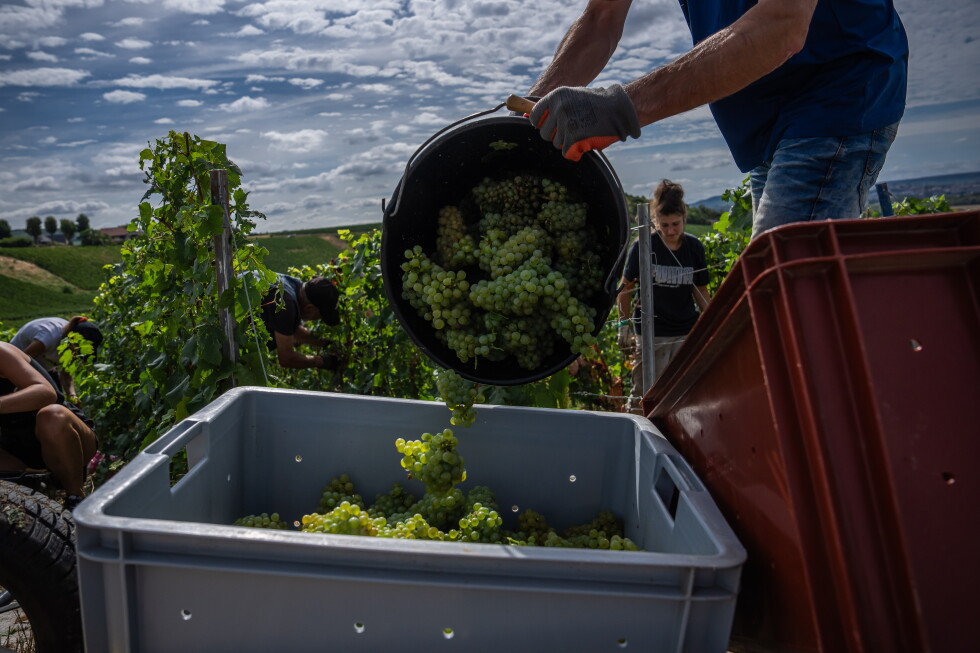
Champagne growers race to preserve quality in record-early harvest
In the sun-baked UNESCO-listed vineyards of northern France’s Champagne region, harvesters are rushing up their annual routine by almost a full month, kicking off the earliest grape harvest in recorded history. Unprecedented summer heat waves and prolonged drought have accelerated grape ripening, forcing producers to move fast to preserve the delicate quality that has made Champagne the world’s most iconic sparkling wine.
-
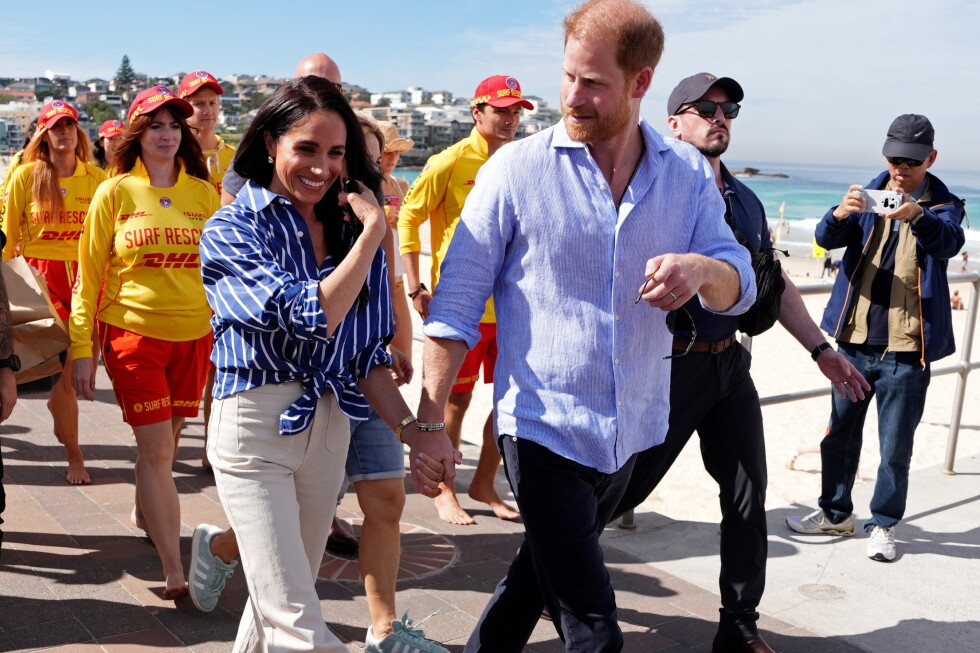
A timeline of Prince Harry and Meghan’s relationship with the royal family as they return to the UK
After more than six years of estrangement, public acrimony, and high-profile legal battles, Prince Harry and Meghan, the Duchess of Sussex, are set to return to the United Kingdom, in what observers are calling the most significant step toward mending the years-long rift between the couple and the British monarchy, multiple sources have confirmed. According to reporting from The Daily Telegraph, while the couple will not resume their former positions as working members of the royal family, their upcoming return will grant King Charles III, who is currently undergoing treatment for an undisclosed form of cancer, the opportunity to spend extended time with his grandchildren Archie and Lilibet, who have rarely visited the UK since the couple relocated to North America.
The road to this tentative reconciliation has been marked by public conflict and dramatic turning points, stretching back to the couple’s first meeting in 2016. The pair was introduced on a blind date arranged by a mutual friend in July of that year, and by November, their relationship had become public. When their romance was revealed, Harry issued an extraordinary public statement condemning the British press for its harmful, racially charged coverage of Meghan, a biracial American actor, warning that the intrusive coverage put her safety at risk. The statement immediately drew comparisons to the death of Harry’s mother, Princess Diana, who died in a 1997 car crash while being chased by paparazzi photographers.
The couple moved forward with their relationship, announcing their engagement in November 2017 and marrying in a globally televised ceremony at Windsor Castle in May 2018. Their son Archie was born in May 2019, but tensions between the couple and the royal establishment and tabloid press were already growing. That same year, Harry launched a series of high-profile lawsuits against three major British newspaper groups—News Group Newspapers, Mirror Group Newspapers, and Associated Newspapers—alleging that outlets had obtained private information about him through illegal tactics including phone hacking, bugging, and deception.
In January 2020, Harry and Meghan announced their decision to step back as senior working royals and pursue financial independence, a choice that quickly escalated into a full public rift with the monarchy. The couple relocated to Meghan’s home state of California within months, and in February 2020, a royal security committee stripped Harry of his taxpayer-funded police protection, prompting a years-long legal battle against the UK government over the decision.
Through the following years, key events continued to drive a wedge between the couple and the royal household. In February 2021, Meghan won her own privacy lawsuit against Associated Newspapers over the publication of a private letter she had written to her estranged father. The couple’s daughter Lilibet was born that June, named after Queen Elizabeth II, Harry’s grandmother. When the Queen died in September 2022 at the age of 96, after 70 years on the throne, the rift remained unresolved as Charles ascended to the throne.
2023 saw further public tension: Harry’s explosive ghostwritten memoir *Spare* hit bookshelves in January, becoming an instant bestseller while detailing Harry’s personal grief over his mother’s death, deep frustrations with his royal role, and public grievances against his father, stepmother Queen Camilla, brother Prince William, and the British media. Harry attended Charles’ coronation at Westminster Abbey alone in May 2023, without Meghan or their children. That June, he made history as the first British royal to testify in a court case in more than a century, taking the witness stand in his case against Mirror Group Newspapers. In December 2023, Harry won that case, with a judge ruling that Mirror tabloids had engaged in illegal phone hacking and surveillance for more than a decade, awarding him over £140,000 in damages plus legal costs.
The turning point toward reconciliation came in early 2024, when Buckingham Palace made the shock announcement that King Charles had been diagnosed with cancer and would begin treatment, declining to share the specific type of cancer. Harry rushed back to the UK from California to visit his father just days later, marking the first of a series of gradual encounters that thawed the frozen relationship. The High Court dismissed Harry’s security protection claim later that month, a decision he immediately appealed. Court proceedings stretched into 2025: in January, News Group Newspapers, publisher of The Sun, settled Harry’s lawsuit against them, issuing a full and unequivocal apology for the unlawful intrusion into his private life between 1996 and 2011. That May, three Court of Appeal judges upheld the lower court’s ruling on Harry’s security case, calling the original decision to downgrade his protection “sensible.” In response, Harry said the ruling meant he could not safely bring his wife and children back to his home country. Days later, in an emotional televised interview, Harry stated he wanted reconciliation but repeated his long-held grievances against the monarchy, the UK government, and the press.
By September 2025, signs of a thaw had become impossible to ignore. Harry returned to the UK that month to visit his charitable initiatives, with the trip coinciding with the third anniversary of Queen Elizabeth II’s death. During that visit, Harry and King Charles met for tea in London, their first in-person meeting in more than a year. This past July 2026, Charles hosted Harry, Meghan, and their two children at his Highgrove House country estate, marking the first time the entire family had met in years as part of ongoing efforts to repair the rift. Last week, plans for the couple’s permanent return were officially revealed, confirming that while they will not take on official royal duties, they will base part of their time in the UK.
The tentative reconciliation comes as the monarchy navigates other internal shifts: in October 2025, Prince Andrew, Charles’ younger brother, announced he would give up his Duke of York title and other royal honors after renewed public scrutiny of his long-standing friendship with convicted sex offender Jeffrey Epstein. For Harry and Meghan, the return marks a new chapter for both the couple and the House of Windsor, bringing an end to one of the most high-profile public rifts in modern royal history.
-
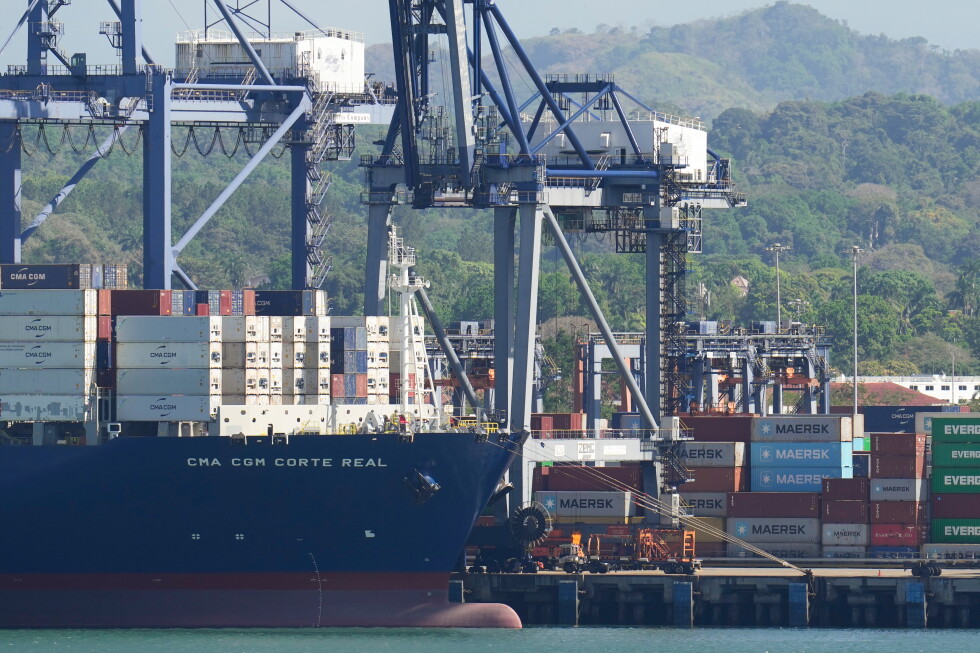
Hong Kong conglomerate seeks $1.5 billion in damages from Panama for takeover of canal ports
A major Hong Kong-based conglomerate has launched fresh legal action against the Panamanian government, demanding more than $1.5 billion in damages over the state-led seizure of two key ports positioned at opposite ends of the Panama Canal, a move the company frames as an unlawful asset grab tied to escalating U.S.-China geopolitical tensions.
CK Hutchison, the conglomerate controlled by the family of Hong Kong billionaire Li Ka-shing, announced the new arbitration proceedings in an official statement released Thursday. In the filing, the company accuses the Central American nation of violating a bilateral investment protection agreement through a coordinated “state attack campaign” targeting its long-standing concession to operate the critical ports.
The dispute traces back to February 2024, when Panama’s national Supreme Court ruled that the operating concession held by CK Hutchison’s local subsidiary, Panama Ports Company, was unconstitutional. Shortly after the ruling, Panamanian authorities moved to seize control of Balboa Port, located at the Pacific entrance to the Panama Canal, and Cristobal Port, which sits at the Atlantic opening of the key global trade waterway.
The two ports have been caught in the middle of fraught geopolitical tensions between Washington and Beijing for months, particularly after former U.S. President Donald Trump returned to the White House in 2024 and made unsubstantiated claims that China effectively “controlled” the strategic canal. It should be noted that the Panama Canal itself has been fully owned and managed by the government of Panama since 1999. CK Hutchison’s subsidiary first secured the concession to operate the two end-of-canal ports in 1997, and renewed the agreement for an additional 25-year term in 2021.
This latest legal filing marks the third arbitration action tied to the seizure launched by entities linked to CK Hutchison. Back in March, Panama Ports Company initiated a separate international arbitration proceeding seeking no less than $2 billion in compensation for what it calls the unlawful government takeover, and CK Hutchison confirmed this week that those earlier proceedings are moving forward as scheduled. The company noted that Thursday’s new action focuses on violations of investment treaty rights, a distinct legal claim from the contract rights at the center of the March filing.
The broader dispute is also tied to a stalled large-scale ports deal. In 2023, CK Hutchison unveiled plans to sell its entire global ports portfolio, including the two Panama Canal ports, to a consortium led by U.S. investment giant BlackRock for an initial valuation of $23 billion. The transaction has failed to move forward, however, bogged down by overlapping geopolitical friction between China, the U.S. and Panama, as well as mounting legal challenges to the Panamanian assets. In April of this year, Panama Ports Company launched another arbitration claim against Danish logistics and shipping leader Maersk, which stepped in to take over partial operations at the seized ports after the government takeover. Maersk has publicly stated that it does not believe it holds any legal liability for the claims brought against it.
Following the Panamanian government’s seizure of the ports in February, both Beijing and Hong Kong’s local government issued formal pushback against the move, condemning the asset seizure as unlawful.
-
‘People, not robots’: Ukraine’s soldiers justify human role amid drone revolution
On an unseasonably frosty August dawn in central Ukraine, hundreds of newly graduated Ukrainian paratroopers trundled across sprawling fields of corn and rapeseed, gearing up for their first parachute jump as part of final qualification training. Strapped into heavy gear and waiting in formation for their turn to board aircraft, many of these rookie soldiers already know that the combat jump they are training for may never happen in an active warzone. Four years into Russia’s full-scale invasion, cutting-edge military technology has upended long-standing norms of warfare, reshaping the very purpose of frontline infantry and traditional airborne forces.
Today, the iconic image of war—massed infantry advancing across the front and intense dogfights between manned fighter jets—has largely become a relic of the past. Uncrewed aerial systems, commonly known as drones, now dominate the battlespace, while ground-based robotic platforms are increasingly integrated into frontline combat missions, carrying out offensive strikes and resupplying troops trapped in high-risk positions. Ukraine’s Ministry of Defense confirmed this paradigm shift in a July update, reporting that approximately 90 percent of all targets destroyed by Ukrainian forces are now taken out by drone strikes.
Despite this dramatic technological revolution, Ukraine’s newest generation of paratroopers remains convinced that traditional military skills and the human role in combat remain irreplaceable. Twenty-one-year-old recruit Karyi, who uses a callsign for operational security, noted that while advanced technology can deliver devastating firepower, it has inherent limits. “I’d love to see artificial intelligence winning wars, liberating territories,” he told AFP reporters on the training ground, “but that is not the reality we face today.”
Airborne forces have held elite status in militaries across the globe for nearly a century, with combat parachute drops a core tactic of warfare since World War II. But amid the current drone-driven conflict with Russia, newly trained paratroopers are now deployed for a more fundamental mission: holding critical frontline positions and repelling ongoing Russian advances. Large-scale parachute insertions behind enemy lines are “not practical at all” in modern drone-equipped warfare, explained young officer Roman Kulievych during the training exercise. Still, he added, the tradition of paratrooper training endures because it builds mental resilience that sets airborne forces apart from other branches of the military.
Instructors emphasize that traditional paratrooper training serves a far broader strategic purpose than just teaching the technical skill of jumping from aircraft: it is rigorous psychological preparation for the stresses of frontline combat. “It is essentially part of psychological training: this way we understand if the personnel are ready for stressful situations … and how they fight their fears,” said 24-year-old drill instructor Axel.
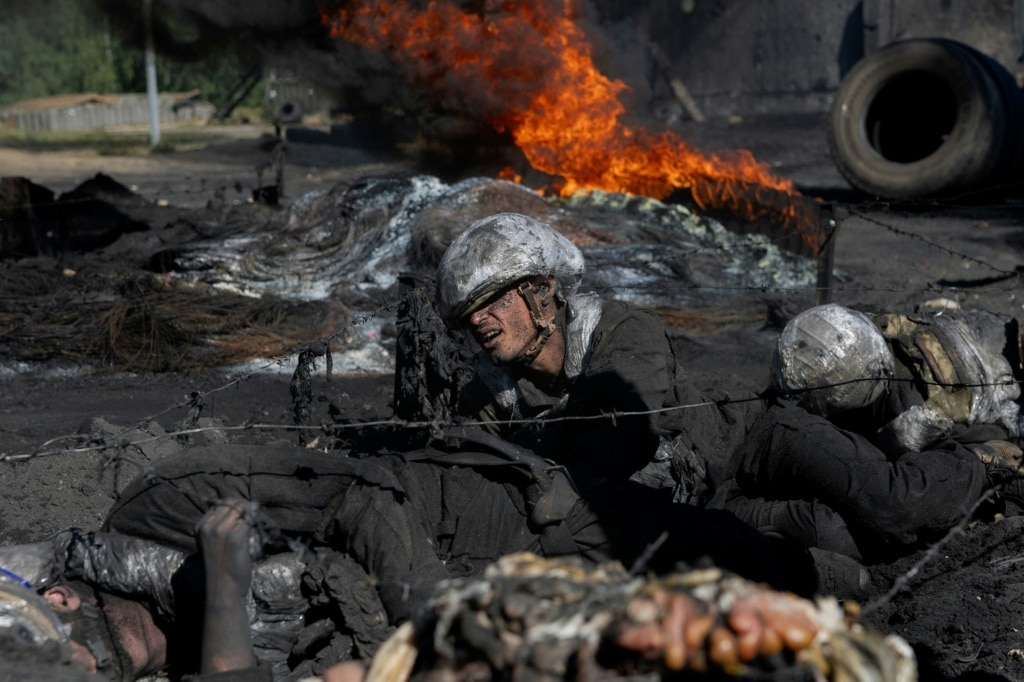
This philosophy is on full display during the final test to earn the coveted paratrooper beret: a grueling forced march through harsh terrain. Trainees navigate kilometers of sand bogs and swampy ground, surrounded by simulated explosions, constant gunfire, shouted instructor commands, the stench of rotting animal carcasses and artificial fake blood designed to replicate the chaos of combat. At the end of the march, recruits must go through consecutive hand-to-hand combat bouts against three experienced veteran paratroopers.
“It shapes your psyche and moulds your motivation to fight, so that in critical situations, you know you are capable of something more,” Karyi explained of the brutal training.
For modern frontline soldiers, the nature of fear has shifted dramatically amid the rise of drones. Instead of bracing for an enemy infantry charge, troops now live in constant fear of being spotted by an unseen drone pilot operating from miles away behind enemy lines. This new reality, Ukrainian instructors say, means conventional ground troops require even stronger mental preparation than in past conflicts. Daily life for frontline troops in the age of drone warfare includes days without rotation, chronic food shortages, and the constant stress of staying perfectly still to avoid revealing their position to circling enemy drones.
Midway through training, an air raid siren cut through the hum of conversation among the waiting paratroopers, forcing a halt to jump operations until the threat of enemy attack passed. The unit commander balanced strict discipline with dry, profane military humor and quiet paternal care for his young troops as he reorganized the trainees. “Gentlemen, stop screwing around and get over here to help your brothers gear up the parachute. Find yourself a good-looking life companion and get to work,” he shouted to the group. After helping a fellow trainee strap on his parachute rig, one recruit offered a firm handshake and a wish for good luck. “Luck is for losers,” the other replied. “In our line of work, it’s skill and courage.”
Senior instructor Yuriy, who leads one of the training squads through the punishing obstacle course, has occasionally questioned the need for such grueling traditional training in an era of autonomous drones and AI-assisted warfare. He acknowledged that one day, conflict could be dominated by technical specialists operating remote systems from safe positions behind the front. “But still, territory is only held by a unit when actual units are standing there — meaning people, not robots,” he argued.
Karyi echoed that conviction, summing up the shared perspective of the new generation of Ukrainian troops. “First and foremost, a human is still behind all of this, and these people must be of high quality,” he said.
-
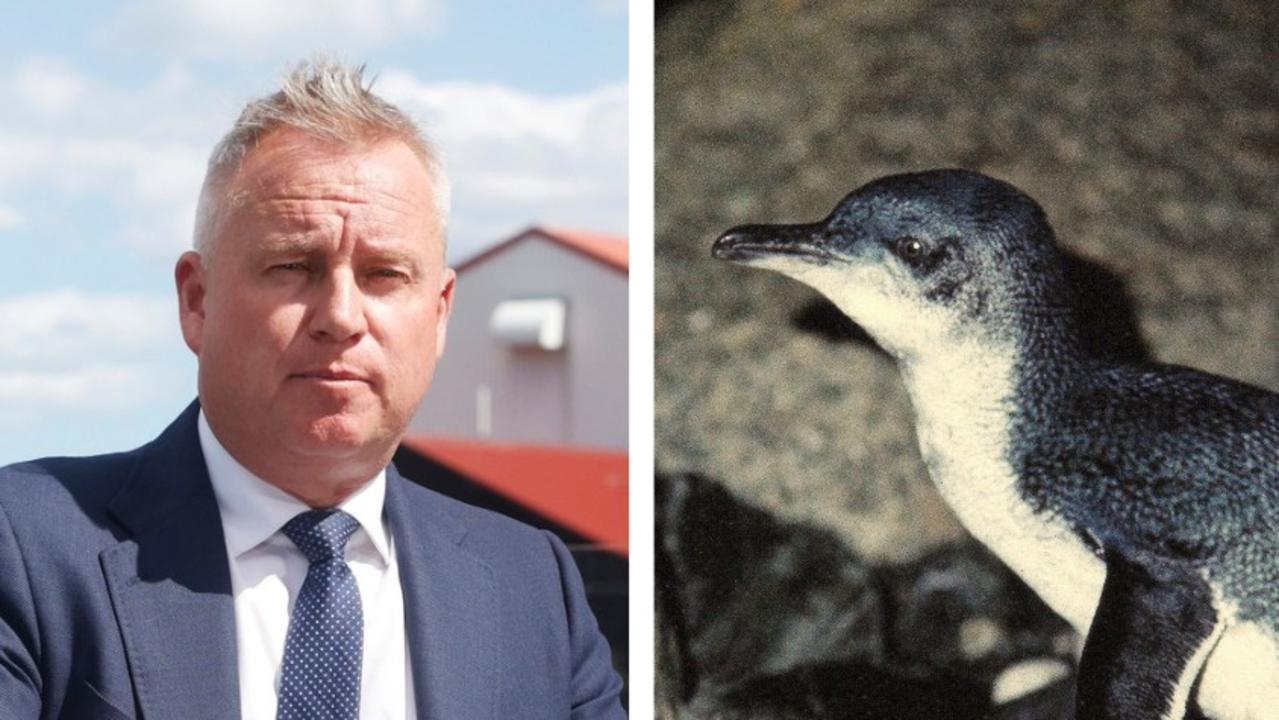
28 dead penguins found on Tasmania’s King Island spark bird flu fears
A fresh outbreak of suspected avian influenza has emerged on Tasmania’s King Island in Australia, leaving 28 little penguins dead and triggering an urgent government response to contain potential spread of the virus. Alongside the deceased penguins, three dead crested terns were also recovered at the Port of Grassy, where the discovery was made, prompting state authorities to deploy specialized investigative teams to the site.
Tasmanian Premier Jeremy Rockliff confirmed the development in an official Facebook post Thursday, noting that diagnostic testing is currently underway to confirm whether H5 bird flu is the cause of death. To support the investigation, additional personnel have been redirected to King Island to boost on-the-ground surveillance operations and expand capacity for sample and carcass collection.
In a formal statement, the Tasmanian Department of Natural Resources explained that collected tissue samples have already been dispatched to the state’s Animal Health Laboratory for analysis. All recovered bird carcasses are being securely collected and processed to reduce any potential risk of disease transmission to other wildlife or domestic animals, even as the cause of death remains unconfirmed.
This new cluster of deaths comes as Tasmania has already recorded 11 confirmed cases of bird flu in wild birds earlier this year. Federal Agriculture Minister Julie Collins issued a stark public warning earlier this month, forecasting that avian influenza cases would rise across Australia in the coming months.
Collins emphasized that given the highly contagious and virulent nature of the H5 strain of bird flu, complete prevention of spread among wild bird populations is unfeasible. “We’ve done everything we can, but we cannot stop a very virulent, very contagious disease in this bird flu,” she said. “It is not possible to avoid significant losses, which is what we’re starting to see now.” Despite the grim outlook, the minister reaffirmed that the federal government would continue taking all feasible measures to protect Australia’s native wildlife populations from the ongoing outbreak.
-

‘It hurts the most’: Euan Aitken has gone 198 games without playing finals footy, but the drought is almost over
For nearly a decade, one unwanted statistic has hung over South Sydney Rabbitohs forward Euan Aitken: he has not played a single NRL finals game since his debut rookie season in 2015. Now, with just a few weeks left in the regular season, that long drought is finally on the cusp of ending — and not even a debilitating case of influenza A that cost him four kilograms in 10 days can derail his goal.
The topic of long finals dry spells entered NRL conversation earlier in 2024, when Luke Brooks finally ended a 229-game streak without a post-season appearance. Now, Aitken sits atop the list of active players waiting for another taste of finals football, with 198 regular-season games under his belt since his only finals clash nine years ago. Back in 2015, Aitken’s St George Illawarra Dragons fell a single point short against the Canterbury Bulldogs, losing 10-11 in a match that saw star playmaker Benji Marshall depart early with a severe ankle injury.
Aitken has moved through four NRL clubs since that 2015 match, with stints at the Dragons, New Zealand Warriors, Dolphins and now the Rabbitohs. He holds an 18-game lead over Wests Tigers forward Alex Twal — who has never played a finals game in his career — and sits ahead of former Dragons teammate Blake Lawrie, who has gone 154 games without a post-season appearance since his last finals run in 2018. Aitken came close to breaking the drought back in 2018 himself, but a hamstring injury in the penultimate round of the regular season ruled him out, extending his wait for another shot.
This weekend, Aitken will hit a personal milestone, taking the field for his 199th NRL game against his former club the Warriors, before notching his 200th career match on the Gold Coast the following week. For the Rabbitohs, a spot in the top eight (and a place in the 2024 finals series) is well within reach, requiring only consistent results across the remaining weeks of the regular season to lock in their post-season berth. Aitken is far from the only Rabbitohs player still chasing a first or long-awaited finals appearance: teammate Jayden Sullivan has never featured in a finals game, Matt Dufty has not played post-season football since 2018, and Sean Keppie and David Fifita have both waited five years for another chance.
For Aitken, ending the drought has been his top priority all season. “I’m probably one of the longest-serving players that hasn’t played finals since my first year, so it means a lot to me to get in that team and play finals footy,” he explained. “That’s the only thing I had written down before the start of the year was to play finals, so hopefully I’ll be able to get to do that over the next few weeks. It stings. It hurts the most. That’s all you want to do as a footy player is win games, play finals and try for that ultimate premiership at the back end. I’ve been around for a while now, played over 200 games, so that’s all I want to do. That’s the last thing I need to do is to have a good finals series, and hopefully we can get there.”
That hunger has been a quiet driving force for the forward throughout his career. “It’s definitely a motivation. Some years are very trying and you’re not winning a lot of games, so by the end of the year you sort of want a break. But when you’re in a good team, all you want to do is keep playing, play finals games, and obviously the ultimate goal at the end of the day is the premiership. That’s what we want to achieve. It’s probably not a spoken-about thing, but I think a few teammates might know. It adds to my motivation that all I want to do is play finals footy.”
This season, the dream was almost derailed by a sudden, severe health scare. A nasty strain of influenza A forced Aitken out of two matches, left him bedridden for 10 days with nine straight days of fever and full-body aches, and caused him to drop four kilograms unexpectedly. “There’s no treatment for influenza A or anything like that,” he said. “You get a bit of cabin fever as well because there’s not much you can really do besides wait it out. It wasn’t a great time.”
Rabbitohs coach Wayne Bennett even gave Aitken special permission to indulge in calorie-dense foods like pizza and pies to speed up his weight regain, a plan the forward balanced with nutrient-dense whole foods to avoid dropping too much fitness ahead of a crucial run of matches. “I was a bit nervous coming into the game last week because I still hadn’t put the weight back on, but I probably got on the field a bit earlier than I expected with Adam Elliott going down,” Aitken said. To his surprise, he held up well, helping the Rabbitohs secure a critical win over the Canterbury Bulldogs — the same side that eliminated him from the finals in his only post-season appearance to date.
“It was good to get out there, and I felt a lot better than I actually expected. To come away with the win topped off a good night,” he added. With the finish line in sight, Aitken is now just weeks away from closing the book on one of the NRL’s most unwanted long-term records.
-

Missing teen hiker found dead in Australian bush after eight-day search
After eight days of coordinated large-scale search efforts across rugged New South Wales bushland, authorities have recovered the body of 18-year-old Sydney resident Lily Hooper, bringing a tragic close to a case that captured widespread public attention. The teen, who had departed her Sydney home for a solo day hike in nearby Nattai National Park on August 12, was reported missing that same night after she failed to return by the 10pm deadline her family had expected.
Search teams first located Hooper’s parked vehicle in a lot at the base of one of the national park’s most physically demanding backcountry trails, narrowing the search scope to the remote, dense wilderness of the Southern Highlands region. At roughly 11:30 a.m. local time on Thursday, search crews located the young woman’s body in the area.
The final hours of the search were marked by public confusion after an incorrect announcement that Hooper had been found alive. New South Wales Premier Chris Minns initially told a state parliamentary hearing that the teenager had been located alive, a report that was repeated across multiple local media outlets, which also claimed Hooper’s family had been notified of the false good news. Minns issued a rapid correction moments later, confirming that Hooper’s body had been recovered and that she had been deceased.
“This is obviously devastating, and I’m profoundly sad for her family and for all those concerned,” Minns said, extending his condolences and issuing a formal apology to the parliamentary committee for his earlier incorrect statement.
The week-long search operation drew together resources from dozens of state and federal agencies, marking one of the largest coordinated search efforts for a missing bushwalker in the region in recent years. Multiple specialized units from the New South Wales Police Force participated, including the PolAir aviation search team, mountain rescue units, trail bike and mounted patrols for rough terrain access, and canine search teams. They were joined by ground and logistics support from the Rural Fire Service, the National Parks and Wildlife Service, and roughly 100 active personnel from the Australian Defence Force, who aided in grid-searching the park’s vast, uninhabited stretches.
-
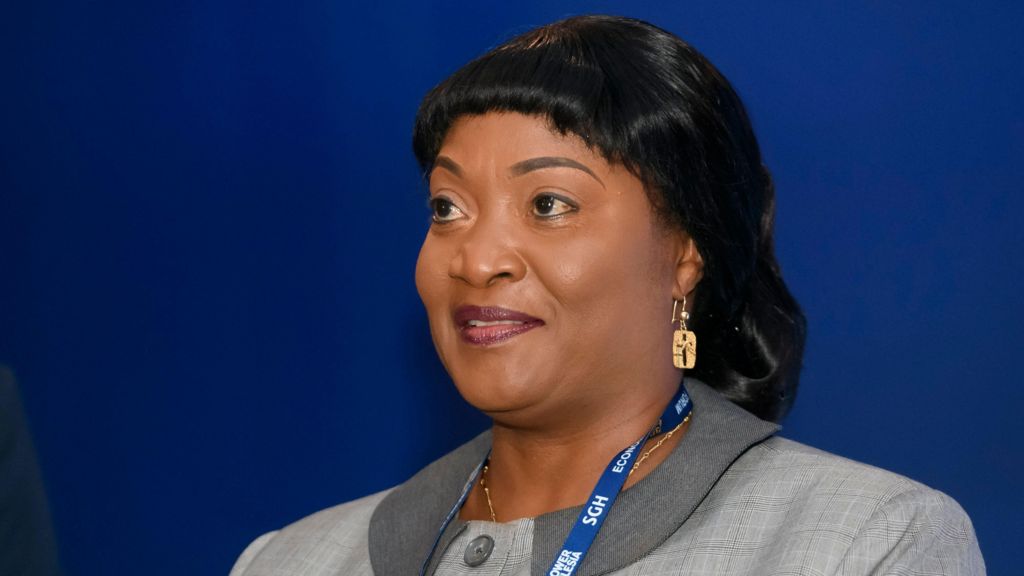
Former Liberian vice president charged in drug-trafficking probe
In a high-profile development that underscores Liberia’s new government’s aggressive push against organized crime and public corruption, the West African nation’s Ministry of Justice has announced criminal charges against former Vice President Jewel Howard-Taylor, including drug trafficking, money laundering, and multiple related felony offenses. Howard-Taylor, who occupied the nation’s second-highest executive office for a full six-year term alongside former President George Weah from 2018 to 2024, was taken into custody by law enforcement officials at Roberts International Airport, Liberia’s primary international air gateway located just outside the capital Monrovia. She was detained moments before she was set to board an outbound flight leaving the country, and has since been transferred to the headquarters of the Liberia National Police for processing. As of the latest updates, Howard-Taylor has not issued any public statement responding to the allegations against her.
As part of the same ongoing investigation into the transnational criminal network, Liberian police have also filed charges in absentia against three foreign nationals: two Croatian citizens and one Ukrainian citizen. Authorities allege all three individuals are active members of the same trafficking syndicate that Howard-Taylor is accused of collaborating with, and official representatives have confirmed law enforcement is committed to tracking down and arresting the fugitive foreign suspects. The investigation aligns with a years-long national strategy to dismantle transnational drug trade operations operating through Liberian territory, with a particular focus on disrupting cocaine trafficking networks.
Liberia has increasingly found itself positioned as a key transit hub for cocaine smuggling, as criminal groups move the drug from production centers in South America to consumer markets in Europe. In recent months, Liberian officials have carried out a string of major drug seizures, several of which rank among the largest contraband busts in the country’s recorded history. Authorities have made clear their campaign targets every tier of trafficking operations, from low-level couriers to the organizers, facilitators, and shadowy financiers that structure these criminal networks.
The charges against Howard-Taylor come against a backdrop of shifting political leadership in Liberia. The Weah administration, which held power from 2018 through 2024, was consistently dogged by widespread allegations of systemic corruption and widespread financial mismanagement during its tenure. When new President Joseph Boakai was inaugurated earlier this year, he made two central planks of his incoming administration’s agenda clear: launching a sweeping crackdown on public corruption, and preventing Liberia from becoming a safe haven for transnational drug trafficking organizations operating in West Africa.
-
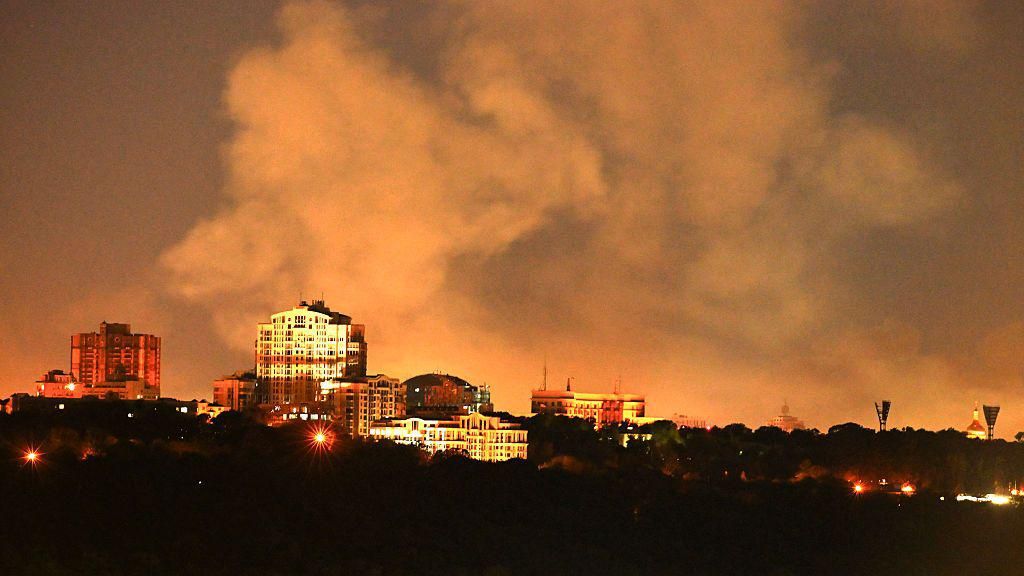
Russia unleashes ‘massive attack’ on Kyiv, killing at least five
A coordinated wave of Russian missile assaults carried out overnight across Ukraine’s capital Kyiv and its surrounding outskirts has left at least five civilians dead and 23 more wounded, Ukrainian emergency management officials confirmed Thursday. The State Emergency Service of Ukraine (DSNS) labeled the assault a “massive attack” that targeted multiple civilian sites, including multi-story residential apartment buildings and commercial storage warehouses, leaving several structures partially or fully reduced to rubble.
Emergency response teams have been deployed across the affected districts to search for survivors trapped beneath collapsed building debris, with crews already extracting at least one person alive from the wreckage. Kyiv Mayor Vitali Klitschko confirmed that a children’s hospital in the capital suffered damage during the strikes, with shattered window panes and multiple civilian vehicles parked nearby set on fire by blast waves. The Solomyanskyi district, an industrial hub located in Kyiv’s southwest, was also struck by multiple missiles, according to the mayor.
Outside the city boundaries, the Brovary district of the broader Kyiv region recorded one fatality and one additional injury, regional governor Tymur Tkachenko announced. Regional authorities issued public shelter alerts early in the night ahead of the strikes, notifying residents that active air defense operations would be underway across the area. Multiple follow-up missile warnings were issued by local administrative bodies, aligned with alerts from Ukraine’s national air force command.
The strikes severed electrical transmission lines across the region, cutting power to thousands of residential and commercial properties and leaving large swathes of the Kyiv area without power overnight. Utility technicians have launched urgent repair work to restore service to damaged energy infrastructure. Photos from the scene show Kyiv residents seeking shelter in underground spaces to avoid incoming fire, with thick plumes of smoke rising from impact sites across the capital.
This latest attack comes as Kyiv has endured almost daily overnight assaults over recent weeks, with some waves of strikes resulting in dozens of fatalities and severe casualties. The escalation in Russian attacks follows a string of recent missile and drone strikes targeting Russian territory that have raised pressure on Moscow’s government to enter peace negotiations to end the conflict, which has now stretched into its fifth year. This week alone, two separate attacks on Russian soil have killed at least 16 people, including one child.
Russia launched its full-scale invasion of Ukraine in February 2022, and as of the latest frontline reports, Russian forces occupy approximately one-fifth of Ukraine’s internationally recognized territory, with most occupied land concentrated along the country’s eastern border regions.