博客

  • Asian shares gain, with South Korea’s Kospi up 6%, after the US Treasury expands its debt buybacks

    Asian shares gain, with South Korea’s Kospi up 6%, after the US Treasury expands its debt buybacks

    Global equity markets staged a broad upward rebound on Thursday, with Asian benchmarks leading gains after a policy shift from the U.S. Treasury Department calmed investor jitters over soaring bond yields that had dragged down stock values in recent sessions.

    The most dramatic surge came in South Korea, where the benchmark Kospi index jumped 6.1% to close at 6,858.91. The strong gain reversed a 5.8% drop the previous session, which was triggered by a fresh wave of sell-offs in artificial intelligence-linked stocks. Two of the country’s largest technology names led the rally: Samsung Electronics climbed 9.7%, while memory chip manufacturer SK Hynix soared 14.1% following the company’s announcement of a major share buyback initiative designed to support shareholder value.

    Across the rest of the region, major stock indices also posted solid gains. Japan’s Nikkei 225 rose 1.3% to 66,178.26, erasing the declines the index recorded earlier in the week. The country’s latest trade data released Thursday showed that Japan logged its third consecutive monthly trade deficit in July, with both imports and exports hitting all-time record highs. SoftBank Group, the Japanese multinational investment holding company that counts OpenAI among its high-profile investments, added 3.8% to its share price on the day.

    In other Asian markets, Hong Kong’s Hang Seng Index gained 1.1% to end at 25,786.32, while mainland China’s Shanghai Composite Index edged up 0.3% to 3,905.23. Australia’s S&P/ASX 200 climbed 0.3% to 9,066.40, India’s Sensex advanced 0.7%, and Taiwan’s Taiex held nearly steady after previous volatility.

    The market rebound was sparked by an announcement from the U.S. Treasury Department, which revealed it will at least double the volume of planned longer-term government debt purchases. The intervention is designed to stabilize the bond market, as increased buying pushes bond prices higher — which, due to the inverse relationship between bond prices and yields, pulls borrowing yields down. Yields have climbed steadily in recent months, driven by investor concerns over persistent inflation fueled by the ongoing months-long war in Iran, as well as rapidly growing U.S. government debt levels. Spiking yields had pulled down stock valuations across global markets in recent weeks, creating intense pressure on policymakers to act.

    Following the Treasury’s announcement, U.S. government bond yields fell as expected. The 10-year Treasury yield dropped to 4.64% from 4.71% recorded earlier this week, though it remains far above levels seen before the outbreak of the war in Iran. The 30-year Treasury yield also fell, sliding from 5.28% to 5.18% by Thursday. The policy shift also pulled down bond yields across Asia: Japan’s 10-year government bond yield fell to 2.83% from over 2.89% on Wednesday, pulling back from the 30-year high it had touched in recent trading.

    On Wall Street, U.S. stock futures edged higher early Thursday, extending a recovery that began a day earlier. On Wednesday, the benchmark S&P 500 notched its first gain in four trading sessions, rising 0.2%, while the Dow Jones Industrial Average and the technology-focused Nasdaq Composite also each added 0.2% to close out the day.

    In commodity markets, oil prices ticked slightly higher on Thursday as diplomatic efforts between the U.S. and Iran to end the ongoing war made no major breakthrough. International benchmark Brent crude added 0.3% to trade at $91.90 per barrel, up from roughly $72 per barrel before the war began. U.S. benchmark West Texas Intermediate crude rose 0.2% to $84.57 per barrel. In currency markets, the U.S. dollar edged up slightly against the Japanese yen, rising to 158.60 yen from 158.16, while the euro dipped marginally to $1.1676 from $1.1677.

  • Sydney Swans apologises to AFLW team amid player sex scandal allegations

    Sydney Swans apologises to AFLW team amid player sex scandal allegations

    The Sydney Swans Australian Football League club is grappling with deep internal and public fallout after five of its senior men’s players were linked to an alleged sexual assault incident in Melbourne, prompting the club’s leadership to issue a sweeping public apology and enforce season-ending suspensions for the athletes involved.

    The allegations stem from an incident that unfolded in the early hours of Monday this week at the Pullman East Melbourne hotel. The five players at the center of the situation — star squad members Riley Bice, Nick Blakey, Isaac Heeney, James Jordon and Chad Warner — are currently the subject of an active investigation by Victoria Police. As of Thursday, no arrests have been made and no criminal charges have been filed against any of the five athletes.

    While law enforcement continues its inquiry into the sexual assault claims, the club has already taken decisive disciplinary action, noting that the players violated internal club standards regardless of the outcome of the police investigation. Multiple reports, including coverage from the *Herald Sun*, have detailed that the group brought exotic dancers to their hotel room for lap dances before an altercation broke out. The players violated team rules by drinking late into the night following the Swans’ Sunday win over Essendon at the Melbourne Cricket Ground, and hosting unapproved guests at their team accommodation. In response to these breaches, all five players have been stood down from all team activities for the remainder of the 2026 season.

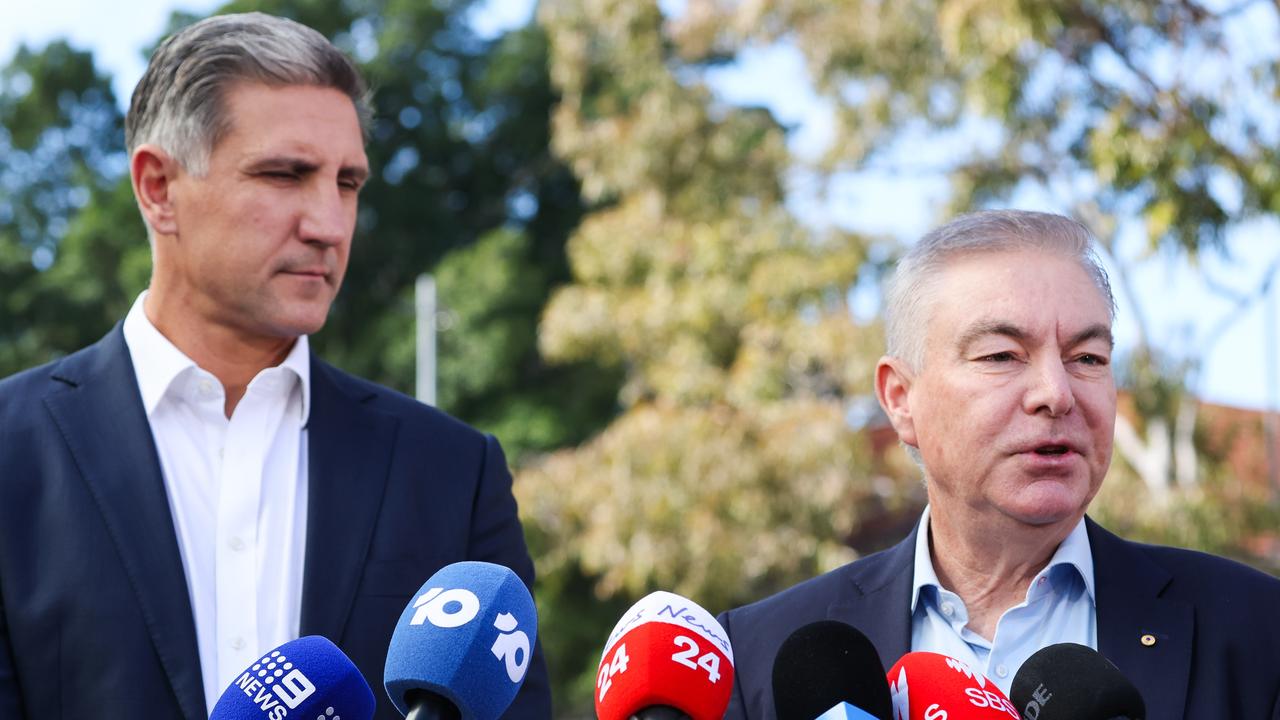
    On Wednesday night, the five players released a joint public statement addressing the incident. A day later, club chairman Andrew Pridham and chief executive Matthew Pavlich followed with an open public letter signed by both leaders, outlining the club’s position and extending apologies to all groups impacted by the scandal.

    In the statement, released Thursday afternoon, Pridham and Pavlich opened by offering a sincere apology for the widespread distress the incident has caused. “First and foremost, we would like to offer a sincere apology for the distress this incident has caused the wider community, our members, supporters, commercial partners, Academy families, staff members, athletes, their partners and families,” the letter read.

    The pair emphasized that the club’s priority remains centered on those harmed by the incident: “Our thoughts remain with everyone affected, particularly the women involved. All women deserve to feel safe and respected.” They added that the depth of the club’s disappointment could not be overstated, saying, “We understand and share the hurt that many of you will be feeling. To say we are disappointed is an understatement.”

    The leaders stressed that the immediate season-ending suspensions were a deliberate choice to reflect how seriously the club treats the incident. “The sanctions and decisive action we have taken demonstrate the seriousness with which we have treated this matter. Our focus is on doing what we believe is right and upholding the standards expected of everyone who represents our Club,” they wrote.

    A core focus of the club’s apology was directed at the club’s own AFLW (Australian Football League Women’s) program, whose recent milestone achievement has been completely overshadowed by the men’s scandal. The Swans’ AFLW side notched its first win of the 2026 season on Sunday, the same weekend the alleged incident took place, and is set to make history this coming Sunday when it hosts its first home game at the Sydney Cricket Ground as part of a landmark double-header. It marks only the second time in the AFLW team’s history that the squad will compete for premiership points at the Swans’ traditional home ground, a milestone that comes after years of hard work from the female athletes.

    “It is deeply regrettable that their success has been overshadowed by these events,” Pridham and Pavlich wrote. “As a Club, we are also looking ahead to our first AFLW home game this Sunday, a historic double-header at the SCG. This is only the second time in the AFLW team’s history that our athletes have played for Premiership points at our spiritual home. It’s a significant moment for our athletes who have worked so hard.”

    The club called on its members and fans to redirect their support to the AFLW team this weekend, with a goal of breaking the existing attendance record for a Sydney Swans AFLW game in Sydney. “We encourage our members and fans to support the team and give them the recognition they deserve as we aim to set a record for the biggest Sydney Swans AFLW crowd in Sydney,” the statement said.

    Acknowledging that repairing trust within the club community will not happen quickly, the pair said the club accepts that the process of moving forward will take time. “We know that moving forward as a Club will take time. Every member of our community will process this in their own way, and we do not take your trust or support for granted. We are committed to doing the work required to uphold the values, standards and culture we expect of everyone at the Sydney Swans,” they concluded. The incident has already drawn widespread criticism across the Australian football community, with former club leaders and AFLW figures speaking out about their deep disappointment and concern over the allegations.

  • A historic boat emerges in Serbia as Europe’s rivers run dry from drought and heat

    A historic boat emerges in Serbia as Europe’s rivers run dry from drought and heat

    Amid an unprecedented prolonged heatwave and crippling drought that has parched major European waterways, a well-preserved early 20th-century steam tugboat wreck has become the latest historical artifact to resurface from receding river waters in northern Serbia.

    Known colloquially as the Slovenian, the rusted iron hull of the vessel was exposed earlier this month along the banks of the Sava River near Sremska Mitrovica, a small town located roughly 45 miles northwest of Serbia’s capital Belgrade. While small portions of the wreck have poked above the waterline during previous dry periods, local historians and residents confirm the vessel has never been this fully visible in modern memory.

    Historian Andrija Popovic, director of the Sremska Mitrovica town museum, told reporters the unusual full exposure of the wreck has sparked intense public curiosity. Dubbed “Sava’s Titanic” by Serbian national media, the vessel has a century-long history tied to two world wars and the shifting political borders of Central Europe. According to Popovic’s research, the Slovenian was originally constructed in 1913 at a Budapest shipyard, when the city was still part of the Austro-Hungarian Empire. Measuring 177 feet in length, the steam-powered boat was first named *Vag*—the Hungarian name for the Vah, Slovakia’s longest river—and worked pulling heavy cargo barges along the Danube between Budapest and regional trading hubs.

    The vessel’s service paused entirely during World War I, and when the conflict ended with the collapse of the Austro-Hungarian Empire, it was transferred to the newly created Kingdom of Serbs, Croats and Slovenians (the precursor to modern Yugoslavia) as part of post-war reparations. It was at this point that the boat was renamed the Slovenian, a choice of name that Popovic says remains a historical mystery.

    The tugboat saw further action during World War II, when it fell under Nazi German occupation following the invasion of Yugoslavia. When Yugoslav anti-fascist forces retook Belgrade in 1944, the Slovenian was pressed into service to evacuate wounded fighters and transport military equipment as allied troops pushed retreating German forces westward. In late April 1945, just weeks before the end of the war in Europe, the vessel struck a German naval mine off the Sremska Mitrovica coast and sank, remaining undisturbed on the riverbed for nearly 80 years until this summer’s drought.

    The Slovenian is far from the only relic uncovered by Europe’s shrinking rivers this year. Along Serbia’s eastern border with Romania, rusted hulls of Nazi German Black Sea fleet warships—scuttled by retreating German troops in the final days of World War II to block the waterway—are now protruding from the Danube’s depleted waters, some still holding leftover ordnance. In Italy, the most severe drought in 70 years has exposed the stone piers of a 1st-century Roman bridge over the Tiber River, a structure used by emperors that fell into ruin by the 200s CE. On the Bulgarian banks of the Danube, paleontologists recently recovered a complete set of bones, including a jaw, tusks, and rib fragments, from an extinct woolly mammoth that had been buried in river sediment for millennia.

    Beyond uncovering long-lost artifacts, the record-breaking drought has wreaked widespread havoc across the continent. Record low water levels on the Danube—Europe’s second-longest waterway—have disrupted commercial shipping and cut into cooling water supplies for nuclear power plants in Hungary and Romania, forcing output cuts. From the Netherlands to Bosnia, months of unrelenting heat and dryness have destroyed cereal and vegetable crops, while severe water shortages have reached as far inland as the high Alps. Even alpine visitor facilities in Slovenia have been forced to implement strict water restrictions: the Triglav Lodge, the highest-elevation mountain guesthouse in the country at 8,251 feet above sea level, has switched entirely to disposable paper plates this summer to cut down on water used for dishwashing.

    Climate data confirms Europe is warming faster than any other continent on Earth, with average temperatures rising twice as fast as the global mean since the 1980s, per analysis from the European Union’s Copernicus Climate Change Service. By the end of July 2026, half of the European Union and the United Kingdom was experiencing some level of drought, with 9% of territory classified at the most severe “alert” level, according to the European Drought Observatory.

    Scientists warn that human-caused climate change is steadily increasing both the frequency and intensity of extreme heat and drought events across the continent. Dejan Vladikovic, a leading Serbian hydrology expert, explained that this year’s extreme dry conditions stem from a combination of minimal winter snowpack and an unusually rainless spring. “What awaits us in the future is that such situations will be more frequent,” Vladikovic said. “We are entering periods when this will, unfortunately, become the new normal.”

  • Captured Ukrainian-born soldiers tell BBC why they fought for Russia

    Captured Ukrainian-born soldiers tell BBC why they fought for Russia

    Deep in Western Ukraine, tucked behind reinforced high walls and multiple layers of secured locked gates, sits a prisoner of war camp holding dozens of men captured while fighting on behalf of the Russian military. A closer look at the camp’s population reveals a striking, complex reality of the ongoing war: unlike the initial wave of conscripts drawn mostly from remote, economically depressed Russian regions at the start of the 2022 full-scale invasion, many current detainees are recruited from major Russian urban centers including St. Petersburg and Yekaterinburg. More surprisingly, a notable share of the prisoners are not Russian citizens at all – they are Ukrainian-born men who took up arms against their home country.

    Gaining meaningful access to interview prisoners of war carries significant challenges. Reporters must first confirm that no coercion is being used to force participation, then gauge how open subjects can be under detention conditions. With independent journalists barred from embedded access to Russian military units inside Russia, however, these interviews offer a rare, unfiltered window into the shifting dynamics of the war and the varied motivations that drive men to fight for Moscow – including those born on Ukrainian soil. All participants were given the option to decline interviews, and conversations with willing subjects were conducted far from guard posts and off-camera. Beyond structured formal interviews, the reporter was able to hold direct, Russian-language conversations with detainees across multiple locations within the facility.

    The camp holds detainees from two core groups: soldiers pulled from major Russian cities, and Ukrainian natives from Russia-occupied eastern Ukrainian territories. For one Ukrainian-born detainee, 20-year-old Anton, his connection to the Russian side began when he was just 10 years old, when his home region in eastern Ukraine’s Donbas fell to Moscow-aligned separatist forces. When he turned 18 in 2022, the same year Russia launched its full-scale invasion, he immediately enlisted in the Russian army.

    “I don’t regret my choice. I went to defend my land,” Anton says, adding that most of his close friends also volunteered. Now, he says, he receives repeated text messages notifying him of their deaths: “Dead, dead, dead.” Multiple other prisoners echoed his account, reporting that nearly all of their original units have been killed in action, and far fewer new volunteers are stepping forward to replace them – even with the promise of massive enlistment bonuses. This trend suggests that Putin’s goal of avoiding politically unpopular large-scale domestic mobilization may soon face new pressures.

    Under Ukrainian law, Ukrainian citizens captured fighting for Russia are charged with treason, but after trial they are transferred to standard POW camps alongside Russian detainees. Officially, Kyiv still recognizes these men as Ukrainian citizens and views Russia’s occupation of their home regions as temporary, but on-the-ground realities are far more nuanced. “They’re very pro-Russian, and their national identity is very blurred,” explains Petro Yatsenko, a representative from Ukraine’s coordination headquarters for prisoners of war.

    Anton rejects any label of traitor, saying firmly, “I consider myself Russian. A country means nothing, it’s all about nationality. All my family are from Russia. All my roots are from there.” When asked about his Ukrainian surname, he dismisses it as a meaningless irrelevant detail.

    Anton’s identity is not an anomaly: an entire generation of Ukrainians born in occupied Donbas has grown up under Russian rule, attending Kremlin-controlled schools and consuming state-aligned Russian media that has portrayed Kyiv’s government as “Nazi” and illegitimate for nearly a decade. Since the 2022 full-scale invasion, this model of cultural and political reorientation has been expanded to newly captured territories across the country. Anton has fully internalized this narrative, repeating standard Russian talking points consistently: he refers to Putin as “my President” and supports a continued push to seize the entire Donbas, even after hundreds of thousands of deaths on both sides. “It’s a shame that people died, especially those who are innocent,” he says. “But war is war. It could have been ended. But no-one wanted to do that.”

    In the camp’s hospital, 20-something Artyom lies in a corner bed, his body riddled with shrapnel from battlefield fighting. He had only served two months on the front lines before being captured. Like Anton, he is a native of Donetsk and enlisted voluntarily, and he says financial incentives were not his only motivation. “We have our own grudges,” he explains, referencing the heavy shelling his region faced in 2014 when Ukrainian forces moved to stop the separatist breakthrough.

    His experience in the Russian military left him deeply embittered. He describes his commander as incompetent, and says he never received the 400,000 rouble (approximately £3,470 or $5,000) enlistment bonus he was promised. To add to his grievances, the wounded Russian soldier in the bed adjacent to his received five times that signing bonus.

    Within the camp, detainees are allowed to work to earn small wages that can be spent on extra food, cigarettes, and other small comforts. In one outbuilding, POWs assemble wooden coffins for local clients – a macabre assignment that comes after a previous contract to build garden sheds. In a separate workshop across the courtyard, a small group of prisoners constructs artificial Christmas trees and paints holiday decorations, work that will likely end up on the tables of Christmas shoppers across Ukraine. Both groups say their earnings go to small extra comforts they cannot get through standard camp rations.

    Sergei, another detainee, was born in the occupied Ukrainian city of Luhansk, but identifies as Russian, following his parents who moved to the Donbas when both Ukraine and Russia were part of the Soviet Union. He enlisted in the Russian military a decade ago “to defend my homeland,” but says that if he is released, he will retire and never return to the front. “I’ve done my bit,” he says. For most detainees, however, that choice is not available.

    Working next to Sergei stacking plastic tree branches is Konstantin, a former drug dealer who enlisted in the Russian military exclusively to avoid serving a 15-year prison sentence in Russia. “For me, 15 years in prison was too much,” he explains. “I know it probably doesn’t excuse me, but it’s a fact. I’m 44 now, I would be 60 [when I got out]. So no.” These so-called “convict soldiers” only earn their freedom if they survive until the end of the war, a grim outcome for troops assigned to high-casualty assault units. Three convicted murderers interviewed for the report shared that they had been promised release after one year of combat, only to have their contracts automatically extended without warning.

    When asked about fighting and killing fellow Ukrainians on the battlefield, Sergei dismissed the question as “provocative” and declined to answer. Konstantin answered carefully, acknowledging the tragedy of the conflict: “I see nothing good in any war, and in a war like this there can be nothing good a priori. I’m not saying we’re the same as Ukrainians, but we are close. We all have relatives there. This just isn’t good.” Even so, he still believes his choice to enlist was the right one for his circumstances.

    Neither Konstantin nor Sergei expect the war to end soon, and both agree that Putin will not halt his campaign until he controls the entire Donbas. “But everyone I know there has had enough,” Konstantin says. “I just want this to be over, as soon as possible.”

    While most of the Ukrainian-born POWs interviewed were from 2014-occupied territories and joined voluntarily, there are exceptions. One Donetsk native said he was forcibly conscripted into the Russian army. He appeared visibly nervous during the interview, constantly scanning the room for listeners, unsure of who he could trust. Official Ukrainian intelligence estimates that more than 50,000 Ukrainians have been forcibly conscripted in occupied regions, with independent analysts putting the number far higher. This detainee said his family remained in Donetsk after the invasion not out of loyalty to Russia, but simply because it was their home. Now, his only goal is to return to his wife and children, and hide to avoid being sent back to the front if he is released: “I’m just going to hide,” he confided.

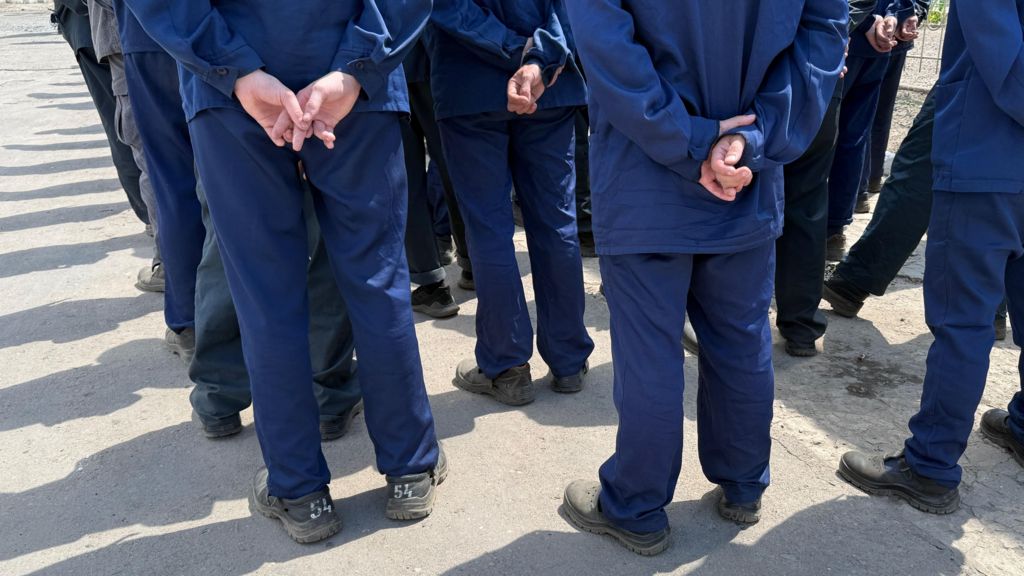
    At lunchtime, detainees in navy blue overalls file into the camp dining hall, heads bowed and hands clasped behind their backs. As they eat a simple meal of soup and stew, a video titled *Myths about Crimea* plays on a loop, debunking Russia’s false claims to historic ownership of the peninsula that Moscow illegally annexed from Ukraine in 2014. None of the prisoners pay any attention to the broadcast. Kyiv’s so-called “re-education” efforts for these POWs appear half-hearted at best; the government’s core priority for the detainees is to use them as bargaining chips for prisoner swaps to bring captured Ukrainian soldiers home. Even that path to freedom is uncertain for the Donbas natives, however: Russia has shown little interest in exchanging these men. “Only a dozen or so have been transferred this year,” Konstantin says. “It seems like they don’t want to exchange us. I think we will be the last to go.”

    Additional reporting by Anastasia Levchenko

  • ‘It’s not going to be fullback’: Clint Gutherson searches for new position after Dean Young confirms Scott Drinkwater’s role for 2027

    ‘It’s not going to be fullback’: Clint Gutherson searches for new position after Dean Young confirms Scott Drinkwater’s role for 2027

    The St George Illawarra Dragons are gearing up for a major positional reshuffle in their 2027 National Rugby League (NRL) campaign, head coach Dean Young has confirmed. The biggest change awaits veteran utility back Clint Gutherson, who has occupied the fullback position for 41 games since leaving the Parramatta Eels to join the Red V. With high-profile recruit Scott Drinkwater locked in as the club’s first-choice fullback for next season, Gutherson will need to compete for a spot in a new position.

    Drinkwater is one of several big-name signings joining the Dragons for 2027, and his arrival opens up multiple possible pathways for Gutherson: potential spots at centre, wing, or a utility interchange role off the bench. Currently, the 31-year-old Gutherson is sidelined for the remainder of the 2026 season with a knee injury, meaning he will formally step away from the fullback role when pre-season for 2027 gets underway.

    Young laid out his plan for the versatile veteran in comments to SEN radio, noting that Gutherson’s value to the team extends far beyond the fullback position. “It’s not going to be fullback if ‘Drinky’ is fit and playing well, but he obviously can back up Drinky,” Young said. “I’ll give him an opportunity in the pre-season to train in the centres, on the wing, and even coming off the bench as a ball-playing 13. He’s just a footy player. He’s a competitor and his energy is infectious for the group. He’ll be in the team somewhere, and we’ll see where we land.”

    The positional shift also sparks questions around the Dragons’ 2027 captaincy. Longtime senior leader Damien Cook is already set to leave the club to join the English Super League, and if Gutherson moves to a bench role, the club will need a new on-field leader. Young noted that young gun Dylan Egan has stepped up into a leadership role in recent weeks, but a final captaincy decision will not be made until late January, after the new recruits have had time to settle into the squad and coach staff can assess team dynamics.

    Alongside the Gutherson news, Young confirmed the long-term development plan for emerging forward Hamish Stewart, who has been a breakout revelation in the back row this season. Stewart, who had never played in the back row before making his NRL first grade debut this year, has excelled on the left edge in attack and handled heavy defensive workloads with ease. While he will remain in the edge role for the 2027 season, Young says Stewart is ultimately destined to fill a ball-playing lock position similar to that of Penrith Panthers star Isaah Yeo.

    Young explained that keeping Stewart on the edge for the next 12 to 24 months is a deliberate choice to support the young forward’s long-term development. “At the moment, the team needed him to go to back row because he moves so well defensively, and we needed to improve defensively,” Young said. “He’s still only young, and I think at this stage of his career, him playing 80 minutes in the back row and not having the collisions that he’d probably feel and cop in the middle will be good for his long-term future.”

    Young drew a parallel between Stewart’s development path and that of Australian and Penrith star Isaah Yeo, who began his career at centre, moved to the edge, and only transitioned to the ball-playing lock role at 25 or 26 years old. “Whether Hamish has to wait that long (remains to be seen),” Young said. “But at the moment, it just shows how good he is because he’d never played back row in his entire life until this year in first grade.” Young also added that Stewart’s strong form this season has put him in contention for a spot in Australia’s World Cup squad, highlighting how quickly the young forward has adapted to his new role.

  • Founder of China’s Evergrande sentenced to life in prison

    Founder of China’s Evergrande sentenced to life in prison

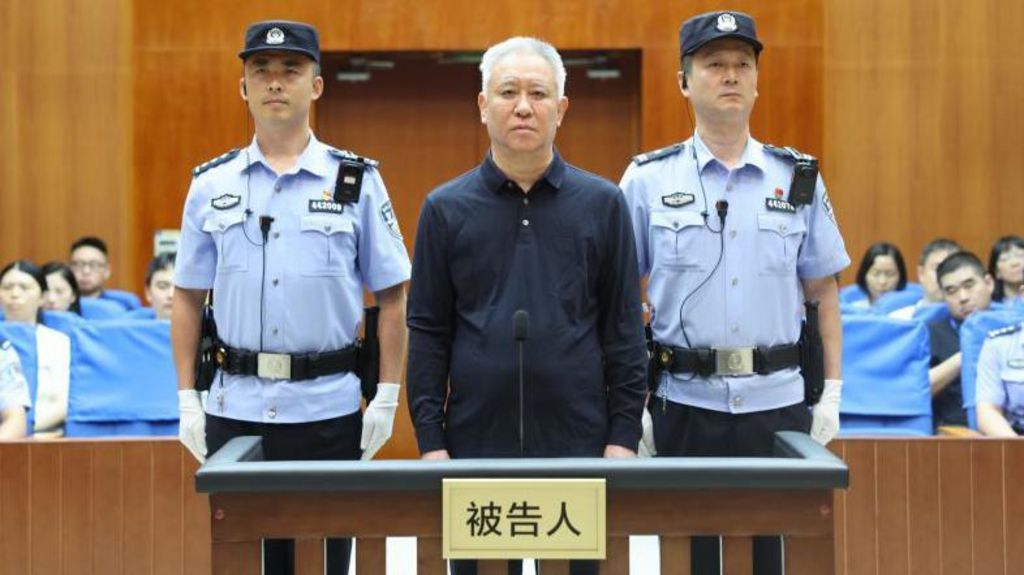
    In a landmark ruling that closes one of the most high-profile chapters of China’s ongoing property sector crisis, Hui Ka Yan, the founder of embattled real estate giant Evergrande Group, has received a life sentence and an order for the full confiscation of his personal assets. The verdict was handed down by China’s Shenzhen Intermediate People’s Court, following a guilty plea entered by Hui in April on multiple corruption charges, including large-scale embezzlement of corporate assets and corporate bribery.

    Alongside the sentence for Hui, the court also imposed heavy financial penalties on the troubled conglomerate itself: Evergrande Group has been fined 8.82 billion yuan, equal to approximately $1.31 billion or £960 million, while the firm’s core real estate subsidiary has been ordered to pay an additional 7 billion yuan in fines, according to official Chinese state media reports.

    The 66-year-old tycoon, who also goes by the name Xu Jiayin, built his business empire from extremely humble origins. Born into a rural family in southern China, he was raised primarily by his grandmother before entering the property development industry and founding Evergrande in 1996. Over the following two and a half decades, Hui guided Evergrande through an extraordinary period of expansion, fueled by an aggressive growth strategy that relied heavily on massive borrowing from domestic banks and global capital markets. At its peak, Evergrande claimed the title of China’s largest residential developer, boasting a public market valuation that exceeded $50 billion, and Hui was for years ranked among the wealthiest people in Asia.

    That meteoric rise came to an abrupt end in 2021, when Evergrande defaulted on more than $300 billion in outstanding debt, triggering a cascading collapse that sent shockwaves through China’s entire $60 trillion real estate industry. The company’s implosion is widely credited with sparking the broader housing market slump that has persisted for three years, and which continues to act as a major drag on China’s overall economic growth, leaving thousands of unfinished residential projects, millions of stranded homebuyers, and billions in losses for domestic and international investors.

    Legal analysts and economic observers describe Hui’s sentencing as a defining turning point in the aftermath of Evergrande’s collapse, wrapping up one of the largest corporate corruption investigations in recent Chinese history and signaling the Chinese government’s continued commitment to cleaning up systemic irregularities in the country’s property sector.

  • Russian missile barrage kills at least 6 in Kyiv, injures 33

    Russian missile barrage kills at least 6 in Kyiv, injures 33

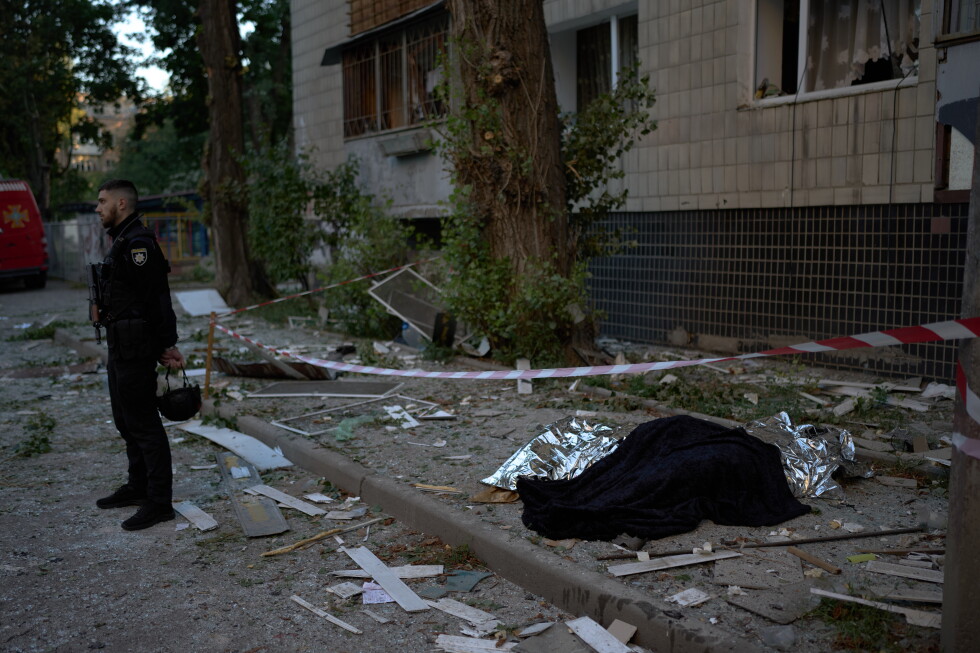
    In a major escalation of hostilities between Russia and Ukraine, a massive overnight Russian missile assault on Kyiv left at least six civilians dead and 33 others injured, local Ukrainian officials confirmed Friday. The attack, which unfolded throughout Thursday night, sent deafening explosions echoing across Ukraine’s capital, and air raid warnings stayed in effect well into the early hours of Friday.

    The barrage targeted 12 separate sites across three of Kyiv’s key districts: Darnytskyi, Sviatoshynskyi, and Solomianskyi. Multiple civilian infrastructure sites were damaged in the strikes, including private residential buildings, a local medical clinic, and an educational facility. First responder and emergency teams worked through the night to extract residents who had been trapped beneath collapsed rubble.

    Military analysts say the stepped-up missile campaign on Kyiv is a deliberate Russian strategy to deplete Ukraine’s limited air defense stockpiles. Ukraine currently operates only a small number of air defense systems capable of intercepting incoming ballistic missiles, and stockpiles of interceptor missiles for its U.S.-supplied Patriot air defense systems remain consistently low. A previous development saw former U.S. President Donald Trump authorize licenses allowing Ukraine to domestically produce Patriot air defense systems, a decision he later reversed, adding further strain to Ukraine’s air defense capabilities.

    In one of the hardest-hit areas of the capital, Solomianskyi district, the top two floors of a nine-story residential apartment building were completely destroyed by the impact, and blazes broke out across multiple other floors of the structure. Trapped civilians were reported in two additional residential buildings as well as a school that was being used as a public bomb shelter.

    The attack comes as Ukraine has simultaneously ramped up its own long-range strike campaign against Russian targets. Ukrainian forces have been targeting weapons storage depots, military command facilities, and other key strategic sites deep inside Russian territory, with the stated goal of eroding Moscow’s capacity to continue large-scale offensive strikes against Ukrainian population centers.

  • US elections: Progressive Democrat scores shock win in Florida

    US elections: Progressive Democrat scores shock win in Florida

    On Tuesday, voters across three U.S. states – Alaska, Florida and Wyoming – cast their ballots in a critical round of Democratic and Republican party primary elections, revealing deep ideological fractures within U.S. political parties that center on Washington’s Middle East policy, particularly American support for Israel and the ongoing escalatory posture toward Iran.

    A defining force shaping the outcome of these contests was the American Israel Public Affairs Committee (AIPAC), one of the most influential lobbying groups in U.S. politics. The organization poured massive financial resources into favored candidates from both major political parties, prioritizing the defeat of any incumbent or challenger who openly criticized U.S. military and diplomatic intervention across the Middle East. Meanwhile, a number of anti-establishment candidates attempted to leverage widespread voter frustration over sky-high household costs, linking economic strain to the billions of dollars in U.S. funding allocated to Middle East engagements. When all ballots were counted, the final results broadly reinforced the unbroken grip that party establishment figures hold over political power in these three states.

    In Florida’s Democratic primary for governor, an upset outcome defied many pre-election pundit projections: State Representative Angie Nixon, a self-identified Democratic Socialist and former union organizer, secured a victory over retired Army Lieutenant Colonel Alexander Vindman, a former White House National Security Council aide. The gap in campaign funding between the two candidates was staggering: Nixon raised less than $1 million for her bid, while Vindman pulled in more than $16 million in donations. Nixon’s campaign platform centered on an explicit anti-war position, paired with progressive policy priorities including universal single-payer healthcare through the Medicare for All proposal and expanded access to affordable housing.

    On the Republican side of Florida’s primary contests, Congressman Bryon Donalds claimed victory over a crowded field of challengers. Donalds, who earned an early endorsement from former President Donald Trump, faced sharp criticism from opponent James Fishback over his close ties to AIPac. Fishback, who was backed by far-right commentator Nick Fuentes and former Fox News host Tucker Carlson, ran an aggressive campaign opposing U.S. support for Israel and U.S. policy toward Iran. With Florida having shifted to become a reliably Republican-leaning state in recent election cycles, political analysts widely expect Donalds to win the November general election and succeed outgoing Governor Ron DeSantis, who is leaving the post to pursue other political opportunities. In another Florida House primary, Trump-endorsed Congressman Cory Mills suffered an unexpected defeat, after months of controversy stemming from a House Ethics Committee investigation into allegations of campaign finance violations and sexual misconduct against the incumbent.

    In Alaska, primary results further solidified the hold of AIPAC-endorsed establishment candidates from both major parties. The state uses a nonpartisan blanket primary system, where the top four overall vote-getters advance to the general election, and former Democratic Representative Mary Peltola and Republican incumbent Senator Dan Sullivan both moved on to the November contest. Peltola centered her campaign on state-specific priorities: protecting Alaska’s vital commercial fishing industry and expanding development in the state’s energy sector. She accepted more than $96,000 in campaign donations from AIPAC and limited her criticism of U.S. policy toward Iran to only calling for stricter congressional oversight of administration actions, stopping short of a full rejection of current policy.

    In Wyoming, the smallest of the three states holding primaries this week, there was little sign of a major shakeup or progressive reckoning within state Democratic ranks. Republicans retained their long-standing dominance of Wyoming politics, nominating Harriet Hageman for the U.S. Senate seat being vacated by retiring Senator Cynthia Lummis, while Chuck Gray secured the Republican nomination for Hageman’s current U.S. House seat. Hageman, a close political ally of former President Trump, has been a vocal public supporter of U.S. policy toward Iran and continued American military aid to Israel throughout her campaign.

    This report is compiled from independent coverage provided by Middle East Eye, a global outlet specializing in original, unrivaled reporting and analysis on the Middle East, North Africa and surrounding regions.

  • Chinese court sentences Evergrande founder to life in prison for fraud

    Chinese court sentences Evergrande founder to life in prison for fraud

    BEIJING – In a landmark ruling that underscores the fallout from one of the world’s biggest corporate debt collapses, the Shenzhen Intermediate People’s Court handed down a life prison sentence Thursday to Hui Ka Yan, the flamboyant founder of Chinese property giant Evergrande Real Estate Group. The court’s official statement also issued massive financial penalties, imposing an 8.82 billion yuan ($1.31 billion) fine on Evergrande Group and a separate 7 billion yuan ($1.04 billion) fine on its core real estate arm, Evergrande Real Estate.

    Hui, who is also known by his Chinese name Xu Jiayin, had already entered a guilty plea back in April to a sweeping set of criminal charges, spanning large-scale fraud, illegal absorption of public deposits, and corporate bribery. The conviction and sentencing close a major chapter in a crisis that has shaken global confidence in China’s $60 trillion property sector.

    Once China’s top-selling property developer and a symbol of the country’s explosive infrastructure and housing boom, Evergrande spiraled into insolvency after years of unchecked aggressive expansion fueled by relentless borrowing. By the time a Hong Kong court ordered the firm into liquidation in 2024, it held more than $300 billion in total liabilities, earning it the unenviable title of the world’s most indebted real estate developer.

    The company’s collapse was triggered in large part by a 2020 Chinese government regulatory crackdown designed to rein in reckless leverage and systemic risk across the property sector. But the sudden implosion rippled far beyond Evergrande itself, tipping the entire Chinese real estate market into a prolonged downturn that has hit consumer confidence, halted thousands of construction projects across the country, and spilled over into the broader domestic economy.

  • Essendon coaching exodus continues as David Rath becomes fourth major departure

    Essendon coaching exodus continues as David Rath becomes fourth major departure

    A brutal wave of coaching turnover continues to batter the Essendon Bombers, with David Rath, the club’s respected coaching innovations and game strategy manager, becoming the fourth high-profile member of the coaching group to depart the AFL side in 2026 alone.

    The club officially confirmed Rath’s exit in a statement released Thursday afternoon, announcing the 20-year industry veteran will leave the club at the end of the current season, bringing his three-year tenure with the Bombers to a close. The statement added that Rath will pursue new professional opportunities with other organizations following his departure.

    Rath leaves the Bombers with a decades-long track record of experience across Australia’s top sporting institutions. His professional resume includes previous senior roles with AFL clubs Hawthorn and St Kilda, the Australian national rugby union team the Wallabies, and the Australian Institute of Sport, where he built a reputation for strategic innovation across elite sport.

    His departure is the latest in a string of high-profile exits that have gutted the Bombers’ coaching panel this year. The turnover began in May, when the club sacked former senior head coach Brad Scott. Shortly after Scott’s dismissal, assistant coach Ben Jacobs stepped down from his role. Earlier this month, a second assistant coach, Cam Roberts, confirmed he would also leave the club at the end of the current season.

    The string of coaching exits comes amid one of the worst recent seasons for the Essendon franchise. The Bombers currently sit in 18th place on the 2026 AFL ladder, holding only two wins for the entire season. Since interim head coach Dean Solomon took over the top role in May, the side has only secured a single victory, leaving fans and club stakeholders questioning the direction of the struggling franchise.