博客

  • Belgian car salesman becomes prince after royal parentage confirmed

    Belgian car salesman becomes prince after royal parentage confirmed

    A new chapter of unpublicized change has emerged in Belgium’s royal household, more than half a year after Prince Laurent quietly completed legal proceedings to recognize 26-year-old Clément Vandenkerckhove as his biological son and official heir. Details of the quiet town hall ceremony held six months ago have only recently come to light, shedding new light on the decades-long secret relationship between the royal and Belgian singer Wendy Van Wanten, whose real name is Iris Vandenkerckhove.

    Clément’s journey to becoming an officially recognized prince is a years-long story of gradual connection. Born out of Prince Laurent’s relationship before his 2003 marriage to Princess Claire, Clément grew up unaware of his father’s true identity. It was not until he turned 16 that his mother revealed the royal lineage running through his blood. A chance unexpected encounter with Prince Laurent in a Belgian shopping center in 2013 passed without Clément recognizing who the man in front of him was. Four years after learning his father’s identity, Clément gathered the courage to reach out by phone, and a series of conversations eventually led to an in-person meeting. To confirm their biological connection, the pair agreed to take a DNA test at a local hospital. Clément later recalled that Prince Laurent volunteered to give his sample first to put him at ease. When the results came back, they confirmed a 99.5% match, cementing their paternal bond.

    Now formally recognized as a prince of Belgium, Clément’s new status comes with significant limitations. Unlike Prince Laurent’s three children with Princess Claire – Princess Louise, Prince Aymeric and Prince Nicolas – Clément holds no place in Belgium’s official line of royal succession. He also will not participate in any official public engagements on behalf of the monarchy, and per Belgian royal financial rules, he will not receive any annual public royal allowance, a provision that aligns with 2013 changes to Belgian law that restrict public royal funding to only a small circle of core royal family members: currently King Philippe, former King Albert II, Prince Laurent himself, and Princess Astrid.

    The 26-year-old former car salesman, who rose to public attention after a Flemish VTM documentary chronicled his story last September, has made clear he holds complicated feelings about adopting his father’s family name, Saxe-Coburg. In an interview with local newspaper Het Nieuwsblad, Clément explained that while he has not ruled out taking the royal name in the future, he remains deeply proud of his existing surname Vandenkerckhove, which he shares with his mother. Giving up that name, he said, would feel like a betrayal of everything his mother has done for him over the course of his life.

    This recognition echoes a high-profile paternity case that rocked the Belgian monarchy just a few years ago, involving Prince Laurent’s own father, former King Albert II. After a years-long public legal battle, King Albert II formally acknowledged in 2020 that he had fathered an out-of-wedsted daughter, artist Delphine Boël, during an extra-marital affair. Boël eventually won her court fight for official recognition, gained the title of princess, and now uses the royal surname Saxe-Coburg. The ongoing paternity scandal was one of the key factors that led Albert II to abdicate the Belgian throne in favor of his son Philippe in 2013, marking a major turning point in modern Belgian royal history.

  • Brotherly touch and English flavor could see Inter dominate Serie A, Como looks to surprise again

    Brotherly touch and English flavor could see Inter dominate Serie A, Como looks to surprise again

    As Italy’s top football division prepares to kick off its new campaign this weekend, all eyes are on defending champion Inter Milan, where rookie head coach Cristian Chivu’s unconventional, brotherly leadership style has emerged as an unlikely catalyst for continued dominance.

    When Chivu was tapped last year to replace seasoned incumbent Simone Inzaghi at the San Siro, the appointment sparked widespread skepticism across the football world. The Nerazzurri were still reeling from a historic 5-0 Champions League final thrashing at the hands of Paris Saint-Germain, and critics questioned how a coach with only 13 prior Serie A matches under his belt could steady a fallen giant. As Inter midfielder Hakan Çalhanoğlu recalled in a recent interview with beIN Sports Australia: “Everyone was thinking that Inter was, let’s say dying, after what happened.”

    What followed defied all expectations. Chivu’s fresh tactical vision and people-first approach reinvigorated a demoralized squad, steering Inter to a historic domestic double of Serie A and Coppa Italia in his first full season in charge. Unlike more autocratic managers who separate leadership from personal connection, the 45-year-old Romanian has built his program on close, trusting bonds with his players. “With Chivu it is something different, he cares more about the person, not about the football,” Çalhanoğlu explained. “For him it’s more important how you are, how you feel, and he’s open to everything. He gives you the confidence to feel good. Of course, he has tactical things … but outside of the football he’s like a brother or a friend, you can talk to him about whatever you want, he’s always close to you. That helped me a lot.”

    Inter has further strengthened its title credentials this offseason with a notable injection of English talent. The club has already secured the signings of England defenders Djed Spence and John Stones, and is closing in on a deal for Liverpool and Three Lions midfielder Curtis Jones to add further depth to its starting lineup. Inter will open its title defense at home against newly promoted Monza this Saturday, kicking off what is shaping up to be one of the most unpredictable Serie A campaigns in recent memory.

    While Inter enters the season as the favorite, multiple challengers are poised to push for the Scudetto, with off-season coaching changes reshaping the competitive landscape. Last season’s runner-up Napoli, who were held back by a crippling injury crisis that prevented them from mounting a closer title fight, is now led by Massimiliano Allegri, the veteran former Juventus and AC Milan manager. The appointment comes after Antonio Conte stepped down at the end of the last campaign, marking Napoli’s sixth head coaching change in just over three years. Allegri himself is returning to management after being fired by AC Milan last season following what the club called an “unequivocal failure” of a campaign.

    AC Milan, which finished fifth last season after a late-season slump, has turned to Rúben Amorim, the highly rated young Portuguese coach whose stock dipped during a disappointing spell at Manchester United. The Rossoneri have already made a major statement in the transfer market, smashing their club record to sign Portugal forward Gonçalo Ramos from Paris Saint-Germain for more than €70 million ($80 million) to add much-needed attacking firepower.

    Coaching turnover has hit other top half sides too: Lazio and Atalanta both appointed new managers this off-season, with long-time Lazio boss Maurizio Sarri switching to Atalanta in its first full campaign after legendary manager Gian Piero Gasperini’s departure. Former Italy head coach Gennaro Gattuso has stepped into Sarri’s old role at Lazio.

    Against this wave of change, two top contenders have leaned into stability to mount their title pushes. Roma, which secured Champions League qualification for the first time since 2018 in Gasperini’s debut season at the club, is retaining the veteran manager despite a high-profile public falling out with former special adviser and ex-coach Claudio Ranieri that ended in Ranieri’s exit from the club. Gasperini has added exciting young talents Santiago Castro and Rodrigo Mora to his squad, putting Roma in position to challenge for its first Serie A title in more than 25 years. At Juventus, Luciano Spalletti will lead the side in his first full campaign after taking over in October last season. Though the Bianconeri narrowly missed out on Champions League qualification and finished sixth, Spalletti earned a new two-year contract for the club’s strong late-season form.

    The most surprising contender to watch this season is Como, the Cinderella side that shocked Italian football last term by pipping Juventus and AC Milan to fourth place and the final Champions League spot. It is a staggering rise for the 119-year-old club: just seven years ago, it was competing in Italy’s fourth division, and it had never qualified for any continental competition in its history until last season. This remarkable turnaround has come under the leadership of Cesc Fàbregas, the former Arsenal, Barcelona and Spain midfield legend who has taken the club to new heights in just two years in charge.

    Last season’s success was no fluke: Como boasted the tightest defense in the league while playing an expansive, attacking style of football that won plaudits across the country. This off-season, Fàbregas has strengthened his backline with the €30 million signing of Chelsea defender Trevoh Chalobah, and pulled off a major coup by retaining star playmaker Nico Paz for at least one more season. After last year’s historic overachievement, few are willing to count out an unlikely Como title push. The big unanswered question remains, however: how will the club’s young, inexperienced squad, almost all of whom have never competed in Champions League football, handle the increased physical and mental demands of balancing European and domestic competition?

  • Vietnam police charge man with rape after American woman alleges attack

    Vietnam police charge man with rape after American woman alleges attack

    A 24-year-old Vietnamese-American woman who was raised in the United States has helped secure formal rape charges against a 23-year-old Vietnamese man following a sexual assault that occurred during a group resort trip in northern Vietnam, a case that has thrown a rare public spotlight on the stigma and barriers facing survivors of sexual violence in the country.

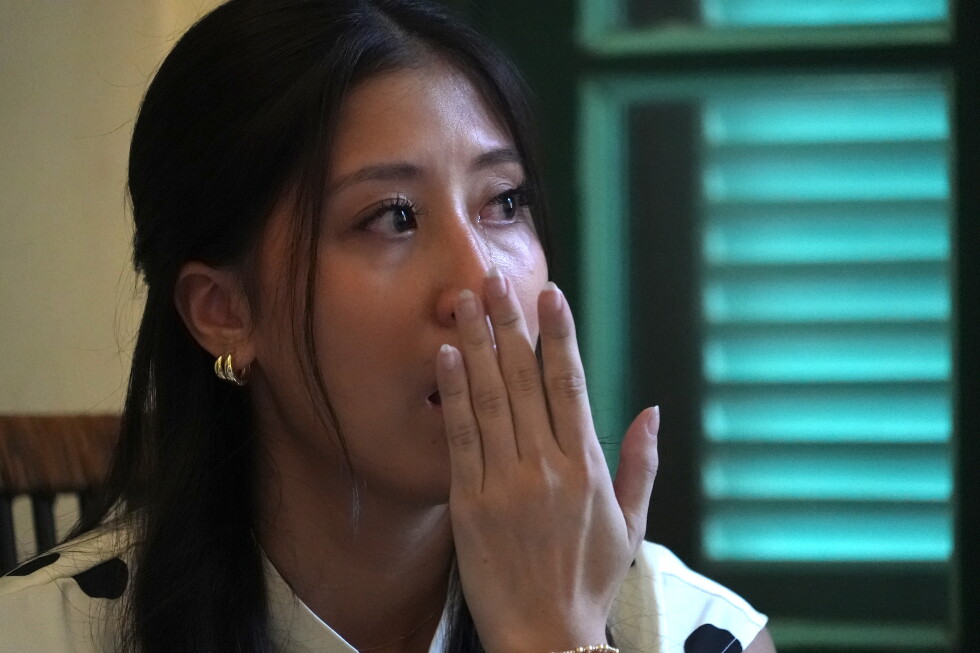
    Nguyen Thi Quynh Tam, a Houston native who moved back to Vietnam in May to complete a banking internship and reconnect with her cultural heritage, joined a group of acquaintances for an Independence Day weekend trip to a resort in Phu Tho province, located roughly 80 kilometers northwest of Hanoi. When Tam was locked out of the room she had planned to stay in after the group’s late-night gathering, she found an empty bedroom to rest in and fell asleep with the door unlocked. In the early hours of July 5, she woke to find the 23-year-old man assaulting her, she told the Associated Press in a series of on-the-record interviews.

    Despite Tam repeatedly pushing him away, shouting verbal refusals, and fighting back, the man pinned her arms above her head and completed the assault, according to her formal police complaint, documented text messages shared with AP, and recorded communications. Hours after the attack, Tam messaged her boyfriend, who was based in the United States, to confirm she had been raped; AP has verified the content of those messages.

    In the days following the assault, Tam faced mounting pressure to abandon any formal legal action. Members of the travel group told her the accused man came from a wealthy, politically well-connected family, leaving her uncertain how to proceed. On July 9, the suspect apologized twice: once in a written note and once in a phone call, a recording of which AP has reviewed. Six days later, at a meeting arranged by mutual acquaintances, the suspect’s father directly asked Tam what sum of money she would accept to avoid involving law enforcement, she said. He followed up with another offer of financial compensation five days later.

    When contacted by AP via email, the suspect’s father acknowledged the pair had been “intimate” but declined to provide further comment, denying that his family ever pressured Tam to drop the case. The suspect himself has not responded to multiple requests for comment from AP sent via social media platforms.

    When Tam ultimately filed an official complaint with local police on July 21, she faced additional pressure to resolve the case privately, she alleges. During the initial investigation, officers forced her to reenact the assault on the exact site where it occurred, a process that left her severely emotionally distraught. “A part of me is gone. And it’s in that room,” Tam told AP. The following day, police pressured her to meet with the suspect and sign a document stating she had voluntarily declined both a forensic rape kit and legal representation, a request she refused. Even while Tam was receiving inpatient mental health care at a Hanoi hospital, law enforcement continued to push her to settle the case out of court, she said.

    Tam also reported receiving limited initial support from the U.S. Embassy in Hanoi. She said officials only advised her to either file a report with Vietnamese authorities or return to the United States, and discouraged her by referencing a previous sexual assault case that took more than a year to resolve before ultimately being dismissed. After Tam’s father reached out to their home senator, Texas Republican Ted Cruz, embassy officials called Tam to apologize. In an official statement to Cruz’s office, the embassy claimed it had already supported Tam and facilitated her contact with Vietnamese authorities, but Tam’s father called that claim “inaccurate” in a July 29 email exchange reviewed by AP.

    The U.S. State Department has confirmed it is aware of Tam’s case, but declined to comment further, citing privacy constraints and ongoing domestic legal proceedings. The department added that the safety and security of American citizens overseas remains its top priority.

    It is extremely rare for survivors of sexual violence to speak publicly about their experiences in Vietnam, where cultural stigma around sexual assault keeps most cases out of public discourse and often unreported to police. The Associated Press follows a standard policy of not publicly identifying survivors of sexual assault, but Tam made the intentional decision to share her full name and story openly, in the hopes of protecting other women from similar harm. “I’m doing this not just for me. But for everybody else that has been harmed,” she said.

    Following weeks of advocacy and external pressure, Vietnamese authorities confirmed Thursday that they had formally filed rape charges against the 23-year-old suspect. Vietnamese Foreign Ministry spokesperson Pham Thu Hang confirmed that legal proceedings have been launched “in accordance with Vietnamese law,” but declined to answer questions about the alleged pressure from police to settle the case privately.

  • Russian strikes kill 16 in Kyiv, surrounding region

    Russian strikes kill 16 in Kyiv, surrounding region

    In a deadly escalation of Russia’s four-year full-scale invasion of Ukraine, overnight Russian bombardments killed at least 16 people across Ukraine’s capital Kyiv and its surrounding region, Ukrainian authorities confirmed Thursday. The attack, which Ukrainian President Volodymyr Zelenskyy described as a pre-planned massive offensive, has prompted urgent calls for a stronger unified global response to Moscow’s expanding military aggression.

    By early Thursday morning, emergency rescue teams were combing through the smoldering rubble of leveled residential and civilian infrastructure, including a children’s hospital that sustained significant damage. At one damaged apartment block in Kyiv, grieving local families looked on as recovery workers pulled two bodies from the collapsed structure. “There used to be a building here, and now it’s gone,” said 45-year-old Kyiv resident Maria Abramova, whose family narrowly escaped death. Abramova recounted that she had only just reached her children’s room after the air raid alert sounded when explosions rocked the neighborhood, blowing out all her home’s windows and nearly killing her husband.

    The speed and destructive power of Russia’s increasingly frequent ballistic missile strikes have left Kyiv’s defense forces stretched thin. These projectiles travel at thousands of kilometers per hour, reaching the capital in mere minutes after an air warning is issued. Wednesday night’s first explosions shook Kyiv less than three minutes after the official alert, leaving almost no time for residents to reach safe shelter. Unlike slower cruise missiles or drones, ballistic missiles can only be reliably intercepted by advanced systems such as the U.S.-made Patriot air defense battery, which Ukraine has in limited supply. Ukraine has repeatedly pleaded with Western allies for additional air defense assets as Russia ramps up its missile campaign: AFP analysis of Ukrainian Air Force data shows Russia fired a record number of missiles at Ukrainian targets in July.

    “Unfortunately, while Moscow is investing in ballistic missiles and escalation, the world does not always respond appropriately to such attacks,” Zelenskyy told the international community in the wake of the assault.

    Officials confirmed the death toll stood at 15 fatalities within Kyiv city limits, with one additional person killed in the wider Kyiv region. The nine-hour attack also damaged commercial warehouses in Boryspil, a city located just outside the capital that has been on high alert for impending Russian strikes for several days. Zelenskyy noted that Russian forces spent extensive time preparing for the offensive, combining multiple types of weaponry: ballistic missiles, cruise missiles, and Iranian-made Shahed attack drones. The Ukrainian Air Force reported that Russia launched at least 44 projectiles in total, and that Ukrainian air defenses successfully intercepted 39 of them before impact. For its part, the Russian Ministry of Defense claimed the strike only targeted legitimate military sites: “military-industrial facilities, a transportation and logistics centre, and warehouses” in the Kyiv area.

    The cross-border ripple effects of the attack quickly triggered security mobilizations in three neighboring countries: NATO members Poland and Romania, and non-aligned Moldova. Poland’s military command announced it had mobilized combat aircraft and activated its national air defense systems to secure its airspace, particularly along the border with Ukraine. In Romania, the defense ministry reported that radar systems detected unidentified aerial targets near the Ukrainian border overnight, prompting authorities to scramble two Spanish fighter jets deployed on NATO air policing missions alongside a Romanian Air Force rescue helicopter. Officials confirmed a Russian-origin drone entered Romanian airspace near the city of Galati before crashing in an unpopulated area of Tulcea county, just kilometers from the Ukrainian border. Moldova also reported that a Russian Shahed-style drone crashed on its territory, sparking a small fire near the Ukrainian border. Unintended and intentional aerial incursions into neighboring countries have grown more frequent in recent months as the conflict deepens.

    Separately, Russian authorities reported they had shot down 726 Ukrainian drones launched in overnight retaliatory strikes across Russian territory. While Kyiv endures near-daily Russian air attacks, Ukraine has stepped up its own cross-border retaliatory strikes on Russian military and infrastructure targets in recent months, part of a strategy to increase pressure on Moscow to return to good-faith negotiations to end the conflict, the deadliest armed confrontation in Europe since World War II. So far, all diplomatic efforts to bridge the two sides’ positions have failed. Russia continues to demand sweeping territorial and political concessions from Kyiv as a condition for any ceasefire, terms Zelenskyy has repeatedly rejected, arguing they would amount to unconditional surrender that would leave Ukraine open to future Russian aggression.

  • Why Taiwan and the South China Sea matter to the US and the world

    Why Taiwan and the South China Sea matter to the US and the world

    A recent debate gaffe by incumbent U.S. Senator Darline Graham of South Carolina has drawn fresh public attention to the critical strategic importance of two of the most consequential flashpoints in the Indo-Pacific: Taiwan and the South China Sea. When asked whether the United States holds core national security interests in both regions, Graham drew sharp criticism for her offhand response that national security issues were “not my thing.” The moment carries added weight because Graham is running for a full Senate term, having been appointed to fill the seat left vacant by the death of her brother, Lindsey Graham — a long-serving influential lawmaker widely known for his deep engagement in foreign policy, including multiple official visits to Taiwan.

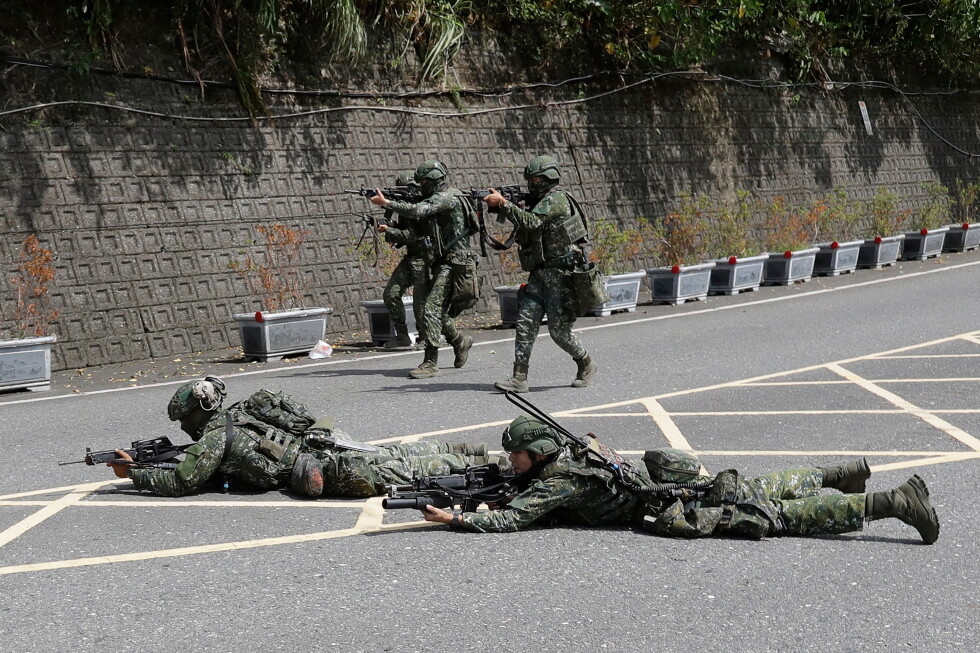
    Taiwan and the South China Sea have remained top-billing issues in U.S. foreign policy for decades, and rising tensions with China have kept both at the forefront of global headlines in recent months. For context, Beijing asserts full sovereignty over Taiwan, a self-governing democracy that has operated independently since the 1949 conclusion of the Chinese civil war that split the two territories. Beijing has never ruled out the use of military force to bring Taiwan under its control, and in recent years, Chinese military aircraft, coast guard vessels, and other naval assets have conducted near-daily operations around the island, paired with periodic large-scale military exercises that ratchet up regional pressure. Taiwan, in turn, holds regular defensive drills, including its annual Han Kuang exercises.

    The United States does not maintain formal diplomatic relations with Taiwan, but it has longstanding unofficial ties with the island, and U.S. law mandates that the U.S. provide Taiwan with the defensive military equipment needed to protect itself. This framework has made the U.S. Taiwan’s primary informal security backer and largest arms supplier, a dynamic that has consistently been one of the biggest sources of friction between Washington and Beijing. During former U.S. President Donald Trump’s May visit to Beijing, Chinese President Xi Jinping emphasized that Taiwan remains the most sensitive and critical issue in bilateral relations, warning that mismanagement of U.S. engagement with the island could trigger direct confrontation between the two global powers. While Trump did not publicly address the Taiwan issue during his Beijing trip, his remarks on the return flight — framing U.S. arms sales to Taiwan as a “very good negotiating chip” with Beijing — stirred widespread anxiety among Taiwan’s population and policy circles.

    Beyond the geopolitical rivalry, the strategic importance of Taiwan extends far beyond regional politics: the island produces over 60% of the world’s semiconductors, and more than 90% of the most advanced cutting-edge chips that power everything from consumer electronics to military defense systems. Any disruption to Taiwan’s semiconductor production would send shockwaves through global supply chains and the entire global economy.

    Turning to the South China Sea, a 3.5 million-square-kilometer body of water bordered by China, the Philippines, Vietnam, and multiple other Indo-Pacific nations, the region is one of the world’s most vital maritime trade arteries, with roughly $3.4 trillion in global trade passing through its waters annually. Despite a landmark 2016 international arbitration ruling that legally invalidated Beijing’s expansive territorial claims across most of the South China Sea, China has continued to assert its claims, defying the ruling. On the 10th anniversary of the arbitration in July this year, the United States, the United Kingdom, and 12 other other nations reaffirmed that Beijing’s claims have no legal foundation, a move that prompted Beijing to reiterate it would neither accept nor recognize the arbitration outcome.

    Confrontations between claimant parties have grown increasingly frequent in recent years: Chinese coast guard vessels have repeatedly deployed water cannons, military-grade lasers, and dangerous blocking maneuvers against Philippine naval forces and civilian fishermen from other claimant states, leading to at-sea collisions and high-risk aerial encounters that raise the risk of accidental conflict. Just this month, China held large-scale military exercises near Scarborough Shoal, a disputed outpost claimed by both China and the Philippines. In a show of support for its long-time ally Manila, the U.S. and the Philippines launched their annual Balikatan military exercises in April, which included live-fire drills and mock combat scenarios in Philippine provinces directly adjacent to the disputed South China Sea and Taiwan Strait.

    Regional security analysts widely emphasize that Taiwan and the South China Sea are deeply interconnected strategically, and shifts in one will rapidly trigger spillover effects in the other. “If China were to blockade or seek to forcibly retake Taiwan, the South China Sea could quickly see spillover effects,” explained Hunter S. Marston, director of the Southeast Asia Program at the Lowy Institute, an Australia-based independent think tank. Marston noted that if China gained full control over Taiwan, or if the U.S. clarified it would not intervene to defend Taiwan in a conflict, Beijing would be able to project its military power — particularly its submarine force — far beyond the first island chain, deep into the South China Sea and the broader Pacific Ocean. A full conflict over Taiwan would also have direct, immediate consequences for Southeast Asia: Marston estimates that nearly 1 million ASEAN citizens would require evacuation from the region, and the movement of U.S. and Chinese military forces through the South China Sea would force regional governments into an untenable position of choosing sides between the two great powers.

    For the United States, core national security interests in the region are rooted in preventing Chinese regional hegemony, analysts say. “The primary objective is preventing China from gaining regional hegemony and dominating the Pacific,” Marston noted. “The security of Taiwan and U.S. allies such as the Philippines, as well as defense of the first island chain, are integral to this overarching goal.”

    However, the U.S. military’s ability to maintain a consistent, robust presence in the western Pacific has recently been tested by competing security demands elsewhere. The USS George Washington aircraft carrier is scheduled to depart the Pacific to replace the USS Abraham Lincoln in the Middle East, where the Lincoln’s deployment was extended to support U.S. counter-Iran operations. The repositioning will leave the western Pacific temporarily without a U.S. aircraft carrier at a moment of rising tensions with China, as the current Trump administration refocuses its strategic priorities away from the Asia-Pacific toward the Western Hemisphere. The Center for Strategic and International Studies warns that any large-scale conflict in the South China Sea would cause catastrophic disruption to global trade, thanks to the region’s position as a critical commercial corridor connected to the Indian Ocean via the Malacca Strait and to the East China Sea via the Taiwan Strait — two of the most important strategic chokepoints in global maritime trade.


  • One lesbian couple’s winding path to marriage leads to a historic first in Bolivia

    One lesbian couple’s winding path to marriage leads to a historic first in Bolivia

    In a sunlit Santa Cruz home shared with three dogs and four cats, newlyweds Fabiana Justiniano and Scarlett Rocha still get emotional talking about their August 7 wedding. Like many couples celebrating their big day, they rushed from the civil registry to finalize hair and makeup, then danced side-by-side in their white gowns long into the night, surrounded by more than 100 loved ones. “We never dreamed our day would be this beautiful,” 29-year-old Justiniano said, looking back on the milestone that is both deeply personal and unprecedented for the South American nation. Their union marks Bolivia’s first legally recognized same-sex civil marriage, the end of a grueling four-year legal fight in a deeply religious and socially conservative country where the national constitution still formally defines marriage as a union between one man and one woman. While the court ruling that cleared the way for their marriage applies specifically to Justiniano and Rocha, LGBTQ+ advocates and legal experts say the victory could set a transformative precedent for same-sex couples across the country. When Rocha, also 29, first laid eyes on their official marriage certificate, she said a lifetime of uncertainty and exclusion melted away. “All this weight just lifted off my chest,” she explained. “I finally felt this peace, like I could let my guard down and really embrace what it means to be married.” Across majority Roman Catholic South America, Bolivia is far from the only nation that has long restricted marriage to heterosexual couples. But the continent’s most populous countries – including Brazil, Argentina, and Colombia – have recognized same-sex marriage for years. By contrast, most nations in Central America and the Caribbean remain far more conservative on LGBTQ+ rights, offering few to no formal legal protections for same-sex partnerships. For decades, targeted legal challenges brought by same-sex couples, like the one Justiniano and Rocha pursued, have driven forward marriage equality around the world, from the United States to Nepal. “What these women achieved gives hope to every other same-sex couple in Bolivia fighting to have their love recognized,” said Mateo Rodrigo, a lawyer with Igual Bolivia, the LGBTQ+ legal advocacy organization that represented the couple. “We know change is coming, it is inevitable.” The couple’s path to the altar began nearly four years ago, when civil registry authorities rejected their initial application for a marriage license, forcing them to turn to the courts to claim their right. Justiniano, a psychologist, and Rocha, a Bolivian-American neuroscientist born in Hollywood, Florida and raised between the U.S. and Bolivia, met through mutual friends in Santa Cruz in early 2020, fell in love quickly, and began discussing marriage within months. Though no same-sex couple had ever legally married in Bolivia, building a life together through formal marriage had always been a core part of their shared life plan. Before their case, some same-sex couples in Bolivia had formalized their relationships through “uniones libres,” or free unions, a legal designation for cohabiting partners that theoretically carries the same financial and legal rights as marriage. But in practice, lawyers report that same-sex couples attempting to exercise these rights almost universally face systemic discrimination and endless bureaucratic barriers. Unlike free unions, marriage offers the formal social recognition and long-term legal security that heterosexual couples take for granted, a benefit the couple wanted deeply. For Rocha specifically, formal marriage also provided certainty that their relationship would be recognized by U.S. authorities should the couple choose to relocate there. When their initial marriage license application was predictably rejected, their legal team found a critical opening in Bolivia’s own constitution: the document explicitly states that international human rights treaties take precedence over conflicting national law. The legal team cited a landmark advisory opinion from the Inter-American Court of Human Rights, which requires member states to extend all legal protections granted to heterosexual couples to same-sex partnerships, including full marriage rights. “We always knew this would be a hard fight, but we never imagined it would take this long,” Justiniano said, recalling years of traveling back and forth between government offices and courthouses, sorting through confusing conflicting requirements, chasing down obscure paperwork, and waiting months at a time for the process to move forward. “There were so many obstacles, so much open discrimination every step of the way,” she added. It took more than three years, two separate lawsuits, before a constitutional tribunal in La Paz, Bolivia’s administrative capital, issued a ruling siding with the couple in March 2023. The court found that the civil registry had unlawfully discriminated against Justiniano and Rocha based on their sexual orientation. Rocha left the six-hour hearing stunned, and called Justiniano immediately with the news. “Her voice was shaking when she said, ‘If I got that right, I think we won,’” Justiniano recalled. “My first question was, ‘So can we get married tomorrow?’” The tribunal ordered civil authorities to issue the couple their marriage licenses within 10 business days, but bureaucratic delays pushed the actual wedding back another five months. Now that their marriage is legally recognized across Bolivia, rights officials say the outcome is already encouraging other same-sex couples to pursue their own marriage licenses. Paola Tapia, a senior official at Bolivia’s independent Ombudsman’s Office, which is tasked with protecting human rights across the country, called the ruling a critical turning point. “This is an incredibly important precedent,” Tapia explained. “Just as these two women from Santa Cruz won the right to formalize their marriage, there will surely be many other couples that come forward seeking the same recognition.” Already, Igual Bolivia reports that multiple other same-sex couples have reached out to the organization to inquire about pursuing their own marriage licenses. Because the lawsuit centered on a proven violation of constitutional rights, the case will now move to Bolivia’s highest court, the Constitutional Court, for final review. Justiniano and Rocha’s marriage will remain legally valid regardless of the high court’s final ruling, but if the Constitutional Court votes to uphold the lower tribunal’s decision, it will create a formal nationwide legal precedent that will clear the way for other couples to marry, bringing Bolivia’s marriage equality laws in line with its more progressive South American neighbors, Tapia explained. One week after their wedding, standing in the kitchen of their Santa Cruz home while pasta simmers on the stove, the couple reflected on what their historic win means for the country of 12 million people they call home. “This fight started with us, but at the end of the day it is about equal rights,” Rocha said. “It is about all people being able to protect the love they share.” (Reporting from Buenos Aires, Argentina by DeBre)

  • Ex-Zambian minister killed in security raid on opposition

    Ex-Zambian minister killed in security raid on opposition

    In the tense aftermath of Zambia’s recently concluded presidential election, authorities have confirmed that a former senior cabinet minister has died from injuries sustained during a security force raid on a property tied to the main opposition candidate. The incident has deepened political friction in the southern African nation just days after incumbent President Hakainde Hichilema was declared the winner of a second five-year term.

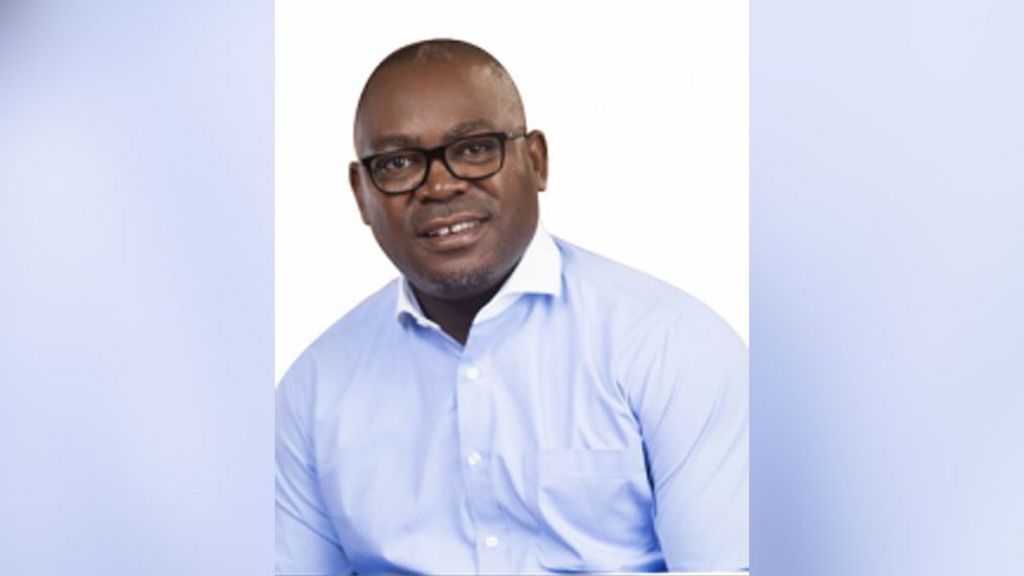
    Mutotwe Kafwaya, 49, a long-serving opposition lawmaker and former minister under the previous administration, was fatally shot during the operation carried out in Lusaka, Zambia’s capital, this past Friday—one day after the country went to the polls. Police spokesperson confirmed Wednesday that Kafwaya was killed during an exchange of fire between a joint security task force and individuals at the property, which opposition leader Brian Mundubile claims is his private residence.

    According to official police accounts, officers entered the premises as part of an investigation into alleged subversive activity, and encountered armed resistance that forced them to return fire. “In the process one unidentified male person was fatally wounded, and the firearm was recovered,” a police statement read, noting that Kafwaya’s family later formally identified his body. Eleven additional people were taken into custody during the raid.

    Security officials have accused Mundubile’s party, the National Restoration Party of Zambia (NRPUP), of engaging in insurgency and militia activity, and claim the raid recovered high-grade weaponry from the property. Mundubile, who has gone into hiding since the operation, has dismissed all accusations as “total fabrications” manufactured to discredit the opposition.

    Kafwaya’s political career spans nearly a decade in Zambian public office. He first won a parliamentary seat in 2016, before being appointed Minister of Works by then-President Edgar Lungu in 2018. A year later, he was shifted to lead the Ministry of Transport, a post he held until Lungu lost the 2021 presidential election to Hichilema. He remained an active opposition member of parliament following the transition of power.

    Official election results released last week show Hichilema secured a comfortable victory with 60 percent of the national vote, while Mundubile trailed close behind with 38 percent of ballots cast. The opposition leader has rejected the outcome, alleging widespread tampering during the vote tallying process, and has announced plans to contest the results through Zambia’s judicial system. Mundubile told reporters Tuesday that he had no information about Kafwaya’s fate in the 48 hours after the raid, as calls for transparency around the former minister’s disappearance grew across the country.

    While regional and international election observers largely characterized election day itself as peaceful, the post-vote period has been marked by rising political tension. Observers have raised pointed concerns over last-minute changes to electoral rules, shrinking press freedom, and unequal access to media platforms for opposition candidates during the campaign period. The European Union’s election observation mission warned over the weekend that systematic restrictions on opposition campaign activity created an “uneven contest” that undermined the fairness of the poll.

  • Bodies of 2 hikers missing for decades in Swiss Alps turn up as glacier melts

    Bodies of 2 hikers missing for decades in Swiss Alps turn up as glacier melts

    GENEVA — More than 30 years after two Belgian mountaineers vanished while exploring the Swiss Alps, their remains have been recovered, a discovery that has again thrown a spotlight on the accelerating pace of glacial melt driven by global warming. Swiss authorities confirmed the identification this week, linking decades-old missing person cases directly to the dramatic environmental shifts reshaping the iconic Alpine region.

    According to officials from Valais, the southwestern Swiss canton that maintains a century-long database of people reported missing in its mountain areas, the steady retreat of Alpine glaciers is steadily uncovering the remains of people who disappeared while climbing or hiking decades ago. In late June, a long-distance hiker stumbled on human remains that had been exposed by the melting of Trift Glacier, located south of the city of Lucerne. The find triggered an official recovery operation, and forensic experts launched a DNA analysis to identify the deceased.

    Forensic testing carried out at a hospital in Valais confirmed that the remains belong to two Belgian hikers who were 39 and 41 years old when they went missing near Weissmies mountain, roughly 40 kilometers south of Trift Glacier, in 1992.

    While the discovery of long-buried remains from glacial melt is not a new phenomenon, such findings have become far more common in recent years as Switzerland’s glaciers shrink at an unprecedented rate. In 2020, for example, DNA testing confirmed that a body recovered from a glacier near the famous Matterhorn peak belonged to a German mountaineer who disappeared in the area in 1986.

    Climate scientists across the globe have repeatedly linked the sharp surge in glacial melting across the Alps and other mountain regions to human-caused global warming. The ongoing retreat of Switzerland’s glaciers is not only transforming one of the world’s most famous mountain landscapes but also continuing to unlock long-frozen mysteries that have been hidden for decades.

  • Spurs in talks to sign Man City’s Savinho and Marmoush

    Spurs in talks to sign Man City’s Savinho and Marmoush

    As the 2026-27 Premier League season approaches, North London club Tottenham Hotspur are locked in negotiations with treble-winning Manchester City over a potential transfer package that would bring two attacking players, Savinho and Omar Marmoush, to the Tottenham Hotspur Stadium, sources close to the process have confirmed to BBC Sport. Negotiations between the two top-flight clubs are moving forward, though no final binding agreement has been signed off by either side at this stage.

    Tottenham’s pursuit of 22-year-old Brazilian winger Savinho stretches back to 2025, when the young wide player made the decision to extend his stay at Manchester City’s Etihad Stadium following initial interest from the London side. Savinho joined City from French Ligue 1 outfit Troyes in 2024 for an upfront fee of £30 million, but limited first-team opportunities have prompted the player to reconsider his future: he made only seven starting appearances in the Premier League for City during the 2025-26 campaign, and is now open to making a move away from the reigning champions to secure regular minutes.

    The second player under discussion is 27-year-old Egyptian forward Omar Marmoush, who joined City from German Bundesliga side Eintracht Frankfurt for £59 million just 12 months ago. Marmoush fell down the pecking order under City manager Pep Guardiola last season, managing eight goals across 36 appearances in all competitions as he struggled to cement a regular starting role under the Catalan manager.

    Manchester City’s combined asking price for the two players has not been made public, but the club is widely expected to turn a substantial profit on both attackers, having only signed them in the last two transfer windows.

    The potential double swoop comes as new Tottenham head coach Roberto de Zerbi has already prioritized overhauling his squad this summer. The Italian has already reshaped his central midfield, bringing in Mateus Fernandes from West Ham United and Sandro Tonali from Newcastle United for a total outlay of £185 million. De Zerbi has openly stated that adding attacking quality is his next priority after a dismal 2025-26 campaign for Spurs, who finished 17th in the Premier League and scored only 48 goals from their 38 league matches, leaving them just outside the relegation zone.

    Tottenham remain linked with a separate move for Liverpool forward Cody Gakpo, but there are lingering question marks over whether the club can afford to push through a deal for the Netherlands international in addition to signing Savinho and Marmoush.

    Manchester City have already had a busy summer transfer window, offloading a string of first-team players to free up space in their squad and wage bill. High-profile exits include star midfielder Rodri, Dutch international Tijjani Reijnders, and backup goalkeeper James Trafford.

    The new Premier League season kicks off this weekend, with Tottenham travelling to face Brentford for their opening fixture on Saturday at 17:30 BST, while Manchester City begin their title defence at home against Bournemouth on Sunday, kicking off at 14:00 BST.

  • Belgium winger Diego Moreira joins AC Milan in latest big-money sale by Strasbourg

    Belgium winger Diego Moreira joins AC Milan in latest big-money sale by Strasbourg

    In a high-profile transfer deal shaking up European club football, 22-year-old Belgian winger Diego Moreira has completed a move to Italian Serie A side AC Milan from French club Strasbourg, for a reported transfer fee of €50 million ($58.5 million). The transfer comes as Strasbourg faces growing financial pressure from European football’s governing body UEFA over breaches of financial sustainability rules.

    AC Milan confirmed the transfer in an official statement released late Monday, announcing that Moreira has put pen to paper on a five-year contract with the club. A versatile attacking talent, Moreira earned a spot in Belgium’s squad for the most recent FIFA World Cup, where he featured in one match: he came on as a second-half substitute in the team’s dramatic 3-2 comeback victory over Senegal in the round of 32.

    Moreira’s international career carries an interesting backstory: he represented both Belgium and Portugal at youth international level, before receiving formal approval from FIFA in May 2025 to switch his senior international eligibility to Belgium.

    The sale of Moreira marks another major asset offload for Strasbourg this week, pushing the French club’s total transfer revenue from sales this week to roughly €100 million ($117 million). Strasbourg is currently owned by BlueCo, the same holding company that controls English Premier League side Chelsea. Back in June, UEFA handed the club a €13 million ($15 million) fine for overspending that violated the body’s financial monitoring regulations. That penalty stands as the largest financial sanction issued by the European football governing body to any club across last season.

    Following the fine, UEFA ordered Strasbourg to make significant cuts to its overall player wage and transfer costs by 2026. The club will not compete in any European competition next season, after exiting the third-tier Europa Conference League at the semifinal stage last campaign.

    Notably, Moreira’s path to Strasbourg came via Chelsea back in 2024, when the London club sold him to the French side. The winger never made a single senior Premier League appearance during his time on Chelsea’s roster.

    For AC Milan, the signing adds a promising young attacking option to the squad ahead of the new season. Milan finished fifth in Serie A last term, which means the club will compete in the second-tier UEFA Europa League this upcoming season, under the guidance of newly appointed head coach Ruben Amorim.