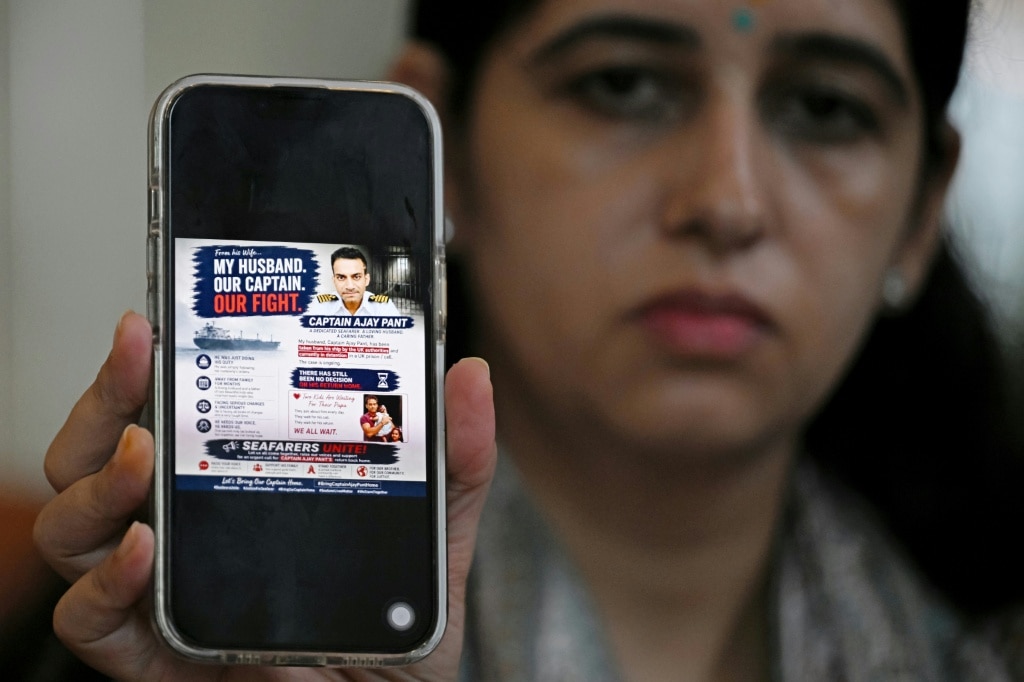
A high-stakes legal case unfolding in the United Kingdom is sending shockwaves through the global merchant shipping industry, after an Indian captain of an oil tanker linked to Russia’s shadow fleet was hit with sanctions violations that could put him behind bars for a decade. For Ajay Pant, the 38-year-old mariner now held in British custody, the situation is a personal catastrophe, and his family insists he is nothing more than a political scapegoat caught in the crossfire of international geopolitics.
Pant’s arrest came on June 14, when British special forces commandos fast-roped from a military helicopter onto the deck of the tanker *Smyrtos* mid-voyage through the English Channel. The vessel is accused of being part of Russia’s vast “shadow fleet” – a loose network of ships with deliberately obscured ownership and unorthodox insurance arrangements that Moscow has deployed to bypass Western oil sanctions imposed after its full-scale invasion of Ukraine in 2022.
Shipping tracking data from MarineTraffic confirms the *Smyrtos* departed Russia’s Baltic port of Ust-Luga on June 5, bound for Egypt’s Port Said. When it entered the English Channel, UK authorities launched their operation. The intercept marked the first UK-led mission of its kind targeting a Russian shadow fleet vessel, and then-Prime Minister Keir Starmer publicly celebrated the action as a significant “blow to Russia”.
In her first public interview since Pant’s arrest, Ritu Pant, the captain’s 36-year-old wife, told Agence France-Presse that her husband was simply in the wrong place at the wrong time, and is being punished for actions that were out of his control. “My husband just became the scapegoat,” she said, fighting back tears as she described their first phone call after his arrest. “He was broken and he was just crying. He didn’t know what had happened to him… He just said, ‘I am in jail, please take me out.’” Bail has been denied to Pant, and his wife says he is struggling deeply with the conditions of his pre-trial custody.
As the court case proceeds, the core legal argument from Pant’s defense is clear: as an employee of the ship’s owners, he was only following orders to deliver cargo to its scheduled destination. Prosecutors, however, contend that as the vessel’s master, Pant had full knowledge of the sanctioned cargo – 98,000 tonnes of Russian crude oil – and is therefore legally responsible.
This unprecedented case is set to open on December 15, and legal and maritime experts warn it will set a critical precedent that reshapes how Western nations enforce sanctions against Russian shadow fleets. It is the first known instance of a European country filing criminal sanctions charges against a ship’s captain, rather than only targeting the vessel itself or its corporate owners, a shift that has raised urgent questions about accountability for working seafarers caught in geopolitical disputes.
Anwar Sadat, a legal expert with the Indian Society of International Law, noted that the case raises unusually complex legal questions that have not been fully tested in international courts. Writing in an analysis for Lloyd’s List Intelligence, David Hammond of Human Rights at Sea International summed up the broader stakes of the trial: “The case carries implications far beyond the fate of a single ship, its cargo or its master. It is likely to become an early test of how far Western governments are prepared to use criminal sanctions enforcement not only against shadow fleet operators, but also against the seafarers who work aboard their vessels.”
Of the 25 crew members on board the *Smyrtos*, Pant is the only one facing criminal charges. The other 24 sailors have been repatriated to their home countries, and the tanker remains anchored off the southern coast of England. India’s Ministry of Foreign Affairs confirmed that consular officials have visited Pant to check on his welfare, but the family has launched a public appeal for the Indian government to intervene to secure his release.
For the global shipping community, the case has sparked widespread anxiety among seafarers, who often find themselves caught between competing geopolitical blocs with little ability to verify the details of their cargo or their vessel’s ownership. Steve Yandell, coordinator of the seafarers’ section at the International Transport Workers’ Federation, explained that many working mariners have no way of knowing if their vessel is carrying sanctioned cargo, leaving them exposed to criminal penalties for actions outside their control. “Seafarers will often not know that their ship might be carrying sanctioned oil, and that they’re potentially open to getting caught up in a geopolitical conflict,” Yandell said. “They’re stuck in the middle of a tug-of-war between rival powers.”
India supplies more than 320,000 seafarers to the global merchant shipping industry, making it one of the largest sources of maritime labor in the world. Sanket Joshi, a veteran Indian tanker captain with 40 years of experience, called the case deeply alarming, noting it marks the first time a captain has been arrested over commercial sanctions violations rather than standard maritime safety breaches.
For Pant’s family, who live in the quiet Himalayan foothill town of Ramnagar, the anxiety of the past five months has been overwhelming. Days before his arrest, Pant had written to his wife expressing growing concern about the risks of working in increasingly geopolitically tense waters, coming on the heels of the deaths of several Indian sailors near the Strait of Hormuz amid Middle East tensions. “He said that the sea is becoming very difficult now,” Ritu Pant recalled. “I was just praying, and telling him that, ‘just be calm, be careful and just keep contacting us.’”
Pant’s 60-year-old mother Deepa has made an emotional public appeal for governments to intervene to bring her son home. “I just want to plead to the government, with folded hands, to get my son back home,” she said through tears.