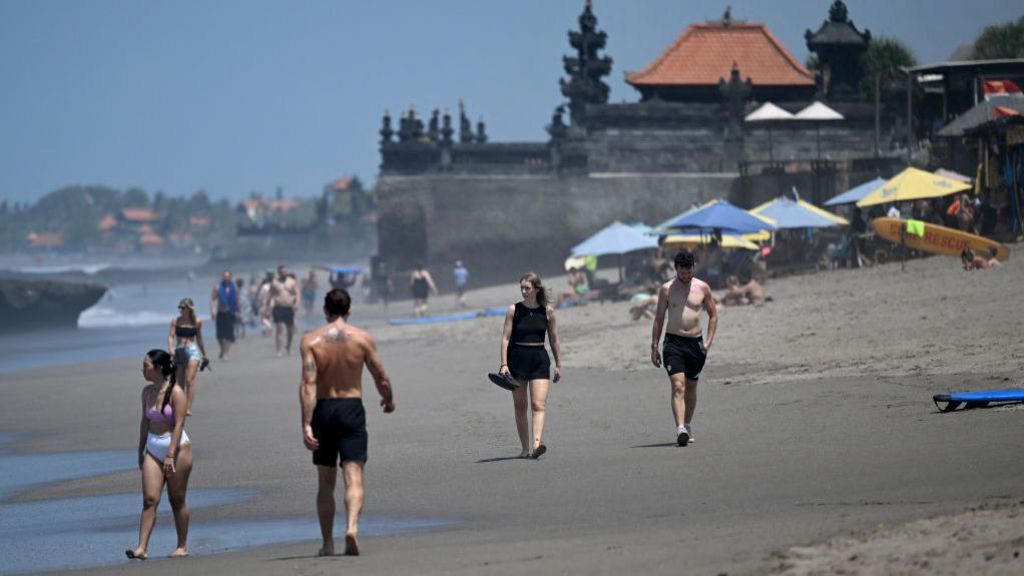
Bali, Indonesia’s world-famous holiday island, has long drawn millions of international visitors drawn to its lush coastlines, vibrant culture, and warm hospitality. But a recent legal ruling has put a sharp spotlight on the growing tensions between surging post-pandemic tourism and respect for local Balinese religious traditions: a 26-year-old Swiss national has been sentenced to 12 months in prison for insulting one of the island’s most sacred annual observances, Nyepi, the Day of Silence.
The incident dates back to March of this year, when Nyepi fell on March 19. Nyepi is a foundational Hindu holiday for Balinese communities, marking the start of a new Saka year. Unlike most major cultural festivals that bring crowds and celebration, Nyepi is defined by complete quiet: for 24 hours, the entire island shuts down. Normally crowded beaches stand completely empty, the international airport halts all operations, public entertainment is banned, internet access is restricted, and even voluntary cuts to electricity use are widely observed. All people on the island — regardless of their personal religion or citizenship — are required to stay home and observe the day of silence, with locals stocking up on groceries in advance to avoid leaving their residences.
Against this backdrop, Luzian Andrin Zgraggen, the Swiss tourist, deliberately violated the movement ban to walk along one of Bali’s normally busy empty beaches. He recorded a video of his outing, shared it to his Instagram account with profane captions, and described the quiet, empty scene as “crazy”. The video quickly spread across local social media platforms, sparking immediate and widespread outrage among Balinese communities. Zgraggen was taken into custody by local authorities shortly after the video went viral, and the clip was later removed from the platform.
During his trial, Zgraggen testified that he did not fully grasp the scope and cultural significance of Nyepi’s restrictions, and insisted he never intended to offend Balinese people or their religious beliefs. “I deeply regret what I did, I apologise to the Balinese people,” he told the court, according to reporting from the Associated Press.
However, presiding judges rejected that mitigation in their ruling, affirming that Zgraggen’s actions had caused measurable harm. “What the defendant did offended the Balinese people, hurt their faith and provoked public outrage,” the judge stated in the verdict.
This case is not an isolated incident. In past years, a small number of foreign tourists have been detained or deported for breaking Nyepi’s rules, but this one-year prison sentence marks a notably strict penalty that underscores Bali’s growing commitment to enforcing respect for local culture. In the years following the global COVID-19 pandemic, Bali’s tourism sector has rebounded dramatically: in 2025, the island welcomed a record-breaking seven million international visitors, surpassing pre-pandemic numbers and bringing a major boost to the local economy.
Yet that rapid rebound has come with a growing set of challenges. A steady stream of unruly behavior by foreign visitors has frustrated local residents and strained authorities, with incidents ranging from offensive acts at sacred religious sites to the creation of unregulated, exclusive tourist enclaves that sideline local communities, to widespread flouting of local traffic laws. In response, Bali’s government has already pledged to ramp up scrutiny of foreign visitors and enforce stricter penalties for any behavior that disrespects local norms and laws, in an effort to balance the economic benefits of mass tourism with protection of the island’s unique cultural and religious heritage.