
As the clock ticks down to his first Premier League match in charge of Manchester City, new manager Enzo Maresca has made a clear case that the club needs time to navigate its ongoing rebuild, after sweeping changes both on the bench and on the pitch that represent the biggest transition the Etihad Stadium side has seen in a decade. The Italian coach stepped into the role vacated by Pep Guardiola, the legendary Spanish manager who stepped down at the end of last season after an unparalleled 10-year tenure that brought 20 major trophies, including six Premier League titles. Filling the void left by Guardiola’s unprecedented success is already one of the most daunting jobs in European football, and Maresca’s challenge has grown far more complex with a wave of high-profile departures hitting City’s first-team squad this summer. Fan-favorite midfield and defensive mainstays Rodri, John Stones, and Bernardo Silva have all already left the club, and star winger Savinho is on the brink of completing a move to Tottenham Hotspur. City’s current rebuilding phase comes after the club ended its 2024-25 campaign without a Premier League title, finishing seven points behind defending champions Arsenal. The gap between the two sides was highlighted again just last weekend, when Arsenal crushed City 3-0 in the annual Community Shield curtain-raiser, a result that put the size of Maresca’s task firmly in the spotlight ahead of Sunday’s opening home fixture against Bournemouth. Speaking to reporters on Friday ahead of the game, Maresca acknowledged the scale of the upheaval at the club but stressed that change is not an excuse for underperformance. “When you make many changes, not only the manager, Rodri was here, John (Stones) was here, Bernardo (Silva) was here. It’s a big change, but it doesn’t mean that we won’t be ready to compete,” Maresca said. “It’s a context, it’s not an excuse. We need to be ready, I want to compete. The reason I’m here is because I want to try and win titles, and carry on what this club stands for in the last 15 years. Where we are now, it’s a bit complicated because we started one month ago. But the intention is to compete as soon as possible.” Maresca is under no illusion that a slow start to the new season will bring immediate pressure from fans and pundits alike, but the former Chelsea head coach remains confident his side will deliver results in time. “When we win games, fans are happy. When we don’t win games, everyone is upset. It’s important to win games because we are all more happy but no doubt we are going to win games,” he added. The rebuild is still very much a work in progress as the summer transfer window enters its final 11 days. Along with Savinho’s impending exit, reports have linked Egypt forward Omar Marmoush with a move to Tottenham, and there are lingering question marks over the future of attacking midfielder Nico Gonzalez. On the incoming side, Maresca has been heavily linked with a move for Lille teen prospect Ayyoub Bouaddi, former Chelsea midfielder Enzo Fernandez, and Liverpool’s Alexis Mac Allister. When asked whether the stream of outgoing players had disrupted his early squad planning, Maresca admitted that convincing players to stay when they have already made up their mind to leave is all but impossible. “It’s quite clear when players want to leave, for any reason, then it’s complicated to convince them to stay or change their thoughts,” he explained. “It happened with Rodri, the same thing is happening with Savinho, since day one he asked me that he wants to leave. So now we are waiting.” Maresca clarified that Marmoush’s situation is far less settled than Savinho’s, noting: “I don’t know. Omar is still here. Different situation than with Savinho. We’ll see what happens.” The City boss worked with Enzo Fernandez during his time at Chelsea, and he is well aware of the Argentine midfielder’s elite quality, but he declined to comment on a potential £120 million move for the star, citing professional respect for his former club. “Enzo is a Chelsea player and I’m not going to talk about players who are not with us, first of all, because I think it’s a lack of respect, and second of all because I don’t like when different managers talk about our players,” Maresca said. Despite the ongoing uncertainty around incomings and outgoings, Maresca says he remains completely unruffled by the situation, with the club working closely alongside the sporting director to land the right targets before the transfer window closes. “I’m not worried, I’m not concerned. Since day one, we knew exactly what we need. We are working together with the sport director of the club, there are 11 days to go until the window shuts and many things can happen.”
博客
-

Meghan faces difficult return to the UK
Six years after stepping down as working members of the British royal family and triggering a national media firestorm, Prince Harry and Meghan Markle’s reported plan to relocate back to the United Kingdom has thrown a new spotlight on the significant challenges waiting for the Duchess of Sussex.
Meghan, a 45-year-old former American actress who captured global attention with her 2018 fairytale wedding to King Charles III’s younger son, has never shied away from detailing the immense struggles she faced during her time as a working royal. Through high-profile explosive interviews and a tell-all Netflix documentary, she and Harry have repeatedly called out the hostile treatment she received from the British tabloid press — treatment Harry told a UK court earlier this year turned her life into “an absolute misery”.
While Harry has maintained strong ties to the UK, driven by his long-standing charitable commitments and his desire for his two young children to build connections with their British royal relatives, Meghan’s path back to British public life is far more complicated. After years based in the sunny, laid-back lifestyle of Montecito, California, where the couple built their post-royal life, experts say Meghan’s readjustment to UK life poses far more open questions than Harry’s.
“There’s more questions sort of over her and how she re-adapts to the life back in the United Kingdom than about Harry,” said royal historian Ed Owens. Owens added that predicting how she will navigate the transition remains unclear, as “she’s tried successively over the last six years to reinvent her public image to relaunch her brand” with mixed results.
Reports of the planned return first emerged from Australian news outlet news.com.au, and a spokesperson for the couple did not issue a denial when contacted by Agence France-Presse. Multiple sources indicate the move is partially tied to an acting role Meghan has been offered for a UK-based production, marking a potential return to her pre-royal career for the former star of hit US legal drama *Suits*. For Meghan, who saw her US-based career prospects stall after her lifestyle and cooking show *With Love, Meghan* was dropped by Netflix following the end of their content deal, the UK role could open a new professional chapter. Talent manager Jonathan Shalit, chairman of the InterTalent Rights Group, told the Press Association that if Meghan was serious about returning to acting full-time, industry leaders would be eager to meet her.
For the couple’s family, the transition appears to already be underway: their two children, seven-year-old Archie and five-year-old Lilibet, have already been enrolled in a British school, and the pair have reportedly selected a new permanent residence in the country. Experts widely expect Meghan will prioritize family life in her return, noting she has previously spoken publicly about finding joy in routine parenting moments like the daily school run.
Despite any personal or professional opportunities the move may bring, Meghan continues to face deep public unpopularity in the UK that complicates her return. A YouGov public opinion poll released in late July found that 65 percent of British adults hold an unfavorable view of the duchess. Her lifestyle and food brand As Ever remains a regular target of mockery in the British tabloid press, which initially framed her 2018 entry into the royal family as a breath of fresh air for the centuries-old institution before quickly turning on her, portraying her as demanding and unwilling to accept the strict constraints of royal life.
In her 2022 Netflix docuseries, Meghan summed up the hostility she said she faced, saying: “Truth be told, no matter how hard I tried, no matter how good I was, no matter what I did, they were still going to find a way to destroy me.”
Since the couple left the UK in 2018, Meghan has made only rare return visits: most notably for Queen Elizabeth II’s Platinum Jubilee in June 2022 and the late monarch’s state funeral later that same year. A short, private holiday last month that saw the couple meet with King Charles and Queen Camilla was widely interpreted as a sign that icy family relations may be starting to thaw. But Nathalie Weidhase, a media studies specialist at the University of Surrey, warned that Meghan’s permanent return risks reigniting long-simmering conflicts that first pushed the couple to leave, including explosive accusations of institutional racism within the royal household.
Tensions remain raw from Harry’s 2023 memoir *Spare*, in which he accused his older brother Prince William and sister-in-law Catherine, Princess of Wales, of being unwelcoming to Meghan and undermining her attempts to integrate into the family. In a 2021 interview with Oprah Winfrey, Meghan also alleged that an unnamed senior royal had raised repeated questions about the skin color of her unborn child before Archie’s birth.
Still, Owens argues that the couple’s return is not motivated by a desire to restart public conflict with the working royal family. “They are not coming back for another fight with the wider royal family, that’s not their purpose here,” he said. “They want stability for their family … stability for their children.”
-

3 injured after donkey jumps into a van, kicking and biting, in northern Germany
BERLIN – A chaotic roadside incident unfolded in northern Germany on Friday when a loose donkey named Freddy launched a sudden aggressive attack on two motorists, leaving three people injured before the animal’s owner stepped in to stop the outburst.
Local law enforcement from Cuxhaven, a coastal German city where the encounter took place just south of the town limits, confirmed the unusual sequence of events in an official public statement. The trouble began when members of the public spotted Freddy the donkey and a companion horse wandering freely through a busy roundabout in Holssel, a small community located in the area.
Concerned about the safety risks of having large unrestrained animals on a major traffic intersection, two motorists made the decision to step in and attempt to contain the stray donkey. But their intervention was met with an unprovoked hostile reaction: according to police accounts, Freddy immediately became extremely aggressive, and in an unexpected move, leaped directly into the motorists’ parked van. Once inside the vehicle, the animal lashed out, striking and biting the two drivers.
A 33-year-old local woman who saw the attack unfolding rushed over to help subdue the out-of-control equine, but she too was caught in Freddy’s aggression. Following the incident, emergency responders transported the woman to a local hospital for mandatory medical care, while the two original motorists only walked away with minor cuts and bruises that did not require extended hospital treatment.
To date, authorities have not been able to pinpoint what triggered the donkey’s sudden violent outburst. Investigators with Cuxhaven police note that the root cause of Freddy’s aggressive behavior remains undetermined, with no final conclusions released as of the latest update.
-
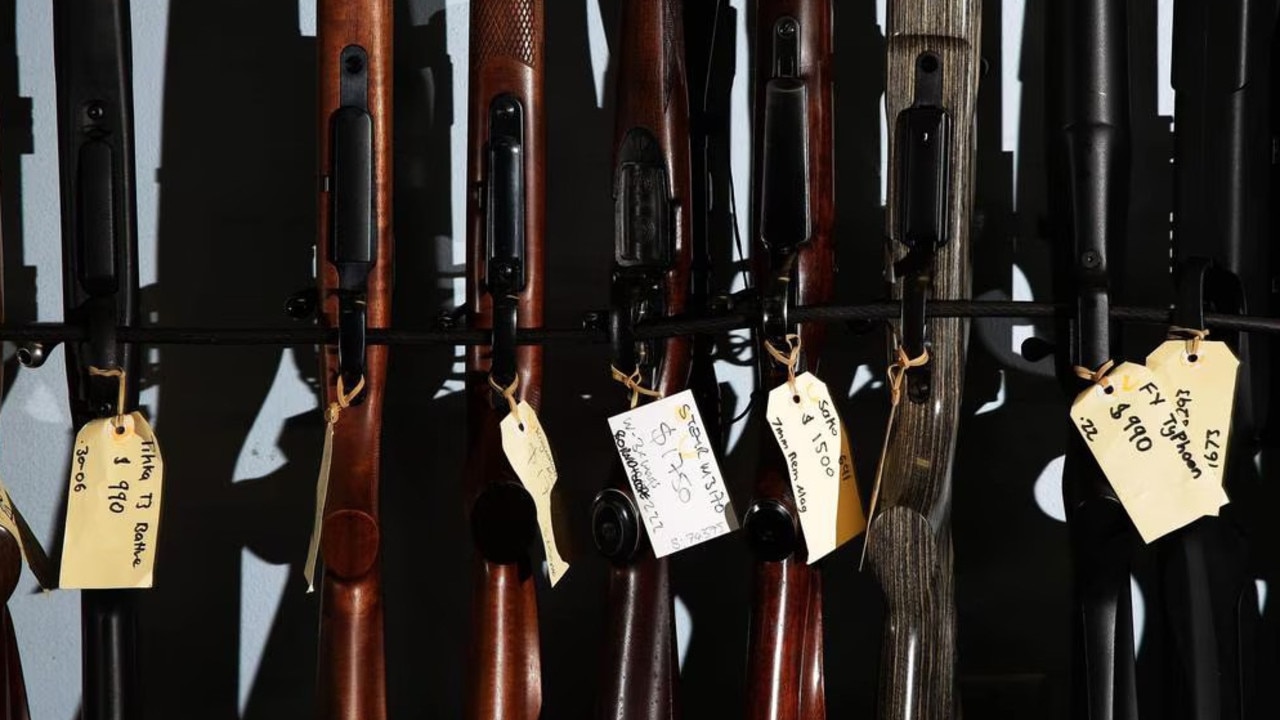
ACT strikes gun buyback deal with federal government, new limits on firearms to be imposed
Weeks after the deadly Bondi Beach terror attack sparked urgent calls for national gun control overhaul, the Australian Capital Territory (ACT) has become the second jurisdiction to sign on to Prime Minister Anthony Albanese’s federal gun buyback initiative, leaving the national reform effort fragmented as most state governments continue to reject the plan.
Previously, New South Wales (NSW) was the only region to commit to the scheme, which aims to remove excess and high-risk firearms from civilian circulation. The federal government has now agreed to cover 75% of the ACT’s compensation and administrative costs, alongside 100% of all firearm destruction expenses, to move the initiative forward in the territory.
Five other jurisdictions—Victoria, Queensland, the Northern Territory, and Tasmania—have so far refused to join the national scheme, while Western Australia has opted to proceed with an independent, state-run buyback program of its own. This fragmented participation leaves the Albanese government’s push for uniform national gun reform far from completion, months after the attack that prompted the policy push.
In an official statement announcing the ACT agreement, Albanese emphasized that strengthened national gun laws are a critical step to preventing acts of terror like the antisemitic attack at Bondi Beach from occurring again. “National gun reform is an important part of making sure an antisemitic terrorist attack like we saw at Bondi can’t happen again,” he said. “I thank the ACT government for their collaboration as we work to take unneeded guns off our streets in order to better protect Australians.”
Current data shows the ACT is home to more than 7,000 licensed firearm owners who collectively hold approximately 23,000 weapons. The reforms, which include a hard cap limiting most civilian owners to a maximum of 10 firearms, are projected to affect roughly 14% of the territory’s license holders. The ACT government first tabled the necessary gun control legislation back in February, with provisions that go beyond the ownership cap: the bill also reclassifies certain weapon categories, bans belt-fed firearms entirely, and creates a new criminal offense for possession of digital blueprints used to 3D-print firearms. A second separate piece of legislation will grant Australian police expanded authority to block high-risk individuals from obtaining gun licenses.
Both bills are scheduled for parliamentary debate later this year, and their structure largely aligns with the post-Bondi reforms already advanced in NSW, which adopted a Western Australia-style ownership cap model. ACT Chief Minister Andrew Barr noted that the funding agreement with the federal government will boost community safety and support coordinated, cross-jurisdictional firearms reform.
“Reducing the number of high-risk firearms in circulation is a sensible and practical measure to help keep Canberrans safer,” Barr said. “Working with the commonwealth and NSW ensures a more co-ordinated approach to firearms safety. The ACT already has some of the strongest firearms laws in the country, and this agreement supports our ongoing efforts to further reduce the risk of firearms falling into the wrong hands.”
Barr added that the government recognizes the vast majority of local firearm license holders are responsible, law-abiding citizens, noting that the buyback will provide fair compensation to owners while delivering improved public safety outcomes.
ACT Police Minister Marisa Paterson said the territory government will engage closely with local communities as the reforms roll out. “Once we have finalised the agreement we will provide clear information to the community about the process of the buyback, including eligibility, compensation and the process for surrendering the firearms,” she said. “This will be a major undertaking for ACT Policing and the ACT government will continue to work to support them as they progress.”
The territory is also developing a fully digital firearms registry that will integrate with the national gun register, giving frontline police real-time access to up-to-date firearms ownership data across the country.
Across the border in NSW, the first phase of the state’s buyback launched last week with set compensation rates for surrendered weapons: handgun owners receive AU$1000 for a revolver and AU$850 for a semi-automatic pistol, while single-barrel shotguns pay out AU$650 and double-barrel models pay AU$850. Center-fire rifles can fetch up to AU$1000 in compensation. A second phase of the NSW scheme, launching in early 2027, will open a compensation pathway for eligible high-value firearms with market values above AU$3000, with a cap of AU$10,000 per weapon. -

Two Mexicans arrested as police uncover big meth lab on South African farm
Following a two-month long probe into suspicious activity at a rural farm, South African law enforcement has dismantled one of the largest illegal crystal methamphetamine production operations uncovered in the country this year, carrying out an overnight raid that resulted in five arrests and the seizure of roughly $37 million in drugs, production equipment, and undisclosed cash.
The raid targeted a property outside the border town of Musina, located in Limpopo province just kilometers from South Africa’s boundary with Zimbabwe. Of the five suspects taken into custody, two are Mexican citizens, two are Zimbabwean, and one is a Malawian national. All five are scheduled to make their initial court appearance on Monday, where they will face formal charges related to the illegal manufacturing and possession of controlled illicit substances.
In an official statement following the operation, police described the bust as exposing a highly sophisticated, industrial-scale criminal enterprise built specifically to produce dangerous illicit drugs for widespread distribution across regional and global markets.
This latest bust is far from an isolated incident. Over the past two years, South African police have uncovered a string of large-scale crystal meth production operations operating out of isolated rural farms across the country, with a consistent pattern of Mexican national involvement. Just three months prior to this raid, in May 2026, authorities arrested 11 people including four Mexicans after discovering a $6 million meth operation on a remote farm northwest of Johannesburg. Going further back, in September 2025, five Mexican suspects were arrested when police broke up a $20 million crystal meth lab on a farm in eastern South Africa, and in July 2024, three Mexicans were among those arrested at another Limpopo province lab holding $108 million in seized drugs.
The expanding trend of Mexican cartel activity on the African continent extends far beyond South Africa’s borders, counter-narcotics officials confirm. In May 2026, Nigeria’s national drug enforcement agency announced it had dismantled a multi-million dollar Nigeria-Mexican meth production syndicate operating out of a remote dense forest in the West African country, a case that remains active in the country’s courts.
Data from US Africa Command (Africom) underscores the rapid growth of this threat: since the start of 2023, counter-narcotics forces have carried out raids on 14 meth labs operated by Mexican criminal groups across the continent, with discoveries documented in Kenya, Mozambique, Nigeria, and South Africa. Regional security experts say the pattern of these busts makes one trend clear: Mexican criminal cartels are increasingly shifting their operations to use Africa not just as a transit hub for drug trafficking to European and Asian markets, but as a full-scale production base for illicit methamphetamine.
This expansion plays into existing vulnerabilities across Southern Africa. According to the 2022 Global State of Harm Reduction report, South Africa is already ranked as one of the largest consumer markets for crystal methamphetamine in the world. The United Nations has also warned that the country’s expansive geography and loosely regulated, porous border regions make it an ideal transit point for illicit drug traffickers moving product between continents.
-
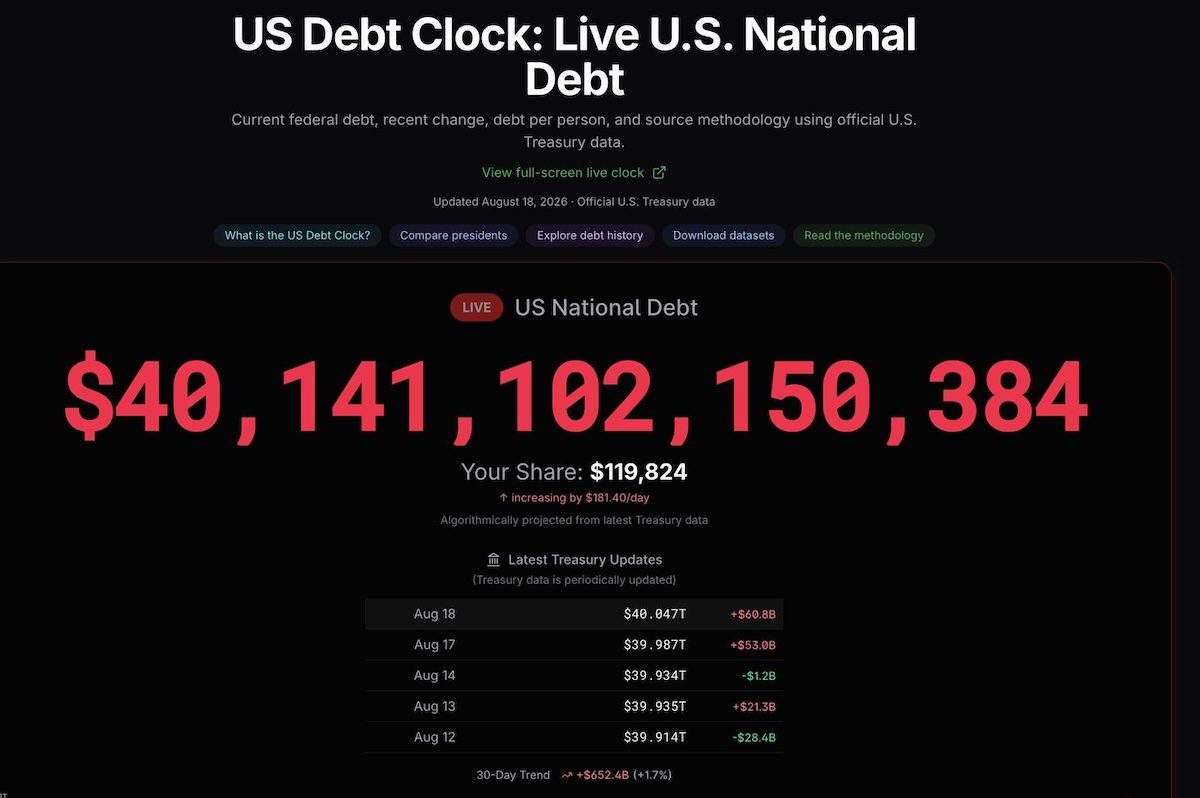
Republicans blame $4 trillion US debt milestone on ‘socialism’
The recent milestone of U.S. national debt surpassing $40 trillion has ignited a sharp partisan battle on Capitol Hill, with congressional Republicans rushing to criticize Democratic economic policies as reckless, “unaffordable socialist spending” that has driven the nation’s borrowing crisis. But independent economists and policy analysts are pushing back against that narrative, arguing that decades of Republican-led policy decisions — from sweeping tax cuts for the wealthiest Americans to costly discretionary military interventions in the Middle East — are the primary drivers of the national debt’s rapid expansion over the past 25 years.
Central to this debate is the record of former President and current President Donald Trump, who campaigned repeatedly on a pledge to fully eliminate the national debt. Across his two terms in the White House, Trump has already overseen an $11.6 trillion surge in total national debt, a figure that outpaces the debt growth of any other modern U.S. president.
Dean Baker, a senior economist at the nonpartisan Center for Economic and Policy Research, framed the issue clearly in a commentary published Thursday. “I have never been a deficit hawk, and I’m not about to change my religious affiliation now,” Baker wrote. “But whatever we think of debt and deficits, there is one point that should be very clear: It has been run up almost entirely due to Republican tax cuts and their inept management of the economy.”
Nobel Prize-winning economist Paul Krugman echoed that assessment, noting that while the $40 trillion figure itself holds no inherent special economic meaning, it serves as a stark reminder of the fiscal irresponsibility of the Trump administration. Krugman pointed to unfunded tax cuts that disproportionately benefit the top 1% of earners, billions in unnecessary wasteful military spending — including costly redesigns of aircraft carriers undertaken solely because Trump disliked their original appearance — as key contributors to ballooning borrowing.
Krugman added that the nation’s deficit outlook would be far more stable today if not for the large, inequality-widening tax cuts rammed through by successive Republican presidents George W. Bush and Donald Trump, both of which heavily favored high-income households.
Data from Bobby Kogan, senior director of federal budget policy at the Center for American Progress, backs up these claims. In a 2023 analysis, Kogan found that tax cuts passed under the Bush administration and during Trump’s first term accounted for 57% of the total growth in the U.S. debt-to-GDP ratio since 2001. When one-time emergency spending to address the 2008 Great Recession and the 2020 COVID-19 pandemic is excluded from calculations, that share jumps to more than 90% of all debt ratio growth over the period.
Just last summer, Trump signed into law yet another massive tax cut package that will deliver disproportionate benefits to wealthy households and large corporations, and is projected to add trillions of additional dollars to the national debt over the coming decade.
Former U.S. Labor Secretary Robert Reich highlighted a further layer of inequity in the current system in his Thursday commentary. “From now on, whenever you hear someone fret about how huge, horrible, and out-of-control the national debt is, explain to them that it’s largely because of tax cuts to the wealthy – who are also the major recipients of interest on that debt,” Reich wrote.
The $40 trillion debt milestone was reached several months earlier than independent forecasters initially projected, a gap partially attributed to lost federal revenue from Trump’s trade tariffs that were later invalidated by federal courts.
Democratic lawmakers have joined economists in calling out Republican fiscal hypocrisy. “Before his second term is even over, Donald Trump is responsible for more than $10 trillion of this,” Representative Chris Deluzio of Pennsylvania wrote Thursday. “Just INTEREST on this debt is now sucking up more of our public money than even the military and Medicare. DC Republicans are leaving our kids a colossal mess to clean up.”
-
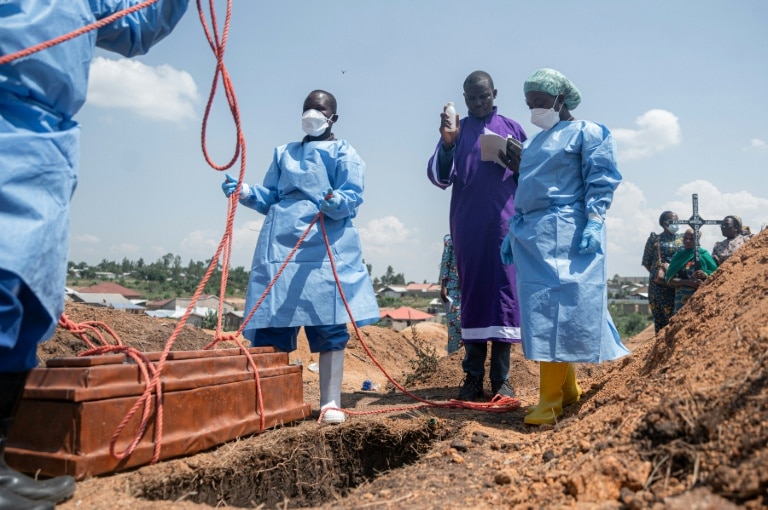
2,500 dead and rising — UN says DR Congo Ebola outbreak ‘growing exponentially’
An Ebola outbreak raging across the Democratic Republic of Congo (DRC) is spreading at an exponential rate, with the official death toll surging past 2,500 and half of those fatalities recorded in just the last 20 days, the United Nations’ senior Ebola response coordinator confirmed Friday.
This outbreak, the 17th recorded Ebola event in DRC history, is already the deadliest the country has ever faced, and is expanding faster than any previous Ebola outbreak on record. Speaking to reporters via remote connection from Bunia – the outbreak’s epicenter – Julien Harneis, the UN’s top coordinator for the crisis, painted a stark picture of the rapidly worsening situation.
“The epidemic is spreading widely. It’s now covering an area that is bigger than France…. It is growing faster and wider than the Ebola response,” Harneis said. Experts believe the outbreak began spreading quietly for several weeks before it was officially declared by DRC authorities on May 15, giving the virus a critical head start on containment efforts.
The virus has taken hold primarily in northern and eastern regions of DRC, where long-standing systemic vulnerabilities have created a perfect environment for unchecked spread: weak central government presence, crumbling and under-resourced health infrastructure, and decades of activity by dozens of armed armed groups that have destabilized communities.
The international medical charity Doctors Without Borders (MSF) echoed the UN’s alarm Friday, warning the outbreak is accelerating “at an alarming rate.” “This epidemic continues to spread, moving faster than the response can keep up,” MSF president Javid Abdelmoneim said in an official statement.
The ongoing response effort has faced widespread criticism for its slow rollout and poor coordination, and is further complicated by deep-rooted mistrust of medical authorities among local populations. To date, confirmed cases have been reported across six DRC provinces, with some cases detected near the South Sudan border and a previous cluster in neighboring Uganda. Uganda, which recorded 20 cases and two deaths before containing its outbreak, declared itself Ebola-free last month.
Complicating response efforts further, the current outbreak is driven by the Bundibugyo Ebola strain, for which no specifically approved vaccine or targeted treatment exists, though multiple clinical trials are currently underway. The World Health Organization (WHO) announced Thursday that DRC will receive 70,000 doses of Ervebo, an approved vaccine that has proven highly effective against the more common Zaire Ebola strain.
Earlier this month, WHO vaccine experts endorsed a full-scale human trial of Ervebo to test whether it provides cross-protection against the Bundibugyo strain. While early data from animal trials suggests the vaccine may offer partial protection, WHO spokesman Christian Lindmeier emphasized Friday that “it is not yet known whether Ervebo is protective against the Bundibugyo virus in humans.”
Bringing the outbreak under control, which spreads through direct contact with infected bodily fluids and causes life-threatening hemorrhagic fever, faces a host of additional barriers. Harneis pointed to widespread insecurity across eastern DRC and a chronically weak public health system as major obstacles.
“The law and order is undermined, and the basic services, particularly health, have been fragmented,” he said, describing working conditions for frontline responders as “brutal.” Since the outbreak began, 160 healthcare workers have contracted Ebola, and 43 of those workers have died. Frontline teams have also faced repeated targeted attacks on ambulances and response facilities.
Harneis added that a barely functional banking system has made it difficult to deliver timely wages to response workers, while recent cuts to international funding have reduced the response capacity of humanitarian organizations operating in the region by one third.
In closing, Harneis issued an urgent call for expanded international support and resources. “If we provide more staffing, if we get more resources into remote areas across … the east of the Democratic Republic of Congo, within months we can slow the transmission and move to stopping it,” he said. “If we do not, … then this epidemic will become more deadly. It will spread wider and it risks to spread into neighbouring countries.”
-
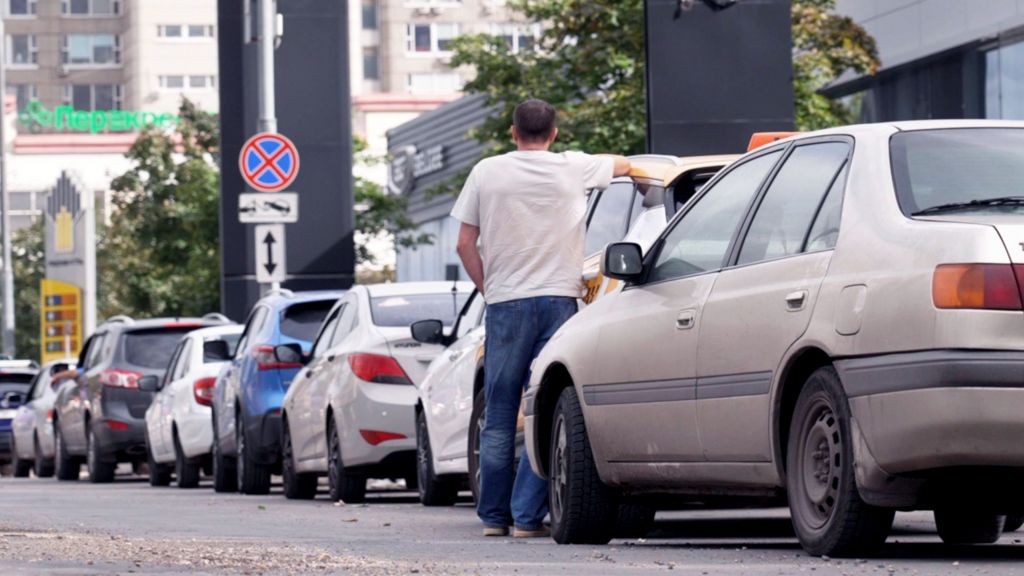
Rosenberg: Shortage of petrol but not patriotism as Russians feel growing impact of war
In the sweltering late summer days of August 2026, motorists across Moscow and large swathes of Russia are trapped in a growing fuel crisis, triggered by sustained Ukrainian drone attacks on key oil refining infrastructure that have plunged daily life into disruption.
At a petrol station in southeast Moscow, 58-year-old driver Svyatoslav has sat idling in a two-hour queue, only to watch the facility’s digital sign flip to a stark notification: no fuel available. With barely any fuel left in his tank to reach another station, he holds out faint hope that a new delivery will arrive soon. “They say there will be petrol here, they just don’t know when. Maybe today, maybe tomorrow,” he says, his quiet optimism belying the scale of the shortage gripping the capital.
This is not an isolated incident. This week, lines of dozens, even hundreds of vehicles have stretched for blocks from petrol stations across the city, with wait times stretching into hours for drivers desperate to fill their tanks. In one station alone, 80 vehicles were counted waiting in a single line. For many motorists, the scramble for fuel has become a daily grind. Elizaveta, another driver waiting in line, recalled waiting until midnight the previous night just to reach the pump, only for the station to close for two hours before she could refuel. Lyubov, who drove into Moscow from a provincial region, said every station she passed along her route was completely empty. To calm her nerves during the hours-long wait, she gently strokes her small pet dog Agatha in the passenger seat.
Russian officials have attributed the shortage to unscheduled maintenance at domestic oil refineries – a framing that omits the direct cause of these repairs: repeated long-range Ukrainian drone strikes on refining facilities. These attacks first sparked widespread fuel shortages earlier this summer, and targeting of oil infrastructure has continued unabated. This second wave of shortages has produced even longer queues than the first, and Russian authorities are struggling to address gaps in refining capacity and supply chain logistics. Leading Russian broadsheet *Nezavisimaya Gazeta* declared this week that “the second wave of the fuel crisis is building.”
The irony of the crisis is impossible to ignore: Russia, long billed as a global energy superpower and one of the world’s top crude oil exporters, has been forced to take extraordinary emergency measures to stem the shortage. The Kremlin has authorized imports of finished petrol to boost domestic supply, and temporarily lifted a 13-year ban on lower-grade Euro 2 petrol, a high-sulfur fuel phased out over environmental and engine health concerns. While faster to produce than modern Euro 5 fuel, state newspaper *Rossiyskaya Gazeta* warned that regular use of Euro 2 damages critical engine components including fuel injectors, spark plugs, catalytic converters and soot filters – while a single tank will not destroy an engine, it drastically cuts an engine’s operational lifespan and safety margin.
The fuel shortage is not the only way the Ukraine war has been brought home to ordinary Russians. Recent Ukrainian strikes on logistics centers for Wildberries, Russia’s largest domestic e-commerce platform equivalent to Amazon, have disrupted online shopping and caused significant financial losses for small sellers across the country.
Russian President Vladimir Putin has acknowledged that these attacks on industrial and energy infrastructure do cause damage, but has downplayed the severity of the crisis. “There are no critical consequences from such attacks. There have not been and cannot be,” Putin said this week, urging the public not to panic. But independent observers and recent polling suggest a growing gap between the Kremlin’s official narrative and public sentiment.
Andrei Kolesnikov, a columnist for independent Russian outlet *Novaya Gazeta*, argues there is a fundamental disconnect between Putin’s framing of the situation and the reality ordinary Russians experience. “It is a disconnect between people’s feelings and the description of reality by Vladimir Putin, the description of his personal reality in his head,” Kolesnikov said. “Maybe he’s trying to hypnotise himself that everything is okay.”
Recent polling from Russia’s Public Opinion Foundation confirms that public anxiety is rising, and the Kremlin’s call for “keep calm and carry on” is failing to resonate with the public. “This permanent feeling of anxiety is with everyone right now. You feel that something is wrong. Anxiety is the main sentiment,” Kolesnikov explained. He added that the Russian government has failed to outline any clear vision for the future, leaving the public with a very short planning horizon and a reluctance to think long-term.
Just minutes from the petrol stations choked with queues, a stark contrast played out across Moscow this week for Russian Flag Day: state-organized patriotic events featuring street concerts, free candyfloss for families, and public displays of military hardware, including Kalashnikov rifles and hand-held rocket launchers that children were invited to handle and pose with. The event highlights the growing militarization of everyday Russian society, and the Kremlin’s efforts to maintain public morale amid growing hardship.
For some Russians, the difficulties have reinforced patriotic unity. “Difficulties unite us. The harder things are, the stronger we get,” said pensioner Tatyana, who attended the Flag Day event. But for many others, the fuel shortages and drone attacks have created a persistent undercurrent of fear and uncertainty. “When you go to sleep you don’t know if you’ll wake up in the morning,” said Muscovite Angelina. Another resident added: “The problems we have are high prices, petrol shortages and last night, for the first time, my windows shook…I heard ‘boom boom!’”
Many ordinary Russians report feeling powerless to change the situation, saying the only option available to them is to adapt and maintain their psychological strength. “Right now, it’s important to take care of your psychological state, so that it’s strong and unbreakable. So that, whatever happens, you can say: ‘Oh well, never mind,’” one resident said. Even as state events keep patriotism on full display, for millions of Russians across Moscow, the daily struggle to find petrol has made the cost of the war impossible to ignore.
-
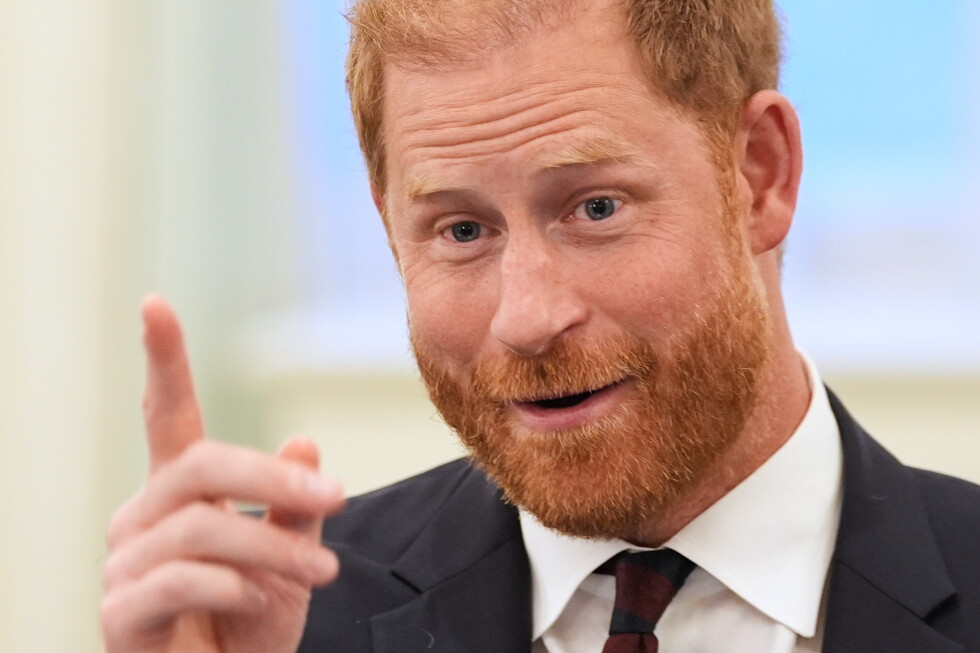
Prince Harry and 6 others to learn initial cost of failed Daily Mail case
LONDON – A high-stakes legal battle between a group of high-profile public figures, led by Britain’s Prince Harry and music icon Elton John, and the publisher of the Daily Mail is entering its final financial chapter this Friday, as the courts prepare to unveil how much the losing claimants will owe in up-front legal costs.
The case wrapped up last month at London’s High Court, when Justice Matthew Nicklin dismissed the group’s claims that Associated Newspapers Ltd., the parent company of the Daily Mail, had engaged in unlawful privacy violations including phone hacking and private investigator surveillance to gather sensitive information on the claimants. In his ruling, Nicklin found that the claimants had failed to produce sufficient evidence to back their allegations, and noted that much of the disputed reporting could be traced to legitimate journalistic sources. Associated Newspapers has repeatedly and vigorously denied all accusations of unlawful activity throughout the 11-week trial, which concluded on July 7.
Joining Harry and John as co-claimants are a roster of well-known public figures: Doreen Lawrence, the prominent anti-racism activist whose son Stephen was murdered in a 1993 racist attack; David Furnish, Elton John’s husband and a leading film producer; actors Sadie Frost and Liz Hurley; and former politician Simon Hughes.
Friday’s ruling will clarify the total financial liability the losing side faces, as well as the schedule for paying the outstanding balance after the initial interim payment. Court documents show the defendant, Associated Newspapers, has requested an interim payment of more than 9.9 million pounds, while the claimants’ legal team has argued the up-front amount should be capped at just over 7.9 million pounds. Total accrued legal costs for the publisher amount to roughly 34 million pounds (equivalent to $46 million), and industry estimates indicate the claimants’ insurance policies cover approximately half of that total. That leaves the up-front payment, which could reach as high as 10 million pounds, as the first major financial order the court will issue.
The upcoming ruling comes just two days after the public announcement that Prince Harry and his wife Meghan Markle, the Duke and Duchess of Sussex, are preparing to move back to the U.K. after more than six years of self-imposed exile in California. The couple, who stepped down as working members of the British royal family in 2020, will take up residence in a private non-royal home outside London.
This failed case against Associated Newspapers closes out the third of three high-profile legal actions Prince Harry has brought against British tabloid publishers over allegations of unlawful information-gathering tactics. The prince notched two prior legal wins: in 2023, a judge ruled against the publisher of the Daily Mirror, finding evidence of “widespread and habitual” phone targeting of Harry. Last year, Rupert Murdoch’s The Sun issued an unprecedented public apology for years of invasions of Harry’s privacy and agreed to pay substantial damages to settle the claim out of court.
For Harry, this series of legal actions represents far more than personal grievance: he has long framed his fight against the British tabloid press as a campaign to reform an industry he blames for deep personal harm. The prince has openly stated that his decision to take the press to court – a break from longstanding royal tradition of avoiding public litigation – was a core reason for his public rift with his father, King Charles III, and elder brother Prince William. His resentment of the press dates back to the 1997 death of his mother, Princess Diana, who was killed in a car crash in Paris while being chased by paparazzi photographers. Harry has also argued that relentless negative press coverage of Meghan pushed the couple to leave their royal roles and relocate to North America, saying the years of intrusion left him “paranoid beyond belief.”
-
Peru earthquake damages buildings and causes power cuts
A 6.7-magnitude earthquake rattled a remote stretch of the Andes Mountains in southern Peru on Thursday, leaving a trail of damaged infrastructure and three non-critically injured people, according to local and international seismic and emergency officials.
The U.S. Geological Survey (USGS) placed the quake’s epicenter roughly 31 kilometers (19 miles) northwest of the tiny settlement of Aniso in the Ayacucho region, hitting at approximately 1 p.m. local time (6 p.m. GMT) at a depth of 100 kilometers (62 miles). Seismic authorities in Peru recorded a higher magnitude of 7.2 for the event. Shaking from the quake was detected across broad swathes of the country, even reaching the capital city of Lima located more than 480 kilometers (300 miles) from the impact zone.
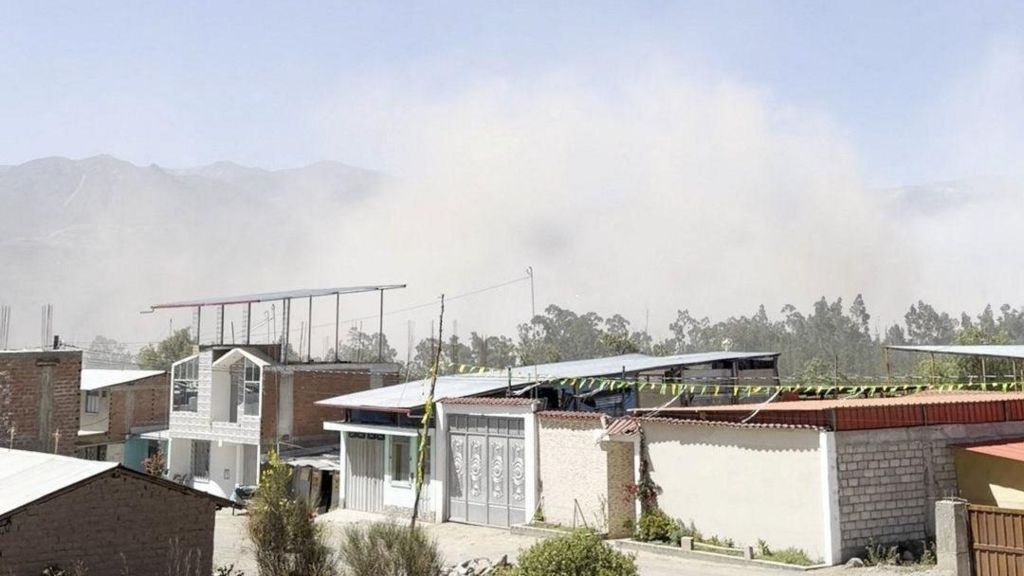
Peru’s National Institute of Civil Defence confirmed that the seismic event caused damage to more than a dozen infrastructure sites across the southern highlands. In addition to the 22 residential homes and six schools damaged in Ayacucho reported by Defense Minister Rafael Belaunde, 10 healthcare facilities in the region also sustained damage. Two additional medical centers were impacted in the adjacent Cusco region, though all health services have remained fully operational throughout the affected areas. Approximately 9,000 residential properties across the impact zone lost power following the quake, and the total count of damaged educational facilities has risen to nine. Photographs from Pausa, a Peruvian town located roughly 74 kilometers (46 miles) from the epicenter, show thick dust clouding the air in the wake of the tremor.
Peru is no stranger to frequent seismic activity, as its territory sits along the volatile convergent boundary where the Nazca tectonic plate slides beneath the South American tectonic plate. Thursday’s quake marks the latest in a string of powerful seismic events to hit South America in recent months, coming on the heels of two deadly major quakes that struck the northern part of the continent. In late June, a pair of large earthquakes measuring magnitudes 7.2 and 7.5 hit Venezuela just 39 seconds apart, leaving more than 6,000 people dead according to local official counts. A 7.4-magnitude quake that hit Colombia on August 10 has claimed more than 300 lives, and the national government declared a national state of emergency in response to the disaster.
As of the latest updates, emergency response teams are coordinating assessments of the damage across the affected Andean regions, with no reports of fatalities connected to Thursday’s earthquake released to the public.