博客

  • New Tata boss to face formidable challenges

    New Tata boss to face formidable challenges

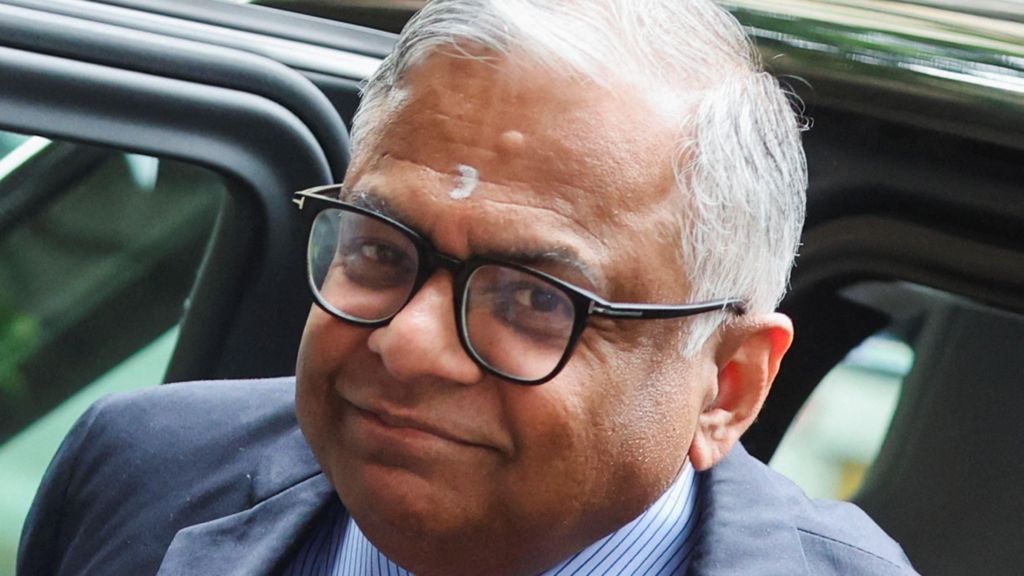
    In a surprising development that has sent ripples across India’s corporate landscape, Tata Sons chairman N. Chandrasekaran stepped down on August 12, deepening long-running tensions between the holding company and its controlling shareholder, Tata Trusts. The departure leaves a vacancy at the top of India’s most iconic conglomerate, a $300 billion sprawling empire that spans luxury automaker Jaguar Land Rover, flag carrier Air India, and Apple’s domestic iPhone manufacturing operations, and sets off what industry analysts describe as one of the most challenging leadership searches in recent Indian business history.

    Chandrasekaran’s exit came after a months-long deadlock over his reappointment, as disagreements between the Tata Sons leadership and the Tata Trusts board widened beyond repair. Sources close to the matter confirm the core points of contention were Chandrasekaran’s push for a public listing of the unlisted Tata Sons holding company, plus his aggressive capital allocation strategy for a slate of new high-growth, cash-burning businesses including semiconductors, electric aviation, and domestic e-commerce.

    Under Chandrasekaran’s tenure, the Tata Group launched its largest ever capital expenditure cycle, pouring tens of billions of dollars into transformative projects: building India’s first commercial semiconductor fabrication plant, scaling domestic electric vehicle battery production, and overseeing the turnaround of Air India, which the group acquired from the Indian government in 2022. This breakneck expansion has left the next chairman facing a steep set of challenges from day one, governance experts warn.

    “It is an incredibly difficult role not just for the individual who will get it but also for the selection committee to find someone,” explained Hetal Dalal, head of Institutional Investor Advisor Services (IiAS), a leading Indian governance advisory firm, in an interview with the BBC. “It requires a multitude of skillsets and experience: managing the working relationship with Tata Trusts, steering the Tata Sons board, understanding the unique dynamics of our new emerging businesses, and maintaining strong, collaborative ties with Indian regulators and the central government.” Dalal added that few global executives lead conglomerates of Tata’s size and diversification, and many sitting leaders would be reluctant to leave their current roles to take on the high-stakes position.

    The complexity of the role has grown sharply in recent years, notes Nirmalya Kumar, former chief strategy officer at Tata Sons. “The collective losses of the new businesses are more than the cashflow generated by older companies like TCS, the group’s software arm whose business model has itself been challenged by the rise of artificial intelligence,” Kumar explained. For decades, Tata Consultancy Services (TCS) served as the group’s undisputed cash cow, contributing roughly 85% of total operating cash flow to fund new investments. Today, that historic pillar of support has weakened significantly, putting greater pressure on new leadership to right the ship of unprofitable new ventures.

    While Dalal points out that the group has a deep bench of seasoned internal executives who may put their names forward for the role, she warns that finding an immediate “plug and play fit” is nearly impossible. “Any person who comes in will have a set of skills and experience, but must also be groomed for the unique demands of this role,” she said. Kumar, however, argues that existing internal leaders are not equipped to address the group’s current strategic challenges. “The people internally are good executors of existing business models. Companies like Tata Steel and Tata Motors are almost running on auto-pilot with a CEO in charge. The new chairman will have to understand new business models of the four unlisted businesses that are losing money,” he noted.

    For institutional and retail investors holding shares in Tata Group’s listed entities, Chandrasekaran’s resignation is expected to bring a prolonged period of market uncertainty. Experts agree that new leadership will almost certainly shift the group’s strategic direction, particularly when it comes to the aggressive expansion agenda pursued by Chandrasekaran. “Some of the bleeding businesses will need a strategic plan to be made profitable. [The new person] will need to decide whether to scale back or exit some investments,” Dalal said. Kumar adds that the next chairman will also need to deliver a clear roadmap to markets, outlining how much additional capital will be required for ongoing projects and when investors can expect those high-risk bets to reach break-even.

    But the single most critical priority for the new chairman, analysts agree, is repairing the fractured relationship between Tata Trusts – the charity foundation that holds a controlling stake in Tata Sons – and the Tata Sons operating board. The Tata Group enjoyed its most successful era under JRD Tata and Ratan Tata, when the same leaders helmed both the Trusts and the operating holding company, eliminating strategic friction. The first major breakdown came under former chairman Cyrus Mistry, when the roles were separated, and Chandrasekaran’s exit marks the second time a Tata Sons chairman has stepped down over a rocky relationship with the Trusts.

    Mukund Rajan, former brand custodian for Tata Sons, told India Today that misalignment between the controlling shareholder and operating leadership is a fundamental, structural issue that must be addressed. “You cannot have companies being run where the majority shareholder is either feeling ignored or not aligned with the way the company will be run going forward,” Rajan said. “Repairing this relationship will have to be a key priority for whoever is next in the driving seat.”

    Thus far, the ongoing leadership turmoil has already damaged the Tata Group’s decades-old reputation for stable, consensus-driven governance, experts say. Clear communication with stakeholders has long been a pain point for the group, Dalal explains, and the current silence creates unnecessary risk even though Tata Sons itself is unlisted. Movements at the holding company have a direct, tangible impact on millions of shareholders across the group’s 28 listed entities, she notes.

    Minari Shah, a corporate communications advisor who previously worked with Tata Motors, told the BBC that the group’s immediate priority should be reducing uncertainty, not rushing to deliver full answers. “That means demonstrating that governance mechanisms are working, reassuring stakeholders that business continuity is unaffected and providing clarity around the process for leadership transition. It is okay not to have all the answers immediately, as long as stakeholders have confidence that the disagreeing parties are in dialogue,” Shah said.

    As of nearly two weeks after Chandrasekaran’s resignation, neither Tata Sons nor Tata Trusts have released a detailed public statement outlining a succession roadmap or a path forward to resolve strategic differences. Tata Sons’ recent annual general meeting was even adjourned due to a lack of quorum, leaving key governance and succession decisions in limbo at a moment when stakeholders across India’s most valuable corporate group are craving clarity more than ever.
  • Gauff beats Pegula for 2nd Cincinnati Open title; France’s Fils beats American Tiafoe in men’s final

    Gauff beats Pegula for 2nd Cincinnati Open title; France’s Fils beats American Tiafoe in men’s final

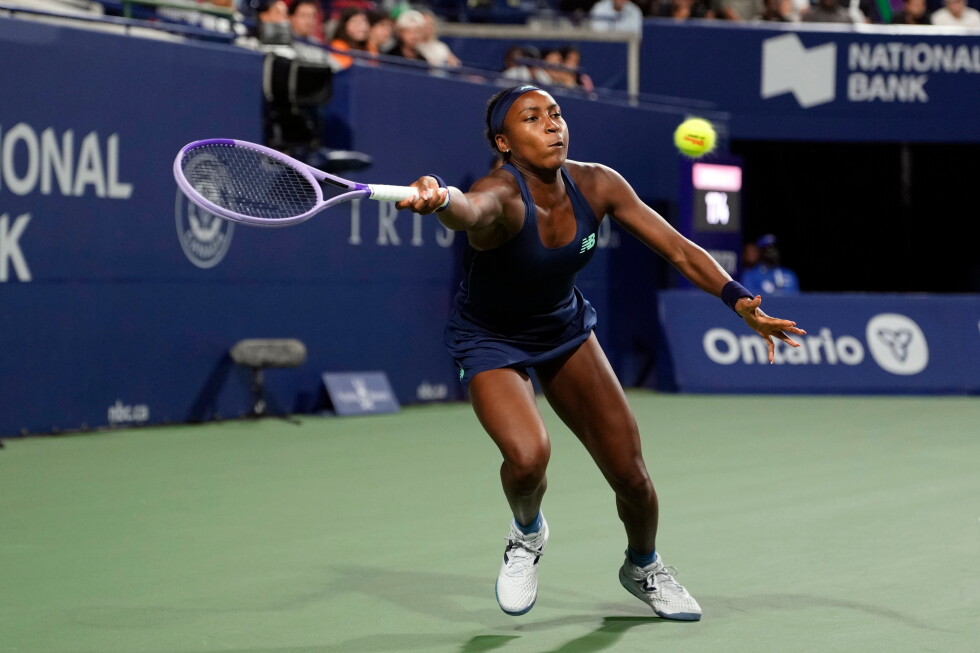
    MASON, Ohio — The 2025 Cincinnati Open wrapped up Sunday with two historic championship matches, as American rising star Coco Gauff captured her second Western & Southern Open women’s singles title, while France’s Arthur Fils stunned the field to claim his first ATP Masters 1000 crown.

    In the women’s championship, Gauff delivered a dominant straight-sets victory over compatriot Jessica Pegula, winning 6-2, 6-4. The final marked a milestone for the tournament: it was the first all-American women’s championship match at Cincinnati in 56 years, last achieved in 1969? No, the historic pairing was last seen 1970, when Rosie Casals defeated Nancy Richey for the title. Both Gauff and Pegula earned their spot in the historic final through impressive semifinal runs Saturday: Pegula upset defending champion Iga Swiatek, while Gauff defeated Czech qualifier Sara Bejlek to advance.

    Gauff, who first claimed the Cincinnati title in 2023 with a win over Karolina Muchova, got off to a blistering start in Sunday’s final, racing out to a 5-0 lead in the opening set before closing it out 6-2. Though Pegula rallied to pull within one game at 4-5 in the second set, Gauff held firm to secure the win, converting five of six break point opportunities across the match. The result leveled their head-to-head career record at five wins apiece, following Gauff’s victory over Pegula in the 2024 Wuhan Open final.

    Reflecting on her win after the match, Gauff highlighted the dramatic growth she has made in her game over the past year. “I think it was a long journey, but I’m happy,” she said. “I think it’s night and day, the player I was last year to now. I don’t think that this is an indicator that I’m going to do well in New York. Just knowing the quality of tennis I produced this week, hopefully I can carry that experience forward to the US Open.” Gauff dropped just one set across the entire tournament, winning all five of her matches in straight sets.

    Pegula, who fell to Aryna Sabalenka in the 2024 Cincinnati final, praised Gauff’s consistent high-level play. “I thought she just played at a really high level and didn’t really have many dips,” Pegula said. “I didn’t really think I played bad. The more you construct the point against her, the worse it is because she almost likes to run. It was tough today. A dangerous, confident Coco is heading to New York, that’s for sure.”

    In the men’s final, 22-year-old Fils made history of his own, outlasting American Frances Tiafoe 6-3, 1-6, 6-0 to lift his first Masters 1000 trophy. The match itself marked a landmark for men’s professional tennis: it was the first time two Black players have faced off in an ATP Masters 1000 final. Fils is only the third Black man to win a Masters 1000 title, joining American Ben Shelton, a two-time Canadian Open champion, and France’s Jo-Wilfried Tsonga, who won titles in Paris (2008) and Canada (2014). He is also the youngest French champion in Masters 1000 history, and just the second French man to claim the Cincinnati crown, following Guy Forget’s 1991 victory.

    Fils’ run to the title comes after a challenging 12 months that saw him miss the 2024 French Open with a hip injury, face early exits in lead-in events this summer, and endure outside speculation that his career momentum had stalled. “It’s been a tough last year. I didn’t play the French Open due to a hip injury. I lost early in Washington. People think that I’m done. But here we are. I got the title,” Fils said after the win. “It feels very good to have a trophy next to me, especially a Masters 1000. Never won one before. You just have to stay positive and find a way to make it work. Being positive is going to help me in the next weeks at the US Open.”

    The match followed a familiar pattern to Fils’ tournament run: he jumped out to an early lead in the first set, winning 12 of 13 opening points to build a 3-0 advantage and closed out the set 6-3. Tiafoe turned the tide in the second set, jumping to his own 3-0 lead and rolling to a 6-1 win to force a deciding third set. Before the third set, Tiafoe received treatment for tightness in his upper left leg and lower back, though he downplayed the injury after the match. Tiafoe was looking to become the first American man to win the Cincinnati title since Andy Roddick in 2006, and was appearing in his second consecutive Cincinnati final after falling to Jannik Sinner in 2024.

    Despite Tiafoe saving three championship points in the final game, Fils closed out the match to secure the win. The Frenchman served 11 aces and won 71% of his first-serve points, improving his 2025 record to an undefeated 10-0 in deciding sets, and 8-0 against American opponents. Fils also beat Tiafoe in their only previous meeting, a three-set clash at the 2024 Miami Open.

    “I’m going to have two Cincinnati finals trophies at the crib,” Tiafoe joked after the match. “I wish they were both champion ones. Losing on Sunday sucks. I’ve had a tough summer, but I was able to play five great matches and beat quality players. My hip bothered me a little bit, but that’s neither here nor there. It’s not about how I feel. I’ll be alright in a week for the US Open.”

    As the final hard-court warm-up event for the US Open, the Cincinnati results have set the stage for what is expected to be a thrilling final Grand Slam of the season, with both new champions heading into New York with renewed momentum.

  • Rumours swirled after a Vietnamese teen was run over – then came a stunning admission

    Rumours swirled after a Vietnamese teen was run over – then came a stunning admission

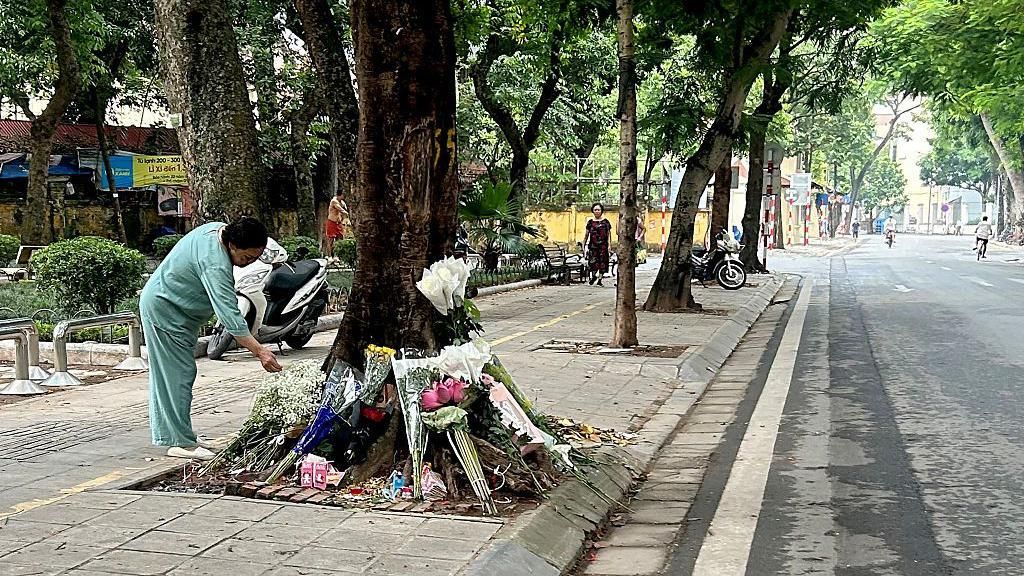
    For months, an unassuming street tree along a busy Hanoi avenue blended in seamlessly with the hundreds of other greenery lining Vietnam’s capital. Today, it is widely known as the “Justice Tree,” a quiet gathering point for grief and anger that has grown into one of the most significant grassroots movements the country has seen in recent years.

    The tragedy at the center of this movement dates back to May 2025, when former National Assembly deputy Nguyen Sy Cuong was driving his BMW along Nguyen Huy Tu Street. For reasons that remain undetermined, Cuong’s vehicle veered across the center line into oncoming traffic, slamming directly into a motorbike carrying 49-year-old Do Viet Hung and his 18-year-old daughter, Do Ngoc Phuong Thuy. Hung survived the crash with a broken leg, but Phuong Thuy – who had her right leg severed in the collision – died 10 days later in a local hospital.

    For 15 months after the crash, almost no official information was released to the public, leaving a vacuum of transparency that fueled widespread speculation among Vietnamese citizens, particularly younger generations. In early August 2026, anonymous Gen Z social media users launched a coordinated campaign across major platforms including Facebook, Instagram, Threads and X, publishing millions of posts under the hashtags #NguyenSyCuong and #BMW to demand full accountability for the crash.

    Early online discussion centered on two core questions: Was Nguyen Sy Cuong indeed the driver at fault, and why had authorities refused to release detailed information about the case? Multiple users shared reports matching the driver’s initials (NSC) and 1961 birth year to the former politician, leading to widespread rumors that the case had been covered up to protect a well-connected former public official. Many users also claimed their posts discussing the crash had been removed by social media platforms at the request of the Vietnamese government, sharing screenshot evidence of deletion notices – claims that have not yet been independently verified by outside outlets.

    As calls for a full, transparent investigation grew louder, masked mourners began visiting the site of the crash to lay bouquets at the base of the Justice Tree. Local police quickly removed the flowers, prompting activists to create a virtual memorial of the Justice Tree online. The digital tribute quickly garnered hundreds of thousands of messages, condolences and tributes from across the country.

    Faced with mounting public pressure and growing online attention that made the case impossible to ignore, Vietnamese authorities issued an unprecedented official confirmation in an August 2026 broadcast on state-run Vietnam Television (VTV). Officials confirmed that Nguyen Sy Cuong was indeed the driver of the BMW involved in the fatal collision. They added that because Cuong had “sincerely confessed and actively and fully remedied the consequences of his actions,” Phuong Thuy’s family had submitted a formal petition requesting that he be exempt from criminal prosecution. The statement did not disclose details of what “remedy” Cuong provided, and the former lawmaker was ultimately cleared of all criminal liability.

    While the decision to drop charges is technically permitted under Vietnamese law, it has sparked sharp criticism from both legal experts and the public. Lawyers have questioned whether full due process was followed during the investigation, while social media users have pointed to Cuong’s decades of political connections as the core reason he avoided prosecution, renewing calls for a full independent probe.

    This is not the first time that grassroots social media pressure in Vietnam has pushed authorities to revisit a high-profile crash involving a powerful connected individual. In March 2026, a retired police colonel named Nguyen Van Sau – a former deputy department head at the Ministry of Public Security – was involved in an alcohol-fueled chain-reaction crash that killed one woman and injured two others. After the victim’s family raised concerns the former official would avoid accountability, social media users amplified their calls for action. Three months later, Sau was formally charged with violating road traffic safety regulations.

    Many Gen Z activists believe the same level of public pressure is the only path to securing justice for Phuong Thuy. But their movement has been met with swift pushback from Vietnamese authorities and state media.

    In the same VTV broadcast that confirmed Cuong’s involvement, Phuong Thuy’s father Do Viet Hung thanked internet users for their sympathy, but stated his family was satisfied with the investigation’s outcome and asked the public to stop pressing the issue. He also warned citizens “not to be drawn into the influence of reactionary elements.” A senior Ministry of Public Security official went further, claiming that “hostile forces” were leveraging the accident to incite unrest and social disorder in the country ahead of Vietnam’s 2 September national holiday. Authorities have gone as far as to accuse the Gen Z-led movement of plotting a “colour revolution,” a common label used to describe nonviolent protest movements that the Vietnamese government frames as externally driven anti-government plots.

    Movement organizers have rejected these accusations as baseless, insisting their only goal is to secure full transparency and accountability for a teenage crash victim. But the widespread outrage over the case has exposed growing, simmering discontent among Vietnamese youth even as the government tightens restrictions on online freedom of expression, using tools ranging from fines and intimidation to criminal prosecution to curb dissent.

    On anonymous platforms like Threads and Reddit, young Vietnamese are increasingly speaking out about a range of grievances beyond the crash, from expanded police power and controversial land reclamation projects to high-profile exam cheating scandals and tighter restrictions on online communication. This youth discontent aligns with a broader wave of Gen Z-led anti-government movements across the Asia-Pacific over the past year, where young people have mobilized against corruption, nepotism, economic inequality and democratic backsliding. Collectively, these movements have been unofficially dubbed the “Asian Spring,” with visible uprisings taking place in Bangladesh, India, Nepal, Iran, Mongolia, the Maldives, the Philippines and Timor-Leste.

    Unlike many of these countries, large-scale public protest has rarely reached a boiling point in Vietnam, where authorities have a long history of quickly stifling dissent before it can translate to offline action. For most Vietnamese civilians, anonymous social media posts, digital memorials and online organizing represent the most robust form of activism they can safely pursue.

    At its core, the movement remains focused on a single goal: holding a former lawmaker accountable for a fatal crash that killed an 18-year-old girl, and ensuring that no connected public figure is granted special treatment under the law. Yet even the existence of this small, focused movement has sparked alarm among authorities, serving as a stark reminder of the entrenched political status quo in Vietnam’s one-party state. As one viral post framing the government’s perspective put it: “Are these Gen Z kids planning a colour revolution using this accident? Are they trying to emulate Bangladesh, India, and Nepal, and then create an Asian Spring? Remember, this is Vietnam! This is not Nepal, India, or Bangladesh!”

  • Licence to thrill: Joseph Manu unveiled as PNG Chiefs 007 signing

    Licence to thrill: Joseph Manu unveiled as PNG Chiefs 007 signing

    The newly established Papua New Guinea (PNG) National Rugby League (NRL) expansion franchise the PNG Chiefs continues to build a star-studded roster that could rival even Marvel’s Avengers, securing their seventh high-profile recruit: former Rugby League Golden Boot winner Joseph Manu. The 30-year-old rugby league star has put pen to paper on a two-year contract that will see him join the team ahead of their competitive debut in 2028.

    For weeks leading up to the official announcement, club officials teased fans with cryptic hints referencing a “#007 signing”, sparking widespread speculation that the franchise was targeting a top-tier halfback. The reveal of Manu as the mystery recruit has exceeded most expectations, adding another elite talent to a backline already stacked with household names of the sport including Jarome Luai, Zac Lomax, Brian To’o and Alex Johnston. The dual-code star is widely expected to slot into the fullback position for the new franchise.

    Manu departs the NRL after a decorated nine-season tenure with the Sydney Roosters, where he claimed back-to-back NRL premiership titles and established himself as one of the league’s most dynamic attacking players. On the international stage, he also built a reputation as a game-changing talent, turning out consistently for New Zealand’s national side. Currently, he is competing in French rugby union with Racing 92, and will transition back to rugby league ahead of his 2028 arrival with the Chiefs. Club officials note that while Manu will need to reacclimate to the nuances of league, his natural talent and proven track record make the transition unlikely to be a significant challenge.

    In a statement following the signing, PNG Chiefs Chief Executive Lorna McPherson emphasized what Manu’s addition means for the expansion club’s long-term vision. “Joey is another key signing for us and a further demonstration of the ambition we have for this club in making an impact for the people of Papua New Guinea,” she said. “His connection to the Pacific, his character, experience and standing in the game will have a profound impact on our club. He understands the responsibility that comes with representing something bigger than himself, and we believe he can have a genuine impact on our young players and the next generation of Papua New Guineans who we are proud to represent as a club.”

    Michael Chammas, the club’s general manager of football, echoed that excitement, praising Manu’s unique skill set and leadership qualities. “We’re thrilled to add Joey to our squad moving forward,” Chammas said. “He is a world-class footballer with versatility across several positions and can change a game in a single moment with the skills he possesses. His experience and demonstrated success at the highest level will be a great benefit to our team and we can’t wait to see him have a significant impact in the Chiefs jersey.”

    The signing of Manu caps off a months-long recruitment spree that has seen the upstart franchise assemble one of the most talented starting rosters in recent expansion history, cementing its status as one of the most anticipated new entries to the NRL in decades.

  • Israeli forces kill three Palestinians in Gaza, shoot child dead in Nablus

    Israeli forces kill three Palestinians in Gaza, shoot child dead in Nablus

    Fresh rounds of Israeli military operations and settler-led attacks have left multiple Palestinians dead, including two minors, and dozens injured across the Gaza Strip and the occupied West Bank, shattering the already fragile ceasefire brokered by the United States that went into effect in October 2025.

    The first fatality reported on Sunday was a 14-year-old Palestinian shot in the chest by Israeli forces during a military incursion into the Askar refugee camp located east of Nablus, according to Al Jazeera, which cited an anonymous medical source confirming the teenager’s death.

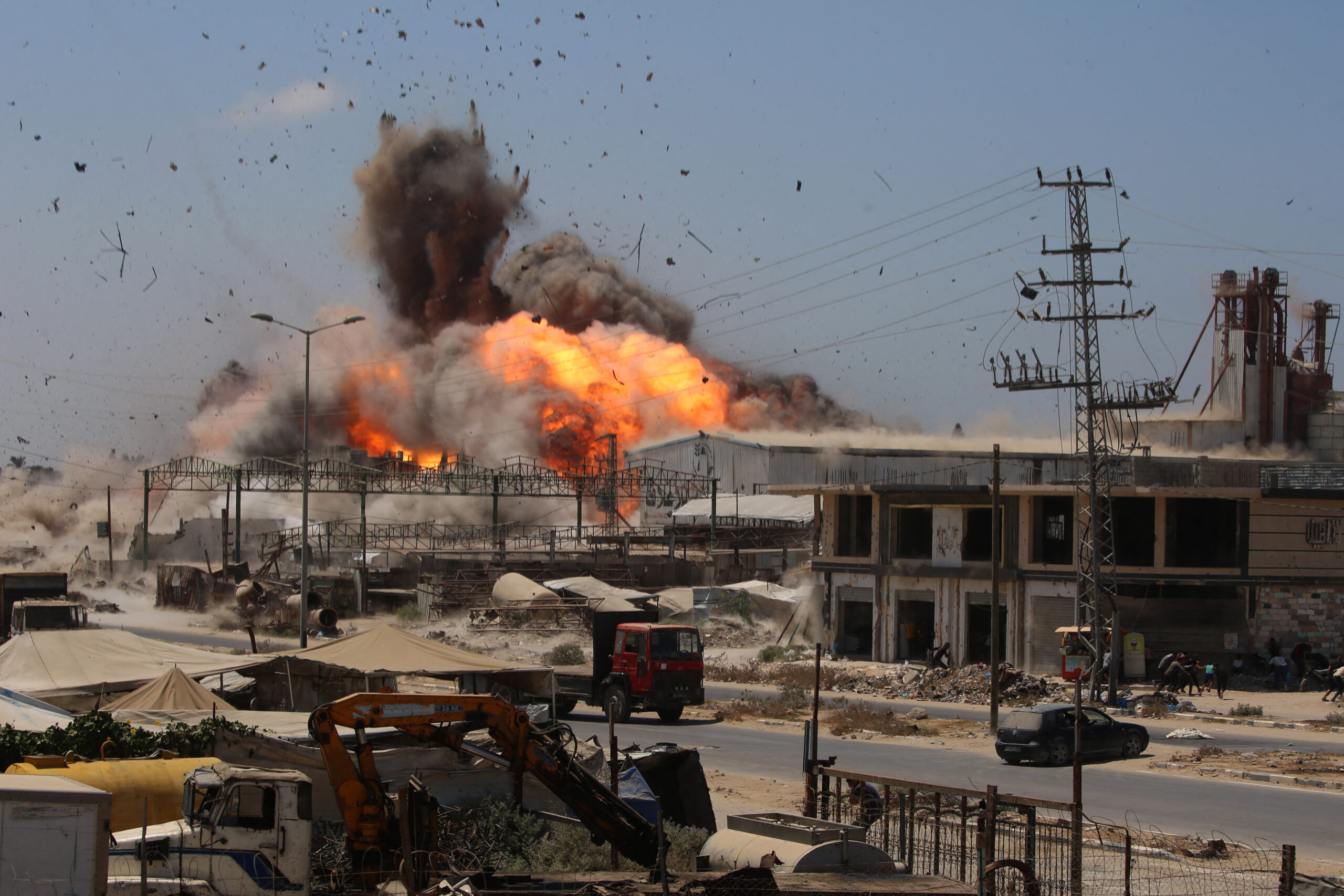
    Parallel violence unfolded in central Gaza over the weekend, where Israeli airstrikes targeted two populated areas: the Nuseirat refugee camp and the nearby town of az-Zawayda. Local medical officials at Al-Aqsa Martyrs Hospital confirmed that two Palestinians were killed in the attacks, with seven additional people sustaining injuries. A separate Israeli airstrike carried out along central Gaza’s major Salah al-Din Street left one more Palestinian dead and two others wounded, Palestine’s official Wafa news agency reported, citing multiple medical sources.

    Since the October 2025 ceasefire took hold, the violence has not let up. Data from Palestinian local health authorities shows that more than 1,280 Palestinians have been killed in Gaza in the months following the truce agreement. The Israeli military, for its part, has confirmed that four of its soldiers have been killed during operations in the same period.

    Israeli military activity extended to multiple other locations across the occupied West Bank over the weekend. Late Saturday, Israeli forces entered the central district of Tulkarm, deploying live ammunition and stun grenades against local residents, Wafa confirmed. Following raids on residential properties in the nearby West Bank towns of Zeita and Seida, Israeli forces detained five Palestinian civilians.

    In the Tubas governorate, an Israeli raid left 11 people — four of them children — suffering from tear gas inhalation, with emergency medical teams from the Palestine Red Crescent Society providing on-site treatment. Just southeast of Tubas in the town of Tammun, Israeli settlers assaulted a 15-year-old Palestinian boy, beating him severely before Red Crescent medics treated him for his injuries.

    On Sunday morning, Israeli forces completed a full closure of the only functional access point to al-Mughayyir village, located northeast of Ramallah, blocking all movement in and out for local residents. Local media outlets report that Israeli soldiers harassed and interrogated passing commuters, and fired tear gas at civilian vehicles that attempted to cross the sealed entrance.

    In the greater Nablus region, Israeli forces arrested one Palestinian and seized two civilian vehicles following raids on the villages of Beita, Tal and Beit Dajan. East of Bethlehem, Israeli settlers encroached on privately owned Palestinian agricultural land in the village of al-Maniya, uprooting dozens of mature olive and grape vines that formed the core of local families’ livelihoods, Wafa reported.

    Meanwhile, the ongoing siege of the village of Qusra, south of Nablus, entered its 15th consecutive day on Sunday. Israeli settlers have maintained a constant cordon around three residential properties in the village’s Ras al-Ain area, with Israeli soldiers backing the blockade by blocking all entry and exit to the neighborhood. Wafa confirmed that the three besieged Palestinian families are facing severe water shortages, after settlers blocked access roads and halted all supply deliveries to the area.

    The latest surge in violence comes as Israeli military operations continue at scale across both Gaza and the occupied West Bank. Since large-scale hostilities began in October 2023, official Palestinian health data records that at least 73,419 Palestinians have been killed in Israeli attacks on Gaza, with an additional 174,364 people sustaining injuries.

  • Zelensky rejects rival’s call for vote, says would ‘split’ Ukraine

    Zelensky rejects rival’s call for vote, says would ‘split’ Ukraine

    As senior European leaders gathered in Kyiv for the high-stakes Nordic-Baltic Eight summit over the weekend, Ukrainian President Volodymyr Zelensky doubled down on his rejection of holding national elections amid ongoing full-scale conflict with Russia, pushing back against a surprise call from his former defense minister to organize a vote. In comments published Sunday that emerged from a Saturday press briefing with international reporters including Agence France-Presse, Zelensky framed wartime elections as an existential danger to Ukrainian national unity at a moment when the country is united around fending off Moscow’s 2022 invasion.

    “I believe that in a war like this, elections as such are a huge risk,” Zelensky told reporters. “Elections right now are a tsunami for the country that will split Ukraine. If we want to destroy the country, then we can move in the direction of elections during these times of war.”

    The debate over wartime voting comes amid a turbulent summer of domestic political unrest in Ukraine, triggered when Zelensky dismissed popular former defense minister Mykhailo Fedorov, who had built a strong public following as a leading advocate for Ukraine’s dominant drone warfare strategy and a vocal proponent of military reform. Following his ouster, thousands of demonstrators took to the streets to call for his reinstatement, and Fedorov launched scathing public attacks on Ukraine’s top military leadership, a conflict that ultimately forced Zelensky to replace his commander-in-chief.

    Days ago, Fedorov unexpectedly broke his silence to call for urgent progress on organizing a national election. Though he stopped short of explicitly declaring a challenge to Zelensky’s presidency, the move prompted even some of Fedorov’s own long-time supporters to distance themselves from the proposal. Polling data shows the proposal has little traction among the Ukrainian public: only 15 percent of respondents back holding elections before hostilities come to an end, consistent with the broad national support for the continued suspension of elections under existing martial law regulations.

    Political analysts have outlined a cascade of practical and security barriers that would make a free, fair wartime vote all but impossible. Key challenges include facilitating ballot access for millions of Ukrainian soldiers on the front lines, millions of refugees displaced across Europe, and residents living under Russian occupation in illegally annexed territories, as well as mitigating the constant threat of Russian election interference and targeted Russian missile and drone strikes on voting infrastructure.

    Despite growing pockets of domestic criticism as the war enters its third year, Zelensky remains the most popular political figure in Ukraine. Over the weekend, Fedorov’s team confirmed to AFP that the former minister plans to travel to the United States in the near future, a trip that has already reignited public speculation that he is laying the groundwork for a potential 2025 presidential challenge against the incumbent.

    Alongside navigating domestic political pressure, Zelensky used the weekend’s Nordic-Baltic summit to shore up critical international military support. Following one-on-one talks with Norwegian Prime Minister Jonas Gahr Store, Zelensky announced a new bilateral drone agreement that will deepen defense industrial cooperation between Kyiv and Oslo. Store also used the summit to announce that Norway has pledged $9 billion in military and economic support for Ukraine for 2025, one of the largest single-country annual commitments from any European ally to date.

    On Monday, Ukraine’s Independence Day, participating leaders will convene formal working talks focused on building new international pressure on Russia to end its invasion and addressing Ukraine’s increasingly urgent military gaps. The most pressing of these gaps is a critical shortage of interceptor missiles for Ukraine’s U.S.-supplied Patriot air defense systems, which are the primary defense against Russia’s growing campaign of hard-to-intercept ballistic missile strikes across Ukrainian population centers.

    Zelensky confirmed over the weekend that deliveries of these critical Patriot interceptors have dropped by half since 2023. The United States is currently facing its own supply chain shortages of the missiles amid rising tensions with Iran, and has so far declined to approve large-scale new transfers to Kyiv. The intensification of Russian strikes has pushed civilian casualty rates to their highest level since the opening months of the 2022 invasion, according to recently updated verified data from the United Nations.

    Ukraine has responded to the stepped-up Russian attacks by accelerating its own long-range strike campaign targeting Russian energy infrastructure, military logistics hubs, and supply depots deep behind Russian lines. Over the weekend, Ukrainian forces struck a warehouse belonging to major Russian e-commerce company Ozon for the second consecutive day, marking the latest in a series of sustained attacks on Russian commercial and military supply networks.

  • More than 24k calls for bird flu in Australia, Agriculture Minister reveals

    More than 24k calls for bird flu in Australia, Agriculture Minister reveals

    As Australia ramps up enforcement against biosecurity breaches amid an ongoing H5N1 bird flu outbreak, new official data has revealed that Australian residents have placed more than 24,000 reports of suspected infection through the national emergency hotline, underscoring the critical role of public participation in protecting the country’s unique ecosystems and agricultural systems.

    The outbreak first emerged in June 2026 on a remote cape in Western Australia, and has since spread to six Australian states, with more than 200 confirmed cases recorded to date. One high-profile casualty of the virus was a little penguin found dead on Victoria’s Phillip Island, prompting urgent conservation action to protect vulnerable native species. In response, federal authorities have launched a targeted vaccination program focused on at-risk wildlife populations, including wild little penguin colonies and animals held in captive conservation facilities across the country.

    Agriculture Minister Julie Collins emphasized that the unprecedented volume of public reports highlights how shared responsibility forms the backbone of Australia’s biosecurity defense. “This outbreak cannot be fully stopped, but community surveillance has been the core of our response from day one,” Collins said. “Every call from an alert Australian helps us contain spread faster and protect our unique way of life.”

    The national government’s biosecurity efforts are supported by billions in new funding and on-the-ground work by trained personnel and specialized detection teams across the country’s borders. Since 2022, the current government has allocated more than $2 billion in additional resources to strengthen biosecurity systems, with officials noting the government will never compromise on border protection standards.

    One notable success story comes from Adelaide, where detector dog Ghost and his handler Jade intercepted illegally imported concealed seeds hidden inside a traveller’s dentures and sewn into custom arm sleeve covers. This is far from an isolated case: between January 1 and July 31 of this year, Australian border officials recorded more than 195,000 interceptions of high-risk biosecurity goods at international airports, with an additional 53,000 illicit items seized at national mail processing centers. More than 70,000 of these detections came via X-ray screenings of passenger baggage and detector dog sweeps, stopping more than 23,000 prohibited items from entering the country.

    Examples of intercepted contraband range from small seeds hidden in pill capsules and chewing gum containers to larger prohibited items: one passenger was stopped after attempting to bring more than 11 kilograms of undeclared meat and fresh produce into the country, while another falsely marked succulent plants as generic “desktop decorations” on their customs declaration. In July, a Victorian man was convicted on multiple biosecurity charges stemming from a year-long scheme to import and attempt to import prohibited exotic animals, including Burmese pythons, ball pythons, albino softshell turtles, iguanas and tarantulas.

    This week, national authorities are marking National Biosecurity Week, a seven-day national campaign designed to raise public awareness of biosecurity risks and reinforce the importance of individual compliance with border protection rules. Officials say the ongoing bird flu outbreak has served as a stark reminder that strong biosecurity relies on collaboration between government agencies, frontline workers, and the general public.

  • Norwegian King Harald’s health has ‘deteriorated’: palace

    Norwegian King Harald’s health has ‘deteriorated’: palace

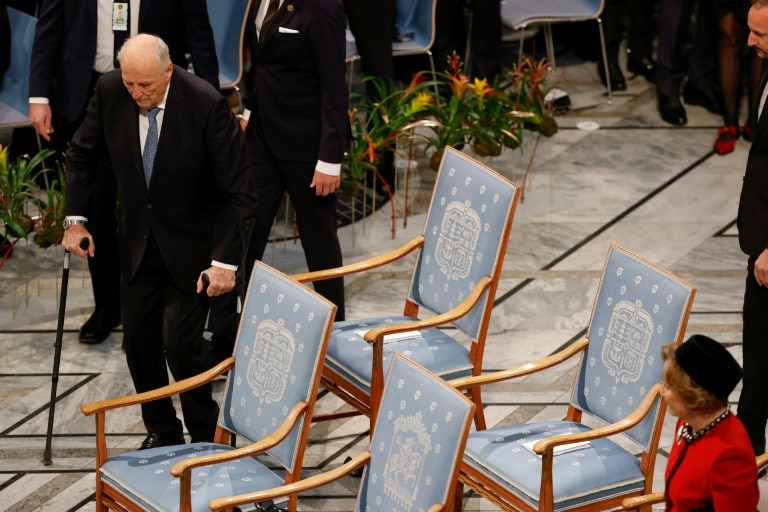
    At 89 years old, Norway’s King Harald V — the longest-reigning living monarch in Europe — has seen his health worsen over the weekend while receiving inpatient care at Oslo University Hospital, the Norwegian Royal Palace confirmed in an official public statement released Sunday. The king was first admitted to the facility one week prior after experiencing dangerous fluid retention linked to ongoing cortisone treatment for his chronic blood condition, haemolytic anaemia, and was initially placed on a two-week medical leave from all official duties. Haemolytic anaemia develops when red blood cells break down faster than the body can replace them, triggering persistent fatigue, skin paleness, and difficulty breathing for affected patients. Since admission, the king has also developed a secondary bacterial blood infection, which medical teams are treating with antibiotic therapy. The palace noted in its update that the monarch has shown initial positive responses to this antibiotic regimen, despite the overall decline in his health status. Following the deterioration, the royal household has already scrapped a planned official visit to Norway’s central Trondelag region, scheduled for September 1 and 2 — a trip that was slated to take place after the original two-week leave period was set to end. Multiple senior members of the Norwegian royal family have visited the king at his hospital bedside in recent days. According to local Norwegian newspaper Verdens Gang, visitors on Sunday included the king’s wife, 89-year-old Queen Sonja; his son and heir Crown Prince Haakon, who has stepped into the role of regent during the king’s medical leave; Crown Princess Mette-Marit, Haakon’s wife; and the king’s sister. All family members declined to comment on the king’s condition to reporters after leaving the hospital. King Harald has navigated a series of serious health challenges in recent years, which have already forced him to adjust his public role: he previously received a pacemaker to manage a heart condition and has gradually reduced the volume of his official engagements over time. Despite these struggles, the king has repeatedly rejected calls for him to abdicate the throne, noting that he swore a lifelong oath of office to the Norwegian Parliament when he ascended to the throne in 1991. This is not the king’s first unplanned hospitalisation in 2024: in February, he was admitted for treatment of an infection and dehydration while on a private holiday in Tenerife with Queen Sonja, who herself had a brief hospital stay for heart concerns in May. The king’s declining health comes at a period of unprecedented turmoil for the entire Norwegian royal household, which has faced overlapping scandals and personal crises in recent months. Crown Princess Mette-Marit, the next queen consort of Norway, has faced intense public and media scrutiny over her documented past connections to disgraced American financier and convicted sex offender Jeffrey Epstein, who died in prison in 2019. Court documents released in the United States earlier this year revealed that Mette-Marit maintained regular, at times intimate, correspondence with Epstein between 2011 and 2014 — years after Epstein had already been convicted of a sex offense in Florida. Further adding to the household’s stress, Mette-Marit’s son from her first relationship, Marius Borg Hoiby, was convicted in June on dozens of criminal charges including two counts of rape and multiple counts of violence against a former partner, resulting in a four-year prison sentence. Borg Hoiby has since filed an appeal challenging the conviction. Mette-Marit herself has also faced a major personal health crisis: living with a chronic serious lung condition, she underwent a life-saving lung transplant in July. Despite the string of personal challenges and scandals facing the royal family, the institution remains broadly popular among the Norwegian public. Polling and public sentiment consistently reflect high approval for the monarchy, a trend widely attributed to King Harald’s longstanding reputation as a unifying national figure during his 33-year reign.

  • Thai prime minister meets security chiefs after coordinated attacks in 3 southern provinces

    Thai prime minister meets security chiefs after coordinated attacks in 3 southern provinces

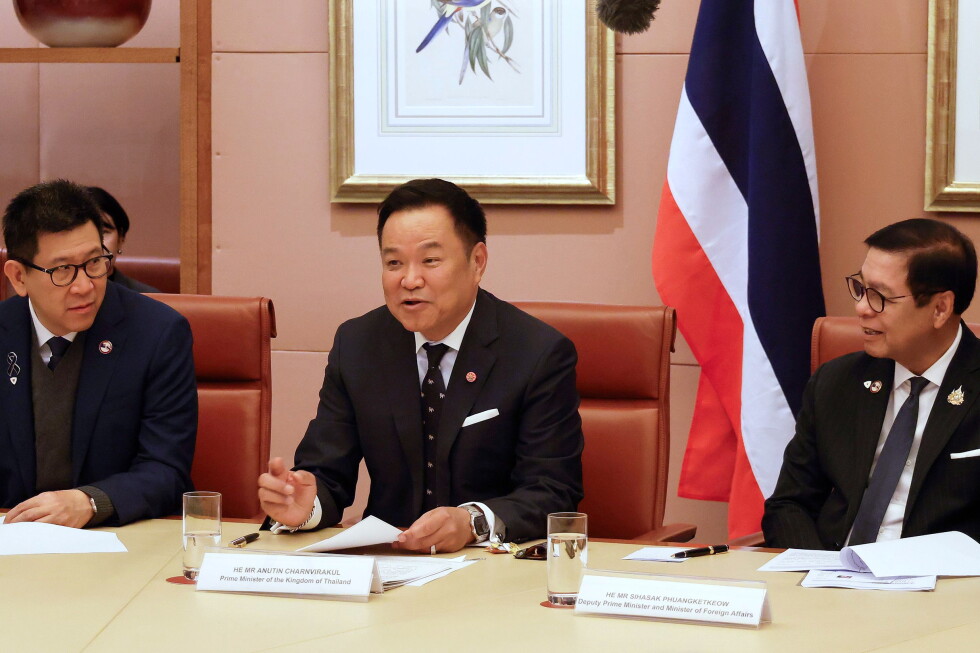
    BANGKOK – Thailand’s political leadership is juggling two overlapping national emergencies this week, as Prime Minister Anutin Charnvirakul cut short urgent security briefings on Sunday to respond to a separate crisis: catastrophic flooding in the country’s northern provinces. The security emergency unfolded overnight Saturday, when dozens of coordinated attacks targeted civilian and infrastructure sites across three restive southern border provinces that have been the center of a decades-long low-intensity Muslim separatist insurgency.

    Anutin gathered top national security leaders for an emergency meeting within hours of the attacks being confirmed, which took place across Narathiwat, Pattani, and Yala – the three southernmost Thai provinces, where a Muslim majority population has long held separatist sentiment in the predominantly Buddhist nation. In total, local security officials recorded 51 separate violent incidents between Saturday evening and early Sunday morning, marking one of the largest coordinated actions by insurgent groups in recent years.

    Unlike past high-profile attacks that targeted security forces directly, Saturday’s operations avoided direct clashes with military and police personnel. Official updates on Sunday confirmed only three civilian injuries, all of which were non-life-threatening and the victims were reported to be recovering in local medical facilities. Instead of targeting personnel, the attackers focused on property damage, using small improvised explosive devices, arson, and other low-intensity tactics to spread disruption across the region.

    The most widely publicized attack targeted a 7-Eleven convenience store in Pattani. Security camera footage circulated widely across social media platforms shows armed men patrolling the exterior of the store while customers and staff scrambled to escape before the building was set alight. In Narathiwat, an explosive device planted on railway tracks damaged the infrastructure, forcing authorities to suspend both local passenger services and long-haul cross-border routes. As of Sunday, officials had not given a timeline for restoring service, citing ongoing uncertainty about the security situation in the area.

    As is typical for insurgent attacks in Thailand’s deep south, no group immediately claimed public responsibility for the coordinated operation, and no faction was publicly named as a suspect by authorities in the immediate aftermath. However, multiple security analysts and government sources point to the Barisan Revolusi Nasional Melayu Patani (BRN) – the largest and best-organized separatist group active in the region – as the perpetrator. The BRN has been the primary counterpart for the Thai government in intermittent, on-again off-again peace negotiations over recent years, and the group’s stated core goal is to win autonomous self-rule for the three majority-Muslim southern provinces.

    Grievances that fuel the separatist movement stretch back decades. Muslim residents in the deep south have long alleged systemic discrimination, saying they are treated as second-class citizens by the national Buddhist-majority government. Separatist violence escalated dramatically in 2004, when the central government responded to rising unrest with heavy-handed military crackdowns that further radicalized local populations and deepened public discontent. According to data from Deep South Watch, a leading independent think tank hosted at Prince of Songkla University’s Pattani campus, more than 7,800 people have been killed in insurgency-related violence across the region over the past 22 years.

    The most recent major flare-up of violence occurred in July this year, when roughly 10 assailants attacked a military security checkpoint in Narathiwat with gunfire and pipe bombs. The assault left five paramilitary soldiers dead and six civilians wounded, including a 10-year-old child.

    Independent security analyst Don Pathan, a leading expert on the Thai southern insurgency, explained that the BRN typically carries out large coordinated attacks to gain greater leverage during peace negotiations with the national government. “From the ground, BRN combatants are turned off by the boasting of military officials and wanted to use the spike in violence to demonstrate their capabilities,” Pathan said. He added that while most of the targets in the latest wave of attacks were civilian sites, the group was not focused on causing mass casualties. “Many of the targets in these latest incidents were civilians, but BRN combatants were not after body counts. They want to send a stern message to the Thais of what they are capable of doing.”

    The overlapping emergencies come at a tense time for Anutin’s government, which is already managing resource deployment to support flood response in northern Thailand, where widespread flooding has displaced thousands of residents and caused extensive damage to agricultural land and infrastructure. Anutin departed Bangkok for the flood-hit northern province of Nan immediately after Sunday’s urgent security meeting.

  • Viral ‘Cat in the Hat’ TikTok trend sparks fun fake videos but also real fear

    Viral ‘Cat in the Hat’ TikTok trend sparks fun fake videos but also real fear

    What started as a quirky online post about an aging vintage film costume has exploded into a viral social media phenomenon that has left teenagers across the United Kingdom and Ireland spooked, and pushed law enforcement to step in and calm widespread panic.

    The beloved Dr. Seuss children’s book character The Cat in the Hat, a staple of childhood reading for generations, has been reimagined as a menacing, urban legend-style figure in a wave of AI-generated images and user-posted clips that have flooded TikTok and other social platforms in recent weeks. For millions of young social media users, the once-fictional character now feels like a real threat that could lurk around any dark street corner.

    Sixteen-year-old Skye, one of many teens shaken by the trend, recalled a terrifying sleepover experience that ended with her calling her mother for an emergency pickup. “It was 3 a.m. and everyone was watching these Cat in the Hat videos,” she explained. “When I walked down my friend’s driveway afterward, I was completely convinced he was going to jump out at me. I was too scared to stay.”

    A quick scroll through TikTok confirms how widespread the trend has become: dozens of new accounts created in the past month post regular content of the life-sized character, showing an unblinking figure in the iconic tattered red-and-white striped hat and faded black-and-white fur suit. One of the earliest viral clips, captioned “Help, what do I do?”, has racked up more than 14.6 million views in just three weeks.

    Wild conspiracy theories have flourished in the comment sections of these posts. Some viewers have questioned why the costume looks taxidermied, while others have pushed the outlandish false claim that Mike Myers — who played the character in the 2003 live-action *The Cat in the Hat* film — is actually trapped inside the roaming costume. Other posts go even further, adding geotags and threatening captions such as “Kent, I’m coming — lock your doors” that stoke panic across different regions of the UK.

    Much of the early alarm centered on Ireland’s Limerick and Wexford counties, where shaky, AI-generated clips purporting to show the character wandering after-dark residential streets spread like wildfire. Local Gardaí were quick to debunk the sightings, confirming the images were entirely artificial, but their statements did little to slow the spread of the hoax. Unsubstantiated claims quickly began circulating that the costumed figure was linked to violent assaults, with no evidence to back up the dangerous rumors.

    The panic has even spilled into Scotland, where one 14-year-old teen named Lily received a fake invitation to a “meet and greet” with the Cat in the Hat in remote woodland near the small border town of Galashiels. Her mother quickly shut down the idea, horrified at the risk of her child venturing into an isolated area to meet a stranger.

    Law enforcement across the UK has been forced to issue repeated statements to debunk the growing hoax. South Yorkshire Police was among the forces forced to respond after false posts claiming a “killer Cat in the Hat” was on the loose gained hundreds of thousands of views. One fake post even impersonated a non-existent “Yorkshire Police” force to claim officers were taking the alleged sighting seriously.

    In a playful but firm statement, a South Yorkshire Police spokesperson urged social media users to verify the source of any policing updates they see online: “If you do see posts online providing policing updates and advice, please check that they are from an official policing account. The cat is not out of the bag on this one… Please don’t believe everything you read on social media.”

    The origins of the current viral trend trace back to an August 8 post from pop culture outlet DiscussingFilm, which shared news that the original 2003 *Cat in the Hat* film costume was going up for auction through entertainment memorabilia retailer Propstore. That post alone has gained 10 million views, with hundreds of commenters describing the aged, dilapidated costume as “nightmare fuel” and “genuinely haunting.”

    The tattered, worn costume is set to go up for auction alongside 1,399 other film and TV memorabilia lots this Wednesday, with an estimated selling price between $12,000 and $24,000 (£17,500). The aged condition of the original costume, which shows clear signs of decades of disrepair, gave internet users the eerie starting point for the hoax.

    While many social media users have joined the trend for lighthearted fun — with creators posting comedic clips of police chasing Cat in the Hat impersonators, dancers in costume performing to Beyoncé, and even jokes poking fun at the panic — the trend has left many teens genuinely scared. “I was already afraid of him when I was little,” shared 16-year-old Ellie from the Scottish Borders. “Now it feels like he’s actually come to life to haunt me.”

    Observers have drawn parallels between the Cat in the Hat hoax and the 2018 “Momo Challenge”, a widespread digital urban legend that caused widespread panic among parents and young people, even as fact-checkers found no evidence of the trend causing actual harm. Scottish mother Emily warned that the trend creates unnecessary risk beyond the immediate fear: “I’m not worried about my own daughters, but there could be people with bad intentions who might take advantage of this trend to manipulate teenagers.”

    As of now, all evidence confirms that there is no real roaming Cat in the Hat: the trend is a rapidly evolving online story built from an auctioned vintage costume, amateur costume wearers, AI-generated content, and unsubstantiated social media posts. Whether the trend began as a harmless joke or a deliberate attempt to frighten audiences, police across the UK and Ireland are echoing consistent safety advice for social media users: always pause before sharing viral content, verify claims against official sources, never accept invitations to meet strangers in isolated, late-night locations, and treat unsourced online rumors with caution.

    The viral Cat in the Hat panic serves as a fresh reminder of how quickly online viral fear can cross over into the real world, impacting daily life and prompting official intervention across two countries.