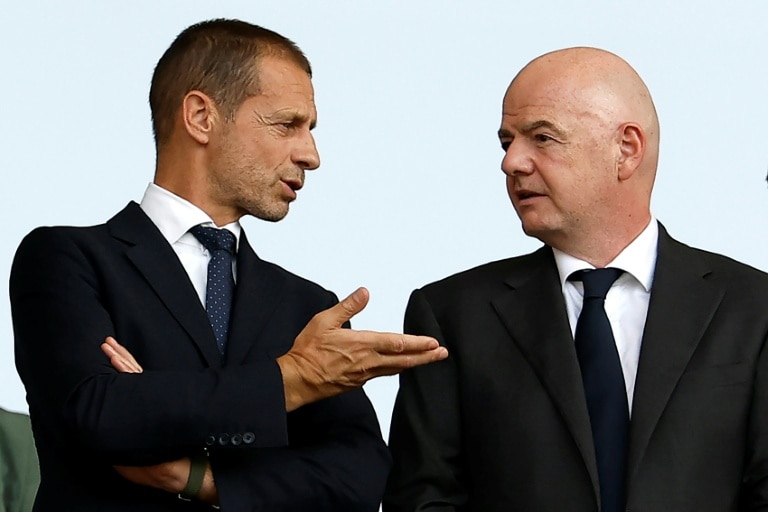
A high-stakes public rift has erupted between the leaders of global football’s two most powerful governing bodies, as UEFA President Aleksander Ceferin has publicly demanded FIFA chief Gianni Infantino step down — while explicitly ruling out any personal bid to replace him. The growing crisis at FIFA stems from Infantino’s now-scrapped controversial plan to bring private investment into top FIFA competitions, including the men’s World Cup. The proposal sparked widespread backlash across the global football ecosystem, leaving Infantino facing cascading withdrawals of support from multiple continental confederations and national federations, with UEFA threatening to boycott future FIFA tournaments over the plans. In an interview with *The Rest is Politics* podcast on Monday, the 58-year-old Slovenian UEFA leader laid out his position clearly, confirming he has no ambition to take Infantino’s job. “I’m not interested because of two reasons,” Ceferin explained. “One reason is that I love UEFA and I love working here, and I think that at a certain point… it’s time to also enjoy life a bit. And the second point is, my credibility is much, much higher if I’m not interested in the position.” Ceferin has been one of the most vocal critics of Infantino’s privatization plan since it was unveiled, and he argued on Monday that Infantino’s once unassailable grip on the FIFA presidency is now irrevocably weakened. He laid out two possible outcomes ahead of the next FIFA Congress, scheduled for March 2025 in Morocco: Infantino will either voluntarily step down, or he will face a formal leadership challenge when he runs for re-election. The rift marks a dramatic reversal from 2016, when Infantino, a former UEFA secretary general, won the FIFA presidency following the resignation of disgraced former leader Sepp Blatter with broad backing from European football nations. Ceferin also confirmed that the two leaders have not communicated at all since the controversy over the private investment plan erupted. “There are two options,” Ceferin said of the coming months. “One option is that he realises that he doesn’t have the support, and that’s not only a political support of the ones who vote, but the political support of the football community, the political support of fans, the political support of the players, former players, coaches. And the second option, that he goes to the elections in March, but in that case I think he will have a candidate against him. I don’t know yet who.” Two leading football administrators have emerged as the most likely potential challengers should Infantino follow through on a re-election bid: CONCACAF President Victor Montagliani and Asian Football Confederation (AFC) chief Sheikh Salman bin Ebrahim al-Khalifa. For his part, Infantino has pushed back against the mounting pressure, claiming he continues to hold significant support among the global football community. Over the weekend, he carried on with a scheduled visit to the Dominican Republic for meetings with Caribbean football leaders, despite reports that Montagliani had asked him to avoid the trip, which included a planned appearance at a regional youth tournament. In pre-recorded video remarks released by FIFA on Sunday, Infantino appeared to address the brewing leadership crisis without referencing it directly. “It’s important to engage, to have a dialogue, to express views and opinions,” he said. “A lot has been happening the last few weeks and it’s important that you hear, you listen, and you’re able to also express what your feelings are. So I think overall positive, very, very happy with all the support I get here.” The standoff now sets the stage for a historic showdown over the future of global football governance, just months ahead of FIFA’s key presidential election.
博客
-

Workers in China worry over being replaced as they adapt to the growing impact of AI on jobs
BEIJING – As China aggressively advances government-backed artificial intelligence integration across every major sector of its economy, the technology is triggering rapid, often unsettling shifts in the country’s massive labor market, leaving thousands of workers displaced and forcing widespread adaptation to a new employment landscape. The disruption has sparked debate among economists over AI’s long-term impact on China’s growth trajectory, social stability, and ability to offset its looming demographic challenges.
One of the earliest and most visible impacts of AI adoption has hit white-collar knowledge workers. For 40-year-old former Beijing-based programmer Fei Zhaojun, AI’s arrival came abruptly: just two weeks after his boss questioned whether AI could replace human coding teams, Fei was laid off alongside 160 of his colleagues. Today, Fei is using his career break to create vlog content focused on ordinary people’s experiences, while he navigates what comes next. He acknowledges that most mid-tier coding roles are already readily replaceable by modern AI tools, and has adopted a pragmatic approach: if AI is reshaping the industry, workers have no choice but to learn to work with it.
The disruption extends far beyond software development. Du Qinchun, a part-time translator based in Chengdu, now works to train AI translation models — a role that has brought him temporary new work, even as industry-wide translation pay has dropped by more than half from just a few years ago. This trend has reshaped higher education too: as AI-powered translation tools become ubiquitous, popular foreign language university programs have rapidly fallen out of favor with prospective students. In creative industries, generative AI has upended China’s booming short drama sector: industry data shows the number of live-action short-form vertical series for mobile platforms dropped roughly 75% year-over-year in the first quarter of this year, as AI handles more creation, production, and distribution tasks.
Official policy has positioned China at the forefront of global AI adoption. Through the national “AI Plus” initiative and a 2030 five-year development plan, Beijing is pushing to embed AI across all sectors to gain a competitive edge in its ongoing technology rivalry with the United States. This proactive policy support has led to explosive growth in enterprise AI integration: market intelligence firm IDC reports the share of Chinese industrial enterprises using AI models and autonomous agents jumped from just 9.6% in 2024 to 47.5% last year. IDC senior research manager Yanze Du notes that China’s dynamic open-source AI ecosystem has accelerated innovation in industrial applications, closing the gap between cutting-edge foundational model capabilities and real-world business value. Today, the technology is already moving beyond office and creative work: humanoid robots are sorting parcels in postal facilities on a small scale, testing capabilities for traffic direction and coffee preparation, while autonomous food delivery robots are expanding across urban areas, putting millions of delivery workers’ livelihoods at potential risk.
Unlike many Western economies where public pushback against AI-driven job displacement is more common, anti-AI sentiment remains muted in China, according to industry analysts. “There appears to be far less anti-AI sentiment in China than elsewhere. Most people seem either positive, neutral, or mildly interested in AI,” explained Shujing He, a Beijing-based senior analyst at research and advisory firm Plenum. “Individuals who worry about being replaced, as well as those who have already left traditional workplaces, are often eager to experiment with AI-enabled businesses and independent ventures. The level of interest is striking.” He added that workers with narrow, specialized roles in AI-vulnerable fields like software development and multimedia creation face the highest displacement risk, as AI can now complete tasks that once required years of specialized training for a fraction of the cost and time.
A recent International Labour Organization report adds another layer to the disruption: women in China face disproportionately higher risks of AI-driven job loss, as they are overrepresented in roles easily automated such as electronics assembly, and remain underrepresented in high-growth science and technology fields that are more resilient to automation.
For China’s already slowing economy, AI brings a mixed set of long-term outcomes. Years of sluggish growth have been compounded by a prolonged housing market downturn that has eroded household wealth, and AI-driven job uncertainty is further dragging on consumer spending as households cut back on purchases to prepare for potential unemployment. Cornell University economics and trade policy professor Eswar Prasad notes that while AI is driving major productivity gains across China’s tech sector, those gains have not translated to broad new job creation. “AI is likely to lift productivity across the board but could have a severe disruptive effect on employment, worsening the employment growth problem and resulting in a detrimental effect on social stability,” Prasad warned. Current labor market data underscores this uncertainty: while China’s headline urban unemployment rate holds around 5%, unemployment for 16 to 24-year-olds (excluding students) is roughly three times that figure. Major Chinese tech giants, much like their U.S. competitors, have already cut and restructured tens of thousands of roles in recent years, with AI integration cited as a key driving factor.
Yet some economists argue that AI could ultimately offset one of China’s biggest long-term economic challenges: its rapidly aging and shrinking population. By 2050, projections show China will have fewer than two working-age adults to support each retiree, compared to more than 2.5 in the United States. Xuenan Cao, a professor at San Francisco Bay University specializing in technology and society, argues that automation can fill critical gaps left by a shrinking workforce rather than acting purely as a threat to employment. “Automation could partially offset a shrinking workforce rather than being purely a threat to it,” Cao said.
For many displaced workers, the common approach has become “if you can’t beat them, join them.” Wang Zhicheng, a former scriptwriter for a children’s educational animation company, saw his employer lay off half of its 13-person writing team amid AI integration. He chose to resign and launch an independent studio creating illustrated children’s books, using AI as a productivity tool rather than viewing it as a replacement. “You can treat AI as a tool just like Microsoft Word,” Wang explained. “While AI can cut down on brainstorming and drafting time, the scripts it generates often feel formulaic, repetitive, and inconsistent in depth. Humans are still the decision makers on which one to pick or pursue among all that AI generates.”
Even in less affected fields, many workers see AI as a helpful complement rather than a threat. Yang Zheng, a 29-year-old high school chemistry teacher in China, says even though students now use AI to help with homework, the technology improves rather than undermines his work. “Teachers cannot be there all the time,” he said. “It is a good thing for students as it generates responses in real-time so that students can ask follow-up questions. It often gets things wrong, but it improves over time.”
As AI adoption continues to accelerate across China’s economy, the coming years will test whether the country can harness the technology’s productivity gains while mitigating its disruptive impact on employment and social cohesion.
-

Nearly 3 million Teslas recalled in China over hidden door handles
A sweeping safety recall, the largest in China’s modern automotive history, has placed the once-trendy minimalist hidden door handles of electric vehicles under unprecedented scrutiny, impacting more than 4 million passenger vehicles built by some of the world’s biggest EV manufacturers. The recall covers 2.98 million Tesla vehicles produced in China, alongside models from major domestic Chinese automakers XPeng, Xiaomi, and Geely, all of which have adopted the popular aerodynamic design in recent years.
First popularized globally by Elon Musk’s Tesla, retractable hidden door handles were engineered to streamline a vehicle’s profile, reduce wind drag, and boost overall driving range — a key selling point for electric vehicles. The design tucks the handle flush into the door panel when not in use, only extending outward when the vehicle detects an approaching user with a paired key fob or smartphone.
Safety concerns surrounding the design erupted after two fatal traffic collisions involving Xiaomi-manufactured electric vehicles in China. Investigations have pointed to potential power system failures that left the retractable handles locked in their flush position, trapping occupants inside and preventing rapid escape or first responder access. Following these incidents, Chinese regulators launched a broad investigation into the safety of the design across the domestic EV market.
Tesla confirmed the recall in an official public statement released Friday, noting that the issue in its vehicles stems from door handles that share a nearly identical color with surrounding interior trim, making them hard for occupants or rescuers to locate quickly in high-stress emergency scenarios. The automaker added that in severe collision events that knock out a vehicle’s low-voltage electrical system, the hard-to-locate handles could significantly delay door opening, putting lives at greater risk.
To address the hazard, Tesla will apply clearly marked warning labels to all recalled vehicles and roll out a free over-the-air software update designed to automatically lower vehicle windows immediately after a collision, preserving an alternate exit route even if the door handles remain locked. It remains unclear whether the affected automakers will expand the recall to cover vehicles sold in international markets outside of China. The BBC has reached out to Tesla, XPeng, Xiaomi, and Geely to request additional comment on global plans.
The recall comes months after Chinese national regulators announced a formal ban on unmodified hidden door handles for new passenger vehicles sold in the country. New regulatory requirements, set to take full effect on January 1, 2027, mandate that all new vehicles sold in China must include a fully functional manual door release mechanism on both the interior and exterior of every door, regardless of electronic design.
This is not the first time hidden door handle designs from Tesla have drawn regulatory attention. US safety regulators launched a formal investigation into the feature after multiple reports of sudden handle failure that left children trapped inside locked vehicles in extreme weather conditions. In July, the US National Highway Traffic Safety Administration indicated it was exploring the creation of a new mandatory federal safety standard that would govern door handle design for all automakers selling vehicles in the United States. The BBC has also contacted the agency for additional updates on the rulemaking process.
-

AFL 2026: Sydney Swans five will be denied entry to Brownlow Medal
One of Australian Rules Football’s most high-profile annual events will proceed this week with a notable absence: five Sydney Swans players have been formally excluded from the Brownlow Medal ceremony over an ongoing police investigation into alleged sexual misconduct tied to a Melbourne hotel incident.
The five players at the center of the controversy — Isaac Heeney, Chad Warner, Nick Blakey, James Jordon and Riley Bice — were handed club suspensions last week for violating internal team standards, just days after the squad secured a victory against Essendon. The suspensions will remain in place through the end of the current season.
The incident unfolded when the group invited several women back to their rooms at the Pullman East Melbourne hotel following the win, prompting a formal investigation by Victoria Police’s sexual crimes unit into sexual assault allegations. Authorities have not publicly named any of the players as guilty of the alleged offense, only confirming that an active inquiry is underway.
AFL Chief Executive Andrew Dillon publicly addressed the situation for the first time on Monday morning, speaking to reporters at the official launch of the AFL finals series in Melbourne. He confirmed the organization’s decision to bar the five players from the prestigious Brownlow Medal night, a signature event on the Australian football calendar.
“ Invitations for the Brownlow will be going out this week — those players won’t be invited,” Dillon told assembled media. While the players are ineligible to attend the ceremony, they retain their eligibility for end-of-season awards, Dillon clarified. Notably, Warner remains in the running for the League’s Goal of the Year honor, which is traditionally presented during the Brownlow Medal event. Collingwood’s Nick Daicos remains the clear frontrunner to claim this year’s Brownlow Medal, the award recognizing the league’s best and fairest player over the regular season.
Dillon opened the finals launch with a pre-prepared statement emphasizing the league’s commitment to a culture of respect for women. He acknowledged that the high-profile scandal had cast a shadow over the start of the AFL’s championship finals series, but expressed hope that the competition would still unite fans across the country over the coming weeks.
“I think it is a fair statement that it has overshadowed the build-up to finals, but what we have seen is that footy is a place people can come together,” Dillon said. “It’s a really serious matter being investigated by the police. But I think the finals and footy is a way people can come together.”
Over the weekend, Sydney played their first match since the allegations became public, defeating North Melbourne in front of a home crowd at the Sydney Cricket Ground. The Swans finished the regular season second on the overall league ladder, meaning they will host at least two finals matches, kicking off their championship push against premiership favorite Brisbane.
-
Israel warns of strikes, evacuations over kites launched by Palestinian children in Gaza
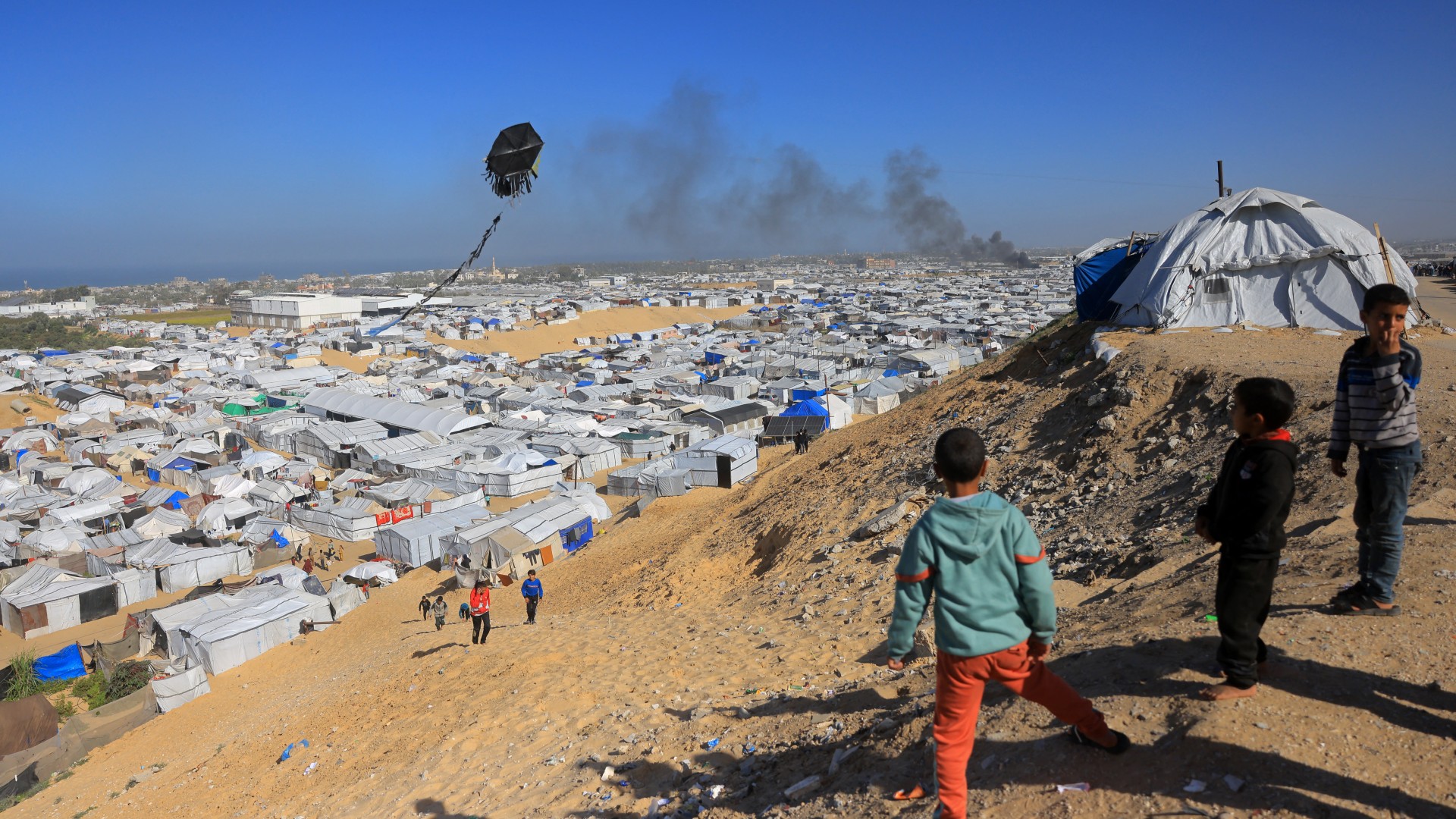
A seemingly innocuous childhood activity in the Gaza Strip has spiraled into a major escalation threat, after the Israeli military has framed the kites flown by Palestinian children as a security threat justifying expanded military operations and forced displacement across the blockaded enclave.
On Sunday, Prime Minister Benjamin Netanyahu’s office issued a formal statement announcing that Israel had issued Hamas a 72-hour deadline to end all kite launches from Gaza. If the activity continued, the statement warned, Israel would launch a wide-ranging air assault, and would evacuate populated Gaza regions from which kites, incendiary balloons, and unmanned aerial devices have reportedly been launched.
The current tensions were sparked over the weekend, when Israeli media outlets reported that several kites launched from Gaza had touched down near Nahal Oz Kibbutz, an Israeli settlement built illegally on Palestinian territory adjacent to the Gaza border. Though Israeli military sources confirmed the kites were launched by local Palestinian children, and that no hazardous materials were found on any of the devices, confirming they posed no threat to public safety, the incident did not end there.
Kibbutz residents pushed back against the characterization of the flights as harmless isolated incidents, releasing a collective statement rejecting any passive approach to what they framed as a breach of their security. “We will not accept a policy of containment when it comes to our security,” the statement read.
Within days, top Israeli security officials convened for an emergency strategy session. Netanyahu joined Defense Minister Israel Katz, Israel Defense Forces Chief of Staff, the head of the National Security Council, and other senior security leaders for a special closed-door meeting focused exclusively on the kite issue on Sunday.
Following the meeting, Katz announced he had instructed Israeli military units to respond to the kite launches with overwhelming force, and take all necessary measures to halt the activity. He went so far as to classify the children’s activity as an “act of war”, equating unarmed paper kites to hostile drones and saying the military would treat them identically. As part of the response measures, Katz confirmed that Israeli forces would target Hamas commanders deemed “responsible” for the launches. In a remark that underscored the severity of the Israeli stance, he added: “A balloon is like a kite, and a kite is like a drone, whether it carries explosives or not.”
For Gazans, however, kites have carried a far different meaning for nearly two decades, shaped by the ongoing Israeli siege that has confined the strip’s 2 million residents since 2007. Cut off from freedom of movement beyond the enclave’s borders, flying homemade kites has become a quiet symbol of the desire for freedom for Palestinians, particularly for children growing up under blockade.
The deep cultural roots of the activity stretch back more than a decade. In 2010, thousands of Gazan children gathered on Gaza’s Mediterranean coast to fly kites as part of the United Nations Relief and Works Agency for Palestine Refugees (UNRWA) Summer Games, breaking the Guinness World Record for the largest number of kites flown simultaneously. A total of 6,302 handmade kites, built by the children themselves, were launched into the sky that day, drawing international attention to life under blockade. To this day, building and flying homemade kites remains one of the most popular pastimes for children and young people across Gaza, even as they remain trapped behind the Israeli and Egyptian barriers that enclose the small coastal enclave.
-
Melbourne Lord Mayor calls for federal funds to protect religious events
As public hearings wrap up at Australia’s Royal Commission into Anti-Semitism and Social Cohesion, Melbourne’s top local official has made an urgent push for federal financial support to boost security at religious gatherings across cash-strapped municipal jurisdictions.
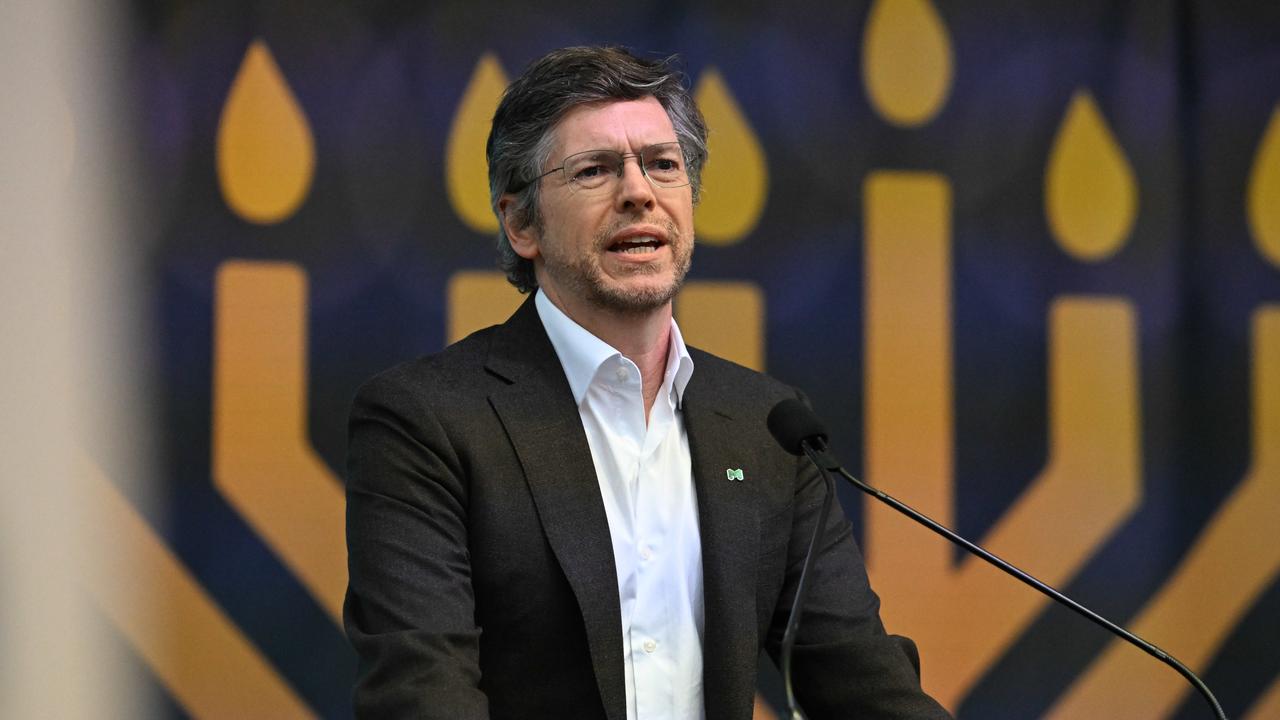
Appearing before the inquiry on Monday, Lord Mayor Nicholas Reece emphasized that Melbourne is home to Australia’s largest Jewish community, a group that has been woven into the cultural, social and civic fabric of the city since its founding. He then detailed his firsthand experience responding to a 2023 firebombing attack on a Melbourne synagogue, carried out while families were gathering inside for Shabbat dinner.
Reece described the scene as one of the most distressing he has ever witnessed: children and families displaced onto the street, emergency responders from the fire service and Victoria Police surrounding the site, and the entire area cordoned off as an active crime scene. “This is not the Melbourne I have known for most of my life,” he told commissioners, adding that the act of violence was terrifying and entirely unacceptable in a democratic Australian city. The attack, he confirmed, has been linked to an extremist conspiracy originating overseas.
Beyond addressing immediate security needs, Reece also weighed in on the role of local government in debating complex global conflicts, referencing an hours-long council motion held during his time as acting mayor about the Gaza war. He called the process deeply challenging and a poor use of local government resources. While Reece acknowledged that local councils have a legitimate role in international engagement – from supporting cultural exchanges for international students to fostering university partnerships – he argued that nuanced, high-stakes geopolitical conflicts fall outside the core remit of local government.
Instead, Reece recommended that the federal Department of Foreign Affairs and Trade (DFAT) take the lead in facilitating community input on these global issues, modeling the work of community forums previously run by the Australian Agency for International Development (AusAID). He clarified that he does not oppose councils hosting open community debate on any topic, but DFAT is far better positioned to collect and address community perspectives on international matters.
Turning back to security for multicultural religious events, Reece noted that the Melbourne City Council has already been forced to add security measures to major public celebrations for Hanukkah, Ramadan, and Diwali to address rising concerns about social fracturing and the threat of antisocial or violent incidents. So far, the extra precautions have not been needed for active incidents, which Reece called a positive outcome, but the need for the measures themselves underscores the growing risk facing faith communities.
Most critically, Reece stressed that the vast majority of Australian local governments operate under severe resource constraints, with little to no budget available to cover the extra costs of enhanced event security. “I cannot overstate how resource constrained local government is,” Reece told the commission. “Most councils don’t have financial capacity to provide that safety support at some of those events. One of the things the Commission might like to consider is if we do want to see more celebration of faith events, social, multicultural events … then that might be something that requires some funding support in order to deliver.”
Reece also shared shocking data on the scale of persistent antisemitic vandalism across Melbourne over the past two years: his council has removed more than 3,000 pieces of offensive graffiti, with between 800 and 1,000 of those tagged with explicitly antisemitic messaging. In total, the council has cleared nearly 4,000 square meters of antisemitic graffiti, posters, and stickers, he said. To address the ongoing crisis, the city has launched a rapid response program that aims to remove hateful vandalism within one hour of it being reported, though the service does not cover most private property outside of pre-arranged automatic arrangements for public transport assets like trains and trams.
Earlier in the hearing, Tony Jackson, president of the Southbank Elsternwick Rotary club, told commissioners he felt he had failed his members after hearing widespread reports of fear and anxiety among club members about rising antisemitism in the local community. The Royal Commission, overseen by Commissioner Virginia Bell, is drawing to a close after months of public testimony from community leaders, officials, and residents across Australia.
-
Shein aims for almost $27bn valuation in stock market debut
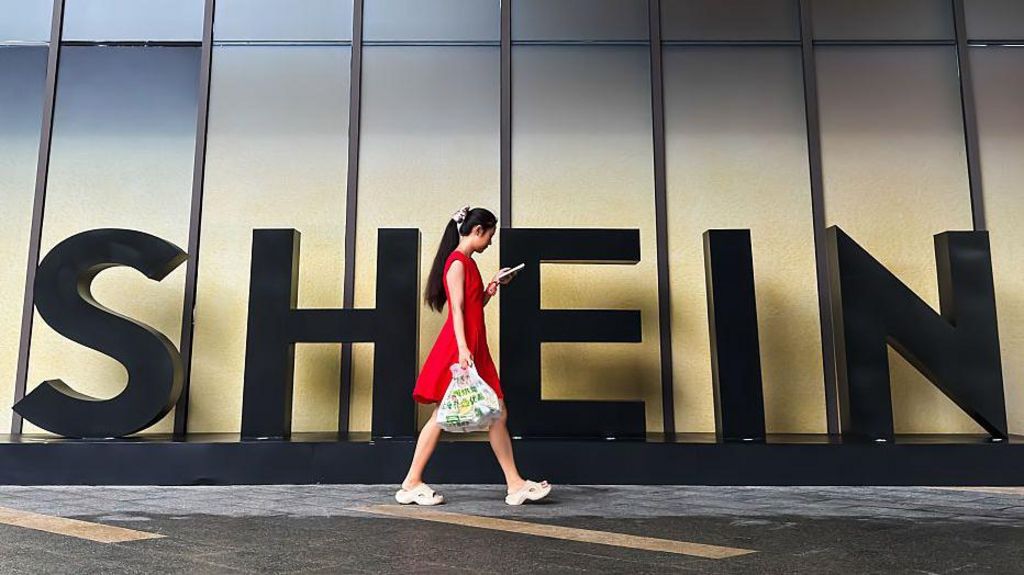
Global fast-fashion powerhouse Shein has formally locked in September 1 as the launch date for its long-awaited initial public offering (IPO) on the Hong Kong Stock Exchange, with plans to raise up to HK$13.86 billion (equivalent to approximately £1.3 billion or $1.77 billion), the company confirmed in a regulatory filing released Monday.
Under the terms of the offering, Shein will issue nearly 280 million new shares, priced in a range between HK$47.60 and HK$49.50 per share. At the upper end of this pricing band, the China-founded, Singapore-headquartered retailer would carry a total market valuation of roughly $27 billion. This figure marks a sharp 73% drop from the $100 billion valuation the company achieved during a 2022 private fundraising round, a decline that mirrors broader industry headwinds including slowing sales growth and soaring operating costs across the retail sector.
This Hong Kong listing comes after two failed attempts to launch IPOs in the United States and the United Kingdom, derailed by heightened regulatory scrutiny and geopolitical tensions tied to the company’s origins and operational practices. The offering is underwritten by three of Wall Street’s most prominent investment banks: Goldman Sachs, Morgan Stanley, and JP Morgan, signaling major institutional backing for the listing despite ongoing challenges.
Shein’s path to public markets has been complicated by a series of recent financial setbacks. In July, the company disclosed it had swung to a net loss of $99 million in the first quarter of 2026, a reversal from the $395 million net profit it recorded in the same period one year earlier. The retailer attributed the poor results largely to the elimination of a longstanding US import duty exemption for small packages by former President Donald Trump, which drastically increased its cost of doing business in its largest market.
“In response to the increased duties and taxes, we are pursuing a wide range of options, including increasing our prices in the US market to offset a portion of the increased costs,” the company stated in its July financial update. Uncertainty around the ongoing, currently paused US-China tit-for-tat tariff war has also created long-term headwinds for the retailer, which relies heavily on Chinese manufacturing for its core supply chain. Shein added that the ongoing Iran conflict has further disrupted operations, pushing up logistics costs, delaying deliveries to key regional markets, and softening consumer demand in affected regions.
The company noted that roughly $328 million of the first-quarter loss stems from a non-cash accounting adjustment related to special investor shares, which will convert to ordinary stock following the IPO and are subject to valuation shifts before listing.
Founded in 2008, Shein has grown from a small online apparel retailer to one of the world’s largest fast-fashion players, serving a active customer base across more than 150 countries. The company’s disruptive business model leverages a vast network of Chinese manufacturing partners to deliver ultra-cheap, trend-driven apparel to consumers at speeds far outpacing traditional retail rivals like H&M and Zara. Its annual revenue has already outstripped both legacy competitors, cementing its position as the global leader in fast-fashion e-commerce. As of the end of March 2026, Shein counted 281 million active customers, a 16% year-over-year increase, with customers placing more than one billion orders in the 12-month period.
Despite its rapid growth, Shein has faced persistent criticism on multiple fronts. Environmental activists have repeatedly raised alarms about the company’s contribution to textile waste and carbon emissions, a core critique of the fast-fashion industry as a whole. The company has also faced repeated allegations of forced labor in its Chinese supply chains, claims Shein has repeatedly denied, telling the BBC it maintains a “zero tolerance for forced labor” policy across all supplier partners. Its attempted London IPO collapsed in 2024 after regulators and investors called for greater transparency around supply chain practices, which Shein declined to provide at the time.
-
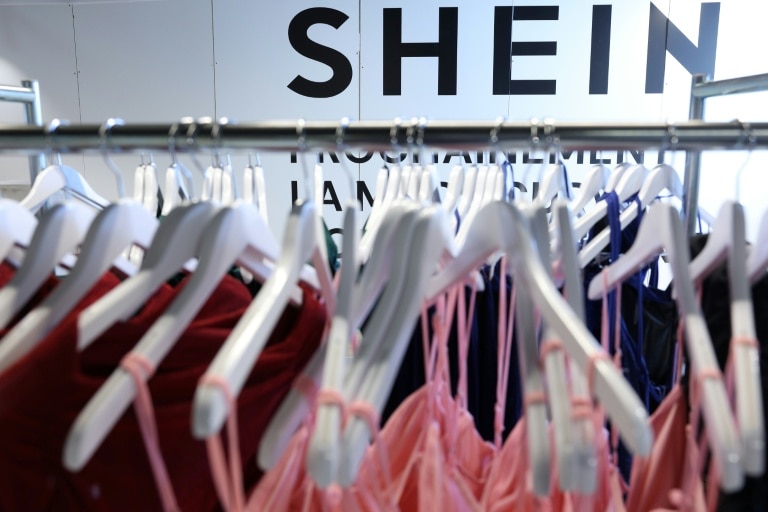
Shein to make market debut in Hong Kong in September
Global fast-fashion e-commerce leader Shein has formally announced its long-awaited initial public offering (IPO) will launch on the Hong Kong Stock Exchange on September 1, confirming a valuation of nearly $27 billion for the company at the top end of its offering range, according to an official filing released Monday.
In its regulatory submission to the Hong Kong bourse, the retailer outlined plans to issue 280 million new shares at a price band between HK$47.60 and HK$49.50 per share. If all shares are issued at the upper end of the range, the offering will raise approximately US$1.7 billion (HK$13.86 billion) in gross proceeds. The company will finalize its offer price on August 31, with the listing set to go live the following day.
Founded in mainland China and headquartered in Singapore since 2022, Shein secured final approval from Chinese regulatory authorities for the Hong Kong listing just last month, marking an end to years of delays that derailed earlier plans to list on either the New York or London stock exchanges due to cross-border regulatory hurdles.
Unlike many of its fast-fashion competitors, Shein has built its competitive advantage on the back of China’s unparalleled textile manufacturing ecosystem and a hyper-responsive supply chain model. The company’s ability to roll out new product designs in days, paired with its famously low price points, has catapulted it to the top tier of global e-commerce, reaching comparable market standing to Amazon in the U.S. consumer market. As of the end of 2025, the platform counted 156 million average monthly active users across Europe, outranking Amazon and trailing only fellow Chinese cross-border platform AliExpress in monthly user size on the continent.
Shein confirmed that the net proceeds from the IPO will be allocated to two core priorities: upgrading its technological infrastructure and expanding its global market footprint. The move to Singapore for its headquarters was widely framed by analysts as a strategic step to reduce growing geopolitical and regulatory scrutiny of China-founded global corporations, though the company still retains nearly all of its manufacturing base in China, leveraging the country’s low-cost production capacity and advanced e-commerce logistics network.
Despite its impressive growth trajectory, Shein has faced mounting regulatory and public scrutiny across major Western markets in recent years. The company reported a full-year net profit of $2.06 billion for 2025, but posted a $99 million net loss in its most recent quarter after the U.S. eliminated a longstanding import duty exemption for small-value packages, a change that directly raised costs for the company’s core cross-border shipping model.
Regulatory pushback has been particularly sharp in the European Union. Earlier this year, a French appeals court rejected a government request to temporarily suspend a portion of Shein’s French website after illicit childlike sex dolls were discovered on the platform (the products were immediately removed after the discovery). In June alone, French regulators issued two fines totaling more than €22 million ($25.1 million) over violations including inadequate product traceability, incorrect environmental labeling, and non-compliance with delivery transparency rules. Cumulative fines imposed on Shein by French authorities now exceed €210 million, and Italian regulators have also issued fines over allegations of misleading environmental claims.
Beyond regulatory penalties, the company has faced repeated criticism over its environmental impact, driven by its high-volume, fast-turnover business model, as well as long-running allegations of supply chain human rights violations. Shein’s executive chairman has repeatedly pushed back on these claims, telling Agence France-Presse last year that the company maintains “zero tolerance” for forced labor in its supplier network.
-
Former cricket captains appeal to Pakistan over Khan health care
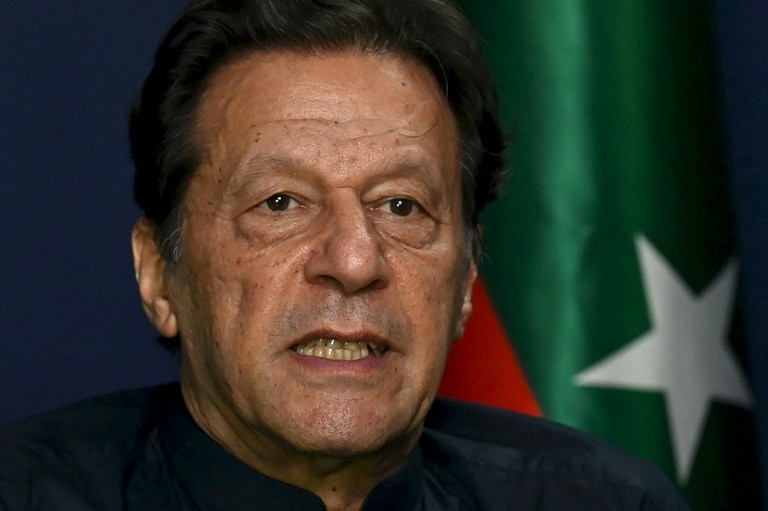
In an unprecedented show of cross-border solidarity from the global cricket community, 21 legendary former international cricket captains have added their voices to calls for the Pakistani government to ensure proper, uninterrupted healthcare for imprisoned ex-prime minister and former Pakistan cricket captain Imran Khan. This open letter, addressed to Islamabad on Sunday, marks the second such appeal from the group, following an earlier statement focused on Khan’s medical access released in February.
Imran Khan, 73, has been held in custody since 2023, after he and his wife were sentenced to a combined 17 years of imprisonment on corruption charges that the pair have repeatedly and vehemently denied. A former cricket star who led Pakistan to a historic World Cup victory in 1992 before entering politics and serving as prime minister from 2018 to 2022, Khan’s legal and political battles have gripped the nation for more than two years. He was ousted from office in 2022 via a no-confidence vote amid rising tensions between his administration and Pakistan’s powerful military establishment, and has since faced dozens of overlapping legal cases on charges ranging from corruption to contempt of court. Khan and his Pakistan Tehreek-e-Insaf party have consistently maintained that all legal proceedings against him are politically motivated, a claim the government denies.
Earlier this week, Pakistan’s Supreme Court responded to growing concerns over Khan’s deteriorating health, ordering that he be transferred to Islamabad’s private, top-tier Shifa International Hospital for a full medical evaluation. On Friday, just hours after completing court-ordered check-ups, the 73-year-old was sent back to his jail cell, prompting renewed anxiety among his supporters and global observers over his condition, specifically the reported vision loss he has experienced in his right eye.
The open letter from cricket’s legendary leaders lays out three clear, specific demands to Pakistani authorities. First, the group calls for the Supreme Court-ordered independent medical board to be allowed to complete a full, unimpeded health assessment of Khan, with particular attention paid to his reported eye issues. Second, they urge authorities to fully uphold the court’s ruling restoring weekly family visits to Khan, with no administrative delays or unnecessary interruptions to these visits. Finally, the cricket leaders demand that any treatment the medical assessment recommends be implemented immediately, without political or bureaucratic hold-up.
The list of signatories to the letter includes some of the biggest names in international cricket history, spanning across major cricketing nations. From India, the signatories include Sunil Gavaskar, Kapil Dev and Dilip Vengsarkar, all former captains of the men’s national team. Six former England captains have added their names: Michael Atherton, Michael Brearley, Nasser Hussain, Andrew Strauss and David Gower. Australia’s contingent includes six legendary skippers: Allan Border, Ian Chappell, Belinda Clark, Adam Gilchrist, Steve Waugh and Kim Hughes. Rounding out the signatories are Clive Lloyd, the iconic former West Indies captain, and John Wright, former men’s skipper of New Zealand.
Khan’s arrest in May 2023 sparked massive, widespread protests across Pakistan that saw thousands of his supporters take to the streets, with some demonstrations turning violent. The unrest led to hundreds of arrests of PTI supporters and leaders, and has deepened the ongoing political crisis in the South Asian nation.
-
Syria says Israel talks addressed de-escalation, staying out of Israel-Turkey tensions
In a rare high-level diplomatic meeting mediated by the United States and hosted by Jordan, Syria and Israel have convened talks focused on rolling back recent cross-border violence and preventing Israel’s growing standoff with Turkey from spilling onto Syrian territory. The Sunday negotiations mark the first formal direct dialogue between the two sides in several months, building on an earlier January agreement to establish a joint intelligence-sharing framework as they edge toward a broader regional security deal.
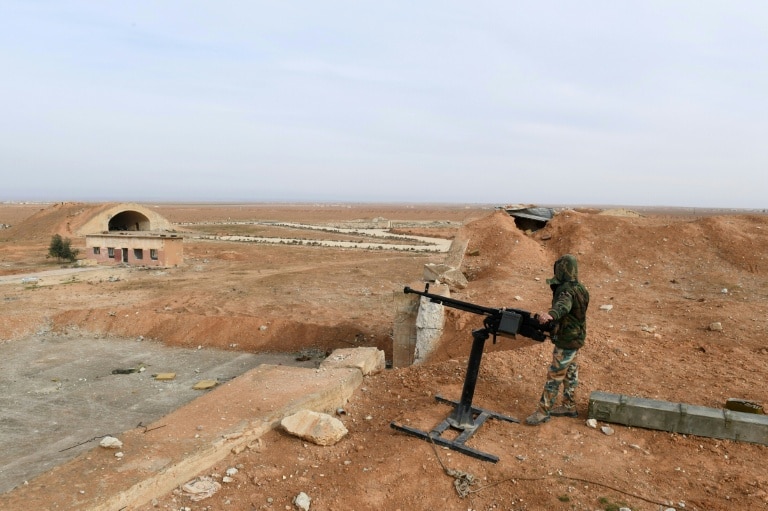
The talks come on the heels of two key destabilizing events: an Israeli airstrike earlier that week on the abandoned Abu Duhur airbase in northwest Syria, and a deadly targeted strike in southern Syria just one day before the negotiations. Israel justified the Abu Duhur attack by claiming it aimed to block an impending deployment of Turkish forces to the site, a claim Ankara has firmly denied. A day before the Jordan meeting, Israel carried out another strike targeting an alleged militant in southern Syria, leaving one person wounded and drawing condemnation from Damascus as a blatant violation of Syrian sovereignty.
According to a diplomatic source quoted by Syrian state news agency SANA, the Syrian delegation was led by Foreign Minister Assad al-Shaibani and included the heads of both general and military intelligence, while the Israeli side was headed by Roman Gofman, director of Israel’s Mossad intelligence agency. Sources confirmed to Agence France-Presse that core agenda items included the creation of a joint US-supervised special operations room based in Jordan, tasked with preventing unintended confrontations on Syrian soil, particularly those that could draw in third-party actors like Turkey.
The overarching goal of the dialogue, the Syrian foreign ministry source noted, is to de-escalate tensions following a string of recent Israeli bombardments on Syrian territory that have raised the risk of broader conflict in southern Syria. Discussions also centered on bridging gaps between Ankara and Jerusalem to ensure that the ongoing public feud between Israeli Prime Minister Benjamin Netanyahu and Turkish President Recep Tayyip Erdogan does not draw Syria into the crossfire. Tensions between Turkey and Israel have surged since the Abu Duhur strike, with the two leaders exchanging sharp public criticism in recent days.
The airstrike on the abandoned airbase drew unusual pushback from the United States, with US Syria envoy Tom Barrack describing the attack as an unnecessary escalation that undermines, rather than advances, regional stability. Since the December 2024 overthrow of longtime Syrian leader Bashar al-Assad by Islamist forces that Israel classifies as jihadist, Israel has launched hundreds of strikes across Syrian territory. It has also deployed troops into the UN-patrolled buffer zone on the Israeli-annexed Golan Heights, maintained a permanent military presence in a self-declared security buffer in southern Syria, and repeatedly pushed for a full demilitarization of the southern region.
Sunday’s talks are part of a broader US-brokered process that began with earlier negotiations in Paris in January, where the two sides first agreed to set up a US-supervised communication cell to reduce bilateral friction. An Arab diplomat based in Damascus confirmed earlier that the proposed joint operations room in Jordan would oversee both security coordination and border management efforts. While US President Donald Trump has actively pushed for a formal security agreement between Israel and Syria’s new transitional authorities, Israeli leadership remains deeply distrustful of Damascus’s new governing institutions, slowing progress toward a final deal.
The Golan Heights, which Israel captured from Syria in the 1967 Arab-Israeli War and unilaterally annexed shortly after, remains a core long-standing point of contention between the two states. The annexation has only been recognized by the United States and, earlier this month, Colombia, with most of the international community continuing to regard the territory as occupied Syrian land.