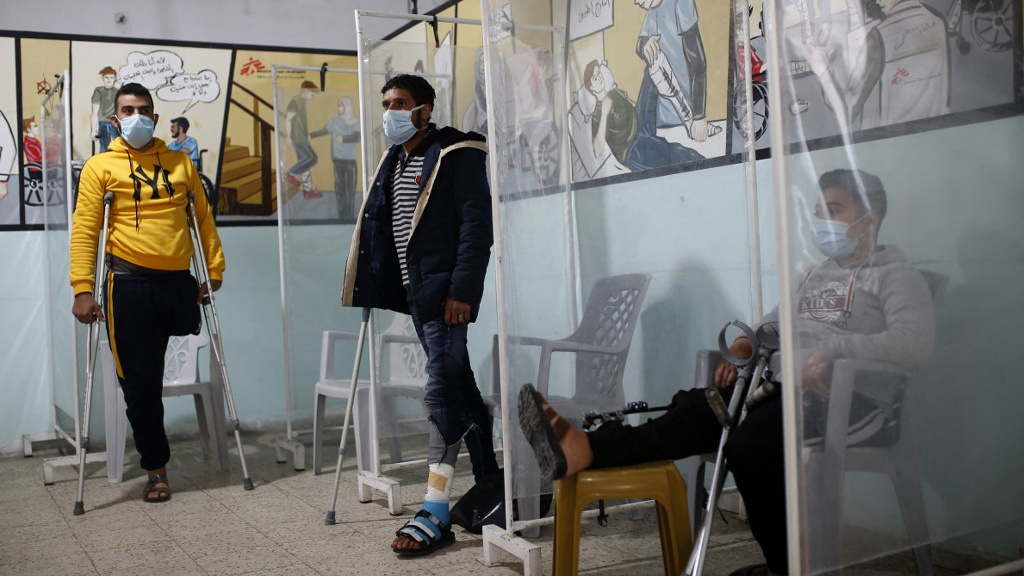
A long-running campaign targeting international humanitarian medical organization Doctors Without Borders (Médecins Sans Frontières, MSF) has escalated dramatically, with British pro-Israel advocacy group UK Lawyers for Israel (UKLFI) formally calling on the British government to designate the Gaza-operating charity as a terrorist organization.
The push from UKLFI is rooted in a recent report claiming unproven links between MSF employees and Palestinian militant groups, allegations that MSF has forcefully and repeatedly rejected. The core of the claims centers on Fadi Jihad Mohammed al-Wadiya, a physiotherapist on MSF’s payroll who was killed in an Israeli airstrike on June 25, 2024. Israeli officials immediately asserted al-Wadiya was a member of Palestinian Islamic Jihad (PIJ), an armed Palestinian group.
MSF pushed back on the claim within months of the strike, stating in February that it had found no evidence of any military affiliation by al-Wadiya before his death at the hands of Israeli forces. In an official statement responding to UKLFI’s latest demand last week, the charity doubled down on its denial. “MSF unequivocally refutes the allegations made by the Israeli authorities that we knowingly hired people with ‘ties to terrorism’,” the organization said. “MSF would never knowingly employ anyone involved in military activities, which contradicts our core values and ethics.”
MSF further noted that Israeli authorities have only made claims of militant links against its staff after those employees have already been killed, with no advance warning or evidence shared while they were alive. “If Israeli authorities had reliable information about any MSF staff involvement in military activity, they never shared it with us before their deaths,” the statement added. The charity also confirmed it has been the target of a sustained disinformation campaign for months, and strongly condemned the deliberate spread of false accusations against its team.
The tensions come amid a string of recent attacks on MSF operations in Gaza: just this week, an Israeli airstrike damaged an MSF-owned bus carrying 10 humanitarian workers in Gaza City, adding to a long list of incidents that have threatened aid workers delivering critical care to the besieged enclave.
Financial records show MSF’s UK branch raised £11.3 million in 2023 specifically for its humanitarian work in occupied Palestine. In defending its demand for a ban, a UKLFI spokesperson argued that British donors deserve full transparency and rigorous vetting for any funds sent to Hamas-controlled Gaza. “The evidence we have assembled raises serious questions about people employed by MSF, the organisations with which it works and whether adequate safeguards have been put in place to ensure that charitable resources cannot be exploited by terrorist organisations,” the spokesperson said.
The UK’s Charity Commission confirmed last week it is now actively reviewing the concerns raised by UKLFI to determine what action, if any, it will take next. The current allegations are not new: they can be traced back to claims from the Israeli government earlier this year that two MSF employees held ties to Hamas and PIJ, another accusation MSF has emphatically denied. In February, Israel moved to ban MSF from operating in both Gaza and the occupied West Bank after the organization refused to turn over a full list of its Palestinian and international staff. MSF said it could not share the data because it could not secure guaranteed assurances that the information would be protected and not misused.
This is part of a broader pattern: the Israeli government has repeatedly accused international and local aid groups operating in Gaza of ties to Hamas in recent years. Earlier this year, Israel imposed bans on dozens of aid groups working in the enclave, a move that human rights organizations have warned has severely restricted already fragile humanitarian access to Gaza, where more than two million people face widespread food insecurity and collapsing medical infrastructure.
Founded in 2011, UKLFI has established itself as a leading British advocacy group focused on pressuring and discrediting UK-based individuals and organizations that criticize Israeli government policy, as well as humanitarian groups that provide aid to Palestinians. The group is prominently featured in the European Legal Support Centre’s Britain Index of Repression, a database that documents what the center calls systematic repression of pro-Palestine solidarity activism across the United Kingdom. UKLFI is listed 128 times in the database, and the center found that the group has contributed to a “chilling environment” that pushes people and organizations to pull back from or alter fully lawful pro-Palestine activity out of fear of legal action. The center’s analysis also shows UKLFI frequently acts as an initiating or escalating actor against pro-Palestinian solidarity work, often using formal complaint letters, legal threats, and public pressure to push schools, universities, employers, and public institutions to launch disciplinary investigations or cancel planned events related to Palestine.