As Turkey moves toward ratifying a landmark defense agreement with Saudi Arabia under the Mecca pact, regional analysts are warning that new security commitments could pull Ankara into an unwanted confrontation with Yemen’s Houthi movement – a shift that would carry critical implications for Turkish strategic and commercial access to the Horn of Africa.
The tripartite Mecca pact, which brings together Turkey, Saudi Arabia and Pakistan, is scheduled to go before the Turkish parliament for ratification in October, following the body’s current recess. Even before formal approval, two developments have raised the specter of conflict: ongoing Houthi cross-border attacks targeting Saudi infrastructure, and Ankara’s recent decision to join the Saudi-led Multinational Maritime Defense Alliance.
Multiple regional security and political experts who spoke with Middle East Eye emphasize that Turkey has no inherent interest in a direct military clash with the Houthis. Instead, the prevailing view among analysts is that Ankara is positioned to leverage its unique dual relationships with both Riyadh and Tehran – the Houthi movement’s primary backer – to facilitate de-escalation, while potentially providing Riyadh with defensive military support to strengthen its air and missile defense capabilities. A senior Turkish official confirmed to MEE that Saudi Arabia has not yet formally requested operational military assistance from Turkey under the terms of the pact.
Despite this cautious starting point, analysts warn that escalation of tensions would put key Turkish strategic interests at severe risk, particularly the critical maritime supply routes that run through the Red Sea and the Bab al-Mandeb strait – a chokepoint that the Houthis have effectively controlled since earlier this month.
Ebuzer Demirci, a research fellow at the University of Toronto Scarborough’s Secure Futures Lab, explained that Bab al-Mandeb serves as a primary maritime gateway for Turkey connecting it to key trade and security partners in China, India, and across East Africa. For Turkey’s extensive engagement in Somalia, this route is particularly indispensable.
“What would be affected is the direct line between Ankara and Mogadishu, at a time when piracy off Somalia is already rising again,” Demirci noted. While most routine trade involving Somalia passes through the Indian Ocean for global markets, all of Turkey’s heavy military equipment, naval rotation personnel, and bulk supplies for its embassy, military training base, offshore oil exploration projects, and planned spaceport in Mogadishu move through the Suez Canal-Red Sea-Bab al-Mandeb corridor. Urgent supplies and personnel move by air, but any disruption to seaborne traffic would drastically raise operational costs for all Turkish activities in the country.
Demirci added that Houthi restrictions on Turkish shipping would not completely erase Turkey’s regional influence, which is rooted in long-term institutional partnerships across Somalia and other Horn of Africa states rather than solely dependent on maritime access. Even so, any disruption would raise trade costs, slow transit times, and complicate ongoing Turkish strategic projects in the region. Most importantly, Demirci noted that the most likely scenario is not a full closure of the strait, but selective Houthi control that targets shipping linked to Saudi Arabia and its partners – a situation that would still create significant costs for Ankara, but would remain manageable.
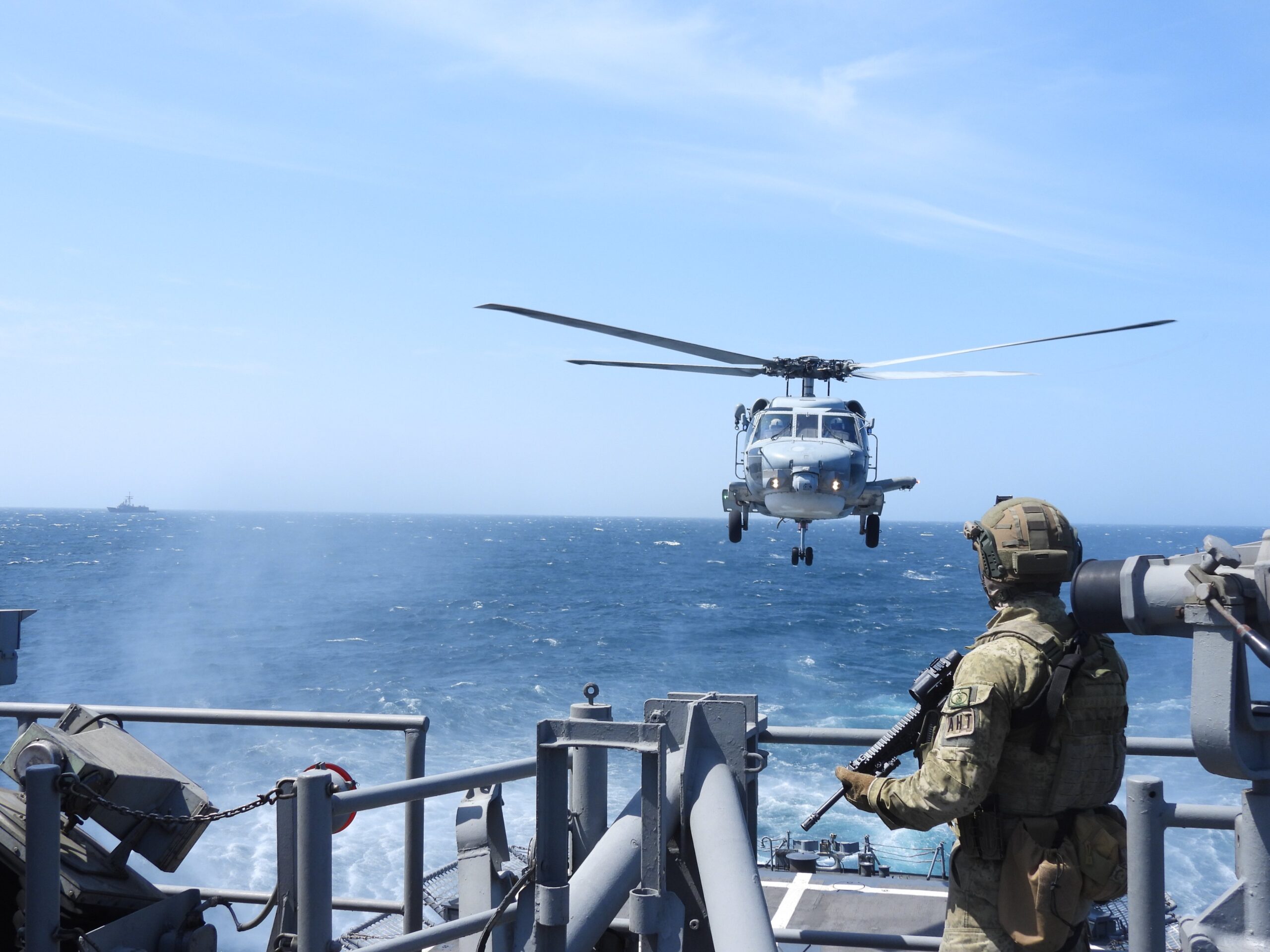
Turkey already maintains an active naval presence in the region: its warships currently escort an energy exploration vessel operating off the Somali coast, and Ankara continues to participate in a United Nations-backed anti-piracy mission in the Gulf of Aden.
Tensions have already risen ahead of Turkey’s ratification of the pact: last week, a senior Ansar Allah (Houthi movement) official, Mohammed al-Bukhaiti, issued a public warning to Turkey and Pakistan against intervening on Saudi Arabia’s behalf, stating that any direct intervention would come with a “heavy price.”
In Ankara, the broad consensus is that Turkey cannot afford a direct confrontation with the Houthis, and should instead prioritize diplomatic mediation between Riyadh, Tehran, and the Yemeni group. Betul Dogan-Akkas, an assistant professor of international relations at Ankara University, pointed out that Turkey has never designated the Houthis as a terrorist organization, leaving critical diplomatic communication channels open. She added that Turkey’s large Yemeni diaspora community, which retains deep tribal connections across Yemen, gives Ankara unique political capital to push for diplomatic resolution to the years-long Yemeni civil war.
“The members of the Mecca alliance would probably not want their first action to be directed against another Muslim group,” Dogan-Akkas noted.
Muhammed Huseyin Mercan, a senior fellow at Ankara-based think tank Seta, echoed that assessment, warning that any military confrontation would create ripple effects far beyond the Red Sea. He pointed to recent attacks on Saudi energy infrastructure carried out by Iran-aligned Iraqi militias, noting that a Turkish clash with the Houthis would severely strain Ankara’s relations with Baghdad, and complicate ongoing peace efforts to resolve the conflict with the Kurdistan Workers’ Party (PKK).
Turkey has recently made significant progress in encouraging PKK and affiliated groups to disarm and integrate into Iraqi political and administrative structures, a process that relies heavily on Baghdad’s cooperation. The Iraqi militias that back the Houthis have already demanded the full withdrawal of Turkish troops from northern Iraq as a condition for their own disarmament and integration into Iraq’s national armed forces, so a Houthi confrontation could derail these fragile peace talks, Mercan explained.
“Turkey should try to bring all sides to the table and help lay the groundwork for a comprehensive agreement to end Yemen’s civil war,” Mercan told MEE.
Even with these substantial risks, experts agree that Turkey is still likely to move forward with providing defensive military support to Saudi Arabia, including drones, air defense systems, and ammunition. Senior regional officials familiar with ongoing negotiations confirmed to MEE that Ankara plans to provide defensive assistance while deliberately avoiding direct military intervention inside Yemeni territory.
The deployment of defensive assets, including aircraft, system operators, and technical support personnel, could begin as early as October, immediately after the Turkish parliament ratifies the Mecca pact. The assistance is explicitly structured to counter Houthi missile and drone attacks targeting Saudi territory. This aligns with Turkey’s existing defense relationship with Riyadh: in recent years, Ankara has already signed multiple major agreements to supply drones and ammunition to the Saudi military.
Yasmeen al-Eryani, executive director for knowledge production at the Sana’a Center, a Yemeni-based independent think tank, noted that the crisis also creates a unique diplomatic opening for Turkey. “Turkey has actively strengthened its relations with Saudi Arabia while maintaining a delicate balance with Tehran. It can help convey messages, promote de-escalation and mitigate the impact of the conflict,” al-Eryani said. She added that Ankara could play a valuable secondary mediation role to reduce tensions surrounding the Houthi control of Bab al-Mandeb, benefiting all regional states that rely on the strait for global trade.