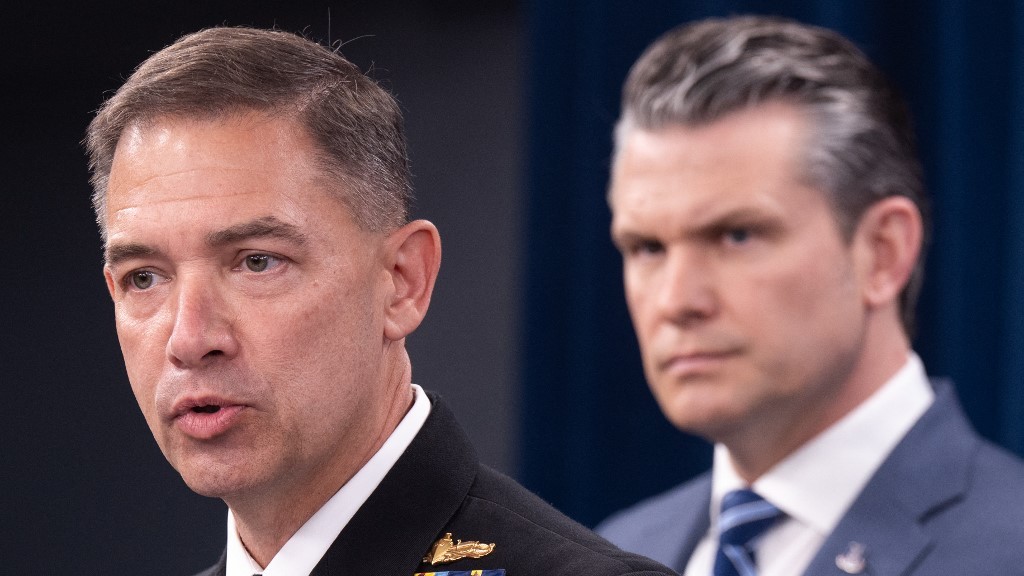
A highly confidential gathering of top military commanders from the United States, Israel, and multiple Arab nations took place in Germany last week to coordinate strategy around the ongoing Israel-US military campaign against Iran, details of which have been disclosed by anonymous Israeli sources to journalists. The exclusive report, published by Axios and written by Barak Ravid — a former Israeli intelligence officer who now works as a political and security correspondent — reveals that the closed-door “private retreat” was arranged personally by Admiral Brad Cooper, the head of U.S. Central Command (Centcom).
According to two unnamed Israeli officials interviewed by Ravid, the meeting included the highest-ranking military chiefs of staff from eight nations: Israel, Saudi Arabia, the United Arab Emirates, Bahrain, Kuwait, Qatar, Jordan, and Egypt. This gathering marks the first formal collective meeting of these military leaders since the Israel-US war against Iran began more than six months ago.
While none of the participating regional nations have issued any public confirmation of the meeting, Centcom has released an official, albeit vague, acknowledgment of the event. In a short public statement, the command confirmed it “hosted senior military leaders from eight nations during a scheduled conference in Germany” and added that attendees “discussed opportunities for enhancing security cooperation in the Middle East.”
Beyond the broad public confirmation, leaked details from the closed-door sessions indicate that Admiral Cooper used the meeting to deliver a key reassurance to regional partner nations. Despite repeated large-scale Iranian strikes on U.S. military installations across the Middle East that have caused extensive damage, Cooper stated that Washington has no intention of withdrawing its military forces from the region.
Verified open-source satellite analysis conducted by *The Washington Post* has confirmed that Iranian attacks have left their mark on at least 15 separate U.S. military sites spread across the region, including bases in Kuwait, Bahrain, Qatar, the UAE, Saudi Arabia, Iraq, Oman, and Jordan. Hundreds of structures and pieces of military hardware have been destroyed or damaged, with many bases rendered functionally unusable. The most severe impact has been felt at the U.S. Navy Fifth Fleet headquarters in Bahrain, where extensive damage forced Centcom to reroute all regional logistics operations to alternate sites.
In addition to addressing force posture, Cooper also outlined U.S. plans to increase commercial and military ship traffic through the Strait of Hormuz, a critical global chokepoint for oil and gas trade that has become a major flashpoint in tensions with Iran.
For his part, Israeli Chief of Staff General Eyal Zamir used the gathering to give attendees a full briefing on ongoing Israeli military operations across the Middle East, per one Israeli official quoted in the Axios report. A key structural change also followed the meeting: Israel was officially transferred from the U.S. European Command’s area of responsibility to Centcom, a shift that opens the door to far more direct military cooperation between Israel and the participating Arab states under the U.S. military command structure.
Not all regional and security observers view the new alignment and Admiral Cooper’s leadership positively, however. Andreas Krieg, an associate professor at King’s College London who specializes in Middle East security, noted that there is widespread underlying distrust of Cooper among Gulf Arab governments. Krieg argued that regional capitals see Cooper as excessively aligned with Israel, overly hawkish toward Iran, and prone to pushing military operational options that carry high risks of strategic disaster for the region.