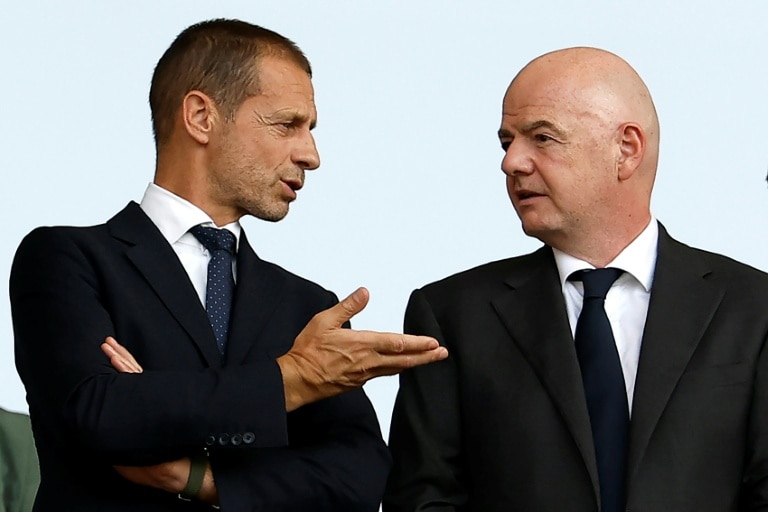
A high-stakes public rift has erupted between the leaders of global football’s two most powerful governing bodies, as UEFA President Aleksander Ceferin has publicly demanded FIFA chief Gianni Infantino step down — while explicitly ruling out any personal bid to replace him. The growing crisis at FIFA stems from Infantino’s now-scrapped controversial plan to bring private investment into top FIFA competitions, including the men’s World Cup. The proposal sparked widespread backlash across the global football ecosystem, leaving Infantino facing cascading withdrawals of support from multiple continental confederations and national federations, with UEFA threatening to boycott future FIFA tournaments over the plans. In an interview with *The Rest is Politics* podcast on Monday, the 58-year-old Slovenian UEFA leader laid out his position clearly, confirming he has no ambition to take Infantino’s job. “I’m not interested because of two reasons,” Ceferin explained. “One reason is that I love UEFA and I love working here, and I think that at a certain point… it’s time to also enjoy life a bit. And the second point is, my credibility is much, much higher if I’m not interested in the position.” Ceferin has been one of the most vocal critics of Infantino’s privatization plan since it was unveiled, and he argued on Monday that Infantino’s once unassailable grip on the FIFA presidency is now irrevocably weakened. He laid out two possible outcomes ahead of the next FIFA Congress, scheduled for March 2025 in Morocco: Infantino will either voluntarily step down, or he will face a formal leadership challenge when he runs for re-election. The rift marks a dramatic reversal from 2016, when Infantino, a former UEFA secretary general, won the FIFA presidency following the resignation of disgraced former leader Sepp Blatter with broad backing from European football nations. Ceferin also confirmed that the two leaders have not communicated at all since the controversy over the private investment plan erupted. “There are two options,” Ceferin said of the coming months. “One option is that he realises that he doesn’t have the support, and that’s not only a political support of the ones who vote, but the political support of the football community, the political support of fans, the political support of the players, former players, coaches. And the second option, that he goes to the elections in March, but in that case I think he will have a candidate against him. I don’t know yet who.” Two leading football administrators have emerged as the most likely potential challengers should Infantino follow through on a re-election bid: CONCACAF President Victor Montagliani and Asian Football Confederation (AFC) chief Sheikh Salman bin Ebrahim al-Khalifa. For his part, Infantino has pushed back against the mounting pressure, claiming he continues to hold significant support among the global football community. Over the weekend, he carried on with a scheduled visit to the Dominican Republic for meetings with Caribbean football leaders, despite reports that Montagliani had asked him to avoid the trip, which included a planned appearance at a regional youth tournament. In pre-recorded video remarks released by FIFA on Sunday, Infantino appeared to address the brewing leadership crisis without referencing it directly. “It’s important to engage, to have a dialogue, to express views and opinions,” he said. “A lot has been happening the last few weeks and it’s important that you hear, you listen, and you’re able to also express what your feelings are. So I think overall positive, very, very happy with all the support I get here.” The standoff now sets the stage for a historic showdown over the future of global football governance, just months ahead of FIFA’s key presidential election.