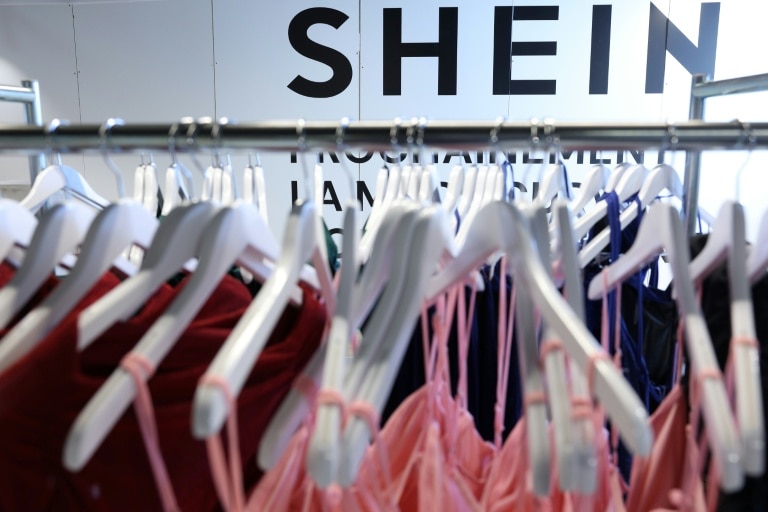
Global fast-fashion e-commerce leader Shein has formally announced its long-awaited initial public offering (IPO) will launch on the Hong Kong Stock Exchange on September 1, confirming a valuation of nearly $27 billion for the company at the top end of its offering range, according to an official filing released Monday.
In its regulatory submission to the Hong Kong bourse, the retailer outlined plans to issue 280 million new shares at a price band between HK$47.60 and HK$49.50 per share. If all shares are issued at the upper end of the range, the offering will raise approximately US$1.7 billion (HK$13.86 billion) in gross proceeds. The company will finalize its offer price on August 31, with the listing set to go live the following day.
Founded in mainland China and headquartered in Singapore since 2022, Shein secured final approval from Chinese regulatory authorities for the Hong Kong listing just last month, marking an end to years of delays that derailed earlier plans to list on either the New York or London stock exchanges due to cross-border regulatory hurdles.
Unlike many of its fast-fashion competitors, Shein has built its competitive advantage on the back of China’s unparalleled textile manufacturing ecosystem and a hyper-responsive supply chain model. The company’s ability to roll out new product designs in days, paired with its famously low price points, has catapulted it to the top tier of global e-commerce, reaching comparable market standing to Amazon in the U.S. consumer market. As of the end of 2025, the platform counted 156 million average monthly active users across Europe, outranking Amazon and trailing only fellow Chinese cross-border platform AliExpress in monthly user size on the continent.
Shein confirmed that the net proceeds from the IPO will be allocated to two core priorities: upgrading its technological infrastructure and expanding its global market footprint. The move to Singapore for its headquarters was widely framed by analysts as a strategic step to reduce growing geopolitical and regulatory scrutiny of China-founded global corporations, though the company still retains nearly all of its manufacturing base in China, leveraging the country’s low-cost production capacity and advanced e-commerce logistics network.
Despite its impressive growth trajectory, Shein has faced mounting regulatory and public scrutiny across major Western markets in recent years. The company reported a full-year net profit of $2.06 billion for 2025, but posted a $99 million net loss in its most recent quarter after the U.S. eliminated a longstanding import duty exemption for small-value packages, a change that directly raised costs for the company’s core cross-border shipping model.
Regulatory pushback has been particularly sharp in the European Union. Earlier this year, a French appeals court rejected a government request to temporarily suspend a portion of Shein’s French website after illicit childlike sex dolls were discovered on the platform (the products were immediately removed after the discovery). In June alone, French regulators issued two fines totaling more than €22 million ($25.1 million) over violations including inadequate product traceability, incorrect environmental labeling, and non-compliance with delivery transparency rules. Cumulative fines imposed on Shein by French authorities now exceed €210 million, and Italian regulators have also issued fines over allegations of misleading environmental claims.
Beyond regulatory penalties, the company has faced repeated criticism over its environmental impact, driven by its high-volume, fast-turnover business model, as well as long-running allegations of supply chain human rights violations. Shein’s executive chairman has repeatedly pushed back on these claims, telling Agence France-Presse last year that the company maintains “zero tolerance” for forced labor in its supplier network.