博客

  • Australian shark attack victim grateful for ‘second chance at life’

    Australian shark attack victim grateful for ‘second chance at life’

    A 34-year-old Australian mother who survived a brutal shark mauling at one of Sydney’s most popular public beaches says she is ready to embrace the new lease on life she has been given, after months of grueling recovery that included emergency surgery and the amputation of one arm.

    Leah Stewart was attacked by the predator during an early morning swim at Coogee Beach back in June, suffering multiple laceration bites across her arms and legs. The incident was one of a string of deadly shark encounters recorded across Australia throughout 2026, which have claimed multiple lives already this year.

    Following the attack, Stewart was placed in an induced coma by emergency medical teams to stabilize her condition, and underwent multiple urgent surgical procedures to save her life – one of which required the amputation of one of her arms.

    In her first public statement since the attack, shared via social media on Monday, Stewart opened up about her challenging recovery journey, and expressed profound gratitude to the thousands of supporters who have rallied around her. An online community fundraiser organized on her behalf has now raised more than AU$550,000, equal to roughly US$394,000, to cover her ongoing medical and living costs.

    “After what has been an incredibly difficult few months, I’m so happy that I’ve progressed enough to build some independence, and I can finally see some light after all of this,” Stewart wrote. “I want you to know that I feel like I’ve been given a second chance at life, and I’m not going to waste it.”

    Stewart said she had been overwhelmed by the outpouring of support from her loved ones and even complete strangers from across the globe, adding that the kindness she has received has inspired her to focus on healing rather than resentment. “You’ve inspired me to get better, not bitter,” she wrote.

    She confirmed that the online fundraiser would be officially closed now that the target has been far exceeded. The funds will allow her to complete her recovery in the comfort of her own home, and will also cover the cost of future adaptive medical treatments and prosthetic care.

    “I still have a long way to go, but my recovery has been remarkable, and a huge part of that is because of the absolute army of love, support, prayers and encouragement surrounding my family and I from all over the world,” Stewart added.

    Stewart’s full account of the attack will be broadcast this weekend on Nine Network’s flagship current affairs program *60 Minutes*. In pre-released excerpts from the interview, she described coming face-to-face with the shark before the attack, saying she will never forget the “horrific” sight of the animal. “I’ll never forget its face – it was a monster,” she said.

    Recounting the terrifying moment the shark latched onto her leg, Stewart said her first and only thought was of her young daughter, August. “I just thought, ‘she’s not going to have a mum. She’s gonna grow up without a mum’,” she recalled. Fighting back tears, she added, “I couldn’t handle that, I didn’t want her to not have a mum. I just thought, I’ve got to fight it, do everything I can to be here.”

    The attack on Stewart comes amid a marked rise in shark encounters along Australia’s coastlines this year. In January, four separate shark attacks were recorded across the country in just a 48-hour window, including one that left a 12-year-old boy dead from his injuries. In May, a spearfisher was killed by a shark off the coast of Queensland, and a father of two died after being attacked by a 4-meter great white shark in Western Australia.

  • ‘Blaize knows’: Panthers face selection headache for finals as Ivan Cleary addresses Kangaroos rumour

    ‘Blaize knows’: Panthers face selection headache for finals as Ivan Cleary addresses Kangaroos rumour

    Veteran NRL head coach Ivan Cleary is navigating two major looming storylines simultaneously: a crunch selection dilemma for his in-form Penrith Panthers side amid a tight minor premiership race, and growing speculation linking him to the vacant Australian Kangaroos head coaching job.

    With just two rounds remaining in the 2024 NRL regular season, Penrith finds itself deadlocked with the New Zealand Warriors and Sydney Roosters atop the ladder on 38 competition points. A slightly inferior for-and-against record drops the Panthers to second place, but two wins from their remaining fixtures against Canterbury-Bankstown Bulldogs and Wests Tigers would lock in a second-place finish, guaranteeing two home finals matches to open the post-season.

    This tight ladder position rules out the approach Penrith took in last year’s corresponding round 26 clash with the Bulldogs, when the side rested nearly all of its starting 17. This week, the Panthers will already be without starting five-eighth Jack Cogger, who accepted a three-match suspension for a high tackle against the Melbourne Storm. Cogger opted to accept the ban rather than contest the charge at the NRL judiciary, where a prior earlier-season offence would have pushed the potential suspension to four matches had he lost his appeal. “Three weeks is bad enough, but four’s worse,” Cleary told reporters. “Super disappointed with it, to be honest. But ultimately, we didn’t think we could win.”

    Cogger’s suspension has thrown a last-minute curveball into Penrith’s finals preparations. Only a few weeks prior, Cogger had reclaimed the starting five-eighth spot from young talent Blaize Talagi over ongoing defensive concerns, and Talagi has since lined up for the club’s reserve grade side. While Talagi offers significant attacking upside, repeated defensive misreads have put his selection in doubt for Friday’s clash. The current frontrunner to partner Nathan Cleary in the halves is Jack Cole, who already stepped into the starting role when Cogger was unavailable in round 23.

    Cleary noted that the squad has already addressed Talagi’s defensive gaps, and that the sudden vacancy is just another routine challenge of a long NRL season. “You’d prefer it if you get a little bit more cohesion there, but all the boys that have played there have sort of played enough. It’s just another challenge that you get throughout the season,” he said. “It’s an important position, a big game with top two spots still up for grabs. The team is the most important thing. Whoever fills the job, we have confidence they’ll do it. Injuries and suspensions have hit every side this year, so you just have to be ready for everything, have different contingencies. It’s not all about one guy who starts, there are plenty of other things that you’ve got to work out as well.”

    In additional injury news, starting hooker Mitch Kenny remains sidelined with a serious lower-leg injury and will not return this week, though he is on track to record game minutes in the final round of the regular season.

    Off the field, Cleary remained tight-lipped when asked about speculation linking him to the Kangaroos head coaching vacancy, which opened after incumbent coach Kevin Walters announced he would step down following the 2024 World Cup to take over at English Super League side St Helens.

    Cleary is currently contracted to Penrith through the end of the 2027 NRL season, and recently stepped down from his role as New South Wales Blues head coach, with the NRL locking in Matt King as his replacement several weeks ago. The four-time premiership-winning coach previously served as an assistant coach for the New Zealand Kiwis at the 2013 World Cup, making him a high-profile candidate for the Kangaroos role, alongside Kangaroos legend Cameron Smith.

    “If I’ve been linked to it, I’d be very honoured, but it’s not something I’m thinking about because I don’t know what I’ll be doing,” Cleary said. “I’m still coaching in the NRL, it’s a big enough job, plenty to be worrying about anything else, so that’s what I’m doing. I don’t know why I’m being considered because I don’t know much to it.”

  • Migrants, rescue ships face threats, harassment at sea: aid group

    Migrants, rescue ships face threats, harassment at sea: aid group

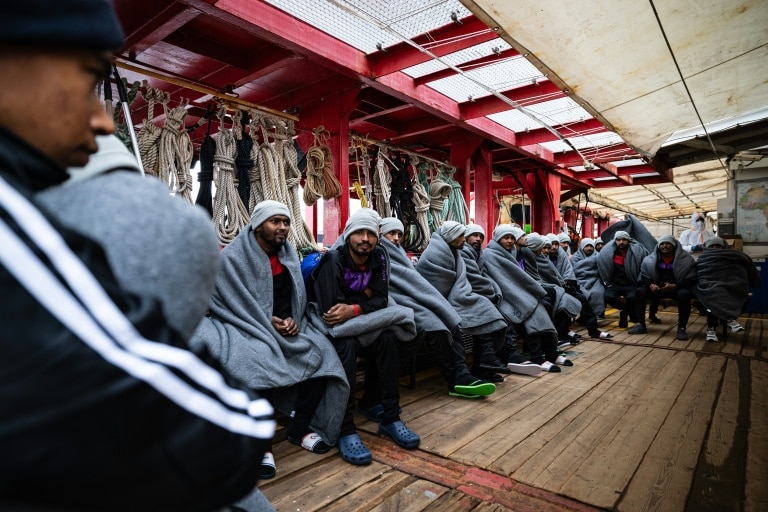
    The central Mediterranean crossing route for African migrants seeking entry to Europe has grown far more dangerous in recent months, with armed Libyan factions increasingly threatening and harassing both vulnerable migrants at sea and civilian humanitarian rescue operations, a leading search-and-rescue aid organization has reported.

    Europe’s enhanced cooperation with Libyan authorities and armed groups to block migrant departures has directly fueled this rising hostility, according to SOS Mediterranee, the NGO that operates the prominent rescue vessel Ocean Viking. The organization documented at least seven separate incidents between June and July where boats linked to Libyan actors approached NGO rescue craft at high speed, shadowed them for hours on end, and even chased the vessels into open international waters.

    Beyond these targeted encounters, the group notes a sharp uptick in unmarked speed boats affiliated with multiple Libyan armed groups operating in the crossing region. These unidentified craft have carried out violent interceptions of migrant vessels in distress, including deliberately ramming overcrowded boats and executing dangerous maneuvers that put all people on board at grave risk of death.

    This pattern of aggression is not a new development. Last year, SOS Mediterranee accused the Libyan coast guard of attacking the Ocean Viking while the ship was operating in international waters, with more than 100 rounds fired at the vessel. At the time of the attack, 87 rescued migrants and the ship’s civilian crew were on board, putting every person in immediate danger. Legal cases related to the attack have been launched in Italy, France, and Germany, but the organization says European Union institutions and national authorities across the bloc have refused to comment on the incident, and no perpetrators have been identified or held accountable to date.

    SOS Mediterranee is now calling for a full, independent international investigation into the escalating violence targeting migrants and rescue operations in the central Mediterranean.

    Data from the United Nations International Organization for Migration (IOM) released earlier this month supports the aid group’s warnings: while stricter European migration deterrence policies have cut the total number of migrants attempting the deadly crossing, the fatality rate for those who do set out has spiked dramatically. Between January and April of this year, the IOM recorded 821 people dead or missing at sea along the route, a 111% increase compared to the same period in 2025. Over the same timeframe, total migrant arrivals to European shores fell 46% to just 8,577 people.

  • New Zealand moves to ban social media for under-16s

    New Zealand moves to ban social media for under-16s

    Almost 18 months after neighboring Australia introduced what was then the world’s first national ban on social media use for children under 16, New Zealand’s center-right government is officially bringing forward its own sweeping legislation to restrict underage access to major platforms, in one of the most ambitious global attempts to curb youth exposure to online harm. Prime Minister Christopher Luxon’s ruling National Party has spent more than a year reviewing Australia’s policy and designing its own regulatory framework, which is set to be introduced to parliament this coming Monday.

    The core of the proposal, titled the Online Safety Bill, prohibits any child under the age of 16 from creating and using personal accounts on major social media platforms including Meta-owned Instagram and Facebook, ByteDance’s TikTok, and Snap Inc.’s Snapchat. To enforce the rule, the legislation requires platforms to take legally mandated reasonable steps to verify the age of all new users, mandating verification methods ranging from existing account metadata and formal government-issued identification to digital ID services and AI-powered facial age estimation tools. Beyond age checks, platforms will also be required to conduct regular mandatory assessments of the risks their platforms pose to underage users and publish public reports detailing their efforts to mitigate those harms.

    The stakes for non-compliance are steep: platforms that fail to meet their regulatory obligations could face fines equal to as much as 10% of their annual global revenue, a penalty structure aligned with strict digital regulations introduced by the European Union in recent years. Crucially, the bill does not impose any fines or legal penalties on children who access platforms, nor on their parents or caregivers, a clarification Education Minister Erica Stanford emphasized as the government rolled out the proposal.

    Luxon made the case for the controversial legislation in stark terms, framing it as a necessary intervention to protect a generation of young New Zealanders. Citing public health data, he noted that one in three teenagers between 13 and 17 currently spend at least five hours per day on social media platforms. “Social media is exposing them to harmful content, addictive technology and pressures they are not equipped to deal with, and it’s affecting their family life, mental health, sleep, and education,” Luxon said. “We simply cannot accept the harm being done to a generation of New Zealand children.”

    Despite the government’s push for the bill, its path to becoming law remains far from certain. The National Party holds a plurality in parliament, governing in coalition with two smaller parties – the libertarian ACT Party and the populist NZ First – both of which have already publicly announced their opposition to the proposal. NZ First cited what it calls the “colossal failure” of Australia’s similar policy, which was implemented in December 2023, to justify its opposition. ACT, meanwhile, has argued the ban is unworkable, claiming that tech-savvy teenagers will easily find ways to bypass age verification checks.

    Critics of the ban can already point to independent research out of Australia that casts doubt on the effectiveness of the under-16 ban. A peer-reviewed study conducted by Australian researchers, published in June 2024, found little empirical evidence that the ban had led to a meaningful drop in social media use among Australian teenagers. New Zealand joins a growing number of countries around the world that are exploring strict age-based restrictions on social media access, as policymakers grapple with rising concerns about the impact of unregulated social media use on youth mental health and well-being.

  • Divorce, smartphones and control – BBC sees how Taliban run Afghanistan

    Divorce, smartphones and control – BBC sees how Taliban run Afghanistan

    Five years have passed since the Taliban seized control of Afghanistan, ousting the U.S.-backed government that had held power for two decades. In a rare, multi-year access arrangement, BBC correspondents gained unprecedented entry to meet with senior Taliban officials, offering an unfiltered look at the gap between the group’s pre-power promises of moderation and the hardline reality of its current rule.

    One of the most striking encounters took place in the office of Abdullah Sarhadi, governor of northern Afghanistan’s Jawzjan Province, as an 18-year-old woman – identified only by the pseudonym Tuba to protect her identity – confronted the former Taliban commander to demand a divorce from her husband, who she says has abused her for months. Fully veiled and wearing sunglasses to conceal her identity, the young woman stood her ground, stating calmly, “If there was any chance to live together, I wouldn’t be here… I have taken my decision.”

    After attempting to pressure Tuba into remaining in the marriage – warning her that no man would marry a divorced woman and claiming she would lose her social standing – Sarhadi ultimately dismissed her request, and privately commented to the room of male officials, bodyguards and local elders that women are “mindless” and “deficient in intellect”, prompting laughter from those present. Under Taliban-imposed Sharia law, women face extreme barriers to securing divorce without spousal consent; Tuba’s husband demanded four times the original bridal bride price as a settlement, a demand her family refused. Even after Sarhadi ordered the husband to stop beating Tuba and provide her with a separate room, Tuba’s father told the BBC the family would continue pursuing divorce through Taliban courts, despite the long odds of success. This public, on-the-record exchange offers a rare unvarnished glimpse into how gender restrictions play out in daily life under Taliban rule.

    Sarhadi’s own trajectory mirrors the journey of many senior Taliban figures now holding national office. A military commander during the Taliban’s first rule in the 1990s, he surrendered to U.S.-led coalition forces in 2001 when the group was ousted, and spent several years detained at the U.S. Guantanamo Bay detention camp before being released. When the Taliban retook power in 2021, he was first appointed governor of Bamiyan Province, then moved to lead Jawzjan, and most recently became deputy commander of a military corps in Kunduz Province. When pressed about the 2001 destruction of the ancient giant Bamiyan Buddha statues – an act that triggered global condemnation – Sarhadi made an unflinching admission: he personally helped destroy the UNESCO-recognized archaeological site. “Whatever we did and we do is in accordance with the guidance and God’s law… We smash idols rather than sell them. Why should I regret? It was God’s will,” he said. He also confirmed that a recent ban on smartphones for government officials has slowed administrative work, but declined to criticize the policy further, noting any open opposition would “cause trouble”.

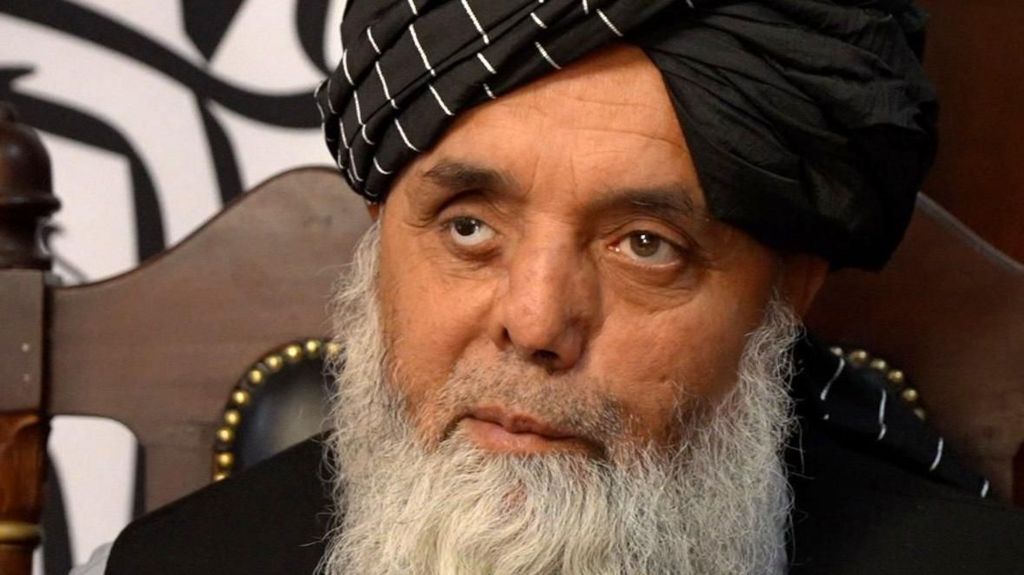
    Another senior Taliban official, Habibullah Badr, who now holds a position in the ruling administration after stepping back temporarily for medical treatment, admitted he previously planned and oversaw suicide attack operations in Kabul during the insurgency. The former death row inmate even went on to run the same prison where he was once held under the former U.S.-backed government, serving as national deputy head of prisons. When questioned about the thousands of civilian deaths caused by Taliban suicide attacks during the insurgency, Badr evaded questions about specific strikes, claiming the group only targeted U.S. convoys and warned civilians to stay away from foreign installations, and refused to discuss past violence, saying it would “reopen wounds” and upset the public.

    At a tribal gathering where Badr was set to receive a medal honoring his service, a rare moment of public dissent played out: foundation head Sultan Mohammad Talaee publicly called on the Taliban to reopen girls’ secondary schools, which have been banned nationwide since the group took power. “Seeking knowledge is an obligation for both men and women in Islam,” Talaee told the crowd, before his microphone was immediately cut off and he was prevented from speaking further. Dissent like this carries severe risk: women who have protested restrictions have been jailed, and most local journalists the BBC spoke to reported being regularly summoned and interrogated by the Taliban’s intelligence agency, Estikhbaraat.

    When pressed by the BBC about broken promises to allow women to work and study within Islamic frameworks, Taliban chief spokesman Zabihullah Mujahid – who publicly revealed his birth name, Tahir Shah Seddiqi, for the first time during the interview – defended the group’s policies, arguing that all women’s rights and freedom of expression must be interpreted “through the Sharia lens”. He claimed allowing women to work in government offices would “lead to immoralities” and “undermine their dignity”, and said that discussions around reopening girls’ education are still ongoing, with a Sharia-compliant solution still being developed. On media freedom, Mujahid confirmed the group maintains restrictions, stating that media cannot be allowed to broadcast content against Islamic law or spread anti-government propaganda.

    While the formal seat of government remains in Kabul, Mujahid confirmed most senior leadership is based in Kandahar, the Taliban’s historic heartland and the de facto national capital, where restrictions have only tightened in recent years. Men are required to grow beards, radio stations are banned from playing music or broadcasting women’s voices, and independent journalists are prohibited from filming in the city. The Taliban’s supreme leader, Hibatullah Akhundzada, who almost never appears in public and has never given a media interview, declined the BBC’s request for a meeting.

    In a remote, impoverished region outside Kandahar, former insurgent fighters who now serve as government security personnel showed the BBC the secret cave network they used to hide from coalition forces during 20 years of insurgency. One local commander, Abdul Samad, whose father was killed fighting for the Taliban, acknowledged that the region – already one of the poorest in a country where the UN estimates three-quarters of the population cannot meet basic needs – has yet to receive the infrastructure and development support residents need. “Emirate officials have not forgotten us. They are busy with other priorities, but we are hopeful they will look after us sometime,” Samad said.

    Five years into the Taliban’s second rule, Afghanistan remains mired in widespread poverty, mass unemployment and economic collapse. While Taliban officials claim they are working to address these crises, many Afghans say the group’s rule itself is the primary obstacle to stability. For women in particular, systemic restrictions on education, work, movement and public life have destroyed decades of progress. “I’m speechless about how a group that has no understanding about life is suddenly in power,” said Hoda, a female activist who protested the 2021 takeover who requested anonymity for her safety. “Women can’t accept this situation. They might advance restrictions but it won’t stay like this forever. I think the Taliban are scared of educated women, that’s why they restrict us: they want uneducated women who cannot raise a generation that will challenge and end their rule.”

  • What do locals think of IndyCar in Washington DC?

    What do locals think of IndyCar in Washington DC?

    On a sunny Sunday in the heart of the U.S. capital, Washington D.C. played host to a rare and thrilling event: an IndyCar street race that drew hundreds of spectators from across the region – and one very high-profile guest. Former U.S. President Donald Trump was spotted in the crowd, joining racing enthusiasts and curious onlookers alike to watch the high-speed competition roar past iconic downtown landmarks.

    The race marked a unusual moment for Washington, a city better known for political gridlock and bureaucratic business than for wheel-to-wheel motorsports action. As the open-wheel cars zoomed along closed city streets, the event sparked a range of reactions from local residents, who weighed in on everything from traffic disruptions to the economic boost the race could bring to the district. For many locals, the arrival of IndyCar offered a welcome break from the daily grind of political news, bringing a new form of entertainment to the nation’s capital that put D.C. in the national sports spotlight. Others raised questions about the long-term value of hosting major motorsports events in a dense urban environment, citing concerns over road closures, noise pollution, and public resources allocated to the one-off event. Regardless of differing opinions, there was no denying that the race generated widespread buzz across the city, with Trump’s appearance adding an extra layer of media attention to the already high-profile sporting occasion.

  • Uganda and Burundi military officials visit Israel to discuss Gaza troop deployment

    Uganda and Burundi military officials visit Israel to discuss Gaza troop deployment

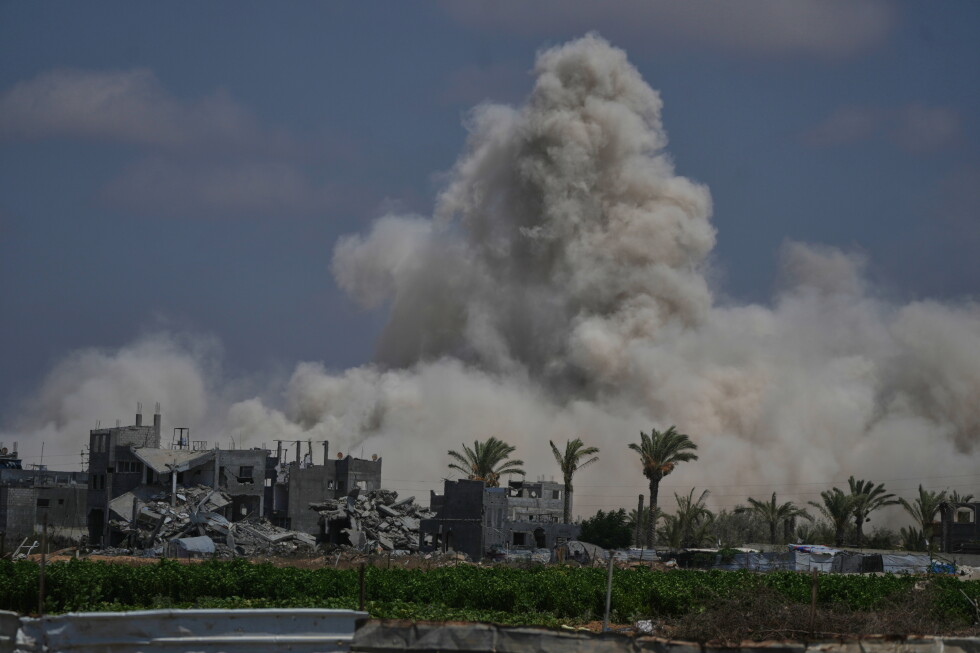
    Diplomatic and military discussions centered on expanding the planned U.S.-backed international security force for Gaza have advanced this week, with delegations from Uganda and Burundi holding closed-door talks with Israeli and U.S. Board of Peace officials last week in Tel Aviv, multiple anonymous sources have confirmed to the Associated Press. The proposed force is a core component of former U.S. President Donald Trump’s Gaza peace framework crafted to sustain the region’s fragile current ceasefire.

    A senior Board of Peace official, who requested anonymity as talks with potential contributing nations remain confidential ahead of any final agreement, confirmed that the Ugandan and Burundian delegations held knowledge-sharing sessions during the visit. Uganda is moving quickly to finalize its participation plans, after its parliament formally approved a troop contribution for the mission earlier this month, while Burundi has not yet concluded its internal negotiations, though senior officials have signaled clear intent to join the initiative.

    A separate Burundian military source, also speaking anonymously to the AP, confirmed the country’s delegation was led by three senior military officers, adding that Burundi’s leadership remains committed to moving forward with the deployment. Details on the exact size of the contingent both nations will contribute, as well as any potential financial or strategic compensation they will receive for their participation, have not been made public, and military spokespeople for both countries have not responded to repeated requests for comment from international media.

    If Burundi formalizes its commitment, the two East African nations will join a growing list of countries that have already pledged personnel to the force, including Morocco, Kosovo, Kazakhstan, and Albania. To date, Uganda has pledged approximately 1,200 troops, Morocco has committed up to 500, and the three remaining nations collectively have offered around 80 personnel. Indonesia, which previously announced plans to deploy 8,000 troops — the largest proposed contribution by any nation — has put its deployment plans on hold following the U.S.-Israeli military strike on Iran.

    The overall target for the full force is 20,000 troops, which will be led by U.S. Major General Jasper Jeffers. Current commitments remain far below this goal, and overall progress on standing up the force has moved at a slow pace amid ongoing political gridlock over the ceasefire terms.

    The proposed peace framework, first announced by Trump last month, outlines a path forward that requires Hamas to fully disarm, Israel to withdraw all military forces from Gaza, and the deployment of the International Stabilization Force to regions of Gaza that will be administered by a new technocratic Palestinian committee. The force’s core mandates include monitoring ceasefire compliance, training local Palestinian police forces, and supporting the safe delivery of humanitarian aid to the territory’s civilian population.

    The ceasefire that went into effect in Gaza last October has stalled in recent weeks, deepening gridlock over the core terms of the peace plan. Israeli Prime Minister Benjamin Netanyahu has rejected the U.S.-brokered proposal, stating that Israeli forces will not withdraw from the roughly 60 percent of Gaza that they currently control until Hamas is completely eliminated and disarmed. Earlier this month, a U.S. delegation led by senior negotiator Jared Kushner held separate marathon talks with Hamas leadership and Netanyahu to break the impasse; while Hamas has agreed to the terms of the framework, Israel has yet to offer any concrete commitment to move forward with the plan.

    Security analysts note that Uganda and Burundi bring unique practical experience to the proposed mission, having deployed thousands of troops to long-term peacekeeping operations in Somalia as part of an African Union-led counterterrorism mission against the al-Qaida-affiliated extremist group al-Shabab. Paul D. Williams, director of the security policy studies program at George Washington University, explained that both governments have a proven track record of tolerating high casualty rates during peacekeeping deployments without pulling out their forces.

    Williams added that as the Somali peacekeeping mission draws down, both nations are actively seeking new deployment opportunities to secure ongoing financial and material support for their national militaries. “Deploying to Gaza with U.S. backing is a logical and attractive opportunity for both governments to sustain that support,” he noted. A senior Ugandan military officer with direct knowledge of the deployment preparations also confirmed to the AP that the process of selecting troops for the Gaza mission is already underway.

    Diane Falzetta contributed additional reporting for this story from Nairobi, Kenya.

  • What to know about Iceland’s vote on whether to restart talks to join the EU

    What to know about Iceland’s vote on whether to restart talks to join the EU

    On a crisp election weekend in Reykjavik, Iceland’s 400,000 eligible voters headed to the polls to decide one of the most consequential questions in the small Nordic nation’s modern history: whether to restart accession negotiations for membership in the European Union. What many observers did not expect was that a series of offhand remarks from former U.S. President Donald Trump would accelerate the vote and shift the tone of the entire national debate.

    Earlier this year, as Trump pushed repeatedly for the U.S. to gain control of Greenland, the self-governing Danish territory bordering Iceland, he made a repeated public gaffe: he called the territory “Iceland” no fewer than four times, describing it as “a piece of ice, cold and poorly located” that he wanted to acquire. The mistake sent immediate shockwaves through Icelandic public opinion. Even though Trump’s target was Greenland, not Iceland, the blunder stoked long-simmering anxieties about great power interference in the small Arctic nation’s sovereignty. The government, which had originally planned to hold the referendum by 2025, moved the vote up to Saturday, citing shifting geopolitical risks that demanded an urgent decision.

    The anxiety was compounded by a separate misstep from the incoming U.S. ambassador to Iceland, William Long, who joked shortly after his appointment that he hoped Iceland would become the 51st U.S. state, and he would serve as its governor. Though Long quickly apologized for the offhand comment, it prompted thousands of angry Icelanders to sign a public petition calling on the prime minister to reject his credentials. For pro-EU campaigners, the two incidents crystallized a core argument: in an era of unpredictable great power competition, Iceland’s hard-won independence is better protected within a unified European bloc than going it alone.

    “We can’t really trust the U.S. anymore,” said Hildur Knútsdóttir, an Icelandic horror fiction writer who plans to vote in favor of restarting accession talks. “Trump was not joking about Greenland. There was a lot of fear here in Iceland because if he takes Greenland with force, we’re probably going to be next.”

    Iceland already has deep ties to the European bloc: as a member of NATO, it participates in the EU’s single market through the European Economic Area agreement and is part of the Schengen Area, which allows unrestricted cross-border travel across most of Europe. Proponents of full membership argue that joining the EU would insulate Iceland from growing global geopolitical instability, deliver tangible economic benefits including a more stable currency, lower long-term interest rates, and reduced inflation, while strengthening the nation’s sovereignty through collective European security guarantees.

    Foreign and Defense Minister Thorgerdur Katrín Gunnarsdóttir, a leading proponent of EU membership, notes that small European member states report no erosion of their sovereign authority. “When I ask people from smaller countries such as Ireland, Finland or Luxembourg, whether they feel they’ve lost their sovereignty, they look at me like I’m a crazy woman and say membership has made them stronger,” she explained. Gunnarsdóttir added that Trump’s saber-rattling over Greenland underscored the value of collective European action: “That is so important for us to see a group of like-minded nations stand together on principles and values. That is also what I’m looking at when I see the European Union in this volatile world.”

    But for Euroskeptic opponents, the core issue remains sovereignty, which they argue Iceland already holds in full after winning independence from Denmark in 1944. The nation has thrived as an independent state outside the EU, enjoying all the economic benefits of European single market access without being subject to EU laws and regulatory authority. Opponents see no reason to surrender that autonomy, particularly when Iceland’s economy is already performing strongly.

    “The independence of Iceland is the most precious resource that we have,” said Haraldur Olafsson, a physics professor and chairman of Heimssýn, Iceland’s leading Euroskeptic advocacy group. “The possibility of making your own law and deciding how things are done is essential.”

    University of Iceland political science professor Hulda Thorisdottir explains that sovereignty frames the entire debate, with both sides framing their position as the best defense of Iceland’s national autonomy. “For both sides of the debate, it’s really a matter of sovereignty,” she said. “Opponents argue that the nation that won its independence in 1944 enjoys all the benefits of European integration with no drawbacks. Why surrender that when they’re doing so well? EU proponents, however, see it through the lens of a rapidly changing world in which shifting alliances pose a security risk. Being outside the EU makes Iceland vulnerable and that threatens its sovereignty.”

    This is not Iceland’s first flirtation with EU membership. The country first applied for membership in 2009, shortly after its entire overleveraged banking sector collapsed in the 2008 global financial crisis. At the time, no public referendum was held to authorize the application bid. Accession negotiations began but were suspended in 2013 after a center-right Euroskeptic government took power, and talks were formally ended in 2015. The current center-left coalition government led by Prime Minister Kristrun Frostadottir was elected in 2024 on a platform that promised a public vote on restarting negotiations, delivering on that promise with Saturday’s referendum.

    Voters are being asked a simple yes-or-no question: Should Iceland resume accession negotiations with the European Union? A no vote would take the issue of EU membership off the national agenda for the foreseeable future. A yes vote would launch a multiyear negotiating process, where the European Commission would assess Iceland’s alignment with 35 separate EU policy sets, ranging from financial regulation and fisheries management to transport infrastructure, agricultural rules, and fundamental freedoms of speech and religion. Any final accession agreement would require approval from all 27 current EU member states, followed by a second final public referendum in Iceland for final approval.

    The single biggest sticking point in any future negotiations is almost certain to be Iceland’s fishing industry, which is not just the nation’s most valuable economic sector but a core part of its cultural identity as a descendant of Viking maritime communities. Iceland fought two hard-fought “Cod Wars” against the United Kingdom in the 1970s to secure full control over its exclusive economic zone and rich North Atlantic fishing grounds, and any deal that forces Iceland to open its waters to other EU fishing vessels under the bloc’s Common Fisheries Policy is widely seen as politically untenable.

    Pro-EU officials insist they will not accept any deal that does not guarantee full Icelandic control over its fisheries. “We are a superpower when it comes to fisheries,” Gunnarsdóttir said. “We will not sign any agreement which will not underline our sovereignty and full control of our fisheries.” Heiðrun Lind Marteinsdóttir, CEO of the industry trade group Fisheries Iceland, says the sector does not oppose EU membership outright, but only if Iceland secures a permanent opt-out from the Common Fisheries Policy – a concession that has never been granted to any previous accession candidate. “I think we need to be very realistic on the negotiation process and what we can get out of the negotiations,” she said. “To be honest, I think, we’re aiming high.”

    Still, many industry leaders remain skeptical that any protections for Icelandic fisheries would hold up over time, particularly for highly migratory open-ocean species such as herring, capelin, and mackerel that move freely between international fishing zones. “We are going to see European fishing vessels here in Iceland,” predicted Einar Sigurdsson, chairman of leading Icelandic fishing firm Isfelag.

  • Ex-cricket captains urge ‘proper medical care’ for Imran Khan

    Ex-cricket captains urge ‘proper medical care’ for Imran Khan

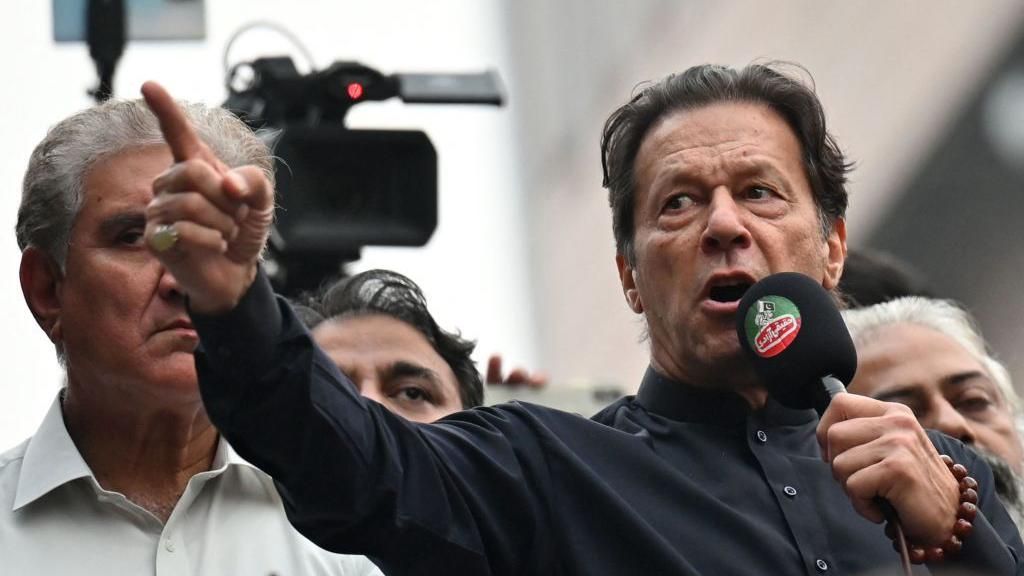
    A coalition of 21 legendary former cricket captains from across the globe, including Indian batting icon Sunil Gavaskar and England’s longest-tenured skipper Sir Alastair Cook, has publicly called on the Pakistani government to uphold court orders and guarantee adequate, timely medical care for incarcerated former prime minister Imran Khan.

    The 73-year-old, a former Pakistan national cricket team captain who led the country as prime minister from 2018 to 2022, has been held in jail since August 2023 facing over 100 different charges, including allegations of corruption, leaking state secrets and selling official state gifts. Khan and his political party, Pakistan Tehreek-e-Insaf, have consistently denied all charges, framing them as politically motivated retaliation. His imprisonment triggered widespread mass protests from his supporters, which were harshly cracked down on by state authorities.

    The latest appeal, organized by former Australian cricket captain Greg Chappell, comes after a weeks-long dispute over Khan’s declining health, particularly his reported severe vision loss in his right eye. Back in February, 14 of the current signatories already joined an earlier appeal demanding humane treatment and proper medical access for Khan, when his legal team stated he had only 15% functional vision remaining in the eye after prison officials failed to act on his care needs.

    In their open letter addressed to current Pakistani Prime Minister Shehbaz Sharif, the former cricket leaders outlined three clear, core demands. First, they called for a full medical assessment of Khan led by a Supreme Court-appointed medical board that includes Khan’s own personal physicians, to address his ongoing vision issues. Second, they urged authorities to allow unimpeded weekly family visits, as already ordered by the country’s top court, with no unnecessary administrative delays or interruptions. Third, they demanded that any treatment recommended by the official medical board be provided to Khan immediately, without hold-up.

    The letter notes that after Pakistan’s Supreme Court issued a ruling this Tuesday ordering the government to transfer Khan to a private hospital for examination by his chosen doctors, state authorities instead only allowed him a few hours of assessment at a government-run Islamabad hospital by a state-appointed medical team, which subsequently declared Khan “medically fit” before returning him to prison. Khan’s party has since filed a contempt of court petition against the government over its failure to comply with the Supreme Court’s order for access to Khan’s personal physicians.

    “Imran Khan is 73 years old and has now spent more than three years in custody,” the letter reads. “Whatever the legal and political arguments surrounding his case, the basic decency of ensuring a court-ordered medical process is actually completed is not, in our view, a controversial request.”

    Other notable signatories to the letter include multiple other English captains: Michael Atherton, Michael Brearley, Nasser Hussain, Andrew Strauss and David Gower; Indian greats Kapil Dev and Dilip Vengsarkar; and Australian legends Belinda Clark, Adam Gilchrist, Steve Waugh and Kim Hughes, among others.

    In a closing statement, the group of former captains framed their appeal as a gesture rooted in the global fraternity of cricket, noting they are “former colleagues and rivals who share a bond forged on the cricket field” and that this bond “transcends the borders and disputes that too often divide countries.”

  • UEFA’s Ceferin tells Infantino to go, but ‘not interested’ in replacing him

    UEFA’s Ceferin tells Infantino to go, but ‘not interested’ in replacing him

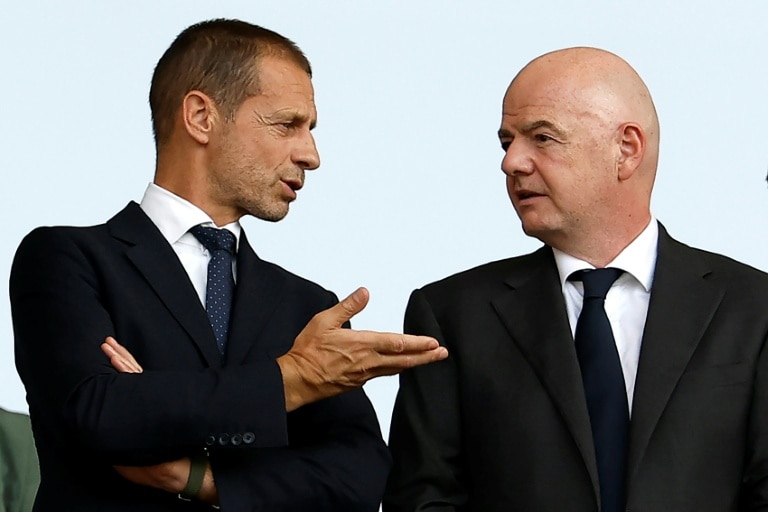
    A high-stakes public rift has erupted between the leaders of global football’s two most powerful governing bodies, as UEFA President Aleksander Ceferin has publicly demanded FIFA chief Gianni Infantino step down — while explicitly ruling out any personal bid to replace him. The growing crisis at FIFA stems from Infantino’s now-scrapped controversial plan to bring private investment into top FIFA competitions, including the men’s World Cup. The proposal sparked widespread backlash across the global football ecosystem, leaving Infantino facing cascading withdrawals of support from multiple continental confederations and national federations, with UEFA threatening to boycott future FIFA tournaments over the plans. In an interview with *The Rest is Politics* podcast on Monday, the 58-year-old Slovenian UEFA leader laid out his position clearly, confirming he has no ambition to take Infantino’s job. “I’m not interested because of two reasons,” Ceferin explained. “One reason is that I love UEFA and I love working here, and I think that at a certain point… it’s time to also enjoy life a bit. And the second point is, my credibility is much, much higher if I’m not interested in the position.” Ceferin has been one of the most vocal critics of Infantino’s privatization plan since it was unveiled, and he argued on Monday that Infantino’s once unassailable grip on the FIFA presidency is now irrevocably weakened. He laid out two possible outcomes ahead of the next FIFA Congress, scheduled for March 2025 in Morocco: Infantino will either voluntarily step down, or he will face a formal leadership challenge when he runs for re-election. The rift marks a dramatic reversal from 2016, when Infantino, a former UEFA secretary general, won the FIFA presidency following the resignation of disgraced former leader Sepp Blatter with broad backing from European football nations. Ceferin also confirmed that the two leaders have not communicated at all since the controversy over the private investment plan erupted. “There are two options,” Ceferin said of the coming months. “One option is that he realises that he doesn’t have the support, and that’s not only a political support of the ones who vote, but the political support of the football community, the political support of fans, the political support of the players, former players, coaches. And the second option, that he goes to the elections in March, but in that case I think he will have a candidate against him. I don’t know yet who.” Two leading football administrators have emerged as the most likely potential challengers should Infantino follow through on a re-election bid: CONCACAF President Victor Montagliani and Asian Football Confederation (AFC) chief Sheikh Salman bin Ebrahim al-Khalifa. For his part, Infantino has pushed back against the mounting pressure, claiming he continues to hold significant support among the global football community. Over the weekend, he carried on with a scheduled visit to the Dominican Republic for meetings with Caribbean football leaders, despite reports that Montagliani had asked him to avoid the trip, which included a planned appearance at a regional youth tournament. In pre-recorded video remarks released by FIFA on Sunday, Infantino appeared to address the brewing leadership crisis without referencing it directly. “It’s important to engage, to have a dialogue, to express views and opinions,” he said. “A lot has been happening the last few weeks and it’s important that you hear, you listen, and you’re able to also express what your feelings are. So I think overall positive, very, very happy with all the support I get here.” The standoff now sets the stage for a historic showdown over the future of global football governance, just months ahead of FIFA’s key presidential election.