博客

  • Optus, Telstra and TPG forced to explain how to call triple-0 during outage in wake of disasters

    Optus, Telstra and TPG forced to explain how to call triple-0 during outage in wake of disasters

    In response to a string of crippling national network failures that have already been tied to preventable deaths, Australia’s three largest mobile network operators have joined forces with the government’s national emergency call oversight body to roll out a critical public education campaign on accessing the 000 emergency line when primary networks go down.

    The joint initiative, launched Monday by industry giants Optus, Telstra and TPG Telecom (owner of the Vodafone network), comes in partnership with the Triple-Zero Custodian, the government office established in 2024 to oversee Australia’s national emergency call system. The campaign is designed to arm everyday Australians with clear, actionable guidance to reach first responders even when their home network suffers an outage.

    “This campaign gives Australians practical, easy-to-find information about how their phones connect to emergency services, and what steps they can take if their regular provider’s network is unavailable,” said Jane McNamara, a corporate spokesperson for Optus, the carrier at the center of the most recent high-stakes outage. “By raising public awareness of existing safeguards like the emergency camp-on system and delivering simple guidance that people can remember under pressure, we are helping Australians better prepare for the moments when reliable access to 000 matters more than anything else.”

    The catalyst for this urgent public outreach is the widespread Optus outage that struck in September 2025, which blocked 000 calls across large swathes of Australia: South Australia, Western Australia, the Northern Territory, and far western New South Wales. Over the 14-hour outage, 75% of all 000 calls placed through the network failed to connect, and official records have linked two preventable deaths to the communications failure.

    In the wake of the disaster, the Australian Communications and Media Authority launched legal action against Optus, alleging the carrier breached two separate legal regulatory obligations more than 1,000 times. An independent investigation commissioned by Optus itself later traced the outage to multiple overlapping errors that occurred during a routine network upgrade carried out by Optus teams and contractor Nokia.

    The new public campaign breaks down how existing emergency backup systems work, and clarifies the different status messages that iOS and Android devices display when network access is compromised. At its core is an explanation of the “emergency camp-on” function, a pre-existing safeguard that automatically routes a 000 call from an unavailable home network to a competing carrier’s active network, if local coverage from another provider is available.

    The guidance outlines key steps for users attempting to access this backup system: Callers will typically experience five seconds of silence at the start of the first call attempt while the system routes the connection. If the first attempt does not connect, users are instructed to hang up and retry, and on subsequent attempts, to stay on the line for up to 60 seconds to allow the routing process to complete.

    Luke Coleman, chief executive of the Australian Telecommunications Alliance, the national peak body for the telecommunications sector, emphasized that the campaign is intended to address gaps in public knowledge that could cost lives during a crisis. “Our priority is to ensure Australians are equipped with simple advice they can recall and use in a worst-case scenario if they need to call 000 and find their usual network is unavailable,” Coleman explained.

    The campaign also clarifies what different device status messages mean for users: If emergency camp-on access is available, iPhones will display “SOS” or “SOS only” in the status bar, while Android devices will show “Emergency calls only”, “No service – emergency calls only”, or a dedicated SOS icon. If a device displays a plain “No service” message, however, no mobile network coverage is available at all. In that scenario, users are advised to locate a working landline, public payphone, or connect to a Wi-Fi network to place an emergency call.

  • A political amnesty law takes effect in Thailand but excludes lese majeste

    A political amnesty law takes effect in Thailand but excludes lese majeste

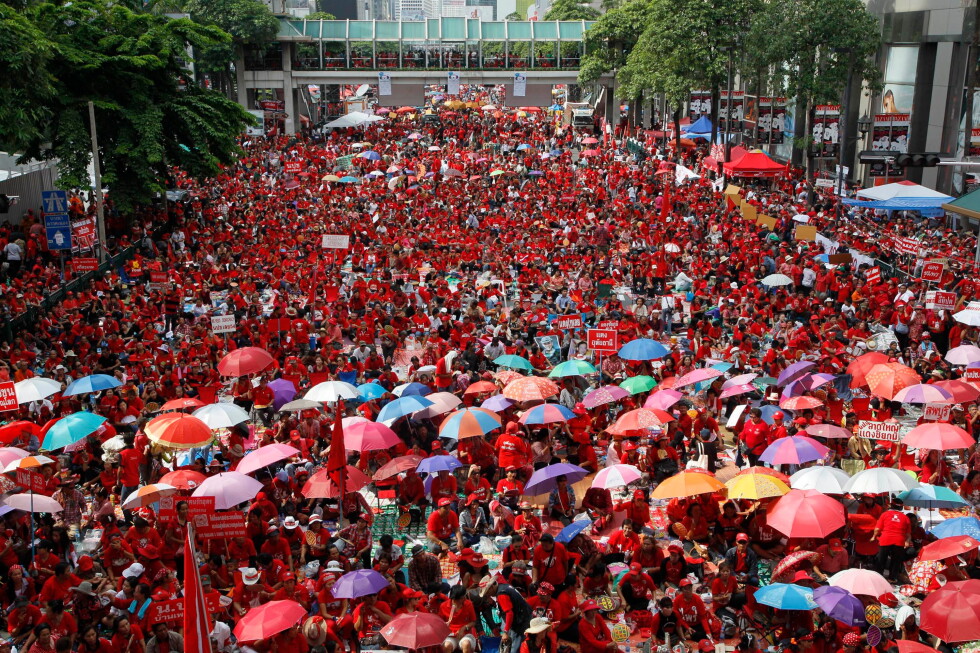
    BANGKOK – A long-awaited amnesty covering political offenses committed across Thailand over the past 20 years officially entered into force on Monday, but targeted exclusions for high-profile and controversial crimes – most notably violations of the country’s harsh lese-majeste law that criminalizes defamation of the monarchy – have left advocates of national reconciliation skeptical of the policy’s ability to heal deep-seated political rifts.

    First introduced as a measure to mend divisions sparked by decades of political unrest, violent mass protests, and repeated military coups, the amnesty is projected to apply to roughly 6,000 eligible individuals, according to parliamentary estimates. Formally named the Peaceful Society Promotion Act, the legislation passed its final parliamentary vote in July and was officially published in the Royal Gazette on Sunday, clearing the final procedural hurdle before it could take effect.

    A special committee led by Thailand’s prime minister will be tasked with reviewing applications and confirming which individuals qualify for amnesty. The panel is required to convene its first meeting within 30 days of the law’s entry into force, though no official timeline has been set for how long the full eligibility review process will take.

    The amnesty covers a broad spectrum of political offenses committed between January 1, 2005, and July 15, 2025. For qualifying recipients, the law will not only secure the release of currently imprisoned individuals, but also terminate open investigations and prosecutions, dismiss pending court cases, and permanently expunge related criminal records. Beyond lese-majeste offenses, the policy also excludes convictions for public corruption and any political crimes that resulted in death or severe bodily harm.

    Critics have centered their pushback on the exclusion of lese-majeste cases, formally codified as Article 112 of Thailand’s Criminal Code. The law has long been a flashpoint of national controversy: critics argue it is routinely weaponized to suppress political dissent, with penalties including a maximum prison sentence of 15 years per conviction. Complaints can be filed by any private citizen, not just government or royal officials, and most defendants are ordered to remain in detention for the duration of often years-long legal proceedings. Even minor acts, such as liking a critical social media post on Facebook, have resulted in charges in recent years.

    Mass student-led pro-democracy protests that erupted across Thailand in 2020 centered calls for reform of Article 112, only for many of the movement’s leading organizers to be charged with lese-majeste offenses themselves. Thai Lawyers for Human Rights, a Bangkok-based legal advocacy organization, reports that more than 290 people – the majority of whom are young student activists – have faced Article 112 charges since early 2020. As of July this year, at least 54 people remain imprisoned in connection with political cases, and only around 10 of those detainees are expected to qualify for release under the new amnesty, the group confirmed, because all others are being held on lese-majeste charges.

    Thailand’s long-running political divides have largely centered on the polarizing figure of former Prime Minister Thaksin Shinawatra, who was removed from office in a 2006 military coup. Thaksin’s populist policy agenda earned him fierce loyalty among low-income and rural voters, particularly in the country’s northern and northeastern regions, but his widespread popularity and assertive governing style created deep, lasting fractures between his political base and the kingdom’s conservative establishment: urban elites, traditional royalists, and the military. Over the past two decades, parties aligned with Thaksin have repeatedly won general elections and returned to power, while Thaksin himself lived in self-imposed exile abroad for many years to avoid prison time on past political convictions. Just last week, Thaksin was granted an early royal pardon and released from parole just over a year after he returned to Thailand, a development that has reignited debate over the country’s uneven application of political justice.

  • Pant, Jurel guide India to 419-6 at lunch on Day 2 of the 2nd cricket test against Sri Lanka

    Pant, Jurel guide India to 419-6 at lunch on Day 2 of the 2nd cricket test against Sri Lanka

    The second Test match between India and Sri Lanka in Colombo entered its second day on Monday with India building on a strong overnight foundation, thanks to a game-changing seventh-wicket stand from experienced wicketkeeper Rishabh Pant and young batter Dhruv Jurel. Resuming play at 300 for five wickets after a dominant first day of action, India lost an early wicket just seven runs into the day’s scoring, when maiden Test batter Saransh Jain was dismissed for six runs. Fast bowler Asitha Fernando delivered a high bouncer, and Jain’s attempted defensive fend ended in a caught behind, with fielder Kamil Mishara securing the catch to leave India at 307 for six.

    That set the stage for Pant and Jurel to turn the tide in India’s favor, putting together an unbeaten 112-run partnership that carried the visitors to 419 for six by the lunch interval. Pant, who had been forced to return to the pavilion late on Day 1 after taking a blow to the body from a Lahiru Kumara delivery, reached his 21st Test half-century and remained not out on 63 off 88 deliveries at the break. His innings included six boundaries and two towering sixes, anchoring the middle order with calm experience after India’s early wicket.

    Alongside him, Jurel notched up his third Test half-century, finishing the first session unbeaten on 59 from 107 deliveries, with five well-placed boundaries to his name. For Sri Lanka, Fernando was the standout bowler, finishing the first session with impressive figures of four wickets for just 46 runs, while Kumara and spin bowler Keshara Nuwantha each claimed one wicket apiece.

    The strong session for India followed a stellar first day headlined by opener Devdutt Padikkal’s second Test century. Carrying the red-hot form he showed in the series opener, where his 167-run first innings knock helped India secure a 165-run win in Galle, Padikkal scored 117 runs from 193 deliveries on Day 2. He spent nearly five hours at the crease, hitting 12 boundaries to build a solid platform for India’s batting innings and set up the big total the side built on Monday morning.

    Heading into the second Test, India already holds a 1-0 lead in the two-match series, putting Sri Lanka under increasing pressure to respond with a strong all-round performance to level the tie.

  • Burnham and European leaders arrive in Kyiv as Ukraine marks Independence Day

    Burnham and European leaders arrive in Kyiv as Ukraine marks Independence Day

    On Monday, a landmark day that marks Ukraine’s 35th anniversary of independence from the Soviet Union, United Kingdom Prime Minister Andy Burnham touched down in Kyiv for his first foreign visit since assuming office. The high-profile trip brings him together with Ukrainian President Volodymyr Zelenskyy for key bilateral talks, and he will co-lead a gathering of the global coalition backing Ukraine alongside a cohort of other top international leaders.

    Burnham is not arriving empty-handed. According to statements from his official office, the British premier is set to announce a critical policy shift: the UK government has given approval for defense manufacturer MBDA to declassify technical details of British-built components integrated into the SCALP long-range cruise missile. This regulatory and security move clears a major bureaucratic hurdle that has blocked progress on a joint plan between France and Ukraine to manufacture the SCALP weapon domestically on Ukrainian soil.

    A string of other senior European leaders also made their way to the Ukrainian capital to join the commemorations and talks. Among those in attendance are European Council President Antonio Costa, Moldovan President Maia Sandu, Luxembourg Prime Minister Luc Frieden, and Estonian President Alar Karis, a showing that underscores the continued unified European support for Kyiv amid its ongoing conflict.

    For context, the SCALP missile, developed and produced by France, shares deep technological roots with the UK’s own Storm Shadow long-range missile. Both weapons rely on shared technology developed jointly by French and British defense industries, making the declassification of UK-built components a critical step for any domestic production effort in Ukraine.

    Beyond the missile announcement, Burnham’s schedule includes taking part in official Independence Day remembrance events and leading discussions at the coalition of the willing meeting, where participating leaders will debate the future of ongoing international military, economic and political support for Ukraine as the war with Russia continues.

  • Maradona’s ‘Hand of God’ ball sells for £2.5m

    Maradona’s ‘Hand of God’ ball sells for £2.5m

    One of the most controversial and recognizable pieces of football memorabilia in history — the match ball Diego Maradona used to score his infamous ‘Hand of God’ goal during the 1986 FIFA World Cup — has found a new buyer at auction, closing at a final price of £2.5 million ($3.3 million).

    The moment that cemented the ball’s place in global sports lore came during Argentina’s tense World Cup quarter-final clash against England in 1986. With the match tied at 1-1, Maradona extended his left arm to punch the ball past England goalkeeper Peter Shilton, a handball that went unnoticed by referee Ali Bin Nasser. After Argentina secured a 2-1 victory, Maradona famously quipped to reporters that the goal had been scored “a little with the head of Maradona and a little with the hand of God” — a quote that turned an already controversial moment into a permanent part of football folklore. Later in the same match, Maradona scored what is still widely referred to as the ‘Goal of the Century’, weaving past five England outfield players in a 60-yard mazy run before beating Shilton again to secure Argentina’s place in the next round of the tournament.

    The Adidas Azteca match ball was brought to auction by its current owner at Heritage Auctions’ sports memorabilia event held in the United States on Saturday. While auction specialists had initially projected the one-of-a-kind item could sell for as much as $10 million (£7.3 million), the final winning bid fell far short of those expectations.

    Ahead of the auction, Mike Provenzale, a senior specialist auctioneer at Heritage, described the piece as an unparalleled artifact for football fans. “It’s a true one-of-one item,” Provenzale told Reuters. “Arguably the most significant soccer item that exists.”

    The ball has a decades-long ownership history tied directly to the 1986 match. It was collected by Bin Nasser, the Tunisian referee who officiated the quarter-final, right after the final whistle blew. Bin Nasser kept the ball in his personal collection for more than 30 years before selling it at auction for the first time in 2022, when it fetched $2.37 million (£1.74 million). After the 2022 sale, the ball’s new owner put it back up for auction in 2022, but the lot failed to sell as incoming bids did not meet the reserve price set by the owner. In 2023, authentication of the ball was solidified when Bin Nasser issued a signed formal letter confirming it was the actual match ball used throughout the entire 1986 quarter-final, a finding that was later independently verified by third-party experts.

    The ‘Hand of God’ ball is not the only piece of memorabilia from that iconic match to break sales records in recent years. The match shirt Maradona wore during the 1986 quarter-final sold at auction for £7.1 million back in 2022, setting a new benchmark for match-worn football apparel at the time.

  • The health of Norway’s King Harald deteriorates over the weekend

    The health of Norway’s King Harald deteriorates over the weekend

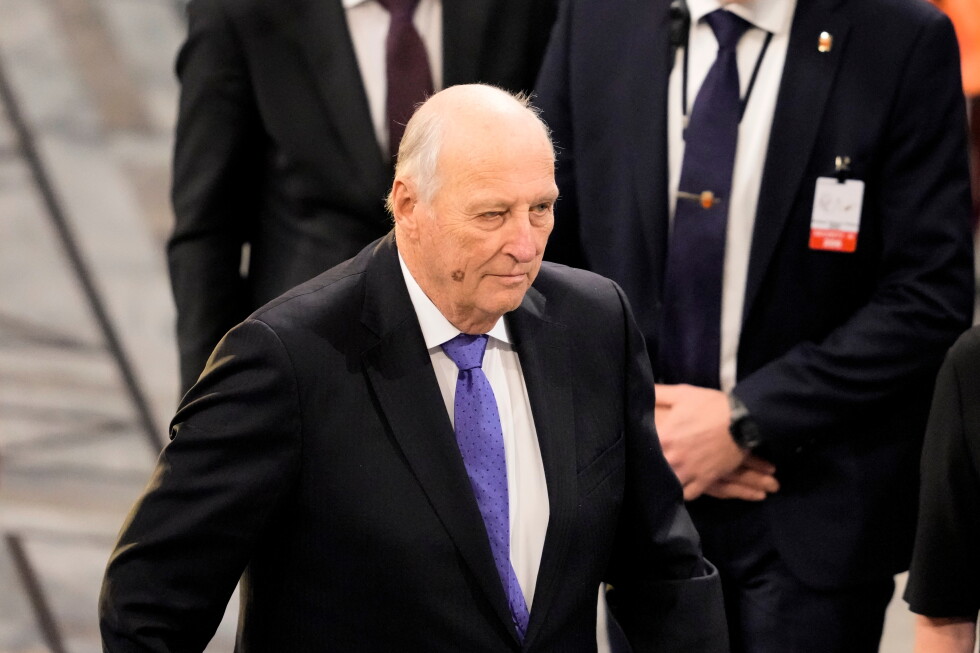
    OSLO, Norway — The Norwegian Royal House has issued an update confirming that 89-year-old King Harald V’s health declined over the weekend, days after he was admitted to Oslo’s National University Hospital for ongoing chronic health complications. The aged monarch, who has ruled the Scandinavian nation since 1991, had already been on medical leave for several weeks ahead of his hospital admission one week prior to the latest update.

    Late Sunday, palace representatives announced that the king is currently undergoing antibiotic treatment to target a newly diagnosed bacterial blood infection, and that he has shown positive preliminary responses to the therapeutic course. As of the latest update, his condition is classified as stable.

    Last week, palace officials clarified the root of the king’s current hospital stay: King Harald lives with hemolytic anemia, a chronic blood condition that has required long-term management with cortisone medication. Ongoing cortisone treatment triggered a dangerous accumulation of fluid in his body, which necessitated urgent inpatient medical intervention.

    In the king’s absence during his medical leave, his son and heir apparent, Crown Prince Haakon, has stepped into the role of regent, carrying out the formal constitutional duties of the monarchy on a temporary basis.

    The 89-year-old king has faced growing health challenges in recent years, with multiple hospital admissions for routine and urgent care as his chronic conditions progress.

  • New Zealand’s prime minister proposes banning children from using social media

    New Zealand’s prime minister proposes banning children from using social media

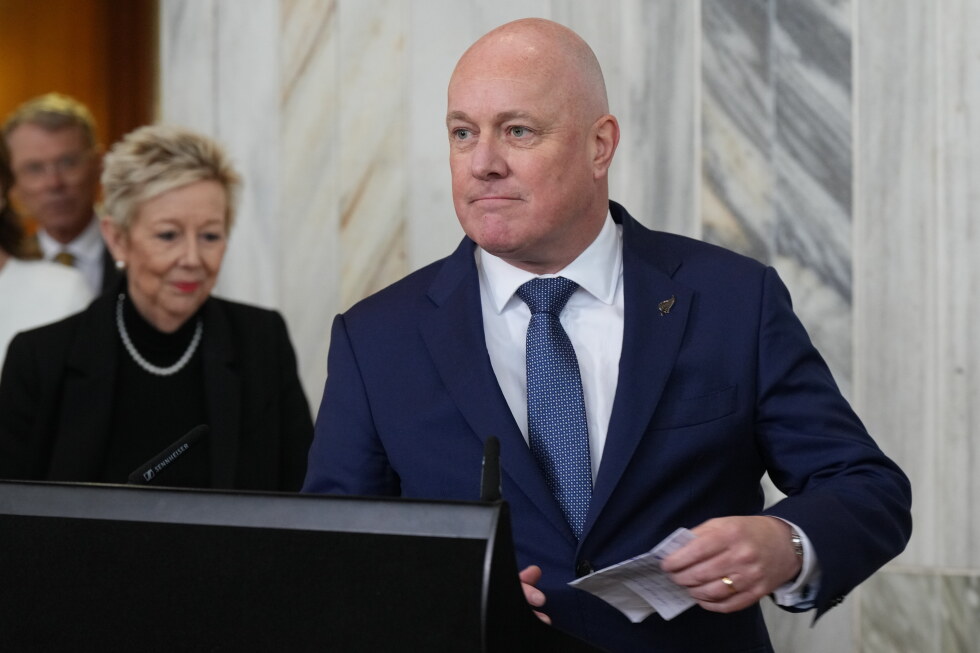
    WELLINGTON, New Zealand — Prime Minister Christopher Luxon has introduced a landmark draft law that would bar all children under the age of 16 from accessing major social media platforms, framing the proposal as an urgent response to what he described as widespread, generational harm to New Zealand’s young people. Announced on Monday, the policy joins a growing global wave of age-based restrictions on big tech, but faces immediate gridlock within Luxon’s own ruling coalition, leaving its path to passage deeply uncertain.

    The proposed legislation targets leading platforms including Instagram, TikTok, Snapchat, and Facebook, requiring these companies to implement verifiable age-checking measures to exclude underage users. Acceptable verification methods outlined in the policy document from Luxon’s center-right National Party include existing user account data, facial age estimation technology, digital identity services, and formal government-issued identification. Critical carve-outs exclude one-on-one messaging services such as WhatsApp, user-generated online gaming platforms like Roblox, and productivity-focused artificial intelligence tools including ChatGPT, Google Gemini, and Microsoft Copilot.

    Notably, the draft law imposes no penalties on children or parents who access platforms in violation of the ban. Instead, enforcement falls entirely on tech companies, which could face fines of up to 10 percent of their annual global revenue for failing to meet their compliance obligations. The bill also mandates that platforms with significant child user bases must conduct regular public risk assessments and publish reports detailing potential harms to young users on their networks.

    Luxon framed the policy as a necessary intervention based on local data, noting that 2025 research found one-third of New Zealand teenagers spend at least five hours per day on social media. “Social media is exposing them to harmful content, addictive technology and pressures they are not equipped to deal with and it’s affecting their family life, mental health, sleep, and education,” he told reporters on Monday.

    Luxon’s push for the ban follows Australia’s implementation of a world-first under-16 social media ban that took effect in December 2025. Since Australia’s ban came into force, Canada, Brazil, and Indonesia have also enacted similar age restrictions, while dozens of other nations are currently drafting or evaluating their own rules. Early results from Australia show that just one month after the ban took effect, major platforms reported revoking access to roughly 4.7 million accounts confirmed to belong to underage users. The policy has divided global stakeholders: child safety advocates and many parents have praised the measures as a long-overdue protection for young people, while digital privacy organizations argue age-verification rules are easily circumvented and create unacceptable risks to users’ personal data.

    Despite the prime minister’s support, the bill faces steep procedural and political obstacles. Two of the three parties in Luxon’s ruling coalition — the libertarian ACT Party and populist NZ First — have repeatedly and vehemently opposed the legislation, and confirmed Monday they will vote against it. For the bill to advance, Luxon will need backing from opposition lawmakers, who have not yet committed to supporting the proposal. Chris Hipkins, leader of the center-left Labour Party, the largest opposition bloc, said Monday his caucus has not reached a final decision on how to vote.

    Complicating matters further, Luxon confirmed there is insufficient time to complete the legislative process before Parliament dissolves on October 1, ahead of New Zealand’s general election scheduled for November. Under New Zealand law, all bills must pass three separate rounds of parliamentary voting, a process that typically takes several months, before they can be signed into law. If Luxon’s National Party is reelected to lead the next government, he has pledged to reintroduce and advance the bill to make New Zealand the latest nation to implement strict age limits for social media access.

    This is not the first time Luxon’s government has taken action to limit young New Zealanders’ screen time: in 2024, the administration enacted a nationwide ban on cellphone use during school hours for students of all age groups.

  • Japanese lawmakers visit Beijing seeking to mend ties after fallout from Takaichi’s Taiwan remark

    Japanese lawmakers visit Beijing seeking to mend ties after fallout from Takaichi’s Taiwan remark

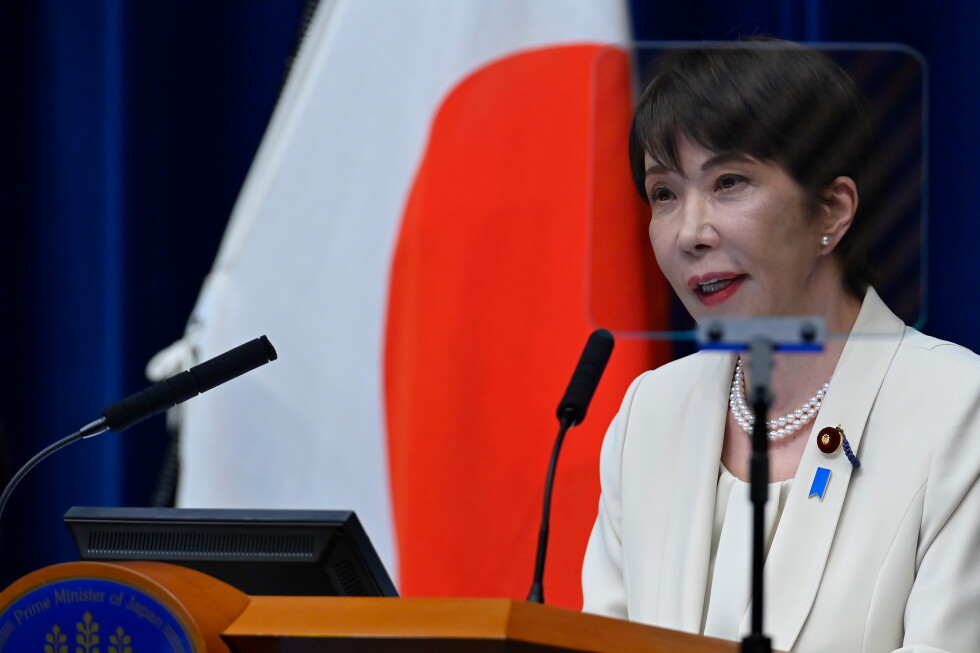
    TOKYO — In a bid to reverse a dramatic breakdown in China-Japan relations triggered by a controversial statement on Taiwan from Japanese Prime Minister Sanae Takaichi that inflamed Beijing and spilled over to damage economic ties, a multi-party delegation of Japanese legislators departed for Beijing on Monday. The four-day visit, scheduled to run through Thursday, will see the group hold formal talks with officials from the Chinese Communist Party, in what supporters frame as an opening to restart frozen diplomatic communication.

    The cross-party delegation includes Gaku Hashimoto, a former health and welfare vice minister from Takaichi’s own ruling Liberal Democratic Party, one lawmaker from the Komeito opposition, and a representative from the Centrist Reform Alliance (CRA). Shinichi Isa, the CRA spokesperson and a former diplomat posted to the Japanese Embassy in Beijing, spoke to reporters ahead of the delegation’s departure from Tokyo’s Haneda Airport, emphasizing the urgency of the mission.

    “Communication has been severed in all areas, and we are already seeing negative impacts ripple across multiple sectors,” Isa told reporters. “Our goal is to find a path forward that can restart constructive dialogue between the two sides.”

    The crisis erupted immediately after Takaichi took office, when she stated that a Chinese military action targeting Taiwan would qualify as a “survival-threatening situation” for Japan, potentially justifying the deployment of Japanese military force. The comment crossed a well-established red line for Beijing, which claims the self-governing island of Taiwan as its sovereign territory, and triggered furious pushback from Chinese authorities.

    Weeks later, Isa warned on social media platform X that bilateral relations had fallen to their lowest point since the two countries normalized diplomatic ties in 1972. Unlike previous periods of tension, when low-level official communication remained open to prevent escalation, Isa noted that “now all official channels between government agencies and ministries have been completely cut off.” He added that the ongoing frozen relationship serves no national interest for either China or Japan, and confirmed that Beijing had granted the delegation’s request to open a limited “window for dialogue” between the two sides.

    Earlier last week, China’s Foreign Ministry acknowledged that cross-party “people of insight” from Japan had recognized the severity of the current bilateral standoff and were seeking concrete steps to put relations back on a stable footing. “We urge those running the Japanese government to take these voices seriously … and take concrete actions to create the necessary conditions for normal exchanges between the two countries,” the ministry said in a statement Friday.

    Takaichi has so far refused to retract her original comment on Taiwan. In a small conciliatory gesture amid rising tensions, however, she chose to pray remotely rather than make an in-person visit to Tokyo’s controversial Yasukuni Shrine during the annual Aug. 15 commemoration of Japan’s World War II surrender. The shrine, which honors convicted Japanese war criminals alongside the country’s war dead, is widely viewed by China and South Korea as a symbol of unrepentant Japanese wartime militarism and aggression.

  • China probes use of formaldehyde to keep cabbages fresh

    China probes use of formaldehyde to keep cabbages fresh

    As the world’s leading cabbage producer, accounting for nearly half of the global annual output that exceeds 30 million metric tons, China is now facing a fresh food safety scare that has sparked nationwide attention. Hebei Province, a key growing and distribution hub in the country’s northeast, has confirmed that authorities have launched a full investigation following the emergence of footage showing cabbage handlers dipping heads of the vegetable in a preserving solution before loading them onto transport trucks.

    The controversial footage was first brought to public attention by an independent environmental blogger last week. In China, the use of formaldehyde — a colorless, carcinogenic chemical — for any food preservation purpose is banned under strict national food safety regulations. Most of China’s cabbage output is distributed domestically, with a large share also exported to neighboring Asian markets and Russia, with South Korea and Vietnam counting among the top international buyers.

    State media reports confirm that local police have already initiated legal proceedings against the individuals identified as being involved in the practice. In response to growing public concern, national and local regulators have moved quickly to head off widespread consumer panic and rebuild public trust in the country’s fresh vegetable supply. Authorities are rolling out widespread random spot checks of cabbage stocks at wholesale and retail markets across every region of the country.

    Investigators are also working to determine how widespread the illegal practice of formaldehyde dipping is across the cabbage industry, and have implemented tracing protocols to isolate and remove any affected produce from the supply chain. In an official public statement released Saturday, administrators from Kangbao County, the region at the center of the initial reports, reaffirmed their commitment to upholding food safety standards: “Any illegal or non-compliant practices discovered will be dealt with strictly in accordance with the law to ensure the safety of the vegetable supply.”

    Beijing’s Xinfadi Market, the largest wholesale fresh produce hub serving the Chinese capital, released its own statement confirming that it had completed a full audit of its cabbage supply chains, and that no contaminated produce had entered the market’s distribution network.

    The incident has dominated domestic Chinese media coverage and sparked intense public discussion. In an official editorial, People’s Daily, the official newspaper of the Chinese Communist Party, issued a sharp rebuke of the actors involved: “The wholesalers focused solely on their immediate economic interests while completely disregarding the lives and health of consumers. [They] crossed a legal red line and breached the moral bottom line.”

    According to the American Cancer Society, while prolonged exposure to high concentrations of formaldehyde in occupational settings has been definitively linked to multiple forms of human cancer, the long-term health impacts of low-level exposure through food consumption remain understudied and not clearly understood.

  • Asian shares mostly decline as bond market pressure mounts

    Asian shares mostly decline as bond market pressure mounts

    As global markets kicked off a high-stakes trading week Monday, most Asian equity benchmarks retreated and crude oil prices pulled back, with investors across the world holding their breath ahead of the annual gathering of top U.S. economic policymakers at Jackson Hole, Wyoming. U.S. stock futures also ticked downward in early pre-market trading, setting a cautious tone across the Asia-Pacific region.

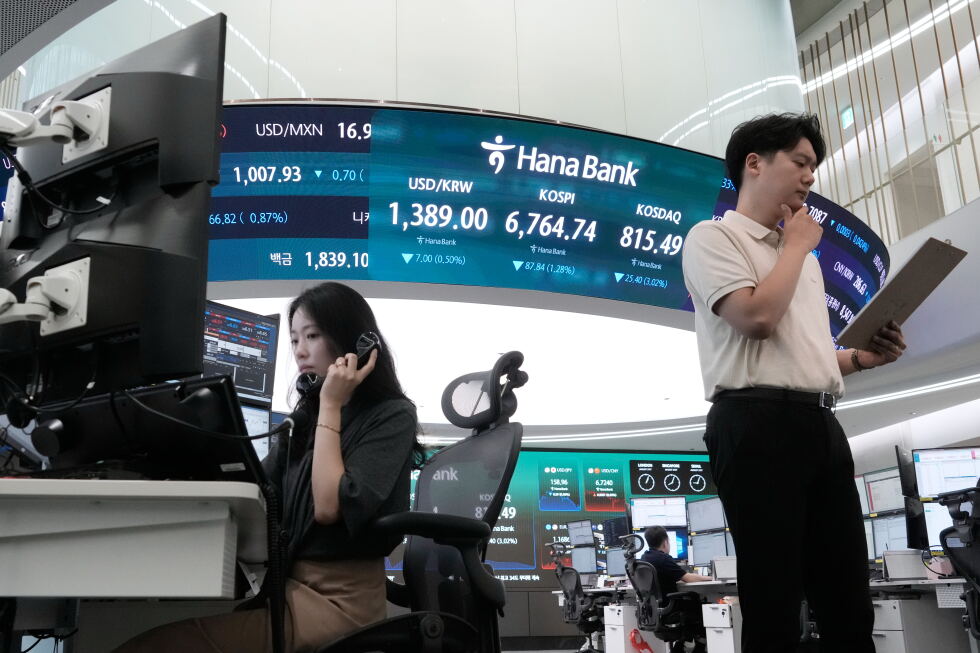
    Across major regional markets, the downturn was broad-based. Japan’s benchmark Nikkei 225 index dropped 0.5% to close at 65,678.45, while South Korea’s Kospi suffered a steeper 3.5% decline to land at 6,664.36. Hong Kong’s Hang Seng index fell 2.1% to 25,465.23, and China’s Shanghai Composite index edged 0.7% lower to 3,877.30. Taiwan’s Taiex also followed the downward trend with a 0.5% loss. Australia bucked the regional slump, however, with its S&P/ASX 200 gaining 0.5% to reach 9,107.40.

    This week’s market calendar holds several make-or-break economic releases and events that could shape near-term global policy. On Wednesday, U.S. officials will release the July reading of the Personal Consumption Expenditures (PCE) price index, the Federal Reserve’s preferred metric for tracking inflation. Current forecasts and recent data signal U.S. consumer inflation remains stuck above 3%, well above the Fed’s long-term 2% target.

    Inflation has reaccelerated after a brief cooling period in early 2025, driven by two key global shocks: broad-based U.S. tariffs imposed on trading partners worldwide, and output disruptions caused by the ongoing Iran conflict, which has cut oil shipments through the critical Strait of Hormuz and pushed energy prices sharply higher starting in early 2026.

    Persistent inflation pressures have already sent bond yields surging in recent weeks, creating cascading volatility across financial markets. Last week, spiking long-term yields forced an unusual intervention from the U.S. Treasury Department, led by Secretary Scott Bessent. To calm markets, Bessent announced the government would double its buyback program for longer-term bonds, a move designed to push down 10-year Treasury yields and ease pressure on mortgage rates. The relief was short-lived, however: by Friday, the 10-year yield climbed back to 4.73%, matching a multi-year high, and held near that level at 4.71% in early Monday trading. The 30-year Treasury yield, another key target of the buyback program, also rose to levels not seen since 2007.

    The unexpected failure of the Treasury’s intervention has amplified investor concerns. Higher sustained yields raise government borrowing costs, which in turn weigh on consumer spending—the core engine of U.S. economic growth. Many market participants are also growing increasingly wary of the risks posed by continuous large-scale government borrowing, a trend that has put persistent upward pressure on yields. The bond market remains highly volatile, and all eyes are now turning to the Jackson Hole summit, where Federal Reserve Governor Kevin Warsh is set to deliver a key speech that could signal upcoming shifts in interest rate policy.

    U.S. equities closed last week on a fragile positive note: the S&P 500 gained 0.4% on Friday, notching only its second gain in six trading days after hitting an all-time high earlier the previous week. The Dow Jones Industrial Average climbed 1% and the Nasdaq composite edged up 0.4%, supported by better-than-expected spring corporate profits that have helped drive major U.S. indexes to record levels in recent weeks.

    Geopolitical uncertainty continues to cloud the outlook, however. On Sunday, the new head of Iran’s top security body warned that Tehran would view any country’s support for new U.S. economic sanctions against the Islamic Republic as an act of war, even as Iran’s president defended a recent memorandum of understanding with the U.S. as the best path forward to de-escalate the stalled conflict. Persistent doubts about when oil tankers will be able to safely resume full transit through the Persian Gulf have kept energy markets volatile. Early Monday, crude prices pulled back from recent highs: Brent crude fell 1.4% to $93.10 per barrel, while U.S. benchmark crude dropped 1.6% to $85.63 per barrel.

    One unusual bright spot amid the market volatility has been cryptocurrency. Bitcoin, which tends to rally when interest rate expectations fall and liquidity increases in global financial markets, has benefited from expectations that the Treasury’s intervention will push long-term yields lower. Additional tailwinds have come from growing hopes for pro-crypto industry legislation working its way through Washington. Early Monday, bitcoin traded near $77,000, according to data from CoinDesk.

    In currency markets, the U.S. dollar edged slightly lower against the Japanese yen, falling to 158.89 yen from 158.94 yen at Friday’s close. The euro held steady, remaining unchanged at $1.1678 against the greenback.