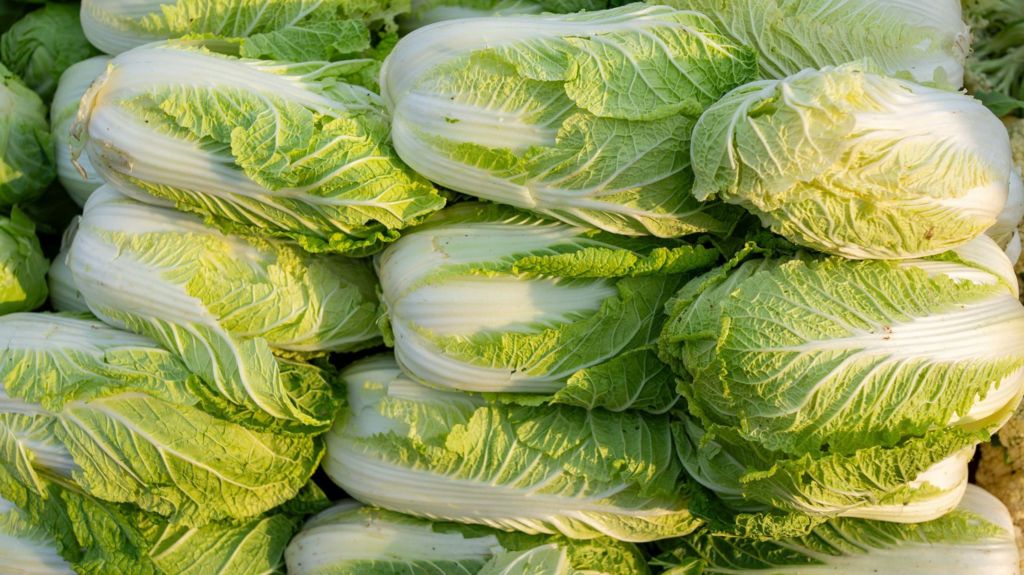
As the world’s leading cabbage producer, accounting for nearly half of the global annual output that exceeds 30 million metric tons, China is now facing a fresh food safety scare that has sparked nationwide attention. Hebei Province, a key growing and distribution hub in the country’s northeast, has confirmed that authorities have launched a full investigation following the emergence of footage showing cabbage handlers dipping heads of the vegetable in a preserving solution before loading them onto transport trucks.
The controversial footage was first brought to public attention by an independent environmental blogger last week. In China, the use of formaldehyde — a colorless, carcinogenic chemical — for any food preservation purpose is banned under strict national food safety regulations. Most of China’s cabbage output is distributed domestically, with a large share also exported to neighboring Asian markets and Russia, with South Korea and Vietnam counting among the top international buyers.
State media reports confirm that local police have already initiated legal proceedings against the individuals identified as being involved in the practice. In response to growing public concern, national and local regulators have moved quickly to head off widespread consumer panic and rebuild public trust in the country’s fresh vegetable supply. Authorities are rolling out widespread random spot checks of cabbage stocks at wholesale and retail markets across every region of the country.
Investigators are also working to determine how widespread the illegal practice of formaldehyde dipping is across the cabbage industry, and have implemented tracing protocols to isolate and remove any affected produce from the supply chain. In an official public statement released Saturday, administrators from Kangbao County, the region at the center of the initial reports, reaffirmed their commitment to upholding food safety standards: “Any illegal or non-compliant practices discovered will be dealt with strictly in accordance with the law to ensure the safety of the vegetable supply.”
Beijing’s Xinfadi Market, the largest wholesale fresh produce hub serving the Chinese capital, released its own statement confirming that it had completed a full audit of its cabbage supply chains, and that no contaminated produce had entered the market’s distribution network.
The incident has dominated domestic Chinese media coverage and sparked intense public discussion. In an official editorial, People’s Daily, the official newspaper of the Chinese Communist Party, issued a sharp rebuke of the actors involved: “The wholesalers focused solely on their immediate economic interests while completely disregarding the lives and health of consumers. [They] crossed a legal red line and breached the moral bottom line.”
According to the American Cancer Society, while prolonged exposure to high concentrations of formaldehyde in occupational settings has been definitively linked to multiple forms of human cancer, the long-term health impacts of low-level exposure through food consumption remain understudied and not clearly understood.