博客

  • Fans suffer firework burns and eye injuries in Eredivisie

    Fans suffer firework burns and eye injuries in Eredivisie

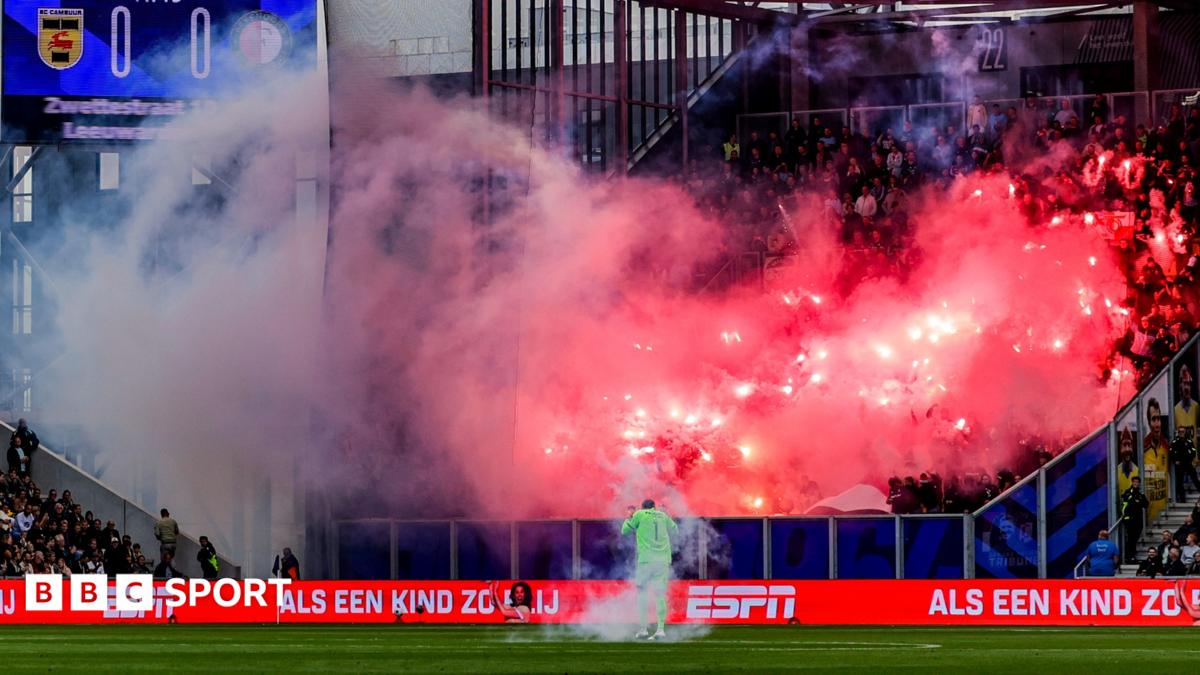
    A tense Eredivisie opening weekend fixture was brought to an abrupt halt on Sunday after visiting Feyenoord supporters launched fireworks into stands holding home fans at SC Cambuur’s Kooi Stadion, leaving five spectators with serious injuries including burns, permanent hearing impairment risk and eye damage. The chaotic disruption, which unfolded in the 12th minute of the first half, forced match officials to pause play for 10 minutes as stewards and security responded to the scene. One stray explosion was captured just meters away from Feyenoord goalkeeper Tjark Ernst, highlighting how close the dangerous projectiles came to harming on-pitch personnel.

    In the aftermath of the incident, newly promoted Eredivisie side SC Cambuur released a strongly worded statement condemning the reckless behavior of the visiting fans. The club, which returned to the Dutch top flight this season after three consecutive campaigns in the second tier, emphasized that the use of pyrotechnics and fireworks has no place in professional football stadiums. Officials confirmed that five home supporters had been medically assessed for injuries following the incident, and added that the club would fully cooperate with local law enforcement and football governing bodies to identify and sanction every person responsible for the disorder.

    Feyenoord, who went on to secure a 5-2 victory after the match resumed, moved quickly to distance itself from the unacceptable actions of its fanbase. Head coach Giovanni van Bronckhorst, who previously served as assistant manager to Arne Slot at Liverpool ahead of taking his current role at the Rotterdam club, issued a formal apology to SC Cambuur on behalf of the entire organization following the final whistle. The club also announced it would request full access to stadium security camera footage to assist with investigations into the trouble.

    Feyenoord general manager Robert Eenhoorn acknowledged that even the three-point win failed to offset the damage of the incident, noting that frustration over the disorder overshadowed any positive result from the fixture. “This problem obviously does not only affect Feyenoord and is unfortunately something we have been unable to put a stop to for decades,” Eenhoorn told reporters. “We will therefore have to sit down again with all stakeholders, clubs, the KNVB [Royal Dutch Football Association], and the authorities to look for a solution together.”

    This incident is not an isolated case for Dutch top-flight football. Just last season, a league fixture between Ajax and Groningen had to be completely abandoned after fans ignited fireworks and flares behind one of the goals at Amsterdam’s Johan Cruyff Arena. Following Sunday’s disruption, local Leeuwarden mayor Foort van Oosten joined in condemning the violence and pledged a full official investigation into how the fireworks were smuggled into the stadium and who was behind the attack.

    The KNVB has also announced it will open a review of existing crowd disorder protocols to address gaps in prevention and response revealed by the latest incident. Match rules currently only require officials to abandon a fixture if a player or match official is hit by pyrotechnics or projectiles, a rule that KNVB professional football competition manager Jan Bluyssen acknowledged may need adjustment. “That doesn’t feel right,” Bluyssen told Dutch national news agency ANP. “We need to examine whether the protocol is still appropriate and how we might want to adjust it.” Despite the calls for review, the match resumed after the 10-minute suspension to allow Feyenoord to claim their opening victory of the 2026-27 Eredivisie season.


  • Four arrested over suspected poisoning of elephants in Kenya

    Four arrested over suspected poisoning of elephants in Kenya

    A devastating poaching-adjacent wildlife crisis has unfolded in southern Kenya’s iconic Amboseli ecosystem, leaving at least 18 elephants dead and triggering a major cross-border investigation that has resulted in four arrests, Kenya Wildlife Service has confirmed to the BBC.

    The detained individuals include three Kenyan nationals and one Tanzanian national, all held on suspicion of orchestrating the mass poisoning that has rocked one of Africa’s most important elephant habitats over the past two months. Among the fatalities was Genghis Khan, an 11-year-old bull elephant whose remains were found just outside the boundary of Amboseli National Park, a stark reminder of how close this crisis has come to core protected areas.

    Investigators are currently probing the theory that the elephants ingested lethal cyanide after raiding nearby tomato farms grown with illegally imported pesticides. Preliminary laboratory analysis of stomach content samples has already confirmed the presence of cyanide traces in affected animals. Most of the deceased elephants were adult females and their young calves, and all displayed clear symptoms of paralysis before death — a clinical sign that wildlife authorities say further supports the cyanide poisoning hypothesis.

    The farms in question are located in Kenya’s Kimana region, a critical wildlife corridor that connects Amboseli National Park to the larger Tsavo National Park. This expansive transboundary landscape, the Amboseli ecosystem, crosses the porous Kenya-Tanzania border and supports a migrating population of more than 2,000 elephants that move through the area annually in search of fresh water and forage.

    In recent years, expanding agricultural activity has brought human settlements and farms right up against the ecosystem’s boundaries, creating frequent conflict as elephants raid crops for food when wild forage becomes scarce. Smugglers regularly move pesticides banned for use in Kenya across the undefended border with Tanzania to supply local farms, a illegal trade that has flown under the radar for years. While Kenya does have formal regulations restricting the use of dangerous unapproved agrochemicals, enforcement remains chronically under-resourced, and little policy attention has been paid to the lethal spillover effects these substances have on protected wildlife.

    All four suspects have since been released on bail as investigations continue, with authorities working to build a full picture of the poisoning network and prevent further mass deaths of Kenya’s threatened elephant population.

  • Dutch broadcaster Avrotros pulls out of  2027 Eurovision Song Contest

    Dutch broadcaster Avrotros pulls out of 2027 Eurovision Song Contest

    One of Europe’s most high-profile annual entertainment events is facing fresh internal turmoil after Dutch public broadcaster Avrotros announced its full withdrawal from the 2027 Eurovision Song Contest, citing irreversible damage to the competition’s long-held claim of political neutrality amid ongoing international armed conflicts. The decision, formally announced in an official statement released Monday, marks a deepening of rifts that have divided the Eurovision community since 2024, as tensions over Israel’s participation in the contest continue to escalate.

    Avrotros leadership made clear that the recent rule adjustments adopted by the contest’s governing body, the European Broadcasting Union (EBU), do not go far enough to repair the competition’s compromised neutral standing. Earlier in August, the EBU passed a landmark amendment to its competition rules: any nation actively involved in a large-scale armed conflict that wins the contest will be barred from hosting the following year’s event. The rule change also expands disqualification for hosting to nations grappling with sensitive geopolitical situations that threaten the security, safety or regional stability of a potential host. While the amendment was widely interpreted as a response to calls for stricter standards around Israel’s participation, it also applies to Ukraine, which has been engaged in a full-scale defensive war against Russian invasion since 2022.

    For Avrotros, however, these incremental changes failed to address core concerns around the contest’s shifting identity. In its statement, the broadcaster noted that two ongoing crises—the severe humanitarian catastrophe unfolding in Gaza and growing global restrictions on press freedom—have deepened divisions within the Eurovision ecosystem in recent years. The rule updates, Avrotros argued, do not provide sufficient confidence that the competition’s founding independent and neutral character has been restored.

    The exit of Avrotros does not automatically mean the Netherlands will be absent from the 2027 contest. Unlike the United Kingdom’s single national public broadcasting system, the Netherlands has a decentralized network of multiple public broadcasters overseen by umbrella organization NPO. Another Dutch public outlet could step in to take on participation, and the EBU has already confirmed it will open dialogue with NPO to explore this path. Avrotros also emphasized that its withdrawal is limited to the 2027 contest, and does not rule out future Dutch participation in 2028 and beyond.

    This development follows a series of boycotts that have rocked the contest over the past year. Last November, after the EBU rejected a motion to suspend Israel from the 2026 contest held in Vienna, Austria, five national broadcasters announced boycotts—including major Eurovision participant nations Spain, Ireland and the Netherlands. Despite the protests, Israeli entrant Noam Bettan finished second in the 2026 competition, marking the second consecutive year Israel has claimed the runner-up position. This back-to-back strong performance has amplified private concerns among participating broadcasters over the security risks of hosting the contest in Israel if the country claims its first victory since 1998, a fear that directly prompted the EBU’s new rule barring conflict-zone nations from hosting.

    Taco Zimmerman, director general of Avrotros, framed the painful withdrawal as a matter of alignment with core organizational values. “The Eurovision Song Contest was originally created to bring people and countries together, but it is now a platform for division,” Zimmerman said in a statement. “It is undeniable that international conflicts are increasingly affecting the contest, undermining its neutral character. As a public broadcaster, we remain committed to our values. They guide us in everything we do, even when that means stepping away from an event that is very close to our hearts. That is painful as we would have very much liked to be part of the contest again next year.”

    In response, EBU contest director Martin Green expressed regret over Avrotros’s decision but reaffirmed respect for the broadcaster’s stance. “We will now continue our dialogue with NPO, the umbrella organization for Dutch public service media, regarding the opportunities for another broadcaster to participate,” Green said in a statement. “We very much hope that audiences and artists in the Netherlands can continue to be represented in the Eurovision Song Contest.” Green pushed back against claims the contest has become a platform for division, reaffirming its founding mission: “The Eurovision Song Contest has always been a place to bring people together, celebrate diverse communities, and show that a better world is possible even in the most difficult times.”

    The rule amendment, which was approved by the contest’s governing body following feedback from participating broadcasters after the 2026 Vienna contest, addresses a long-unresolved gap in Eurovision rules that many feared would leave the organization in crisis if a conflict-zone nation won. Ukraine’s 2022 victory, just months after Russia’s full-scale invasion, was broadly celebrated as a symbolic show of global solidarity, with the United Kingdom stepping in to host the 2023 contest on Ukraine’s behalf. But growing polarization around the Israeli-Palestinian conflict has created far deeper divisions within the Eurovision community, with no clear consensus on how to balance political values with the contest’s founding mission of cross-border connection.

  • Russia’s second-biggest online retailer targeted in Ukrainian strikes

    Russia’s second-biggest online retailer targeted in Ukrainian strikes

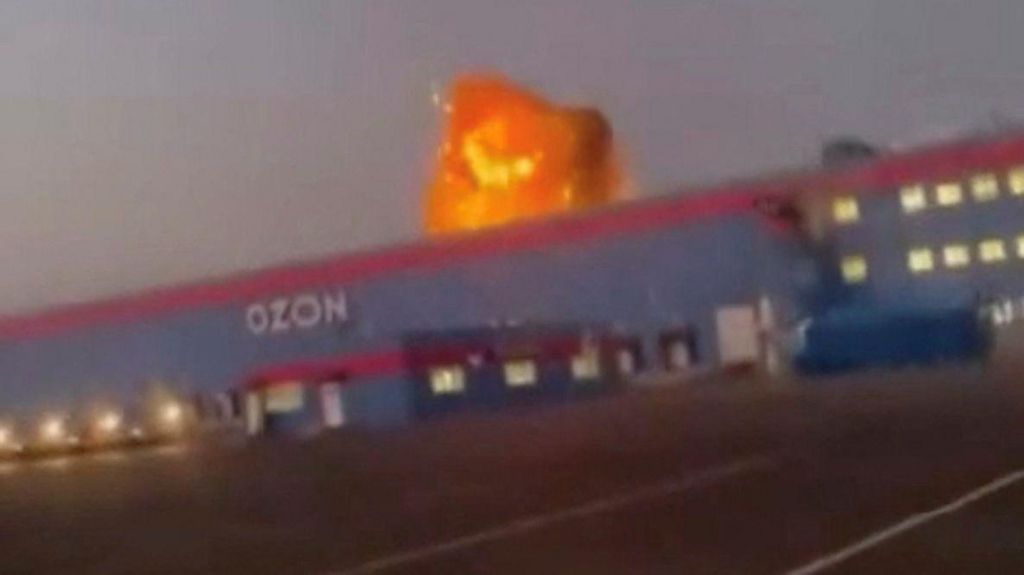
    A coordinated wave of Ukrainian drone attacks has targeted warehouses and logistics hubs operated by Ozon, Russia’s second-largest e-commerce retailer, igniting large-scale fires across multiple southern Russian regions and leaving multiple casualties in its wake, as the ongoing war in Ukraine expands to critical domestic economic infrastructure on Russian territory.

    Ozon confirmed Monday that overnight drone assaults sparked blazes at its facilities in Krasnodar, Dagestan, Stavropol and Adygea, with multiple people injured in the attacks. The earliest reported strike hit a logistics center in Makhachkala, the capital of Dagestan, at approximately 5 a.m. local time, followed by a major fire at a separate Ozon hub in Krasnodar, located around 435 miles west of the Dagestan site. All staff were evacuated from Ozon facilities in Adygeysk (Adygea) and Nevinnomyssk (Stavropol) as a safety precaution.

    Russia’s defense ministry announced that three children, aged 13, 15 and 16, were killed in the Krasnodar strike, with six additional children hospitalized for injuries. Multiple social media videos of the attacks, including footage of a drone strike on an Ozon warehouse in Orenburg and thick plumes of smoke rising from the burning Dagestan facility, have been verified by the BBC.

    Monday’s attacks follow a strike on an Ozon site in Russia’s Samara region a day earlier, which also left workers injured. In a statement following the Samara attack, Ukraine’s defense ministry framed targeting of Russian e-commerce logistics hubs as a deliberate military strategy, noting that systematic strikes on dual-use storage centers disrupt Russian military logistics and damage the broader Russian economy. The statement added that after Ukrainian forces hit 15 major logistics hubs belonging to Wildberries—Russia’s largest e-commerce retailer—it was Ozon’s turn to be targeted. Ukraine has long classified Wildberries as a legitimate military target, claiming it supplies components to the Russian military, a claim Moscow consistently denies.

    The escalation of strikes against economic targets drew a sharp threat of retaliation from Russian President Vladimir Putin Saturday, who warned that Ukraine had “opened Pandora’s box” by attacking civilian economic infrastructure, and promised that Russia would retaliate against Kyiv’s most sensitive economic sectors. In a tit-for-tat pattern of escalation, Russian forces have repeatedly targeted Ukrainian logistics infrastructure in recent weeks, including warehouses and cargo terminals. Early Monday, Ukrainian officials reported that Russian overnight strikes hit food storage and energy infrastructure in Ukraine’s Odesa region, leaving five people injured.

    Following the attacks, Ozon shares dropped as much as 12% on the Moscow Exchange during Monday morning trading, while shares in AFK Sistema, Ozon’s largest private equity shareholder, fell nearly 13%. When asked whether the Russian government would extend financial support to the company, Kremlin spokespeople stated that officials are working with business representatives to develop multiple support options for the challenging situation.

    Founded in 1998, Ozon was one of Russia’s first online retail platforms, and now ranks second only to Wildberries in national market share. Together, the two platforms—often dubbed “Russia’s Amazons”—are used by an estimated 85% to 90% of Russia’s working-age population. Unlike Amazon, which combines direct retail sales with third-party marketplace operations, both Ozon and Wildberries operate almost exclusively as marketplaces: they connect independent sellers to buyers across Russia, handle storage, delivery and payment processing for third-party goods. This structure means that most of the financial losses from destroyed inventory fall on small and medium independent businesses, rather than the platforms themselves.

    For many remote Russian regions with limited access to traditional brick-and-mortar retail, residents rely heavily on the two e-commerce giants for clothing, household appliances and daily necessities. The targeting of their widely distributed logistics network has brought the impact of the war directly home to ordinary Russian civilians, far from the front lines of the invasion Russia launched in February 2022. Both Moscow and Kyiv have repeatedly denied that they deliberately target civilian infrastructure and civilian populations.

  • Iran faces ‘economic D-Day’, US treasury secretary warns

    Iran faces ‘economic D-Day’, US treasury secretary warns

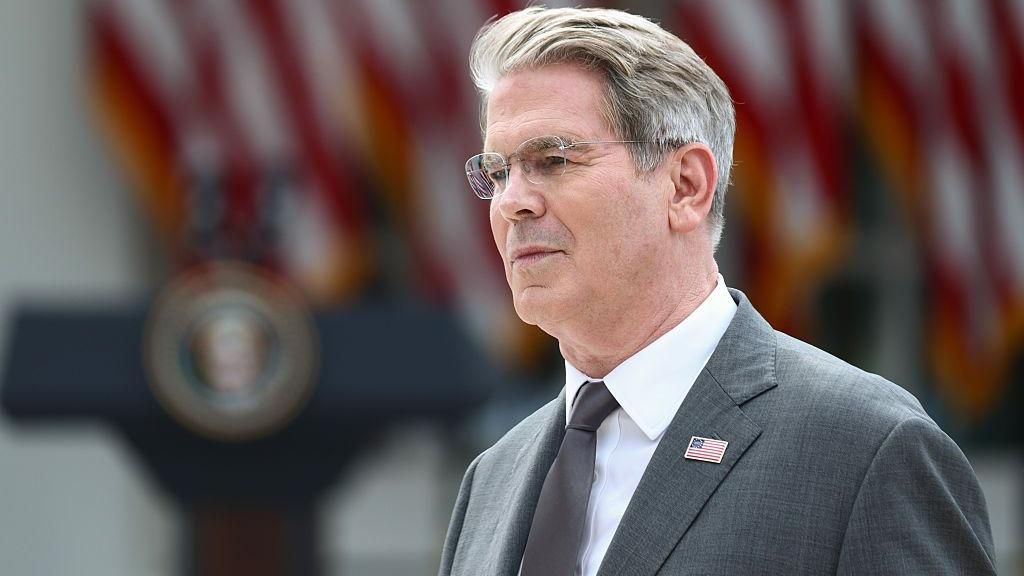
    Amid a months-long conflict between the U.S.-aligned alliance and Iran, top U.S. financial official Scott Bessent has issued an extraordinary new threat, promising what he calls “the single greatest financial offensive” in modern history against Tehran, as the confrontation enters what Washington frames as its endgame phase.

    In an opinion piece published by the *Financial Times*, Bessent framed the planned pressure campaign as an “economic D-Day”, noting that the U.S. intends to cut all remaining economic ties with Iran. He added that any country maintaining financial partnerships with Tehran will also face international isolation at the hands of Washington. The official stopped short of outlining specific measures in the op-ed, but confirmed he will lay out full details during a scheduled press conference in the U.S. Monday at 13:00 local time, equal to 18:00 BST.

    “The world should understand that our objective is to sever every economic lifeline that sustains the tyrannical regime until Tehran stands alone,” Bessent wrote in the commentary.

    Bessent’s latest warning comes on the heels of repeated backtracking and extended deadline delays from the second Trump administration on previous threats to take aggressive action against Iran. This pattern of reversed positions stretches back to April of this year, when former President Trump issued a dramatic ultimatum, warning that “a whole civilisation will die tonight” unless Iran struck a deal to end the conflict and reopen a critical global waterway. That threat was ultimately walked back after Pakistan, acting as a neutral mediator, stepped in to call for renewed diplomatic negotiations.

    Tehran has already pushed back fiercely against Bessent’s new remarks, per reporting from Reuters. Iranian officials have warned that if the U.S. follows through on its escalatory plans, the country will halt all oil exports from the broader Persian Gulf region. Iran has also issued a fresh warning to global maritime operators, barring any commercial ships from transiting the Strait of Hormuz without explicit official permission from Tehran.

    The Strait of Hormuz, a narrow waterway located off Iran’s southern coast, is one of the most critical energy chokepoints on the planet: roughly one-fifth of the world’s total oil and natural gas supplies pass through the strait for global export. Since the outbreak of open conflict at the end of February, Iran has effectively blocked all traffic through the strategic route, creating widespread ripple effects for global energy markets.

    Iran has been living under harsh sweeping U.S. economic sanctions for years, a situation rooted in shifting U.S. policy toward the country over the past decade. In 2015, former President Barack Obama and a coalition of international allies reached a landmark nuclear agreement with Tehran: the deal lifted a wide range of international sanctions in exchange for Iran accepting strict limits on its nuclear development program to prevent it from developing nuclear weapons. However, when former President Trump first took office in 2018, he withdrew the U.S. from the agreement, calling it “defective at its core”, and reimposed all unilateral U.S. sanctions on Iran.

    During President Joe Biden’s term, the administration made multiple attempts to restart negotiations and revive the 2015 nuclear deal, but those efforts never produced a final agreement. After winning re-election in 2024, the Trump administration launched a new wave of sanctions in April of this year targeting foreign banks and commercial firms that continued to conduct business with Tehran, after initial U.S. military operations failed to force the Iranian regime into surrender.

  • Zambia courts sealed off as election petition deadline looms

    Zambia courts sealed off as election petition deadline looms

    As Zambia approaches the legal deadline for filing formal challenges to the recent presidential election results, widespread closures of court facilities across the country have thrown the post-election process into deep uncertainty, with the main opposition candidate vowing to pursue legal action over alleged voting irregularities.

    Multiple court premises, including the High Court in the capital Lusaka, the Supreme Court that also hosts the Constitutional Court, and several lower local courts, have been cordoned off and closed to public access. Heavy, unusual deployments of police officers have been documented at these sealed sites, with court perimeters blocked by tape to prevent entry. When lawyers arrived at the courthouses on Monday, the final day for submitting election petitions, they were repeatedly ordered to leave the area. One attorney told the BBC that three armed men approached his vehicle, identified themselves as law enforcement, and directed him to depart immediately. It remains unclear when the closed court facilities will reopen to the public, and requests for comment from Zambia’s police force and judicial branch have not yet received a response.

    The controversy stems from the August 13 presidential election, where incumbent President Hakainde Hichilema secured a second five-year term with 60% of the popular vote. Main opposition challenger Brian Mundubile, who finished second with 38% of the vote, has rejected the official outcome and pledged to challenge the results in court, citing widespread procedural irregularities. Currently, Mundubile is in hiding at a secure location, guarded by an international human rights organization, after claims of targeted threats against his life. His seclusion comes amid a turbulent post-election period marked by violence and political repression: one senior opposition figure, former cabinet minister Mutotwe Kafwaya, was shot and killed during a security force raid in Lusaka, with officials claiming Kafwaya was killed in an exchange of fire during a targeted operation. Multiple other opposition members have also been arrested in recent weeks.

    The death of Kafwaya and the wave of arrests have sparked widespread outcry from domestic and international human rights groups. Amnesty International has labeled the killing “deeply alarming” and called for an immediate, thorough, and impartial independent investigation. The Law Association of Zambia has also raised “grave concern” over the incident and joined demands for an independent probe into the circumstances of Kafwaya’s death.

    While court access is blocked and the election challenge hangs in limbo, the incumbent government has moved forward with plans for Hichilema’s inauguration, scheduled for September 1 at Lusaka’s National Heroes Stadium. Zambia’s Ministry of Youth and Sport has already issued media invitations for journalists to join a cabinet official for an inspection of inauguration preparations at the venue, indicating the ceremony is expected to proceed as planned even if a legal petition is ultimately filed. If an opposition election petition is successfully submitted before the deadline, it could theoretically delay the inauguration, though the court closures have thrown that entire process into doubt.

    Regional and international election observers who monitored the August 13 vote have acknowledged that voting day was largely peaceful, but they have raised multiple serious concerns about the integrity of the contest. The European Union’s election observation mission found that unequal restrictions on opposition activity created an “uneven playing field” ahead of the poll, echoing broader worries about late changes to electoral rules, shrinking media freedom, and unequal access to media platforms for opposition candidates.

    On the vote tallying process, the EU mission documented multiple procedural failures: a heavy military presence at many tallying centers that created an intimidating atmosphere for voters and polling staff, multiple reported attacks on tallying facilities, widespread delays in updating official results on public tally sheets after vote counts were announced, weak verification processes that failed to cross-check digital vote entries against physical paper records, and frequent pauses in tallying proceedings as local officers waited for instructions from national electoral commission headquarters. Critically, the mission also noted that the Zambian Electoral Commission did not publish disaggregated results broken down by individual polling station, a lack of transparency that the mission says undermines public trust in the final outcome. The EU has publicly called for “maximal transparency” from Zambian authorities to resolve lingering questions about the official results.

  • Champions League fairytale team Bodø/Glimt close to return as 7 playoffs decide full 36-team lineup

    Champions League fairytale team Bodø/Glimt close to return as 7 playoffs decide full 36-team lineup

    Europe’s top club soccer competition is just days away from finalizing its historic 36-team expanded lineup, and a beloved low-profile underdog stands on the cusp of securing one of the last coveted spots.

    Norwegian side Bodø/Glimt, the tiny Cinderella club hailing from a fishing town located above the Arctic Circle, carries a comfortable 3-1 first-leg advantage into Tuesday’s decisive second leg of Champions League qualifying against Dutch first-time qualifier NEC Nijmegen, played on Bodø/Glimt’s home turf. If the club advances, it will earn a place in the main draw, which will be unveiled Thursday evening at a ceremony in Monaco, alongside global soccer heavyweights including defending champion Paris Saint-Germain, Real Madrid, and Bayern Munich.

    Bodø/Glimt is no stranger to giant-killing runs in the Champions League. Last season, the side pulled off upset wins against European elites including Manchester City, Atletico Madrid, and Inter Milan on its way through the competition. This qualifying campaign, the team has shown consistent offensive firepower, netting three goals in each of its three qualifying matches so far, and eliminated Belgium’s Union Saint-Gilloise 6-5 on aggregate to reach this final playoff stage. Unlike many small clubs that lose their top talent after standout runs, Bodø/Glimt has retained nearly its entire 2023-24 squad, with only one high-profile departure: Danish forward Kasper Høgh was sold to Scottish side Celtic for a reported $15 million. Høgh and Celtic will also play a decisive qualifying match on Tuesday, carrying a 3-0 first-leg lead into their away fixture against Austria’s LASK.

    Norway could see two clubs qualify for the expanded Champions League main draw. Domestic champion Viking hosts Croatia’s Dinamo Zagreb on Wednesday for their second leg, with the tie leveled at 2-2 after Dinamo Zagreb squandered an early two-goal lead in the opening fixture last week.

    The official Champions League draw ceremony is scheduled to kick off at 6 p.m. local time (1600 GMT) in Monaco, just a short 10-minute drive from where local club AS Monaco will kick off its own Conference League playoff second leg, defending a 3-2 first-leg lead over Poland’s Gornik Zabrze. Monaco is one of 36 clubs across European soccer’s second-tier Europa League and third-tier Conference League playing second legs this week to finalize lineups for their own main draw ceremonies, set for Friday.

    UEFA has already released the confirmed seeding pots for Thursday’s draw, with 29 of the 36 spots already locked in. Pot 1 is packed with the sport’s most high-profile sides: Paris Saint-Germain, Bayern Munich, Real Madrid, Liverpool, Inter Milan, Manchester City, Arsenal, Barcelona, and Atletico Madrid. The draw will use UEFA’s specialized software to assign eight opponents to each of the 36 teams, with two opponents drawn from each of the four seeding pots. Seven spots in Pot 4 remain unclaimed, reserved for the seven playoff winners to be decided this week.

    The new-look expanded Champions League will begin its group-stage round with first matchdays held across September 8-10, marking the only round of matches before a newly scheduled four-game international break that starts September 24. The competition will resume October 13 for the second round, with the sixth group-stage round set for December 8-9 before a winter break through January. The eighth and final round of group-stage matches, which will see all 36 teams play simultaneously, is scheduled for January 27.

    This week also sees decisive qualifying action across UEFA’s other two club competitions, both of which feature surprisingly strong lineups for their upcoming league phases. The Europa League, which will hold its draw Friday, counts global powerhouses AC Milan, Juventus, and Bayer Leverkusen among its already qualified teams, plus an unusual trio of English sides: defending Conference League champions Crystal Palace, first-time European qualifier Bournemouth, and Sunderland, which is returning to UEFA competition for the first time in 53 years. The winner of the 2024-25 Europa League, which will hold its final in Frankfurt, Germany next May, earns an automatic spot in the 2025-26 Champions League.

    Many second legs for Europa League qualifying are scheduled for Thursday, overlapping with the Champions League draw in Monaco. Notable ties include Mo Salah-associated Trabzonspor, which trails 1-0 ahead of its away match against Hungary’s Ferencvaros, and former European Cup winners Benfica and Red Star Belgrade. A number of feelgood underdog domestic champions have already fallen in earlier qualifying rounds: Swiss champion Thun, who was eliminated from Champions League qualifying by Dinamo Zagreb, suffered a lopsided 7-0 first-leg loss to Poland’s Lech Poznan in Europa League qualifying, while Sweden’s Mjällby carries a 1-0 home loss into its second leg against Austria’s Red Bull Salzburg. All Europa League playoff losers will drop down to the Conference League main phase, which will be played across six rounds through December.

    The Conference League, for its part, features a number of clubs that are regular contenders in the Champions League, including Ajax, Atalanta, and AS Monaco. Former Europa League finalist Freiburg has dropped down to the third-tier competition, while England’s Brighton will aim to secure a third consecutive Conference League title for English clubs, following previous wins by Chelsea and Crystal Palace. No teams have received a bye to the six-round league phase, meaning all must secure playoff wins this week to advance. Atalanta, the 2024 Europa League winner, is at particular risk of elimination after playing to a 0-0 home draw in the first leg against Israel’s Hapoel Tel-Aviv; the second leg will be played on neutral ground in Hungary due to ongoing regional conflict. The tiny principality of Andorra is also poised to make history, with Inter Escaldes carrying a 2-2 aggregate tie into its home second leg against Kosovo’s Drita, while Northern Ireland’s Larne carries a 2-0 advantage into its home leg against Gibraltar’s Lincoln Red Imps.

  • Indonesia intensifies aerial firefighting as wildfire haze spreads to Malaysia

    Indonesia intensifies aerial firefighting as wildfire haze spreads to Malaysia

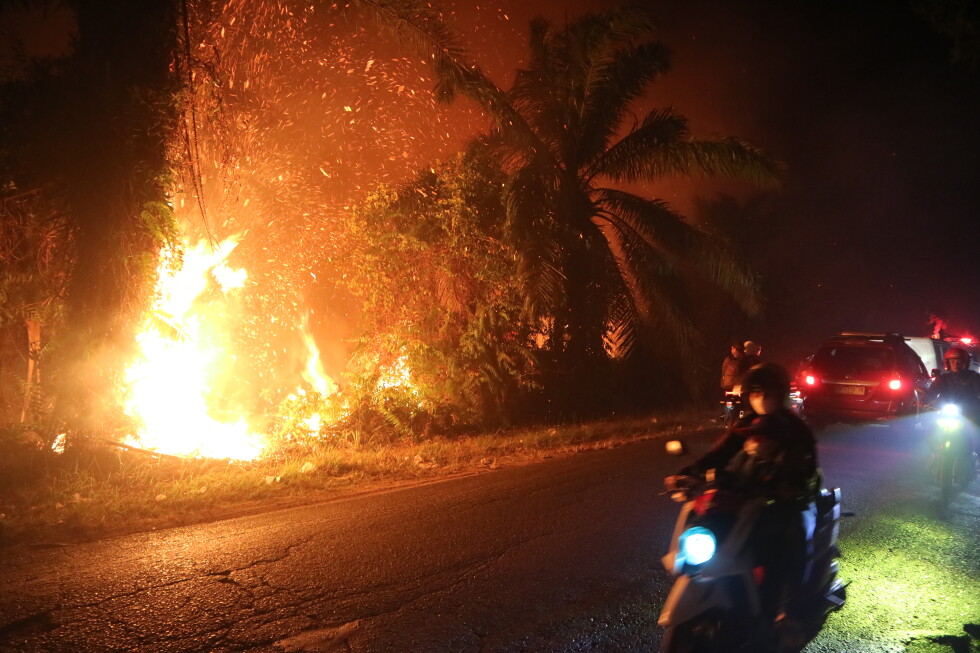
    Indonesia escalated large-scale ground and aerial firefighting operations on Monday, as raging wildfires tearing through forests and peatlands in the country’s central and western regions have generated toxic, choking haze that has blanketed major cities and drifted across national borders. The blazes, amplified by the extreme dry conditions driven by a strengthening El Niño weather pattern, represent a sharp annual surge in wildfire activity across the Southeast Asian archipelago, according to Indonesia’s National Disaster Management Agency (BNPB).

    Active fire hot spots remain concentrated across high-risk provinces on two of Indonesia’s largest islands: Borneo, which hosts West, Central and South Kalimantan, and Sumatra, which includes Riau, South Sumatra and Jambi. BNPB officials noted that persistent drought, unseasonably strong winds and parched, highly flammable vegetation have severely hampered containment efforts. More than 24,000 ground firefighters have been deployed across Sumatra and Borneo, but dozens of remote hot spots remain unreachable by land teams, forcing local leaders to formally request additional aerial water-bombing support.

    Indonesian President Prabowo Subianto has made on-site visits to multiple fire-affected regions to oversee response efforts. After touring fire-ravaged areas of Central Kalimantan Saturday, he traveled to Riau and neighboring South Sumatra Monday to inspect damage and urge local authorities to bring the spreading haze under control. As of the latest official reports, over 36,000 hectares (89,000 acres) of land have burned across 10 Indonesian provinces, with Forestry Ministry data showing nearly 94,000 hectares (232,000 acres) were destroyed by fire in July alone.

    Prabowo has pledged full government backing for ongoing firefighting operations, including the deployment of additional water-bombing helicopters and oxygen supplies to protect frontline crews. He has ordered direct, detailed reporting on all suppression progress to his office, and called for expanded public outreach to prevent future blazes: roughly 1,000 military and police personnel will be deployed to work with regional officials on fire prevention education and community awareness campaigns.

    Satellite data from Indonesia’s Environment Ministry confirms the scope of the crisis, with South Sumatra recording the highest number of active hot spots nationwide at 1,429. West Kalimantan follows with 1,226 hot spots, Central Kalimantan with 811, East Kalimantan with 576, Riau with 503, West Papua with 468 and Jambi with 458. To boost response capacity, Indonesia’s Transportation Ministry has authorized 35 foreign-registered aircraft to join firefighting missions, including water-bombing runs and aerial surveillance; the aircraft are cleared to rapidly reposition to high-need zones while adhering to Indonesian aviation safety regulations.

    Beyond ground and aerial suppression, Indonesia is expanding cloud-seeding operations to induce much-needed rainfall over fire zones, a common weather modification tactic that disperses salt particles into clouds to trigger precipitation. A total of 30 aircraft are currently deployed for cloud-seeding and water-bombing across Kalimantan, with an additional 22 helicopters covering Sumatra. In a coordinated cross-border effort, Malaysia gained permission from Indonesia on Monday to conduct cloud-seeding operations along their shared border, as both nations work to curb the worsening haze crisis.

    Malaysian Environment Minister Arthur Joseph Kurup announced the country is finalizing an operational plan and stands ready to provide additional firefighting support to Indonesia if requested. The coordinated action comes as Malaysia prepares for two major upcoming national events: August 31 marks the country’s Independence Day, while September 16’s Malaysia Day, celebrating the nation’s unification, will be held in Sarawak, a Borneo state that is among the regions hardest hit by cross-border haze. Last week, nearly 600 Sarawak schools were closed due to dangerous air quality, displacing roughly 200,000 students, and Malaysian meteorologists forecast that hot, dry conditions will persist through October. As of Monday, Malaysia’s Environment Department recorded 20 areas across Peninsular Malaysia and Sarawak with unhealthy air quality.

    Wildfires are a recurring annual crisis during Indonesia’s dry season, a problem rooted in the common practice of clearing land for agricultural plantations and small-scale farming through intentional burning. The blazes generate hazardous particulate haze that cuts visibility, disrupts land and air transportation, and poses severe public health risks, often spilling over to affect neighboring Southeast Asian nations and straining bilateral relations.

  • Bangladesh tribunal orders 3 journalists held until trial in 2024 uprising case

    Bangladesh tribunal orders 3 journalists held until trial in 2024 uprising case

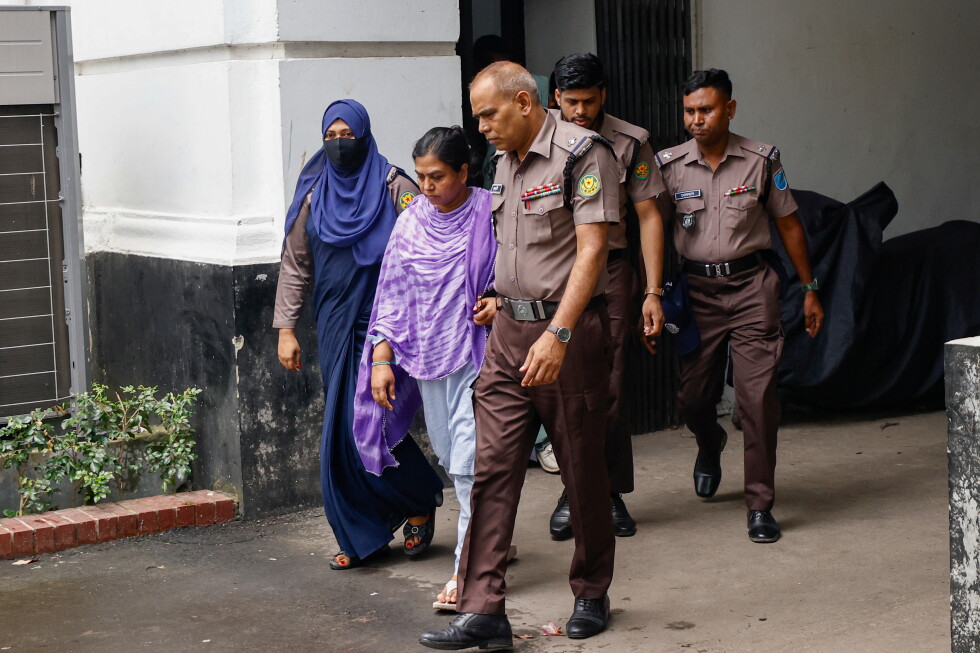
    In a development that has reignited global debate over press freedom in Bangladesh, a special tribunal in Dhaka formally ruled Monday that three high-profile journalists must remain in pre-trial detention as their case connected to the 2024 mass uprising that removed former prime minister Sheikh Hasina from power moves forward. The three detained media workers are Mozammel Babu, editor-in-chief of private broadcaster Ekattor Television; Farzana Rupa, the outlet’s principal correspondent; and Shyamal Dutta, editor of the daily newspaper Bhorer Kagoj and a former head of Dhaka’s National Press Club.

    Following Monday’s hearing where the journalists appeared before the tribunal, the judge scheduled the next procedural session for October 25 and ordered investigating officials to submit their full evidentiary findings against the three by that date. Prosecutors have leveled serious allegations against the trio: they claim the journalists incited the violent crackdown on student-led protestors during the 2024 uprising by asking Hasina provocative questions at a July 14, 2024 press conference. Prosecutors argue these questions prompted Hasina to make derogatory comments about demonstrators, which preceded a bloody government crackdown that left hundreds of protesters dead.

    The 2024 uprising, which was spearheaded by student activists, ended with Hasina fleeing to India on August 5 that same year after she was removed from office. In the years since, Hasina has been tried in absentia by Bangladeshi courts and sentenced to death on charges of crimes against humanity linked to the crackdown. The three journalists have remained in custody since Hasina’s ouster, facing a slate of charges including murder connected to the July-August 2024 uprising. They were originally arrested during the tenure of the interim government led by Nobel Peace Prize laureate Muhammad Yunus, which transferred power to a new elected administration in February.

    The continued detention of the journalists and repeated denial of bail have drawn sharp condemnation from international human rights and press freedom organizations. The Committee to Protect Journalists (CPJ) was among the first to speak out, with Asia-Pacific Program Coordinator Kunal Majumder calling the prosecution of the journalists for simply asking questions at a public press conference “outrageous and deeply troubling” in an earlier statement this month. Majumder emphasized that while editorial choices or reporting may at times be partisan or raise ethical questions, they do not constitute criminal activity. He warned that criminalizing independent journalistic judgment sets a dangerous precedent that erodes Bangladesh’s democratic standing, calling on authorities to immediately release the three journalists and dismiss all charges against them.

    Family members of the detained journalists have also alleged that their detention is unlawful, adding another layer of controversy to the case. In related political developments, Hasina, who has remained in exile in India since 2024, recently announced she plans to return to Bangladesh in December. Both the former Yunus-led interim government and current Prime Minister Tarique Rahman’s sitting administration have formally requested India extradite Hasina to face her sentence, but New Delhi has rejected the request to date.

  • ‘Half my business will be gone’ – Firms in Canada and US fear trade war

    ‘Half my business will be gone’ – Firms in Canada and US fear trade war

    When US-Canada trade negotiations collapsed abruptly over the weekend, triggering reciprocal 50% tariffs from both nations, small and medium-sized business owners across the border woke up to an uncertain future that could wipe out major portions of their revenue overnight. For many enterprises already weathering years of on-again off-again trade tensions, the new levies mark a breaking point that threatens long-standing operations.

    Cindy Baldassi, the Calgary, Alberta-based founder of handcrafted stone-and-glass jewelry brand CindyLouWho2, relies on US consumers for 75% of her total annual sales. Her product line, which features artisanal pieces crafted from amethyst, natural sea glass, and polished agates, will almost all fall under the new tariffs imposed by US President Donald Trump that went into effect Saturday. To avoid taking a total loss on each sale, Baldassi says she has no choice but to pass the full 50% tariff cost on to US buyers. The result, she warns, will almost certainly erase the vast majority of her American customer base. “It’s quite likely that it will wipe out most of my US sales,” Baldassi told the BBC. “I expect that at least half of my business will be gone.”

    The tariffs target roughly $20 billion worth of annual Canadian exports to the US, equal to approximately 5% of Canada’s total annual shipments to its southern neighbor. The new levies build on existing tariffs already in place on Canadian steel, aluminum, automobiles and lumber. Canadian Prime Minister Mark Carney has pledged to match the US tariffs dollar-for-dollar, with 50% levies on US steel, dairy, home appliances and electronics set to take effect September 8. Trump’s new tariffs already target Canadian goods including wine, dairy, cement, clothing and hockey equipment.

    For Canada, which sends 70% of all its exports to the US, the risk of escalating tariff pressure leaves the national economy heavily exposed. But many Canadian businesses have already navigated years of trade volatility, and the new round of levies has amplified long-running anxieties. Lind Furniture, a nearly 60-year-old leather furniture manufacturer based in Ontario, saw sales dip immediately after Trump took office in 2025, as trade uncertainty led major retail clients to pause big purchases. “As soon as there were tariffs in the air, people put purchases on hold,” said Michael Saifer, the company’s general manager. Today, Saifer says he doubts Canadian businesses can emerge unscathed from an all-out trade conflict. “Everyone wants to sell to the Americans – they can buy from whoever they want,” he said. “I don’t know that we’re going to win a war with them; we may get killed.”

    Small Canadian apparel brands are already grappling with pre-ordered shipments that will arrive at US retailers just as the new tariffs kick in. Matteo Sgaramella, founder of Toronto-based menswear label Outclass, explains that most retailers place wholesale orders months in advance of delivery. The US store orders his company secured back in January are scheduled to arrive in September – meaning they will be hit by the full 50% tariff at the border. If Sgaramella alerts clients that they will be hit with an extra 50% charge on top of the agreed purchase price, he says almost all will cancel the order entirely. He has yet to figure out how to absorb or redistribute the unexpected extra cost, and warns the sudden shock will put countless small operations out of business. “Big business can always find a way… but small businesses are going to get smashed by this,” Sgaramella said. While only 20% of Outclass’ total sales come from the US market, other smaller enterprises that rely far more heavily on American customers face far bleaker outlooks.

    The pain of reciprocal tariffs is not limited to Canadian businesses. On the US side of the border, companies that source goods from Canada or count Canadian customers as a core part of their revenue are already bracing for major losses. Paloma Clothing, a 51-year-old apparel and gift retailer based in Portland, Oregon, sources its best-selling product – custom-designed pillows printed by a Montreal firm – from Canada. Under the new tariffs, owner Kim Osgood says a standard markup would push the retail price of the $59 pillows up to between $86 and $90. Because gift items are extremely price-sensitive, co-owner Mike Roach says customers are unlikely to pay the higher price. The couple plans to hold the line on the original retail price, absorbing the extra cost themselves in hopes the trade dispute is resolved quickly. “It would be one thing if we had three months’ notice; that would be something you could plan around, do some work with the vendors,” Roach said. “But when it happens literally overnight you’re really stuck.”

    Some US businesses have already been dealing with trade fallout for more than a year. Bill Easton, owner of Terre Rouge Wines in Plymouth, California, has been blocked from shipping his products to Canadian consumers for 18 months amid a widespread boycott of American alcohol in response to earlier tariffs. He currently pays $2,400 per month to store thousands of bottles of wine in a warehouse, holding out hope that he will one day be able to access the Canadian market he built over decades. Even if the border opens tomorrow, Easton says he cannot pass the 18 months of accumulated storage costs on to Canadian customers, leaving him with thousands of dollars in unrecoverable losses.

    Border-region US retailers that rely on cross-border Canadian shoppers have also seen steady declines in revenue. Heather Seevers, owner of Northwest Yarns and Mercantile, a craft store located just 25 minutes from the US-Canada border in Bellingham, Washington, has seen the number of Canadian customers drop by roughly 20% since the latest trade war began more than a year ago. Tensions have been amplified by Trump’s public comments suggesting Canada should become the 51st US state, which sparked backlash among northern customers. Seevers says her shop has received multiple emails from Canadian shoppers saying they cannot patronize her business due to the anti-Canada political rhetoric. The combination of fewer customers and higher supply costs has already forced the store to launch a community fundraiser to stay open. With the new 50% tariffs, Seevers says the outlook will only get darker. “It’s going to get worse before it gets better,” she said. “It’s going to take years and years and years to get a relationship back with Canada, and I think these new tariffs are digging us deeper into a hole.”