Beneath the wide open skies of Inner Mongolia’s rolling grasslands, traditional potato harvests now share space with a very different kind of development: sprawling construction sites for massive data centres that will underpin China’s global push to lead the artificial intelligence industry. This unexpected digital frontier in Ulanqab, a city long known as China’s official “potato capital” for its fertile steppes and dramatic volcanic landscapes, is ground zero for Beijing’s ambitious AI expansion, just as Chinese President Xi Jinping meets with former U.S. President Donald Trump in Washington to discuss AI safety and bilateral tech competition.
On these active construction zones, hundreds of construction workers in bright yellow hard hats haul heavy structural materials across muddy lots, while welding torches send sparks flying across metal scaffolding. Towering cranes maneuver with deliberate precision to lift prefabricated roof sections into place, and masons balance on narrow ladders to smooth brick facades. “This is China speed,” one worker joked with reporters, describing his country as an “infrastructure maniac” before walking off with a laugh. An electrical engineer overseeing the project outlined the phased development timeline: “We complete one full phase every year, and this is already our second. There are many more phases to come after this.”
Artificial intelligence has become the central arena of strategic competition between China and the United States, and the raw computing power housed in these new data centres is the core of that race. For the Chinese Communist Party, these facilities are a critical pillar of both national economic growth and national security. Once fully operational, they will bring Beijing closer to its stated goal of integrating AI into 90 percent of China’s industries and social sectors by 2030.
Beyond building out physical infrastructure, China is also cultivating a growing domestic talent pool of young engineers and AI researchers. Shifting global dynamics, including rising U.S.-China tensions and restrictive U.S. immigration policies introduced during the Trump administration, have dimmed the appeal of the “American dream” for many Chinese STEM scholars, pushing more to stay in their home country or return after completing studies abroad. Jack Zhang, a researcher from the University of Science and Technology of China who previously studied at Yale University in the U.S. and the University of Cambridge in the U.K., was recruited back to China through a high-level national talent program. “Fewer students and researchers are heading to the U.S. now, and more are coming back from the U.S. to China — that trend is very clear,” he explained. For Zhang, returning home allowed him to translate his laboratory AI research into practical applications for human health and medicine, a goal that required access to large-scale resources, research teams, and government support that he could not easily secure while working overseas.
China’s rapidly expanding AI capabilities have in turn hardened Washington’s position: U.S. leaders have rejected calls to pause domestic AI development, despite widespread warnings from industry leaders that the technology is advancing faster than regulatory frameworks can manage. “Whoever wins AI, wins the future,” Trump stated publicly just one week ahead of the Washington summit. Dario Amodei, CEO of leading U.S. AI firm Anthropic, has called for maintaining the existing U.S.-led ban on selling advanced AI chips and equipment to China, warning that a Chinese lead in AI would “pose grave danger for the U.S. and the world.”
That hardline stance is not what Beijing will come to the table with during Wednesday’s White House talks. The Global Times, a Chinese state-run newspaper that reflects official government policy, has dismissed U.S. concerns as nothing more than a Cold War-era playbook designed to contain China’s peaceful economic and technological rise.
Beyond just competing to catch up to U.S. AI leadership, China is actively promoting an alternative development model for the industry. President Xi has encouraged Chinese AI firms to prioritize low-cost, open-source AI models that allow external developers, companies and even foreign governments to modify and adapt the technology to their own needs. This stands in direct contrast to the dominant U.S. model, where leading developers including OpenAI and Anthropic rely on closed, proprietary AI systems that keep core design details confidential.
Beijing’s embrace of open-source AI is rooted in practical experience: sharing core technology across domestic firms has enabled faster collective innovation, helping China overcome one of its biggest structural barriers to AI growth: limited global access to the advanced semiconductors that deliver cutting-edge computing power. Beyond technological strategy, Beijing is also seeking a greater seat at the table to write global rules governing AI development. President Xi has repeatedly called for international collaborative regulation and a unified global governance framework for the sector. With global momentum for AI safety regulation building, this week’s bilateral summit carries outsized significance: observers are watching closely to see if the two major powers can find common ground on AI oversight, or if the pace of competitive development will make any slowdown unworkable.
On the ground in Ulanqab, there is no sign of a slowdown. China is constructing hundreds of new data centres for major domestic tech players including Huawei, ByteDance, and DeepSeek across sparsely populated regions: northern provinces including Ulanqab, Ningxia, and Gansu, as well as Guizhou in the southwest. These locations offer major practical advantages: China has already built massive renewable energy capacity (mostly wind and solar) in these areas, land costs are far lower than in major urban centers, and cooler ambient temperatures reduce the energy and water needed to cool server banks.
Still, the rapid transformation of these rural regions has not come without challenges and local concerns. Beijing has set a target powering most of its data centres with green energy by 2030, but much of China’s national power grid still relies on coal-generated electricity. Water scarcity is also a persistent risk in the arid grasslands of Inner Mongolia. Multiple whole villages have been relocated to clear space for data centre construction, though it is difficult to confirm the total number of relocated households or the level of compensation offered to residents. Open criticism of these projects is rare, as speaking out publicly carries significant risk for local people.
“This big data has absolutely nothing to do with ordinary people,” one local resident told reporters anonymously, speaking off-camera. “What benefits has it brought us?” He added that few local workers have been hired for jobs at the completed facilities. Other local residents shared fears that their farmland would be seized for future development, leaving them unable to continue the agricultural work that has sustained their communities for generations.
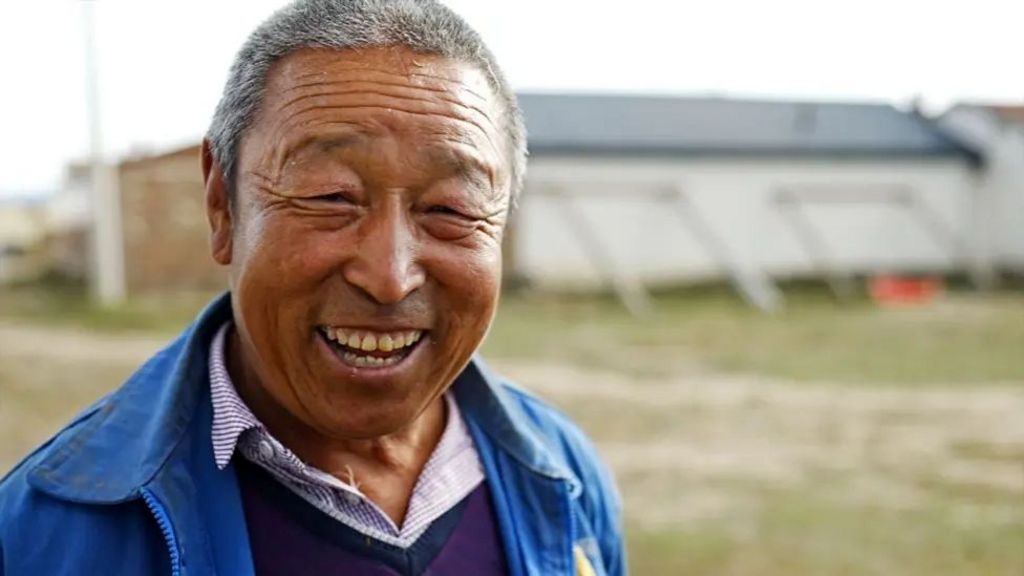
Not all local perspectives are critical, however. A local resident who gave his surname as Zhang, standing near a potato harvest adjacent to one of the new data centres, expressed optimism about China’s AI push. “China is now at the forefront of the world,” he said. “It’s not like the 1960s, when we were relatively backward. China is doing alright now, whether in economic development or other areas.” Zhang noted that his own children have secured stable jobs at the new data centres.
Surveys conducted in China suggest far lower public opposition to widespread AI adoption than is seen in many other Western countries, though the accuracy of these figures is difficult to verify in a political environment with strict media censorship. Beijing has framed AI as a solution to the challenge of China’s aging workforce, and is rapidly automating manufacturing and production sectors, a shift that has created unreported anxiety around potential mass job displacement.
Even with these challenges, China produces roughly five million new science and technology graduates each year, compared to just half a million in the United States. As more of these graduates choose to build their careers domestically, a thriving, self-sustaining innovation ecosystem has taken root. Dang Ronghao, a 27-year-old AI developer working for a leading Chinese tech firm in Shanghai, noted that Chinese academic institutions have grown far more open to global collaboration, allowing him to partner with researchers around the world from his base in China. “I’ve seen research combining AI with nuclear fusion, AI with astrophysics, AI with new materials, and AI with the development of new drugs,” he said. “I think we are entering a good era for AI innovation here.”
Still, some long-time observers argue that China’s academic and research culture still prioritizes conformity over critical challenge. Liu Jun, a professor in the Department of Statistics and Data Science at Tsinghua University who has previously taught at Harvard and Stanford, said: “It’s not as open as I wish it would be. I keep encouraging students here to ask more questions, to challenge existing assumptions more, but that’s a hard culture to change. I think it’s partly rooted in traditional culture, and partly shaped by the political system.”
Far from the cutting-edge research labs of Beijing and Shanghai, and the construction sites of Inner Mongolia, many ordinary Chinese people are still grappling with far more immediate economic challenges: slow post-pandemic growth, persistently high youth unemployment, stagnant consumer spending, and plummeting property values. In rural areas like Ulanqab, an aging farming population remains the most pressing local concern. For many long-term residents, the AI boom unfolding alongside their potato fields feels like a distant, irrelevant development.
“Big data and all that… it’s pretty good, but it has nothing to do with me,” said one elderly Inner Mongolian farmer as he rode a cart to check on his sheep flock. The farmer said he has no practical use for AI, and barely uses the internet at all. His smartphone screen is cracked, and he only pays for a pocket Wi-Fi dongle that costs roughly 40 yuan (around $5.50) per month for basic connectivity. “There haven’t really been any changes for me. I don’t know what the future will hold,” he said.
This widespread public disconnect between national AI ambitions and ordinary people’s daily lives poses a quiet long-term challenge for Beijing. All across China, rapid technological transformation is reshaping landscapes and economies, but it remains unclear how much of the general population shares their leaders’ enthusiasm for a tech-driven future.