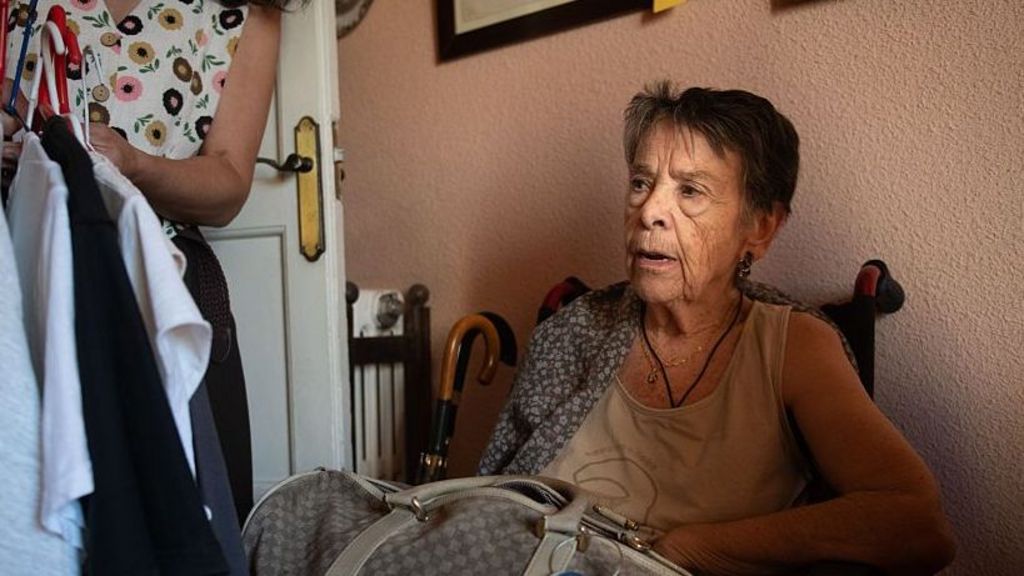
On a tense Wednesday in central Madrid’s sought-after Retiro neighborhood, an 87-year-old woman named Maricarmen was forcibly removed from the apartment her family first rented back in 1956 — a home where she had lived continuously for 70 years after inheriting her parents’ tenancy. Her eviction, the result of a dramatic rent hike imposed by the private investment firm that bought the building in 2018, has sparked national outrage and thrown a harsh spotlight on the growing housing affordability crisis that has left millions of low-income Spaniards vulnerable.
Maricarmen’s decades-long tenancy was protected by a long-standing rent cap, which kept her monthly payment at just €500, a sum she could cover with her €1,350 monthly state pension. But when Urbagestión acquired the property in 2018, the firm exploited a little-known legal loophole to push the rent up to an unaffordable €2,650. Even after lowering the demanded rate to €1,650 to ease pressure, the amount still exceeded Maricarmen’s entire monthly pension, leaving her with no way to keep up with payments.
For years, court orders blocked three separate attempts to evict Maricarmen, and her fight gained widespread public and media attention as a symbol of systemic injustice in Spain’s housing market. Ahead of the scheduled eviction on Wednesday, hundreds of supporters gathered outside her building to stage a peaceful protest. Celebrities including actor Carlos Bardem and singer Ana Belén joined the overnight vigil, with Belén reciting Rafael Alberti’s iconic poem *Desahucio (Eviction)* to honor Maricarmen’s struggle. By Wednesday morning, hundreds of mostly young protesters had assembled to block access to the building, with a group of activists barricading the internal stairwell to prevent bailiffs from reaching her apartment. A tearful Maricarmen released a video on social media thanking her supporters for standing with her against what she called a “cruel struggle by someone who only wants to earn money.”
The large police deployment that followed drew sharp criticism from activists and legal representatives. Officers cordoned off a full section of the nearby street, cleared protesters and journalists from the building entrance, and reports indicate some demonstrators were struck with batons during the clearance. “There is a police deployment as if this were a military operation,” said Beatriz Duro, Maricarmen’s lead lawyer. “This is the fourth time they’ve tried to evict her, but the first time they’ve come right to the door of the property. It’s completely disproportionate.” A representative from tenant advocacy group Sindicato de Inquilinas called on officers to reconsider their actions, shouting through a megaphone: “Think for 10 seconds about Maricarmen, who could be your own grandmother.”
International pressure had also mounted to halt the eviction. Back in June, the UN Committee on Economic, Social and Cultural Rights formally called on Spanish authorities to stop the eviction and provide Maricarmen with affordable alternative housing. Local Madrid officials offered the 87-year-old a place in a publicly funded elderly care facility, which she declined. Representatives of Spain’s central national government also confirmed they had made repeated attempts to negotiate a solution with Urbagestión, all of which the firm rejected. A last-minute glimmer of hope emerged when an anonymous private donor offered to cover the majority of Maricarmen’s demanded back rent and ongoing payments, but Urbagestión reportedly turned the offer down, clearing the way for the eviction to proceed. The BBC has attempted to reach Urbagestión for comment on the case, but has not yet received a response.
Spanish Housing Minister Teresa Rodríguez called the eviction a devastating example of the harm caused by unregulated housing speculation. “Today is a very sad day, a very dramatic day, when it’s plain to see the effects of unbridled speculation, of not wanting to control the market, of putting out the red carpet for the vultures and the speculators,” she said.
Maricarmen’s case is far from an isolated incident. Spain has grappled with a chronic shortage of affordable rental housing for years, driven by limited new construction, growing foreign investment in residential property, and supply constraints that have sent rental prices soaring across the country. Data from leading Spanish property portal Idealista shows that average rental prices in Madrid have more than doubled over the last decade, with a 10% jump recorded in just the last 12 months. Millions of Spanish households now report spending more than a third of their income on housing, pushing low-income and fixed-income groups like pensioners into extreme insecurity.
The current Socialist-led government of Prime Minister Pedro Sánchez has made reining in corporate housing speculation a key policy priority. Back in January, Sánchez pledged to “protect those who are most exposed to that speculation and that greed.” But critics say the government’s response has fallen short: some argue officials need to accelerate large-scale construction of new affordable housing to ease the core supply shortage, while others warn that the government’s tough rhetoric on private investment has discouraged small property owners from listing units for rent, tightening supply even further. Maricarmen’s high-profile eviction is expected to reignite national debate over what urgent policy reforms are needed to address Spain’s deepening housing crisis.