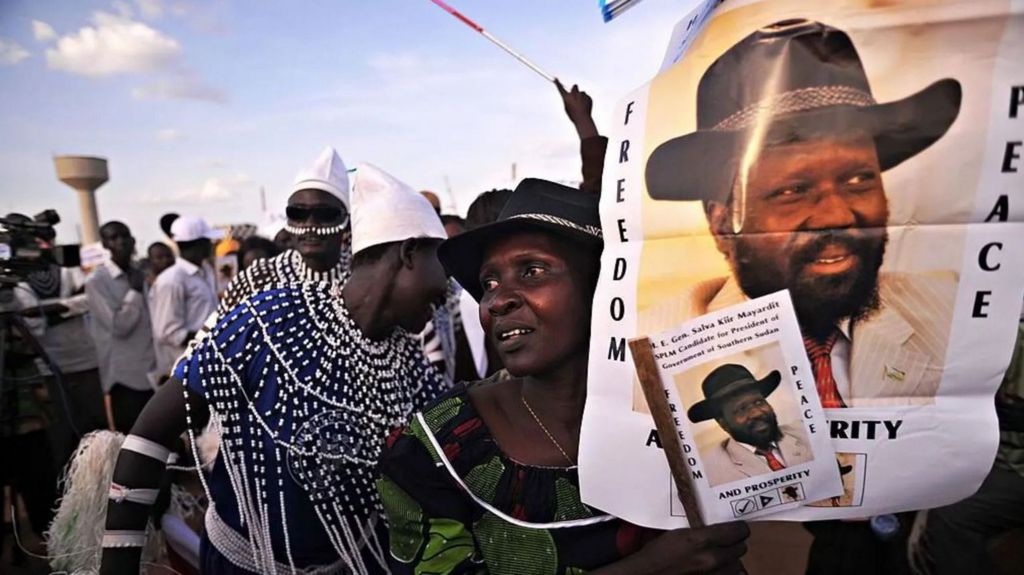
Three months ahead of South Sudan’s first national election since gaining independence from Sudan in 2011, President Salva Kiir has announced the full dissolution of the country’s long-running transitional administration, setting the stage for a poll that has already been delayed twice and faced years of political tension.
The dissolution, formalized under an amended law signed by Kiir this week, cleared out the entire existing transitional leadership structure: all five sitting vice presidents were removed from office, the national parliament was dissolved, and both national and state-level executive governments were disbanded. Kiir, who is running as the presidential candidate for his long-governing Sudan People’s Liberation Movement (SPLM), will retain full constitutional executive powers until a newly elected president is inaugurated following the December 22 vote. He has already appointed a small set of caretaker ministers and state governors to maintain basic government functions through the election period.
The run-up to Tuesday’s formal announcement saw a dramatic security buildup across the capital, Juba. Joint patrols from the South Sudanese army and national intelligence services blocked entry to all government ministry compounds, turned away civil servants reporting for work, and increased patrols across high-traffic areas of the city. Government staff were instructed not to return to office until the following Monday, while United Nations agencies operating in Juba directed all non-essential personnel to switch to remote work as a precaution while security teams monitored the evolving situation.
Kiir, who has led South Sudan since independence, faces no major declared challengers in the upcoming poll. His most prominent political rival, former vice president Riek Machar, has been sidelined since last year when Kiir removed him from office and brought treason charges against him; Machar is currently detained under house arrest. Machar’s inclusion as vice president in the transitional government was a core provision of the 2018 peace deal that ended a brutal five-year civil war fought between forces loyal to Kiir and Machar respectively.
Weeks before the dissolution, Kiir made an unannounced leadership change at the country’s national election commission, removing chairperson Abednego Akok Kacuol from his post without public explanation and replacing him with Gabriel Bol Deng, the commission’s former secretary-general. Akok had publicly raised alarm in August over critical funding shortfalls, stating the commission required $250 million to run a free and fair election but had only received $21 million in committed funding to date.
Machar’s main opposition bloc, the Sudan People’s Liberation Movement in Opposition (SPLM-IO), has already signaled it will not participate in election preparations. In a public Facebook statement in June, acting SPLM-IO chairperson Nathaniel Pierino warned that any individuals attempting to register voters or conduct campaign activity in territory held by the opposition would be treated as prisoners of war.
The Reconstituted Joint Monitoring and Evaluation Commission (RJMEC), the independent body tasked with overseeing implementation of the 2018 peace agreement, has characterized South Sudan’s current political moment as an extraordinarily critical phase. The commission noted that multiple key negotiated provisions of the peace deal remain unfulfilled, and urged all political parties to quickly agree on a clear path that would deliver a credible, inclusive election and a peaceful conclusion to the transitional period that has been in place since South Sudan’s independence. The latest extension of the transitional period was originally scheduled to run until February 22, 2027, ahead of this week’s dissolution.