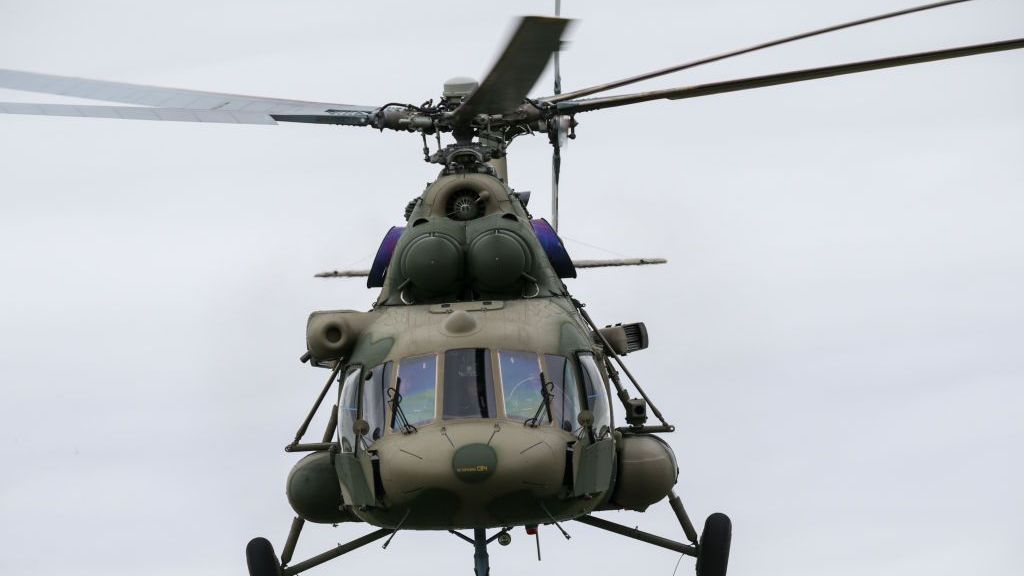
In an incident that has escalated existing tensions between Moscow and the Western military alliance Nato, Poland confirmed Wednesday that a Russian Mi-8 military helicopter violated its national airspace, triggering a rapid defensive response from the alliance’s eastern flank member.
According to Poland’s Army Operational Command, the incursion took place at 11:08 local time (09:08 GMT) north of the town of Braniewo, after the aircraft crossed into Polish territory from Russia’s Kaliningrad exclave. Radar systems tracked the helicopter throughout the event, which saw the jet penetrate roughly 300 meters (328 yards) into Polish airspace and remain there for 42 seconds before exiting. In response to the incursion, Poland scrambled active fighter jets and placed all ground defense units on heightened alert.
Polish military officials framed the incident as a deliberate provocation, noting that the brief incursion follows a pattern of Russian actions designed to test the readiness of Nato’s eastern air defense systems. “The nature of the incident indicates that Russia is once again testing the readiness of our air defence,” the command said in its official statement, adding that Polish air defense units maintain round-the-clock operational readiness to secure the country’s territorial integrity. As of Wednesday evening, the Kremlin had not issued any immediate comment on the accusation.
This latest incident comes amid a sharp rise in warnings from Nato members in Eastern Europe that Russia is actively probing alliance defenses and stepping up hybrid aggression to undermine Western support for Ukraine. Poland has been among the most vocal countries warning of growing Russian threats, with Prime Minister Donald Tusk just last week saying Moscow was planning coordinated drone and missile strikes against Nato’s eastern flank nations.
“In recent weeks, the Russian hybrid threat against Europeans… has intensified,” Tusk stated. “The intent is to intimidate us and break our effort to support Ukraine. The result will be the exact opposite. We are not intimidated because we know that our security today and tomorrow is at stake in Ukraine.”
French President Emmanuel Macron echoed Tusk’s concerns shortly after, confirming that France had also been targeted by a wave of Russian hybrid attacks over the past several weeks. Hybrid attacks, a term referring to tactics that blend conventional military pressure with non-military actions including cyberattacks, sabotage, and misinformation campaigns designed to destabilize adversaries, have become increasingly common across Europe since Russia’s 2022 full-scale invasion of Ukraine. While mounting evidence ties many such attacks to Russian actors, Moscow has consistently denied any involvement. Macron pledged that the recent attacks would not go unanswered, and confirmed he had already ordered the development of a comprehensive protective plan for France’s critical infrastructure and defense industry sites.
In recent weeks, multiple Nato member states across Europe have reported suspicious incidents targeting defense-related facilities: unexplained fires and blasts have struck defense sites stretching from Italy and Bulgaria to Estonia, with multiple affected governments openly blaming Russian sabotage operations. Earlier this month, Germany formally accused Russia of orchestrating an August drone attack on Leipzig Airport, a claim Moscow dismissed as “absurd”. Just this week, Lithuania’s prime minister told the BBC that the Baltic state has finalized public evacuation plans in preparation for potential Russian aggression, while stressing that the country would “not surrender” if attacked.
Tensions have also spilled over into the Ukrainian border region near Poland. On September 13, a Russian drone strike hit a passenger train on the Ukrainian side of the Poland-Ukraine border, just after a diplomatic convoy carrying former UK Prime Minister Boris Johnson and senior European security officials traveled along the same rail line. Ukrainian officials have said the drone strike was very likely intended to target the diplomatic train, while the Russian military only acknowledged targeting “railway infrastructure” in the area.
Since Russia launched its full-scale invasion of Ukraine in 2022, multiple stray Russian weapons and unmanned aerial vehicles have landed on Polish territory, a pattern that has steadily eroded trust between Moscow and Warsaw, one of Ukraine’s staunchest supporters. Moscow has repeatedly denied any intention to attack Nato member states, with Russian President Vladimir Putin repeatedly insisting Russia has no plans to expand the conflict into alliance territory. However, Russian Foreign Minister Sergei Lavrov issued a stark warning to Europe earlier this month, saying that it is European leaders who are constantly preparing for conflict with Russia, and warning that “If Europe attacks Russia, it will be a completely different war [from that in Ukraine], and it will be very short.”
Moscow continues to control approximately 20% of Ukraine’s internationally recognized territory, including the Crimean Peninsula that Russia illegally annexed in 2014.