Eight months after the contentious 2025 Africa Cup of Nations (Afcon) final, whose final champion remains undetermined, the competitive road to the 2027 edition of the tournament is finally starting. A total of 48 national teams still in the running will contest the first two rounds of qualifying matches during this extended international break, which opens its gates on Thursday. Two additional matchdays are scheduled for November, with the final two group-stage fixtures set to wrap up group competition next March.
Under the current qualifying format, the top two teams from nine of the 12 total groups will secure their spots in the 24-team final tournament, which will be co-hosted for the first time by three East African nations: Kenya, Tanzania and Uganda. While pre-tournament infrastructure and preparation work among the co-hosts is reportedly falling behind schedule, all three have automatic qualification to the finals, meaning only one qualifying spot is up for grabs in each of their groups – a quirk that means a second-place finish will not guarantee progression in those groups.
In the months following the 2025 Afcon and this year’s FIFA World Cup, African football has seen sweeping changes: a wave of new managerial appointments across top national sides, and the retirement of dozens of star players from international duty. This qualifying window brings the first chance to see these new-look squads in competitive action.
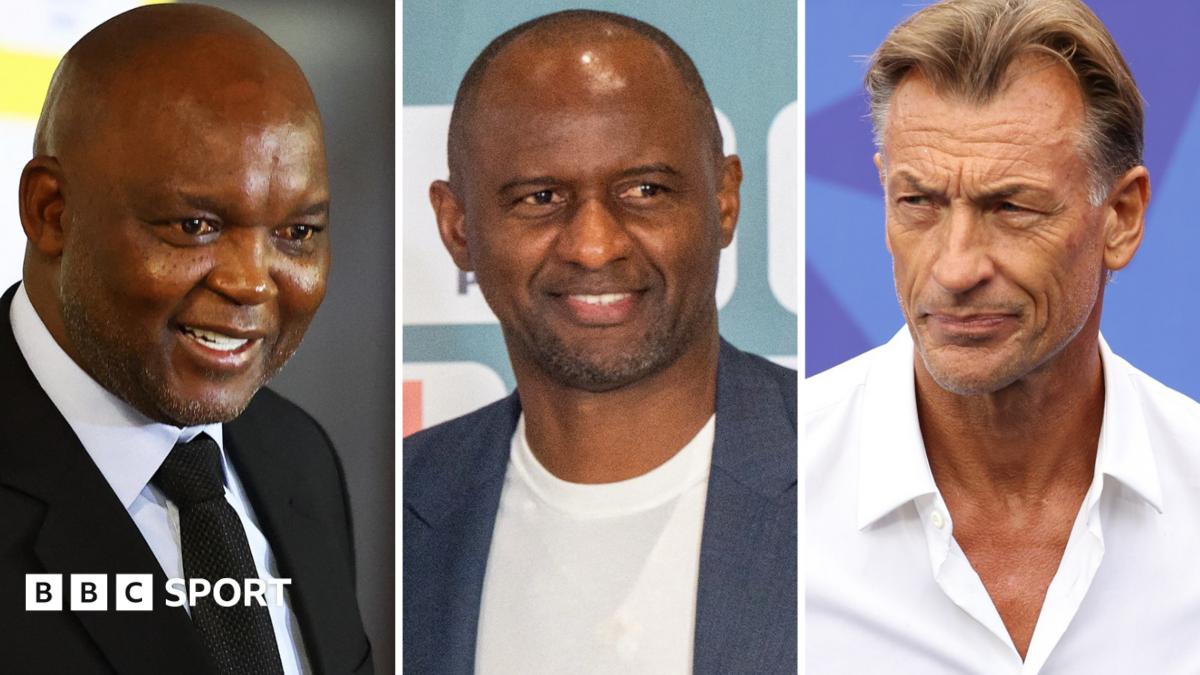
Among the many coaching changes, a handful of high-profile moves have stood out. Herve Renard, the only manager in history to lift the Afcon trophy with two different nations, is returning to lead Ivory Coast 11 years after he guided the West African side to their past continental title. The 57-year-old Frenchman will kick off his second stint with the Elephants on Thursday with a home opener against Ghana – the most anticipated fixture of the first qualifying round. Opposite Renard in the Ghana dugout will be seasoned manager Carlos Queiroz, who is back at the helm after leading the Black Stars to the round of 16 at this year’s World Cup, though Ghana will be missing key talent including Tottenham Hotspur star Mohammed Kudus, who has withdrawn from the squad.
Another marquee arrival is Patrick Vieira, the 1998 World Cup winner with France, who takes charge of his first international role at Senegal – the country of his birth. The 50-year-old former Arsenal midfield great has described the appointment as “an absolute dream”, though he will open his tenure with two consecutive away matches against Mozambique and Ethiopia, as Senegal’s capital Dakar wraps up preparations to host the 2026 Youth Olympic Games. Other familiar faces are also returning to dugouts across the continent: Pitso Mosimane is back leading South Africa 14 years after his first spell in charge of Bafana Bafana, while 78-year-old Afcon legend Claude Le Roy has signed on for a second stint with Congo-Brazzaville, aiming to become the first manager to reach a 10th Afcon finals tournament – a new record.
Among other new appointments, Cape Verde, one of the breakout stories of this year’s World Cup after they pushed eventual champions Argentina all the way to a 3-2 extra-time loss in the round of 16, have promoted former assistant Humberto Bettencourt to head coach following the resignation of long-serving manager Bubista. Tunisia has hired Moin Chaaban, formerly of Esperance and Renaissance Berkane, to rebuild after a disastrous World Cup campaign that saw Sabri Lamouchi fired after just one match and Renard unable to turn the team’s fortunes around. Brahim Hemdani has taken over at Algeria following Vladimir Petkovic’s exit, Amir Abdou has moved to lead Burkina Faso after previously managing Comoros, and 2021 Afcon-winning coach Aliou Cisse, who most recently led Libya, will contest his first competitive matches as manager of Angola, opening with a tough away test against Egypt.
Alongside the wave of new managers, a number of star players have retired from international football since the World Cup, leaving big shoes to fill for their national sides. Senegal is in the market for a new starting goalkeeper after 34-year-old Edouard Mendy, who helped the Teranga Lions win the 2021 and 2025 Afcon titles (the latter of which remains under dispute at the Court of Arbitration for Sport), retired from international duty. Algeria has lost captain Riyad Mahrez, the winger who led the side to the 2019 Afcon trophy, while Ivory Coast will be without midfielders Seko Fofana and Jean-Michael Seri. Tunisia’s Ellyes Skhiri has also called time on his international career, just as the North African side aims to qualify for an 18th consecutive Afcon – an unprecedented streak.
Veteran striker Pierre-Emerick Aubameyang has also stepped away from Gabon’s national side, saying he felt “humiliated” by how he was treated following Gabon’s group-stage exit from the 2025 Afcon. Aubameyang, 37, was excluded from the national squad after the exit, a sanction that was later reversed, but the striker still chose to turn down a call-up, despite a strong early start to his club season at Deportivo La Coruna.
This qualifying cycle also brings two historic firsts for smaller African nations. Eritrea has reached the group stage of Afcon qualifying for the first time since the lead-up to the 2008 edition, after beating Eswatini 4-1 on aggregate in the preliminary round back in March. The East African side withdrew from qualifying for the 2023 Afcon and 2026 World Cup, in large part due to longstanding issues of Eritrean athletes absconding during international competitions to avoid returning to the country’s one-party, highly militarized regime. Seven Eritrean players did not return home after the away leg of their preliminary tie against Eswatini, which was held in South Africa. Drawn into Group D alongside co-host Kenya, South Africa and Guinea, Eritrea’s squad for the opening two qualifying rounds relies almost entirely on players from the Eritrean diaspora, with just three home-based players selected. The side will play their opening fixture against Kenya in Nairobi on Saturday, and will host their “home” match against South Africa in Cairo, Egypt, next Tuesday.
Meanwhile, Somalia has qualified for the Afcon qualifying group stage for the first time in the nation’s history, drawn into a tough group alongside Ivory Coast, Ghana and The Gambia. Ranked 53rd out of 54 African football nations, the Ocean Stars can still celebrate their historic milestone, just as the Afcon returns to East Africa for the first time since 1976.