博客

  • Ex-Mossad chief says Israeli settler violence reminds him of the Holocaust

    Ex-Mossad chief says Israeli settler violence reminds him of the Holocaust

    One of Israel’s most senior former intelligence leaders has delivered a scathing rebuke of unaddressed settler violence against Palestinian communities in the occupied West Bank, drawing a deeply personal, provocative comparison to the Holocaust that has reignited debate over the Israeli government’s failure to curb escalating attacks.

    Tamir Pardo, who led Israel’s iconic Mossad intelligence agency from 2011 to 2016, shared his searing observations during a recent on-the-ground interview with Israel’s Channel 13. The interview took place during a tour of violence-ravaged Palestinian villages, which Pardo joined alongside a group of retired senior Israeli military officials.

    Pardo, whose mother survived the Nazi Holocaust that killed 6 million European Jews, opened up about the visceral reaction he had to what he witnessed during the tour. “My mother was a Holocaust survivor, and what I saw reminded me of the events that happened against Jews in the last century,” he stated. The former intelligence director went further, adding, “What I saw today made me feel ashamed to be Jewish.”

    Beyond the emotional condemnation, Pardo issued a stark warning about the long-term consequences of unchecked settler aggression. He argued that ongoing settler crimes, which have been largely unpunished by Israeli authorities and in some cases actively enabled by state actors, are laying the groundwork for another devastating escalation of conflict similar to the October 7, 2023 attacks that killed roughly 1,200 people in southern Israel.

    “It will be in a different format, much more painful, because the region is much more complicated. The state has chosen to sow the seeds for the next October 7,” Pardo warned. He added that while Israeli law enforcement agencies are fully aware of the scale and severity of settler violence, political leadership has deliberately chosen to look the other way. “What I saw today is the existential threat to the State of Israel,” he emphasized.

    Pardo specifically called out the outsized political influence held by hardline settler groups, which enjoy open backing from top figures in Israel’s current far-right governing coalition, including controversial ministers Bezalel Smotrich and Itamar Ben Gvir. While Pardo acknowledged that it is still possible to reverse course and address the crisis, he warned that doing so would come at a profound cost, even raising the prospect of internal civil conflict within Israel. “If we want, we can correct this, but the price will be very high,” he said. “It is very much in our interest not to reach that point.”

    The former Mossad chief also reflected on a decades-old warning from prominent Israeli philosopher Yeshayahu Leibowitz, who publicly condemned Israel’s occupation of Palestinian territories shortly after the 1967 Six-Day War. In his 1968 essay *The Territories*, Leibowitz argued that permanent military rule over millions of Palestinians would inevitably corrupt Israeli society as a whole, writing that “the corruption characteristic of every colonial regime would also prevail in the state of Israel” and calling for an immediate full withdrawal from occupied lands. Pardo noted that he once rejected Leibowitz’s assessment as wrong, but his recent tour of affected West Bank villages has convinced him the philosopher’s prediction held significant truth.

    Pardo’s comments come amid a well-documented surge in settler violence and territorial expansion in the West Bank that has accelerated dramatically since October 2023. According to the Wall and Settlement Resistance Commission, Israeli settlers have killed at least 16 Palestinians in the West Bank so far in 2025. A United Nations report published in March 2025 added further context, documenting that more than 36,000 Palestinians have been displaced from their homes in the West Bank between November 2024 and October 2025, driven by a wave of coordinated military raids and settler attacks. Over that same 12-month period, the UN recorded 1,732 separate incidents of settler violence that resulted in casualties or property damage – a 25% increase compared to the previous year. Many of these attacks have taken the form of systematic forced displacement of Palestinian communities from their historical land, with settlers increasingly using live fire against unarmed civilian residents.
  • High-level talks begin on moving away from fossil fuels at Colombia conference

    High-level talks begin on moving away from fossil fuels at Colombia conference

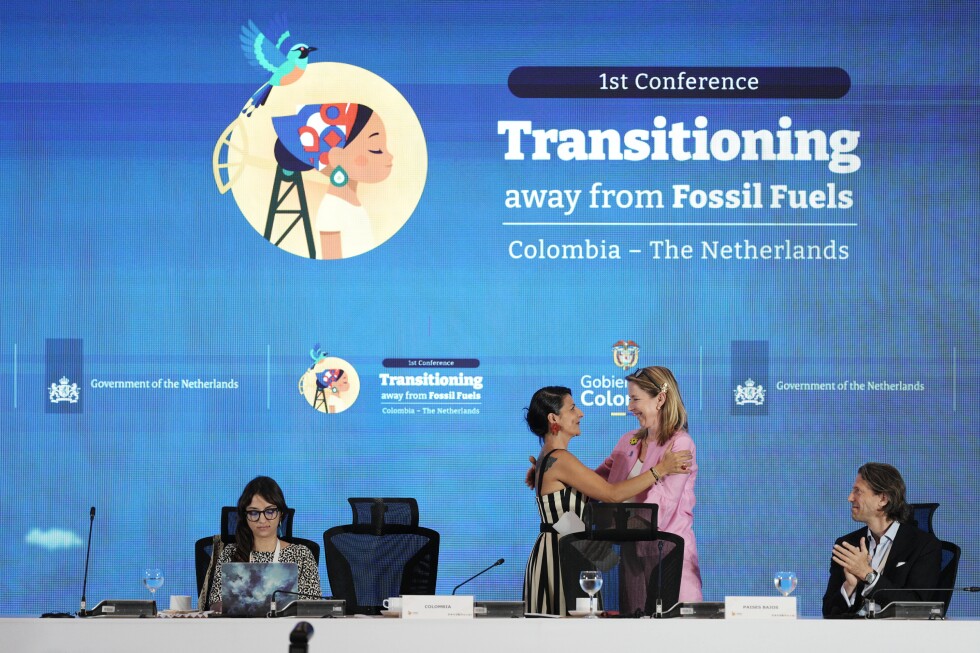
    High-level international negotiations focused on accelerating the global transition away from coal, oil, and gas officially launched Tuesday in Santa Marta, the Caribbean coastal hub of Colombia, bringing together more than 50 nations to push for bolder climate action after decades of stalled progress in formal global climate talks. This two-day ministerial and senior official segment forms the political core of the inaugural *First Conference on Transitioning Away from Fossil Fuels*, a landmark gathering convened outside the framework of United Nations climate negotiations to directly address the leading drivers of anthropogenic global warming that formal processes have long failed to tackle head-on.

    Co-hosted by Colombia and the Netherlands, the conference opens with a clear, unifying core message from participating policymakers. Stientje van Veldhoven, Dutch minister for climate policy and green growth, emphasized that a full phase-out of fossil fuels is an unavoidable imperative, noting it delivers dual benefits beyond climate stability: strengthened national energy independence and enhanced energy security for all nations.

    The summit itself emerged from growing frustration among climate-focused governments and grassroots advocacy groups, who argue that 30 years of U.N.-led climate negotiations have avoided direct, binding action to curb fossil fuel production. While recent formal U.N. talks have formally acknowledged the need for a global transition away from fossil fuels, deep divides persist between nations over implementation frameworks and, critically, how to fund the shift for lower-income and developing economies. That divide is on clear display even within host nation Colombia.

    Security measures were tightened at the oceanfront Santa Marta hotel hosting the conference, in advance of an address scheduled Tuesday afternoon from Colombian President Gustavo Petro. The leftist Colombian leader has positioned his country as a global leading voice for fossil fuel phase-out, and has followed through on a campaign pledge to halt new oil and gas exploration in Colombia, despite the fact that the Andean nation remains heavily reliant on oil and coal exports to drive its national economy. With a national election just one month away, Petro is balancing his ambitious global climate leadership with domestic political tensions, visible on the streets outside the conference venue: members of a local mining union gathered to protest both Petro and the summit, holding signs reading “I arrive at the conference by plane to criticize the oil industry” and “More oil, less Petro”, chanting demands to protect existing fossil fuel jobs.

    Even amid domestic friction, Colombian officials framed the gathering as a defining moment for cross-border climate solidarity. Colombian Environment Minister Irene Vélez Torres opened the conference by urging participants to turn climate ambition into collective action, calling the summit a potential turning point in global history. “Let this conference be the moment when ambition becomes solidarity and when cooperation becomes the path toward a future beyond fossil fuels,” she said Tuesday morning.

    Grassroots and youth activists at the opening plenary echoed that urgency, while pushing for a just transition that centers frontline communities disproportionately harmed by fossil fuel extraction and climate change. Yuvelis Morales Blanco, a 25-year-old climate activist from Puerto Wilches, Colombia, called on governments to move past vague pledges and adopt direct, concrete policy action to phase out fossil fuels and protect intact ecosystems. “We are called to make real the world we have imagined,” she said. “We demand energy justice, climate justice and justice for youth and children.”

    Debates through the opening day of the conference have zeroed in on the biggest practical barrier to a global transition: affordable financing, particularly for developing nations that face steep borrowing costs and limited access to affordable capital to scale renewable energy infrastructure. Van Veldhoven emphasized that unlocking low-cost financing is non-negotiable for a global, equitable transition, noting that many low- and middle-income nations face crippling debt burdens and limited fiscal space to invest in clean energy. Participants have also debated the effectiveness of policy tools including carbon markets and fossil fuel subsidy phase-outs, alongside discussions to ensure the transition does not replicate historical patterns of extractive resource development that have harmed Indigenous and local communities.

    Unlike formal U.N. climate talks, the Santa Marta conference will not produce binding international agreements. Instead, organizers designed the summit to build grassroots and political momentum for faster action, and to coordinate a bloc of nations willing to accelerate phase-out outside the slow formal U.N. process. The gathering is also seen as a critical steppingstone ahead of upcoming global climate negotiations, where fossil fuel phase-out timelines and transition finance will remain core sticking points for global negotiators.

    In a pre-conference announcement Monday, small island developing nation Tuvalu — one of the countries most vulnerable to sea-level rise driven by climate change — revealed it will host the second iteration of the fossil fuel transition conference. Scientists and U.N. climate experts project the low-lying South Pacific nation could be completely submerged by rising ocean waters by 2100 if global emissions continue on their current trajectory, making the fight to phase out fossil fuels an existential priority for the Tuvaluan people.

  • ‘Are they gunshots?’ BBC correspondent’s minute-by-minute account of dinner shooting

    ‘Are they gunshots?’ BBC correspondent’s minute-by-minute account of dinner shooting

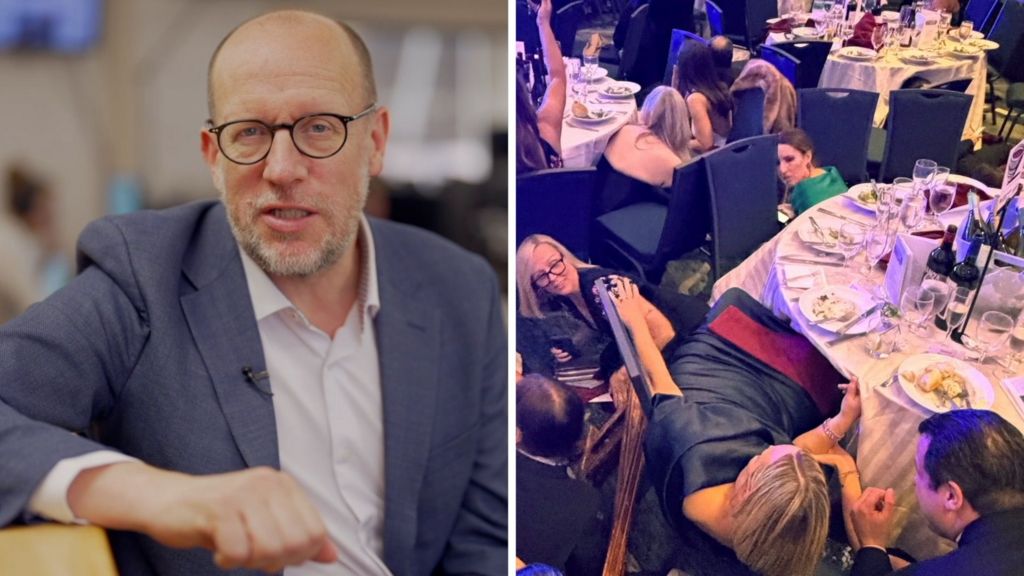
    On a night designed for media and political leaders to mingle under the spotlights of Washington D.C.’s most high-profile annual press gatherings, a sudden, jarring question cut through the room: “Are they gunshots?” That question came from BBC correspondent Tom Bateman, who found himself in the center of unfolding chaos when sudden sounds resembling gunfire erupted inside the dining hall, where then-President Donald Trump and dozens of senior administration officials, lawmakers, and national media figures had gathered for the traditional White House Correspondents’ Dinner.

    Bateman has since shared a minute-by-minute breakdown of the experience, tracing how the event shifted from low-key conversation and pre-speech networking to stunned silence in seconds. Witnesses in the room reported that the abrupt, sharp cracks of sound immediately triggered panic, as attendees scrambled to assess whether the gathering, which regularly hosts the sitting U.S. president and top national security figures, was under active attack. For minutes after the sounds were first detected, confusion rippled through the venue, with guests unsure whether to shelter in place, evacuate, or wait for official confirmation from the U.S. Secret Service, which is responsible for presidential security at all public events.

    The incident sparked immediate conversations about the vulnerability of high-profile public gatherings that include top U.S. government leadership, even with the extensive security protocols that are standard for events featuring the president. While later assessments clarified the source of the sounds was not an active shooter, the split-second panic that unfolded highlighted how persistent concerns over gun violence in the U.S. have changed the experience of even the most heavily secured public events. Bateman’s on-the-ground account has offered the public a rare, granular look at how chaos unfolds in a space that is usually carefully choreographed for political and media spectacle.

  • African migrants warned to close shops during South Africa anti-migrant march

    African migrants warned to close shops during South Africa anti-migrant march

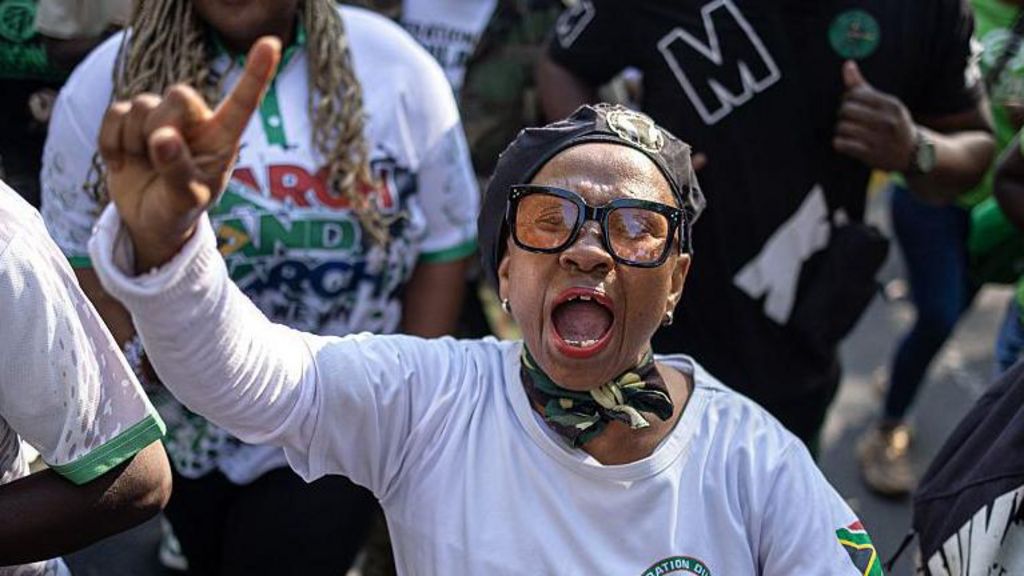
    Hundreds of demonstrators gathered in the streets of South Africa’s administrative capital Pretoria on Tuesday for an organized march against illegal immigration, triggering urgent safety advisories for African migrant communities across the country and reigniting fierce debate over long-simmering xenophobic tensions. The protest, organized by anti-immigration group March and March, saw participants march toward the Union Buildings, South Africa’s official seat of national government, carrying hand-painted signs, chanting slogans, and wearing branded T-shirts emblazoned with their messaging.

    One protester spoke to BBC correspondent Thuthuka Zondi, explaining that he joined the demonstration over frustrations that national politicians have failed to address what he frames as a crisis of unregulated migrant entry. “We are grateful that we now have groups like this that have come up to aid the voice of what we have always been preaching about — illegal immigration is a big problem to our society,” he said. The demonstration follows a years-long rise in anti-migrant political sentiment, fueled by widespread beliefs among some South Africans that foreign-born workers take available jobs from citizens and disproportionately draw on taxpayer-funded public services. South Africa currently faces one of the world’s highest unemployment rates, hovering near 33% — a statistic that anti-immigration groups have leveraged to grow their support base.

    In response to the planned demonstration and credible fears that the protest could escalate into targeted xenophobic violence, diplomatic missions and migrant community organizations have issued urgent warnings urging African migrants to practice maximum vigilance. Ghana’s High Commission in Pretoria issued an official advisory Tuesday urging all Ghanaian nationals in the country to prioritize personal safety, close their businesses, avoid protest hotspots, and maintain a low public profile to reduce the risk of confrontation. Similarly, Olaniyi Abodedele, chairman of the Nigerian Union of South Africa, instructed all community members to stay indoors and shutter their businesses amid the unrest.

    Abodedele told the BBC’s Pidgin service that the entire community is on edge, noting that xenophobic targeting often does not distinguish between legal and undocumented migrants. “As long as you are a Nigerian, you are profiled and you are stereotyped immediately,” he said, adding that many community members feel uncertain about what protection their home government will provide if violence breaks out. A second demonstration focused on restricting immigration is scheduled to take place Wednesday in South Africa’s largest city, Johannesburg, which hosts one of the country’s largest migrant populations alongside Pretoria.

    Speaking to the BBC on the sidelines of the Pretoria protest, affected Nigerian migrants expressed fear and frustration over the restrictions they have been forced to adopt. One small business owner, who closed his shop in line with the safety advisory, said he resented being targeted when most migrants only come to South Africa to earn a living. “It is not okay because we are blacks, we are brothers… everybody comes here just to survive,” he said. A security guard who was unable to report for work due to the unrest added: “It’s just making us scared — imagine if we’re scared in our own African continent — what if we go to Europe?”

    Senior political and international leaders have moved quickly to condemn rising xenophobic violence and anti-migrant rhetoric in South Africa. In his annual Freedom Day address Monday, which marks the anniversary of the country’s first post-apartheid democratic elections in 1994, President Cyril Ramaphosa rejected growing anti-migrant sentiment. Ramaphosa reminded South Africans that the wider African continent provided critical support to the anti-apartheid struggle, urging citizens not to let legitimate economic frustrations “breed prejudices and hatred towards our fellow Africans.” He also explicitly condemned recent targeted attacks on foreign-born residents.

    United Nations Secretary-General António Guterres echoed that condemnation in remarks released by his spokesperson Stéphane Dujarric on Monday. Guterres criticized “criminal acts perpetrated by individuals inciting violence and exploiting socio-economic conditions,” and also recalled the international and African solidarity that sustained South Africa’s fight against apartheid. The UN chief stressed that he is deeply concerned by ongoing reports of “xenophobic attacks and acts of harassment and intimidation,” adding: “Violence, vigilantism and all forms of incitement to hatred have no place in an inclusive, democratic society.”

    Xenophobic violence and anti-migrant sentiment have been persistent challenges in South Africa for decades, with occasional deadly outbreaks of targeted attacks on migrant communities. Official government data shows that approximately 2.4 million migrants live in South Africa, making up just under 4% of the national population. The vast majority of these migrants come from neighboring Southern African countries including Lesotho, Zimbabwe, and Mozambique, which have a long history of supplying labor to South Africa’s economy. In recent years, organized anti-migrant groups such as Operation Dudula and March and March have gained increasing public traction for their demands that all foreign-born nationals be expelled from the country. Earlier this year, Zulu King Misuzulu kaZwelithini drew widespread condemnation for using a derogatory slur to refer to foreigners and calling for all migrants to leave South Africa, 11 years after his father made a similar call.

    Past anti-immigration demonstrations in South Africa have escalated into violent attacks on migrant communities and their businesses, prompting civil society groups to repeat calls for calm and enhanced protection for vulnerable migrant populations. A second planned protest in Johannesburg on Wednesday has communities bracing for further tension across the country’s most populous urban center.

  • The Supreme Court seems likely to shut down a lawsuit by Falun Gong over Cisco’s aid to China

    The Supreme Court seems likely to shut down a lawsuit by Falun Gong over Cisco’s aid to China

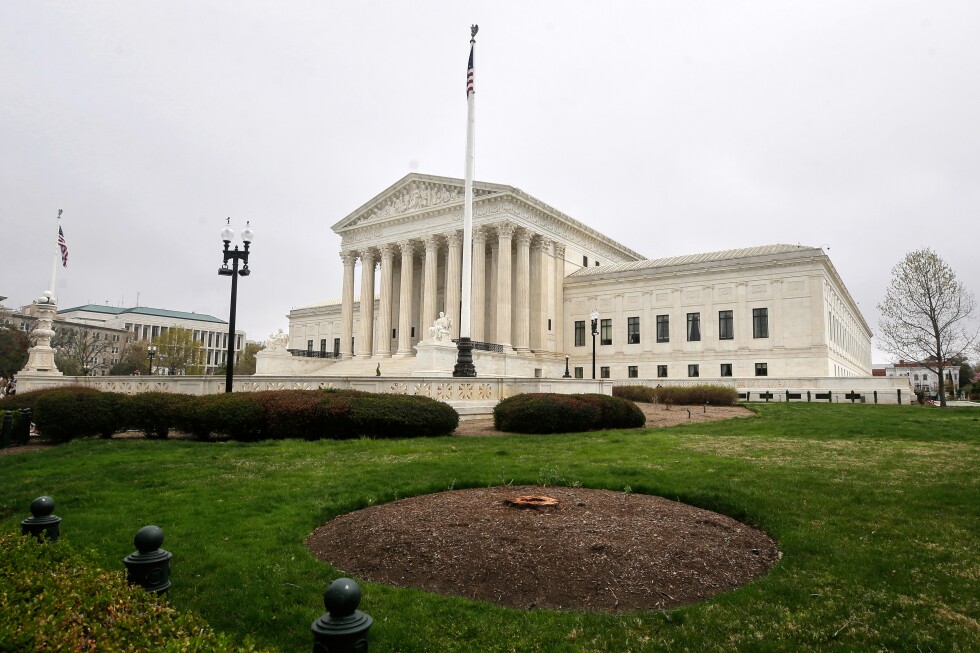
    WASHINGTON – During oral arguments held Tuesday, a majority of U.S. Supreme Court justices signaled clear openness to granting tech conglomerate Cisco’s request to dismiss a high-profile human rights lawsuit that alleges the company deliberately provided technology enabling the persecution of Falun Gong practitioners in China. The case centers on a challenge to a lower appellate court ruling that cleared the way for the suit to be heard in U.S. federal courts, bringing long-simmering debates over corporate accountability for overseas human rights abuses to the nation’s highest court.

    The lawsuit, first filed by Falun Gong adherents back in 2011, accuses Cisco of knowingly customizing its digital infrastructure to help Chinese authorities track, identify, detain and torture followers of the spiritual movement. Declassified internal documents and internal corporate materials leaked to the press in 2008, later confirmed by a 2023 Associated Press investigation, back up many of these claims: those records show Cisco framed China’s massive “Golden Shield” internet censorship and surveillance program as a lucrative business opportunity, openly referred to Falun Gong as an “evil cult” in alignment with Chinese government rhetoric, and advertised that its products could flag more than 90% of Falun Gong-related online content. The company even built a national-level tracking system specifically designed to monitor Falun Gong believers, marking the group as a national security “threat” in official marketing materials to Chinese officials.

    Cisco has forcefully denied all allegations, arguing it cannot be held legally liable in U.S. courts under the two statutes cited by plaintiffs: the 18th-century Alien Tort Statute (ATS) and the 1991 Torture Victim Protection Act (TVPA). The company’s legal counsel Kannon Shanmugam reiterated the firm’s denial during Tuesday’s arguments, telling the bench that “Cisco vigorously disputes those allegations.”

    The court’s conservative majority, which holds a 6-3 advantage in the chamber, centered its questions on the scope of authority for lower courts to hear similar transnational human rights cases. Multiple conservative justices raised concerns that lower tribunals have allowed too many foreign-focused civil rights claims to proceed. Justice Neil Gorsuch, one of the court’s most conservative members, pointedly asked whether the door to U.S. courthouses for such suits is being “not closely guarded,” signaling skepticism of retaining broad access for these claims.

    This skeptical tilt aligns with a years-long trend: both the Supreme Court and successive Democratic and Republican presidential administrations have pushed back against allowing U.S. courts to hear claims over human rights abuses committed by foreign governments on foreign soil. To counteract this well-documented skepticism, lawyers for the Falun Gong plaintiffs have emphasized that a significant share of Cisco’s decision-making and product development related to the Golden Shield project was carried out at the company’s U.S. headquarters, giving U.S. courts legitimate jurisdiction over the case.

    Only the court’s two liberal justices, Sonia Sotomayor and Ketanji Brown Jackson, voiced clear support for allowing the lawsuit to move to trial. Sotomayor pushed back directly on Cisco’s claims during arguments, noting “Cisco was a willing partner with the Chinese government. It knew that those people will be tortured.”

    The Supreme Court’s final ruling in the case is scheduled to be issued by the end of June 2024. The outcome will set a major precedent for future corporate human rights litigation, potentially closing off U.S. courts as a venue for holding American tech companies accountable for their role in enabling authoritarian surveillance and repression overseas.

  • Ex-TV showgirl’s pardon at centre of widening Italian scandal

    Ex-TV showgirl’s pardon at centre of widening Italian scandal

    A presidential pardon granted to a former associate of late Italian Prime Minister Silvio Berlusconi has erupted into a major political controversy, forcing Italy’s head of state to call for an immediate explanation from the country’s justice department. Nicole Minetti, a former television personality who was convicted over her role in the infamous “bunga bunga” sex parties scandal more than a decade ago, received the clemency from President Sergio Mattarella in February. The pardon, however, has now come under intense scrutiny after an investigative report by Italian outlet Il Fatto Quotidiano exposed potential fraud in the application, throwing the entire process into question and dragging Italy’s highest political office into the unfolding drama.

    Minetti’s conviction dates back to 2014, when she was found guilty of both facilitating prostitution for the private parties held at Berlusconi’s Milan-area villa and embezzling hundreds of thousands of euros in public funds. She was handed a total sentence of three years and 11 months in prison, which was suspended during her appeal process. Last year, she submitted a formal request for a presidential pardon, arguing that she and her partner needed to care for an adopted child with severe health issues, a claim the newspaper’s investigation has now called into question.

    According to Il Fatto Quotidiano’s reporting, Minetti submitted false information to support her humanitarian appeal for clemency. The outlet claims she misrepresented the child’s background, stating he was abandoned at birth when court records confirm his biological parents are still alive, though they live in extreme poverty. The report also notes that while Minetti claimed the child had received preliminary medical evaluations in Italy before traveling to the U.S. for treatment, no official records of these consultations have been found, and irregularities have also been uncovered in the Uruguayan adoption process.

    By Tuesday, the controversy had advanced to a formal criminal investigation: Milan prosecutors confirmed they had contacted Interpol as part of their probe into allegations of false declarations tied to the pardon. In Italy, presidential pardons are granted based on formal advice and vetting from the justice ministry and prosecuting authorities, meaning President Mattarella relies entirely on the recommendations of government bodies when approving clemency requests. This institutional structure has now put ruling government officials directly in the political crosshairs.

    The timing of the scandal could hardly be worse for Prime Minister Giorgia Meloni’s right-wing government. Meloni’s administration is already reeling from a major defeat in a recent constitutional referendum on judicial reform, a loss that has cut into the government’s public support and left it scrambling to rebuild momentum. Already facing widespread criticism over the referendum result, the emerging pardon scandal has given new ammunition to opposition parties, who are now demanding the resignation of Justice Minister Carlo Nordio, the top official who signed off on the recommendation for Minetti’s pardon.

    Opposition lawmakers have argued that Nordio’s ministry failed in its duty to vet the pardon application, and that the subsequent scandal has damaged the reputation of the Italian presidency. “The justice minister must step down before he causes further harm to the country’s institutions,” opposition leaders have publicly stated. While Minetti has forcefully denied all allegations of wrongdoing, calling the newspaper’s claims “unfounded and seriously damaging to my personal and family reputation” in a statement issued through her lawyer to Italy’s ANSA news agency, the political pressure on the government continues to mount.

    The justice ministry’s deputy leader, Francesco Paolo Sisto, has defended the government’s initial handling of the case, pushing back against claims of ministerial negligence. Sisto explained that the decision to launch a new investigation came only after new, unreported evidence of potential misconduct by Minetti emerged. He confirmed that the re-investigation will specifically examine whether the newly uncovered irregularities fundamentally invalidate the original case that was made to support granting the pardon.

    Minetti’s connection to Berlusconi stretches back more than 15 years. A qualified dental hygienist as well as a former showgirl, she first treated Berlusconi in 2009 after he was assaulted at a public rally in Milan. The following year, the then-prime minister tapped her to run as a regional councilor in Lombardy for his ruling People of Freedom party. She later became a central figure in the “Ruby Gate” scandal that brought down Berlusconi’s government: in 2010, Berlusconi sent Minetti to a Milan police station to collect 17-year-old Moroccan dancer Karima El Mahroug, also known as Ruby, who had been arrested on theft charges. Berlusconi falsely claimed the teen was the niece of the Egyptian president to secure her release, sparking a years-long legal battle that ultimately ended with a guilty verdict that was later overturned on appeal.

  • Path cleared for Everest climbers after huge ice block

    Path cleared for Everest climbers after huge ice block

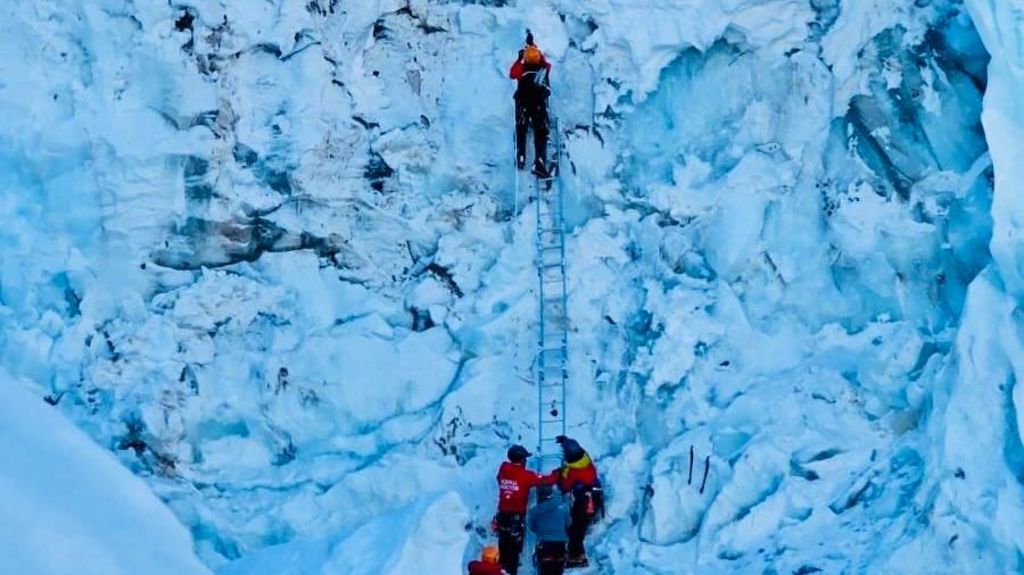
    For two weeks, a massive fallen glacial serac had put all spring climbing plans on hold at Mount Everest, trapping teams below Base Camp and threatening to upend the annual prime climbing season. But following urgent days of work by elite high-altitude crews, a usable alternative path has been carved through the dangerous Khumbu Icefall, opening the way for climbing teams to resume their acclimatization rotations toward the summit.

    Ram Krishna Lamichhane, director general of Nepal’s Department of Tourism, confirmed to the BBC that specialized icefall doctors have successfully installed fixed ropes all the way to Camp 2, which sits at an altitude of roughly 6,400 to 6,500 meters (21,000 to 21,325 feet) above sea level. “Still there are some risks, but icefall doctors have picked up the most convenient available route and identified the path forward,” Lamichhane said. He added that climbers are expected to begin moving toward Camp 1 and Camp 2 for acclimatization exercises starting tomorrow.

    The disruption began in early April, when rope-fixing teams launching preparations for the 2026 spring season encountered the 100-foot (30-meter) tall serac that had calved off the glacier and blocked the standard route. Crews were forced to pause work for two weeks as they waited for the unstable ice block to begin melting naturally, putting all season preparations roughly two weeks behind the original schedule. This delay has sparked growing concerns that the backlog will lead to the dangerous summit queues that have plagued crowded Everest seasons in past years.

    The route-clearing work was a collaborative effort carried out by experienced icefall doctors from Nepal’s Sagarmatha Pollution Control Committee (SPCC) alongside veteran sherpas from expedition operator associations, who specialize in navigating the constantly shifting icefall terrain. Lakpa Sherpa, a veteran climber and expedition manager who oversaw part of the work, explained that modern technology played a key role in speeding up the operation. Airlift support was used to deliver critical supplies including fixed ropes, aluminum ladders, snow stabilizer bars and food to high-altitude crews during the most challenging phases of the work. Teams also leveraged cutting-edge survey tools: “3D photogrammetry and real-time drone surveys to map the Khumbu Icefall and assess hazards like seracs and crevasses,” he said.

    While the route to lower camps is now open for traffic, officials and expedition leaders have stressed that major hazards remain in the area. Lakpa Sherpa warned that the original massive unstable serac is still at high risk of collapse within the next four to five days, and urged climbing teams to avoid carrying heavy payloads through the affected section of the icefall. “Safety is our highest priority; further rotations should proceed with extreme caution and at your own risk,” he said. Acknowledging the delays to the season timeline, he urged permit holders to remain calm: “The season is slightly delayed but the summit will come,” he added.

    Nepal’s Department of Tourism echoed that safety message in a post to X, noting, “As climbers navigate the route, utmost caution is urged, particularly in the serac-affected section. Wishing all a safe ascent.”

    This year, 425 climbers have received official permits to attempt a summit of Mount Everest from the Nepali side of the border. According to the Department of Tourism, these permits will generate roughly 924.2 million Nepalese Rupees, equivalent to approximately $6.1 million or £4.5 million, in government revenue, making the spring climbing season a key contributor to Nepal’s tourism-driven economy.

  • Palestine Action defendant says guard ‘assaulted me multiple times’ during Elbit raid

    Palestine Action defendant says guard ‘assaulted me multiple times’ during Elbit raid

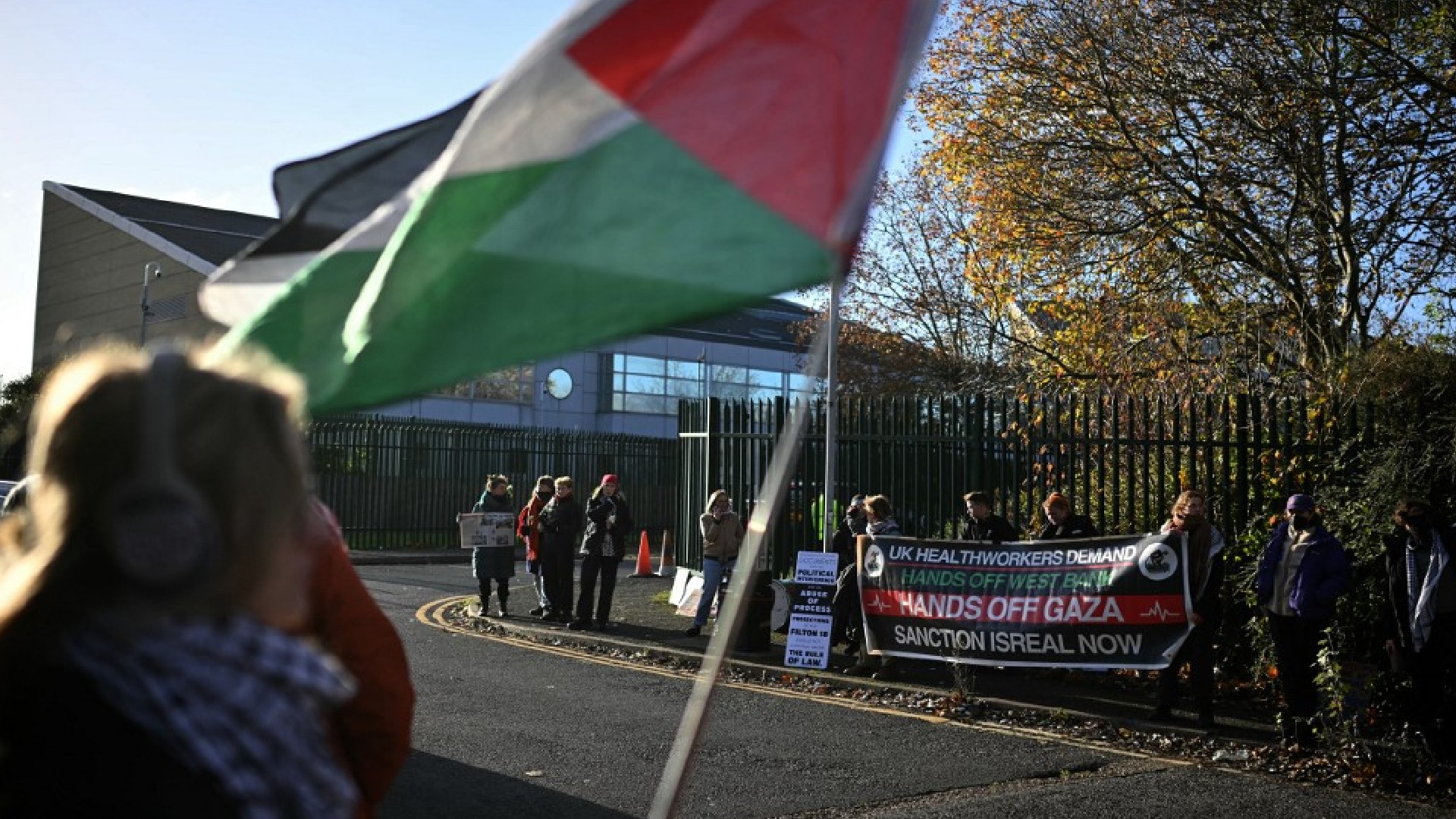
    On Monday, a key defendant in the high-profile trial linked to a Palestine Action raid on an Elbit Systems factory gave dramatic testimony at London’s Woolwich Crown Court, detailing what he says were repeated assaults by a on-site security guard during the August 2024 break-in near Bristol.

    Thirty-one-year-old Jordan Devlin is one of six people facing criminal damage charges connected to the incident at the Filton facility, which manufactures military technology. His co-defendants are 30-year-old Leona Kamio, 29-year-old Charlotte Head, 21-year-old Fatema Rajwani, 22-year-old Zoe Rogers, and 23-year-old Samuel Corner. Corner faces an additional charge of grievous bodily harm with intent, accused of striking a police officer with a sledgehammer during the incident.

    Taking the stand to testify before jurors, Devlin described the sequence of confrontation that unfolded after security guard Angelo Volante intervened in the raid. Devlin, who told the court he was unarmed when Volante first encountered the group, explained that Volante had already seized a sledgehammer from co-defendant Rogers, who was standing nearby. Devlin said he stepped between the two because he believed Volante intended to harm Rogers, triggering a physical altercation.

    “Volante assaulted me multiple times,” Devlin told the court, recounting that the guard kicked him and launched a series of wild swings at him after Devlin caught Volante’s leg during the attack. Body-worn camera footage from Volante was presented to jurors, and Devlin argued that when slowed down, the footage captures Volante delivering a downward swing that would have seriously injured him if it had connected with the back of his head. Devlin went so far as to accuse Volante of enjoying the confrontation, saying “He was looking like he wanted to hurt her… I could see from his face, he was enjoying the opportunity to bully people. He should have lost his job, been barred from the security industry altogether.”

    Photographs of injuries Devlin sustained during the raid were also shown to the court. Devlin pointed to a distinct red linear mark across his shoulder, which he said was likely caused by a blow from the handle of Volante’s sledgehammer. He further testified that after he grabbed the sledgehammer from Volante, the guard deliberately pressed against him to turn off his body-worn camera — and just seconds after the camera cut out, Volante attempted to bite his neck.

    Devlin also described a second, unrecorded confrontation in a factory alcove that was not captured by either body-worn cameras or on-site CCTV. During that grapple over the sledgehammer, Devlin said Volante drove the weapon into his face, leaving him with the black eye visible in his post-arrest mugshot, which was shown to jurors. “The moment I was struck my tinnitus went off, and I stepped back stunned,” Devlin recalled, adding that he even attempted to de-escalate the tension by joking about a “Star Wars moment,” suggesting the two duel with the sledgehammer as if they were light sabers. Devlin noted he has been unable to verify this second altercation because CCTV footage from the relevant part of the factory is missing, a gap the court has previously confirmed.

    The trial proceedings have already revealed that two on-floor CCTV cameras never had their footage retrieved by investigators, a point defense counsel raised earlier this month when questioning PC Sarah Grant, the officer tasked with recovering the facility’s security recordings. Body-worn footage shown to the court also captures a separate incident where Volante runs at Devlin and strikes him across the neck with a sledgehammer handle, knocking him to the ground.

    Devlin also detailed his confrontation with responding police officer PC Aaron Buxton. He told the court Buxton put him in a headlock and pulled him to the slippery floor, which had been covered in fire extinguisher fluid during the raid. After Buxton fell to the ground, Devlin said he was unable to identify the man as a police officer or see anyone approaching because his goggles were coated in Pava spray, an incapacitating agent Buxton had fired just moments earlier. Devlin told the court he did not learn Buxton was a police officer until three days after his arrest, adding “If they had said they were police, it would have been over a lot easier.”

    Jurors viewed Buxton’s body-worn camera footage from the ground, which shows Corner raising a sledgehammer and striking the officer. Devlin told prosecutors he had no idea Corner was nearby at the time, as he was crouched focused on Buxton. When prosecutors asked Devlin if he admitted to causing property damage during the raid, he openly acknowledged the damage, telling the court “Yes I do, and it was an honour.”

    The trial of the six Palestine Action defendants is ongoing.

  • Indian billionaire’s son offers to save Escobar’s hippos

    Indian billionaire’s son offers to save Escobar’s hippos

    Decades after the death of Colombian drug lord Pablo Escobar, a decades-long ecological crisis in Colombia has drawn an unexpected offer from one of Asia’s wealthiest families. The crisis traces back to Escobar, the infamous leader of the Medellín Cartel who was killed by police in 1993, who illegally smuggled a pair of African hippopotamuses into his luxurious Hacienda Nápoles estate, located 155 miles northwest of Bogotá. After Escobar’s death, the two hippos were left to roam freely, and the Magdalena River basin, with its fertile swamps, lack of natural predators, and ideal conditions in the Antioquia region, allowed the species to explode in population. Now numbering in a growing herd recognized as the largest population of hippos outside their native Africa, these animals, nicknamed the ‘cocaine hippos’, have been officially classified as an invasive species by the Colombian government.

    Colombian authorities and environmental groups have long documented the damage caused by the non-native hippos: they have displaced local native wildlife, threatened fishing communities along the Magdalena River, and disrupted the regional ecosystem. Adult male hippos can weigh up to three tons, making aggressive encounters with humans a serious public safety risk. For years, Colombia attempted multiple population control measures, including surgical castration, but all efforts failed to slow the herd’s rapid growth. Facing an uncontrolled population projected to expand far beyond current limits, the government made the controversial decision to cull approximately 80 hippos to manage the crisis.

    That plan is now facing a potential alternative following a public proposal from Anant Ambani, son of Mukesh Ambani—Asia’s richest man. In a formal letter to Colombia’s Minister of Environment, the CEO of Vantara, Ambani’s private zoo in Gujarat’s Jamnagar district, stated that the facility is ‘willing to receive and care for’ the targeted hippos, offering to provide lifelong care for the entire herd on its grounds. The proposal, shared publicly on the zoo’s official Instagram account, emphasized that ‘at the heart of this proposal is Vantara’s belief that every life matters and that we have a shared responsibility to protect life wherever possible’. As of this reporting, Colombian officials have not issued any formal response to the offer.

    Vantara, a 3,500-acre private zoo located near the world’s largest oil refinery owned by Mukesh Ambani, currently houses more than 2,000 animal species including elephants, tigers, and other large megafauna. The facility gained global attention in 2024 when it served as one of the venues for Anant Ambani’s high-profile, extravagant pre-wedding celebrations. However, the zoo has also faced repeated criticism from wildlife conservation activists, who have raised concerns over a range of issues including the incompatibility of Gujarat’s hot, dry climate for many of the species held in captivity there.

    The ‘cocaine hippo’ dilemma remains one of Colombia’s most intractable environmental challenges, balancing ecological protection for native ecosystems and public safety against animal welfare advocacy. The unexpected offer from the Ambani family has opened a new chapter in a debate that has divided conservationists for years, with the Colombian government yet to indicate whether it will accept the proposed relocation plan.

  • Mali’s junta leader meets Russian ambassador after attacks the Kremlin called a coup attempt

    Mali’s junta leader meets Russian ambassador after attacks the Kremlin called a coup attempt

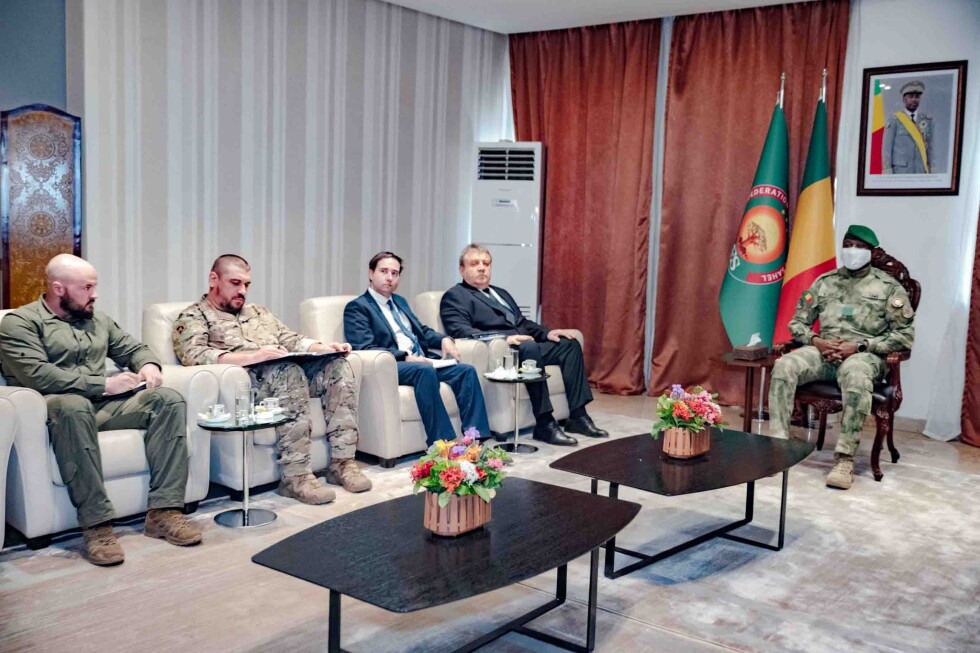
    Three days after a massive, coordinated wave of attacks by al-Qaida-aligned Islamic militants and separatist fighters rocked the West African nation of Mali, the country’s ruling junta chief has made his first public appearance, meeting with a top Russian diplomatic delegation in the capital Bamako.

    Authorities confirmed that Assimi Goita, the military leader who took power via a 2020 coup, held talks with a Russian team led by Ambassador Igor Gromyko on Tuesday. Photos released by Goita’s office show the meeting taking place in Bamako’s presidential palace. Russia, a key strategic and military ally of Mali’s junta, has framed the weekend attack as an attempted coup against the current government.

    The coordinated attacks, launched simultaneously on Saturday by a coalition of militants and the separatist Azawad Liberation Front, targeted at least four population centers across Mali’s central and northern regions—areas long labeled as a global hotbed for terrorist activity. Assaults hit Bamako’s international airport, the nearby garrison town of Kati, and the northern cities of Kidal and Sevare.

    In the wake of the violence, the Azawad Liberation Front claimed its fighters seized full control of Kidal after Malian and Russian military forces withdrew from the strategic northern city. The attack also resulted in the death of Mali’s Defense Minister General Sadio Camara. As of Tuesday, the full scope of casualties across all attack sites and the current status of territorial control in contested areas remain unconfirmed, with the Malian government yet to release a detailed public account of the incident.

    The U.S. Embassy in Bamako responded to the ongoing instability by issuing an urgent security alert, warning of potential terrorist movements within the capital and confirming reports of forced school closures across the city. Bamako remains on high alert three days after the attacks, with many local residents reporting widespread anxiety over personal safety amid the unclear security situation.

    Russia’s Ministry of Defense has issued an unusually detailed statement on the violence, echoing the ambassador’s framing of the offensive as a failed coup attempt. The statement claimed the attack was foiled by joint operations between Malian security forces and the Russian Africa Corps, the unofficial military contingent that provides support to Goita’s junta. Russian defense officials claimed roughly 12,000 attackers participated in the offensive, armed with advanced weaponry. The statement also acknowledged the withdrawal from Kidal, framing the move as a pre-planned strategic decision by the Malian government, noting that outnumbered Malian troops stationed in the city fought off four large-scale assaults for more than 24 hours while fully encircled by enemy forces.

    To date, The Associated Press has not been able to independently verify the claims made in the Russian defense ministry’s statement, and the lack of official updates from Mali’s government has left critical details of the attack unresolved.