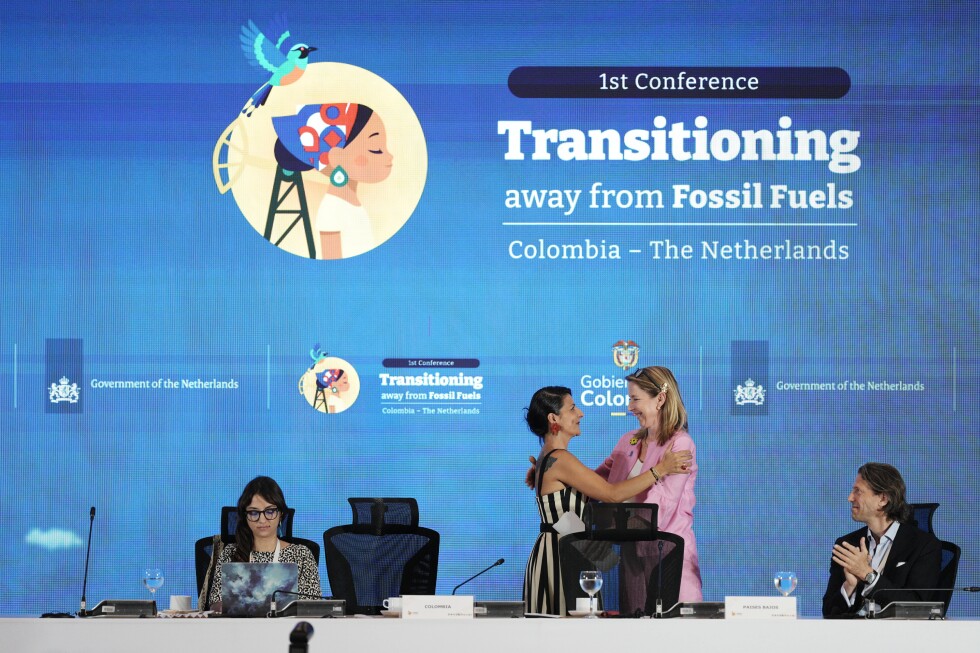
High-level international negotiations focused on accelerating the global transition away from coal, oil, and gas officially launched Tuesday in Santa Marta, the Caribbean coastal hub of Colombia, bringing together more than 50 nations to push for bolder climate action after decades of stalled progress in formal global climate talks. This two-day ministerial and senior official segment forms the political core of the inaugural *First Conference on Transitioning Away from Fossil Fuels*, a landmark gathering convened outside the framework of United Nations climate negotiations to directly address the leading drivers of anthropogenic global warming that formal processes have long failed to tackle head-on.
Co-hosted by Colombia and the Netherlands, the conference opens with a clear, unifying core message from participating policymakers. Stientje van Veldhoven, Dutch minister for climate policy and green growth, emphasized that a full phase-out of fossil fuels is an unavoidable imperative, noting it delivers dual benefits beyond climate stability: strengthened national energy independence and enhanced energy security for all nations.
The summit itself emerged from growing frustration among climate-focused governments and grassroots advocacy groups, who argue that 30 years of U.N.-led climate negotiations have avoided direct, binding action to curb fossil fuel production. While recent formal U.N. talks have formally acknowledged the need for a global transition away from fossil fuels, deep divides persist between nations over implementation frameworks and, critically, how to fund the shift for lower-income and developing economies. That divide is on clear display even within host nation Colombia.
Security measures were tightened at the oceanfront Santa Marta hotel hosting the conference, in advance of an address scheduled Tuesday afternoon from Colombian President Gustavo Petro. The leftist Colombian leader has positioned his country as a global leading voice for fossil fuel phase-out, and has followed through on a campaign pledge to halt new oil and gas exploration in Colombia, despite the fact that the Andean nation remains heavily reliant on oil and coal exports to drive its national economy. With a national election just one month away, Petro is balancing his ambitious global climate leadership with domestic political tensions, visible on the streets outside the conference venue: members of a local mining union gathered to protest both Petro and the summit, holding signs reading “I arrive at the conference by plane to criticize the oil industry” and “More oil, less Petro”, chanting demands to protect existing fossil fuel jobs.
Even amid domestic friction, Colombian officials framed the gathering as a defining moment for cross-border climate solidarity. Colombian Environment Minister Irene Vélez Torres opened the conference by urging participants to turn climate ambition into collective action, calling the summit a potential turning point in global history. “Let this conference be the moment when ambition becomes solidarity and when cooperation becomes the path toward a future beyond fossil fuels,” she said Tuesday morning.
Grassroots and youth activists at the opening plenary echoed that urgency, while pushing for a just transition that centers frontline communities disproportionately harmed by fossil fuel extraction and climate change. Yuvelis Morales Blanco, a 25-year-old climate activist from Puerto Wilches, Colombia, called on governments to move past vague pledges and adopt direct, concrete policy action to phase out fossil fuels and protect intact ecosystems. “We are called to make real the world we have imagined,” she said. “We demand energy justice, climate justice and justice for youth and children.”
Debates through the opening day of the conference have zeroed in on the biggest practical barrier to a global transition: affordable financing, particularly for developing nations that face steep borrowing costs and limited access to affordable capital to scale renewable energy infrastructure. Van Veldhoven emphasized that unlocking low-cost financing is non-negotiable for a global, equitable transition, noting that many low- and middle-income nations face crippling debt burdens and limited fiscal space to invest in clean energy. Participants have also debated the effectiveness of policy tools including carbon markets and fossil fuel subsidy phase-outs, alongside discussions to ensure the transition does not replicate historical patterns of extractive resource development that have harmed Indigenous and local communities.
Unlike formal U.N. climate talks, the Santa Marta conference will not produce binding international agreements. Instead, organizers designed the summit to build grassroots and political momentum for faster action, and to coordinate a bloc of nations willing to accelerate phase-out outside the slow formal U.N. process. The gathering is also seen as a critical steppingstone ahead of upcoming global climate negotiations, where fossil fuel phase-out timelines and transition finance will remain core sticking points for global negotiators.
In a pre-conference announcement Monday, small island developing nation Tuvalu — one of the countries most vulnerable to sea-level rise driven by climate change — revealed it will host the second iteration of the fossil fuel transition conference. Scientists and U.N. climate experts project the low-lying South Pacific nation could be completely submerged by rising ocean waters by 2100 if global emissions continue on their current trajectory, making the fight to phase out fossil fuels an existential priority for the Tuvaluan people.