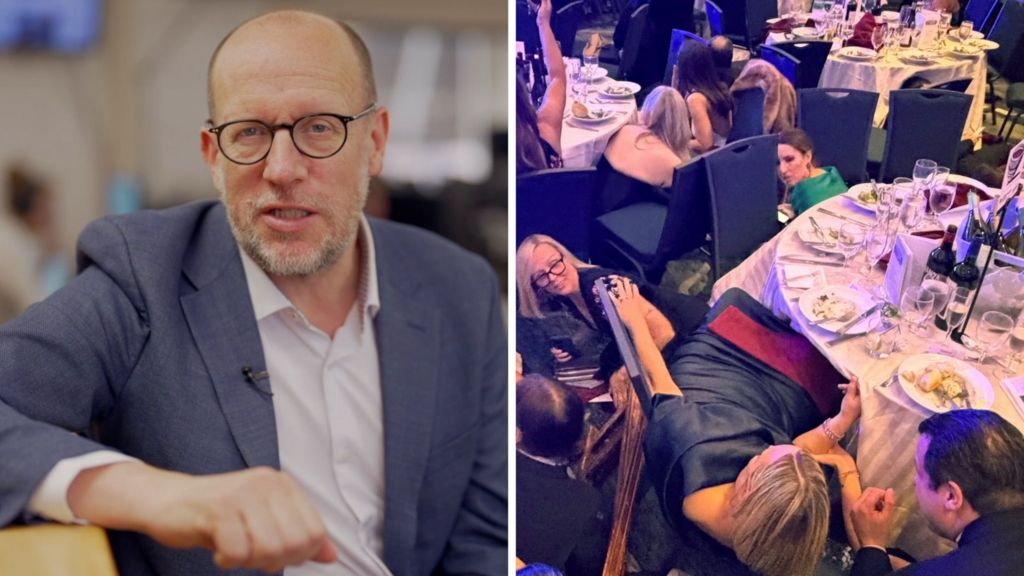
On a night designed for media and political leaders to mingle under the spotlights of Washington D.C.’s most high-profile annual press gatherings, a sudden, jarring question cut through the room: “Are they gunshots?” That question came from BBC correspondent Tom Bateman, who found himself in the center of unfolding chaos when sudden sounds resembling gunfire erupted inside the dining hall, where then-President Donald Trump and dozens of senior administration officials, lawmakers, and national media figures had gathered for the traditional White House Correspondents’ Dinner.
Bateman has since shared a minute-by-minute breakdown of the experience, tracing how the event shifted from low-key conversation and pre-speech networking to stunned silence in seconds. Witnesses in the room reported that the abrupt, sharp cracks of sound immediately triggered panic, as attendees scrambled to assess whether the gathering, which regularly hosts the sitting U.S. president and top national security figures, was under active attack. For minutes after the sounds were first detected, confusion rippled through the venue, with guests unsure whether to shelter in place, evacuate, or wait for official confirmation from the U.S. Secret Service, which is responsible for presidential security at all public events.
The incident sparked immediate conversations about the vulnerability of high-profile public gatherings that include top U.S. government leadership, even with the extensive security protocols that are standard for events featuring the president. While later assessments clarified the source of the sounds was not an active shooter, the split-second panic that unfolded highlighted how persistent concerns over gun violence in the U.S. have changed the experience of even the most heavily secured public events. Bateman’s on-the-ground account has offered the public a rare, granular look at how chaos unfolds in a space that is usually carefully choreographed for political and media spectacle.