博客

  • PSG edge Bayern in nine-goal Champions League semi-final epic

    PSG edge Bayern in nine-goal Champions League semi-final epic

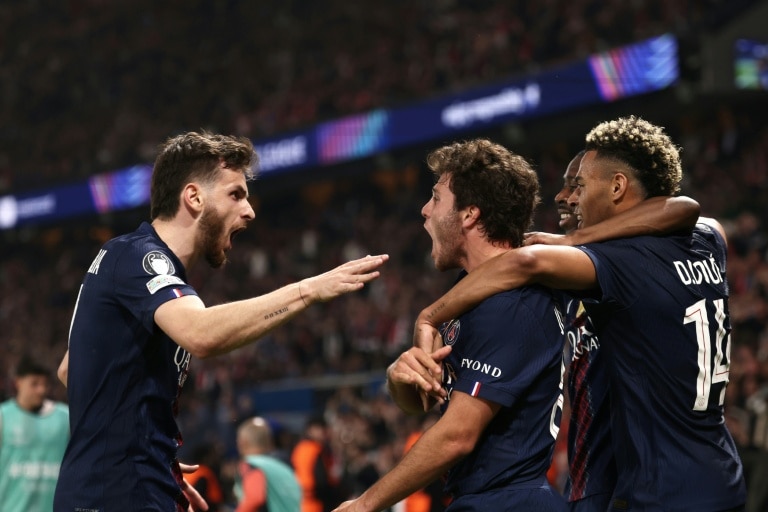
    Paris Saint-Germain and Bayern Munich delivered one of the most dramatic matches in UEFA Champions League history on Tuesday, producing a nine-goal epic in the first leg of their 2025 semi-final encounter that will go down as an instant classic of the competition. The 5-4 victory for PSG at a packed Parc des Princes stands as the highest-scoring semi-final match in the history of the tournament, with two of European football’s current heavyweights showcasing relentless attacking quality from the first whistle to the last.

    The first half alone delivered enough drama to fill an entire fixture, with Bayern Munich drawing first blood in the 17th minute. After PSG defender Willian Pacho brought down Bayern winger Luis Diaz inside the box, England captain Harry Kane stepped up to convert the penalty, notching his 54th goal of an already historic individual season. The German champions, who had beaten PSG 2-1 in the Champions League league phase back in November via a Diaz brace, looked the more dangerous side in the opening exchanges, but their aggressive, front-footed attacking approach left gaps at the back that PSG were quick to exploit on the counter.

    Just after the 30-minute mark, Georgian winger Khvicha Kvaratskhelia – widely regarded as the standout player of this season’s Champions League – broke the deadlock for the hosts. He outpaced Josip Stanisic down the left flank, cut inside the recovering defender, and fired a precision shot into the far corner to level the score at 1-1. Three minutes later, Joao Neves nodded home a well-placed Ousmane Dembele corner to put PSG 2-1 ahead, sending the packed home crowd into a frenzy.

    The end-to-end action showed no signs of slowing, however. Bayern’s Michael Olise drove into the PSG penalty area and smashed a powerful effort past the goalkeeper to restore parity at 2-2, marking his 20th goal of the 2024-2025 campaign. In first-half stoppage time, PSG were awarded a penalty after a cross from Dembele struck the arm of Alphonso Davies, who was making his first Champions League start of the season following a long-term injury layoff. After a lengthy VAR check, Swiss referee confirmed the decision, and Dembele converted to put PSG 3-2 up going into the halftime break.

    Two minutes into the second half, PSG extended their lead further. Achraf Hakimi delivered a pinpoint low cross into the path of Kvaratskhelia, who slotted home his second of the night to make it 4-2 – his seventh goal in seven knockout stage games this campaign, further cementing his reputation as PSG’s biggest match-winner this season. Before Bayern could reorganize, Dembele caught Manuel Neuer off guard with a low shot that bounced into the net off the near post, putting the French champions 5-2 up and seemingly out of reach with just over half an hour remaining.

    Yet Vincent Kompany’s Bayern side refused to fold, even with their manager watching from the stands due to a suspension. The German champions pulled one back through Dayot Upamecano, who headed home a Joshua Kimmich free kick to cut the deficit to 5-3, taking Bayern’s total goal tally for the season to 170. Minutes later, Diaz latched onto a long through ball, dribbled past PSG captain Marquinhos, and slotted the ball past the goalkeeper to make the score 5-4, setting up a nervy final 15 minutes for the hosts. PSG came close to extending their lead late on when Senny Mayulu’s strike hit the crossbar with Neuer beaten, leaving the final scoreline locked at 5-4.

    The result leaves Luis Enrique’s PSG holding a narrow one-goal advantage heading into the return leg next Wednesday at Bayern’s Allianz Arena, with a place in the May 30 Champions League final in Budapest up for grabs. PSG are chasing history as they aim to become only the second club in the modern Champions League era to retain the trophy, having lifted the title in 2024 with a 5-0 win over Inter Munich in Munich’s final venue. For Bayern, who lifted their sixth Champions League trophy in 2020 with a final win over PSG, the club is aiming to reach its first final since that 2020 triumph, and will be confident of turning around the deficit in front of their home fans. Widely praised as already surpassing last season’s iconic semi-final between Inter Milan and Barcelona, the nine-goal thriller has left the tie perfectly poised for another dramatic encounter in Munich next week.
  • More than fashion: A pin worn by Venezuela’s Rodríguez on state visits riles Guyana

    More than fashion: A pin worn by Venezuela’s Rodríguez on state visits riles Guyana

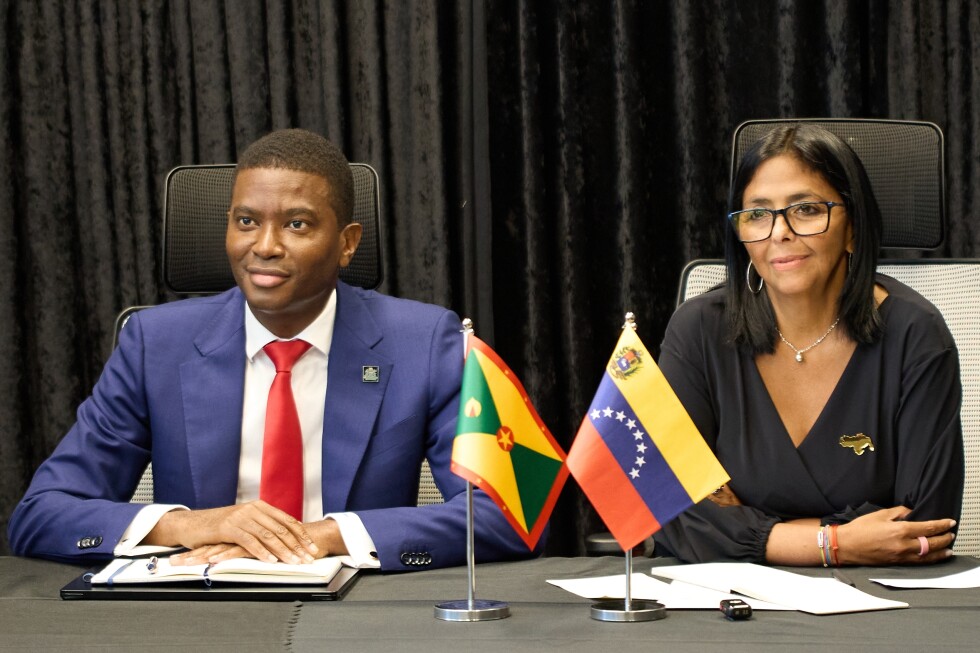
    GEORGETOWN, Guyana – A long-simmering centuries-old territorial dispute between Caribbean neighbor Guyana and Venezuela has reignited into a new diplomatic clash, after Guyana’s president issued a formal complaint to regional leaders over a provocative symbolic gesture by Venezuela’s acting president. The controversy centers on a lapel pin worn by Delcy Rodríguez, Venezuela’s interim head of state, during her recent official visits to Caribbean nations: the pin is shaped explicitly to match the borders of Guyana’s resource-rich Essequibo region, a territory that makes up two-thirds of Guyana’s total land area and has been claimed by Venezuela for more than a century. The gesture comes amid already heightened tensions following the U.S. capture of former Venezuelan president Nicolás Maduro in a surprise overnight raid on his Caracas residence in early January, after which Rodríguez stepped into the acting presidency. In the weeks since that political shift, the pin has become an increasingly common public symbol among senior Venezuelan government figures, ruling party lawmakers, state media anchors and other ruling bloc representatives. Guyana President Irfaan Ali delivered his formal complaint in an official note addressed to Terrance Drew, Prime Minister of St. Kitts and Nevis and current chairman of the Caribbean Community (Caricom), the regional trade and coordination bloc that hosts Rodríguez’s recent travels. Ali confirmed that Rodríguez wore the disputed pin during her official stop in Barbados on Monday, marking the second confirmed instance of her displaying the symbol on an overseas trip – the first came during an official visit to Grenada earlier in April, on her first international tour since assuming the acting presidency. In the note, Ali emphasized that the pin serves as an open, public assertion of Venezuela’s invalid territorial claim to sovereign Guyanese land. Beyond the symbolic provocation, Ali outlined a key concern: that when Rodríguez wears the pin during official visits hosted by other Caribbean nations, the gesture could be misread by third parties as quiet acceptance or even endorsement of Venezuela’s claim by the host government. Ali stressed that Caricom has long stood on clear principles in backing Guyana’s sovereignty over the Essequibo region, and that this commitment needs to be reflected not just in official statements, but also in how member states conduct official diplomatic engagements with Venezuelan representatives. The roots of the dispute stretch back to an 1899 international boundary commission, which set the current border between the two territories when Guyana was still a British colony. Venezuela has long argued that the commission’s ruling was obtained through improper means and stripped the country of the Essequibo territory. The competing claims are currently being adjudicated at the International Court of Justice (ICJ) based in The Hague, Netherlands. Ali reminded Caricom member states that the bloc has previously issued unequivocal public support for Guyana’s sovereign claim to the region at major summit meetings. He pushed for clear action, arguing that Venezuelan representatives should not be permitted to display territorial claim symbols such as the Essequibo-shaped pin or altered maps that include the region as Venezuelan territory, as such gestures threaten to undermine the ongoing legal process at the ICJ. Ali has previously publicly pushed back against other Venezuelan moves to assert the claim, including the inclusion of Essequibo on official Venezuelan government maps, which he has called a calculated, intentional provocation that Guyana rejects entirely. Tensions have escalated dramatically in recent years as major offshore oil reserves were discovered in the Essequibo region, which is licensed for exploration and production by Guyana to international energy firms including U.S. operators. On multiple occasions, Venezuela has deployed military gunboats to the offshore oil blocks, issuing demands that all production activity cease – demands that operating rigs have declined to obey to date. As of Tuesday, no response to Guyana’s complaint had been issued by Venezuelan government officials, who could not be immediately reached for comment by reporters.

  • United Arab Emirates says it is leaving Opec and Opec+

    United Arab Emirates says it is leaving Opec and Opec+

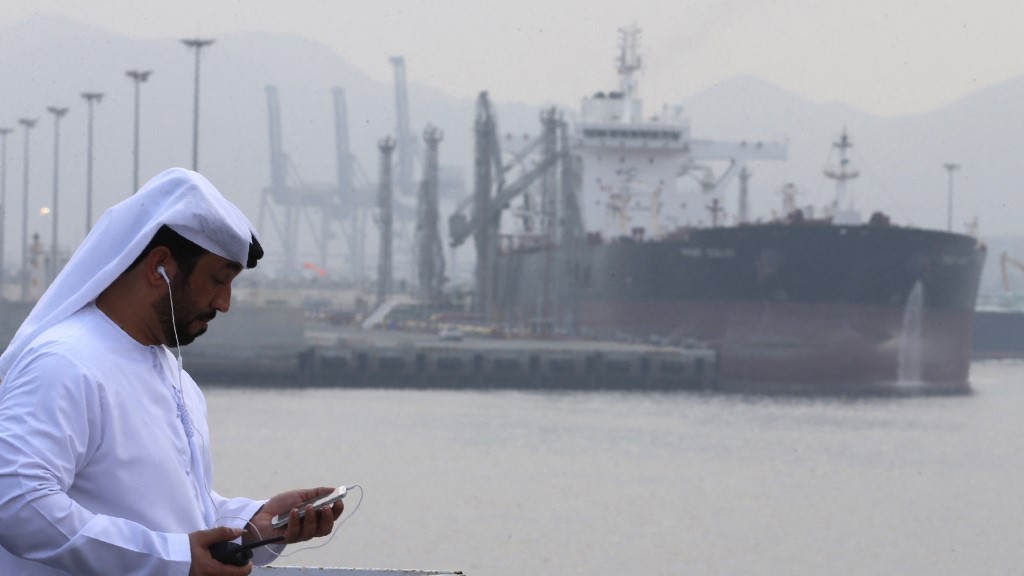
    In a seismic shift that reshapes the landscape of global energy geopolitics, the United Arab Emirates (UAE) has formally confirmed its complete withdrawal from the Organization of the Petroleum Exporting Countries (OPEC) and the broader OPEC+ coalition of oil-producing nations. The country’s Ministry of Energy framed the decision as the outcome of a full, strategic review of its national production framework, in a public statement released to global markets.

    The statement acknowledged that short-term market instability, driven by ongoing supply disruptions across the Arabian Gulf and the critical Strait of Hormuz, has already upended global energy supply dynamics. Even so, it noted that long-term structural projections point to consistent, sustained growth in global energy demand through the medium and longer terms, a core consideration that guided the policy shift.

    Emphasizing the legacy of its decades-long participation in the cartel, the ministry noted that the UAE’s membership dates back to 1967, when the Emirate of Abu Dhabi first joined the organization. Following the formal unification of the United Arab Emirates as a sovereign state in 1971, the country retained its OPEC membership, and over the decades, it has positioned itself as an active stakeholder working to stabilize global oil markets and foster productive dialogue between major producing nations across the world.

    The announcement comes against a backdrop of escalating regional crisis triggered by the ongoing US-Israeli military campaign against Iran that began in late February. The conflict has inflicted widespread economic and security damage across multiple Gulf Cooperation Council (GCC) states, with the UAE bearing a disproportionate share of the impact. As the Gulf nation with the closest formal and economic ties to Israel, the UAE has become a primary target for retaliatory Iranian strikes, which have consisted of thousands of ballistic missiles and drone attacks. These assaults have severely damaged Dubai’s reputation as a safe luxury tourism destination, while also cutting the country’s oil export volumes to a fraction of their pre-conflict levels.

    Within the Gulf bloc, the UAE has emerged as one of the most hawkish voices on the conflict, rejecting calls from some neighboring states for diplomatic de-escalation with Iran and openly calling for the US-led military campaign to continue. Regional analysts widely attribute this hardline stance to two core factors: the UAE’s overwhelming dependence on the Strait of Hormuz, the chokepoint through which roughly a fifth of global oil supplies transit daily for export, and the deep reluctance among the country’s ruling elite to allow Iran to consolidate its position as the dominant regional power in the Gulf.

    Tensions between the UAE and its fellow GCC members boiled over earlier this week, when senior UAE officials publicly criticized the bloc’s collective response to the Iran conflict. Speaking at a Dubai policy conference, UAE presidential advisor Anwar Gargash slammed the six-member GCC, half of whose members also hold OPEC membership, for failing to mount a unified, forceful response after Iran launched retaliatory attacks against GCC states.

    “The GCC’s stance was the weakest in its history, when you consider the scale of the attack and the threat it posed to every single member of the bloc,” Gargash told attendees. He added that while he had anticipated a muted, weak response from the 22-member Arab League, the Cairo-based pan-Arab organization, he never expected the same level of inaction from the Gulf Cooperation Council. “I don’t expect it from the GCC, and I am surprised by it,” he said.

    When pressed by Reuters reporters on whether the UAE had consulted with Saudi Arabia, OPEC’s de facto leader and the UAE’s closest regional neighbor, ahead of announcing its withdrawal, UAE Energy Minister confirmed that the country did not hold direct consultations with any other government or OPEC member ahead of the decision. As global energy markets and regional powers digest the unexpected policy shift, further updates on the implications for oil prices and regional alliances are expected in the coming days.

  • King Charles backs AUKUS defence pact in address to US Congress

    King Charles backs AUKUS defence pact in address to US Congress

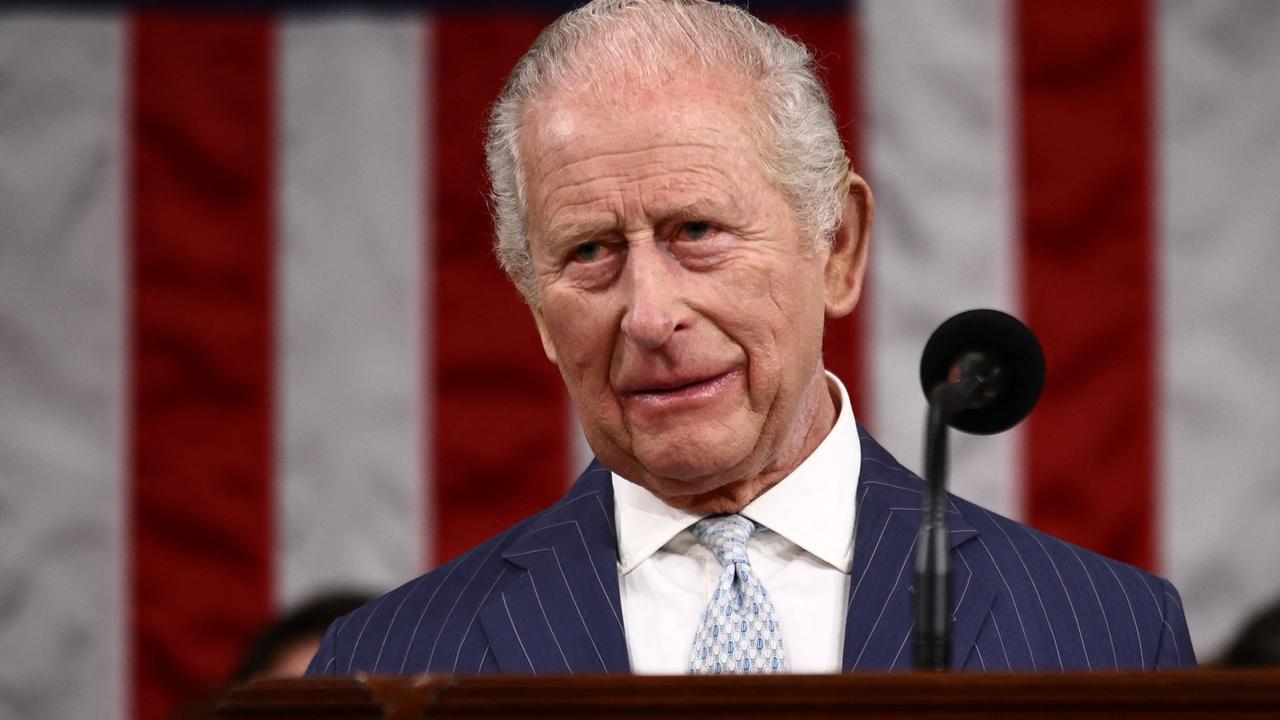
    In a landmark address to the United States Congress — the first by a British monarch in more than 30 years — King Charles III has publicly thrown his support behind the trilateral AUKUS security partnership, framing the ambitious $368 billion submarine initiative as a cornerstone of collective long-term security for the three allied nations.

    The rare joint address to American lawmakers saw the monarch highlight deep existing defense cooperation between the United Kingdom and the United States, noting that thousands of service members and their families from each country are stationed across the other’s territory. Beyond the joint production of F-35 fighter jets, King Charles centered his remarks on AUKUS, the security pact between the UK, US and Australia that he called “the most ambitious submarine program in history.”

    As the reigning sovereign of Australia, the King emphasized personal pride in the partnership, stressing that the collaboration is not rooted in mere sentiment. “We do not embark on these remarkable endeavours together out of sentiment,” he told the assembled legislators. “We do so because they build greater shared resilience for the future, so making our citizens safer for generations to come.”

    King Charles’ endorsement of the pact comes just one day after a British parliamentary inquiry released a critical assessment warning that the ambitious $368 billion program faces significant risk due to a lack of consistent, high-profile political leadership. The inquiry’s report called on new UK Prime Minister Keir Starmer to step into a more public, active role in advancing the initiative, warning that ongoing political drift could ultimately derail the project.

    But top Australian officials have moved quickly to push back on these concerns, reaffirming that AUKUS remains on track and enjoys unified support across all three partner nations. Australian Prime Minister Anthony Albanese told reporters in Canberra this week that overwhelming backing for the pact exists from Starmer’s British government and UK defense leadership alike. Echoing a phrase used by former US President Donald Trump, Albanese declared: “AUKUS is … full steam ahead. And I’m very confident that it will be so.”

    Australian Defense Minister Richard Marles echoed this confidence, noting that recurring bipartisan and cross-national scrutiny of the initiative is a healthy, normal part of the process. Marles pointed out that the UK parliamentary review was ultimately broadly supportive of AUKUS, and emphasized that strong support for the program holds across all three member states. “That the program is put under constant scrutiny again in all three countries is an important thing to happen as well, and this is a part of that,” Marles told Sky News. He added that Australian officials are fully comfortable with the program’s current trajectory, and expect the UK government will act on the inquiry’s recommendations to keep the initiative moving forward.

    Under the terms of the AUKUS agreement, Australia will acquire three nuclear-powered Virginia-class submarines from the United States, with an option to acquire two additional modified boats if needed, as part of a broader plan to build up Western Indo-Pacific defense capabilities.

  • Germany holds breath as stranded whale ‘Timmy’ sets off in barge

    Germany holds breath as stranded whale ‘Timmy’ sets off in barge

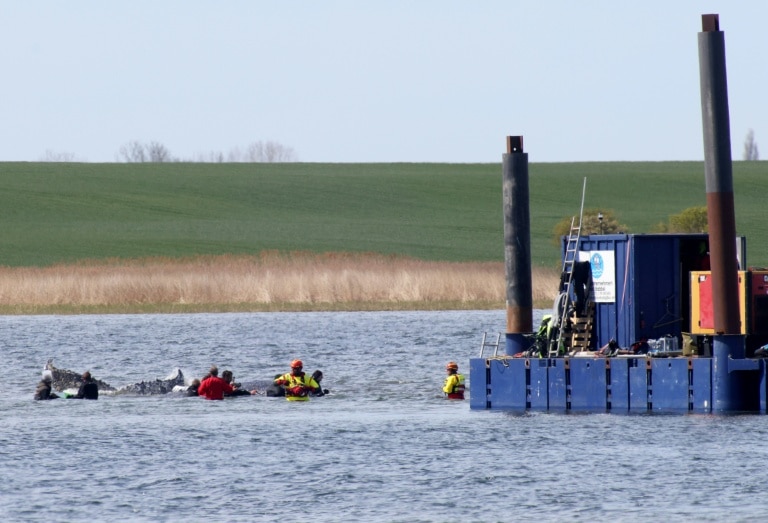
    For weeks, a lost humpback whale’s fight for survival has held the entire nation of Germany in suspense. On Tuesday evening, that saga took a pivotal turn: the 20-ton marine mammal, dubbed Timmy by local media, was successfully guided into a converted cargo barge fitted with a water-filled hold, and the vessel departed for the North Sea to carry out what many call a last-ditch effort to return the animal to its natural habitat.

    Timmy’s ordeal began in late March, when the young humpback – which normally makes its home in the cold, nutrient-rich waters of the Atlantic Ocean – strayed hundreds of kilometers off course and became stuck on a sandbank off the Baltic coast near the northern German city of Luebeck. After the whale freed itself only to become re-trapped multiple times, rescue teams attempted a series of interventions, from digging artificial escape channels to using inflatable flotation devices, but every attempt ended in failure. By early April, state officials formally abandoned rescue efforts, concluding that Timmy could not be saved.

    That decision sparked immediate public outcry, pushing authorities to reverse course and approve a new privately funded rescue plan put forward by two German entrepreneurs. The proposal, which involves transporting Timmy via barge to the North Sea for release if the animal remains strong enough, was dismissed by many marine experts as a long shot, with critics arguing that the stress of capture and transport would only worsen the whale’s condition and reduce any chance of survival.

    Despite the skepticism, rescuers pulled off a breakthrough earlier on Tuesday. Teams fitted stabilizing straps around the 13-meter whale, then guided it down a specially dug sand channel toward the waiting barge. With rescue divers swimming alongside, Timmy picked up speed and voluntarily swam into the water-filled hold, drawing cheers from on-site teams and spectators watching live streams and shore-side broadcasts.

    “I can’t even put my happiness into words,” Karin Walter-Mommert, one of the entrepreneurs backing the mission, told German tabloid Bild. “You could see that the whale was fighting, that he wanted to live. Knowing he’s now safely in the barge is simply wonderful – it proves the fight for Timmy was worth every effort.”

    The operation received official approval after government vets confirmed the whale was healthy enough to withstand the journey north to the North Sea, his intended release site. A temporary green net barrier has been fitted across the barge’s entrance to keep Timmy contained during the voyage. Till Backhaus, environment minister for the state of Mecklenburg-Western Pomerania where the stranding occurred, praised the round-the-clock work of rescue teams, saying “In the end, we have saved this animal.”

    Backhaus has defended the controversial mission against criticism from the scientific community. “I’ve always said: those who do nothing make no mistakes,” he told reporters Tuesday. “If the scientists who claimed this was all pointless had seen the young whale just now, how he swam into the barge all on his own, they would understand.” In a written statement responding to critics who accused officials of sidelining scientific input, Backhaus countered that authorities had always based their decisions on available evidence: “No one could tell us with certainty that the whale would die, or when. On the basis of these uncertain conclusions, we decided to allow the rescue attempt to go forward.”

    The weeks-long saga of Timmy the stranded whale has dominated German media, with rolling coverage on national television, constant updates from online news outlets, and widespread discussion across social media platforms. But the high-profile rescue has also sparked fierce public debate, angry exchanges between supporters and critics of the operation, and even the spread of unfounded conspiracy theories about the whale’s stranding and the rescue’s motives. As the barge carrying Timmy makes its way toward the North Sea, the entire country continues to hold its breath, waiting to see if the high-risk effort will end with the young whale swimming free.

  • Musk says basis of charitable giving at stake in OpenAI lawsuit

    Musk says basis of charitable giving at stake in OpenAI lawsuit

    A landmark legal showdown between two of Silicon Valley’s most influential tech leaders has begun in a California courtroom, bringing long-simmering tensions over the founding and direction of artificial intelligence powerhouse OpenAI into the public eye. The trial, which pits former OpenAI co-founder Elon Musk against current CEO and fellow co-founder Sam Altman, has seen the two sides present starkly conflicting accounts of the company’s origins and core founding commitments.

    When called to the witness stand, Musk — dressed in a formal dark suit and tie — framed the dispute in clear, uncompromising terms. “It’s actually very simple,” he said. “It’s not okay to steal a charity… If it’s okay to loot a charity, the entire foundation of charitable giving will be destroyed.” Musk, who contributed $38 million to OpenAI during its early years as a non-profit research entity, argues that Altman and co-founder Greg Brockman abandoned the organization’s original charitable mission when they launched a commercial division in 2018, years before ChatGPT ignited the global generative AI boom.

    Musk’s lead attorney Steven Molo emphasized to the nine Oakland-based jurors that their client’s involvement was foundational to OpenAI’s existence, telling the court: “Without Elon Musk, there would be no OpenAI. Pure and simple.” Molo explained that Musk’s longstanding position on AI has always centered on responsible, public-benefit development rather than private profit, a stance that solidified after a 2015 meeting with then-President Barack Obama, where Musk grew increasingly concerned about the lack of government oversight for the rapidly advancing technology. Through the lawsuit, Musk is seeking the return of billions of dollars in what his legal team calls “wrongful gains” to be redirected to OpenAI’s non-profit arm, alongside leadership changes that include removing Altman from his role as CEO. His legal claims center on charges of breach of charitable trust and unjust enrichment.

    Counsel for OpenAI, however, has painted a far different picture of the dispute, arguing that the entire lawsuit is a cynical attempt by Musk to sabotage a leading business competitor. OpenAI attorney William Savitt told the court: “We’re here because Mr Musk didn’t get his way at OpenAI. Because he’s a competitor, Mr Musk will do anything to attack OpenAI.” Savitt claimed that Musk attempted to pressure other early OpenAI founders into merging the startup with his electric vehicle and tech company Tesla, and left the organization in a huff only when his bid for full control was rejected. “When they refused to turn the keys of artificial intelligence over to one person,” Savitt said, “When they refused to let OpenAI be absorbed, Musk took his marbles and went home. He left it, he thought, for dead.” OpenAI further argues that Musk never actually prioritized the non-profit model and is motivated by jealousy and regret over walking away from the company before its massive commercial success. The company notes that Musk now runs his own AI firm, xAI, which launched its chatbot Grok in 2023 — a full year after ChatGPT’s debut — and has lagged behind OpenAI in the race to develop advanced artificial general intelligence (AGI). OpenAI also claims that Musk was fully aware of and agreed to the 2018 decision to launch a commercial division, and that he only left after failing to secure the CEO position for himself. Altman is expected to take the witness stand later in the proceedings.

    Judge Yvonne Gonzalez Rogers, who is presiding over the case, has already warned both parties against using their massive social media platforms to sway public opinion or influence the jury. On the first day of jury selection, Musk sparked controversy by referring to Altman as “Scam Altman” in a post on X, the social network he owns. While the judge ultimately declined to issue a full gag order that would bar trial participants from commenting on the case outside court, she urged Musk to curb his social media activity. “Try to control your propensity to use social media to make things worse outside this courtroom,” she said, asking both sides to maintain a “clean slate” moving forward. Both Altman and Brockman agreed to adhere to the same standard of conduct.

    Outside the courthouse, circulating photos show punching bags printed with the faces of both Musk and Altman, a striking visual indicator of the high public interest in the clash between two of the tech industry’s biggest names. A verdict in the trial is expected to be delivered in late May, with the outcome set to shape the future direction of one of the world’s most valuable AI companies and set a precedent for disputes over founding commitments in the rapidly growing tech sector.

  • US regulator to review Disney broadcast licenses after Jimmy Kimmel joke about Melania Trump

    US regulator to review Disney broadcast licenses after Jimmy Kimmel joke about Melania Trump

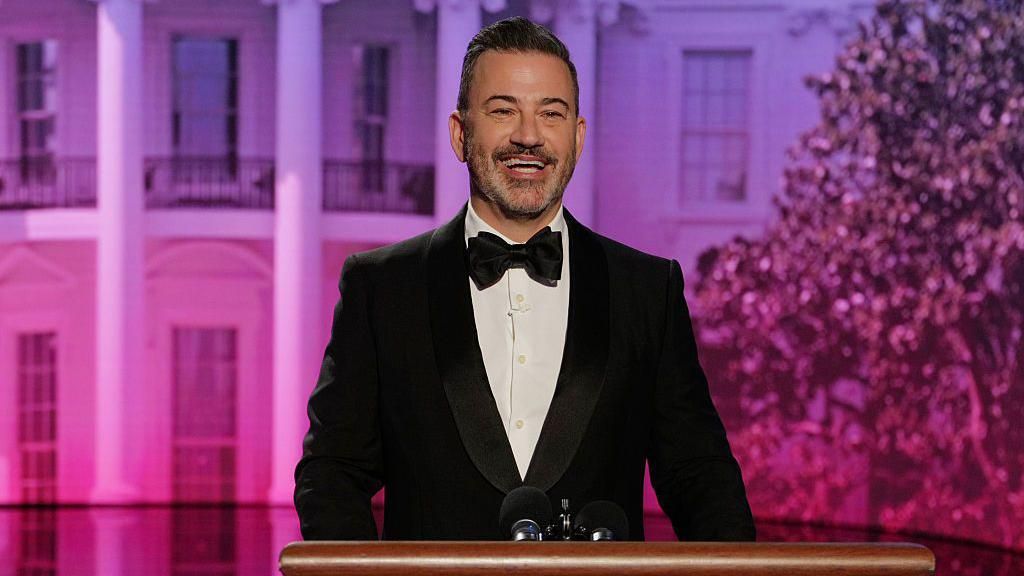
    A major clash over press freedom and political influence has erupted in the United States after the U.S. Federal Communications Commission (FCC) announced an urgent, accelerated review of broadcast licenses for all Disney-owned ABC television stations, just days after former President Donald Trump demanded the network fire late-night host Jimmy Kimmel over a controversial joke. The chain of events stretches back to a poorly received comedy monologue where Kimmel joked that Melania Trump had the “glow of an expectant widow” — comments made just 48 hours before a would-be assassin opened fire at a Washington D.C. gala attended by the Trumps. That joke quickly drew fierce backlash from the former president and his allies, who framed the quip as an implicit incitement to violence. The 31-year-old suspect, Cole Tomas Allen, was tackled by law enforcement before he could reach the ballroom holding the White House Correspondents’ Dinner, where hundreds of journalists, political figures and public officials had gathered. Allen now faces federal charges for attempted assassination of the former president, and the Trumps escaped the incident unharmed. In the aftermath of the shooting, the Trump administration has doubled down on its demand for Kimmel’s removal. White House Communications Director Steven Cheung went so far as to declare publicly Tuesday that Kimmel should be “shunned for the rest of his life.” Donald Trump himself labeled the joke a “call to violence,” while Melania Trump issued a statement accusing the comedian of exacerbating “the political sickness within America.” Kimmel pushed back against these accusations during the opening monologue of his show Monday night, clarifying that his comment was nothing more than a light-hearted jab at the age gap between the 79-year-old former president and his younger wife. “It was not by any stretch of the definition a call to assassination,” Kimmel said, adding that he has spent years speaking out publicly against gun violence. This is not the first time Kimmel has drawn conservative backlash and been pulled off air: Last September, he was temporarily suspended for a week after suggesting Trump’s Make America Great Again (MAGA) movement was seeking political gain from the fatal shooting of conservative influencer Charlie Kirk. In its official order released Tuesday, the FCC stated that it has opened an investigation into ABC’s owned-and-operated stations over alleged potential rule violations, including claims of unlawful discrimination. The commission has ordered Disney to submit full license renewal applications for all its TV stations within 30 days, a major shift from the original 2028 renewal schedule. As part of the review process, the FCC can require Disney to demonstrate that it meets the agency’s strict public-interest standards to hold a broadcast license. In the most extreme scenario, the review could end with the revocation of ABC’s broadcast licenses — a step the FCC has not taken in more than 40 years, according to reporting from Reuters. Disney has pushed back forcefully against the regulator’s action. A company spokesperson told the BBC that ABC and its local stations have a decades-long track record of operating in full compliance with FCC rules, and deliver vital services including trusted local news, emergency alerts and public interest programming to the communities they serve. “Our focus remains, as always, on serving viewers in the local communities where our stations operate,” the spokesperson added. The move has already sparked sharp criticism from Democratic officials at the FCC. Democratic Commissioner Anna M. Gomez issued a public statement on social media platform X labeling the accelerated review a transparent “political stunt.” “This is unprecedented, unlawful, and going nowhere,” Gomez wrote. “Companies should challenge it head-on. The First Amendment is on their side.” The incident marks the latest escalation in a long-running effort by Trump to penalize media outlets that he claims cover him unfairly. Trump has repeatedly suggested in the past that networks that run what he calls “bad publicity” should have their broadcast licenses revoked, a threat that has drawn widespread concerns about attacks on First Amendment press protections. The current tension is not the first regulatory action the FCC has taken against Disney under the Trump administration: Last year, FCC Chair Brendan Carr sent a formal letter to the company notifying it that the commission had opened an investigation into Disney’s diversity and inclusion practices, over claims that the programs violated federal regulation. Founded in 1934, the FCC was originally created to allocate scarce radio and later television broadcast frequencies, and today oversees rules ranging from sponsor disclosure requirements to emergency broadcast protocols and obscenity standards.

  • Former FBI director James Comey indicted for second time

    Former FBI director James Comey indicted for second time

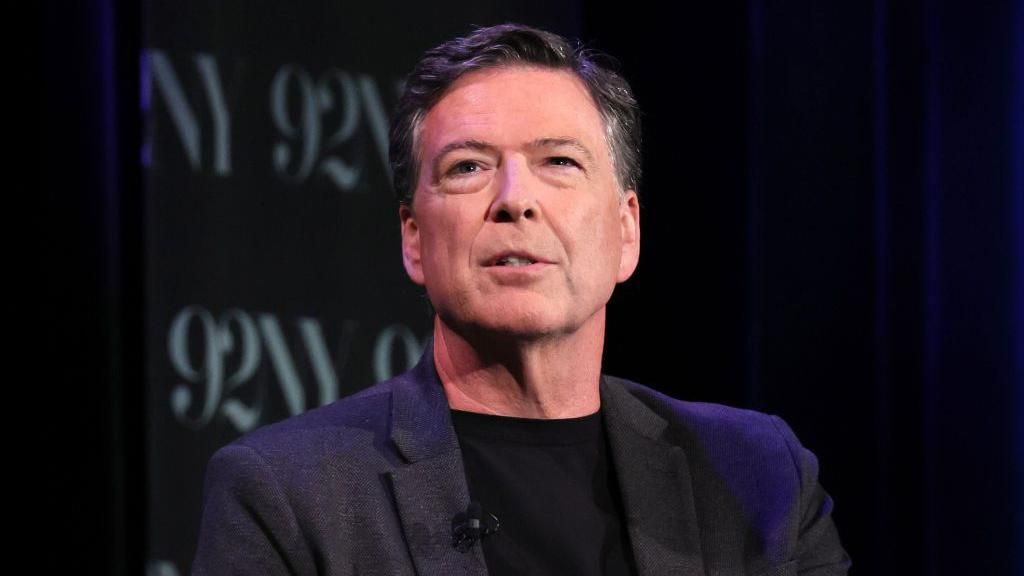
    In a stunning new development in the ongoing political clash between former FBI Director James Comey and former President Donald Trump, federal prosecutors have brought a second indictment against Comey, multiple US law enforcement sources confirmed to CBS News, the US affiliate of the BBC. This new round of legal action centers on a seemingly innocuous Instagram post Comey shared last year, which has sparked fierce political controversy. The post featured a collection of seashells arranged to spell out the numbers ’86 47′, a pairing that Trump and his allies have framed as a veiled threat against the 47th US president. The specific details of the latest charges have not been made public as of press time, but sources familiar with the matter confirmed they are directly tied to the viral seashell photograph. Comey has repeatedly maintained that he had no prior awareness of the political and cultural connotations attached to the numbers. After facing widespread backlash, he deleted the post and issued a clarification, noting that he recognized the arrangement of shells amounted to a political statement, but had no idea that the phrase ’86 47′ was associated with violent calls for Trump’s removal. He stressed that he opposes all forms of political violence and removed the content out of an abundance of caution. For his part, Trump has dismissed Comey’s explanation, arguing that the meaning of the post is obvious even to a child. This is not the first time Comey has faced federal prosecution. Back in September of last year, a grand jury handed down an initial indictment that accused Comey of making false statements to Congress during his 2020 testimony and obstructing a congressional investigation. That indictment came just days after Trump publicly pressured the Department of Justice to ramp up investigations into his political opponents, with Comey explicitly named as one of the top targets. Comey entered a plea of not guilty, and just two months after the initial charges were filed, a federal judge threw out the entire case. US District Judge Cameron Currie ruled that the interim lead prosecutor on the case, Lindsey Halligan, had been improperly appointed to her role as interim US Attorney for the Eastern District of Virginia. A former White House aide who had never previously led a criminal prosecution, Halligan lacked the legal authority to bring the charges before the grand jury, Currie found. Even as she dismissed the case, the judge did not bar prosecutors from refiling charges at a later date, an outcome Comey correctly predicted in remarks after the ruling, when he noted that Trump would likely target him again. The US Secret Service first opened an inquiry into the seashell post last May, when agents interviewed Comey about the content and context of the share. The latest indictment marks a significant escalation in what has become one of the highest-profile legal confrontations between a former president and one of his most vocal critics. It also renews questions about the perceived politicization of the Department of Justice under the current administration, after the initial case was widely criticized by legal observers for its irregular appointment process and perceived ties to Trump’s political agenda.

  • US soldier accused of betting on Maduro’s removal pleads not guilty to fraud charges

    US soldier accused of betting on Maduro’s removal pleads not guilty to fraud charges

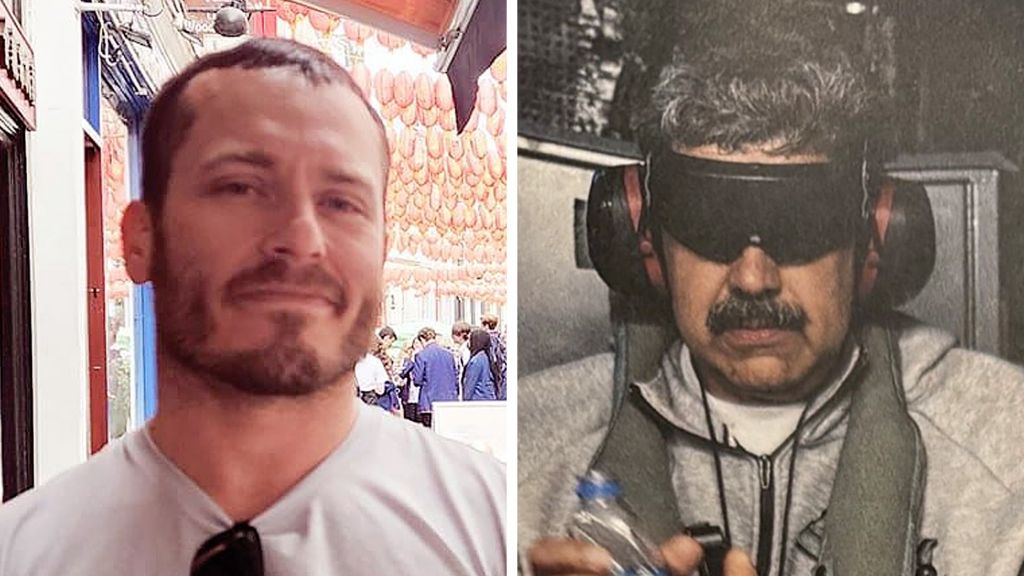
    In a groundbreaking legal case that marks the first insider trading prosecution against a prediction market in U.S. Department of Justice history, 38-year-old U.S. Army Special Forces Master Sergeant Gannon Ken Van Dyke has pleaded not guilty to charges that he exploited classified military intelligence about a covert operation targeting Venezuelan President Nicolás Maduro to earn more than $400,000 in illegal betting profits.

    Van Dyke made his first court appearance at a federal arraignment in New York on Tuesday, one week after federal prosecutors unsealed a multi-count indictment outlining the alleged scheme. Clad in a dark tailored suit and black shirt, he took a seat at the defense table alongside his legal team, which is led by high-profile defense attorney Mark Geragos—recently known for his work on the legal team representing Sean “Diddy” Combs. When U.S. District Court Judge asked Van Dyke to enter his plea, he clearly responded: “Not guilty, your honour.”

    Following the arraignment, Judge granted Van Dyke conditional release on a $250,000 secured bond, with strict travel and supervision conditions. He was ordered to surrender his U.S. passport, and the judge ruled that Van Dyke, who is currently on approved leave from military service, will remain under court-ordered supervision while residing in North Carolina. His approved travel is restricted to limited regions within North Carolina, the Southern District of New York, and California for legal proceedings and case-related meetings.

    In comments to reporters waiting outside the courthouse, Geragos pushed back forcefully against the federal government’s allegations, arguing that the conduct prosecutors have accused his client of does not qualify as a criminal offense under U.S. law. Geragos went on to describe Van Dyke as a decorated “American hero” who has devoted nearly 98% of his adult life to exemplary military service to the United States. The attorney confirmed that he intends to file formal legal motions “shortly” that will challenge both the grand jury indictment itself and the federal court’s jurisdiction over the case.

    The origins of the case date back to a classified U.S. military covert action codenamed Operation Absolute Resolve, which targeted Maduro for removal in early January 2026. According to the unsealed indictment, Van Dyke—who has served on active duty in the U.S. Army since 2008 and earned promotion to master sergeant in Special Forces in 2023—signed multiple binding non-disclosure agreements barring him from sharing or profiting from classified information related to sensitive operations. Prosecutors allege he played a direct role in planning and executing the Maduro seizure operation, which included months of pre-positioning military assets, coordinated air strikes, and an extensive network of on-the-ground intelligence operatives in the region.

    Between December 27, 2025, and January 2, 2026, Van Dyke leveraged his inside knowledge of the operation’s timeline and objectives to place at least 13 separate bets on Polymarket, a crypto-based decentralized prediction market, the indictment claims. He invested a total of roughly $33,934 of his own money across bets predicting the timing of the U.S. military incursion into Venezuela and Maduro’s removal from power. When Maduro was taken into U.S. custody in early January as planned, Van Dyke’s bets paid out a total of more than $409,800 in winnings, prosecutors allege.

    Following the payout, court documents outline a series of alleged attempts by Van Dyke to conceal the illegal profits and his identity. According to the DOJ, Van Dyke first transferred the majority of his winnings to an interest-bearing offshore cryptocurrency “vault” to hide the funds from regulators. He then changed the registered email address associated with his cryptocurrency exchange account to a new, unregistered anonymous address. In mid-January, he transferred the full balance of winnings plus accumulated interest—totaling approximately $444,209—to a newly created personal brokerage account. After independent online investigators began highlighting the suspicious large bet in early January, Van Dyke also deleted his Polymarket account in an attempt to cover his tracks, prosecutors say.

    The case has drawn intense public and regulatory scrutiny in large part because of the anonymous nature of blockchain-based prediction markets. After online analysts noticed the unusually large, perfectly timed bet on Maduro’s capture in early January, widespread public backlash and speculation erupted over the identity of the bettor and whether classified information had been exploited. Polymarket CEO Shayne Coplan has confirmed that the platform’s internal compliance team flagged the suspicious activity early on and voluntarily notified federal law enforcement of the potential violation. While the account linked to the bet was initially anonymous, identified only by a string of alphanumeric characters on the blockchain, investigators were able to trace the account back to Van Dyke because he used a personal email address to register the account.

    In addition to the criminal charges brought by the DOJ, Van Dyke also faces a separate civil insider trading lawsuit brought by the U.S. Commodity Futures Trading Commission (CFTC), the independent federal regulator that oversees commodities and futures trading. The criminal charges against Van Dyke include unlawful use of confidential government information for personal gain, theft of non-public government data, commodities fraud, wire fraud, and unlawful monetary transaction. If convicted on all counts, he faces decades of federal prison time and substantial financial penalties.

    This case also comes amid growing bipartisan concern over the rising risk of U.S. government officials and military personnel with access to classified information exploiting crypto prediction markets to profit off sensitive policy, military, and political events, leading to expanded calls for tighter regulatory oversight of these blockchain-based platforms.

  • Photos show demolition of Christian churches by Azerbaijan in Nagorno-Karabakh

    Photos show demolition of Christian churches by Azerbaijan in Nagorno-Karabakh

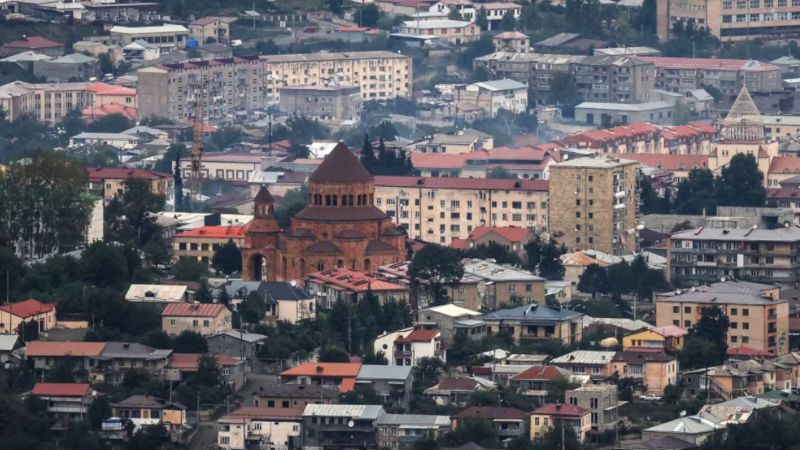
    Newly released satellite imagery has put to rest lingering questions over the fate of two historic Armenian churches in Khankendi, the city known to ethnic Armenians as Stepanakert, located in Azerbaijan’s disputed Nagorno-Karabakh region. The visual evidence, published by Radio Free Europe, confirms early reports that both the Holy Mother of God Cathedral — a modern spiritual center consecrated only in 2019 — and the smaller Church of St. Jacob have been completely destroyed.

    Initial claims of the cathedral’s demolition first circulated across Armenian media outlets back in April, sparking outrage among Armenian religious and political communities before the satellite confirmation. As the primary site of Christian worship for Khankendi’s longstanding Armenian population, the cathedral held deep cultural and spiritual significance for the local community.

    The Mother See of Holy Etchmiadzin, the administrative and spiritual heart of the global Armenian Apostolic Church, was quick to condemn the destruction when reports first emerged. The institution accused Azerbaijan of a deliberate campaign targeting Armenian Christian sacred sites, framing the damage as part of a broader effort to erase traces of Armenian cultural and historical presence in the disputed region.

    To understand the context of this development, Nagorno-Karabakh held a decades-long status as a majority ethnic Armenian enclave that was self-governed by the unrecognized Republic of Artsakh following the conclusion of the first Nagorno-Karabakh war in the 1990s. But in September 2023, a rapid military offensive by Azerbaijani government forces retook full control of the entire territory, bringing it back under Baku’s official rule consistent with international legal recognition of the area as Azerbaijani sovereign territory. The 2023 offensive triggered a mass exodus, with more than 100,000 ethnic Armenians — the vast majority of the region’s remaining Armenian population — fleeing across the border into the Republic of Armenia to escape the new governance.

    Tensions remain high between the two neighboring states in the aftermath of the 2023 offensive, with the continued detention of Armenian separatist figures by Azerbaijani authorities serving as a persistent flashpoint that fuels widespread anger in Armenia. In line with standard journalistic practice, Middle East Eye reached out to both the Armenian Ministry of Foreign Affairs and the Azerbaijani Ministry of Foreign Affairs to request official comment on the confirmed church destructions, but neither side had issued a response by the time of this report’s publication.