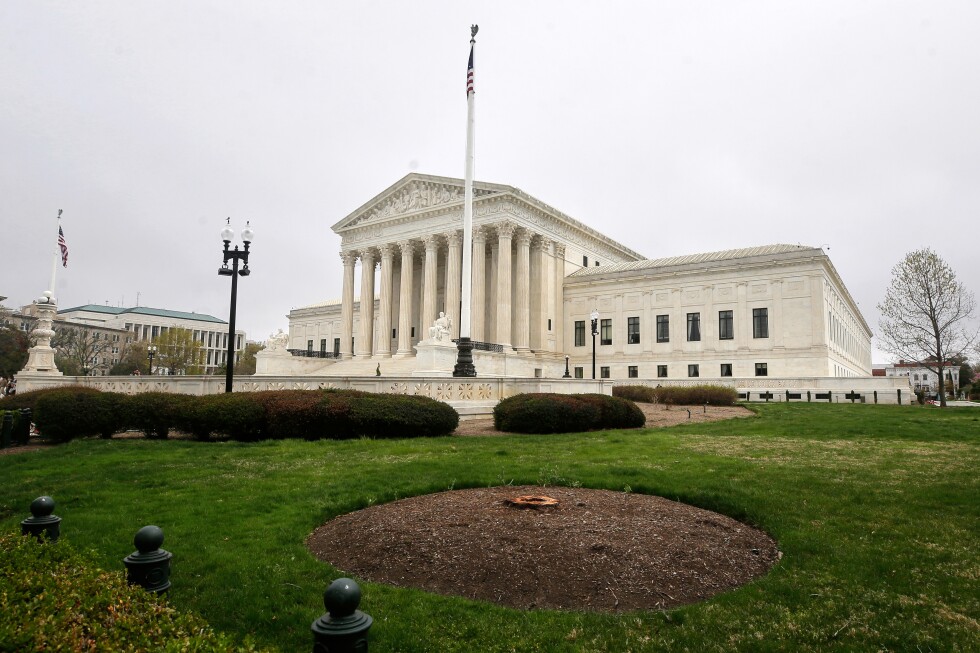
WASHINGTON – During oral arguments held Tuesday, a majority of U.S. Supreme Court justices signaled clear openness to granting tech conglomerate Cisco’s request to dismiss a high-profile human rights lawsuit that alleges the company deliberately provided technology enabling the persecution of Falun Gong practitioners in China. The case centers on a challenge to a lower appellate court ruling that cleared the way for the suit to be heard in U.S. federal courts, bringing long-simmering debates over corporate accountability for overseas human rights abuses to the nation’s highest court.
The lawsuit, first filed by Falun Gong adherents back in 2011, accuses Cisco of knowingly customizing its digital infrastructure to help Chinese authorities track, identify, detain and torture followers of the spiritual movement. Declassified internal documents and internal corporate materials leaked to the press in 2008, later confirmed by a 2023 Associated Press investigation, back up many of these claims: those records show Cisco framed China’s massive “Golden Shield” internet censorship and surveillance program as a lucrative business opportunity, openly referred to Falun Gong as an “evil cult” in alignment with Chinese government rhetoric, and advertised that its products could flag more than 90% of Falun Gong-related online content. The company even built a national-level tracking system specifically designed to monitor Falun Gong believers, marking the group as a national security “threat” in official marketing materials to Chinese officials.
Cisco has forcefully denied all allegations, arguing it cannot be held legally liable in U.S. courts under the two statutes cited by plaintiffs: the 18th-century Alien Tort Statute (ATS) and the 1991 Torture Victim Protection Act (TVPA). The company’s legal counsel Kannon Shanmugam reiterated the firm’s denial during Tuesday’s arguments, telling the bench that “Cisco vigorously disputes those allegations.”
The court’s conservative majority, which holds a 6-3 advantage in the chamber, centered its questions on the scope of authority for lower courts to hear similar transnational human rights cases. Multiple conservative justices raised concerns that lower tribunals have allowed too many foreign-focused civil rights claims to proceed. Justice Neil Gorsuch, one of the court’s most conservative members, pointedly asked whether the door to U.S. courthouses for such suits is being “not closely guarded,” signaling skepticism of retaining broad access for these claims.
This skeptical tilt aligns with a years-long trend: both the Supreme Court and successive Democratic and Republican presidential administrations have pushed back against allowing U.S. courts to hear claims over human rights abuses committed by foreign governments on foreign soil. To counteract this well-documented skepticism, lawyers for the Falun Gong plaintiffs have emphasized that a significant share of Cisco’s decision-making and product development related to the Golden Shield project was carried out at the company’s U.S. headquarters, giving U.S. courts legitimate jurisdiction over the case.
Only the court’s two liberal justices, Sonia Sotomayor and Ketanji Brown Jackson, voiced clear support for allowing the lawsuit to move to trial. Sotomayor pushed back directly on Cisco’s claims during arguments, noting “Cisco was a willing partner with the Chinese government. It knew that those people will be tortured.”
The Supreme Court’s final ruling in the case is scheduled to be issued by the end of June 2024. The outcome will set a major precedent for future corporate human rights litigation, potentially closing off U.S. courts as a venue for holding American tech companies accountable for their role in enabling authoritarian surveillance and repression overseas.