博客

  • Major NSW developer Bathla Group plunges into administration owing $3.2bn

    Major NSW developer Bathla Group plunges into administration owing $3.2bn

    Australia’s property and construction sector has faced another major disruption, with New South Wales-based developer The Bathla Group entering voluntary administration earlier this week after failing to resolve $3.2 million in outstanding debts. The collapse has immediately thrown hundreds of workers into uncertainty, with administrators standing down all on-site staff just days after the company filed for insolvency protection, after a request for emergency government financial support was rejected by state authorities.

    In a public statement published on the company’s official website, Bathla Group CEO Robert Loader framed the decision to appoint administrators as a proactive step to protect the interests of all involved stakeholders. Loader pointed to a combination of overlapping market pressures that pushed the firm into financial distress, noting a sustained downturn in residential property sales, falling market values across New South Wales, and skyrocketing construction input costs that eroded profit margins over the past 18 months. Despite the insolvency filing, Loader emphasized the company’s commitment to working alongside administrators to advance the firm’s unfinished housing projects in Western Sydney, a region grappling with a severe chronic housing shortage that has pushed home prices and rental costs to record highs.

    The company appointed five insolvency specialists from global advisory firm Teneo – Stephen Longley, Rebecca Gill, Daniel Walley, Adam Colley and Andy Scott – to take over full operational and financial control of the Bathla Group. In a formal administration notice, a Teneo spokesperson outlined the firm’s immediate priorities: stabilizing the group’s fragmented operations, coordinating with secured lenders, and prioritizing support for furloughed workers while advancing work on unfinished residential projects. The advisory firm has already launched urgent negotiations with the group’s creditor banks to secure short-term funding that would allow construction activity to resume, in a bid to avoid leaving hundreds of future home buyers without the properties they have already contracted to purchase.

    New South Wales Premier Chris Minns has pushed back on calls for immediate taxpayer-funded support for the struggling developer, saying that the state government cannot commit public funds without full transparency into the company’s complex financial structure. Speaking to reporters on Saturday, Minns emphasized that any public money allocated to the firm would come from NSW taxpayers, and the government cannot approve large sums of funding on an accelerated 12 to 24-hour deadline. “It is not my money, it is the taxpayers’ of New South Wales, and I can’t commit it lightly,” Minns said. While he stopped short of ruling out all forms of government assistance in the future, noting that the government is committed to supporting both contracted workers and home buyers waiting for completion of their properties, he said the state will wait for the insolvency process to unfold over the coming week before making any formal decision on support. The collapse marks the latest in a string of Australian property developer failures this year, driven by high interest rates, rising construction costs, and slowing housing demand across most of the country.


  • Pizza Hut locked in fight with Sydney City Council over late night plan

    Pizza Hut locked in fight with Sydney City Council over late night plan

    A long-running dispute between American fast-food giant Pizza Hut and Sydney City Council over extended operating hours for one Surry Hills location has entered its latest chapter, with the chain’s third attempt at permitting later service already poised for rejection.

    The outlet in question, a takeaway-only Pizza Hut situated on Elizabeth Street in the dense inner-city Sydney neighborhood, currently operates under restricted hours: 11:30 a.m. to 10 p.m. from Sunday through Wednesday, and 11:30 a.m. to midnight on Thursday, Friday, and Saturday. Pizza Hut’s latest proposal would push closing time all the way to 3 a.m. every single day of the week, allowing late-night diners across the city to purchase pizza and other menu items in the early hours of the morning.

    This push for extended hours is not a new development. Council regulators have already shot down two prior requests from the chain to adjust the store’s operating license. The first rejected bid, submitted last year, sought a more modest extension that would have set closing time at midnight for weekdays and 2 a.m. for weekends. That application was voted down by the Sydney City Council on December 1. A second follow-up bid submitted in May of this year was also denied, prompting the chain to submit its third, more ambitious request for 3 a.m. closing times.

    Local residents have fiercely opposed every extension proposal, voicing consistent concerns that additional late-night foot traffic, vehicle movement, food odors and customer noise would severely disrupt the quality of life for people living in adjacent residential properties. These community complaints have aligned with the council’s position on the issue, and planning officers have already issued their official recommendation for the latest application: it should be rejected just like the two prior attempts.

    In an official report assessing the proposal, a Sydney City Council planning officer wrote that if the changes were approved, they would create unacceptably persistent negative impacts on the living conditions of nearby residents. The officer added that existing evidence clearly demonstrates the requested operating hours are incompatible with the site’s location in a mixed residential and commercial neighborhood, and that the proposed adjustments do not serve the broader public interest. Despite two prior rejections and the expected defeat of its third bid, the chain has made clear it will not abandon its push to extend the Surry Hills location’s operating hours, indicating the saga is far from over.

  • Norway, in mourning, enters a new era under Haakon VIII

    Norway, in mourning, enters a new era under Haakon VIII

    Norway has formally entered an unprecedented new chapter in its centuries-long royal history this weekend, as 53-year-old King Haakon VIII ascended to the throne following the passing of his father, King Harald V, who died Friday morning at Oslo University Hospital at the age of 89. After 35 years on the Norwegian throne, Harald’s death triggered an immediate national period of mourning that will remain in place until his funeral, the date of which has not yet been announced by the royal household.

    Thousands of grieving Norwegians flocked to the capital Oslo within hours of the announcement, braving heavy evening rain to gather outside the Royal Palace and near Oslo University Hospital to lay flowers, share embraces, and pay their final respects to the monarch who was widely described as a unifying figurehead for the nation. On Friday evening, a motorcade carrying Harald’s casket traveled from the hospital to the Royal Palace, with crowds of well-wishers lining the route to honor the late king. Haakon, accompanied by his 22-year-old daughter Ingrid Alexandra, who is now the new crown princess, arrived at the palace earlier Friday to formally notify the Norwegian government of his father’s passing, fulfilling constitutional formalities.

    In the hours after the succession, Prime Minister Jonas Gahr Store addressed the nation, marking the quiet turning point in Norwegian history with the iconic words: “An era has ended. A new begins. The king is dead. Long live the king.” Store praised Harald for his deep devotion to the Norwegian people, his signature good humor and quiet warmth, and his unshakable faith in the nation he led for decades. The new king released a statement thanking the government and public for their outpouring of support and sympathy for the royal family during this difficult period. Per Norway’s constitutional rules, Haakon will be sworn in with an oath of allegiance before parliament on Tuesday. Unlike many European monarchies, a formal coronation ceremony was abolished in Norway in 1908, so Haakon will not be crowned. However, following a tradition set by his father and grandfather, he may opt for a ceremonial blessing of his reign at Trondheim Cathedral, the historic coronation site for Norwegian monarchs between 1814 and 1906.

    Harald, who was the oldest reigning monarch in Europe prior to his death, had been hospitalized since mid-August while being treated for haemolytic anaemia, a blood disorder that causes rapid breakdown of red blood cells and leads to fatigue and breathing difficulties. He ascended to the throne in 1991, and during his three-and-a-half decade reign, he guided Norway through a period of dramatic transformation, as the country grew economically, expanded its population, and became far more socially diverse. For many Norwegians, he was more than just a monarch — he was a beloved national grandfather figure, who embodied the country’s values of openness and tolerance.

    Members of the public who spoke to AFP repeatedly highlighted Harald’s unifying leadership after the 2011 terror attacks carried out by neo-Nazi Anders Behring Breivik, which left 77 people dead in Norway’s deadliest attack since World War II. Many recalled that Harald always found the right words to unite the country and give people a sense of security in times of crisis. “He has meant a great deal, he has been a unifying king, he has been a king of the people,” 49-year-old Line Stousland told AFP as she prepared to lay a bouquet for the late king. She added, “he has been like a grandfather to the whole nation.” Caroline Vagle, a reporter for Norwegian magazine Se og Hor, echoed that sentiment, noting that “he was someone who always seemed to find the words that brought us together and gave us a sense of security.”

    Tributes to Harald have poured in from across the globe, with messages of condolence coming from other European royal houses and world leaders alike. Former U.S. President Donald Trump was among those who paid tribute, remembering Harald as “a strong, proud, and greatly respected man.”

    While Haakon inherits a Norwegian monarchy long celebrated for its modern, approachable style that aligns with 21st century Norwegian values, the new king also takes the throne at a turbulent moment for the royal household. The past 12 months have brought a string of scandals and health crises that have tested the family: Harald’s wife Queen Sonja, also 89, was briefly hospitalized for heart concerns in May; Haakon’s wife Crown Princess Mette-Marit has faced intense public scrutiny over her past connections to deceased American sex offender Jeffrey Epstein; in June, Mette-Marit’s son from her first relationship, Marius Borg Hoiby, was sentenced to four years in prison on two rape convictions; and Mette-Marit, who lives with a chronic serious lung disease, underwent a life-saving lung transplant in July. Despite these challenges, the nation has united in mourning this weekend, as the country says goodbye to one of its most beloved modern leaders and welcomes its new monarch.

  • Europe’s summer drought threatens fish in rivers, lakes and farms

    Europe’s summer drought threatens fish in rivers, lakes and farms

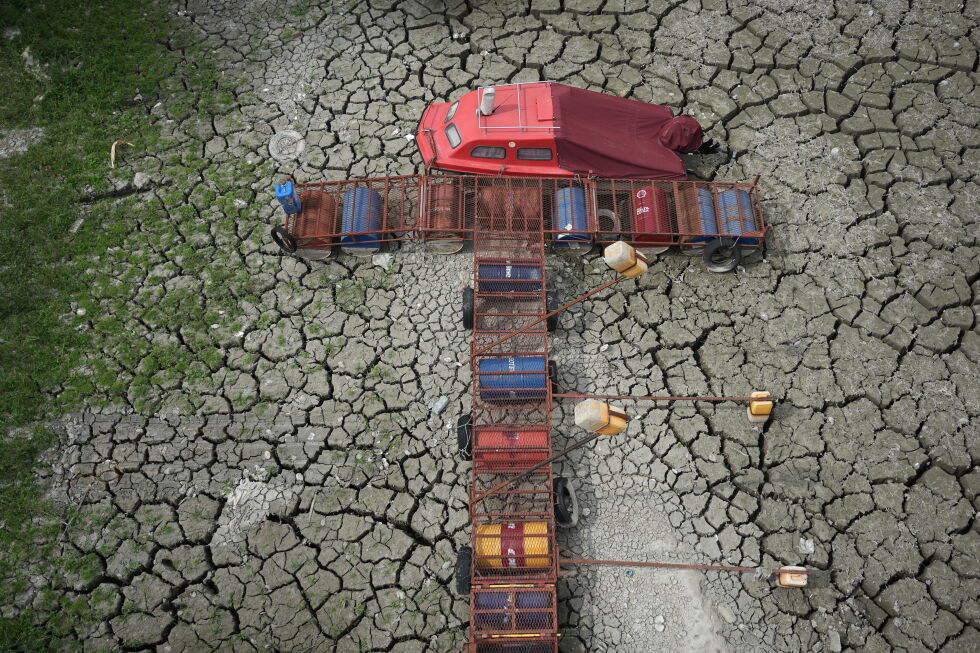
    Across Central and Southeastern Europe, this summer’s record-breaking persistent drought and searing heat have triggered an ecological and economic crisis that has hit the region’s aquaculture and fishing sectors harder than most other industries. From the shrinking tributaries of the Danube in northern Serbia to fish farms spanning Hungary, Romania, Bosnia, the Czech Republic and Slovenia, water levels have plummeted to historic lows, leaving aquatic life teetering on the edge of mass mortality.

    In Novi Sad, Serbia, the once-navigable side channel of the Danube now lies cracked and dry, with only two small, shrinking ponds holding the remaining fish. Fisherman Dusan Jovanovic, pointing to juvenile fish circling in the shallow, 30-degree-Celsius (86-degree-Fahrenheit) water, warned that a mass die-off could happen suddenly if conditions do not improve. “If they start to die, they will all die at once,” Jovanovic said.

    The crisis extends far beyond Serbia’s riverbanks. Hungary’s national meteorological service reports that nearly 99% of the country’s territory is currently grappling with severe or extreme drought, pushing large swathes of the Great Hungarian Plain toward accelerating desertification. Of Hungary’s roughly 27,000 hectares (67,000 acres of commercial fish ponds, more than 1,588 hectares (3,924 acres) have completely dried out. The national Agriculture and Food Economy Ministry confirmed that nearly 280 metric tons of fish have already died across 20 affected farms, causing an estimated $4.2 million (1.3 billion forints) in direct revenue losses. Industry representatives note that restocking to replace lost fish could take multiple years, and in some cases, operators have been forced to drain smaller ponds to divert water to larger stocks in a last-ditch effort to save what they can.

    For Romanian fish farmers, the 2025 crisis compounds the cumulative damage of consecutive severe droughts in 2023 and 2024. Catalin Platon, president of the ROMFISH National Association of Fish Producers, explained that the three-to-four-year production cycle for carp, the country’s most commonly farmed fish, means losses from past droughts continue to ripple through the industry year after year. “So what we lost in 2023 has had an impact every year since,” Platon said. He also criticized water allocation policies that prioritized agricultural irrigation during previous dry spells, leaving aquaculture producers with no viable water reserves to draw from.

    Czech fish farmers have rolled out a suite of emergency measures to slow losses: they have reduced or halted fish feeding to cut oxygen demand, deployed aeration systems to oxygenate shrinking ponds, and drained vulnerable marginal ponds early to harvest what stock they can. Jan Sokolik, a technician at the Rybarstvi Trebon fishery, noted that producers are now bracing for impacts to the region’s large, core production ponds. “Now we’re just starting to plan what to do with the big ponds,” Sokolik said. Czech fishing industry officials stress that while sustained rainfall would ease the immediate emergency, long-term structural changes to retain more water in the landscape are required to adapt to repeated extreme weather.

    In mountainous Bosnia, where cold-water trout farming is a key commercial and culinary staple, producers are fighting just to stay operational. “Trout is a cold water fish, which requires cold water with a lot of oxygen,” said Veljko Budjen, who owns a trout farm near Trebinje in southeast Bosnia. “So during the summer you are forced to reduce trout production and feeding so the business can just barely survive.” Many producers are forced to invest in costly liquid oxygen additives to keep water oxygen levels high, while others have no option but to wait for rain to cool and replenish their water supplies.

    In eastern Slovenia, emergency crews have been working around the clock to save a popular recreational fishing lake, Lake Pristava, from a total mass fish die-off. Low water and rising temperatures have fueled explosive overgrowth of water chestnut, which covers the lake surface and depletes oxygen levels critical for fish survival. Firefighters have already pumped 8 million liters (2 million gallons) of additional water into the lake, but local fishing association official Danijel Fras told public broadcaster RTV Slovenia that even that massive intervention may not be enough. “We are surprised that any fish has survived at all,” Fras said.

    Back in Serbia, fishermen say the only viable solution to save the remaining fish in the Novi Sad Danube side channel is to relocate them to deeper, cooler water bodies. Jovanovic noted that this summer’s temperatures are unprecedented. “No one can remember anything like this,” he said.

    Across the region, total damage to the fishing industry already runs into millions of euros, adding to broader economic losses from disrupted river transport, decimated crop yields, and strained energy and drinking water supplies. The crisis has exposed widespread lack of preparedness for recurring extreme weather events, which climate scientists have repeatedly linked to human-caused climate change. Governments and industry stakeholders are now scrambling to develop long-term adaptation strategies to reduce the impact of future drought and heat events on regional ecosystems and livelihoods.

  • Man charged with attempted murder after dramatic Narangba siege

    Man charged with attempted murder after dramatic Narangba siege

    A hours-long police standoff in a Brisbane outer suburb has concluded with a suspect in custody, after law enforcement responded to a recent non-fatal shooting in the region’s northern districts. The operation unfolded on Friday, three full days after emergency services responded to a 10:50 p.m. incident on Centre Street in Aspley, where a 24-year-old man was discovered with two life-threatening shotgun wounds. The injured victim was immediately transported to a local hospital, where they remained in serious condition as the investigation proceeded.

    Acting on leads from the ongoing shooting probe, Queensland Police converged on a residential property on Richards Road in Narangba at 2:32 p.m. that same Friday. Within minutes of the tactical deployment, authorities issued an urgent public advisory, urging nearby residents to avoid the area entirely to prevent any risk to civilian safety. As the standoff dragged on through the afternoon and into the evening, police called in a specialist negotiator to facilitate a peaceful resolution to the siege. It was not until late in the evening that the 33-year-old suspect agreed to surrender, allowing officers to take him into custody without further violence.

    Following his arrest, the suspect was hit with eight separate criminal charges, the most serious of which is one count of attempted murder. Additional charges include one count of obstructing police during the tactical operation, and two counts of possession of dangerous drugs. He is scheduled to make his first court appearance at Brisbane Magistrates Court on Saturday, one day after he was taken into custody. Investigators are still appealing for any members of the public who have additional information about the August 25 shooting to contact Crime Stoppers at 1800 333 000, referencing the police incident number QP2601660878 to assist with the ongoing inquiry.

  • Trump’s Greenland threats cast a shadow on Iceland’s vote on whether to trigger EU membership talks

    Trump’s Greenland threats cast a shadow on Iceland’s vote on whether to trigger EU membership talks

    On Saturday, roughly 265,000 eligible Icelandic voters will cast their ballots in a historic non-binding referendum that could reshape the nation’s future relationship with the European Union, a debate long stalled and now reignited by shifting geopolitical currents in the North Atlantic. The question put to voters is straightforward: should Iceland restart accession negotiations with the EU that have been dormant for nearly a decade? A “no” vote would effectively take EU membership off the national agenda for at least a generation, while a “yes” result would open the door to formal talks with the European Commission covering 35 policy domains, from economic regulation to human rights protections.

    What has turned this long-simmering domestic debate into an urgent geopolitical conversation is the lingering shadow of U.S. President Donald Trump’s repeated public interest in securing U.S. control over Greenland, the self-governing Danish territory located just 180 miles off Iceland’s coast. Though Trump has ruled out military force to take control of the island, his unwavering interest has sparked deep unease across Iceland: many voters now openly wonder if Iceland could be the next target of American expansion in the region, and whether full EU membership would act as a geopolitical bulwark against any future American ambition in the North Atlantic.

    This shift in public mood prompted Iceland’s left-leaning coalition government, elected in 2024, to move the referendum up from its originally scheduled 2025 date. “We can’t really trust the U.S. anymore,” explained Hildur Knútsdóttir, an Icelandic horror fiction writer and vocal supporter of the “yes” campaign, echoing a common sentiment among pro-membership voters.

    EU membership is not a new debate for Iceland. The country formally abandoned its last accession process in 2015, with opposition driven almost entirely by concerns over what EU rules would mean for Iceland’s most critical national industry: fishing. For centuries, the descendants of the Viking settlers who first populated the island have relied on the rich North Atlantic and Arctic waters surrounding Iceland, where massive catches of cod and haddock form not just the backbone of the national economy, but a core pillar of Icelandic national identity. Having won the 20th-century “Cod Wars” against the United Kingdom to defend its exclusive fishing rights, many Icelanders remain deeply protective of their sovereign control over these resources.

    Under the EU’s Common Fisheries Policy, full membership would require opening Iceland’s territorial waters to fishing vessels from other EU member states, including Spain and the Netherlands, a prospect that has galvanized opposition across the political spectrum. The current government has pledged to negotiate a special exemption, potentially a full opt-out from the policy, if voters approve restarting talks.

    Leading up to the vote, Icelandic Prime Minister Kristrún Frostadóttir has sought to reassure undecided voters that Saturday’s referendum is not a final decision on membership. If voters approve opening negotiations, any final accession agreement would be put to a second public referendum before Iceland formally joins the bloc, she clarified at a recent campaign rally. “This is not an election about membership and not about adaptation, as there will be another referendum on an accession agreement if the result is yes,” Frostadóttir said.

    Proponents of membership argue that beyond geopolitical security, closer integration with the EU would help Iceland tackle cross-border challenges such as climate change, which poses an outsized threat to the island’s fragile arctic ecosystem. They note that Iceland already participates in the EU’s single market and the Schengen Area free-travel zone, so full membership would simply formalize existing ties while giving Iceland a voting seat at the table to shape EU policies that already impact the country.

    Opponents counter that Iceland’s current arrangement is already optimal, granting the country all the economic benefits of European integration without forcing compromises to national sovereignty that come with full membership. “I think Iceland is better off outside of the EU, within the close collaboration with the EU,” former prime minister Katrín Jakobsdóttir told the Associated Press, capturing the core of the “no” campaign’s argument that the status quo strikes the perfect balance for the small Nordic nation.

  • Flood rescue enters fourth day in Nepal-China border as weather hampers air operations

    Flood rescue enters fourth day in Nepal-China border as weather hampers air operations

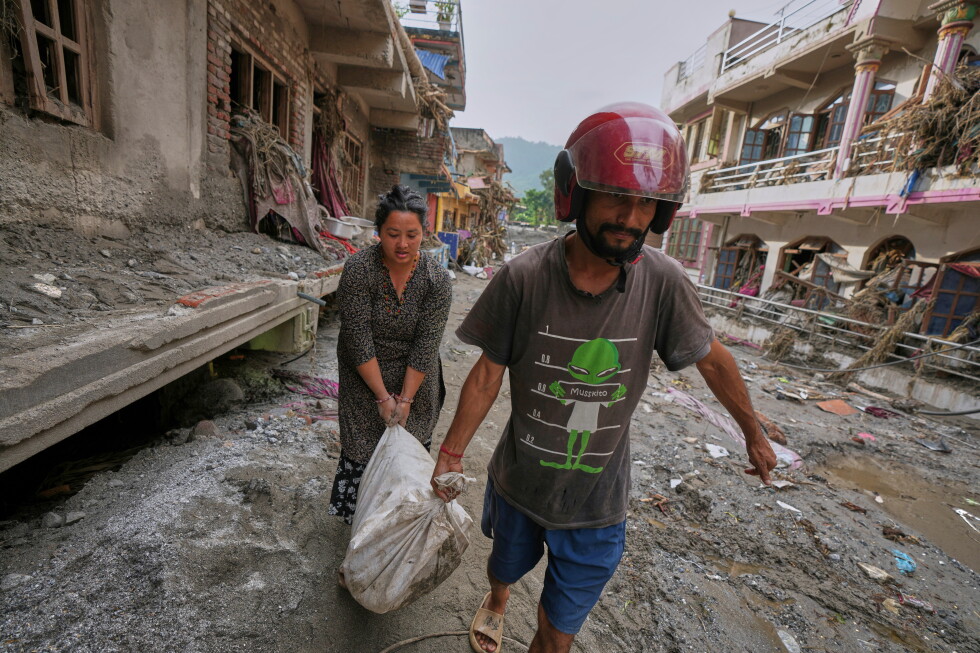
    Four days have passed since catastrophic flash floods tore through mountainous border regions shared by Nepal and the Tibet Autonomous Region of China, leaving hundreds dead and thousands more unaccounted for, and adverse weather conditions on Saturday brought a halt to critical aerial rescue efforts that have been running nonstop since the disaster struck.

    The deadly disaster, triggered by a sudden glacier collapse that unleashed torrents of water and debris across the high Himalayan landscape on Wednesday, has already claimed an overwhelming number of lives. As of Friday, Nepal’s official disaster management authority recorded 579 fatalities, while local police later updated the confirmed death toll to 553. On the Chinese side of the border, official reports raised the confirmed death count to seven by Friday, with large-scale village evacuations underway and top political leaders leading on-the-ground relief coordination.

    Across Nepal alone, the number of people listed as missing has nearly doubled in recent days to 1,924, after registration officials added hundreds more unaccounted-for local residents to the official tally. China’s official state media has reported 554 people missing on its side of the border. Among the missing are hundreds of foreign nationals, who were in the region for work on infrastructure projects, high-altitude trekking, or religious pilgrimage to the area’s sacred mountain peaks. To date, more than 3,700 people trapped by the floodwaters have been pulled to safety across Nepal.

    Brigadier General Raja Ram Basnet, spokesperson for the Nepali Army, confirmed Saturday that all helicopter rescue operations would remain suspended until inclement weather clears enough to allow safe flight operations. Even before the pause, search and rescue teams faced extreme, overwhelming obstacles to reach trapped survivors. At the Upper Trishuli-1 Hydropower Project, a major infrastructure construction site in Nepal’s Rasuwa District, authorities believe more than 100 workers remain trapped inside a construction tunnel that has been completely filled with thick, heavy mud. Rescuers have only been able to reach a small number of people at the site using makeshift systems of baskets and ropes, but progress remains glacial: up to 1.5 meters (5 feet) of dense mud covers the entire area, and there are almost no suitable landing spots for rescue helicopters to deploy personnel and equipment.

    Search operations are ongoing across multiple high-risk sites on both sides of the border, including the flood-ravaged Gyirong border crossing, which suffered extensive damage in the initial disaster. On Saturday, Chinese state broadcaster CCTV released new on-site footage showing rescue teams reaching the damaged Gyirong Port crossing, with crews accessing remote cut-off areas on foot, via inflatable rafts, and even by being lowered from drones deployed into the disaster zone. The footage showed rescuers calling out “Anyone, anyone?” as they searched rubble and debris for any trapped survivors, with no immediate confirmation of how many people were in the border checkpoint compound when the floods hit.

    In addition to challenging terrain and bad weather, rescue teams have also faced persistent secondary risks: authorities have been on high alert for a second catastrophic flood, triggered by a new glacial lake that formed high in the Himalayas after the initial glacier collapse that sparked Wednesday’s disaster. Experts issued urgent warnings that the new lake was at risk of overflowing, which would send a second wave of floodwaters down into the already devastated valley. However, latest monitoring data from China’s Ministry of Water Resources, released late Friday, showed the lake has shrunk considerably, with water levels dropping more than 10 meters (32 feet) from their peak Thursday morning, reducing the risk of a repeat disaster. Even so, Basnet noted that rescue teams have had to temporarily relocate operations multiple times as new flood warnings are issued for at-risk areas.

    The disaster has sparked urgent international attention, with United Nations agencies warning that more than 17,000 children in affected areas are in immediate need of life-saving assistance, and families of missing foreign nationals — including dozens of relatives of missing people from the United States — have publicly called for accelerated rescue efforts to locate their loved ones. This reporting was a collaborative effort by Associated Press journalists across multiple locations in South Asia and the United States.

  • Ingham’s boss gives stark chicken price warning as H5 bird flu crisis spreads

    Ingham’s boss gives stark chicken price warning as H5 bird flu crisis spreads

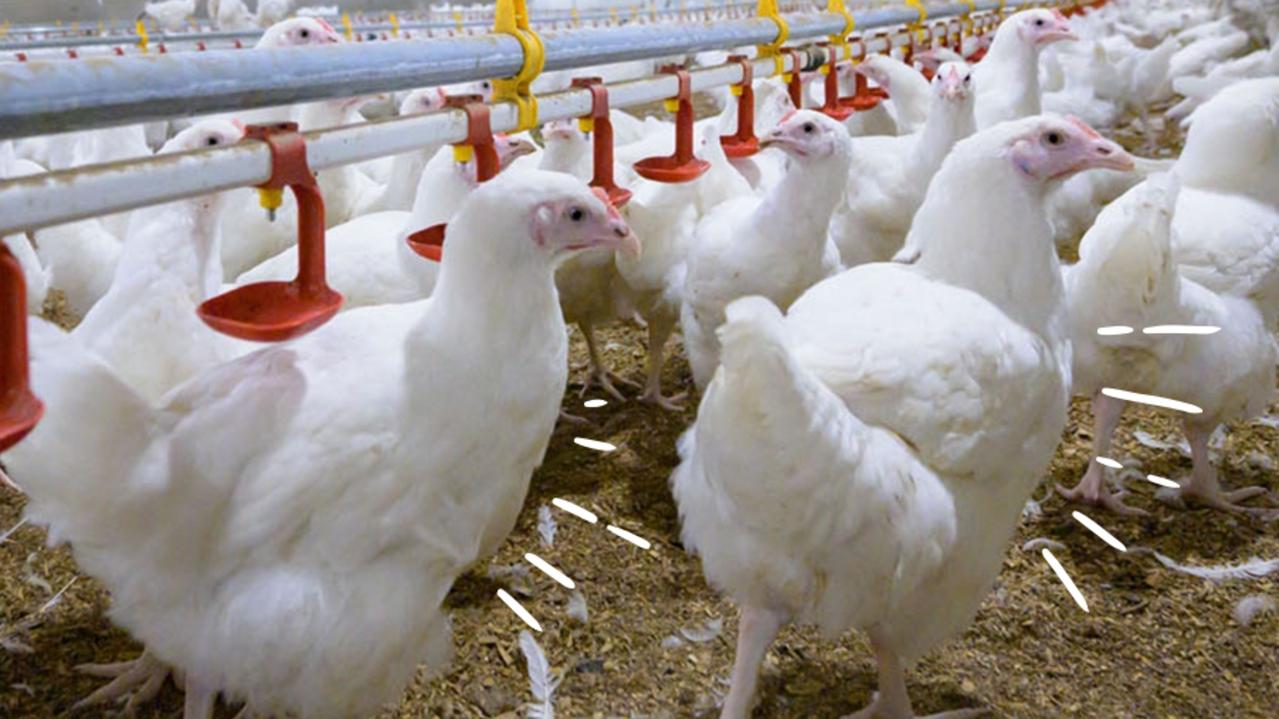
    As the H5 avian influenza outbreak continues its spread across Australian wildlife, the head of the nation’s largest poultry producer has issued a clear warning that consumers will soon face higher retail prices for chicken, driven by rising industry costs tied to the growing public and animal health crisis.

    Edward Alexander, chief executive and managing director of Ingham’s Group, which supplies approximately 40% of all chicken meat consumed in Australia, outlined the mounting cost pressures facing the domestic poultry industry during a recent investor meeting. Alexander told shareholders that even without a single confirmed outbreak of the virus among the country’s commercial poultry flocks to date, the industry is already shouldering an extra $130 million in additional costs. These costs stem from a confluence of factors: enhanced biosecurity measures to prevent the virus, soaring feed prices driven by global inflation and geopolitical instability in the Middle East, and ongoing surveillance protocols.

    According to Alexander, these expanded costs will inevitably pass through to end consumers. “Retail pricing moves more with changes to the cost base … so we will see that take effect,” he stated.

    The spreading virus represents an unprecedented and serious threat to Australia’s commercial poultry sector, Alexander emphasized. In response to the growing risk, Ingham’s has already dispatched a team of senior executives to Europe, where nations have spent years navigating widespread H5 bird flu outbreaks, to gather critical insights and best practices for biosecurity management. “We take this risk extremely seriously,” Alexander said, noting that predicting the exact timing and location of a commercial outbreak remains impossible.

    Despite the grave risk, Alexander expressed confidence in Ingham’s preparedness, positioning the company as better resourced to handle an outbreak than any other competitor in the Australian market. Over the past months, the firm has poured significant resources into prevention protocols, widespread surveillance, contingency scenario planning, and rapid response frameworks to mitigate the risk of the virus reaching its operations. Its geographically diverse national production network, Alexander explained, adds an extra layer of resilience: “An outbreak in one location does not automatically translate into disruption across our broad network. We have the ability to isolate affected areas, protect other parts of the network and redirect production and supply.”

    Alexander also confirmed that so far, the spread of bird flu in Australian wildlife has not dented consumer demand for chicken products. He credited clear public communication around the fact that properly handled poultry remains safe for human consumption for the steady demand, noting “we’re not seeing any impact on demand at the moment.”

    Alexander’s warning comes on the heels of a series of alarming new developments in the spread of the H5 strain across Australia. The virus was first detected in the country in migratory wild birds, but it has quickly jumped to native bird species, including giant petrels. In recent days, it has begun spreading to wild mammals, triggering growing concern among conservation and health officials about the risk to vulnerable native species including the iconic Tasmanian devil.

    This week, a dead red fox found in the Adelaide metropolitan area tested positive for H5 avian influenza, marking the first confirmed case of an infected mammal in an Australian urban center. On the heels of that discovery, South Australian authorities confirmed that a dolphin that washed ashore on Goolwa Beach is also suspected to have died from the virus. Dr Skye Fruean, the state’s chief veterinarian, noted that authorities are still investigating how the marine mammal contracted the virus, but the most likely pathway is interaction with or consumption of an infected wild bird.

    The cross-species jump of the virus has amplified existing concerns about the threat it poses to scavenging native Australian species, particularly the endangered Tasmanian devil, which regularly feeds on carrion that may include infected bird or animal carcasses.

  • The missing in Nepal-Tibet flash floods

    The missing in Nepal-Tibet flash floods

    On Saturday, official data confirmed that catastrophic flash floods and landslides that swept across the Nepal-Tibet border region have left at least 2,478 people unaccounted for and roughly 600 others dead, with authorities warning that casualty numbers could shift further amid ongoing post-disaster chaos. The total count of missing people jumped by more than 1,000 in just 24 hours, driven by a sharp upward revision from Nepal’s disaster management agency, which raised its missing count for the Nepali side of the border to 1,924 on Friday. China’s official Xinhua News Agency reported Saturday morning that 554 people remain missing on the Tibetan side of the border, with seven confirmed fatalities there.

    Cross-border tallies show at least 777 foreigners are among the missing, including international tourists and foreign workers stationed in the popular mountain cross-border region. Nepal’s tourism authorities confirmed that 121 tourists have already been pulled to safety, but full data on the total number of rescued people, including local residents and foreign laborers, has not yet been released. On the Nepali side, the total confirmed death toll reached 586 as of Friday’s update.

    Discrepancies have emerged in some missing person counts between Nepali authorities and foreign diplomatic missions, as response teams continue to sort through incomplete and conflicting data. Nepal’s Tourism Board currently lists 622 people missing on Nepali territory: 149 are Nepali nationals traveling in the area, while the disaster agency puts the domestic missing count at 127, with hundreds of local residents still unaccounted for.

    Major nationalities of missing people on the Nepali side include 98 Indians (with 85 rescued), 65 Americans (with two rescued, no reported fatalities per U.S. officials), 61 Ukrainians, 51 Malaysians, 41 Australians, 33 British citizens, 29 Latvians, and 25 Canadians – Canada’s foreign ministry notes 30 Canadians are missing across both Nepal and Tibet. Other missing foreign nationals include nine South Koreans, nine Singaporeans, nine Russians, eight Germans, six South Africans, five Japanese, five New Zealanders, four French, three Spanish, three Hungarians, three Portuguese, three Italians, three Kazakhs, and multiple other nationalities with one or two people unaccounted for. Several citizens from these countries have already been confirmed safe.

    Chinese officials previously confirmed that 260 foreigners are missing on the Tibetan side of the border, but no breakdown of their nationalities has been published to date. Details on the nationalities of non-tourist missing people on Nepal’s side also have not been released by authorities, as search and rescue operations continue across the rugged, flood-ravaged border landscape.

  • US cuts off major Egyptian bank from global financial system

    US cuts off major Egyptian bank from global financial system

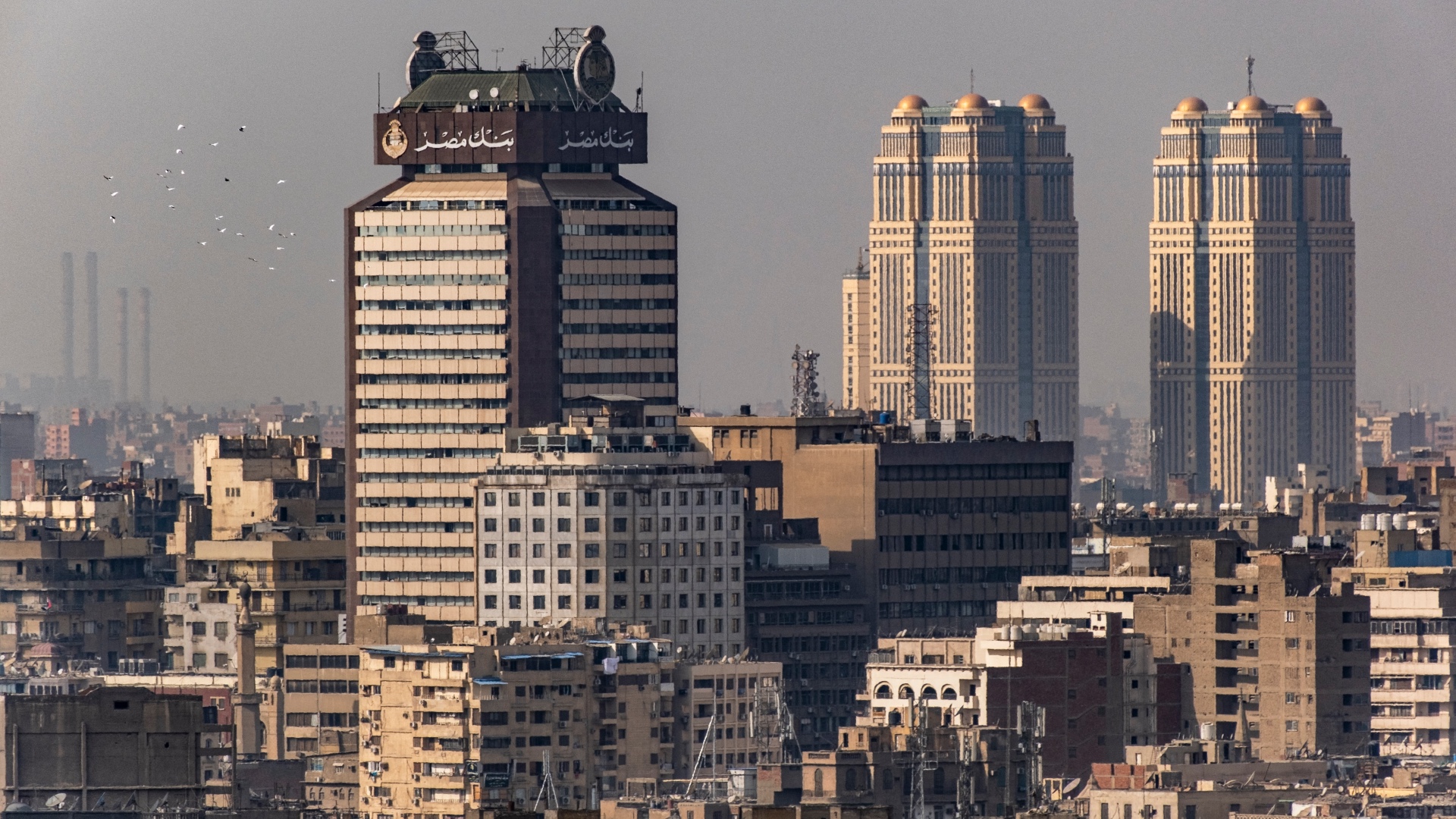
    In a sharp escalation of its economic pressure campaign against Iran, the U.S. Treasury Department announced Friday sweeping new sanctions designed to cut key regional financial actors linked to Tehran out of the global dollar system. The action, framed by the administration as part of its broader push to neutralize what it calls Iran’s financial enablers, centers on cutting off the United Arab Emirates-based branches of Egypt’s second-largest financial institution, Banque Misr, from access to U.S. financial networks.

    Under the proposed rule put forward by Treasury’s Financial Crimes Enforcement Network (FinCEN), Banque Misr UAE will lose its correspondent banking privileges that allow it to transact in U.S. dollars starting September 28. The proposal includes a 30-day public comment period, during which stakeholders can submit feedback for or against the measure, a step that could ultimately alter the final outcome of the designation. Treasury officials said the branch represents a critical access point for the Iranian regime to secure U.S. dollar holdings, justifying its removal from the global financial system.

    The new sanctions campaign, dubbed “Operation Economic Outcast,” was first unveiled by Treasury Secretary Scott Bessent earlier this week as part of Washington’s broader efforts to squeeze Iran amid ongoing heightened tensions over the Strait of Hormuz. Following the implementation of the new rule, U.S. financial institutions will be required to implement enhanced due diligence for all cross-border transactions involving foreign correspondent accounts, and take reasonable steps to block any transactions connected to Banque Misr UAE.

    Friday’s announcement also expanded sanctions to target Dubai’s local branch of Iran’s Bank Melli, one of the country’s oldest and largest commercial banks. Bank Melli functioned as Iran’s de facto central bank prior to the 1979 Islamic Revolution, and today maintains a sprawling network of branches across the Middle East and Europe. The U.S. also imposed direct sanctions on the branch’s manager, Reza Mohammad Taeedi. In its statement, Treasury noted that Bank Melli has long operated as a core financial hub for Iran’s military apparatus, including the U.S.-sanctioned Islamic Revolutionary Guard Corps-Qods Force and the Iranian Ministry of Defense and Armed Forces Logistics.

    A third entity, Hong Kong-based Kameng Trading Limited, was also added to the U.S. sanctions roster for its alleged role in money laundering on behalf of a pre-existing sanctioned Iranian exchange house, Pedram Pirouzan Exchange House, which also operates under the alias Opal Exchange.

    The sanctions, which touch on a Hong Kong-based firm amid deepening geopolitical ties between Beijing and Tehran, have sparked questions about potential impacts on U.S.-China relations, particularly ahead of Chinese President Xi Jinping’s planned state visit to the White House next month. China currently stands as the largest importer of Iranian energy exports. When asked about potential frictions on Monday, Bessent noted that the U.S. is pursuing quiet diplomatic outreach to align expectations with all global partners, saying, “We find that the best way to engage with countries is through quiet diplomacy, and we are level setting with every country to tell them our expectations.”