博客

  • Scientists investigate if a herpes virus is behind the mass deaths of sardines off South Africa

    Scientists investigate if a herpes virus is behind the mass deaths of sardines off South Africa

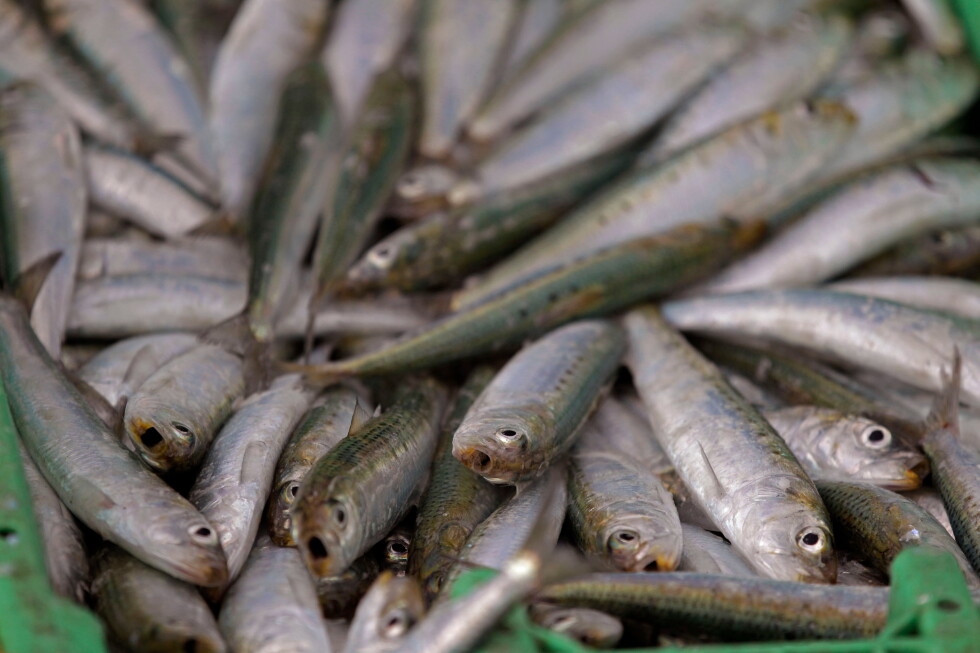
    JOHANNESBURG — A mysterious and widespread mass mortality event involving thousands of sardines washing onto South Africa’s western and southern shorelines has left fisheries and environmental experts working to pinpoint the exact cause, with a newly identified fish herpes virus emerging as the primary suspect. This month’s unprecedented die-off has so far puzzled officials from South Africa’s Department of Forestry, Fisheries and the Environment, though researchers have already confirmed one groundbreaking finding: this marks the first recorded detection of pilchard herpesvirus (PHV) in sardine populations off the South African coast.

    According to department statements, PHV is not a new pathogen to global marine science: the virus was connected to two separate large-scale sardine mortality events in Australian waters during the 1990s. When PHV infects sardines — which are the juvenile, smaller variant of pilchard, the same fish species — it triggers inflammation and thickening of the gill tissue. This physiological damage severely disrupts the fish’s ability to absorb oxygen from water, ultimately leading to suffocation and death.

    Crucially, environmental officials have moved quickly to reassure the public that PHV poses no documented threat to human health. The detection of the virus in wild sardine populations does not render commercially caught fresh sardines or processed canned sardine products unsafe for human consumption, the department emphasized.

    To unravel the full context of the die-off, research teams from the South African Institute for Aquatic Biodiversity and a local partner university have been conducting detailed analysis on dozens of samples collected from affected coastal areas, including both deceased and still-living sardines. Early test results have already revealed a clear pattern: dead sardines recovered from mortality event sites consistently showed very high viral loads of PHV, while surviving fish tested had widely varying levels of the virus.

    Beyond PHV, researchers have explored a range of other potential contributing factors, including toxic harmful algal blooms, unusually cold offshore water temperatures, and widespread low-oxygen conditions in nearshore waters. Even with these alternative lines of inquiry, the department noted that accumulating evidence increasingly points to PHV as the leading explanation for the mass die-off.

    Still, some independent marine biologists not involved in the official investigation caution that the viral detection may not explain the entire event. Dalene Vosloo, a lecturer in biological sciences at South Africa’s University of KwaZulu-Natal, noted that it remains highly plausible that multiple overlapping stressors combined to cause the large-scale mortality. She explained that shifts in water quality or unexpected temperature fluctuations can weaken fish immune systems, leaving them far more susceptible to fatal viral infection.

    As the scientific investigation proceeds, the sardine die-off has already created unforeseen secondary disruptions to critical national infrastructure. Eskom, South Africa’s national power utility, confirmed that the Koeberg Nuclear Power Station — located north of Cape Town on the country’s west coast and the only operational nuclear power facility on the African continent — was forced to cut power output by 50% at one of its two generation units. The shutdown occurred after large volumes of dead sardines clogged the plant’s seawater intake pipeline, which draws cooling water for the reactor systems.
  • Tens of thousands mourn King Harald V in Oslo as Norway enters a new royal era

    Tens of thousands mourn King Harald V in Oslo as Norway enters a new royal era

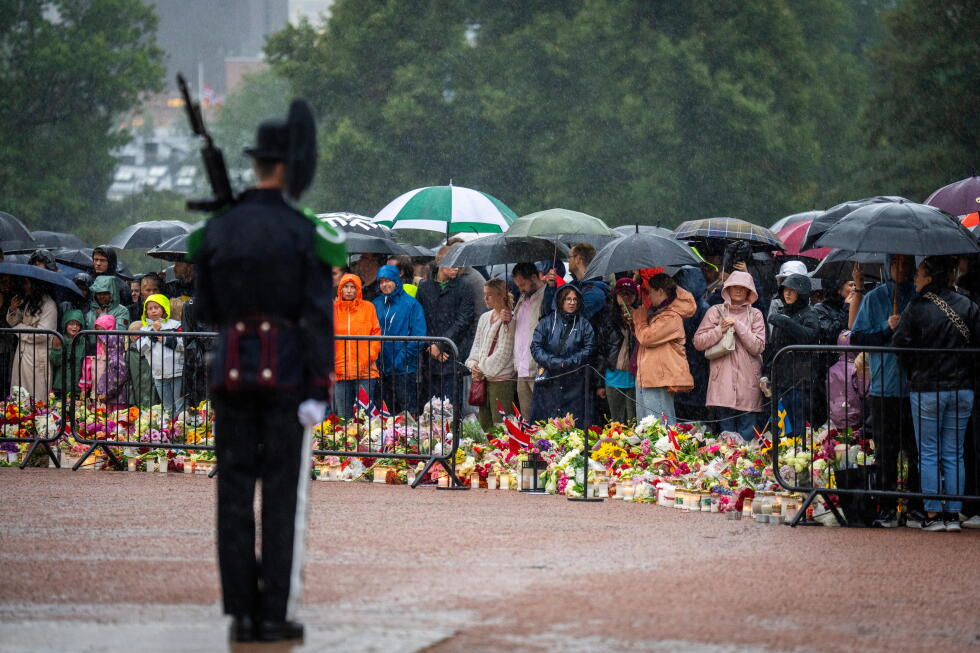
    OSLO, Norway — One day after Norway’s longest-reigning monarch King Harald V died at the age of 89, tens of thousands of grieving Norwegians gathered outside the Oslo Royal Palace on Saturday to lay flowers, leave condolence messages and pay their final respects to the beloved former head of state. By midday, Slottsplassen, the public square fronting the palace, had transformed into a vast, colorful sea of blooms, with a steady, quiet stream of mourners filing past the tributes to honor the king’s decades of service.

    Local public broadcaster NRK reported that palace staff made careful efforts to preserve the outpouring of public affection: a palace gardener removed excess bouquets along the palace’s southern edge to keep pedestrian pathways clear, while workers collected hundreds of condolence cards that had been soaked through by overnight rain, drying them to archive the messages for future generations.

    The national moment of mourning extended far beyond the capital. Across Norway, city halls and churches opened their doors specially on Saturday to allow citizens to light memorial candles and sign official condolence books to share their reflections on the late king. Harald V’s coffin was transported from Oslo’s National Hospital — where he passed away on Friday morning — to the royal palace on Friday evening, in a quiet procession that drew small crowds of respectful onlookers.

    For many attendees, the visit to the palace was a deeply personal act of gratitude. “It’s special, intimate, and lovely. I’m placing my right hand on my chest in gratitude to him and the royal family,” 46-year-old Roni Ervik told NRK during his visit, adding that he was also paying tribute on behalf of his entire extended family based in western Norway.

    With Harald V’s passing, his 53-year-old son, former Crown Prince Haakon, has formally ascended the throne as King Haakon VIII. The new monarch has adopted the royal motto “All for Norway,” a phrase first used by his great-grandfather that echoes a commitment to national service that dates back more than a century. Haakon’s wife Mette-Marit is now Queen of Norway, while his eldest daughter, Ingrid Alexandra, has become Crown Princess and first in line to the Norwegian throne.

    Haakon is no stranger to royal duties: as his father’s health gradually declined over the past decade, he repeatedly stepped in as regent to carry out the ceremonial functions of the monarchy on Harald V’s behalf. Later on Saturday, NRK confirmed that a choir would perform for mourners gathered in the palace square, and the new king was scheduled to hold formal introductory audiences with key Norwegian leaders: the speaker of the Storting (Norway’s parliament), the chief justice of the Supreme Court, and the presiding bishop of the Lutheran Church of Norway, with Crown Princess Ingrid Alexandra in attendance. Haakon is expected to deliver his first public address to the Norwegian people either later Saturday or in the coming days.

    The new king will face early challenges in unifying public support for the monarchy, after recent controversies emerged over his wife Queen Mette-Marit’s past contacts with deceased convicted sex offender Jeffrey Epstein, and the rape conviction of her son (Haakon’s stepson). No official date for King Harald V’s funeral has been announced, but Norway has entered an official period of national mourning, and many Norwegians have voluntarily postponed joyous events including weddings and child baptisms until the period of mourning concludes.

    The Norwegian monarchy traces its unbroken lineage back to King Harald Fairhair in the 9th century, making it one of Europe’s oldest continuous royal institutions. When Norway regained full independence from Sweden in 1905, a national public plebiscite saw 75% of voters endorse the restoration of the monarchy. While the modern Norwegian royal family holds no governing power — all legislative authority rests with the country’s elected parliament — the institution remains widely popular, and the royal family serves as a prominent cultural ambassador for the wealthy Nordic nation on the global stage.

  • At least 27 dead after Russian strike on depot near Kyiv

    At least 27 dead after Russian strike on depot near Kyiv

    In an escalation of the months-long exchange of long-range strikes between Moscow and Kyiv, a Russian drone attack on an industrial depot in the western outskirts of Kyiv early Saturday has left at least 27 people dead, triggered massive explosions and a large blaze that damaged nearby civilian infrastructure. Ukrainian authorities have opened a criminal investigation focused on potential safety negligence over the storage of explosive materials at the site, located in the small town of Myla, just outside the capital.

    Ukrainian President Volodymyr Zelenskyy confirmed the casualties in a post on social media platform X, noting that among the dead was Taras Didych, head of the local Dmytrivka community, who died while evacuating and rescuing residents. The blast caused extensive damage to adjacent residential neighborhoods, as well as a care facility for elderly and disabled residents, Zelenskyy added. The president emphasized that ammunition and explosive materials should never be stored in close proximity to civilian residential areas, and said any parties found responsible for safety lapses must face accountability.

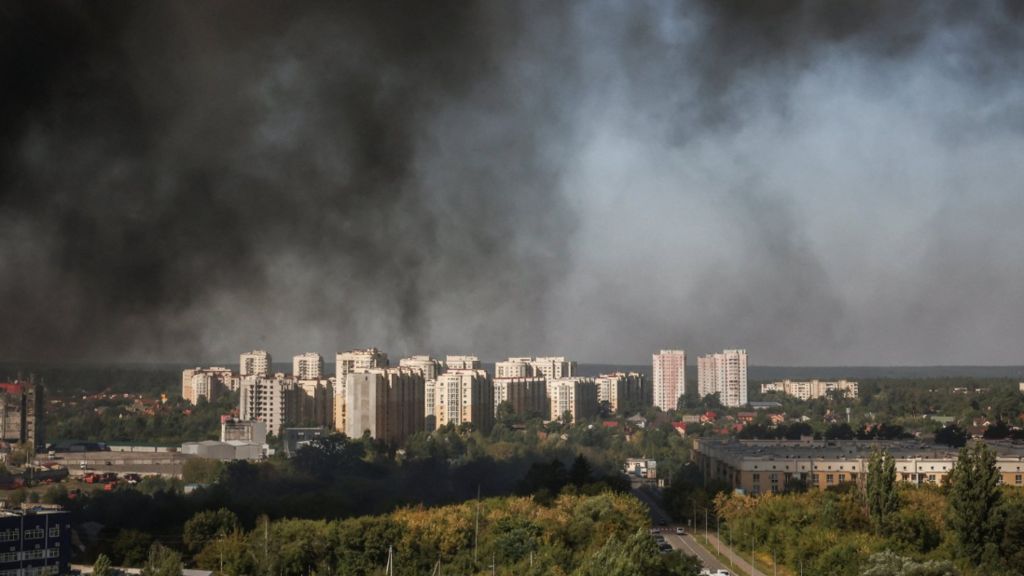
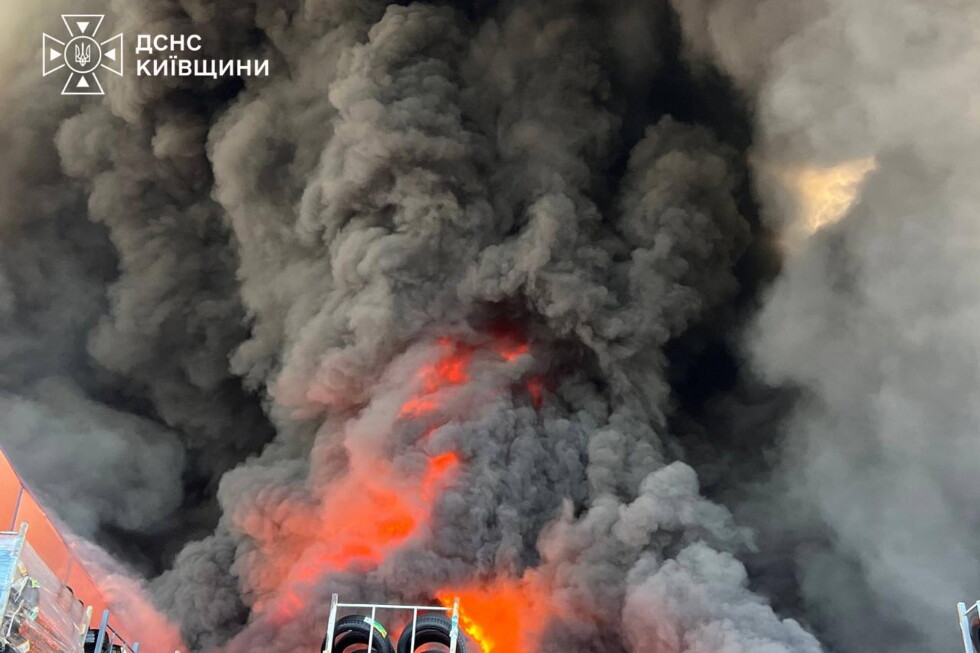
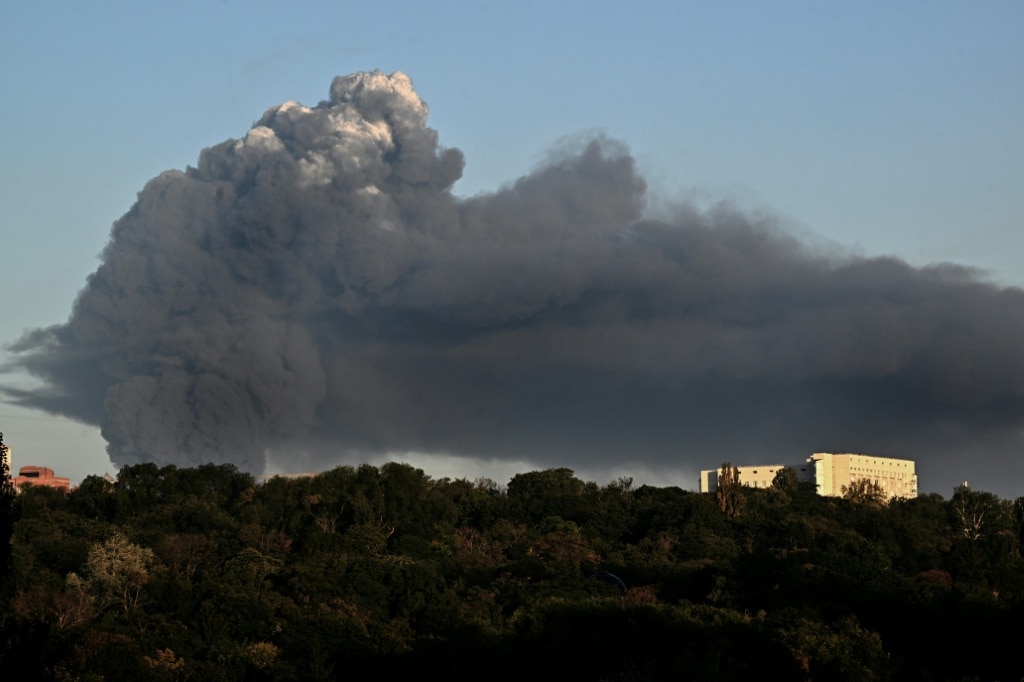
    AFP correspondents on the scene reported seeing a towering plume of black smoke rising over Kyiv’s western suburbs, with local authorities ordering the evacuation of hundreds of residents from the high-risk area surrounding the depot. Officials have not yet publicly confirmed whether the facility was operated as a military or civilian enterprise.

    Ukraine’s Prosecutor General’s Office outlined the scope of its ongoing investigation, confirming the strike took place around 8:10 pm local time (1710 GMT) on August 28. Investigators will examine whether the storage of explosive objects at the site complied with national safety regulations, and whether the unnamed facility owner held all required permits and approvals for the activity.

    Prime Minister Denys Shmyhal (corrected from original misnomer) harshly criticized what he called repeated and unlearned mistakes, noting that a similar deadly strike on a Kyiv-region munitions depot in July already revealed severe regulatory violations by a state-owned company, which failed to follow rules requiring safe distance from residential buildings. “In the fifth year of the full-scale invasion, making the same mistakes over and over is criminal negligence,” Shmyhal wrote on Telegram. “Everyone responsible, without exception, must face severe punishment so that such situations never happen again.”

    The Myla depot strike was part of a sweeping wave of Russian air attacks across Ukraine between late Friday and early Saturday. Ukraine’s Air Force reported that Russia launched at least two missiles and 266 drones in the assault. Additional strikes across the country left one person dead in the southern Odesa region and a 14-year-old girl killed in Boryspil, another Kyiv suburb, regional officials confirmed.

    The coordinated wave of attacks extended into Russian territory as well, where reciprocal Ukrainian strikes left three people dead in the Belgorod region and sparked a major fire at a warehouse operated by major Russian online retailer Ozon. Russian-appointed officials in Sevastopol, Crimea, also reported one fatality from a Ukrainian strike on the city.

    The latest escalation comes amid a months-long stalemate in U.S.-led diplomatic efforts to end the conflict, which is Europe’s deadliest since World War II. Russia has demanded extensive territorial and political concessions from Ukraine, terms Kyiv has repeatedly rejected as equivalent to total surrender. The rising tensions follow an unannounced visit by U.S. Central Intelligence Agency Director John Ratcliffe to Moscow earlier this week, occurring as the conflict enters its fifth year of full-scale hostilities.

  • At least 27 dead and hundreds evacuated after strikes near Kyiv

    At least 27 dead and hundreds evacuated after strikes near Kyiv

    In a devastating wave of overnight Russian drone attacks across Ukraine, at least 28 civilians have been killed and dozens more wounded, triggering new urgent calls from Kyiv for strengthened international support against Moscow’s aggression. The deadliest strike hit the Bucha district of Kyiv region, where regional governor Tymur Tkachenko confirmed 27 fatalities and 42 injured people — including four children. As of Saturday morning, emergency response teams had already evacuated 381 residents from damaged and at-risk neighborhoods, with search and rescue operations still underway to locate survivors trapped in destroyed residential structures.

    In a separate strike targeting the Boryspil district of Kyiv region, Tkachenko confirmed the death of a 14-year-old civilian, denouncing the attack as one more addition to the long list of casualties from what he labeled “Russian terror.”

    Ukrainian President Volodymyr Zelensky released an official statement extending his deepest condolences to the families of all those killed in the attacks. He noted that more than 300 first responders have been deployed across strike zones to conduct rescue operations and assess structural damage. Beyond the Kyiv region, Zelensky confirmed that additional overnight Russian strikes targeted Odesa, Dnipropetrovsk, Sumy and Zaporizhzhia regions, expanding the scope of the assault across multiple parts of the country.

    In his message posted to the Telegram messaging platform, Zelensky emphasized that Ukraine cannot repel these regular large-scale drone attacks alone. He expressed gratitude to global partners that have provided military support packages and imposed harsh economic sanctions on Russia to curb its war capabilities. The Ukrainian military announced that its air defense systems successfully intercepted and shot down 233 Russian unmanned aerial vehicles (UAVs) during the overnight assault, preventing an even higher civilian death toll.

    The latest round of attacks comes amid a steady escalation of cross-border strikes between Russia and Ukraine in recent months. Ukraine has increasingly targeted Russian economic infrastructure in its own operations, while Russia has ramped up its drone and missile attacks on Ukrainian civilian and energy sites. In the 24 hours preceding Saturday’s strikes, Moscow reported Ukrainian attacks on its own Belgorod and Rostov regions. Rostov governor Yuri Slusar confirmed that seven people were injured in those strikes, mirroring the pattern of rising civilian casualties on both sides of the ongoing conflict.

  • Niger’s security forces battle mutinuous soldiers at a strategic base, presidency district

    Niger’s security forces battle mutinuous soldiers at a strategic base, presidency district

    NIAMEY, Niger – Fresh instability has erupted in the West African nation of Niger, where a faction of soldiers launched an apparent mutiny against senior leadership at a critical military installation in the capital Niamey, leaving the country’s year-old ruling military junta facing one of its most severe domestic challenges to date, government authorities confirmed Saturday.

    Overnight clashes that stretched into Saturday left the capital ringing with sustained gunfire and loud explosions, with targeted attacks hitting two high-stakes locations: Base 101, the military air wing hosted at Niamey’s Diori Hamani International Airport, and the Plateau administrative quarter, home to the presidential palace and all of the country’s core governing institutions. Defense Minister General Salifou Mody confirmed in an official statement that mutineering soldiers had taken a number of senior officers hostage at the base before carrying out shootings at the sensitive urban sites, actions he labeled a deliberate violation of military discipline and regulatory protocols.

    Mody noted that rapid deployment by regular defense and security forces allowed troops to intervene and begin re-establishing control over the contested sites, though full confirmation that the situation was fully stabilized was not immediately available. Security forces quickly established cordons around the airport and the administrative district, closing a major arterial highway leading into the capital and prompting most Niamey residents to shelter in their homes for safety.

    This latest incident marks the third time since the start of 2024 that the airport base, one of the most strategically important military sites in the country, has come under attack. The two prior assaults were carried out by jihadi insurgent groups that have waged an ongoing insurgency across the Sahel region. Beyond its role as a domestic air force hub, the airport also houses the headquarters of the tripartite military alliance formed by Niger, Burkina Faso, and Mali, three Sahel states now all governed by military juntas.

    State-owned national broadcaster RTN temporarily suspended its live programming on Saturday morning amid the unrest, before resuming normal broadcasts later in the day. The ruling junta, formally called the National Council for the Safeguard of the Homeland, issued a public call for national unity in a post to its official Facebook page. “Our Defense and Security Forces are mobilized for the defense of the Fatherland. Let us remain united, vigilant and supportive,” the statement read. Local lawmaker Bana Wagana Ibrahim described the mutiny as a “cowardly attack” and claimed that security forces had fully brought the situation under control.

    The mutiny comes at a time of escalating pressure on Niger’s junta, led by General Abdourahamane Tchiani, who seized power in a July 2023 coup that ousted the country’s elected civilian government. In the months following the takeover, the junta cut off long-standing security partnerships with Western nations and aligned Niger closely with Moscow, a shift that has upended regional counterterrorism efforts. The country has also been battered by deepening economic hardship after Western donors cut off billions in critical development aid following the coup.

    Jihadist violence has continued to spread across Niger despite the junta’s new security alignment, leaving large swathes of rural territory ungovernable and a growing number of attacks reaching population centers. The wider Sahel region, a vast arid belt stretching across Africa south of the Sahara Desert, has faced a cascade of military takeovers since 2020, with juntas now holding power in Niger, Mali, Burkina Faso, and Guinea. Prior to the 2023 coup, Niger had been viewed as the last reliable Western partner in the region’s fight against al-Qaida and Islamic State-linked insurgents, making the current instability a major concern for global security across the Sahel.

  • Iceland votes on whether to resume EU membership talks

    Iceland votes on whether to resume EU membership talks

    On Saturday morning, Icelanders headed to polling stations across the island nation to cast their ballots in a high-stakes national referendum that will decide whether the country reopens stalled membership negotiations with the European Union. The close-running race is being watched closely by EU leadership in Brussels, as its outcome could reshape the bloc’s future enlargement trajectory.

    Iceland first submitted its EU membership application in 2009, in the aftermath of a devastating financial collapse that wiped out much of the country’s banking sector and sent its economy into a deep recession. Negotiations progressed for several years, but the process was halted indefinitely in 2013 after a Euroskeptic government coalition won national elections.

    Polling ahead of the referendum showed the race on a knife edge. The most recent survey from Gallup put opposition to restarting talks at 51.6 percent, with support at 48.4 percent, a margin small enough to fall within the poll’s statistical margin of error. Voting opened at 9 a.m. GMT and closes at 10 p.m. GMT, and no exit polls are planned. Given the tight margin, the first official reliable results are not expected until late Saturday at the earliest. Around 273,000 eligible voters are answering a simple yes-no question: “Should Iceland resume accession negotiations with the European Union?”

    If the yes side secures a majority, the Icelandic government will open negotiations with Brussels to finalize a full accession agreement, which would then go before voters in a second public referendum on formal membership. One of the biggest sticking points in past talks has been control over Iceland’s fishing industry, the backbone of the national economy, which Iceland insists on keeping full regulatory control over. This time around, EU officials have signaled a greater willingness to compromise on the issue.

    While the core of the debate over EU membership is rooted in domestic policy and economics, global geopolitical shifts have added a new layer of context to the 2024 referendum. The return of large-scale war to Europe following Russia’s full-scale invasion of Ukraine, combined with the unpredictable foreign policy of second-term U.S. President Donald Trump, has shifted how some Icelanders think about national security. Iceland has no standing military, relying entirely on NATO membership and a 1951 bilateral defense agreement with the U.S. for its security as a strategically critical sub-Arctic nation. Trump has previously made threats to take control of Greenland, and has confused the island territory with Iceland on multiple occasions, stoking quiet concern among Icelandic voters about the reliability of U.S. security guarantees.

    “The fundamentals (of the debate) are very domestic, but there is a significant impact that has come with the second term of (US President) Donald Trump and this sort of geopolitical upheaval,” Eirikur Bergmann, a political scientist at Bifrost University, told AFP.

    Domestically, the debate splits along lines shaped by Iceland’s post-crisis economic boom. With the national economy now growing strongly and Iceland already enjoying full access to the EU single market as a member of the European Economic Area, many opponents argue there is simply no need to pursue full membership. Opponents frame membership as a surrender of national sovereignty to unelected bureaucrats in Brussels, pointing out that Iceland built its current prosperity from poverty in just a century through independent policy.

    “It’s like if you are in a relationship with someone you don’t live with, and if you lose something you have by getting married, then why get married?” said Hjordis Vilhjalmsdottir, a 60-year-old radio presenter who wore clothing in the red, blue and white of Iceland’s flag while voting. “We don’t need Brussels to rule us. We can do it ourselves. We used to be one of the poorest countries in Europe only a hundred years ago. And now we are the most prominent country in Europe. We did it ourselves,” added 65-year-old entrepreneur Elias Theodorsson.

    On the pro-membership side, supporters point to the downsides of Iceland’s current prosperity: soaring inflation and sky-high interest rates that have put massive financial strain on ordinary households. Some homeowners are paying as much as 9 percent interest on their mortgages, making entry to the eurozone — which would bring far lower interest rates — an extremely attractive prospect for many working Icelanders.

    “There’s such a big gap, and it would mean so much for my household,” said Alexandra Yr van Erven, a 32-year-old university administrator. “I just think it’s the responsible thing to do, to give this government the agency to negotiate a deal with the EU, so we can see what the possibilities are. And then we can evaluate the deal.”

    For the EU, a yes vote would mark a major milestone for the bloc’s enlargement project, which has not added a wealthy net contributor to the EU budget since Austria, Finland and Sweden joined in 1995. EU leadership views Icelandic membership as a positive example of enlargement that could build momentum for admitting other candidate countries, including the Western Balkan nation of Montenegro. It could also shift the conversation in Norway, another wealthy Nordic nation that has twice rejected EU membership and remains outside the bloc as a wealthy non-member state.

    “Iceland’s decision would undoubtedly strengthen the case for the EU to welcome new members,” EU Enlargement Commissioner Marta Kos noted.

  • A Russian attack hits Ukraine’s Kyiv region, killing at least 27

    A Russian attack hits Ukraine’s Kyiv region, killing at least 27

    KYIV, UKRAINE – A Russian strike on the Bucha district on the outskirts of Ukraine’s capital Kyiv has left at least 27 civilians dead, Ukrainian officials confirmed Saturday, in an attack that has sparked accusations of official negligence over improper weapons storage near residential areas and triggered renewed escalation of hostilities amid the ongoing full-scale invasion.

    Tymur Tkachenko, head of Kyiv’s regional military administration, announced that roughly 50 residential structures suffered damage in the strike, which ignited a large blaze that spread across multiple private homes and a local restaurant. In a public address following the attack, Ukrainian President Volodymyr Zelenskyy confirmed that the strike hit an ammunition warehouse in the village of Myla, resulting in a massive secondary detonation that extended damage to surrounding civilian infrastructure.

    Zelenskyy noted that a care facility for elderly residents and people with disabilities, alongside multiple apartment blocks and private homes, were damaged in the blast. He added that criminal investigations into official negligence have already been launched, referencing longstanding regulations that prohibit storing ammunition in close proximity to residential communities. As of Saturday afternoon, more than 370 residents have been evacuated from affected areas, with evacuation operations continuing to move at-risk civilians to safer locations, according to the president.

    Ukrainian Prime Minister Serhii Koretskyi echoed Zelenskyy’s criticism of internal missteps, drawing a parallel to an earlier strike on an ammunition depot in the Kyiv suburb of Vyshneve earlier this month. That attack killed 22 people, set off massive secondary blazes, and destroyed dozens of nearby homes. “Unfortunately, the terrible tragedy in Vyshneve did not become a lesson,” Koretskyi said. “In the fifth year of a full-scale invasion, repeating the same mistakes is criminal negligence. All those guilty, without exception, must be severely punished so that such situations do not happen again.”

    Russia’s Ministry of Defense issued its own confirmation of the strike, stating that the targeted warehouse in Myla was being used to store components and launch boosters for Ukrainian long-range attack drones. The Russian military added that it also carried out coordinated strikes on the Black Sea ports of Mykolaiv and Izmail, alongside a separate logistics center and ammunition warehouse storing parts for Ukraine’s Flamingo cruise missiles elsewhere in the Kyiv region.

    The strike on Myla comes amid three consecutive days of near-constant air raids across Kyiv, which have choked the capital’s local economy and upended daily civilian life more than four and a half years after Russia launched its full-scale invasion of Ukraine.

    In additional violence across the country Saturday, separate Russian attacks in Ukraine’s southern Kherson region killed two civilians and wounded 27 others, including one child, regional administration head Oleksandr Prokudin confirmed. Prokudin added that multiple residential homes and apartment buildings suffered damage in the strikes. Earlier this week, Prokudin warned that Russia had sharply intensified its attacks on critical energy and civilian infrastructure across Kherson, roughly 70% of which remains under Russian occupation. He urged tens of thousands of remaining residents to relocate to safer parts of Ukraine, warning that the region could face prolonged power and heating outages through the coming winter months that put civilian lives at severe risk.

  • Dutch institute issues ‘red alert’ over Trump-shaped ecstasy pills

    Dutch institute issues ‘red alert’ over Trump-shaped ecstasy pills

    A leading Dutch research institute focused on drug addiction and mental health has sounded an urgent nationwide warning over a dangerous batch of counterfeit ecstasy pills molded into the shape of former U.S. President Donald Trump’s head, which carry potentially fatal health risks for users.

    The Trimbos Institute, headquartered in Utrecht, confirmed that multiple units of the illicit pills were submitted to official drug testing facilities across the Netherlands throughout August 2026. Laboratory analysis confirmed that the tablets contain an extremely high concentration of PMMA, short for para-methoxymethamfetamine, a synthetic stimulant chemically similar to MDMA—the primary active compound in recreational ecstasy.

    In an unambiguous public safety advisory, the institute stressed that the pills must never be consumed, warning that ingestion can lead to rapid, life-threatening overheating of the body that often results in fatal outcomes. Officials have released public images of the contraband to help users identify the dangerous tablets: one side bears a sculpted likeness of Trump’s face, while the reverse is stamped with the words “Trump” and “NL” to mark its presumed origin in the Netherlands. Two variant designs have been identified so far: one with yellow and blue coloring, and a second featuring red and green detailing.

    Unlike standard MDMA, which produces almost immediate psychoactive and stimulating effects, PMMA acts much more slowly on the body and often lacks the characteristic energizing high users expect from ecstasy. This delayed reaction creates a critical risk of overdose, the institute explained, as users frequently take additional doses believing the first pill did not work, resulting in a toxic buildup of the chemical in the system. Symptoms of PMMA poisoning include severe nausea, elevated heart rate, and uncontrollable convulsions, which can set in several hours after consumption.

    Anniek Groothuis, a spokesperson for the Trimbos Institute, told the Associated Press that as of the advisory’s release, the institute has not received reports of deaths or life-threatening illness linked to this specific batch of pills. Even so, public health officials have emphasized the urgent need for awareness to prevent preventable fatalities.

    While the production, distribution, and possession of ecstasy remain illegal under Dutch law, a 2024 official government report highlights the drug’s persistent popularity as a common party substance across the country. The report noted that in 2022 alone, a record 550,000 Dutch residents reported using ecstasy at least once that year, underscoring the ongoing public health risk posed by adulterated illicit drugs.

    This is not the first incident of Trump’s likeness being used to brand illegal ecstasy pills. Back in 2017, German law enforcement seized roughly 5,000 carrot-colored Trump-shaped ecstasy tablets that investigators believe were marketed online under the provocative slogan “Trump makes partying great again.”

  • Roosters sweating on scans after star halfback Sam Walker limps off in costly loss to the Dolphins

    Roosters sweating on scans after star halfback Sam Walker limps off in costly loss to the Dolphins

    As the NRL finals draw just two weeks away, the Sydney Roosters have been handed a devastating potential season-derailing blow, after star halfback Sam Walker exited Saturday’s clash against the Dolphins with a serious ankle injury that casts major doubt over his availability for the post-season.

    The incident unfolded in the second half of the 26-12 away win for the Dolphins at Allianz Stadium, when Walker’s left foot became trapped awkwardly during a tackle from Dolphins forward Kulikefu Finefeuiaki. The playmaker had to be escorted from the pitch by club trainers, and will now undergo urgent scans to confirm the full extent of the damage.

    Leading NRL physiotherapy experts have warned that the nature of the injury mechanism raises significant red flags: a syndesmosis tear is a likely outcome given how the foot was forced outward under tackler contact, while a fibula fracture cannot be ruled out due to the force of the collision. No penalty was awarded for the tackle, but the outcome of Walker’s scans could go down as one of the most pivotal moments of the 2026 NRL season.

    For the Roosters, the timing could not be worse. Just a few weeks after upsetting reigning premiers Penrith to cement their status as legitimate title favorites, back-to-back home losses have put their top-four Finals position in serious jeopardy. Walker, who is set to hit the free agency market on November 1 where he is expected to draw record-breaking contract offers, has been a cornerstone of the Roosters’ 2026 form.

    If Walker is sidelined long-term, coach Trent Robinson will turn to replacement halves Hugo Savala, who would partner veteran playmaker Daly Cherry-Evans. The club is also pinning its hopes on a timely return from try-scoring winger Daniel Tupou, who has been sidelined with a shoulder injury; a comeback from Tupou would allow Billy Smith to shift to left centre, opening up a spot in the halves for Savala. The Roosters face another minor injury concern after NSW hooker Reece Robson was pulled from the pitch in the game’s final minute.

    The Roosters’ injury drama overshadowed a sixth consecutive win for the Dolphins, a statement performance that has cemented their push for a maiden top-four finish in franchise history. The Dolphins are not without their own problems heading into the final round, however: key forward Kurt Donoghoe faces a nervous wait over potential disciplinary charges after shoulder-charging Roosters captain James Tedesco in the head. The incident did not result in a sin bin, but two of Donoghoe’s teammates were sent off in a chaotic seven-minute second half stretch: Morgan Knowles was binned for a dangerous tackle on Robert Toia, while Tom Flegler was sin-binned for repeated rule breaches and placed on report for a dangerous crusher tackle.

    Saturday’s result exposed deep flaws for a Roosters side that looked unbeatable just a month ago. The home side got off to a strong start, with Tedesco setting up Robert Toia for the game’s opening try, but failed to mount consistent attacking pressure until the Dolphins were reduced to 11 players after the double sin-binning. A late try from Salesi Foketi briefly raised hopes of a comeback, but those hopes were dashed immediately after when Hugo Savala dropped a simple pass with an unmarked try line in front of him, ending any chance of a last-minute turnaround.

    The Roosters now face a do-or-die final round clash against the Rabbitohs: a win will lock in their top-four spot, while a loss will allow the Sharks to overtake them on the ladder. For the Dolphins, the win sees them climb over the Roosters into third position on the ladder, with a powerful performance that confirms their status as genuine title contenders. Standout players for the visitors included Kodi Nikorima, who notched two crucial try assists, and left winger Selwyn Cobbo, who scored a double, including one off a perfectly executed scrum play that capped off a dominant team performance.

  • Ex-White House teleprompter operator ordered to pay $172,000 for Trump speech bets

    Ex-White House teleprompter operator ordered to pay $172,000 for Trump speech bets

    A former White House teleprompter operator has been hit with over $172,000 in penalties and restitution after being caught exploiting confidential access to then-U.S. President Donald Trump’s planned speech content to place illegal insider bets on a public prediction market, U.S. financial regulators have confirmed.

    The case centers on Gabriel Perez, who held a position as a White House teleprompter operator between late 2025 and early 2026. Over that three-month window, Perez used his advance knowledge of exactly what terms and topics the president would include in public addresses to place wagers on Kalshi, a popular prediction trading platform that allows users to bet on the outcome of real-world events.

    The Commodity Futures Trading Commission (CFTC), the federal regulator that oversees commodity and prediction markets, announced a settlement with Perez on Friday. Under the terms of the agreement, Perez is required to surrender all $107,539 in illicit profits he earned from the scheme, plus pay an additional $65,000 civil penalty. Regulators noted the penalty was reduced from its original proposed amount because Perez offered “exemplary cooperation” throughout the CFTC’s investigation. Beyond financial penalties, Perez also received a three-year permanent ban from all trading activity overseen by the CFTC.

    Internal records show the scheme was first uncovered by Kalshi’s own compliance team back in March 2026. Analysts at the platform flagged unusual, concentrated betting activity on so-called “mention markets” — contracts that pay out if a public figure uses a specific pre-named term in a public address, ranging from country names to campaign slogans. After cross-referencing account data, Kalshi investigators confirmed the account holder was a federal employee working as a White House teleprompter, and immediately reported the suspicious activity to the CFTC.

    Kalshi’s lead counsel Bobby DeNault publicly praised the regulator’s ruling in a post on X following the settlement announcement. “It doesn’t matter who you are: violate our rules or federal law and you will face the consequences,” DeNault wrote.

    In a July 2026 statement ahead of the settlement, Kalshi had already highlighted the broader systemic risk posed by this type of insider trading, noting that planned remarks from senior U.S. leaders like the president and Federal Reserve chair routinely move global foreign exchange markets, oil futures, and stock markets by billions of dollars. The company emphasized that policing insider activity is critical to maintaining market integrity.

    Back in July, then-White House Press Secretary Karoline Leavitt confirmed that Perez had been placed on unpaid leave and would not be allowed to return to his role at the White House. The White House has not issued any additional comment on the final settlement ruling. Shortly after Perez’s activity was uncovered, the White House Management Office issued a formal advisory to all White House aides reminding staff that betting on political prediction markets violates federal ethics rules and is prohibited for executive branch employees, administration officials confirmed to CBS News, the BBC’s U.S. media partner.

    No criminal charges have been announced against Perez to date, and the settlement resolves the civil case brought by the CFTC.