博客

  • Flydubai co-pilot attacked captain with axe, UAE official says

    Flydubai co-pilot attacked captain with axe, UAE official says

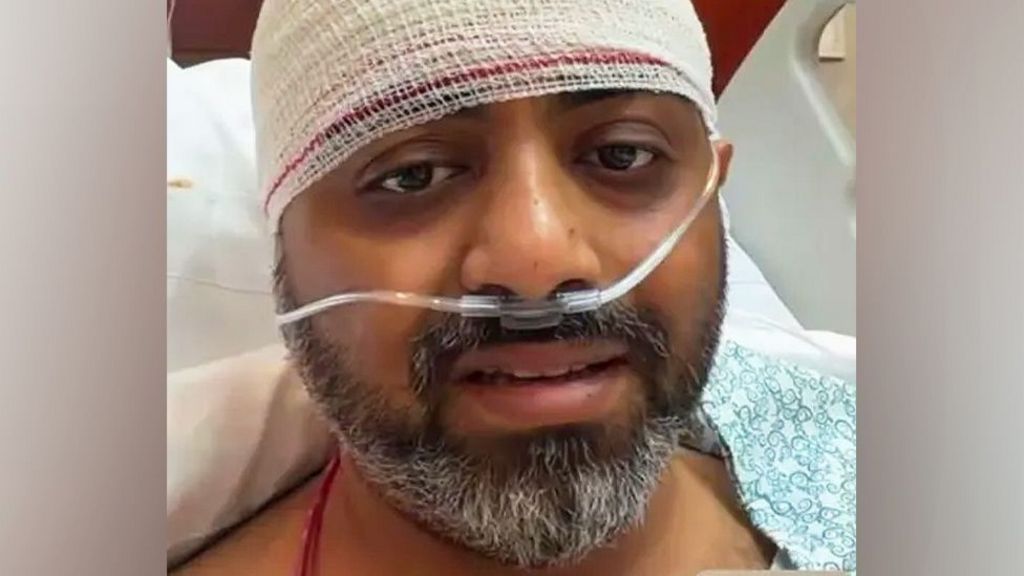
    A dramatic mid-flight crisis unfolded on a Flydubai commercial flight traveling from Dubai to Tel Aviv earlier this week, when the aircraft’s co-pilot launched a sudden, violent attack on the captain in an attempt to seize control of the plane carrying more than 170 passengers and crew. The United Arab Emirates’ top prosecutor confirmed the attacker used a standard emergency crash axe stored in the cockpit to assault the flight’s commander, Captain Smit Machchhar, an Indian national.

    Roughly two and a half hours into the scheduled journey, the assault sent the plane into a terrifying 17,000-foot nosedive, triggering emergency transponder codes: first the general emergency signal 7700, followed by 7500, the international code for unlawful interference or hijacking. Despite suffering multiple stab wounds and being left lying on the cockpit floor injured, Captain Machchhar refused to surrender control of the downing aircraft. In a first-hand account of the incident, he recalled, “I told myself to go for one last push to open the door from inside,” a critical action that allowed passengers and backup pilots to reach the cockpit and intervene.

    Israeli President Isaac Herzog detailed how the alarm was first raised by Tali Manes, an Israeli passenger who heard the chaotic struggle coming from the locked cockpit. Once Captain Machchhar managed to pry the door open, Manes’ husband Zvika, alongside three other Israeli passengers — Yaniv Hayun, Dr. Shota Musayev and Asaf Rajuan — rushed into the cockpit to subdue the attacker. Hayun, in an official video released by the Israeli Prime Minister’s office, explained that the attacker was actively attempting to destroy cockpit instruments to disable the plane. Hayun grabbed the attacker in a chokehold, dragged him out of the cockpit, and other passengers assisted in restraining him, using the attacker’s own zip ties and in-flight multimedia headphone cables to secure him. Hayun also adjusted the plane’s controls to steady its descent before two off-duty reserve pilots on board took over full control of the aircraft and diverted it to a safe landing in Saudi Arabia.

    One passenger, Almog Itali, described the terrifying experience to the BBC, comparing the rapid descent to a rollercoaster drop. “Suddenly the aeroplane started to, like a rollercoaster, to drop down with a massive G-force. It was falling down for 20 or 30 seconds, rapidly, and then balanced, and then started once again to fall down,” he said.

    According to Israeli Prime Minister Benjamin Netanyahu, the attacker is an Omani national. After he was subdued, Netanyahu told Fox News the attacker repeatedly shouted “Kill me, kill me!” to the crew, leading Netanyahu to conclude “it’s clear that he was suicidal… It looks very likely that he was going to down the plane.” Netanyahu also added that the attacker “underwent Islamist radical indoctrination.” The UAE’s state news agency confirmed that authorities have launched an investigation to determine whether the incident was linked to any terrorist organization or extremist activity, with the country’s attorney general noting that investigations are still ongoing to establish the full circumstances and underlying motives of the attack.

    Following the successful landing, Captain Machchhar was first transported to a nearby medical facility for urgent treatment, then airlifted to Abu Dhabi for further care. The Indian Embassy in the UAE released a statement Thursday confirming the captain is in stable condition, and that he is “in good health and recovering well.” In his own public comment on the incident, Machchhar expressed confidence in his recovery, saying “I am confident that the recovery will be there and I will become fit and healthy again.”

    The Indian government has publicly commended Captain Machchhar for his extraordinary bravery in the face of danger, praising his “immense courage” that saved the lives of everyone on board. Netanyahu echoed that praise Wednesday during an interview with CNN, saying the injured captain, quick-thinking passengers, and backup crew had “managed to prevent a 9/11 disaster.”
  • Russia strikes second major bridge in Kyiv, mayor says

    Russia strikes second major bridge in Kyiv, mayor says

    Fresh Russian strikes have targeted a second critical infrastructure bridge in Ukraine’s capital Kyiv, marking a sharp escalation in Moscow’s campaign against key city facilities, according to Kyiv Mayor Vitali Klitschko.

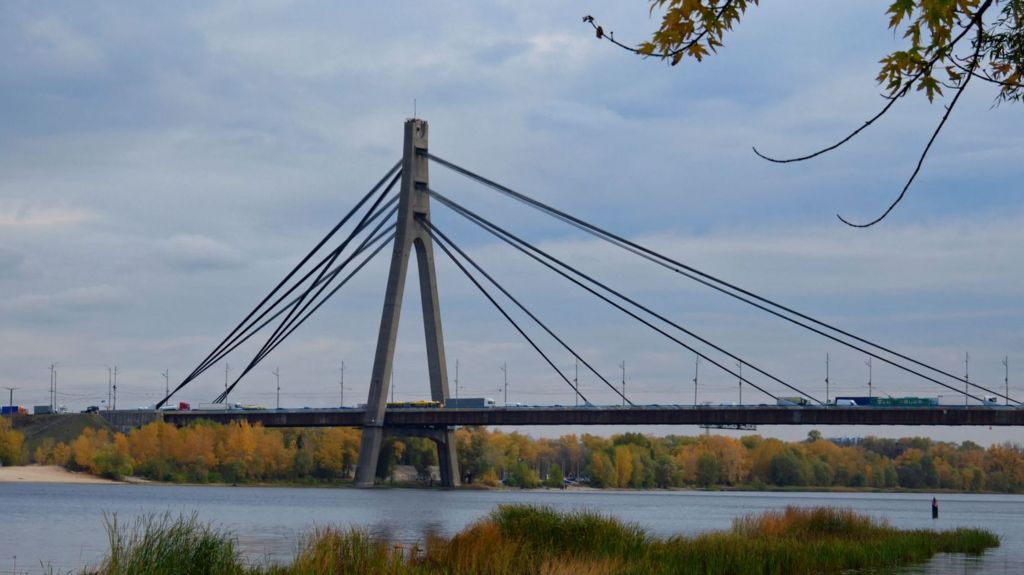
    The latest attack damaged the road surface and overhead power lines for trolleybus transit on the Northern Bridge, Klitschko confirmed in a statement posted to Telegram on Saturday. Following the strike, all traffic traveling from the left bank to the right bank of the Dnieper River on the bridge has been temporarily blocked, with emergency response teams already deployed to the site to assess damage and begin repairs.

    This assault on the Northern Bridge comes just days after repeated Russian drone strikes targeted Kyiv’s Southern Bridge (known locally as Pivdennyi Bridge) starting last Thursday. In that initial attack, one Russian drone struck critical power cables on the Southern Bridge, disrupting transit operations.

    Before this string of attacks that began Thursday, neither of the two major bridges connecting the eastern and western districts of Kyiv had been hit by Russian forces. Analysts and Ukrainian officials say this new targeting of key capital transit links signals a clear shift into a new phase of Russian offensive operations against Kyiv’s core infrastructure.

    In the wake of the first attacks on the Southern Bridge, Kyiv’s Defense Council held an emergency crisis meeting on Friday. During that session, Klitschko issued a stark warning that the stepped-up pace of Russian drone and missile strikes was putting intense strain on the capital. He described the current situation facing Kyiv as “very dramatic,” noting that Russian forces are systematically targeting critical infrastructure, logistics networks, residential housing, and other essential facilities that keep the city functioning.

    Russian President Vladimir Putin has defended the recent wave of strikes, claiming they are carried out in retaliation for Ukrainian attacks on Russian energy infrastructure. This claim comes despite historical records showing that Moscow first launched large-scale strikes targeting Ukrainian energy and critical infrastructure early in the full-scale invasion.

  • US sends additional Patriot batteries to Saudi Arabia and Qatar: Report

    US sends additional Patriot batteries to Saudi Arabia and Qatar: Report

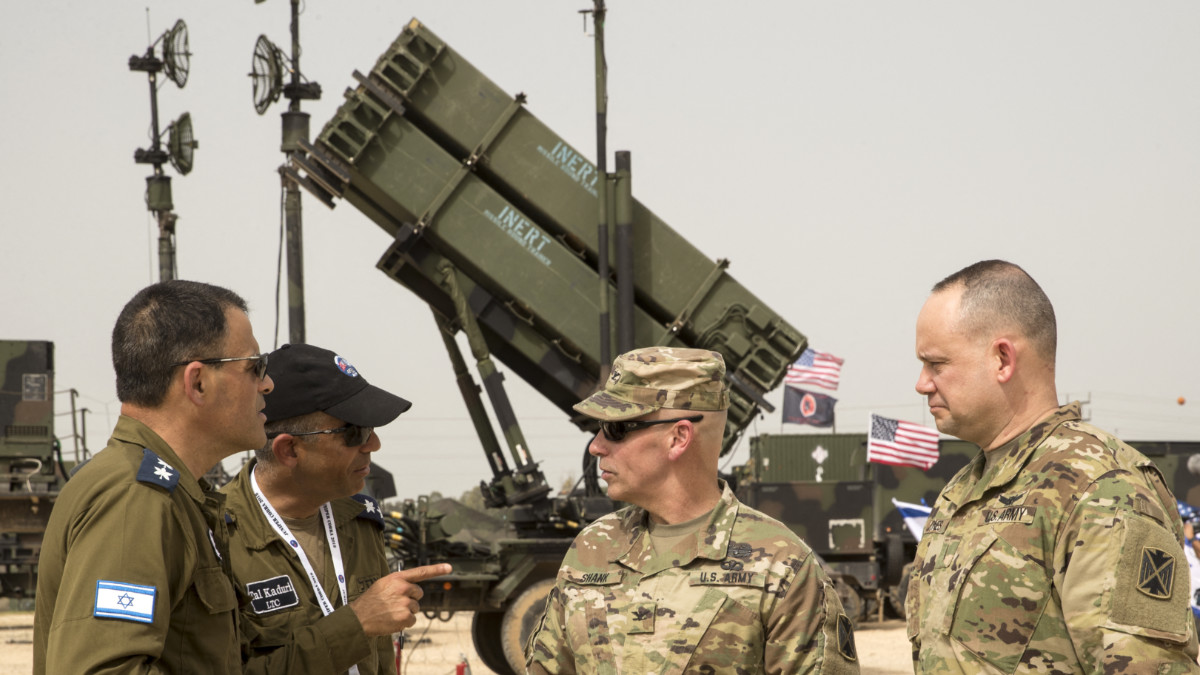
    As former U.S. President Donald Trump confirms he is actively considering new military strikes against Iran, the United States has moved to bolster defenses across the Arabian Peninsula by deploying additional Patriot air defense batteries to two key Gulf energy producers, Saudi Arabia and Qatar, multiple sources familiar with the deployment confirm.

    Axios first reported the deployment details Thursday, noting that one extra Patriot battery has been positioned in Saudi Arabia to shield a critical oil processing facility, while a second battery has been sent to Qatar to protect a major natural gas infrastructure site. What makes this troop movement particularly noteworthy is the global shortage of these highly sought-after air defense systems: the U.S. maintains only a limited stock of operational Patriot batteries globally. Data from the nonpartisan Missile Defence Alliance shows that just 33 batteries are currently stationed for domestic defense within the United States, while another 27 are deployed across all overseas U.S. military missions.

    While major U.S. allies in the Gulf Cooperation Council—including Saudi Arabia, Qatar and the United Arab Emirates—already operate their own fleet of Patriot batteries, regional partners have increasingly turned to Washington for supplementary defensive support. Gulf states have faced the full force of Iranian retaliatory actions targeting Western and Israeli interests in the region, leaving their critical infrastructure vulnerable to attack.

    Saudi Arabia faces the most acute security risks among Gulf states, with both major urban centers and core energy infrastructure facing repeated attacks. Yemeni Houthi fighters have launched regular strikes on Saudi targets, while Iran-aligned Shia militias operating out of Iraq have also carried out attacks against the kingdom. Riyadh has formally blamed Shia militias for a recent strike on its strategic East-West Pipeline, even as Houthi forces have launched their own attacks on Yanbu, Saudi Arabia’s primary oil export terminal on the Red Sea.

    The decision to reinforce Gulf defenses comes at a moment of heightened tensions, after regional allies raised sharp criticism of U.S. security commitments earlier this year. When Gulf states faced a wave of intense Iranian missile and drone strikes in response to the U.S.-Israeli military campaign against Iran, many regional leaders said they felt sidelined by Washington. This backlash has thrown renewed scrutiny on the decades-old U.S. security umbrella that has anchored Washington’s relationships with the energy-rich Gulf states, with many allies questioning the reliability of American protection amid escalating regional conflict.

    In public comments Thursday, Trump confirmed he is weighing a dramatic escalation of conflict, saying new strikes against Iran remain a clear possibility. “Now I have to make a decision; they’ll either sign a very fair deal, or they won’t exist any longer,” Trump stated, repeating his extreme threat to completely dismantle the Islamic Republic of Iran.

    The Patriot deployments are just one part of a broader U.S. military buildup in the Middle East. The Pentagon is also moving thousands of additional troops and a third full aircraft carrier strike group to the region. The nuclear-powered aircraft carrier USS Theodore Roosevelt departed its home port of San Diego Sunday, while the USS Makin Island Amphibious Ready Group—made up of three large amphibious vessels carrying roughly 10,000 U.S. Marines—set sail a day later on Monday. The U.S. already has two other carrier strike groups, the USS George HW Bush and USS George Washington, operating in the Middle East. Once the Theodore Roosevelt arrives, the U.S. will have three aircraft carriers positioned in the region, the largest concentration of American naval air power there since April 2026.

  • Pakistan sent four planeloads of weapons to Saudi-backed government in Yemen: Report

    Pakistan sent four planeloads of weapons to Saudi-backed government in Yemen: Report

    As Saudi Arabia races to reverse rapid territorial gains made by Houthi forces across Yemen, new details have emerged of Pakistan’s deepening involvement in the conflict, with four planeloads of military hardware dispatched to the internationally recognized Yemeni government in September.

    The arms shipment, which arrived at the strategic port city of Aden, was first reported by Reuters on Friday, marking a clear shift away from Pakistan’s earlier neutral stance as Houthi fighters advanced. Citing a senior Pakistani government official, Reuters confirmed the cargo included critical military assets: air defense systems, light artillery pieces, surveillance drones, and specialized anti-drone technology designed to counter Houthi aerial attacks. Beyond weapons supplies, Pakistani military advisors are already operating on the ground alongside Saudi coalition forces to train and assist Yemeni government troops, according to the report.

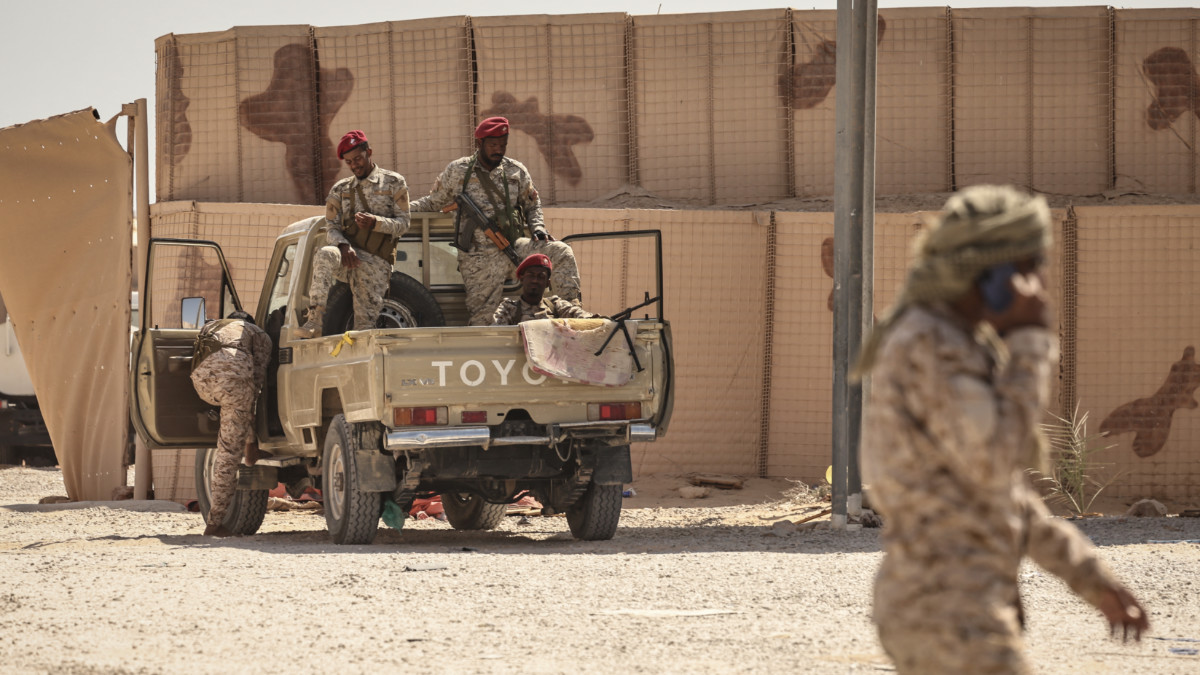
    Multiple Western and Arab diplomatic sources confirmed to Middle East Eye that Saudi Arabia is currently gearing up for a large-scale, high-intensity military campaign to push back the Houthi offensive that has already given the group full control over Yemen’s entire Red Sea coastline. In recent days, heavy clashes have intensified around the strategically vital city of Taiz, where Houthi fighters scored a key tactical victory this week by destroying a critical bridge connecting government-held areas surrounding Taiz to the southern port of Aden.

    If Houthi forces succeed in seizing full control of Taiz from Yemeni government forces, they will effectively cut off Aden from northern government-held territories, severing the government’s primary overland supply routes and putting the seat of the Yemeni administration under increased strategic pressure.

    In response to the rapid advance, Saudi Arabia has dramatically scaled up its air campaign against Houthi positions across the country. Houthi spokespersons reported Thursday that the Saudi-led coalition launched 94 separate air strikes within a 24-hour period. For its part, the Saudi military confirmed it carried out a targeted high-value operation in the Houthi-held capital Sanaa, struck 11 military sites in the Houthi stronghold of Saada, and conducted 27 air raids against what it described as an integrated Houthi military network in Taiz.

    The fighting has spilled across the border into Saudi territory, with Houthi forces repeatedly targeting Saudi civilian infrastructure, including a recent attack on Riyadh’s international airport. On Thursday, Saudi authorities accused the group of launching a drone strike on an electricity distribution station in the holy city of Medina, which supplies power to the Prophet’s Mosque, one of Islam’s holiest sites. The Houthis have denied any involvement in the attack on the station.

    Pakistan’s decision to step up military support for Saudi Arabia and the Yemeni government comes as the first major test of the Mecca Pact, a joint defense agreement signed by Pakistan, Turkey, and Saudi Arabia back in August. For weeks after the pact was signed, both Pakistan and Turkey remained on the sidelines as Houthi fighters swept along the Red Sea coast and imposed a shipping blockade on Saudi vessels transiting the vital waterway.

    Regional security analysts note that both nations face a delicate balancing act, as they seek to maintain strong alliance ties with Saudi Arabia while managing their own distinct security priorities. Pakistan shares a long border with Iran, the key regional backer of the Houthi movement that has provided the group with arms, intelligence, and military advisory support for years.

    While the United States remains Saudi Arabia’s most critical security partner, the Trump administration has so far avoided taking a public role in the latest campaign against the Houthis, even as it joins Pakistan in deploying military advisors and supplying advanced weapons systems to the coalition.

    In a separate move to shore up its regional alliances ahead of the anticipated offensive, Saudi Arabia moved this week to repair strained relations with the United Arab Emirates, a fellow Gulf Cooperation Council member with which it had clashed over Yemen policy amid the UAE’s support for southern Yemeni secessionist movements. On Tuesday, Saudi Crown Prince Mohammed bin Salman welcomed UAE Vice President Mansour bin Zayed Al Nahyan for high-level talks in Riyadh, a public signal of mended ties ahead of the planned military push.

  • LA Times ad promoting Israeli tourism erases occupied Palestinian territories

    LA Times ad promoting Israeli tourism erases occupied Palestinian territories

    A controversial multi-page advertising campaign published by Israel’s Ministry of Tourism on the Los Angeles Times website has sparked scrutiny over its deliberate cartographic erasure of occupied Palestinian territories, while marketing the country as a tranquil, inviting destination for U.S. travelers. Titled *Israel: Land of Creation*, the campaign centers on an interactive nine-day travel itinerary that lets users click through Israeli cities to access information about local history and cultural landmarks. The map included in the ad depicts all territory stretching from the Jordan River to the Mediterranean Sea as part of Israel, with no acknowledgment whatsoever of Palestinian-populated areas. Notable omissions include the occupied West Bank, East Jerusalem, and the Gaza Strip – territories the United Nations formally recognizes as occupied under international law, and which are widely framed as the core territory for a future independent Palestinian state under the two-state solution. Beyond cartographic erasure, the ad also fails to mention that many of the advertised Israeli cities were constructed on the land of destroyed and displaced Palestinian villages and towns. The ad paints a deliberately idyllic picture of travel across Israel, with vivid descriptions of Tel Aviv’s popular coastal lifestyle: “Start by getting oriented. Rothschild Boulevard, the White City’s Bauhaus architecture, the pull west toward the Mediterranean. The beaches here are central to daily life rather than an amenity. You’ll notice people swimming before work, playing matkot on the sand, and treating the shoreline as an extension of their neighbourhood. Plan to walk south toward Jaffa before sundown on the first evening.” For the route between Tel Aviv and Jerusalem, the ad notes the trip takes roughly 40 minutes by car, framing it as a seamless journey across time. What it does not mention, however, is that for Palestinian residents, the same trip requires navigating Israeli military checkpoints and segregated road networks, stretching the travel time to two hours or more. The ad further integrates unambiguously occupied lands into its tourism branding: it refers to the Old City, located in occupied East Jerusalem, as integral Israeli territory, and promotes wine tourism in the occupied Golan Heights – a territory seized by Israel from Syria in 1967, which the post-war Syrian government still claims as its own, and which former U.S. President Donald Trump controversially recognized as Israeli in an unrivaled unilateral move. In the country’s north, the ad describes encounters with “Jesus’ mysticism” and a “thriving artists’ community”, making no mention of the ongoing conflict and instability that shapes daily life across the broader region. This carefully curated image of peace and normalcy stands in stark contrast to the current reality: Israel is currently engaged in active conflict across at least seven regional fronts, carrying out near-daily airstrikes on Gaza, ramping up restrictive measures and raids in the occupied West Bank, and conducting cross-border military strikes in Iraq, Syria, Yemen, Iran, and Lebanon. The marketing push also comes amid a heated domestic Israeli political context, just weeks ahead of the 27 October national election. Israeli Prime Minister Benjamin Netanyahu has spent much of his current campaign leaning into a narrative of existential national threat to mobilize his base, making the campaign’s depiction of a calm, tourist-friendly Israel a notable dissonance. This $6.5 million tourism campaign, dubbed “I am Israel”, was first announced in June by the Israeli Ministry of Tourism, with an explicit focus on attracting travelers from North America. At the time of its launch, the *Jerusalem Post* reported that the campaign’s core goal was to “reconnect the country to people’s hearts and make it clear that tourist sites are safe and open”.

  • The South African men trying to end violence against women: ‘Every man needs to play a part’

    The South African men trying to end violence against women: ‘Every man needs to play a part’

    In the cramped, winding pathways of Organic Market, an informal settlement tucked near Johannesburg’s Alexandra township, a small group of men gather on a dusty street outside a local tavern. Chairs are dragged into a rough circle, and as some sip cold bottled beer, the men turn their conversation to a crisis that has gripped South Africa for decades: the epidemic of violence against women and femicide.

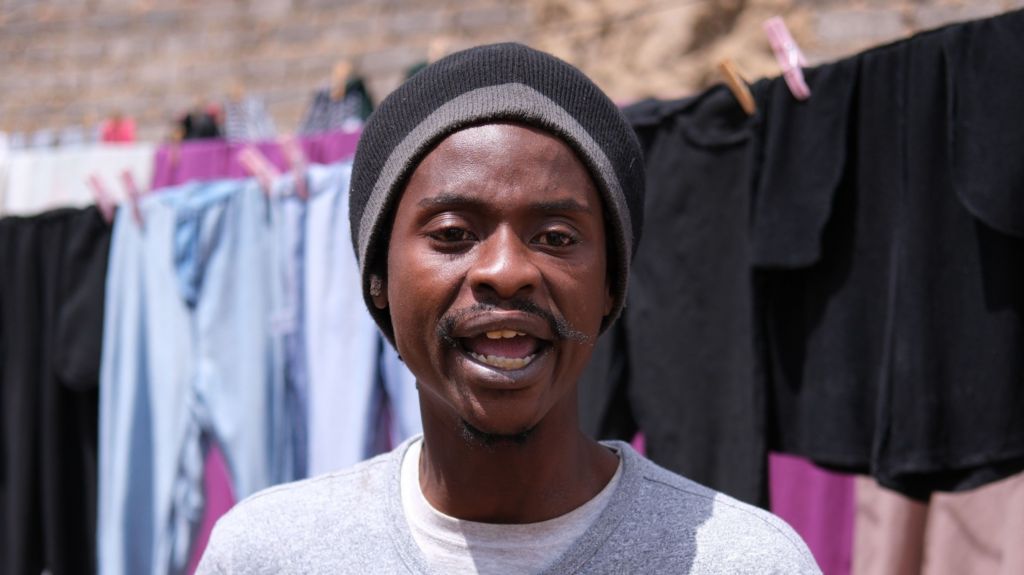
    This gathering is organized by Father A Nation (FAN), a non-profit organization working to reframe masculinity across the country, targeting men and boys to encourage accountability and end gender-based harm. For 30-year-old Kgomotso Mathekga, attending his first meeting is a vulnerable act of confronting his own past. Speaking openly to the group, he admits he once physically assaulted his girlfriend during an argument, grabbing and slapping her. The relationship ended, he says, and he has been cut off from his child ever since. “Now I feel pain,” Mathekga shares. “I feel like I’ve contributed to the problems in South Africa, instead of being the gentleman that I know I am.” He adds that growing up without positive male role models has left a void that many local men fill with harmful, violent behavior, a trend he has witnessed repeatedly in his neighborhood, especially when alcohol is involved. “I see men hitting women all the time, especially when they are both drunk,” he says.

    Leading the meeting is Itumeleng Stephen Tamaga, known to locals as Bra Steve, FAN’s on-the-ground organizer in Organic Market. Raising his fist, he opens the session with a rallying cry: “We are men!” The group responds with cheers and applause. “We must stand together to fight against gender-based violence and femicide,” Bra Steve tells the gathered men. For him, the solution starts with rebuilding a sense of dignity among local men, many of whom grew up without fathers or positive male guidance. “We are a lost generation,” he says. “We must restore dignity to the men around here.”

    This grassroots push comes at a moment of renewed national fury over gender-based violence in South Africa. Over three months earlier this year, the bodies of 12 women were discovered in Ekurhuleni, a metropolitan area just east of Johannesburg. The discovery has reignited long-simmering questions about the scale of the crisis, which activists and survivors have long labeled a national emergency. Police have not confirmed a serial killer is behind the deaths, though they have not ruled out connections between some cases, and suspects in several deaths have already appeared in court. But the string of killings has pushed the issue back to the top of the national agenda, forcing both government and community leaders to confront the staggering statistics behind the violence.

    Official data underscores the severity of the crisis. Between April and June 2026 alone, South Africa recorded 5,427 murders – one of the highest quarterly homicide rates in the world. Of those, 569 were women, an average of six women killed every day, according to the South African Human Rights Commission. A further 1,052 women survived murder attempts in that same period. A 2022 study from the Human Sciences Research Council found that more than 35% of South African women will face physical or sexual violence in their lifetime, most often at the hands of an intimate partner.

    President Cyril Ramaphosa has acknowledged the government’s failure to adequately address the crisis, recently announcing a new package of measures aimed at improving women’s safety, including expanded street lighting in high-risk areas and a review of thousands of unsolved gender-based violence cases. But for FAN project coordinator Zizipho Mtwesi, these steps are too little, too late. “When I think about all of these recent murders in Johannesburg, I get angry,” Mtwesi says. “Why do we have to wait for this to happen for us to act?” FAN’s approach, he explains, is to intervene before violence occurs, reaching out to men to change their attitudes before harm is done.

    Craig Wilkinson, FAN’s founder, outlines the organization’s two-pronged approach. “We get men to talk, to process their feelings,” he explains, standing at the center of the circle of men in Organic Market. “And as they do, this healing takes place. The second phase is teaching and training positive masculinity.” He tells the gathered men that they hold the power to end the crisis: “You as a man are a powerful force for good. You choose what kind of man you want to be. Women need to be safe.” Today, FAN operates across the country, running healthy masculinity training programs in dozens of South African schools and colleges, with the ultimate goal of eliminating gender-based violence entirely.

    For women in Organic Market, the recent string of killings has only deepened a constant state of fear. As Linkie, a local resident, cleans clothes in a large metal bucket outside her shack, she says the anxiety never leaves. “We are not safe when we are outside our place,” she says. “We are afraid when we see a car behind us when we walk. We feel afraid. What if this guy’s going to kidnap me or do something to me?” Providence Maseko, a salon worker in the settlement, shares that feeling of distrust. “Safety here is very bad,” she tells Bra Steve when he stops to invite her to a community conversation. “Maybe you are the serial killer. How do I know who to trust?” Maseko says she now only uses e-hailing taxis for all trips, even short ones, in a desperate bid to stay safe. Bra Steve responds by inviting her to join future community meetings, saying open conversation between men and women is the only path to rebuilding trust.

    As the men’s meeting wraps up on the dusty street outside the tavern, Mtwesi leaves the group with a clear message: every man has a role to play in ending violence. “If they wouldn’t allow these things to happen to their own daughters or own mothers, they mustn’t allow it to be done to someone else’s daughter, which is their wives or their girlfriends,” he says.

    For Mathekga, the meeting has reinforced a new mission: to become the role model he never had growing up. “Many of our fathers and uncles are in prison,” he says. “We no longer have role models, so we must now become the role models ourselves and help make this country better.”

  • Cornell frat house rape accuser ‘under siege’ online, says lawyer

    Cornell frat house rape accuser ‘under siege’ online, says lawyer

    A sexual assault allegation against seven Cornell University students has ignited widespread national debate and triggered a major shakeup in how the case is being investigated, after the accuser revealed she is facing overwhelming online harassment from internet users attempting to publicly identify her. The 20-year-old woman, referred to in legal filings only as Jane Doe, alleges she was gang-raped by seven men at a Cornell fraternity house in Ithaca, New York back in 2024. She claims she was completely incapacitated by intoxication and pressured to take ketamine before the attack, leaving her unable to give legal consent to any sexual activity. No criminal charges were brought against the accused men in the immediate aftermath of the incident, but the case has been reopened after Doe filed a civil lawsuit against her alleged attackers. The lawsuit has pushed the allegations into the national spotlight, renewing speculation that criminal charges could eventually be filed. In recent media interviews, Doe’s attorney Thomas Giuffra shared that his client is struggling deeply amid the relentless online harassment she has endured. “She is not doing well. She is under siege on social media where people are trying to identify her,” Giuffra told CNN. He added that misleading, false postings on public court forums have attempted to out Doe, and have even incorrectly misidentified unrelated women as the accuser, putting innocent people in the line of fire. The growing controversy surrounding the case prompted New York Governor Kathy Hochul to announce Friday that she was removing local county prosecutors from the investigation and appointing state Attorney General Letitia James, the state’s top law enforcement official, to lead the probe moving forward. Hochul told reporters she had lost all confidence that the local prosecutor’s office could fairly and effectively oversee the investigation. “This young woman had already endured something that is utterly unspeakable, and then at every turn she was failed by people and institutions with an obligation to protect her,” Hochul said during the press conference. Beyond the investigation shakeup, the governor also pledged to close a long-criticized loophole in New York state law that currently makes it far harder to prosecute rape cases when the alleged victim voluntarily consumed alcohol or drugs before the assault. As harassment of the accuser has intensified online, a wave of solidarity has erupted across social media platforms, with hundreds of women posting self-recorded videos tagged “I am Jane Doe” to protect the accuser’s anonymity. The campaign is designed to clog internet searches for the accuser’s name and make it harder for online sleuths to track her down. Many participants have also shared their own personal experiences of sexual assault in their videos, turning the movement into a broader call for accountability for campus sexual violence. The push to unmask Doe gained traction after a conservative political commentator publicly pledged to reveal her identity, arguing that it is unfair for the accuser to remain anonymous while the seven men she has accused are publicly identified, even though they have never been criminally charged. Online attempts to dox both the accuser and the accused have already led to multiple cases of dangerous mistaken identity. According to local reporting from the Free Press, an active-duty U.S. Marine Corps sergeant who shares the same name as one of the accused men was incorrectly served with Doe’s civil lawsuit, and has since been flooded with online abuse and violent threats. Campus activists and Cornell students have repeatedly expressed public frustration over how the original inquiry into the allegations was handled, with many calling for greater transparency and accountability from both the university and local law enforcement. The case has already reignited long-simmering national conversations about campus sexual assault, survivor privacy, and gaps in state sexual violence laws that critics say leave many survivors without paths to justice.

  • Women given shorts at Oktoberfest to prevent upskirting

    Women given shorts at Oktoberfest to prevent upskirting

    MUNICH — As the world-famous Oktoberfest beer festival draws its 16-day run to a close this weekend, a longstanding beloved attraction at the event is at the center of a growing debate over digital privacy, gender-based harassment, and gaps in German legislation targeting invasive upskirting filming.

    The Teufelsrad, or Devil’s Wheel, is one of Oktoberfest’s oldest surviving attractions. The spinning circular ride works by accelerating faster and faster until centrifugal force throws riders off the platform. The constant rotation and sudden shifts in speed routinely lift the hems of the traditional dirndl dresses many women wear to the festival, creating an opportunity for bad actors in the crowd to capture invasive footage.

    In recent years, thousands of these voyeuristic videos have been uploaded to social media platforms, where some have racked up millions of views. Investigations by local broadcaster BR uncovered that a coordinated network of content creators, including professional YouTubers from Ukraine and local creators from Bavaria, have profited heavily from these clips. One single video reportedly earned its poster upwards of €9,000 (£7,650). According to Munich-based newspaper Süddeutsche Zeitung, at least 32,000 invasive videos of Teufelsrad riders are currently in circulation online. Many of the videos clearly show women’s underwear, and some have even been digitally altered to add fake nudity, BR reports.

    While filming upskirts is already illegal in Germany, carrying a maximum penalty of two years in prison, advocates and observers argue that existing law does not go far enough to address this growing crisis. Elisabeth Polaczy, the 80-year-old operator of the Teufelsrad, has taken matters into her own hands. For three years running, she has offered free cycling shorts to women and girls riding the attraction while wearing dresses, to protect their privacy.

    “At this year’s Oktoberfest alone, I’ve distributed more than 100 pairs,” Polaczy told the BBC. “I want to do everything I can to make people feel secure.” She added that while providing the free shorts is not cheap, the effort is worth it for her own peace of mind. The ride’s venue is posted with prominent signs in German and English, alongside official police notices, warning visitors that non-consensual filming is illegal. Still, Polaczy acknowledges that it is impossible to police every visitor with a smartphone, leaving gaps in protection that she is trying to fill. Even some Oktoberfest waitresses have started adopting the practice, wearing cycling shorts under their work dirndls to avoid similar harassment.

    Bavarian police have stepped up their own efforts to crack down on the practice, launching a targeted public awareness campaign at the festival starting in 2025. This year alone, officers have already arrested a 45-year-old Swiss man for allegedly filming under a woman’s dirndl with his phone. Police made 10 upskirting-related arrests in 2025 and seven in 2024.

    But Josephine Ballon, head of the German non-profit Hate Aid which supports victims of digital gender-based violence, said current legislation fails to cover key scenarios that leave women vulnerable. Ballon explained that existing law only applies to intentional upskirting, not cases where a skirt lifts naturally from the motion of a ride and is still captured on camera. She added that new compact recording devices, such as hidden camera glasses, also create new loopholes that current law does not address. Ballon is pushing for harsher penalties for anyone who non-consensually shares intimate images of women online, as well as for platforms that host the content. Drafting for a new updated law is already in the works, according to Ballon.

    City officials in Munich have also taken steps to regulate commercial content creation at the festival. New rules ban unpermitted live streaming from Oktoberfest grounds, and require all professional content creators and influencers to purchase a filming permit in order to capture and monetize footage at the event. Hundreds of permits have been issued to influencers this year, who typically earn revenue from brand sponsorships and product placements posted to their channels.

    As the festival closes, the steps taken by Polaczy and city officials highlight a growing recognition of the need to address digital harassment and invasive content creation that disproportionately targets women in public spaces.

  • US road rage killer’s sentence quashed because AI video of victim was shown in court

    US road rage killer’s sentence quashed because AI video of victim was shown in court

    A landmark legal ruling in Arizona has reshaped the boundaries of artificial intelligence use in criminal court proceedings, ordering that a convicted road rage killer must receive a new sentencing after an appeals court found an AI-rendered impact statement from the deceased victim was improperly presented to the original trial court.

    The case dates back to 2021, when 55-year-old Gabriel Paul Horcasitas shot and killed 37-year-old Christopher Pelkey during a violent confrontation that erupted at a red light in Arizona. A jury found Horcasitas guilty of the killing, and he was initially sentenced to 10 years in prison following a 2025 sentencing hearing that would spark a national legal debate over AI in the judicial system.

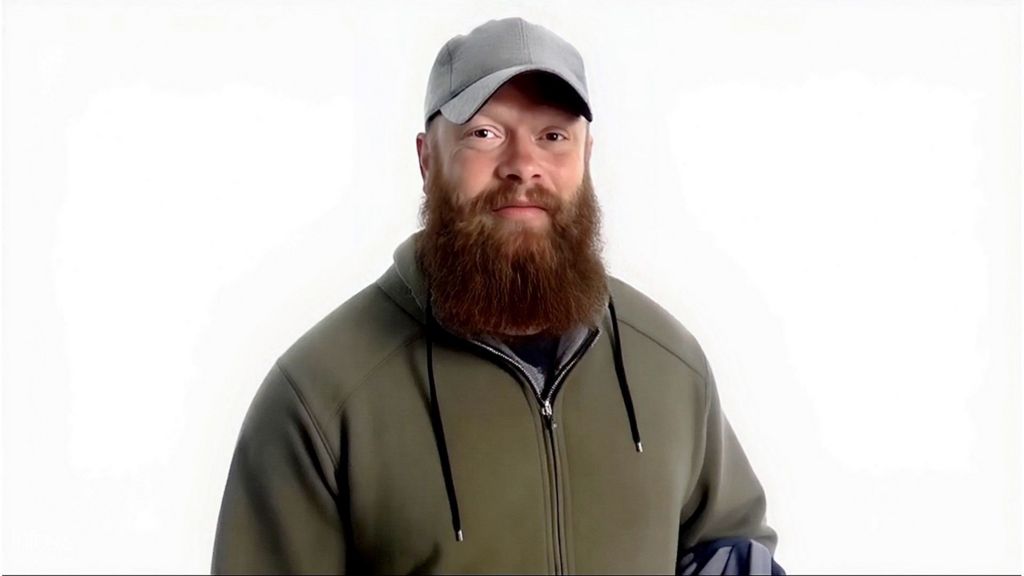
    In a move never seen before in Arizona courtrooms, Pelkey’s family built an AI-generated video of the victim to deliver a posthumous impact statement ahead of the sentencing. Drawing from existing voice recordings, personal video clips, and photographs collected over Pelkey’s life, his sister Stacey Wales worked with AI tools to reconstruct a digital version of her brother. The rendered Pelkey, wearing his signature gray baseball cap, delivered a measured statement that surprised many in the court: he expressed regret for the hostile encounter, noted that the two men might have been friends under different circumstances, and emphasized his long-held belief in forgiveness and divine grace.

    At the original sentencing, trial judge Todd Lang openly praised the use of the technology, noting that the message of forgiveness came across as authentic despite its AI origins. “I loved that AI, thank you for that. As angry as you are, as justifiably angry as the family is, I heard the forgiveness. I feel that that was genuine,” Lang said at the time.

    But Horcasitas’ legal team launched an appeal, arguing that the trial judge had violated judicial precedent by allowing the fabricated AI video to be shown to the court. Last week, the Arizona Court of Appeals sided with the defense, ruling in a Wednesday decision that the AI-generated statement crossed legal lines and warranted a new sentencing.

    In their written ruling, the appeals court justices explained that unlike traditional evidence or pre-recorded statements that capture a victim’s actual words and likeness, this AI clip was a creation built from the imagination of Pelkey’s sister, rather than an authentic documentation of the victim’s own thoughts. “Rather than document an event or recording a particular moment, the AI video presents a depiction of the victim and his thoughts created from the imaginings of the victim’s sister,” the ruling read.

    Neither side has issued public comment following the appeal decision: Kristen Reller, Horcasitas’ defense attorney who argued the appeal, declined to speak with reporters, and Jessica Gattuso, an attorney representing the Pelkey family in the case, did not respond to multiple requests for comment.

  • Green Party members to vote on declaring Zionism a form of racism at conference

    Green Party members to vote on declaring Zionism a form of racism at conference

    On the southern English coast of Brighton, the UK Green Party’s annual conference has kicked off, opening just 48 hours after the ruling Labour Party wrapped its own annual gathering. At the top of the agenda is a historic and deeply polarizing vote that could make the Greens the first major British political party to codify Zionism as a form of racism as official party policy, with the ballot scheduled to take place this coming Sunday.

    Internal party sources and organizers backing the motion say the proposal is poised to pass, pointing to broad grassroots support across the party membership. The motion’s lead author, British-Palestinian activist Lubna Speitan, emphasized the urgency of confronting the ideological framework that she argues normalizes the displacement and marginalization of Palestinian people. Speitan noted that the motion was drafted collaboratively by Palestinians and a cross-faith, cross-community coalition of allies, with the goal of sparking broader conversation across British civil society, trade unions, and other political groups after the conference vote.

    The proposal also calls for the establishment of a single democratic state across historic Palestine, with full equal rights for all ethnic and religious groups residing in the territory. Prominent Holocaust survivor and Jewish activist Stephen Kapos has publicly endorsed the measure, arguing that as a child survivor of the Nazi genocide, he views Zionism — both as an ideology and in its current practice — as an inherently harmful movement that lacks legitimacy and must be rejected.

    The text of the motion clarifies that its target is the political ideology of Zionism, which it defines as an ethnonationalist project that established and maintains a Jewish state in historic Palestine through the exclusion and domination of non-Jewish populations, not Jewish people as a religious or ethnic group. “Not all Jews are Zionists and not all Zionists are Jews,” the motion reads, adding that the material outcome of Zionist policy has been decades of ongoing dehumanization, displacement, dispossession, and disenfranchisement of Palestinian people. A supplementary booklet distributed by the motion’s backers frames the ethnonationalist core of Zionism as incompatible with global anti-racist principles, drawing comparisons to calls for ethno-exclusive states in Europe that would be universally rejected as white supremacist.

    But despite this backing, the motion has drawn fierce condemnation from senior current and former figures within the Green Party itself. Caroline Lucas, the party’s long-serving former sole Member of Parliament, warned on Friday that the proposal carries severe risks of deep division within the party. Lucas argued that there is no universally accepted definition of Zionism, and that regardless of the proposers’ intentions, the motion could reasonably be interpreted as signaling that Jewish members and supporters are not welcome in the Green Party.

    Adrian Ramsay, the party’s former co-leader, echoed these concerns, noting that adopting the motion would contradict the party’s 2024 general election manifesto position, which he ran on and that explicitly supports equal rights for both Israelis and Palestinians. Ramsay added that it would be fundamentally wrong for the party to adopt a policy that could be seen as rejecting the right of both peoples to statehood.

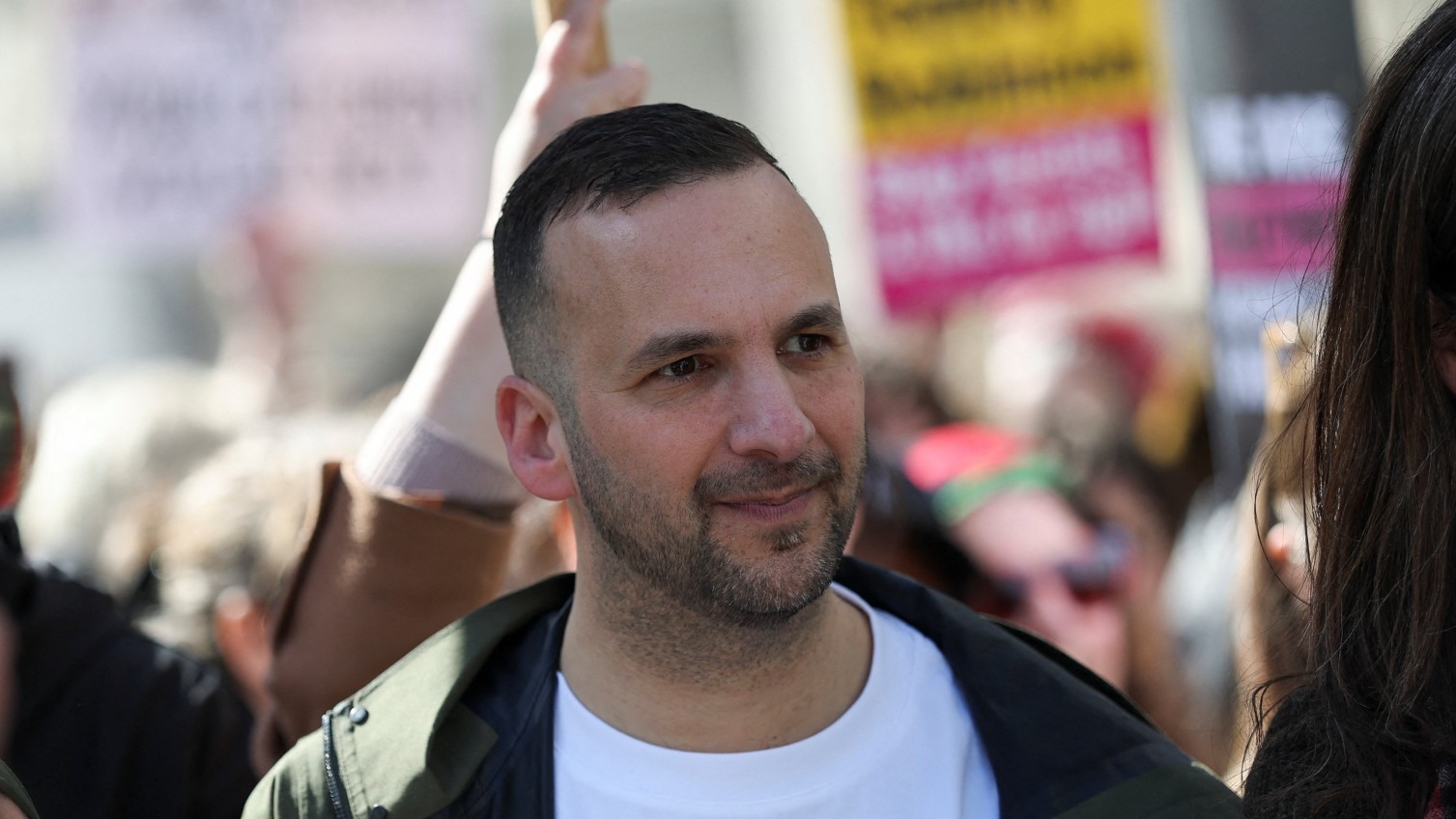
    Even current Green Party leader Zack Polanski, who is Jewish, has called for substantial amendments to the motion ahead of Sunday’s vote, a position he laid out weeks before the conference. Polanski has pushed for language that explicitly safeguards Jewish members of the party, arguing that opponents of Israeli occupation, apartheid, and what he describes as genocide in Gaza should not face discrimination within the party even if they identify as Zionist.

    Polanski also pushed back on the motion’s call for a single Palestinian state, arguing that it is paternalistic for a British political party to unilaterally dictate the final outcome of negotiations between Israelis and Palestinians. “My job as leader of the Green Party, the Green Party’s job, is to maintain justice and equality both for Palestinians and Israelis,” he stated. Last week, he clarified his nuanced position: if Zionism is defined by the displacement and harm inflicted on Palestinians, as it has been practiced, then it is unquestionably racist, but the lack of a clear, shared definition creates avoidable division within the party.

    As delegates prepare to vote on both amendments and the full motion on Sunday, the Green Party’s leader used his opening address to the conference on Friday to pivot to domestic priorities that the party plans to center in the upcoming Holborn and St Pancras by-election, scheduled for 8 October, where Polanski is the party’s candidate. In his speech, Polanski focused on the ongoing UK cost of living crisis and the country’s deepening housing affordability crisis, urging Prime Minister Andy Burnham’s Labour government to implement a three-year emergency freeze on private rents — a policy Labour has already ruled out. Polanski argued that voting Green pushes the governing Labour Party leftward on key issues, from domestic policy to the Israeli-Palestinian conflict, telling delegates: “Vote Green and watch Labour move.”