博客

  • Iran adapts as Gulf economies and Asia bear cost of Strait of Hormuz blockade

    Iran adapts as Gulf economies and Asia bear cost of Strait of Hormuz blockade

    In late April 2026, former U.S. President Donald Trump made a bold prediction: Iran’s critical oil fields and energy infrastructure would “explode” within days, a collapse he credited entirely to Washington’s newly imposed naval blockade of Iranian ports. Framing the blockade as a flawless, genius strategy, Trump told reporters that Tehran would soon be forced to surrender, saying “They have to cry uncle; that’s all they have to do. Just say, ‘We give up.’”

    Nearly a month on, however, Trump’s forecast has proven drastically overstated, with Iran’s long history of navigating energy crises allowing it to adapt rather than collapse. Decades of institutional experience coping with output cuts stretch back to the 1980s Iran-Iraq War, when Tehran slashed production from more than 5 million barrels per day to under 1.5 million to withstand pressure. More recently, during the first Trump administration’s 2018–2020 “maximum pressure” sanctions campaign, Iran cut output by another 2 million barrels per day without systemic energy collapse. Drawing on that hard-won expertise, Iran has already adjusted to the 2026 blockade, cutting current output by an estimated 400,000 barrels per day without widespread infrastructure failure. “We have enough expertise and experience,” said Hamid Hosseini, spokesman for the Iranian Oil, Gas and Petrochemical Products Exporters’ Association. “We’re not worried.”

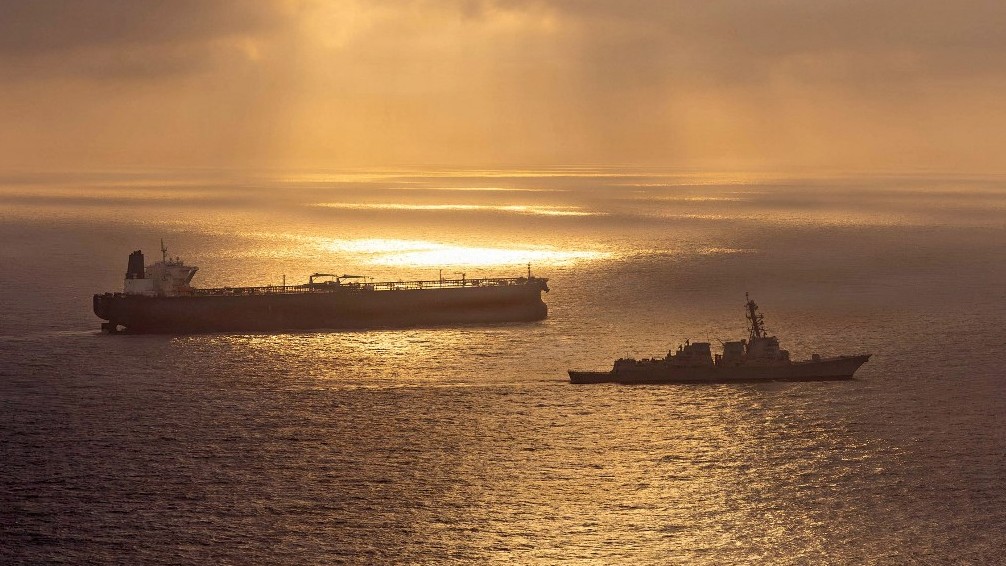
    Instead of collapsing Iran, the crisis has shifted pressure outward, hitting U.S. closest regional Gulf allies after Iran retaliated by closing a key segment of the Strait of Hormuz — the waterway through which roughly one-fifth of global oil production transits. The disruption has already choked off exports for vulnerable Gulf producers: shipping monitor TankerTrackers.com recorded zero crude oil exports from Kuwait in April 2026, the first time that has happened since the 1991 Gulf War. Unlike wealthier neighbors Saudi Arabia and the United Arab Emirates (UAE), Kuwait has no alternative routes to reroute exports, forcing it to divert all production to domestic storage and refining.

    Unlike Iran, which has honed strategies for surviving external pressure for decades, Gulf economies have no comparable experience navigating prolonged blockades and export disruptions. What is more, their growth models rely heavily on stable conditions to retain large migrant workforces, which are likely to depart if economic conditions worsen sharply. “The dual blockade is damaging Iran, but it is also attacking the foundations of the Gulf economic model,” explained Andreas Krieg, associate professor of security studies at King’s College London, in an interview with Middle East Eye. “It means Gulf producers cannot simply watch Iran suffer from a safe distance. Their own exports, logistics, insurance costs, food imports, aviation routes, LNG deliveries and investor confidence are all hit.” While Gulf states accumulated large financial reserves during decades of high oil prices, the current crisis has eroded long-held confidence in the region as a stable, low-friction hub for global energy, trade, capital and aviation, Krieg added.

    The strain has already exposed deep vulnerabilities in the UAE’s geopolitical gambit: Abu Dhabi’s bet on an alliance with Israel to project regional power has backfired spectacularly, according to analysis from Moody’s Analytics. Before the conflict erupted in March, the UAE had claimed its non-oil sectors, particularly tourism, were robust enough to absorb regional shocks. That assumption has collapsed: Moody’s now projects hotel occupancy in the second half of 2026 will plummet to just 10 percent, down from 80 percent pre-conflict, amounting to an effective shutdown of large swathes of the country’s hospitality sector. Thousands of tourism workers have already been laid off, furloughed, or forced to take unpaid leave, with many businesses delaying salary payments amid collapsing revenue.

    The ripple effects of the crisis extend far beyond the Middle East. South Asian economies that rely heavily on remittances and capital inflows from the Gulf have already been hit hard. When cash-strapped Pakistan attempted to mediate between Washington and Tehran to de-escalate the conflict, the UAE — angered by Islamabad’s mediation efforts and facing its own cash shortages — demanded immediate repayment of a $3.5 billion loan. The UAE has also entered talks with the Trump administration to secure a large international financial bailout, similar to the emergency rescue package extended to Argentina in 2025. Further afield, Egypt, Lebanon and Syria, all heavily dependent on Gulf investment, remittances, aid and political stability, are already bracing for deep cuts to external funding as Gulf states pare back spending to conserve reserves. “When Gulf states face revenue losses, they tend to become more selective, more conditional and more strategic,” Krieg noted.

    In Southeast Asia, where major economies are overwhelmingly dependent on Middle Eastern energy imports, the crisis has triggered immediate austerity measures and pushed food insecurity to alarming levels. The Philippines imports 95 to 96 percent of its oil from the Gulf, while Vietnam imports 85 to 87 percent, and Thailand relies on Gulf supplies for roughly 60 percent of its crude needs. The disruption to gas supplies has hit global fertilizer production, driving prices up 80 percent in just over a month; Svein Tore Holsether, CEO of global fertilizer giant Yara International, warned that reduced fertilizer supplies could cut global crop yields by as much as 50 percent. The UN Food and Agriculture Organization reported that global food prices hit their highest level since 2023 in April, with the Middle East conflict cited as a primary driver. To conserve fuel, the Philippines and Thailand have already introduced four-day workweeks and expanded work-from-home policies, while retail fuel prices have doubled across much of the region. In many countries, government fuel subsidies are the only thing preventing public unrest, but the cost of those subsidies has exploded, making the policy unsustainable long-term, according to Kuala Lumpur-based geopolitical analyst Arnaud Bertrand.

    While the immediate crisis has forced governments to focus on short-term survival, business leaders in the region note the conflict is likely to accelerate a permanent shift toward renewable energy. “The war is likely to accelerate the move towards solar and wind and geothermal and hydro power across the region,” said Chris Humphrey of the EU-ASEAN Business Council in a CNBC interview. “All the governments in Southeast Asia are absolutely committed to that as a strategy going forward.”

    Beyond the immediate economic damage, analysts warn the crisis has inflicted lasting damage to the credibility of U.S. power in the Indo-Pacific and beyond. Even prominent U.S. foreign policy hawks have warned that Washington is facing a major strategic defeat. Robert Kagan, one of the most influential neoconservative voices and a long-time pro-Israel hardliner, wrote in an essay for *The Atlantic* earlier this month that Washington is heading toward “total defeat” in its campaign against Iran, and that the damage “can neither be repaired nor ignored. There will be no return to the status quo ante, no ultimate American triumph that will undo or overcome the harm done.” Former senior U.S. diplomat Tom Pickering, who served as U.S. ambassador to Israel and under secretary of state for political affairs, wrote in *Foreign Affairs* that Washington’s insistence that it can force Iran into total surrender is contradicted by months of on-the-ground evidence, and that the U.S. may ultimately have to accept a compromise arrangement that aligns with core Iranian demands for a transit surcharge on ships passing through the strait.

    The failed U.S. “Project Freedom” initiative, launched in early May to escort stranded ships through the Strait of Hormuz and break Iran’s blockade, underscored the gap between Trump’s rhetoric and results. The operation, which Trump claimed was launched at the request of countries with trapped vessels, ultimately succeeded in escorting just two U.S.-flagged ships through the waterway. “This war has shattered the idea that U.S. power, whatever its flaws, at least worked towards open sea lanes and at least helped protect you if you were an ‘ally’,” Bertrand noted. Even long-time U.S. partners in the region are shifting their approach: Philippines President Ferdinand Marcos Jr., once one of Washington’s closest Indo-Pacific allies, has recently made overtures to Beijing as U.S. policy fails to resolve the energy crisis.

    This report was originally published by Middle East Eye, an independent outlet covering the Middle East, North Africa and global affairs.

  • Moment Cybertruck driver intentionally drives into Texas lake

    Moment Cybertruck driver intentionally drives into Texas lake

    A bizarre incident unfolded at a Texas lake over the weekend when a Tesla Cybertruck driver deliberately steered their electric pickup into the water, prompting a swift emergency response and leading to the driver’s arrest. Local law enforcement confirmed that the driver was attempting to test the vehicle’s advertised “wade mode”—a feature designed to allow the truck to traverse shallow flooded or waterlogged terrain—when they made the decision to enter the open lake. First responder teams, including local rescue divers and water recovery crews, were dispatched to the scene near the shoreline, where they successfully pulled the partially submerged electric vehicle from the water hours after the incident. No injuries were reported in the event, but the reckless act has raised new questions about how owners interpret and test the off-road capabilities of modern electric pickup trucks. Police have not yet released details on potential charges the driver will face, but they confirmed the suspect was taken into custody immediately following the recovery operation. Local park officials also noted that the incident caused minor disruption to public recreation access to the shoreline for several hours while recovery work was underway.

  • Austrian ex-intelligence officer found guilty of Russia spying charges

    Austrian ex-intelligence officer found guilty of Russia spying charges

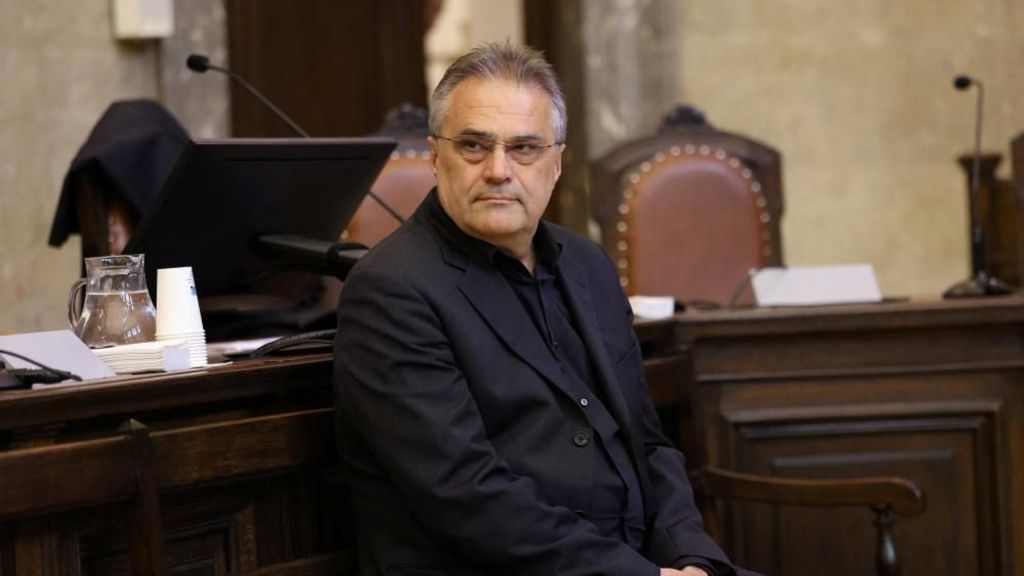
    One of the most high-profile espionage trials in recent European history has concluded in Vienna, where a 63-year-old former senior Austrian intelligence official, Egisto Ott, has been found guilty on multiple charges including spying for Russia. The verdict delivered by a local jury has reignited widespread concern that Austria continues to act as a major hub for Russian intelligence activity in Western Europe.

    Over the course of the proceedings, the court detailed nearly five years of illegal activity carried out by Ott between 2015 and 2020. Prosecutors laid out evidence that Ott abused his official position to pull classified information and large volumes of personal data from restricted Austrian police databases, all to support Russian intelligence operations at the expense of Austria’s national security. He passed this sensitive material to both Russian intelligence agents and Jan Marsalek, a fugitive former top executive at the collapsed German payments giant Wirecard, in exchange for undisclosed financial payments, the court confirmed.

    Among the most damaging acts outlined in the trial was Ott’s procurement of a specialized laptop holding encrypted secure communication hardware used by European Union member states. Prosecutors confirmed the device was ultimately handed over directly to Russian intelligence services. In a separate incident, Ott also obtained the work phones of senior Austrian interior ministry officials after the devices were accidentally lost in the Danube River during an official ministry boating trip. He copied all data from the devices and passed the information to Marsalek and Russian intelligence handlers based in Moscow.

    In addition to the espionage conviction, the jury found Ott guilty of misuse of public office, bribery, aggravated fraud, and breach of trust. He was handed a total prison sentence of four years and one month. Ott has consistently denied all charges against him, claiming he was not working for Russia but instead conducting a covert operation in partnership with a Western intelligence agency. His legal team has already filed an appeal against the verdict, extending the legal process for the high-profile case.

    The case has thrown renewed attention on Jan Marsalek, an Austrian citizen who is one of Europe’s most wanted fugitives. Marsalek fled Germany via Austria in 2020 amid the collapse of Wirecard, which collapsed after a massive multi-year accounting fraud that saw the company inflate its balance sheets and sales figures by billions of euros. He is currently believed to be hiding out in Moscow, and is the subject of an Interpol Red Notice, meaning he can be arrested immediately if he steps into the territory of any of Interpol’s 196 member countries. Beyond his Wirecard fraud charges, Marsalek is also suspected of being a covert Russian intelligence asset, and is alleged to have overseen a network of Bulgarian spies convicted of spying for Russia in London in 2025.

    When Ott was first taken into custody in 2024, then-Austrian Chancellor Karl Nehammer labeled the case a direct “threat to democracy and our country’s national security.” Today’s conviction has done little to ease those long-held concerns, with the scandal once again putting Austria under international scrutiny over its reputation as a hub for Russian espionage activity in Europe.

  • Hezbollah drones limiting 80 percent of Israeli troop assaults in Lebanon

    Hezbollah drones limiting 80 percent of Israeli troop assaults in Lebanon

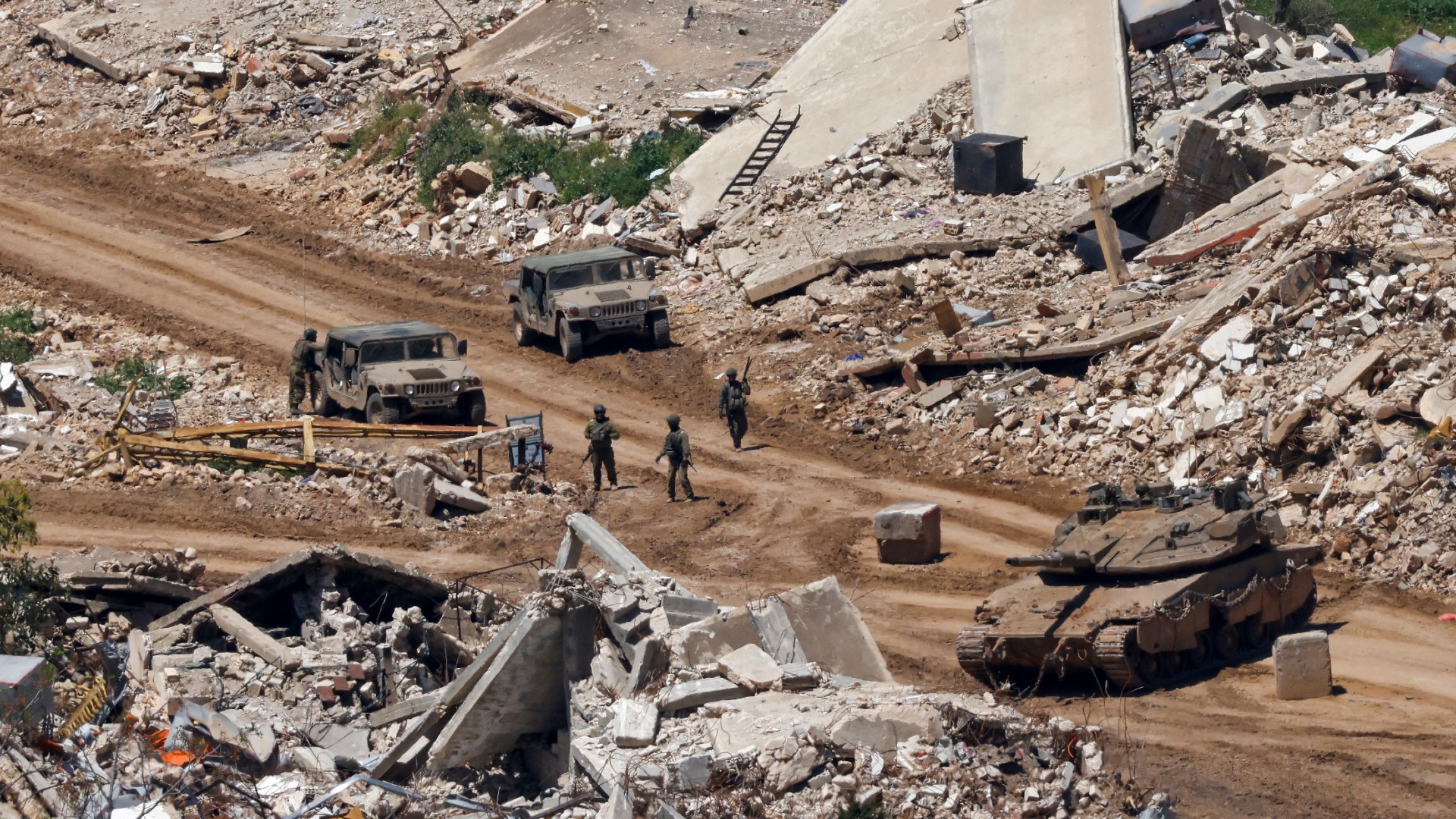
    Israel’s public broadcaster Kan has released a bombshell assessment from military insiders confirming that Hezbollah’s expanding drone arsenal has crippled up to 80% of Israeli offensive operations targeting southern Lebanon, reshaping the dynamics of the ongoing cross-border conflict.

    According to Kan’s Monday reporting, Israeli military estimates make clear that Hezbollah’s unmanned aerial vehicles have dramatically constrained Israeli troop movements across southern Lebanon and have directly contributed to mounting Israeli battlefield casualties. A critical supply gap has worsened the problem: Israel’s anti-drone defense systems are only allocated to a small fraction of frontline troops, forcing commanders to scrap most planned daytime operations entirely to avoid devastating drone strikes.

    The growing threat posed by these drones has become a top priority crisis for Israel’s national government, prompting officials to assemble a dedicated cross-sector task force bringing together military commanders, defense industry specialists, and civilian technology experts to accelerate development of effective counter-drone systems.
    Israeli military intelligence sources told Kan that Hezbollah has also overhauled its operational model in the wake of Israeli assassinations of multiple high-ranking commanders from its elite Radwan Force. Moving away from a rigid centralized command-and-control structure, the group has shifted to decentralized, cell-based guerrilla warfare. Small autonomous Hezbollah units now move between southern Lebanese villages, carrying out opportunistic targeted attacks on Israeli forces with far greater operational flexibility than before.

    The advance of Hezbollah’s drone program is not a recent development: last month, Israeli outlet Ynet News first reported that the group had carried out major upgrades to its drone fleet, most notably the widespread adoption of fiber-optic tethered first-person view (FPV) drones for offensive operations against Israeli troops. Unlike larger, more expensive long-range missiles, these FPV drones are low-cost, easily assembled, and modified locally in southern Lebanese workshops. Local technicians add custom components including reinforced landing skids, high-resolution cameras, and lethal explosive payloads to convert the commercially derived platforms into effective weapons.
    The key fiber-optic upgrade has proven particularly devastating to Israeli defense efforts. Tethering the drone directly to its ground control station via a fiber-optic line eliminates the need for vulnerable radio signals to transmit control data and video feed. This not only makes the drones far harder for Israeli electronic warfare systems to detect, but also blocks Israeli jamming attempts that would otherwise disable the aircraft.

    In response to the escalating threat, Israel’s cabinet last week approved $700 million in emergency emergency defense funding earmarked exclusively for developing and deploying countermeasures against Hezbollah’s drones. The approved plan includes two core components: the installation of new fixed radar systems along Israel’s entire northern border to detect incoming small drones, and the procurement of five million specialized shotgun rounds engineered to shoot down low-altitude, short-range unmanned aircraft.

    The ongoing cross-border hostilities have already unleashed a catastrophic humanitarian crisis across Lebanon. Since Israeli large-scale operations began on March 2, more than 3,000 Lebanese people have been killed in Israeli strikes, and another 9,301 have been wounded. The violence has displaced at least 1.6 million people – roughly one-fifth of Lebanon’s total population. Though a ceasefire was first announced on April 16 and extended last week, Israeli forces have continued to conduct near-daily airstrikes across Lebanese territory.

  • Exclusive: Trump postponed US attack in Iran after ‘Hajj warning’

    Exclusive: Trump postponed US attack in Iran after ‘Hajj warning’

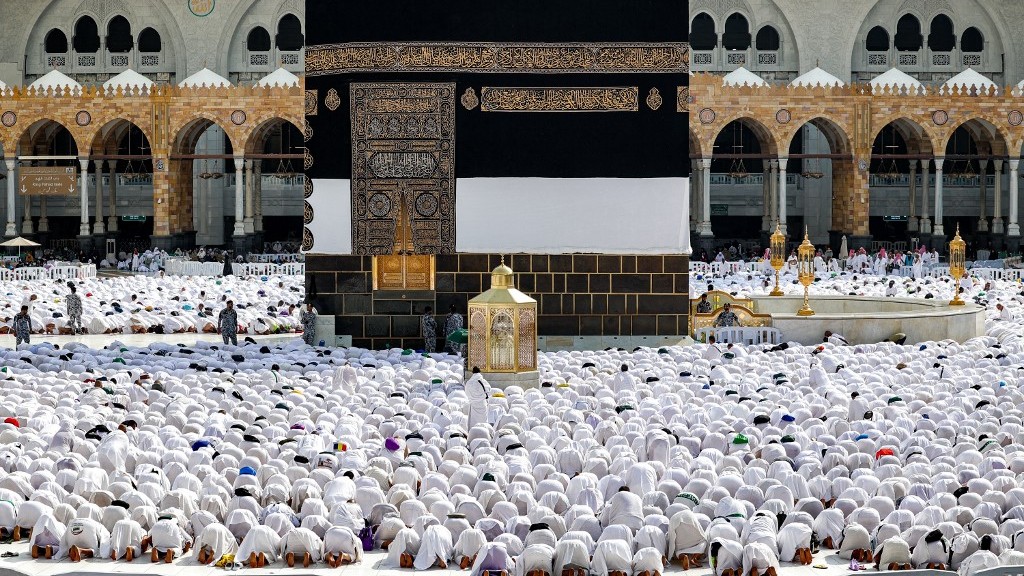
    Exclusive reporting from Middle East Eye has confirmed that US President Donald Trump has put a planned military offensive against Iran on hold this week, after urgent warnings from key Gulf Arab allies and his own senior administration officials that an attack during the annual Islamic Hajj pilgrimage would trigger widespread regional instability. Two high-ranking Gulf officials, speaking on condition of anonymity due to restrictions on discussing closed-door diplomatic communications, shared details of the pressure campaign that swayed the US president. Their accounts reveal that officials emphasized a strike during the sacred religious period would spark a major political crisis across Gulf Cooperation Council states, leaving hundreds of thousands of pilgrims from across the globe stranded in the middle of their journey. They also warned that an attack timed to coincide with the Hajj, which leads directly into the major Islamic festival of Eid al-Adha, would cause lasting and severe harm to the United States’ already strained reputation across the entire Muslim world. A senior US official with direct knowledge of internal debates within the Trump administration has independently confirmed these discussions took place, adding that the president’s own national security team warned that restarting military hostilities against Iran at this juncture would carry significant long-term reputational damage for Trump himself. The United States previously launched military strikes against Iran during the holy Islamic month of Ramadan, but a strike during the Hajj carries unique logistical and political risks for Saudi Arabia, the host nation that welcomes roughly one million international pilgrims to the annual religious gathering each year. This year’s Hajj is scheduled to open on 24 May and run for six days, with hundreds of thousands of pilgrims already on the ground in Saudi Arabia in preparation for the rituals. Beyond Saudi Arabia, disruptive risks from a US attack would extend to major Gulf air travel hubs in Qatar and the United Arab Emirates, as well as the South Asian and East Asian nations that send large contingents of pilgrims to the event. All three officials who spoke to Middle East Eye agree that the pause in military planning is temporary: they widely expect offensive operations to restart in the coming weeks once the Hajj period concludes. The US has a documented recent history of using deceptive signaling and tactical misdirection to lull Iranian leadership into a false sense of security ahead of strikes. The February 2026 attack, which launched the current conflict, came after Washington claimed it was making meaningful progress on diplomatic negotiations with Tehran in Geneva. Earlier this week, Trump publicly acknowledged the delay, confirming on his Truth Social platform that Gulf leaders had directly requested he hold off the planned strike. “I have been asked by the Emir of Qatar, Tamim bin Hamad Al Thani, the Crown Prince of Saudi Arabia, Mohammed bin Salman Al Saud, and the President of the United Arab Emirates, Mohamed bin Zayed Al Nahyan, to hold off on our planned Military attack of the Islamic Republic of Iran,” Trump wrote. He added that the allied leaders “believe a Deal will be made” in lieu of military action. The ongoing conflict between the US, Israel and Iran began on 28 February 2026, when joint US-Israeli strikes launched open hostilities. Iran responded immediately with missile attacks targeting US military bases and allied interests across Gulf states. Tehran has issued clear public warnings that any new strikes against its civilian and energy infrastructure by Washington and Tel Aviv will be met with retaliatory attacks on Gulf state infrastructure, and will draw the conflict beyond the borders of the Middle East. Saudi Arabia, Qatar and Oman have been among the most vocal regional actors pushing to prevent further escalation, as the ongoing Iranian blockade of the Strait of Hormuz — one of the world’s most critical energy chokepoints — has already severely cut into oil and liquefied natural gas exports from these nations. Independent assessments of Washington’s initial February offensive widely judge it to have failed in its core strategic goal: despite the killing of long-time Iranian Supreme Leader Ayatollah Ali Khamenei, the attack did not succeed in toppling the Iranian government. Khamenei’s son and successor, Mojtaba Khamenei, has led Iran through weeks of sustained bombardment, with the regime maintaining control of the country and retaining its large arsenal of ballistic missiles. The Israeli government, which views Iran as its most dangerous regional rival, has continued to lobby Trump aggressively to restart offensive operations, even as internal US intelligence and military assessments flag severe risks to American service members and the global economy. Citing reporting from the *New York Times*, US Pentagon officials have highlighted two major obstacles that threaten the success of any new US offensive: growing shortages of critical military munitions, and major improvements in the sophistication of Iranian air defense tactics that have made US airstrikes far less effective than initial planning anticipated.

  • Final case at UN tribunals for Yugoslavia and Rwanda atrocities comes to an end

    Final case at UN tribunals for Yugoslavia and Rwanda atrocities comes to an end

    THE HAGUE, Netherlands – After nearly 30 years of pursuing perpetrators of mass atrocities, two United Nations-backed ad hoc criminal tribunals formed to prosecute crimes committed during the breakup of Yugoslavia and the 1994 Rwandan genocide concluded their final formal proceedings Wednesday, closing a landmark chapter in modern international justice while highlighting growing strains on the global push for accountability for mass violence.

    The brief 12-minute closing hearing centered on the case of Félicien Kabuga, an alleged key financier of the Rwandan genocide who died in U.N. custody this past Saturday, six years to the day after he was captured outside Paris following 26 years on the run. Presiding Judge Iain Bonomy framed the session as a “truly historic milestone” that formally wraps up the tribunals’ open cases.

    Kabuga, believed to be in his 90s, was deemed unfit to stand trial in 2023 after a medical evaluation confirmed he suffered from severe advanced dementia. After the ruling, no country agreed to accept Kabuga for resettlement, leaving him stuck in the U.N.’s The Hague detention facility until his death. His prolonged legal limbo as a defendant no one would claim has become a symbol of the growing crisis facing modern international justice, according to Lucy Gaynor, a University of Amsterdam historian specializing in global accountability frameworks.

    “Countries put limits on what they are willing to do,” Gaynor noted, pointing to growing political pushback against the global justice project that the original ad hoc tribunals helped launch.

    The two U.N. tribunals – the International Criminal Tribunal for Rwanda and the International Criminal Tribunal for the former Yugoslavia – were established by the U.N. Security Council in the early 1990s, responding to unprecedented waves of mass ethnic violence that shocked the international community. Between the two bodies, they convicted 155 people for atrocity crimes including genocide, crimes against humanity, and war crimes, setting new legal precedents for holding senior leaders accountable for mass atrocities and directly paving the way for the creation of the permanent International Criminal Court (ICC) in 2002.

    The ICC, located just two miles from the current office of the tribunals’ residual body, was created to eliminate the need for ad hoc, temporary tribunals for each new conflict by establishing a permanent global court with jurisdiction over humanity’s worst crimes. But the court has faced growing political headwinds in recent years. Under the Donald Trump administration, the U.S. imposed sweeping sanctions on ICC officials after the court opened investigations into alleged war crimes by U.S. personnel in Afghanistan and Israeli officials in Palestinian territories – two countries that are not ICC member states.

    Political resistance has also translated into widespread noncompliance with ICC arrest warrants. Multiple nations have refused to execute warrants for Russian President Vladimir Putin, issued over allegations of forced deportations of Ukrainian children, and for Israeli Prime Minister Benjamin Netanyahu, issued over alleged war crimes in Gaza. Just last year, Italy refused to detain a wanted Libyan warlord and instead flew him back to Tripoli on a state aircraft.

    For Rwandan genocide survivors, Kabuga’s death without a trial underscores the unmet promises of the global accountability process. Agnes Mukamurenzi, a genocide survivor who knew Kabuga personally, told the Associated Press that she believes he deserved to spend a prolonged life in prison to suffer for his role in the killing of more than 800,000 ethnic Tutsis and moderate Hutus. “I wish he lived longer in prison to feel the pain. During the genocide, he played a key role that saw many innocent lives taken,” she said from Kigali. Dr. Philibert Gakwenzire, head of IBUKA, the umbrella organization representing Rwandan genocide survivors, struck a more measured tone, noting that “history is the true judge” even though Kabuga never faced a guilty verdict.

    Wednesday’s closing session was held in a repurposed conference room, one floor above the main courtroom that hosted some of the tribunals’ most high-profile cases – including the conviction of Ratko Mladić, the Bosnian Serb military commander nicknamed the “Butcher of Bosnia” for his role in the Srebrenica genocide, and the 2017 incident where Croat commander Slobodan Praljak drank lethal poison in the courtroom immediately after his appeal conviction was upheld.

    The residual mechanism that inherited remaining cases and responsibilities from both tribunals after the original bodies closed in 2015 (ICTR) and 2017 (ICTY) has already downsized to a skeleton staff and vacated the main courtroom last year. The body now faces an uncertain future: its official mandate expires in June, and no transition plan has been approved for its core remaining functions, including overseeing detention conditions for 41 convicted war criminals still serving their sentences around the world. There is also no clear plan for preserving the mechanism’s vast archives, which hold millions of pages of documents and thousands of pieces of evidence – including Mladić’s handwritten diaries and copies of the anti-Tutsi incitement newspaper *Kangura*, which Kabuga was accused of funding. The U.S. withdrew from the mechanism earlier this year during Trump’s second term, cutting off millions of dollars in annual funding that the body relied on to carry out its work.

  • Israeli minister says Turkey should be treated as ‘enemy state’

    Israeli minister says Turkey should be treated as ‘enemy state’

    Tensions between Israel and Turkey have surged to new heights in recent weeks, following Israel’s interception of a Gaza-bound aid flotilla that departed from Turkish waters, and a provocative statement from a top Israeli cabinet member calling for Ankara to be formally recognized as an enemy state.

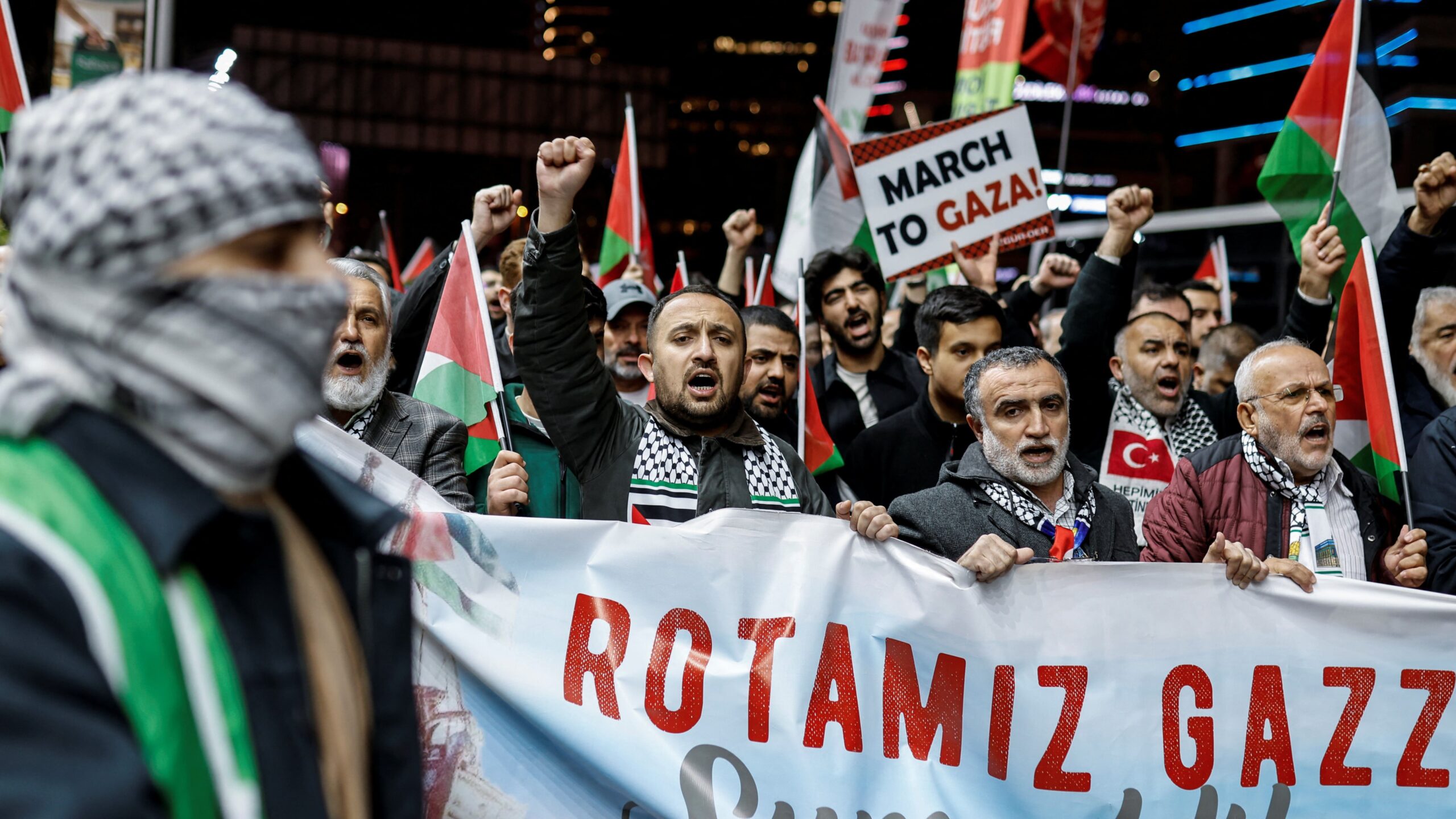
    Israeli Culture and Sports Minister Miki Zohar made the remarks in an interview with local outlet Srugim on Monday, tying his comments directly to the Global Sumud Flotilla, a humanitarian mission that set sail from the Turkish port of Marmaris earlier this week to deliver aid to blockaded Gaza. Israeli military forces launched raids to intercept the flotilla shortly after it departed.

    “We must begin to treat Turkey as an enemy state,” Zohar stated in the interview. He doubled down on the aggressive rhetoric, warning that if Turkey elects to pursue military conflict with Israel, it will face catastrophic consequences. “If Turkey chooses the path of war with us, it will undoubtedly pay a very heavy price. Israel knows how to defend itself and how to harm those who harm it,” the minister added.

    Zohar also repeated an unsubstantiated claim that Turkish President Recep Tayyip Erdogan has publicly stated his intention to build a military force to conquer Israel. While Erdogan has emerged as one of the most vocal international critics of Israel’s military campaign in Gaza, he has never made any such public declaration of intent to wage war against the country. Drawing a comparison to Iran, long framed as Israel’s top regional adversary, Zohar argued that Turkey would face an even worse outcome than Iran if it pursues confrontation. “There were Iranians who thought the same thing, and look where they are now. If the Turks think the same thing, they will be in a much worse situation,” he said.

    Zohar’s comments came immediately after Israeli forces intercepted multiple flotilla vessels in international waters following their departure from Turkey. Initial Israeli media reports claimed the flotilla was split into European and Turkish-flagged groups, and that the Israeli military intended to separate vessels by nationality to target Turkish craft. However, mission organizers quickly rejected these claims as deliberate misinformation, noting that none of the vessels in the Global Sumud Flotilla fly the Turkish flag.

    “The Israeli military is fabricating an outright lie to isolate specific vessels and invoke past incidents – specifically the 2010 lethal assault on the Mavi Marmara, with which GSF has no affiliation,” organizers said in a statement.

    The interception of the aid mission has drawn widespread international condemnation, with Turkey’s foreign ministry issuing a sharp rebuke of Israeli actions. “Israel’s attacks and intimidation policies will in no way prevent the international community’s pursuit of justice and solidarity with the Palestinian people,” the ministry said in an official release.

    This latest exchange is part of a steady escalation of tensions between the two regional powers that has been building for months. Israeli politicians from both the ruling coalition and opposition have increasingly framed Turkey as a growing threat, matching the rhetoric long directed at Iran. Former Israeli Prime Minister Naftali Bennett, now a leading opposition lawmaker, labeled Turkey “the next Iran” during a Washington conference in February.

    Regional analysts have echoed this framing, noting that growing friction over Israel’s military campaign in Gaza and competing regional influence in Syria has positioned Turkey to replace Iran as Israel’s primary regional rival. Writing in Israeli newspaper Maariv last month, columnist Boaz Golani argued that Iran will eventually be forced out of its role as Israel’s “great enemy”, and that either Turkey or Pakistan is poised to take its place. The escalating rhetoric from senior Israeli officials has reinforced this shifting regional dynamic, raising fears of further confrontation between the two countries in the coming months.

  • Jim Furyk and Keegan Bradley added as assistant captains for Presidents Cup

    Jim Furyk and Keegan Bradley added as assistant captains for Presidents Cup

    MEDINAH, Illinois — U.S. Presidents Cup skipper Brandt Snedeker has filled two of his assistant captain roles, announcing the appointments of Jim Furyk and Keegan Bradley this Wednesday. The hirings bring veteran leadership and recent top-level captaincy experience to Snedeker’s team ahead of the September tournament at Medinah Country Club.

    Furyk, who was named U.S. Ryder Cup captain just last month, holds the distinction of being the most recent winning Presidents Cup team skipper, having led the U.S. to victory at the 2024 edition hosted at Royal Montreal. Bradley, who competed in the 2024 Presidents Cup as a player, served as U.S. Ryder Cup captain at Bethpage Black in 2025, where his team fell to the European side.

    In his statement announcing the appointments, Snedeker highlighted the pair’s deep history leading American golf squads and their widespread credibility among tour players of all age groups. “Both guys have incredible experience as leaders representing the United States and they’ve each earned the respect of players across generations,” Snedeker said.

    The 45-year-old captain, who just claimed victory at the Myrtle Beach Classic two weeks prior, still has two additional assistant captain positions left to fill before the tournament kicks off. The 12-team match play event is scheduled to run from September 24 to 27 at Medinah’s championship course.

    First launched in 1994, the Presidents Cup pits the U.S. team against an International side composed of top players from across the globe, excluding Europe. In the tournament’s 30-plus year history, the U.S. has only suffered one defeat — a 1998 loss that remains the sole blemish on the side’s dominant record in the competition.

  • New video captures engine ripping off cargo plane in deadly Kentucky crash

    New video captures engine ripping off cargo plane in deadly Kentucky crash

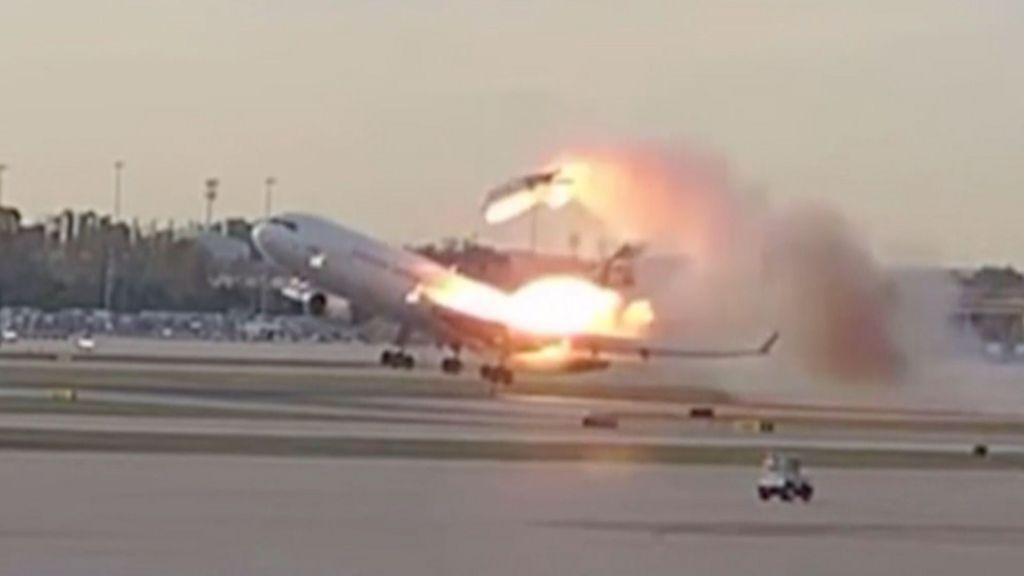
    Investigators probing one of the deadliest aviation incidents in recent Kentucky history have made public dramatic new video that captures a critical moment in the disaster: the cargo plane’s engine tearing away from the airframe as the aircraft attempted to climb away from the runway. The crash, which occurred earlier this year, claimed the lives of all 14 people on board, leaving families grieving and aviation safety experts searching for clear answers into what caused the tragedy.

    The visual evidence, released as part of the official ongoing inquiry, offers investigators a key new clue to piece together the sequence of events that unfolded on the takeoff roll. The footage clearly documents the structural failure that led to the engine detaching from the wing before the plane went down. Since the crash first happened, investigation teams have been working diligently to recover debris from the crash site, interview witnesses, and analyze all available flight data to determine root causes, from mechanical malfunction to maintenance oversights or other contributing factors.

    Aviation safety officials have emphasized that the investigation remains active, and no final conclusions on the cause of the crash have been reached yet. The release of the video marks a key step in keeping the public informed about the progress of the inquiry, as authorities work to uncover the full truth of what led to the fatal accident, and to identify any safety gaps that could be addressed to prevent similar tragedies in the future. For the families of the 14 victims, the new footage comes as a painful reminder of the disaster, even as it brings investigators one step closer to finding answers.

  • The deadly plane attack at the centre of Castro’s indictment

    The deadly plane attack at the centre of Castro’s indictment

    More than three decades after a fatal incident that reshaped decades of Cuba-United States relations, US authorities have unveiled criminal charges against former Cuban leader Raúl Castro, centering on the 1996 downing of two civilian aircraft off Florida’s coast that killed all four people on board. The attack, carried out by Cuban military fighter jets, triggered one of the most severe crises between the two nations, a rift whose impacts continue to ripple through bilateral ties to the present day.

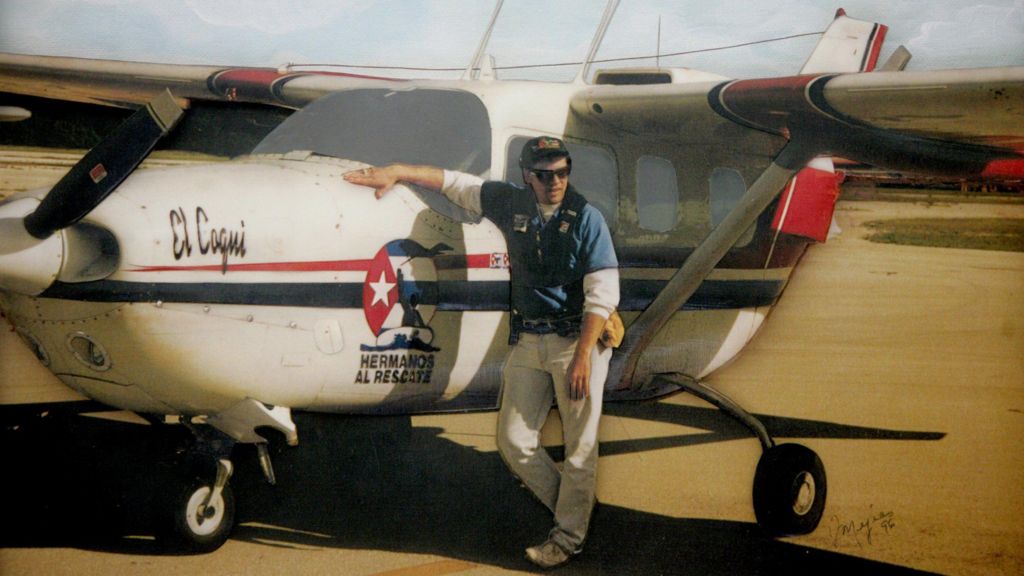
    The two small Cessna planes targeted in the strike belonged to Brothers to the Rescue, an organization founded by Cuban exiles based in Miami, Florida. The February 24, 1996, incident left all four passengers — three US citizens and one Cuban national — dead instantly when the jets opened fire over the waterway separating Cuba and the US. At the time of the attack, Raúl Castro served as Cuba’s Minister of the Armed Forces, placing him at the center of international condemnation that followed the strike. The incident immediately derailed tentative diplomatic outreach between Havana and the Bill Clinton administration, and prompted the US to ramp up economic sanctions against the government led by Raúl’s older brother, Fidel Castro. Though Raúl Castro formally stepped down from the Cuban presidency and Communist Party leadership in 2021, the 94-year-old still retains significant behind-the-scenes influence on the island, making the timing of the indictment particularly sensitive amid Cuba’s current ongoing crises.

    To understand the roots of the 1996 incident, context of Cuba’s 1990s economic collapse is critical. After the Soviet Union, Cuba’s primary economic and political backer, dissolved in 1991, the island entered a devastating period of crisis marked by widespread food shortages, rolling blackouts, and acute fuel scarcity. This hardship drove thousands of Cubans to attempt risky sea crossings to Florida to reunite with family members already settled in the US. “Suddenly, everyone started looking for anything that floated to try to reach Florida,” Cuban historian and former diplomat Juan Antonio Blanco told BBC Mundo of the period — a crisis many observers draw direct parallels to between Cuba’s current economic and energy turmoil.

    It was in this context that Brothers to the Rescue was formed in Miami, led by now 85-year-old Cuban exile José Basulto. The group’s original mission was to conduct flights over the Florida Straits to locate makeshift vessels carrying Cuban migrants, share their coordinates with the US Coast Guard for rescue, and drop emergency supplies of food and water to those adrift. Over time, however, the group expanded its activities beyond search and rescue, according to Cuban political scientist Carlos Alzugaray, who spoke to BBC Mundo from Havana. “They stopped doing what they said they wanted to do, which was helping to rescue rafters, and started entering Cuban airspace and dropping leaflets over Havana,” Alzugaray explained. The Cuban government quickly labeled Brothers to the Rescue members as terrorists, repeatedly condemning the air incursions and arguing the group posed a clear threat to national security.

    Basulto, who has personally led multiple incursion missions, rejects the terrorism label entirely. He argues the Cuban government’s anger stemmed not from any security threat, but from the content of the leaflets: they carried text from the Universal Declaration of Human Rights, a document banned in Cuba at the time. On the day of the fateful 1996 mission, three Brothers to the Rescue planes took off from Florida for what was intended to be a routine patrol over the straits. Over a six-minute window, Cuban fighter jets intercepted and shot down two of the small aircraft. Basulto, piloting the third plane that escaped the attack, recalled the chaos of the moment: “I looked to the right and saw the smoke in the distance from one of the planes being shot down. I immediately looked at Sylvia Iriondo [a volunteer on the mission] and said to her, ‘we’re next.’” Basulto said his aircraft was the primary target, as he was the group’s founder and leader.

    The Cuban projectiles nearly completely destroyed the two downed civilian craft, leaving little physical evidence behind. Basulto maintains both planes were in international waters north of Havana when they were attacked — a claim corroborated by both the International Civil Aviation Organization and the Organization of American States, which formally accused Cuba of violating international law in the strike. The Cuban government has never backed away from its position that the downing occurred within its sovereign airspace.

    Blanco, who was serving as a Cuban diplomat in Havana at the time of the incident, has described the strike as a pre-planned ambush orchestrated by Fidel Castro. He claims Fidel Castro had advance intelligence of the mission’s schedule, flight paths, and personnel, thanks to a mole embedded within Brothers to the Rescue. In Blanco’s account, Fidel Castro held ultimate political responsibility for the operation, while Raúl Castro, as armed forces minister, oversaw its execution. A leaked recording, published on Brothers to the Rescue’s website in 2006, allegedly captures Raúl Castro walking Cuban journalists through details of the operation he commanded; while exiled Cuban officials and independent experts have confirmed the recording’s authenticity, BBC Mundo has not independently verified the tape.

    Scholars and observers continue to debate the full motivations behind the Cuban government’s decision to shoot down the planes. The official Cuban position frames the strike as a legitimate response to repeated violations of its sovereign airspace by a group it labels a hostile security threat. But many outside analysts argue the decision was rooted in major political calculations. Blanco, who participated in backchannel diplomatic communications between Havana and Washington in the 1990s, argues Fidel Castro orchestrated the attack to derail tentative talks on normalizing bilateral relations that were taking place in the months before the strike, as the Clinton administration explored a potential diplomatic breakthrough ahead of Clinton’s expected second term. Blanco argues Fidel Castro feared that any normalization of ties with Washington would spark pressure for political and economic reform that would undermine his authoritarian grip on power. “Shooting down the planes made it impossible for Clinton to enter into any kind of rapprochement afterwards,” he explained.

    In the wake of the attack, the incident triggered the most serious Cuba-US crisis since the end of the Cold War, and set the trajectory of bilateral relations for decades into the 21st century. Clinton condemned the attack “in the strongest terms,” and the United Nations Security Council issued a formal condemnation of the use of lethal force against civilian aircraft in flight. The US responded by significantly expanding economic sanctions on Cuba, a move Havana decried as unprecedented economic and diplomatic aggression. Domestically, the incident also led to a sharp intensification of repressive policies on the island, according to Blanco, who described it as a return to harsh, Stalinist-era governance. Havana has consistently refused to pay compensation to the families of the victims, who ultimately received a $93 million settlement from the US government drawn from frozen Cuban regime assets.

    Today, more than 30 years after the downing, the case retains enormous symbolic and political weight, both within Cuba and across the large Cuban exile community in the US. The unsealing of the indictment against Raúl Castro comes as Cuba faces a new wave of overlapping economic and energy crises, spurred by harsh sanctions imposed during the Donald Trump administration and the recent loss of critical support from Venezuela following the ouster of former leader Nicolás Maduro in January, making the new legal action an especially fraced development for the island’s government.