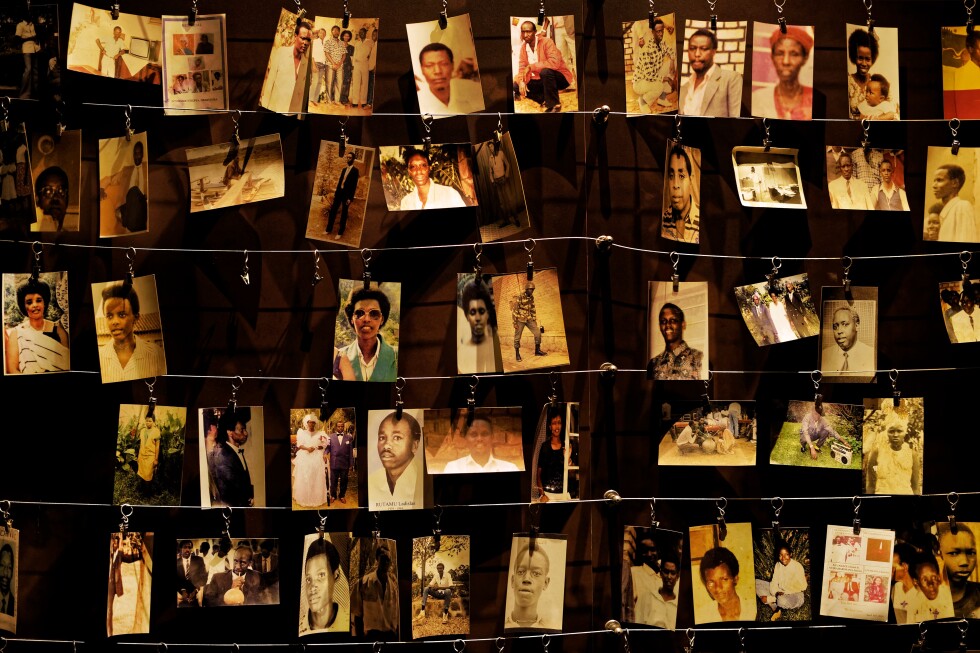
THE HAGUE, Netherlands – After nearly 30 years of pursuing perpetrators of mass atrocities, two United Nations-backed ad hoc criminal tribunals formed to prosecute crimes committed during the breakup of Yugoslavia and the 1994 Rwandan genocide concluded their final formal proceedings Wednesday, closing a landmark chapter in modern international justice while highlighting growing strains on the global push for accountability for mass violence.
The brief 12-minute closing hearing centered on the case of Félicien Kabuga, an alleged key financier of the Rwandan genocide who died in U.N. custody this past Saturday, six years to the day after he was captured outside Paris following 26 years on the run. Presiding Judge Iain Bonomy framed the session as a “truly historic milestone” that formally wraps up the tribunals’ open cases.
Kabuga, believed to be in his 90s, was deemed unfit to stand trial in 2023 after a medical evaluation confirmed he suffered from severe advanced dementia. After the ruling, no country agreed to accept Kabuga for resettlement, leaving him stuck in the U.N.’s The Hague detention facility until his death. His prolonged legal limbo as a defendant no one would claim has become a symbol of the growing crisis facing modern international justice, according to Lucy Gaynor, a University of Amsterdam historian specializing in global accountability frameworks.
“Countries put limits on what they are willing to do,” Gaynor noted, pointing to growing political pushback against the global justice project that the original ad hoc tribunals helped launch.
The two U.N. tribunals – the International Criminal Tribunal for Rwanda and the International Criminal Tribunal for the former Yugoslavia – were established by the U.N. Security Council in the early 1990s, responding to unprecedented waves of mass ethnic violence that shocked the international community. Between the two bodies, they convicted 155 people for atrocity crimes including genocide, crimes against humanity, and war crimes, setting new legal precedents for holding senior leaders accountable for mass atrocities and directly paving the way for the creation of the permanent International Criminal Court (ICC) in 2002.
The ICC, located just two miles from the current office of the tribunals’ residual body, was created to eliminate the need for ad hoc, temporary tribunals for each new conflict by establishing a permanent global court with jurisdiction over humanity’s worst crimes. But the court has faced growing political headwinds in recent years. Under the Donald Trump administration, the U.S. imposed sweeping sanctions on ICC officials after the court opened investigations into alleged war crimes by U.S. personnel in Afghanistan and Israeli officials in Palestinian territories – two countries that are not ICC member states.
Political resistance has also translated into widespread noncompliance with ICC arrest warrants. Multiple nations have refused to execute warrants for Russian President Vladimir Putin, issued over allegations of forced deportations of Ukrainian children, and for Israeli Prime Minister Benjamin Netanyahu, issued over alleged war crimes in Gaza. Just last year, Italy refused to detain a wanted Libyan warlord and instead flew him back to Tripoli on a state aircraft.
For Rwandan genocide survivors, Kabuga’s death without a trial underscores the unmet promises of the global accountability process. Agnes Mukamurenzi, a genocide survivor who knew Kabuga personally, told the Associated Press that she believes he deserved to spend a prolonged life in prison to suffer for his role in the killing of more than 800,000 ethnic Tutsis and moderate Hutus. “I wish he lived longer in prison to feel the pain. During the genocide, he played a key role that saw many innocent lives taken,” she said from Kigali. Dr. Philibert Gakwenzire, head of IBUKA, the umbrella organization representing Rwandan genocide survivors, struck a more measured tone, noting that “history is the true judge” even though Kabuga never faced a guilty verdict.
Wednesday’s closing session was held in a repurposed conference room, one floor above the main courtroom that hosted some of the tribunals’ most high-profile cases – including the conviction of Ratko Mladić, the Bosnian Serb military commander nicknamed the “Butcher of Bosnia” for his role in the Srebrenica genocide, and the 2017 incident where Croat commander Slobodan Praljak drank lethal poison in the courtroom immediately after his appeal conviction was upheld.
The residual mechanism that inherited remaining cases and responsibilities from both tribunals after the original bodies closed in 2015 (ICTR) and 2017 (ICTY) has already downsized to a skeleton staff and vacated the main courtroom last year. The body now faces an uncertain future: its official mandate expires in June, and no transition plan has been approved for its core remaining functions, including overseeing detention conditions for 41 convicted war criminals still serving their sentences around the world. There is also no clear plan for preserving the mechanism’s vast archives, which hold millions of pages of documents and thousands of pieces of evidence – including Mladić’s handwritten diaries and copies of the anti-Tutsi incitement newspaper *Kangura*, which Kabuga was accused of funding. The U.S. withdrew from the mechanism earlier this year during Trump’s second term, cutting off millions of dollars in annual funding that the body relied on to carry out its work.