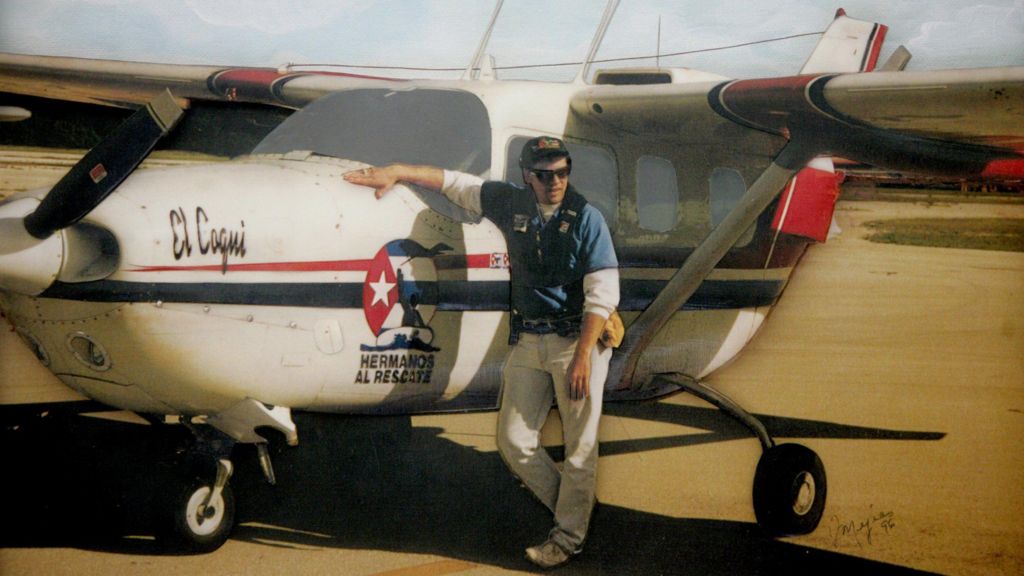
More than three decades after a fatal incident that reshaped decades of Cuba-United States relations, US authorities have unveiled criminal charges against former Cuban leader Raúl Castro, centering on the 1996 downing of two civilian aircraft off Florida’s coast that killed all four people on board. The attack, carried out by Cuban military fighter jets, triggered one of the most severe crises between the two nations, a rift whose impacts continue to ripple through bilateral ties to the present day.
The two small Cessna planes targeted in the strike belonged to Brothers to the Rescue, an organization founded by Cuban exiles based in Miami, Florida. The February 24, 1996, incident left all four passengers — three US citizens and one Cuban national — dead instantly when the jets opened fire over the waterway separating Cuba and the US. At the time of the attack, Raúl Castro served as Cuba’s Minister of the Armed Forces, placing him at the center of international condemnation that followed the strike. The incident immediately derailed tentative diplomatic outreach between Havana and the Bill Clinton administration, and prompted the US to ramp up economic sanctions against the government led by Raúl’s older brother, Fidel Castro. Though Raúl Castro formally stepped down from the Cuban presidency and Communist Party leadership in 2021, the 94-year-old still retains significant behind-the-scenes influence on the island, making the timing of the indictment particularly sensitive amid Cuba’s current ongoing crises.
To understand the roots of the 1996 incident, context of Cuba’s 1990s economic collapse is critical. After the Soviet Union, Cuba’s primary economic and political backer, dissolved in 1991, the island entered a devastating period of crisis marked by widespread food shortages, rolling blackouts, and acute fuel scarcity. This hardship drove thousands of Cubans to attempt risky sea crossings to Florida to reunite with family members already settled in the US. “Suddenly, everyone started looking for anything that floated to try to reach Florida,” Cuban historian and former diplomat Juan Antonio Blanco told BBC Mundo of the period — a crisis many observers draw direct parallels to between Cuba’s current economic and energy turmoil.
It was in this context that Brothers to the Rescue was formed in Miami, led by now 85-year-old Cuban exile José Basulto. The group’s original mission was to conduct flights over the Florida Straits to locate makeshift vessels carrying Cuban migrants, share their coordinates with the US Coast Guard for rescue, and drop emergency supplies of food and water to those adrift. Over time, however, the group expanded its activities beyond search and rescue, according to Cuban political scientist Carlos Alzugaray, who spoke to BBC Mundo from Havana. “They stopped doing what they said they wanted to do, which was helping to rescue rafters, and started entering Cuban airspace and dropping leaflets over Havana,” Alzugaray explained. The Cuban government quickly labeled Brothers to the Rescue members as terrorists, repeatedly condemning the air incursions and arguing the group posed a clear threat to national security.
Basulto, who has personally led multiple incursion missions, rejects the terrorism label entirely. He argues the Cuban government’s anger stemmed not from any security threat, but from the content of the leaflets: they carried text from the Universal Declaration of Human Rights, a document banned in Cuba at the time. On the day of the fateful 1996 mission, three Brothers to the Rescue planes took off from Florida for what was intended to be a routine patrol over the straits. Over a six-minute window, Cuban fighter jets intercepted and shot down two of the small aircraft. Basulto, piloting the third plane that escaped the attack, recalled the chaos of the moment: “I looked to the right and saw the smoke in the distance from one of the planes being shot down. I immediately looked at Sylvia Iriondo [a volunteer on the mission] and said to her, ‘we’re next.’” Basulto said his aircraft was the primary target, as he was the group’s founder and leader.
The Cuban projectiles nearly completely destroyed the two downed civilian craft, leaving little physical evidence behind. Basulto maintains both planes were in international waters north of Havana when they were attacked — a claim corroborated by both the International Civil Aviation Organization and the Organization of American States, which formally accused Cuba of violating international law in the strike. The Cuban government has never backed away from its position that the downing occurred within its sovereign airspace.
Blanco, who was serving as a Cuban diplomat in Havana at the time of the incident, has described the strike as a pre-planned ambush orchestrated by Fidel Castro. He claims Fidel Castro had advance intelligence of the mission’s schedule, flight paths, and personnel, thanks to a mole embedded within Brothers to the Rescue. In Blanco’s account, Fidel Castro held ultimate political responsibility for the operation, while Raúl Castro, as armed forces minister, oversaw its execution. A leaked recording, published on Brothers to the Rescue’s website in 2006, allegedly captures Raúl Castro walking Cuban journalists through details of the operation he commanded; while exiled Cuban officials and independent experts have confirmed the recording’s authenticity, BBC Mundo has not independently verified the tape.
Scholars and observers continue to debate the full motivations behind the Cuban government’s decision to shoot down the planes. The official Cuban position frames the strike as a legitimate response to repeated violations of its sovereign airspace by a group it labels a hostile security threat. But many outside analysts argue the decision was rooted in major political calculations. Blanco, who participated in backchannel diplomatic communications between Havana and Washington in the 1990s, argues Fidel Castro orchestrated the attack to derail tentative talks on normalizing bilateral relations that were taking place in the months before the strike, as the Clinton administration explored a potential diplomatic breakthrough ahead of Clinton’s expected second term. Blanco argues Fidel Castro feared that any normalization of ties with Washington would spark pressure for political and economic reform that would undermine his authoritarian grip on power. “Shooting down the planes made it impossible for Clinton to enter into any kind of rapprochement afterwards,” he explained.
In the wake of the attack, the incident triggered the most serious Cuba-US crisis since the end of the Cold War, and set the trajectory of bilateral relations for decades into the 21st century. Clinton condemned the attack “in the strongest terms,” and the United Nations Security Council issued a formal condemnation of the use of lethal force against civilian aircraft in flight. The US responded by significantly expanding economic sanctions on Cuba, a move Havana decried as unprecedented economic and diplomatic aggression. Domestically, the incident also led to a sharp intensification of repressive policies on the island, according to Blanco, who described it as a return to harsh, Stalinist-era governance. Havana has consistently refused to pay compensation to the families of the victims, who ultimately received a $93 million settlement from the US government drawn from frozen Cuban regime assets.
Today, more than 30 years after the downing, the case retains enormous symbolic and political weight, both within Cuba and across the large Cuban exile community in the US. The unsealing of the indictment against Raúl Castro comes as Cuba faces a new wave of overlapping economic and energy crises, spurred by harsh sanctions imposed during the Donald Trump administration and the recent loss of critical support from Venezuela following the ouster of former leader Nicolás Maduro in January, making the new legal action an especially fraced development for the island’s government.