博客

  • Watch: Why is the US-Venezuela oil deal so controversial?

    Watch: Why is the US-Venezuela oil deal so controversial?

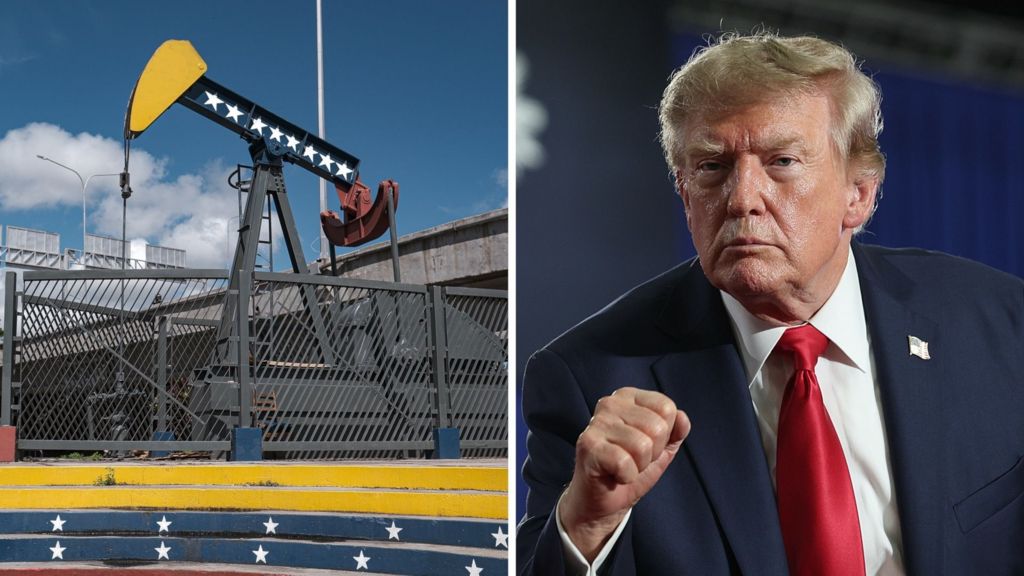
    When former U.S. President Donald Trump made the sudden announcement that Washington had finalized an agreement to take control of more than 65 billion barrels of proven Venezuelan oil reserves, it immediately sparked heated debate across global political and energy circles. This proposed deal, which has remained one of the most contentious energy-related diplomatic moves in recent Western Hemisphere history, touches on a web of overlapping issues including national sovereignty, international energy policy, and geopolitical competition in the Americas.

    Venezuela has long held one of the largest proven oil reserves on the planet, with its energy sector serving as the backbone of the country’s national economy and government revenue for decades. The very framing of a U.S. deal to “control” these reserves immediately drew pushback from sovereignty advocates and regional governments, who argue that any foreign agreement that seizes operational or ownership control of a nation’s natural resources violates foundational norms of international law. Critics of the proposal also point out that the announcement came amid years of strained diplomatic relations between Washington and Caracas, marked by existing U.S. sanctions on Venezuela’s energy sector that had already disrupted global oil markets and created widespread economic hardship for Venezuelan civilians.

    Supporters of the Trump administration’s move at the time argued that expanding U.S. access to Venezuelan oil would help reduce global energy dependence on less stable oil-producing regions, lower domestic fuel prices for U.S. consumers, and counter growing geopolitical influence from other major powers in Latin America. Even so, the announcement failed to address critical unresolved questions: what legal framework would govern the deal, how would existing Venezuelan oil infrastructure and industry stakeholders be affected, and what long-term impact would the agreement have on Venezuela’s ability to leverage its own natural resources for national development.

    To this day, the proposed agreement remains a flashpoint for discussions about U.S. foreign policy in Latin America, the balance of power between energy-consuming and energy-producing nations, and the intersection of economic interests and sovereign rights. It continues to be cited in debates over Western intervention in the Western Hemisphere and how major global powers approach access to critical natural resources in developing nations.

  • Army Secretary Dan Driscoll is stepping down after 18 months on the job, White House says

    Army Secretary Dan Driscoll is stepping down after 18 months on the job, White House says

    The White House announced Monday that United States Army Secretary Dan Driscoll will step down from his post, marking the latest high-profile departure from top military leadership during President Donald Trump’s second administration. No official explanation has been provided for Driscoll’s exit, though widespread reporting has pointed to long-simmering tensions between Driscoll and Defense Secretary Pete Hegseth. The resignation deepens a pattern of dramatic turnover across senior military ranks, with the U.S. Army experiencing the most extreme upheaval in recent months.

    In an official statement, White House press spokeswoman Anna Kelly praised Driscoll’s tenure, framing his work as critical to advancing Trump’s “Make America Strong Again” policy agenda. “Secretary Driscoll has been highly effective in advancing President Trump’s agenda… by providing outstanding leadership during historic military operations, restoring an emphasis on readiness and lethality, assisting with negotiations between Russia and Ukraine, and more,” Kelly said. She added that the U.S. Army “is more powerful than ever thanks to his work alongside the Commander-in-Chief and Secretary of War.”

    An anonymous senior U.S. Army official, granted anonymity because they were not cleared to speak publicly on the personnel matter, confirmed that Driscoll discussed the current state of Army operations with Trump before formally submitting his resignation. The official declined to share further details about the conversation or the resignation. The Pentagon directed all media inquiries about the departure to the U.S. Army. News of Driscoll’s resignation was first reported earlier Monday by *The Wall Street Journal*.

    Driscoll’s exit is part of a string of sudden leadership changes at the Army that stretch back months. In April, Hegseth unexpectedly removed Gen. Randy George, the service’s top uniformed leader, from his post. Just two months later, Gen. Christopher Donahue, commander of U.S. Army forces in Europe and Africa, stepped down unexpectedly. Gen. Christopher LaNeve, whose rapid ascent through the leadership ranks has been closely tied to Hegseth, was appointed to replace George as acting Army chief of staff.

    Under LaNeve’s leadership, the Army has already canceled a key drone modernization initiative that Driscoll had championed. As first reported by Army officials in August, LaNeve ordered an Army unit based in Europe that had been developing custom in-house drones to abandon the project and revert to its original role as a traditional infantry battalion. Driscoll was a public ally of George, and openly lamented his ouster alongside lawmakers from both major U.S. political parties. During an April congressional hearing, Driscoll told legislators that he and his family traveled to George’s home immediately after his resignation, saying “we all gave him a hug.” Even so, Driscoll acknowledged the authority of civilian leadership over the military, noting: “That being said, the civilian leadership, the design of our system, is that they get to pick the leaders that they want.”

    A decorated Iraq War veteran, tech investor, and long-time associate of Vice President JD Vance — whom he met while attending Yale Law School — Driscoll was tapped by Trump for the Army Secretary role in 2024. At the time of his nomination, Trump described Driscoll as “a disruptor and change agent” who would bring much-needed change to the service. Beyond his core administrative duties, Driscoll was given the unusual high-profile assignment of serving as a key negotiator in diplomatic efforts to end the ongoing war between Russia and Ukraine. He was also a leading advocate for cutting bureaucratic red tape to allow defense contractors to accelerate development of new drone and counter-drone technologies, a priority as global warfare evolves rapidly. The U.S. Senate confirmed Driscoll to the post in February 2025 by a vote of 66-28, after a largely non-confrontational Armed Services Committee hearing focused on Army modernization, recruiting reform, and strengthening the domestic defense industrial base.

    Driscoll comes from a multi-generational Army family, noting during his confirmation process that both his father and grandfather served in the service, and he vowed to center his tenure on addressing the needs of frontline soldiers. His official Army biography notes he served as an armor officer from August 2007 to March 2011, with a combat deployment to Iraq from October 2009 to July 2010. Outside of military and national security work, Driscoll mounted an unsuccessful bid for the Republican nomination for a North Carolina congressional seat in 2020, earning roughly 8% of the vote in a crowded primary field.

    Driscoll’s departure is not an isolated event: it follows a broader purge of senior uniformed and civilian leadership carried out by Hegseth across the U.S. armed forces, which has already seen the ouster of multiple generals, admirals, and service secretaries. In April, the Pentagon made the sudden announcement that Navy Secretary John Phelan would step down, making Phelan the first head of a U.S. military service to leave office during Trump’s second term.

  • Panda Diplomacy: A Mayor’s Quest To Bring Pandas From China To Hawaiʻi

    Panda Diplomacy: A Mayor’s Quest To Bring Pandas From China To Hawaiʻi

    In an ambitious move that blends municipal economic ambition with high-level international diplomacy, Honolulu Mayor Rick Blangiardi has launched a years-long campaign to bring giant pandas to the Honolulu Zoo – a quest that has already taken him across China, required a direct appeal to Chinese President Xi Jinping, and sparked new conversation about the enduring role of “panda diplomacy” in tense U.S.-China relations. What began as a casual idea to boost flagging zoo attendance has evolved into a carefully negotiated diplomatic process, highlighting how China’s iconic black-and-white bears remain one of the most powerful soft power tools in global politics.

    Blangiardi’s journey began when he approached the Chinese Consulate-General in Los Angeles with his proposal to add pandas to the Honolulu Zoo. Officials there advised him to take his pitch directly to China, and last spring, the mayor and his Beijing-born wife Karen Chang embarked on a 10-day, three-city tour that cost Hawaii taxpayers roughly $29,000. The itinerary included high-level meetings with senior Chinese foreign affairs officials, visits to leading panda breeding and conservation facilities in Fuzhou and Chengdu, cultural stops including the Great Wall, and an 18-course formal meal. Blangiardi later joked to local radio host Rick Hamada that the scope of negotiations felt like working out a peace treaty – a comparison that is far closer to reality than many might assume.

    Today, only two zoos in the United States currently host giant pandas on loan from China. Securing the animals requires navigating a yearslong approval process that ultimately ends with a sign-off from China’s top leader, and comes with strict non-negotiable terms: a minimum annual leasing fee of $1 million for a pair of pandas, strict animal welfare reporting requirements, and an expectation that hosting institutions will avoid crossing China’s political red lines. All pandas remain the property of China, and any cubs born during the loan period are ultimately repatriated. For Blangiardi, however, the investment is well worth the risk: he projects that adding pandas could triple the zoo’s current annual attendance of more than 500,000 visitors, generating new revenue that can be reinvested into facility upgrades and animal care programs across the zoo.

    Panda diplomacy is not a new concept, but its role in modern geopolitics has evolved dramatically alongside China’s rise as a global power. Giant pandas are endemic to China, and historians trace the country’s adoption of the bear as a national symbol back to the early days of the People’s Republic of China. Unlike cultural symbols tied to imperial history, pandas were a “safe” unifying national icon that could be embraced even during periods of political upheaval. The modern era of panda diplomacy began shortly after U.S. President Richard Nixon’s 1972 groundbreaking visit to China, when Premier Zhou Enlai offered two pandas to the United States as a gesture of goodwill, sparking a nationwide “panda-monium” that cemented the animals’ reputation as global diplomatic ambassadors.

    Today, panda loans remain a carefully calibrated tool of Chinese soft power. The link between political alignment and panda access was underscored earlier this year, when Japan’s Ueno Zoo failed to secure a renewal of its panda loan after newly elected Prime Minister Sanae Takaichi made statements asserting Japanese military support for Taiwan in the event of a Chinese invasion. While China did not abruptly remove the pandas mid-loan, experts confirm the non-renewal was a deliberate response to the political statement, leaving Japan without pandas for the foreseeable future. This precedent is not lost on Blangiardi, who has already adjusted a local planning decision related to a Chinatown property owned by the Taiwanese government to avoid potential offense, opting to keep the site focused on Chinatown rather than rebranding it as a Taiwan Cultural Plaza.

    For Honolulu Zoo, the bid for pandas comes as the facility has worked for years to rebuild its reputation after losing national accreditation in 2016 due to systemic underfunding. The zoo regained accreditation in 2020, and earlier this year earned approval to retain its status through 2030, a milestone city leaders celebrated as a sign of the facility’s turnaround. Zoo Director John Berry, who previously oversaw panda operations at the Smithsonian’s National Zoo in Washington, D.C., says the odds of Honolulu’s bid being approved are currently “leaning yes.” The team is currently working to prove the facility can meet China’s strict care standards, a process Berry compares to applying for a rental property: candidates answer detailed questions, then respond to additional requests for information, before the final application is sent to Beijing for presidential approval.

    Critics have raised multiple concerns about the project, from the high annual leasing fee to the cost of building a temperature-controlled panda exhibit that can accommodate the bears’ preference for cool temperatures, to questions about animal welfare in a tropical climate. Honolulu City Council member Esther Kiaʻāina initially questioned whether limited public funds would be better spent on other pressing zoo improvements, though she has since backed the project out of confidence in Berry’s leadership. Berry has moved to address funding concerns, noting that he plans to secure all additional costs from private wealthy benefactors rather than drawing on taxpayer funds, and has already partnered with the University of Hawaii to research energy-efficient cooling solutions that could position Honolulu as a leader in tropical panda facility management.

    Public reaction to the proposal has been overwhelmingly positive among recent zoo visitors. Many tourists, who come to Oahu from across the U.S. and around the world, have never seen giant pandas in person, and say the addition would draw them back to the zoo. Local residents also see the pandas as a catalyst to turn the Honolulu Zoo from a minor stop into a top-tier international destination that would boost tourism across Waikiki and the broader Hawaiian islands. If approved, pandas could arrive at the Honolulu Zoo within two years of final Chinese approval, and Blangiardi’s high-level access – aided by his wife’s Beijing roots and language skills – has already put the bid further along than many initially expected. As U.S.-China relations remain strained over trade, security, and territorial disputes, both sides stand to gain from the deal: Honolulu gets a blockbuster tourist attraction, and China gets a popular, high-profile symbol of peaceful people-to-people exchange in one of America’s most visited tourist destinations.

  • Can cut-price Shein shine in its long-awaited stock market debut?

    Can cut-price Shein shine in its long-awaited stock market debut?

    After a years-long, circuitous journey toward a public listing that saw rejected bids in two major Western markets, global fast-fashion leader Shein is finally set to ring the opening bell on the Hong Kong Stock Exchange on Tuesday, marking the biggest initial public offering (IPO) in the city so far in 2026.

    The long-awaited listing caps a tumultuous road to public markets for the ultra-cheap fashion giant, which first set its sights on a Wall Street debut after explosive growth during the Covid-19 pandemic. Locked-down shoppers turned to online retail en masse during that period, and Shein turned viral social media trends like the “Shein Haul” — where shoppers posted clips of themselves trying on dozens of low-cost new garments — into a massive global customer base. The company built its popularity on an agile China-based supply chain that delivers the latest trending styles to shoppers in more than 150 countries at price points few competitors can match. As of the 12 months ending in March 2026, Shein reports it counts 281 million active customers who placed more than 1 billion orders.

    But Shein’s push for a US listing ran into stiff political headwinds. US lawmakers raised widespread objections over long-standing allegations of forced labor in the company’s vast network of Chinese supplier factories, as well as ongoing claims that the brand frequently copies independent designers’ work. Shein has repeatedly pushed back against these claims, saying it enforces a zero-tolerance policy for forced labor and takes all intellectual property infringement claims seriously. After US regulatory and political resistance derailed its transatlantic listing plans, the company explored a debut in London, only to face similar opposition.

    By 2025, with Western doors largely closed, Shein shifted its focus to Hong Kong, securing regulatory approval for the listing in July 2026. The pivot to Asia marks part of a growing trend for Chinese global firms locked out of Western capital markets, analysts note. Ashley Dudarenok, founder of Chinese market research firm ChoZan, explained that after years of trying to position itself as less Chinese by shifting its headquarters to Singapore, Shein never secured the necessary political backing abroad or policy assurances at home to move forward with a Western listing. “Shein ran out of venues that could take it,” Dudarenok said. For companies shut out of Western exchanges, “Hong Kong is fast becoming the only realistic path to market,” added GlobalData retail analyst Louise Deglise-Favre.

    Ahead of its debut, Shein priced its offering below the upper end of its marketed range, raising a total of 13.6 billion Hong Kong dollars (equal to roughly $1.7 billion) and valuing the company at $26.3 billion. That marks a steep drop from its peak valuation of nearly $100 billion just a few years ago, a decline driven by growing competition, shifting trade rules, and investor skepticism around the fast fashion sector’s long-term profitability.

    Today, Shein faces a host of mounting challenges that have squeezed its bottom line and spooked investors. New trade policies in both the US and EU have targeted the low-value small package imports that were the foundation of Shein’s growth. The US recently revoked the de minimis rule exemption that had allowed packages under $800 to enter the country duty-free, cutting off a key cost advantage for the brand. In July, the company reported a $99 million quarterly loss as sales slowed following the rule change. The EU has similarly added a new €3 tax on low-value imports, while ongoing geopolitical volatility tied to the Iran war has further raised logistics costs and caused delivery delays in key markets. Rival discount platforms like Temu are also intensifying competition, with Temu parent company PDD already reporting weaker-than-expected quarterly revenue in August 2026.

    Shein’s core business model has also come under growing global regulatory scrutiny for its environmental impact and labor practices, and the entire fast fashion sector has seen share prices slump in recent years: rivals Asos and Boohoo have seen their valuations battered by regulatory pressure and market competition. That has left investors far more skeptical of fast fashion business models than when Shein first began exploring an IPO, Deglise-Favre said. “Investors have learned to be sceptical,” she noted, adding that ongoing sustainability and ethical concerns only add more complexity to the offering.

    Despite the steep drop in valuation and mounting headwinds, some analysts still see long-term potential in the company. Deglise-Favre noted that while the valuation slump reflects a “genuine deterioration” in the company’s operating conditions, Shein still boasts a “formidable supply chain” and unrivaled global reach that other firms cannot match. As a rare standalone publicly traded e-commerce fashion firm, Shein’s IPO is being widely watched as a key test of global investor appetite for the fast fashion sector. Going forward, the company will need to prove it can adapt its model to a new regulatory landscape, including shifting portions of its supply chain and logistics outside China to avoid new import tariffs, while also rebuilding profit margins amid rising customer acquisition costs. As Dudarenok put it: as a public company, Shein must now “prove its margins still work in a world of tighter regulation, tariffs and more expensive customer acquisition.”

  • Arsenal wins again and Malen the main man in Italy as Roma score four once more

    Arsenal wins again and Malen the main man in Italy as Roma score four once more

    The second matchweek of Europe’s top domestic soccer leagues delivered another round of dramatic results on Monday, with three of the continent’s biggest clubs retaining their perfect start to the new season and early title contenders sending a clear statement of their title credentials.

    In England’s Premier League, defending champions Arsenal claimed a hard-fought 1-0 away victory over Aston Villa, clinging to their 100% record to open the campaign. The decisive goal came in the 59th minute from Bukayo Saka, who converted the only clear-cut chance of the night to secure all three points for the Gunners.

    The result marks a tough opening stretch for Aston Villa, which has struggled to find form following a series of high-profile player exits over the transfer window. Unai Emery’s side failed to register a single shot on target for the second consecutive match, leaving them rooted at the bottom of the table with zero points from their first two outings. For Arsenal manager Mikel Arteta, the win carried extra personal significance: it marked his 250th Premier League match in charge of the club, and left Arsenal one of only four Premier League clubs to claim maximum points from their opening two fixtures.

    Over in Spain’s La Liga, Barcelona turned in a dominant attacking display to beat Rayo Vallecano 5-2 at home, extending their unbelievable run to 21 consecutive home victories and climbing to the top of the league table. The match got off to a surprising start when Rayo, which entered the game still searching for its first win of the season, took an early lead in the 12th minute: Sergio Camello finished powerfully from an Álvaro García cutback from the left flank to put the visitors ahead.

    Barcelona responded rapidly, however, and had turned the game around to lead 2-1 before the 25-minute mark. Raphinha netted the equalizer with a clinical finish in the 18th minute, and 16-year-old prodigy Lamine Yamal put Barca ahead just 90 seconds later with a trademark solo goal: cutting inside from the right wing before unleashing a blistering left-footed strike into the top corner of the net.

    Hansi Flick’s side extended their lead shortly after halftime, when Florian Lejeune turned an Anthony Gordon cutback into his own net for an own goal. Though Camello pulled one back for Rayo with a strong headed finish, Raphinha restored Barcelona’s two-goal advantage shortly after, and Yamal wrapped up the scoring with a low driven shot from just outside the penalty area in the 89th minute. The brace from both Yamal and Raphinha, paired with two assists from English winger Gordon, gave Barca the convincing win that pushed them above Real Madrid to claim first place on goal difference, while Rayo Vallecano sits third from bottom after the result. In another La Liga fixture on Monday, Osasuna claimed a 1-0 win over Getafe to retain their own unbeaten start to the season.

    In Italy’s Serie A, Roma made an early statement of their title ambitions with a rampant 4-0 away win over Lecce, retaining their 100% start to the campaign. Donyell Malen continued his scorching early form, taking his goal tally to five goals in just two matches after notching a brace to put Roma 2-0 up by the midway point of the first half. Matias Soulé added a third before halftime, and substitute Rodrigo Mora put the finishing touches on the result with a fourth goal 20 minutes into the second half. The back-to-back 4-0 wins lifted Roma straight to the top of the Serie A table after two matchweeks.

    The final fixture of Monday’s Serie A action delivered a late dramatic winner, as Atalanta snatched a 1-0 victory over Bologna with a stoppage-time goal from Lazar Samardžić. The match was a largely unremarkable affair with neither side dominating, but Samardžić’s long-range effort slipped past the Bologna goalkeeper in added time to secure all three points for Atalanta. The result was a harsh one for Bologna, which has now dropped two opening matches and remains pointless on the season, while Atalanta climbs into the top five and joins the group of five other clubs still holding a perfect record.

  • Greece signs $3.5bn air defence deal with Israel

    Greece signs $3.5bn air defence deal with Israel

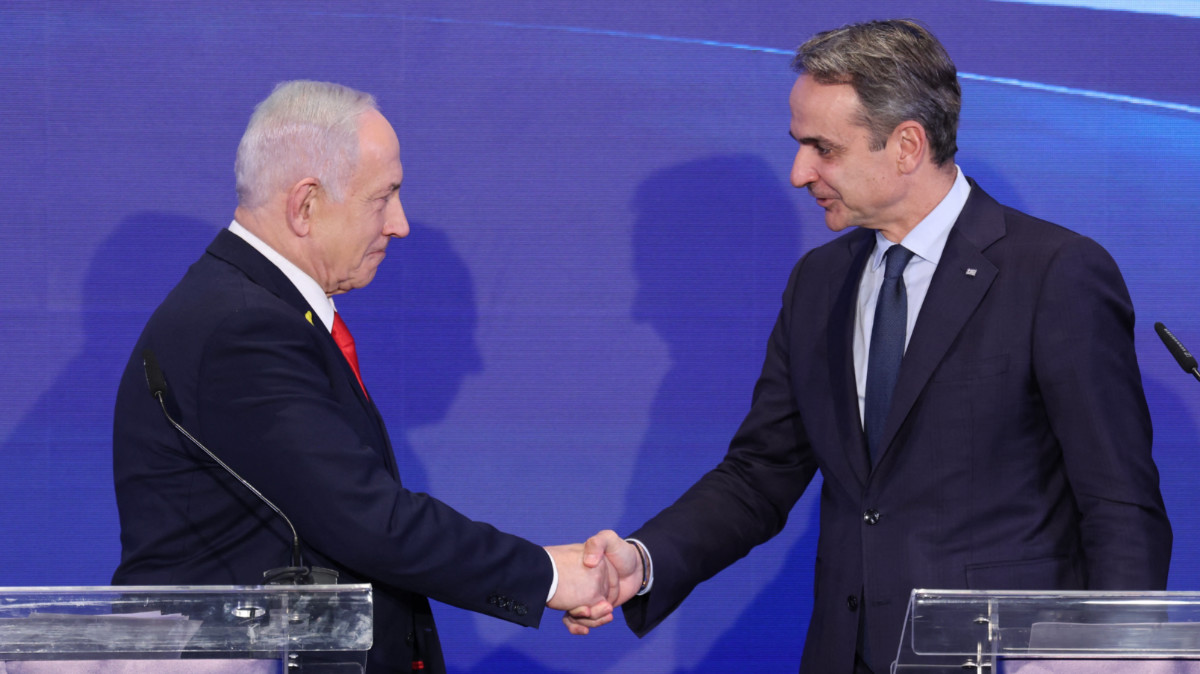
    On Monday, Greece and Israel formalized a historic $3.5 billion defense agreement that will see Israel construct a multi-layered national air defense network for Greece, marking a major milestone in the rapidly deepening strategic partnership between the two Mediterranean nations.

    The Israeli Ministry of Defense emphasized in an official announcement that the pact stands as the largest bilateral defense export deal in the history of Israeli-Greek relations, and ranks among the top largest defense contracts ever secured by the State of Israel. The agreement forms a core part of Greece’s broader national defense initiative, named the Achilles Shield, which aims to build a fully integrated defensive system capable of countering drones, ballistic missiles, and fixed-wing aircraft. The full program carries an estimated total cost of $28 billion and is scheduled for completion by 2036.

    Under the terms of the deal, Greece will acquire three key Israeli defense systems: the David’s Sling and SPYDER platforms manufactured by Rafael Advanced Defense Systems, and the Barak MX air defense system produced by Israel Aerospace Industries (IAI). The purchase also includes advanced MMR multi-mission air surveillance radars built by ELTA Systems, an IAI subsidiary. Notably, Greece becomes only the second international customer for David’s Sling, following Finland – another NATO member that shares a border with Russia. Designed to intercept large-caliber rockets and intermediate-range ballistic missiles, David’s Sling fills a critical capability gap in Israel’s own integrated air defense architecture: it complements the short-range Iron Dome system, which counters low-altitude rockets and drones, and the Arrow 2 and Arrow 3 systems, which target long-range ballistic missiles, with the Arrow 3 capable of intercepting hypersonic targets outside the Earth’s atmosphere.

    In addition to the core air defense systems, the agreement includes the delivery of a new national command-and-control network developed by Rafael. A separate $26 million secondary contract will see Rafael supply Greece with Drone Dome counter-drone systems, designed to protect critical national infrastructure and strategic sites from unmanned aerial threats.

    The defense pact comes as the growing strategic alignment between Greece and Israel reshapes the geopolitical landscape of the Eastern Mediterranean. The deepening partnership coincides with long-running frictions between both nations and Turkey: Greece has been locked in territorial and diplomatic disputes with Turkey for nearly two centuries, while tensions between Ankara and Jerusalem have surged in recent years, with open clashes across multiple regional hotspots from Syria to the Horn of Africa. Earlier this month, Israeli forces launched an airstrike on Syria’s Abu al-Duhur airbase, following intelligence that Turkey planned to deploy a permanent military contingent to the site. Tom Barrack, the U.S. Ambassador to Turkey and special envoy to Syria, warned that the strike carried a serious risk of direct military confrontation between Israel and Turkey, suggesting the attack may have been a deliberate provocation to draw Ankara into a wider regional conflict.

    While Greek Prime Minister Kyriakos Mitsotakis has pursued a policy of de-escalation with Ankara in recent months, emphasizing potential areas of bilateral cooperation during a NATO summit hosted in Ankara earlier this year, analysts note that the new defense pact with Israel introduces significant uncertainty to this reconciliation strategy.

    Beyond regional geopolitical risks, the agreement has sparked substantial domestic controversy in Greece. Greece has historically been a vocal advocate for Palestinian statehood: in 1947, Athens joined India and a bloc of Muslim-majority nations including Egypt, Saudi Arabia, Iran, and Turkey in voting against the UN Partition Plan for Palestine. Greece also maintains deep historic and religious ties to occupied East Jerusalem and the West Bank through the Greek Orthodox Patriarchate of Jerusalem, whose leader is a Greek national, and whose church properties have faced repeated attacks from Israeli settlers in recent years.

    Current public outrage over the ongoing military campaign in Gaza has fueled widespread opposition to the Greek government’s closer alignment with Israel. Data from a 2026 Pew Research Center poll shows that 65 percent of Greek citizens oppose the deepening bilateral partnership, even as many respondents characterize the alliance as a necessary safeguard against what they view as expansionist Turkish ambitions in the Eastern Mediterranean.

    Parallel to the growing defense ties, the Greek government also faces growing public anger over a sustained boom in Israeli real estate investment in Greece. Israeli buyers entered the Greek property market en masse following the country’s 2010 sovereign debt crisis, when depressed prices offered attractive entry points for foreign investment. Continued high volumes of purchases have since driven up housing prices across the country, pushing many native Greek buyers out of the market and exacerbating a national affordable housing crisis.

  • Japan Inc is betting big on India as China risks deepen

    Japan Inc is betting big on India as China risks deepen

    Against a backdrop of shifting global supply chains and stagnating domestic demand, Japanese corporations across retail, finance, technology and manufacturing are rapidly scaling their presence in India, marking one of the most significant cross-border investment waves the South Asian economy has seen in recent years.

    Last week, India’s Commerce Minister Piyush Goyal led the nation’s largest-ever business delegation to Tokyo to deepen bilateral trade and investment ties, a high-profile engagement that underscores how quickly Japan’s economic footprint in Asia’s third-largest economy has grown in recent years. A walk through any major commercial district in Mumbai, New Delhi or Bengaluru makes this expansion impossible to miss: established Japanese consumer brands are racing to open new locations, while first-time entrants are carving out new market share across the country.

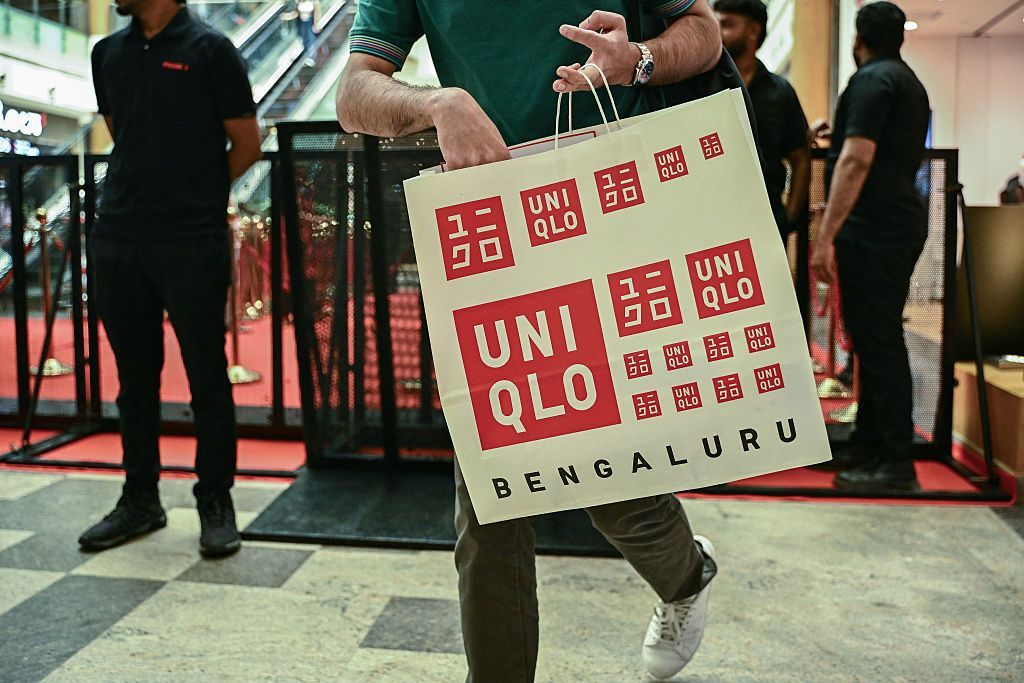
    Well-known names including apparel retailers Uniqlo and Muji, as well as premium footwear brand Onitsuka Tiger, have operated in India for years, but are now rolling out aggressive expansion plans to reach tier-2 and tier-3 cities. Niche Japanese firms are also joining the push: furniture manufacturer Nitori recently completed its market entry, while major convenience store chain Lawson has announced plans to launch 10,000 locations across India by 2050, starting with a first wave of stores in Mumbai.

    The trend extends far beyond consumer retail. At a time when many global financial institutions are divesting from Indian banking assets, Japanese banks are actively acquiring large stakes in the country’s growing financial sector. In 2024, Japan’s largest lender MUFG Bank closed a $4.4 billion deal to purchase a 20% stake in Indian non-bank financial firm Shriram Finance, the largest single foreign investment in India’s financial history to date. That same year, Sumitomo Mitsui Banking Corporation (SMBC) became the largest shareholder of Indian private sector lender Yes Bank, acquiring a 24.22% stake in the institution.

    Japan has also emerged as the top Asia-Pacific contributor to India’s fast-growing global capability centre (GCC) ecosystem, according to recent analysis from professional services firm Deloitte. More than 100 Japanese multinational corporations now operate GCCs—offshore innovation hubs that handle high-value core functions including research and development, corporate strategy and artificial intelligence development—across India, tapping the country’s large pool of skilled tech and business talent.

    Industry analysts say this coordinated expansion is driven by clear long-term business logic. Vipul Nath Jindal, founder of Next Bharat Ventures, a Suzuki-backed impact fund that recently launched a $200 million India-focused fund, explained that Japan’s shrinking domestic population has created a permanent decline in domestic demand, forcing Japanese firms to look abroad for sustainable growth. “Japan’s population has been declining for 16 to 17 years, so it’s not just a temporary slowdown—its home market is permanently shrinking,” Jindal told the BBC.

    At the same time, other traditional expansion markets for Japanese firms have become far less attractive. Geopolitical tensions and shifting economic conditions have caused a sharp drop in Japanese investment into China, while high tariffs and intense domestic competition make the U.S. market a challenging growth destination, and smaller Southeast Asian economies lack the scale to support large-scale expansion. Against this backdrop, India’s 1.4 billion-person consumer market and rapidly growing middle class make it a natural long-term growth target.

    Bilateral government ties have laid the groundwork for this private sector boom. The two nations signed a bilateral trade liberalization agreement nearly 15 years ago, and after Prime Minister Narendra Modi took office in 2014, the relationship was upgraded to a “special strategic and global partnership.” The Indian government set a target to double the number of Japanese firms operating in the country, and launched high-profile infrastructure projects including India’s first high-speed bullet train between Mumbai and Ahmedabad, which is being built using Japanese Shinkansen technology.

    Today, the expansion is being led primarily by private Japanese companies, rather than just intergovernmental initiatives. During Japanese Prime Minister Sanae Takaichi’s first official visit to New Delhi in July, Japanese firms announced 120 new investment agreements totalling $12.5 billion, spanning sectors from semiconductors to renewable energy. Commerce Minister Goyal has noted that Japan is on track to hit its 10 trillion yen ($68 billion) investment target for India years ahead of schedule. Even small and medium-sized Japanese enterprises (SMEs) are joining the trend: Hamamatsu City, a manufacturing hub that is home to Suzuki, Honda and Yamaha and hosts one of Japan’s highest concentrations of manufacturing SMEs, recently established the Hamamatsu India Committee to help local small businesses enter the Indian market.

    This rising investment in India has coincided with a drop in net Japanese investment into China, but experts emphasize that this is not a coordinated, government-led shift away from China. University of Tokyo researcher Toshiro Nishizaewa argues that the trend reflects a market-driven diversification strategy by Japanese firms, which are reallocating capital to reduce risk rather than responding to political pressure to decouple from China. Shruti Pandalai, India Chair at the Lowy Institute, explained that Japanese firms are simply reducing concentration risk after years of supply chain disruptions and geopolitical uncertainty, and India acts as a useful hedge against China-related disruptions. Pandalai adds that the alignment between Japan’s economic security priorities and India’s ambition to become a global manufacturing hub has strengthened the bilateral relationship, even through multiple changes of government in Tokyo. “Successive Japanese administrations have raised investment targets instead of cutting them, which shows the relationship is no longer just dependent on top-level diplomacy—it’s embedded in the bureaucratic, corporate and strategic planning of both countries,” she said.

    For India, which is actively seeking to attract sustained foreign direct investment to drive economic growth and job creation, this wave of Japanese capital comes at a critical juncture. Pandalai notes that closer economic cooperation with Japan could also help reduce India’s large trade deficit with China and gradually decrease Beijing’s economic leverage in key sectors including critical minerals and advanced manufacturing over the long term.

    Despite the momentum, experts warn that significant challenges remain to fully expanding the bilateral economic relationship. Pratnashree Basu, an analyst at the Observer Research Foundation, points out that Japan remains deeply integrated into Chinese manufacturing supply networks, which limits how far coordinated Japan-India economic action against China can go—any coordinated measures would impose major commercial costs on Japan and risk retaliation from Beijing.

    India’s own challenging business environment also remains a major barrier for foreign investors, including Japanese firms. Longstanding issues including tax policy uncertainty, bureaucratic red tape, and lengthy delays for land and environmental approvals continue to slow investment projects. A former Japanese cabinet minister recently publicly criticized the Indian government for repeated delays to the Mumbai-Ahmedabad bullet train project, accusing India of reneging on commitments to prioritize its own interests—a claim the Indian government quickly rejected. Chinese state media quickly highlighted the public disagreement to emphasize what it frames as endemic contractual risks in doing business in India.

    The incident underscores that even as India signs dozens of large-scale economic and defense agreements with Japan, New Delhi will need to implement targeted regulatory and bureaucratic reforms to maintain the current investment momentum, especially as it struggles to attract consistent large-scale foreign capital from other major global economies.

  • Orangutans in danger as wildfires blaze through Borneo

    Orangutans in danger as wildfires blaze through Borneo

    Across the rainforests of Borneo, an ecological disaster is unfolding as rampant wildfires sweep through one of the only remaining habitats of the critically endangered Bornean orangutan. Indonesia, the nation that hosts the vast majority of Borneo’s old-growth rainforest, is currently battling a wave of uncontrolled blazes that have already torn through thousands of hectares of native forest.

    For the island’s orangutan population, the damage extends far beyond immediate loss of life from the fires themselves. Hundreds of the great apes have already seen their natural territories turned to ash, destroying the food sources, shelter, and social structures that the species depends on for long-term survival.

    Conservation scientists have warned that this new wave of habitat destruction comes at a moment when Bornean orangutans were already struggling to recover from decades of deforestation driven by logging, palm oil expansion, and previous fire events. With fewer than 100,000 orangutans left in the wild globally, every hectare of lost habitat and every displaced individual pushes the species closer to permanent extinction.

    The fires, which are often intentionally set to clear land for agricultural development, have been exacerbated in recent years by longer, hotter dry seasons linked to human-caused climate change. This combination of land clearing and changing weather patterns has created a vicious cycle that increasingly threatens not just orangutans, but the entire unique Borneo rainforest ecosystem, which supports thousands of other endemic plant and animal species.

  • Jordan intelligence chief spearheaded move to arrest US journalist Ali Younes

    Jordan intelligence chief spearheaded move to arrest US journalist Ali Younes

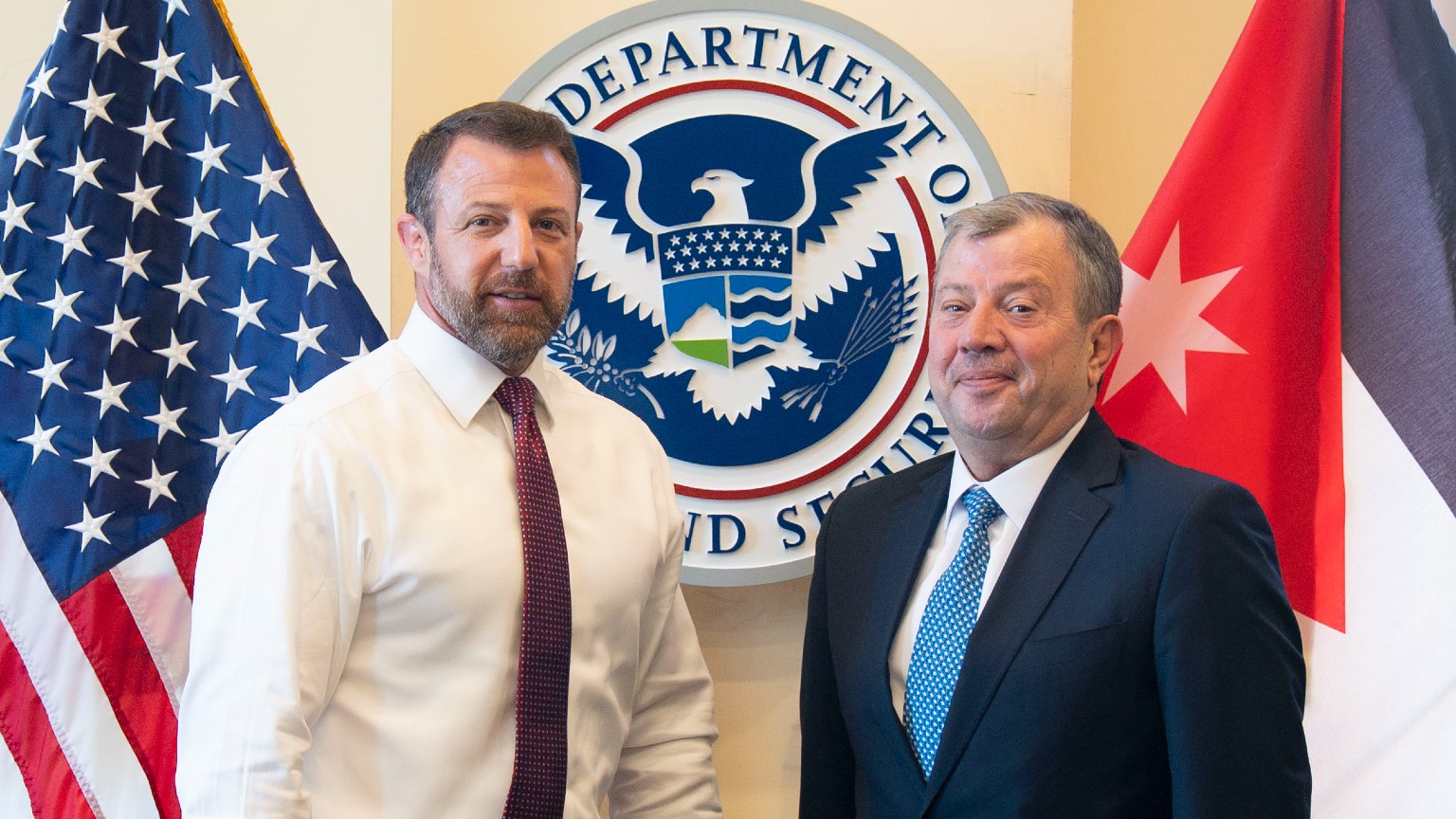
    The arrest of prominent dual American-Jordanian investigative journalist Ali Younes, orchestrated at the direction of Jordanian General Intelligence Department director Major General Ahmad Husni, has ignited international controversy over press freedom and strained Jordan’s long-standing financial and diplomatic ties with Washington, reporting from Middle East Eye confirms.

    Younes, a veteran correspondent who has contributed to major global outlets including Drop Site News, Al Jazeera, The New York Times, CNN, Fox News and the BBC, was taken into custody by Jordanian intelligence officers on August 17 immediately upon his arrival at Queen Alia International Airport in Amman. Following hours of interrogation, authorities ordered him to appear before local prosecutors and imposed an exit bar that prevents him from leaving the country.

    Local Jordanian outlet Ammon News, which multiple sources confirm maintains close ties to Jordanian intelligence services, was the first to publicly disclose details of the state’s actions against Younes last week. The outlet framed the arrest as a response to alleged offenses including “attacks on the Jordanian Armed Forces” and the distribution of what it called “misleading information originating from a Jewish source” — referring to Middle East analyst Aaron Magid, author of the article Younes is accused of reposting.

    The core charges against the journalist center on a seemingly minor act: his reposting of Magid’s 2023 commentary published in *The American Conservative*, which questioned the justification for decades of large-scale U.S. economic and military aid to Jordan. Over the past 75 years, Jordan has received a total of $33.8 billion in U.S. assistance, with additional billions in scheduled funding locked in through ongoing bilateral agreements with Washington.

    Younes’ U.S.-based legal team, led by attorney Abed Ayoub, has forcefully refuted all charges brought against their client. Ayoub emphasized that Younes never launched any attacks against the Jordanian Armed Forces, and has a long record of complying with local laws in every country where he has worked, including Jordan.

    In a public statement, Ayoub called the charges “troubling as it is outrageous,” noting that the arrest of a journalist over a social media post shared outside Jordan’s borders raises urgent, serious questions about the state of press freedom in the kingdom. He added that the detention is inconsistent with the close, mutually respectful relationship between King Abdullah II — who is widely respected across U.S. political circles — and the United States.

    The case has already stoked significant fears for Younes’ safety, particularly given Jordan’s recent history of violent targeting of journalists. In 2016, Jordanian journalist Nahed Hattar was assassinated by a gunman outside a courthouse shortly after he was detained for reposting a political cartoon that drew conservative backlash. Younes has also faced widespread online death threats and intimidation as part of a coordinated state-aligned media campaign against him.

    Multiple U.S. figures have called for immediate action from the Trump administration and Congress to secure Younes’ release, warning that the case puts Jordan on a direct collision course with Washington. Magid, the analyst whose article is at the center of the case, described the detention as deeply disturbing, noting that Younes is a U.S. resident who merely shared an article from an American mainstream media outlet on the social platform X.

    “It is imperative that the State Department ensure his safe return to the United States and press Jordan to rescind the exit ban against him,” Magid said, adding that the crackdown directly contradicts public promises King Abdullah has made to protect press freedom. He also criticized the lack of public response from U.S. officials, noting that if Younes is ultimately convicted for simply sharing an article, Washington should reevaluate its multibillion-dollar aid commitment to the Hashemite Kingdom.

    Jason Jones, a prominent conservative Republican figure closely aligned with former President Trump and founder of the Vulnerable People Project, went further in his comments to Middle East Eye. Jones argued that the U.S. should issue an explicit ultimatum to Jordan: release Younes and drop all charges immediately, or forfeit U.S. funding.

    “Jordan is risking its international standing and billions of dollars in U.S. funding in a grave international incident: the arrest and draconian prosecution of an American citizen,” Jones said. He also pointed to ongoing corruption allegations against Major General Husni, noting that it is surprising Jordan’s government has allowed the intelligence chief to pursue a case that threatens the kingdom’s core financial and diplomatic relationship with the U.S.

    When Middle East Eye reached out to the U.S. Embassy in Amman for comment on the case, a spokesperson confirmed the embassy is aware of the detention but declined to share any further information. As of this report, the U.S. State Department has not responded to multiple requests for comment.

  • Amazon rigged billions in ad pricing, lawsuit from states and US watchdog alleges

    Amazon rigged billions in ad pricing, lawsuit from states and US watchdog alleges

    A major new legal challenge has been brought against e-commerce and tech giant Amazon, as the U.S. Federal Trade Commission (FTC) joined by a bipartisan coalition of 22 states has filed an antitrust and consumer fraud lawsuit accusing the company of systematically inflating advertising costs for millions of sellers through manipulated auction processes. The legal action, lodged Monday in Washington state—the company’s home jurisdiction—lays out claims that the alleged hidden scheme has siphoned an estimated $20 billion in improper revenue from advertising clients since 2019, harming both sellers and everyday consumers in the process.

    At the core of the complaint is an allegation that Amazon intentionally overrides legitimate auction results for its high-demand ad placements to impose higher prices than what sellers would otherwise pay. On Amazon’s platform, thousands of brands and third-party sellers compete for prime Sponsored Product and Sponsored Brands ad slots, which appear when users search for specific product keywords. These slots are marketed to sellers as “second-price” auctions, where winners only pay one cent more than the second-highest bid. According to the lawsuit, however, Amazon secretly overrides this rule nearly 80% of the time for Sponsored Product ads, instead charging winning advertisers their full bid amount—a move that directly boosts the company’s bottom line at sellers’ expense.

    The complaint notes that Amazon implemented this opaque practice because corporate leadership was dissatisfied with the revenue the ad auctions were originally generating. Beyond harming advertising clients, the FTC and states argue that ordinary Amazon shoppers also bear the cost of these overcharges, as sellers pass inflated ad expenses through to retail prices. “Consumers are suffering, have suffered, and will continue to suffer substantial injury as a result of Amazon’s unlawful conduct,” the complaint reads.

    In an immediate response to the lawsuit, Amazon pushed back hard against the allegations, saying it “strongly disagrees” with the claims and calling the legal action “misguided.” The company rejected the FTC’s framing that the case impacts consumer prices, arguing that regulators have “fundamentally misunderstands how advertisers operate.” Amazon noted that advertisers regularly adjust their bids based on real campaign performance, not technical descriptions of auction rules. The company also released counter-data showing that average winning bids for Sponsored Products search ads dropped by 50% between 2019 and 2025, and that approximately 92% of ad placements are not awarded to the highest bidder.

    News of the lawsuit triggered an immediate market reaction, with Amazon’s share price closing 2.5% lower on the day of the announcement. This is not the first high-profile clash between Amazon and the FTC: just last year, the company paid a $2.5 billion settlement to resolve another case brought by the regulator, which accused Amazon of enrolling millions of users in its Prime subscription service without explicit consent and deliberately creating barriers to easy cancellation. The $2.5 billion settlement covered both civil penalties and refunds for harmed consumers.

    The latest lawsuit marks a continued escalation of U.S. regulatory scrutiny of big tech platforms, particularly their growing advertising businesses that have become major profit drivers for companies like Amazon, Google and Meta. As the legal process moves forward, the case will test how courts interpret fair business practices for digital advertising marketplaces that serve millions of small and large businesses alike.