博客

  • Nepal rescuers blast hillside in search of hydropower workers as families wait anxiously

    Nepal rescuers blast hillside in search of hydropower workers as families wait anxiously

    In the wake of catastrophic flash floods that swept across the Nepal-Tibet border, an urgent, multinational rescue operation is underway to reach more than 600 hydropower project workers trapped in a network of mud-choked tunnels along Nepal’s Trishuli River, as anxious families hold out fading hope that their loved ones will be pulled alive from the debris.

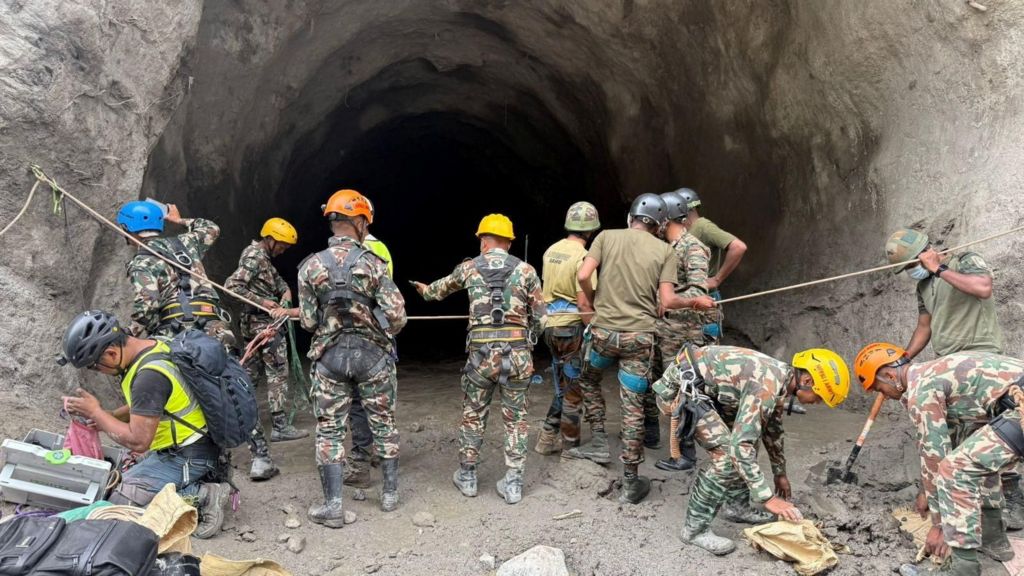
    As of Monday, Nepalese Army teams leading the search have turned to controlled explosives to blast through rock and debris on the collapsed hillside to clear access routes to the tunnel network, after which rescue crews pump compressed air into the trapped space to sustain any possible survivors. Disaster management officials have confirmed the overall death toll from the flood disaster has climbed to 939 in Nepal, with the official count of missing people revised upward to 3,925 – 592 of whom are foreign nationals. Roughly 14% of all missing people are workers employed at the damaged hydropower projects along the river, where 279 people have already been pulled to safety, according to Nepalese Prime Minister Balendra Shah.

    The massive search and recovery effort is being jointly spearheaded by Chinese and Nepalese military teams, with specialized technical experts from India, South Korea and Australia also contributing expertise to the complex underground operation. The Trishuli River basin, located in Nepal’s mountainous northern region, is home to a suite of major hydropower projects that the country, which relies heavily on hydroelectric power for its energy supply, has spent decades developing. Officials confirmed at least 11 operational and under-construction hydropower projects suffered severe damage when the floodwaters hit.

    For families waiting at the operation’s perimeter, every passing minute feels like an eternity, and many have criticized the pace of the rescue for being unacceptably slow. “I still have a 50% hope that he is alive because there is an oxygen system inside,” Sita Pandey, whose husband was working in the plant when the floods hit, told Nepalese daily newspaper Kantipur. Anushila Bhandari, wife of 33-year-old missing engineer Aurus Bhandari, shared her desperate plea with BBC Nepali: “I wish we could find him. I wish he would come home.” Jiban Khadka, who has a relative trapped in the tunnel network, echoed the widespread frustration: “The longer it takes, the more our hope dies. This operation must move much faster because every second is meaningful to us. It’s a frustratingly slow operation.”

    Rescue teams made limited progress on Monday, when one search team managed to advance into a tunnel leading to one of the hydropower plants, only to withdraw after finding no signs of trapped workers. Air pumping operations into accessible tunnel segments began over the weekend, but family members argue that life-saving efforts should have been launched far earlier.

    Australian tunneling expert Arnold Dix, who is advising Nepalese authorities on the search remotely, explained the extraordinary challenges rescuers face in navigating the transformed landscape. “The actual signature of them has gone – everything is just missing. It looks like a lunar landscape,” Dix told BBC Radio 4’s *World at One*. The former head of the International Tunneling Association added that massive boulders, some larger than residential homes, have blocked all original access points, forcing crews to rely on controlled blasts to clear paths: “I’ve never seen that before in my life. It’s just an extraordinary operation.” Even amid the logistical hurdles, Dix remains cautiously optimistic that some survivors may be found, noting that the enclosed tunnel environment could have provided protection from the fast-moving floodwaters.

    Downstream in Nepal’s Chitwan District, the tragedy has moved to the grim phase of recovering and identifying victims. Floodwaters carried nearly 300 bodies to the district’s riverbanks, overwhelming local authorities who have been forced to arrange makeshift burials for unidentified remains, as there are not enough refrigeration units to store all the corpses. Local chief district officer Ganesh Aryaal told BBC Nepali: “We don’t have enough freezers here… We had to choose this last alternative of temporary burial system. We are really overwhelmed.” Medical teams and volunteers have begun extracting DNA samples from the remains to enable future identification, so relatives can claim their loved ones once testing is complete.

    Across the border in Tibet, Chinese state media reports a death toll of 16, with another 546 people listed as missing. Footage and first-hand accounts of the disaster have been heavily censored on Chinese digital platforms, and authorities have issued administrative penalties – ranging from fines and warnings to short-term detentions – for social media users who speculate that the actual casualty count is far higher than the official figure. Nepalese authorities have also taken steps to curb what they classify as misinformation, ordering the removal of social media content that spreads unconfirmed claims about the flood disaster.

    To date, Prime Minister Shah confirmed that a total of 11,379 people have been rescued from flood-affected areas across Nepal, and that rescue operations have been intensified to accelerate progress for the trapped hydropower workers.

  • China’s visa-free boom is rewriting inbound tourism

    China’s visa-free boom is rewriting inbound tourism

    On August 20 this year, China’s National Immigration Administration announced two key adjustments to its visa-free entry policies, adding Kyrgyzstan and Vietnam to the list of eligible countries for the 240-hour visa-free transit program. This expansion brings the total number of qualifying nationalities for the policy to 57, while the parallel 30-day visa-free travel scheme for the southern island province of Hainan has grown to cover 61 nationalities.

    Though these modest, incremental policy changes received only passing coverage in global wire reports, they mark the latest milestone in one of the most underreported major travel shifts of the decade: China is steadily reopening its borders to international travelers at a pace and scale that most visitors from Western nations have not yet recognized.

    New official data underscores the rapid growth of this trend. China’s National Immigration Administration reports that in the first half of 2026, the country recorded 22.91 million entries by foreign nationals, representing a 20.4% year-on-year increase. What is even more striking is the composition of these arrivals: 17.8 million entries, or 77.7% of the total, used visa-free entry channels, marking a 30.6% jump from the same period last year.

    The ten largest source markets for international arrivals to China are South Korea, Russia, Malaysia, Vietnam, Thailand, Singapore, the United States, Japan, Mongolia and Australia, which together account for 62% of total entries. This broad geographic distribution challenges the common narrative that only regional neighbors are taking advantage of new visa-free rules.

    This wave of policy liberalization is no one-off stimulus measure; it is the result of a deliberate, step-by-step rollout that has been unfolding for years. Unilateral visa waivers for ordinary passport holders launched in December 2023, starting with six European nations and Malaysia. The program was repeatedly expanded throughout 2024 and 2025, and the United Kingdom and Canada were added to the unilateral waiver list in February 2026, bringing the total number of eligible countries for that scheme to 50 by the end of the first half of 2026.

    Complementing these unilateral waivers is the 240-hour visa-free transit policy, which now opens 10 days of visa-free stay to citizens of 57 countries. Eligible travelers holding valid ordinary passports and confirmed onward tickets to a third country or region may enter China through any of 65 participating ports of entry, including major hubs in Beijing, Shanghai and Guangzhou. The policy permits travel for tourism, business and family visits, though work, study and journalism still require pre-approved specialized visas.

    What official policy announcements do not always communicate is the on-the-ground experience for visitors, which is where the large gap between policy change and global public perception persists. Here are three key details most outdated travel guides get wrong:
    First, the 240-hour transit policy is far more practical for casual visitors than most travelers assume. A 10-day visa-free stay is long enough for a substantive introductory trip: it can accommodate visits to Beijing and the ancient capital of Xi’an, a journey to Shanghai and Chengdu, or a high-speed rail loop through the economically dynamic Yangtze River Delta.

    That said, there are important caveats that many first-time visitors miss. Under the transit rules, travelers must exit China to a third country or region rather than flying directly back to their country of origin, and itinerary regions are constrained, so careful advance planning is non-negotiable. This requirement is the most commonly misunderstood detail in online travel forums, and this lack of clarity has turned many promising “visa-free” trips into frustrating border denials for unprepared visitors.

    Second, the travel infrastructure that once intimidated international visitors has undergone massive upgrades to accommodate global travelers. China’s high-speed rail network now exceeds 40,000 kilometers in length, making it the largest such network in the world, with 350 km/h premium services connecting all major tourist corridors. Booking tickets with a foreign passport is a straightforward process through official channels, and English-language customer support has improved dramatically in recent years.

    The long-standing “cashless payment barrier”, once the biggest practical headache for foreign visitors, has largely been dismantled. Leading Chinese mobile payment platforms Alipay and WeChat Pay now accept international Visa and Mastercard credit and debit cards, and both platforms offer built-in translation tools. Major ride-hailing platform Didi supports foreign phone numbers for registration, and prepaid eSIM tourist packages from domestic mobile carriers allow visitors to connect to the internet within minutes of landing, eliminating the need to hunt for a physical SIM card on arrival.

    Third, and most importantly, outdated information remains the single largest barrier to growth, based on six years of on-the-ground experience living in Xi’an. Most English-language travel guidance for China was written between 2019 and 2023, when entry rules were strict and practical travel for international visitors was genuinely difficult. That outdated guidance warned travelers to expect widespread payment problems, booking complications and app-based access barriers that no longer exist for most visitors.

    A large share of that old guidance is now obsolete, and in some cases it actively misleads travelers. Visitors who rely on outdated guides often miss the fact that the 240-hour visa-free policy exists, fail to realize that their passports qualify for entry, or still incorrectly believe that international bank cards do not work on major Chinese payment platforms.

    This information asymmetry has major implications not just for individual tourists, but for the global travel industry as a whole. China is one of the only major global travel destinations currently undergoing an aggressive, policy-driven push to open its borders to international visitors. Airlines, hotel groups, tour operators and travel insurance providers that update their guidance to reflect new entry rules and on-the-ground conditions are well positioned to capture rapidly growing demand. By contrast, businesses that still rely on pre-2024 assumptions about travel to China are leaving significant revenue on the table.

    The steady pattern of expansion – adding two new countries to eligible lists every few months, on a predictable schedule – suggests this trajectory of gradual liberalization will continue through at least 2027.

    None of this is to downplay remaining challenges for international visitors. Access to most Western digital services still requires a virtual private network (VPN), some smaller local merchants still only accept cash or domestic QR code payments, and perennial travel hurdles including crowds, seasonal weather and language barriers have not disappeared.

    But the core value proposition for travelers has changed fundamentally. For a growing share of the world’s passport holders, China is now easier to enter, more affordable to travel around, and more navigable than at any point in the past two decades.

    The boom in visa-free travel to China is far more than a minor policy footnote. It represents a structural shift in how, and how many, foreigners get to experience China. Travelers who take the time to learn the new rules, plan their itineraries to comply with transit requirements, and arrive with updated expectations will encounter a version of China that old guidebooks never described. The rest of the world is still playing catch-up to this quiet transformation.

  • US singer D4vd’s celebrity lawyers withdraw from murder case

    US singer D4vd’s celebrity lawyers withdraw from murder case

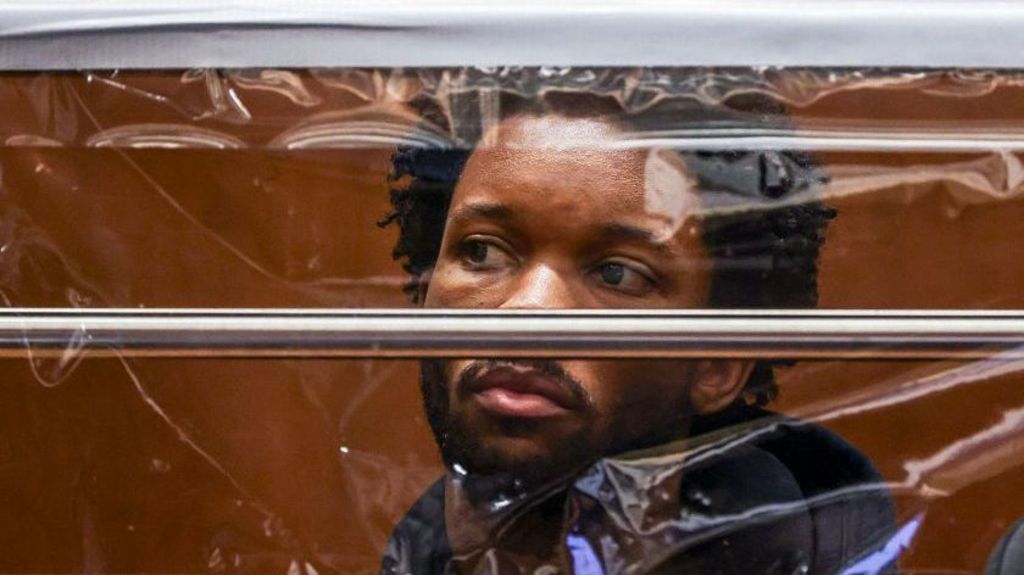
    In a major development in a high-profile Los Angeles criminal case, the team of high-profile celebrity attorneys that was set to defend rising US musician D4vd, legally known as David Anthony Burke, has formally withdrawn from the 21-year-old artist’s upcoming capital murder trial. The 21-year-old performer, who faces horrific charges including first-degree murder, sexual abuse of a minor, and mutilation of human remains, has now been assigned a court-appointed public defender from the Los Angeles County Public Defender’s Office to lead his defense.

    Burke is accused of killing 14-year-old Celeste Rivas Hernandez in April 2025. Hernandez’s remains were discovered last September inside a Tesla registered to an address linked to Burke. Prosecutors have laid out a disturbing narrative alleging that after years of ongoing sexual abuse, Burke stabbed the teenager to death and dismembered her body to cover up the abuse. They argue the killing was motivated by financial and professional self-preservation: Hernandez had threatened to expose her underage relationship with Burke, a move that would have destroyed his multi-million-dollar music career. The case carries special circumstances tied to this alleged motive that make Burke eligible for the death penalty if convicted.

    During a preliminary hearing held last month, court officials reviewed evidence of threatening text messages Hernandez sent to Burke days before her death. On April 22, 2025, amid an argument over Burke’s friendship with another minor, Hernandez sent a profanity-laden message reading, “I swear to GOD I will kill u,” followed by threats to strangle him, lie to her father about his actions, and “end ur career and ur life.” Prosecutors say that the day after these threats were sent, Burke arranged for an Uber to pick up Hernandez and bring her to his Hollywood home, where he allegedly carried out the killing.

    Last month, a judge ruled that there was sufficient evidence to move forward with a full murder trial. During Monday’s court proceeding, charges were formally read to Burke, and he formally re-entered his not guilty plea to all counts. The three lead defense attorneys — Blair Berk, Marilyn Bednarski, and Regina Peter — confirmed their exit from the case in an official statement shared with the BBC, noting that the court had granted their request to withdraw and that Burke meets eligibility requirements for court-appointed counsel.

    Berk, the lead attorney on the original team, is one of the most well-known criminal defense attorneys in the entertainment industry, having previously represented high-profile clients including actor Mel Gibson, disgraced film producer Harvey Weinstein, pop icon Britney Spears, and actress Lindsay Lohan. In their statement, the outgoing legal team reaffirmed their support for Burke, saying, “We continue to support David and his defense against these serious charges. We are grateful that the Los Angeles County Public Defender’s Office has taken over the representation and that David has a highly capable and committed team of attorneys and investigators behind him.”

    Walid Kandeel, a deputy public defender now leading the defense, emphasized the core right to counsel in the American justice system in an official statement. “Burke is entitled to a defense that takes his circumstances seriously and carefully examines the evidence,” Kandeel said, adding, “We are committed to providing him with that defense.” A pretrial hearing to outline next steps for the case is scheduled for October 19, with a full criminal trial expected to begin at a later date.

  • Yemen’s traditional arms trade has evolved into a modern, internet-driven marketplace

    Yemen’s traditional arms trade has evolved into a modern, internet-driven marketplace

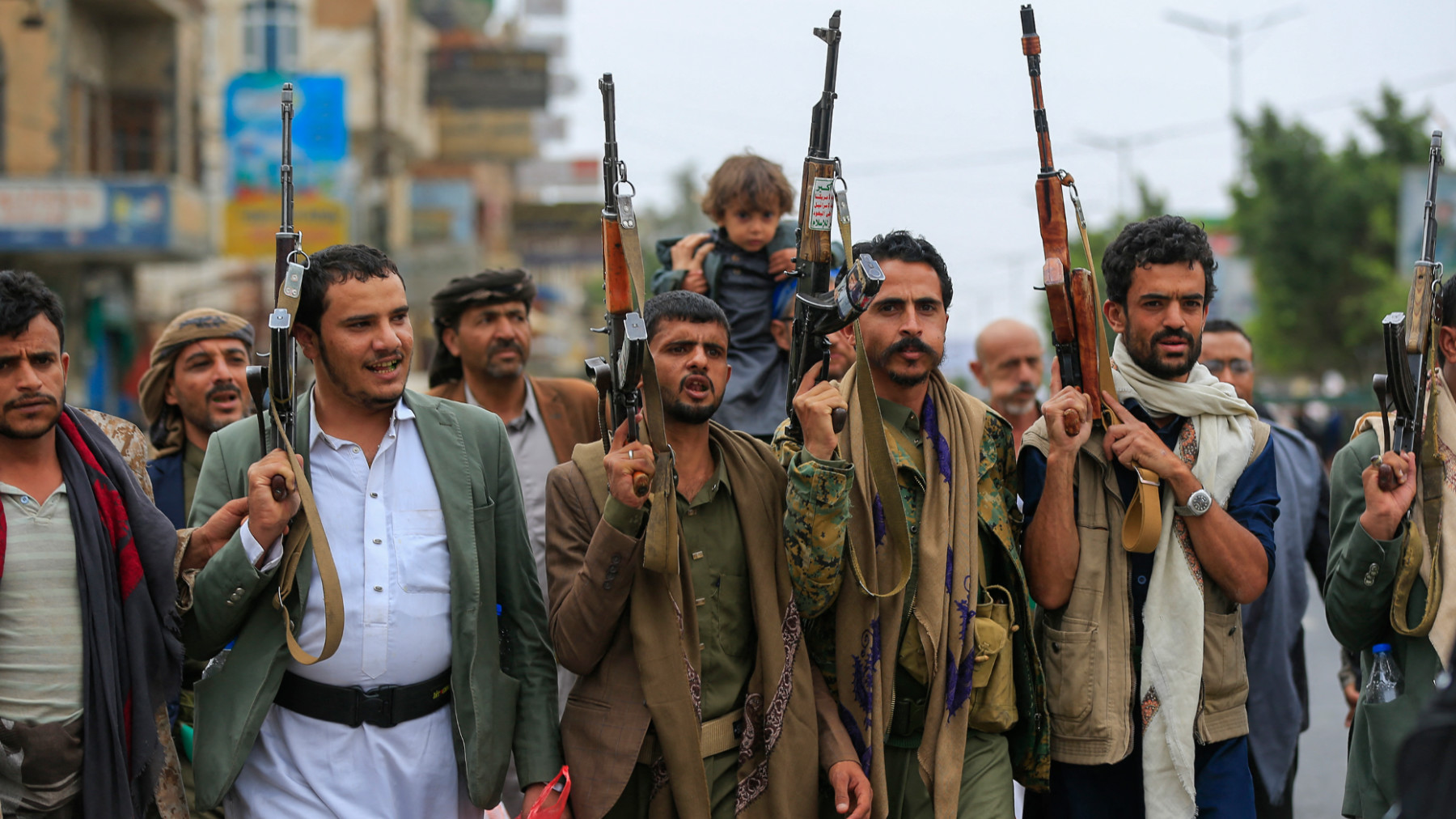
    For generations, weapon ownership has been far more than a personal choice in Yemen—it is a deeply ingrained cultural pillar that shapes social hierarchy, where a high-end Kalashnikov or premium handgun signals a man’s social standing, and those without firearms are often pushed to the margins of community respect. Even as segments of the educated population push back against this unwritten social rule, the tradition remains firmly embedded in Yemeni daily life, and is now undergoing an unexpected digital transformation.

  • ‘I haven’t lost my hope’ – the search for missing loved ones

    ‘I haven’t lost my hope’ – the search for missing loved ones

    In the wake of devastating flash floods that swept through parts of Nepal, leaving a trail of destruction and loss in their path, grieving relatives of those still unaccounted for refuse to abandon the belief that their family members may still be alive. Weeks after floodwaters rushed through communities, destroying homes, sweeping away infrastructure and claiming dozens of confirmed lives, the search operation for missing persons continues, slowed by challenging terrain and lingering hazards in flood-stricken regions. For many families, waiting for official updates has turned into an agonizing limbo, yet even amid widespread despair, many cling to small sparks of optimism. “I haven’t lost my hope,” one relative shared, a sentiment echoed by dozens of other families who continue to comb affected areas, ask local residents for any sightings, and wait by emergency response centers for any news that could bring their loved ones home. Aid organizations and local rescue teams have persisted in search efforts, expanding operations to hard-to-reach river valleys and remote settlements that were cut off immediately after the disaster. While rising death tolls have cast a shadow over the entire region, the unwavering hope of these families has become a quiet testament to the endurance of human connection in the face of natural catastrophe.

  • Company offering reward for safe return of truckload of beer

    Company offering reward for safe return of truckload of beer

    A brazen cargo theft at a Southern California distribution center has left iconic brewer Pabst Brewing Company turning to the public and social media to recover thousands of pounds of stolen Pabst Blue Ribbon (PBR) beer, worth an estimated $25,000. The incident, which unfolded on August 17 at Anheuser-Busch’s Montclair distribution facility, is one of two linked cargo heists pulled off the same day that have law enforcement investigating a potential coordinated fraudulent theft ring.

    According to Montclair Police Department officials, the alleged perpetrator gained access to the PBR shipment by presenting falsified pickup documentation. The 18,144-kilogram (40,000-pound) load was bound for retailers in San Diego when it was driven off the lot. The theft occurred just one hour after a separate, similarly fraudulent pickup of a cargo shipment valued at $45,000 that was en route to Tucson, Arizona. To date, that first shipment remains missing two weeks after it was supposed to arrive at its destination.

    Investigators have confirmed multiple key similarities between the two incidents, noting that all details provided for the supposed trucking company, driver, and vehicles involved contained significant inconsistencies that are still being probed. While Pabst Brewing is an independent brand, it holds a production contract with Anheuser-Busch that sees the lager brewed at Anheuser-Busch facilities, including the Montclair center. It has not yet been confirmed whether the missing Arizona-bound shipment also contained PBR products.

    A company spokesperson clarified to CBS News, a partner of the BBC, that the theft was carried out by a single bad actor who impersonated the authorized carrier scheduled to collect the shipment before driving away with the full load.

    In a playful yet earnest social media appeal, Pabst has leaned into its brand identity while asking for the public’s help locating the stolen beer. The company acknowledged the situation sounds inherently absurd, but emphasized that it is treating the theft with full seriousness. “We realise how ridiculous that sounds, but it’s the truth,” the company shared in its public post. “This is real and we are deadly serious.”

    In a lighthearted nod to its founding year, Pabst extended a limited amnesty offer to the thief, giving them exactly 18 years and 44 minutes to return the full shipment with no questions asked. Beyond the amnesty window, the brewer has also put up an unspecified reward for any tip that leads to the safe recovery of the stolen PBR load. Law enforcement is continuing to work through inconsistencies in the fraudulent paperwork and vehicle details to identify the perpetrators behind the linked heists.

  • Ben Gvir films Palestinian women in cells, boasts of worsening prison conditions

    Ben Gvir films Palestinian women in cells, boasts of worsening prison conditions

    On Sunday, Israeli media circulated a video originally posted to far-right National Security Minister Itamar Ben Gvir’s X account that documents his incendiary visit to Damon Prison, the facility where dozens of Palestinian female prisoners are currently detained. The footage captures Ben Gvir entering the prisoners’ cells unannounced, publicly boasting about the severe, substandard conditions of their confinement even as detainees confront him with complaints about their treatment. In the exchange captured on camera, one prisoner outlined the harsh realities of her detention, but Ben Gvir dismissed her grievances outright, affirming that the era of tolerable conditions in Israeli prisons for Palestinian detainees had ended. “I am directly responsible for everything, and I am pleased with these conditions,” he told the women. In his accompanying social media post, Ben Gvir added that prisoner “whining” about poor conditions would not change his approach, confirming he would continue to enforce a policy that provides only the “bare minimum of the minimum” for detainees. The release of the video has triggered immediate widespread condemnation from Palestinian rights groups, international activists, and political factions, who frame the incident as open, documented proof of a deliberate state policy of abusing Palestinian prisoners. This is not the first time Ben Gvir has drawn heavy criticism for his treatment of detainees: the minister previously shared other prison videos in which he mocked Palestinian prisoners’ complaints about inadequate access to food, clean water, and humane living conditions. As the footage spread across social media, both international solidarity activists and Israeli anti-war activists gathered for a vigil outside the walls of Damon Prison to stand with the female detainees and protest Ben Gvir’s harsh policies. Sharif Tahaineh, husband of 49-year-old detainee Hanaa Tahaineh from Jenin’s Silat al-Harithiya town, confirmed that both his wife and fellow prisoner Yasmin Shaaban appear in the video, with Shaaban speaking on camera about the harsh conditions. Tahaineh, who was released from Israeli detention in early June after serving 22 months, told Middle East Eye he was shocked to see Hanaa’s drastically altered appearance, marked by severe weight loss, when the video was published. He explained that Hanaa was arrested just one week before his own release, and is currently being held under Israeli administrative detention — a controversial, renewable practice that allows indefinite detention without charge or trial. A mother of six children ranging from 10 to 24 years old, Hanaa lives with chronic rheumatism and migraines, and recently contracted scabies while in detention. With no access to medical treatment for the parasitic infection, she was forced to smear toothpaste on her skin to relieve the itching, her lawyer confirmed during a recent visit. Having experienced the harsh conditions of Israeli imprisonment firsthand, Tahaineh said he deeply understands his wife’s current suffering. He also noted that Ben Gvir explicitly targeted detainees from Jenin during the visit, telling the women “Tell Jenin that the prisons have gone from bad to worse” — a choice Tahaineh says confirms the video’s purpose was to deliberately humiliate and degrade the female prisoners. Critics of Ben Gvir argue that publishing the footage does more than document routine prison operations: it turns the extreme suffering of detainees into political propaganda for the far-right minister, at a time when global and regional concern over the treatment of thousands of Palestinian detainees in Israeli prisons has reached new heights. The Palestinian Prisoners’ Club (PPC), a leading advocacy group for detainees, described the cell raid as an extension of a systematic Israeli policy that targets all Palestinian detainees, male and female, turning their abuse, rights violations, and what the group calls an ongoing process of genocide into political theater to boost domestic support. The PPC added that Ben Gvir’s actions go far beyond simple incitement, representing a deliberate provocation that abuses and dehumanizes detainees while turning prisons into a stage for far-right political posturing. “The Israeli prison system has become one of the most prominent sites of genocide, which has led to the deaths of more than 100 prisoners, 91 of whom have been identified, while Israel continues to withhold the bodies of some and conceal the fate of others,” the group said in a statement. Hamas, the governing Palestinian faction in Gaza, labeled Ben Gvir’s actions a clear example of “the level of fascism and political and moral depravity” that defines the Israeli occupation. In a Sunday statement, the group said the incident exposes the “vengeful, terrorist mentality that governs the behaviour of the Israeli occupation and its leaders, which cannot be tolerated.” Hamas warned that turning prisons into open spaces for abuse, humiliation, threats, torture, and murder, and exploiting detainee suffering for cheap domestic political gain, carries severe risks. The Palestinian Islamic Jihad movement held the entire Israeli government fully accountable for the safety and wellbeing of all Palestinian detainees, male and female, and called on international and humanitarian institutions to take urgent action to expose Israeli abuses and bring an end to ongoing violations. The Palestinian Center for the Defense of Prisoners called the raid a blatant act of organized state abuse against female detainees, arguing that Ben Gvir’s public video sends a message to prison staff that repressive and degrading treatment of detainees is encouraged. “What is happening inside the prisons is not an isolated incident, but rather a broader policy for which the occupation government and the prison system bear responsibility,” the group added.

  • Why has organised crime exploded in Palestinian communities in Israel?

    Why has organised crime exploded in Palestinian communities in Israel?

    Two decades ago, a high-profile assassination attempt on one of Israel’s most notorious Jewish crime bosses reshaped the entire national approach to organised criminal networks. In December 2003, a powerful bomb detonated in central Tel Aviv, targeting Zeev Rosenstein. Rosenstein survived the attack – the seventh attempt on his life – but three innocent bystanders were killed. At the time, the violence unfolded against the backdrop of the Second Intifada, and laid bare the expanding influence of criminal underworld groups, sparking public outrage across the country. To address this growing threat, then-prime minister Ariel Sharon’s government introduced sweeping reforms that would redefine how Israel tackled organised crime, reclassifying it not as a routine law enforcement challenge, but a strategic threat to the nation’s social and economic stability. The cabinet passed Resolution 4618, which established an aggressive, cross-agency strategy uniting the Israeli Police, Tax Authority, State Attorney’s Office and anti-money laundering and terror financing watchdog. Unlike previous enforcement efforts that focused on arresting low-level street operatives, the new policy targeted the financial backbone that allowed large syndicates to operate. A complementary resolution, 4619, laid the legal groundwork for a permanent Witness Protection Authority, while significant funding was allocated to expand elite enforcement units. Together, these reforms gave law enforcement a far broader toolkit of legal, operational and financial resources to dismantle major criminal networks. At the time of the crackdown, Israel’s most powerful organised crime groups were overwhelmingly led by Jewish figures, operating across domestic and global markets, with many counting among the most wanted targets of the FBI and Interpol. The Abergil syndicate, for example, was labelled a major international criminal organisation by U.S. authorities. Over the following years, sustained cross-border cooperation and aggressive enforcement delivered tangible results: four of the six largest Jewish criminal groups – including the Rosenstein, Abergil, Abutbul and Shirazi organisations – were fully dismantled or left severely weakened, while the remaining two linked to Shalom Domrani and the Mosly family survived only as fragmented, far less powerful entities. In this same era, organised crime in Palestinian communities within Israel remained a relatively marginal phenomenon, concentrated primarily in poorer neighborhoods of historic mixed cities such as Jaffa, Ramla, Lod and Acre, where many Palestinian families who remained in the territory after the 1948 Nakba lived under persistent socioeconomic hardship. For most Arab towns and villages, large-scale organised criminal activity was largely unheard of. But as Jewish organised crime networks collapsed, a power vacuum began to emerge, and criminal activity gradually shifted into Palestinian communities, where the conditions allowed syndicates to grow rapidly: weak state presence, limited routine policing, widespread access to illegal firearms, systemic economic marginalisation and vulnerable local government institutions. The most devastating measure of this shift can be seen in the soaring homicide rate. In 2015, 58 people were murdered in Palestinian communities across Israel. By 2019, that number climbed to 89. In 2024, it hit 230, and rose again to 254 in 2025. What began as a peripheral criminal issue has grown into one of the most pressing political and social crises facing Palestinian citizens of Israel, who make up roughly 20% of the country’s total population. The disparity in violence is compounded by a equally stark gap in law enforcement outcomes. In 2025, more than 80% of all murder victims in Israel were Palestinian citizens. In 2024, only 15 to 18% of homicides in Palestinian communities were solved, compared to a clearance rate of more than 50% for murders in Jewish communities. That means more than four out of five killings in Arab areas go unsolved, highlighting a systemic gap in equal protection under the law. The per capita disparity is even more striking. A 2023 academic study comparing homicide rates in Palestinian and Jewish Israeli communities to OECD standards found the homicide rate for Palestinian citizens stood at roughly 11 per 100,000 people, while the rate for Jewish Israelis was just 0.64 per 100,000. The gap has also widened dramatically: before 2015, the ratio of homicides in Palestinian versus Jewish communities was roughly 4 to 1; by 2023, it had grown to 13 to 1. This crisis extends far beyond the realm of criminal justice. It has evolved into a fundamental question of equal citizenship, state accountability, political representation and the unequal distribution of basic security. Today, multiple large criminal syndicates operate openly in Palestinian communities across Israel, with activities spanning drug trafficking, protection racketeering, predatory high-interest lending, extortion, weapons smuggling, and increasingly sophisticated efforts to seize control of public resources. In recent years, these groups have expanded their reach into local government, seeking influence over municipal elections, intimidating elected officials, pressuring public tender committees and infiltrating public contracting processes. Sectors including waste management, recycling, construction, transportation and public education budgets have become major targets for criminal revenue streams. Organised crime is no longer confined to activity outside of state institutions; in many Palestinian communities, syndicates have embedded themselves within public governance, bending systems to serve their own profit and power. They control which businesses win municipal contracts, which candidates can safely run for office, and how public funds are distributed, allowing their influence to reshape every aspect of daily economic, political and social life in affected areas. The 2025 municipal crisis in Nazareth, one of Israel’s largest Arab-majority cities, illustrates how deeply criminal groups have penetrated public institutions. A major waste management and municipal finance scandal erupted that year, with criminal organisations suspected of infiltrating municipal systems and gaining control over lucrative public contracts. The investigation ultimately led to the arrest of sitting mayor Ali Salam. Similar patterns have emerged in smaller towns including Arraba, where a local mayor uncovered massive irregularities in municipal spending, discovering the town was paying drastically inflated prices for routine services such as waste collection. After repeatedly appealing to national state authorities for intervention, the mayor’s home was targeted in a gun attack, and he received repeated death threats for his efforts to root out criminal influence. These cases expose a central contradiction of the crisis: the state demands local Arab leaders resist organised crime infiltration, but offers little to no protection for officials who confront powerful syndicates. The Abu Latif organisation, based in the Druze town of Rameh, exposes deeper complexities of the crisis. Many members of the extended Abu Latif family have served in Israeli security institutions, a common career path for Druze citizens, but the group has been accused of directly challenging state authority. As early as 2001, family members were arrested on serious security charges, including operating as foreign agents, providing assistance to Hezbollah, and smuggling weapons, explosives and drugs from Lebanon into Israel. In subsequent years, the organisation was found to have infiltrated even sensitive Israeli state economic structures, with investigations alleging members used extortion and threats to win control over Ministry of Defense and Israeli military construction tenders, including infrastructure projects along the Lebanese border and facilities tied to the Israeli Air Force. Members of the organisation were quoted in court testimony as telling victims, “We are the state.” That stark claim cuts to the core of the crisis: organised crime does not merely operate in the gaps of state authority; it seeks to replace that authority, exploiting public budgets and building its own parallel systems of power through fear and violence. Another layer of the crisis stems from Israel’s longstanding practice of relying on Palestinian collaborators from the occupied West Bank and Gaza. When a collaborator’s identity is exposed, they can no longer safely remain in their home community, so the Israeli state often relocates them and their families to Palestinian towns and mixed cities inside Israel’s 1948 borders, frequently under new identities. Many of these relocated individuals face precarious legal and socioeconomic status, with limited access to stable citizenship, public services, formal employment and long-term social support. Left marginalized in already disadvantaged Palestinian communities, some eventually become involved in local criminal networks. The issue sparked major controversy in 2021, when a senior Israeli police official publicly acknowledged that law enforcement investigations were often hampered by the fact that some individuals involved in serious violent crime also worked as informants or collaborators for Israeli security agencies. According to the official, the protection afforded to these individuals because of their intelligence work often limits police ability to investigate or prosecute them, creating a direct conflict between two branches of the Israeli state: the security establishment, which prioritizes protecting intelligence sources, and the police, which is tasked with combating crime. For Palestinian residents of violence-affected communities, this bureaucratic conflict has tangible, deadly consequences: serious criminal actors are often left beyond the reach of routine law enforcement. The rise of organised crime in Palestinian communities cannot be separated from the broader political marginalization of Palestinian citizens in Israel. Even before Itamar Ben Gvir was appointed Minister of National Security, police response to violence in Arab communities was widely criticized for systemic neglect, institutional discrimination, low clearance rates and pervasive anti-Palestinian stereotyping. Under Ben Gvir’s tenure, these problems have acquired a new, more explicit political dimension: his time in office has been defined by efforts to reshape police leadership, promote officers aligned with his far-right ideological worldview, and prioritize policing according to his political agenda. The outcome of these policies is clear: homicide rates in Palestinian communities have continued to climb steadily. At the start of 2026, the unaddressed crisis sparked one of the largest mass mobilizations by Palestinian citizens in Israel in recent history. The catalyst was a conflict in the northern Arab city of Sakhnin, where a bakery owner refused to continue paying protection money to a local criminal syndicate. Rather than submit to extortion, he announced he would close his business and lay off all his workers. His decision sparked a mass collective revolt. Business owners, ordinary residents, activists and local leaders joined the movement, and on January 22, tens of thousands of demonstrators gathered in Sakhnin, while the entire city shut down in a general strike against organised crime and state failure to address the crisis. The protest spread rapidly beyond Sakhnin, with Palestinian political leadership calling for a mass demonstration in Tel Aviv that drew tens of thousands more participants. For the first time, the crisis of organised crime became a central, unifying collective political demand for Palestinian citizens of Israel. Yet despite the unprecedented scale of the mobilization, criminal organisations continued to operate unimpeded, and homicide rates showed no significant decline. In response to growing public pressure, the Israeli government recently moved to deploy the Shin Bet, Israel’s domestic intelligence agency, to lead counter-crime efforts in Palestinian communities. The decision has drawn widespread opposition from Palestinian political leaders, civil society groups, legal experts and even former Israeli security officials. Critics do not argue that criminal organisations should be left unchallenged; instead, they warn of the danger of deploying an intelligence service built to counter national security threats to police a marginalized civilian minority community. The move has become even more controversial following the appointment of David Zini as head of the Shin Bet, a choice widely criticized for Zini’s extreme ideological positions and close political alignment with Prime Minister Benjamin Netanyahu. The result is a dangerous framing of the crisis: a civilian population demanding equal access to basic police protection is increasingly treated as a national security threat. None of these dynamics can be separated from the deep socioeconomic inequality that shapes life for most Palestinian citizens of Israel. Large segments of Palestinian society continue to face systemic poverty, underfunded public infrastructure, chronic housing shortages, limited formal employment opportunities, and chronic underinvestment in education and local government. At the same time, decades of neoliberal economic policy in Israel have reshaped internal dynamics within Palestinian society: a small, growing Palestinian middle class has emerged, with more Palestinians accessing higher education and entering professional sectors including technology, medicine, law and business. But this economic mobility has been deeply uneven, and economic inequality within Palestinian society itself has widened dramatically. While a small segment has benefited from integration into the Israeli economy, large segments remain trapped in persistent poverty, unemployment, underfunded education systems and geographically marginalized communities. A 2023 report from the Israeli State Comptroller highlights this gap: roughly 25% of Arab men and 34% of Arab women between the ages of 18 and 24 are neither employed nor enrolled in education or vocational training, rates far higher than those for Jewish young people. Large numbers of disconnected young people, growing up without access to stable opportunity or political hope, create fertile ground for criminal organisations to recruit new members. Organised crime fills the gaps left by state failure and economic exclusion: it offers income where the formal economy provides none, creates jobs where legitimate opportunities are absent, extends credit where banks refuse to lend, and wields power where state institutions are weak or unaccountable. This is why the explosion of organised crime in Palestinian society cannot be reduced to a purely social or criminal problem. While targeted law enforcement is a necessary component of any solution – including confiscating illegal weapons, dismantling syndicates, disrupting money laundering networks and prosecuting killers – policing alone cannot explain why organised crime grew exponentially in Palestinian communities even as it declined dramatically in Jewish Israeli society. The roots of the crisis lie in the intersection of multiple interconnected processes: the successful dismantling of major Jewish criminal networks following the 2003 reforms, decades of systemic underinvestment in Arab localities, chronic under-policing and low public trust in law enforcement, widespread availability of illegal firearms, deep socioeconomic inequality, the persistent political marginalization of Palestinian citizens, and the contradictions created by Israel’s broader security policies toward Palestinians. Together, these factors have transformed what began as a local criminal issue into a fundamental political crisis. For Palestinian citizens of Israel, the core question is no longer whether police can arrest individual criminal leaders. The deeper, unresolved question is why the Israeli state, which proved it could dismantle powerful organised crime networks in Jewish communities, has failed for more than a decade to deliver the same level of basic security to its Palestinian citizens. That question inevitably leads to a broader, more fundamental challenge to the nature of Israeli democracy: what does equal citizenship mean when the state’s ability and willingness to provide the most fundamental public good – personal security – varies so drastically between different groups of its citizens?

  • Erasmus fumes at Rennie rugby scrum claims as Springboks and All Blacks brace for 3rd test

    Erasmus fumes at Rennie rugby scrum claims as Springboks and All Blacks brace for 3rd test

    As world rugby powerhouses South Africa and New Zealand gear up for the third match of their landmark four-test series this Saturday at Johannesburg’s FNB Stadium, a war of words over the Springboks’ scrum play has emerged as the dominant talking point ahead of kickoff.

    The series is currently tied at one win apiece, after New Zealand claimed an opening 33-16 victory at Ellis Park, and South Africa fought back to secure a narrow 33-26 win in Cape Town last weekend. The pre-match friction began when All Blacks head coach Dave Rennie raised criticisms of the Springboks shortly after arriving in South Africa a month ago. His first complaint centered on claims that South Africa deliberately slowed the pace of play to neutralize New Zealand’s attack. After the first test, he doubled down on his critiques, alleging that the world-champion Springboks were illegally “walking around” during scrum engagements.

    Rennie repeated the scrum accusation following his side’s second-test defeat, prompting an angry, expletive-laced response from South Africa’s director of rugby Rassie Erasmus during his post-match press conference. On Monday, as Erasmus announced his matchday squad for the third test, he clarified that his frustration stemmed less from Rennie’s mind games and more from the way the unsubstantiated claims were being treated as confirmed fact by media and fans.

    “Once you put that narrative out like that, everybody starts focusing on that — all media, all podcasts — and a lot of people have got no real expert knowledge about how scrums work,” Erasmus told reporters. “I would not claim to be an expert on scrums myself, but I do know how our assistant coach Daan Human trains our scrum, and we would never instruct our pack to walk around. That is not how we play the game, that is not our strength, and there is no reason we would start doing that now.”

    Erasmus went on to note that he understood the strategic motivation behind Rennie’s comments, acknowledging that mind games are a common tactic in top-level rugby. He added that he holds his own grievances about aspects of the All Blacks’ play, but has chosen not to air those criticisms publicly through the media. Erasmus speaks from experience: he was suspended twice by World Rugby in 2021 and 2022 for publicly criticizing match officials, a penalty that taught him to keep public complaints in check.

    Observers of the series have weighed in on the pre-match spat, with former Springboks head coach Nick Mallett noting that psychological tactics aimed at putting pressure on an opponent are standard across elite rugby. Speaking to the *Talking Boks* podcast, Mallett warned that the back-and-forth between the two coaching staffs should not overshadow the historic nature of the four-test series. “Every coach does it,” Mallett said. “You identify an opposition strength, you try to negate it, and you use every tool available — including calling into question whether their advantages are legal. It is a common tactic.”

    Beyond the off-field drama, Erasmus has confirmed only one enforced change to the Springboks squad that secured the second-test win. Cheslin Kolbe will shift to fullback to replace injured starting Damian Willemse, with Kurt-Lee Arendse stepping into Kolbe’s vacated wing spot. Erasmus added that Willemse and three other injured backs — Handré Pollard, Grant Williams and Canan Moodie — are expected to recover in time to travel to Baltimore for the fourth and final test of the series next week.

    The Springboks have made clear they are entering Saturday’s match with the goal of securing a series lead, rather than settling for a split and heading to the United States for a decisive final match with the series still tied. “We’re desperate to make sure we don’t go to Baltimore to play for a draw,” Erasmus said.

  • John Galliano exhibition at New York Met cancelled after backlash

    John Galliano exhibition at New York Met cancelled after backlash

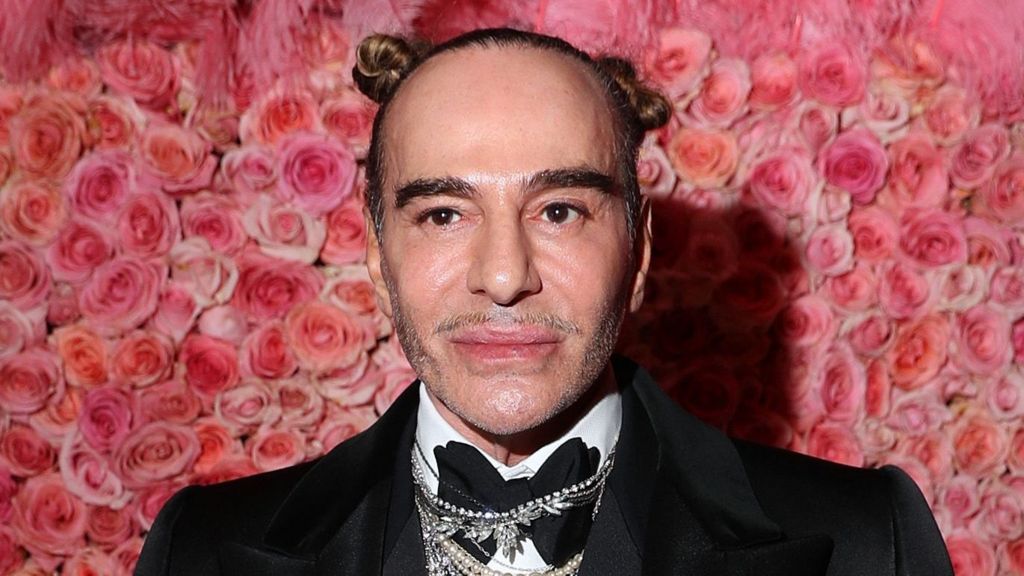
    In a decision that has sent ripples through the global fashion industry, iconic British designer John Galliano has called off a major retrospective of his decades-long career at New York’s The Metropolitan Museum of Art, following widespread public backlash sparked by his 2011 criminal conviction for hateful antisemitic and racist remarks.

    The Met had originally unveiled plans for the exhibition *John Galliano: Horizons*, scheduled to open to the public in May 2027. The show was also set to serve as the official thematic centerpiece for the 2026 Met Gala, the annual high-profile fundraising gala for the museum’s Costume Institute, scheduled to kick off on May 3 — a date that directly coincides with Yom HaShoah, the global day of remembrance for victims of the Holocaust.

    In a public statement released Monday, Galliano confirmed the cancellation, saying: “After much reflection and discussion with the Met and all those involved, I have decided, with great sadness, that it is best for the exhibition not to take place at this time.” The designer acknowledged the enduring harm of his past actions, taking full accountability for the pain his words inflicted on Jewish and South Asian communities more than a decade prior. “I remain deeply sorry for it,” he wrote. “I understand that meaningful atonement is not achieved through an exhibition, institutional recognition or a single public gesture. It is a continuing responsibility, demonstrated through listening, learning and one’s conduct over time.” He added that he recognized a career retrospective honoring his work would remain triggering for many, and had no desire to draw attention away from the transformative work carried out by the Met’s Costume Institute. He also noted his 15 years of continuous sobriety and recovery from alcohol and drug addiction, which he says has shaped his personal journey of growth over the past decade and a half.

    The controversy dates back to 2011, when Galliano was arrested and convicted in a Paris court for verbally abusing a Jewish curator at a local restaurant, hurling racist insults at her South Asian companion, and declaring admiration for Adolf Hitler in a separate incident. The outburst led to his immediate dismissal from his role as creative director of luxury fashion house Dior, a position that had cemented his status as one of the most influential designers of his generation. In the years following his conviction, Galliano gradually returned to the industry, serving 10 years as creative director of avant-garde label Margiela before stepping down in 2024.

    Vogue global editorial director Anna Wintour, a long-standing Met trustee and core organizer of the Met Gala, publicly expressed her full backing for Galliano’s decision. “John’s decision that the exhibition devoted to his work should not take place at this time is very courageous and a measure of the man he is,” Wintour said. “I believe this is the right decision, and both he and the Museum have my full support.”

    Despite Wintour’s support, opposition to the exhibition had mounted rapidly in recent weeks, particularly amid a documented nationwide surge in antisemitic incidents across the United States. New York City Council Speaker Julie Menin, who had led local pushback against the plan, praised the cancellation in a statement Monday. “From the beginning, I have told them that I strongly disagreed with this decision, and at this rising time of antisemitism, it had served as a gut punch to the Jewish community,” Menin said. “This is the correct decision, as the harm and pain this was causing was simply unacceptable.”

    Jonathan Greenblatt, CEO of the Anti-Defamation League — a leading organization dedicated to countering antisemitism and hate speech — also welcomed the outcome, noting that the current wave of antisemitism across the country made honoring Galliano a deeply misguided choice. “Even Galliano ultimately recognised what the Met should have done from the start,” Greenblatt said. “This was the wrong move at the wrong moment. Timing matters.”