博客

  • Tandem bicycle club in Ecuador’s capital leads blind riders to new adventures

    Tandem bicycle club in Ecuador’s capital leads blind riders to new adventures

    In the mountain-ringed capital of Quito, Ecuador, a 19-year-old community organization is redefining what freedom and inclusion mean for people living with visual impairment. What started as a spontaneous, one-off outing has grown into a thriving cycling collective that has opened up new worlds of adventure for more than 100 blind and low-vision residents across the country.

    Franklin Ochoa, a 44-year-old Quito local who lost his vision 16 years ago, is one of the group’s most passionate and adventurous participants. Before losing his sight, he never imagined he would take on long-distance cross-country cycling challenges — but since joining Ciegocleta, a club whose name blends the Spanish words for “blind” and “bicycle,” he has already checked a 1,000-kilometer (621-mile) trip spanning most of Ecuador off his bucket list. For Ochoa, the feeling of rolling into a new town on two wheels brings unrivaled joy. “When I arrive on a bike in a new city I feel like shedding tears of happiness,” he shared. “I love speed and I always tell my guide to let go of the brakes.” His next ambition is even more ambitious: a multi-month overland ride from his home country all the way to Mexico, and he has already found a volunteer partner ready to join the journey.

    The story of Ciegocleta begins with Miguel Ramos, a Quito resident who loved cycling and built his own custom tandem bikes in his spare time. Ramos originally constructed the multi-seat cycles to ride Quito’s popular weekly *ciclopaseo* — an event that closes major city avenues to motor vehicles, opening the space exclusively for cyclists and joggers — with his own children. Everything changed when one of his children was unable to join a ride, and he spontaneously invited his blind neighbor to take their place. That single outing turned into a regular tradition, and the informal group of tandem rides with sighted guides gradually evolved into the structured non-profit community Ciegocleta is today. The club now offers multi-seat bikes ranging from two-seat tandems to three and four-seat models that accommodate multiple visually impaired riders per trip.

    Today, the organization counts 150 registered members, with roughly 30 riders turning out for the weekly Sunday rides that remain the club’s core activity. Before each public ride, the group prioritizes safety and mutual understanding: visually impaired participants receive detailed safety guidance, while participating sighted volunteers complete a perspective-shifting exercise, riding a short distance with their eyes covered to experience the vulnerability and trust their riding partners navigate on every trip. For long-time member Ximena Lozano, a 54-year-old psychologist who was born without sight, the club has transformed her daily life. After spending much of her younger years confined to indoor activities like reading, writing, and web surfing, Ciegocleta gives her a consistent reason to explore the outdoors. “It gives me the chance to experience freedom,” she explained.

    The work of Ciegocleta fills a critical gap in accessibility for Ecuador’s visually impaired community. Official government data puts the total number of people living with vision impairment in the country at roughly 56,000. While blind Ecuadorians have made steady progress in accessing equal employment opportunities in recent years, inclusive access to recreational and sports activities remains a largely unmet need.

    Volunteers say the experience of participating in the club is just as transformative for them as it is for the visually impaired riders. José Paéz, one of the club’s long-time volunteers, joined after his father-in-law lost his sight rapidly to illness and fell into depression. Bringing his father-in-law to the club’s free rides became a way to help him regain his joy for life. Even for experienced cyclists, guiding a tandem bike requires new skills and patience. “At first it felt scary to lead a blind person on a bike,” Paéz recalled. “Keeping a tandem bike balanced and sustaining the rhythm is not as easy as when you use a regular bike.”

    For founder Ramos, the work of the club is about more than just cycling — it is a model for what genuine social inclusion looks like. “This is true inclusion,” he said. “We have blind people who are now enjoying cycling without any limits.”


  • Supreme Court clears way for Trump to keep building White House ballroom

    Supreme Court clears way for Trump to keep building White House ballroom

    In a highly partisan and closely watched 5-4 decision, the U.S. Supreme Court has ruled to allow the continuation of a $400 million construction project that includes a new ballroom and helipad on White House grounds, handing a legal victory to former President Donald Trump’s administration. The ruling blocks lower court decisions that had ordered work to stop on the above-ground segment of the development, which required the demolition of the historic original East Wing of the White House that Trump ordered launched last fall.

    The legal challenge to the project was brought by the National Trust for Historic Preservation, a nonprofit organization that advocates for the protection of culturally significant American landmarks. The group argued that the executive branch lacked unilateral authority to greenlight and carry out major construction on federal property in Washington D.C., pointing to longstanding federal law that requires explicit congressional approval for any new permanent structures on federally managed grounds in the capital.

    The ruling’s narrow margin reflects deep ideological divisions on the nation’s highest court. Earlier in the week, Chief Justice John Roberts, a conservative justice, had issued a temporary stay allowing construction to proceed while the court weighed the full emergency request from the administration. In a surprise twist, Roberts ultimately joined the court’s three liberal justices in dissent. In his dissent, Roberts wrote that the planned construction is likely unlawful, noting that Congress has explicitly barred the construction of new buildings on federal District of Columbia grounds without explicit congressional authorization, and no such authorization has been granted for this project.

    The five-justice conservative majority that backed the project issued an unsigned order justifying their decision. They wrote that the Trump administration had met the standard for a stay by showing it would face irreparable harm if construction were halted at this stage, and that the balance of legal and equitable considerations favored allowing work to continue. The majority also cast doubt on the challenger’s legal standing to bring the suit, noting the government is likely to ultimately prevail in its argument that the National Trust for Historic Preservation lacks sufficient legal standing to challenge the East Wing project in court.

    President Trump has long defended the project, framing it as a necessary upgrade to the White House’s event infrastructure. He has argued that the existing facility lacks a large enough space to host official state events, gatherings, and receptions, and has more recently emphasized that the project includes upgrades critical to presidential security. The work also includes construction of a new helipad on the White House South Lawn, with active construction work ongoing as of August 24, 2026 in Washington D.C.

    The National Trust for Historic Preservation has countered that the project already has caused and will continue to cause irreversible damage to the White House, a landmark that holds deep historical and cultural significance for the United States. The legal fight is expected to continue as the case moves forward through lower courts, even as construction can proceed in the interim.

  • Across Latin America, ‘aura battles’ burst onto the scene

    Across Latin America, ‘aura battles’ burst onto the scene

    A vibrant new social trend has rapidly captured the attention of young people across Latin America, with informal ‘aura battles’ emerging as one of the most talked-about youth activities in the region. Unlike traditional competitions that measure physical skill, academic performance or artistic talent, these novel contests center entirely on one intangible quality that many believe shapes personal and professional success: charisma.

    Participants in aura battles go head-to-head in friendly showdowns, where they work to convince judges and audiences that their personal ‘aura’ — the unique magnetic energy and presence they project — outshines that of their competitors. What began as a niche inside joke shared on social media platforms has quickly snowballed into a widespread cultural phenomenon, with gatherings popping up in major cities from Mexico City to Buenos Aires, and viral challenge clips racking up millions of views across TikTok, Instagram and YouTube.

    The sudden popularity of aura battles among Latin American youth reflects a broader cultural shift toward celebrating soft skills and personal authenticity in a post-pandemic world. After years of social distancing and remote interaction that left many young people feeling disconnected, these low-stakes, high-energy competitions offer a playful space for self-expression and connection. Unlike high-pressure competitive activities that focus on formal achievement, aura battles invite participants to embrace their unique personalities, turning the simple act of being oneself into a friendly game.

    Cultural observers note that the trend also taps into growing public fascination with the concept of aura and personal magnetism across global social media. What makes the Latin American iteration unique, they add, is how it blends regional cultural values of warm interpersonal connection and expressive communication with the viral mechanics of internet culture, creating a trend that feels both deeply rooted in local culture and perfectly suited for the digital age. As participation continues to grow, many organizers are now planning larger, public aura battle events that draw crowds of hundreds of spectators, cementing the trend’s place in contemporary Latin American youth culture.

  • The odds of survival for those trapped after Nepal flood

    The odds of survival for those trapped after Nepal flood

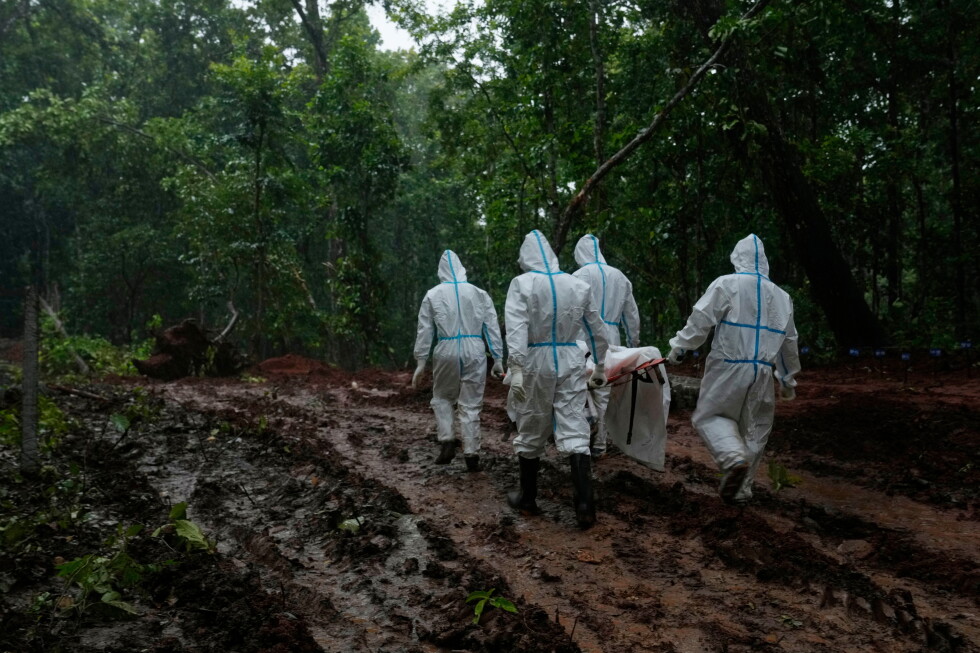
    KATHMANDU, Nepal — Catastrophic flash flooding and subsequent mudslides along the Nepal-China border have left a devastating trail of destruction, with the confirmed death toll surpassing 950 and thousands more still unaccounted for. As of Monday, Nepalese rescue teams have launched an urgent race against the clock to reach hundreds of construction workers who remain trapped in flooded and mud-buried tunnels at a Himalayan hydropower project.

    Disaster response experts emphasize that the first 72 hours after a disaster event are the most critical for saving lives, as survival prospects plummet rapidly without access to basic necessities like clean drinking water. Jennifer Horney, a disaster epidemiologist at the University of Delaware, explained that the outcome for trapped workers will largely depend on whether the hydropower site had pre-established emergency protocols for natural disasters or infrastructure outages.

    “If emergency plans were in place, workers would likely have been trained to locate emergency exits, but the extreme force of this flood has packed solid mud across the site, which could block even marked escape routes and make executing pre-planned rescue strategies incredibly difficult,” Horney noted.

    A core unanswered question remains: did the tunnels stock emergency supply caches that the trapped workers can access right now. Without clean, safe drinking water, even people with limited physical activity cannot survive longer than roughly three days, Horney added.

    Alongside clean water, access to breathable oxygen is another foundational factor for survival. Six days after the flood hit, concerns about suffocation are growing by the hour, though early reports suggest some workers have secured limited oxygen supplies. Jakob Steiner, a Dhaka-based geoscientist from the University of Graz in Austria, pointed out that the tunnels themselves are large enough to accommodate large construction vehicles, which leaves open some air pocket space for trapped people.

    “From what we have learned, rescuers have managed to route small amounts of oxygen to some groups of trapped workers, and active extraction efforts are ongoing,” Steiner said. “But this is still a race against time. Beyond oxygen, the trapped workers urgently need food and potable water to hold on.”

    Disaster preparedness experts add that there are multiple other factors that will shape survival outcomes beyond access to basic supplies. Thomas Chandler, director of Columbia University’s National Center for Disaster Preparedness, noted that the presence of serious injuries among trapped workers and the ability to deliver emergency supplies through temporary access routes are also critical variables. Chandler pointed to a 2023 Himalayan tunnel collapse triggered by a landslide, where 41 Indian workers were successfully rescued after 17 days trapped underground—an outcome made possible by pumping in consistent supplies of food, water and oxygen through narrow pipes during the rescue effort.

    The internal climate of the tunnels also impacts how long workers can survive. If the tunnels are hot and humid, dehydration will set in far more quickly, even for people who are conserving energy. For those who are eventually pulled out alive, disaster experts note that comprehensive physical and mental supportive care will be essential, as the stress of prolonged isolation and harsh conditions takes a major toll on survivors.

    This report was produced in collaboration with Associated Press journalists Shristi Kafle in Kathmandu and Huizhong Wu in Bangkok. The AP Health and Science Department receives funding support from the Howard Hughes Medical Institute’s Science and Educational Media Group and the Robert Wood Johnson Foundation, and retains full editorial independence over all content.

  • Festival honouring Dolly Parton set for Nashville and London

    Festival honouring Dolly Parton set for Nashville and London

    Country music legend Dolly Parton, who passed away at 80 on August 25 following a short battle with cancer, will be celebrated through a unique, star-studded two-day festival planned for London and Nashville, according to an official announcement from her estate released this Monday.

    Named DollyFest, the event will roll out across two consecutive weekends in 2027, with exact dates to be revealed at a later stage. What many fans do not know is that the celebration traces its origins back to Parton herself, who originally conceptualized an earlier iteration of the festival where she would host and take the stage alongside fellow artists. That first planned event, scheduled for January 2026, was quietly canceled before any public announcement after Parton faced unexpected health complications.

    Instead of a conventional public memorial service, which Parton explicitly did not want, DollyFest will stand as the official public tribute to her decades-long legacy. Parton was laid to rest this past Friday at a private family funeral held in Nashville, where she was interred beside her late husband Carl Dean at the city’s Woodlawn Memorial Park and Mausoleum, confirmed by her great-niece.

    Danny Nozell, founder and CEO of CTK Enterprises and the lead organizer of DollyFest, explained that the festival aligns perfectly with Parton’s personal wishes. “It feels more appropriate for us to take a beat, let all the tributes that immediately make sense occur naturally, and then, see through this festival-style concept that was truly dreamed up by Dolly,” Nozell said in the press release. He added that the event stays true to who Parton was, giving artists and fans across the globe space to participate, while also allowing everyone time to grieve and make preparations to join the celebration. The estate has also noted it does not discourage fans from holding their own personal tributes to Parton in whatever ways feel meaningful to them. “A lot of people always say, WWDD (What Would Dolly Do?), and, well, at this moment, DOLLYFEST is WDWD (What Dolly Would Do!),” Nozell added.

    Born in the Smoky Mountains of Tennessee, Parton built a seven-decade career as one of the most influential figures in modern music, alongside work as a celebrated philanthropist and businesswoman. Her discography includes some of the most recognizable songs in country music history, such as *Coat of Many Colors*, *Jolene*, and *I Will Always Love You*. Over her career, she earned 10 Grammy Awards, sold more than 100 million records worldwide, and penned thousands of original tracks. Parton often prioritized her identity as a songwriter over any other title, once saying: “It’s my way of expressing myself. It’s my therapy.”

    Since news of her death broke earlier last week, heartfelt tributes from celebrities, political figures, and millions of adoring fans have flooded social media platforms around the world, a testament to the far-reaching impact of her life and work. Now, DollyFest is set to deliver the large-scale celebration the icon always wanted, turning her original vision into a once-in-a-lifetime gathering for all who loved her music and legacy.

  • Araghchi blames ‘serpent’ Netanyahu for luring Washington into war on Iran

    Araghchi blames ‘serpent’ Netanyahu for luring Washington into war on Iran

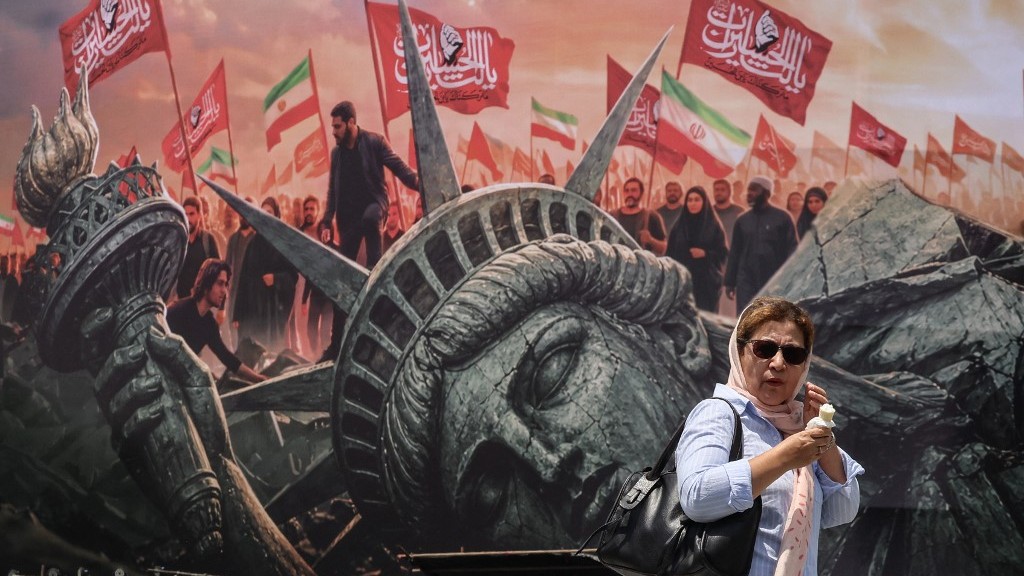
    Escalating tensions in the Middle East have reached a new flashpoint after U.S. forces carried out an airstrike on Iran’s Larak Island over the weekend, killing and wounding both Iranian civilians and military personnel, prompting sharp vows of retaliation from top Iranian officials.

    Speaking on Monday ahead of his departure for Bishkek, Kyrgyzstan, to attend the Shanghai Cooperation Organisation summit, Iranian President Masoud Pezeshkian reiterated that Tehran has no intention of initiating a full-scale conflict, but will not remain passive in the face of external aggression. “Iran is not looking for war, but we will never sit still in the face of any aggression,” Pezeshkian stated, according to reports from Iran’s Fars News Agency. He emphasized that any future attacks on Iranian territory will be met with a firm, decisive response from the Iranian government, adding that widespread instability across the region serves no nation’s interests and will create security challenges for all regional and global actors.

    The Sunday strike marked the first direct U.S. attack on Iranian territory since July, stoking widespread international fears of a further widening of the ongoing Israel-U.S. military campaign against Iran. Iranian Foreign Minister Abbas Araghchi quickly placed blame for the escalation on Israeli Prime Minister Benjamin Netanyahu, accusing Netanyahu of manipulating Washington into fighting a war on Israel’s behalf. The accusation came after Netanyahu admitted over the weekend that he had dedicated decades and nearly 1,000 hours of airtime to American television to build public support for military action against Iran. “In Hebrew, Netanyahu openly crows that he suckered the U.S. Administration into a war on Iran on behalf of Israel,” Araghchi wrote on the social platform X, labeling the Israeli leader a dangerous “serpent.”

    Deputy Iranian Foreign Minister Kazem Gharibabadi echoed the hardline stance, calling for an end to foreign interference in the Middle East and warning that Washington must be taught a “serious lesson” to deter future acts of aggression. The rising rhetoric of confrontation was further stoked by a provocative post from former U.S. President Donald Trump, who shared an AI-generated deepfake video claiming to show a devastating attack on Kharg Island, Iran’s primary crude oil export terminal. The video was captioned “Kharg Island being blown to smithereens!!! President DJT,” drawing swift dismissal from Iranian energy officials. The head of Iran’s National Oil Company dismissed Trump’s post as laughable, confirming that all normal operations at Kharg Island remain ongoing and security conditions are stable, even as workers continue to repair damage from earlier attacks. Prior to the current conflict, Kharg Island handled roughly 90 percent of Iran’s total oil exports.

    In a separate development that adds to regional maritime instability, Iran’s Islamic Revolutionary Guard Corps (IRGC) announced that a supertanker traveling via the southern route of the Strait of Hormuz hit two sea mines, causing a major fire and forcing the vessel to stop navigation. The IRGC Navy issued a stern warning following the incident, stating that any ship that violates Iran’s maritime security regulations through the strait can expect the same outcome, and mandatory compliance with navigation rules issued by the IRGC is required for all transiting vessels. Iran has effectively closed most of the strait—one of the world’s most critical global oil chokepoints—in recent months, though a small number of commercial vessels have continued to sail near Omani waters, occasionally with logistical support from the U.S. Tehran has repeatedly issued warnings against vessels using routes it has classified as unauthorized.

    Regional powers have stepped up calls for de-escalation to avert a full regional war. Anwar Gargash, a senior presidential adviser for the United Arab Emirates (UAE), renewed calls for “realistic and sustainable” political solutions centered on de-escalation and the full restoration of unimpeded commercial shipping through the Strait of Hormuz. Gargash argued that any new negotiation framework must go beyond the existing Memorandum of Understanding (MoU) between Iran and world powers, which he claimed failed to deliver a practical, widely acceptable roadmap for peace. Iran has maintained that any new talks with the U.S. must be built on the prior agreements laid out in the existing MoU, a position that puts the two sides at odds ahead of any potential negotiations. Separately, the UAE Ministry of Defense denied recent Iranian claims that missiles had targeted Al Minhad airbase on UAE territory, calling all reports of an attack completely false.

    Domestic friction within the U.S. military establishment has also emerged over the campaign against Iran. According to a new report from The Washington Post, the heads of all three U.S. military branches—Army, Navy, and Air Force—alongside regional commanders for Europe, Asia, and Latin America, have warned U.S. Secretary of War Pete Hegseth that ongoing large-scale military operations against Iran are overstretching American military assets across the globe. The U.S. has diverted significant numbers of warships, military aircraft, and equipment from other global command regions to support the Iran campaign, weakening commanders’ ability to carry out core mission requirements and conduct routine troop training. For months, more than 50,000 U.S. military personnel have remained on high alert, as the Trump administration continues to threaten additional attacks to force Iran to reopen the Strait of Hormuz and accept Washington’s terms for ending the current conflict.

  • Israeli army shoots first and finds reasons to justify mass killings later, veterans group says

    Israeli army shoots first and finds reasons to justify mass killings later, veterans group says

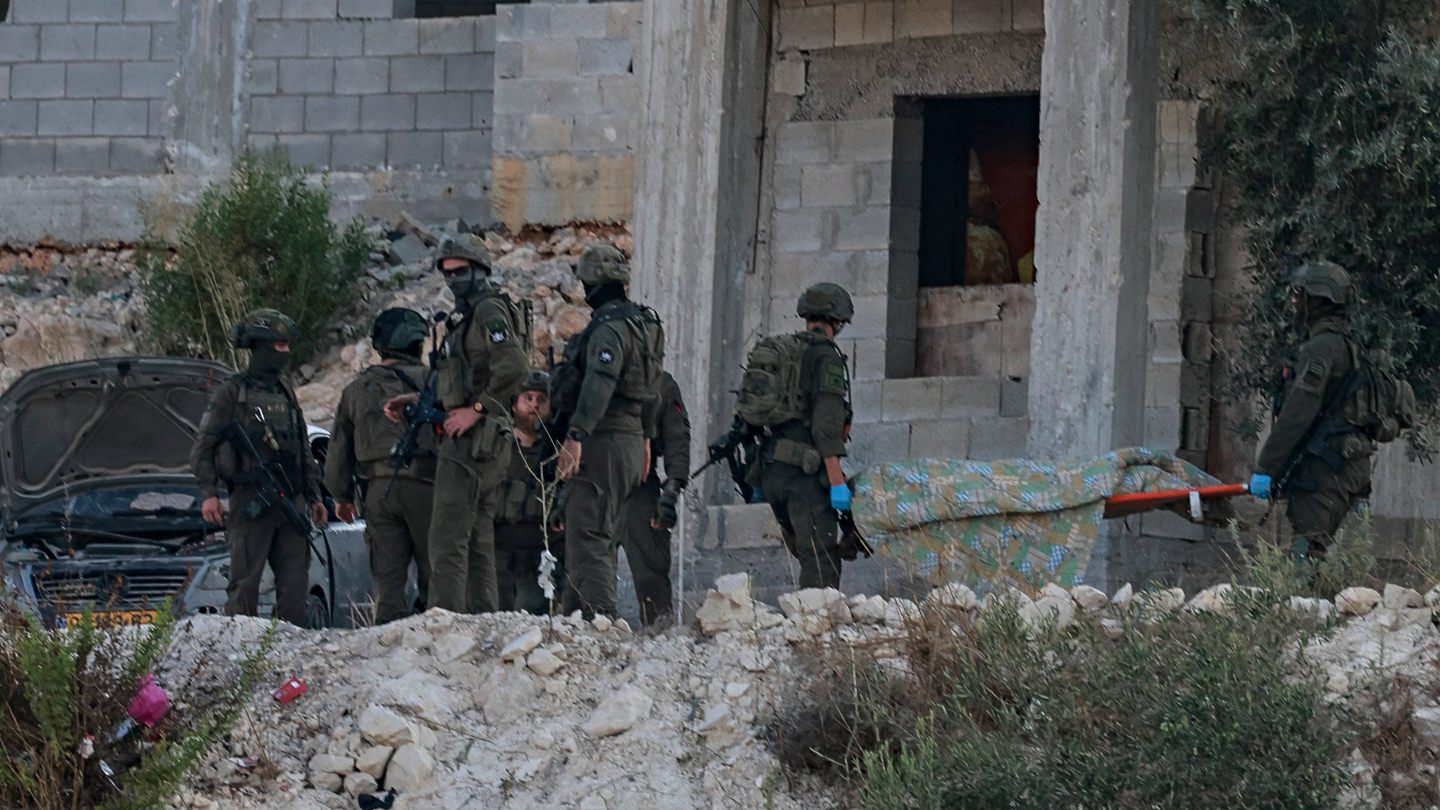
    An Israeli veterans’ organization composed of current and former military service members has leveled serious allegations against the Israel Defense Forces (IDF), claiming the military routinely carries out lethal strikes on Palestinians in Gaza before retroactively assembling evidence to frame those killed as Hamas affiliates — a practice the group calls “retrospective incrimination.”

    Breaking the Silence, a nonprofit founded in 2004 that offers a confidential space for Israeli soldiers to share their on-the-ground experiences in the occupied Palestinian territories, laid out the claims in comments from its executive director Nadav Weiman during an interview with France 24.

    Weiman outlined a clear pattern he says emerges from dozens of soldier testimonies collected by his organization: the IDF conducts strikes first, kills targets, and only then launches an effort to dig up links to Hamas or other armed groups to justify the deadly operation. Soldiers executing strikes on the ground, he emphasized, do not possess the affiliation evidence that is later used to defend the attacks to the international community.

    “First, we shoot, we kill, and then we think, and then we try to find a reason why it happened,” Weiman stated in the interview. He pointed to multiple high-casualty incidents as examples, including the IDF’s large-scale operations surrounding Gaza’s Nasser Hospital, the killing of 15 Palestinian paramedics in Rafah, and multiple air strikes that have left large numbers of civilian non-combatants dead.

    Weiman explained that after strikes are completed, Israeli intelligence pulls the identities of all people killed, then analysts comb through records to find any potential connection — no matter how tangential — to armed groups. Common justifications used after the fact, he noted, include the killed person being located near a building the IDF associates with Hamas, having a family member with alleged links to the group, or having previously been listed on a movement payroll. From there, the IDF constructs a narrative to frame the strike as a targeted operation against legitimate military targets.

    To illustrate the disconnect between on-ground action and post-strike justification, Weiman drew a comparison to operations around Nasser Hospital: “I don’t think that the tank that fired the tank shells at the hospital had a booklet with 25,000 Hamas members, and they looked photo after photo and said, ‘Ah, there are Hamas members over there’. This is something that we do after we shoot.”

    The group says this practice is not a series of isolated mistakes by individual soldiers, but rather the product of intentionally permissive rules of engagement that have opened the door to widespread human rights violations throughout the ongoing Gaza war. The core motivation for the retrospective labeling, Weiman argued, is the Israeli government and military’s desire to secure international legitimacy for their military campaign in Gaza.

    “Suddenly the IDF spokesperson in the state of Israel needs to explain to the international community what we did over there, who are the targets for the attack,” Weiman said. “And that’s why I said legitimisation before, because the IDF in the state of Israel wants international legitimisation to do what we are doing in Gaza.”

    Soldier testimonies collected by Breaking the Silence show the pattern of post-killing classification as terrorists extends even to unarmed Palestinians and children under the age of 18, the organization confirmed. The group also highlighted another consequence of the current permissive rules of engagement: the IDF has classified any person carrying a camera in Gaza as a potential threat to Israeli forces, treating camera operators as legitimate military targets.

    That policy, Breaking the Silence says, directly explains the extraordinarily high death toll among journalists reporting on the war in Gaza. Just as with other civilian deaths, the group claims the IDF has retroactively justified the killing of journalists by linking them to armed groups after the fact to defend its actions to global audiences.

    Original reporting for this story was published by Middle East Eye, a media outlet that provides independent coverage of the Middle East, North Africa and surrounding global regions.

  • Ex-congressman George Santos banned from betting platform for life

    Ex-congressman George Santos banned from betting platform for life

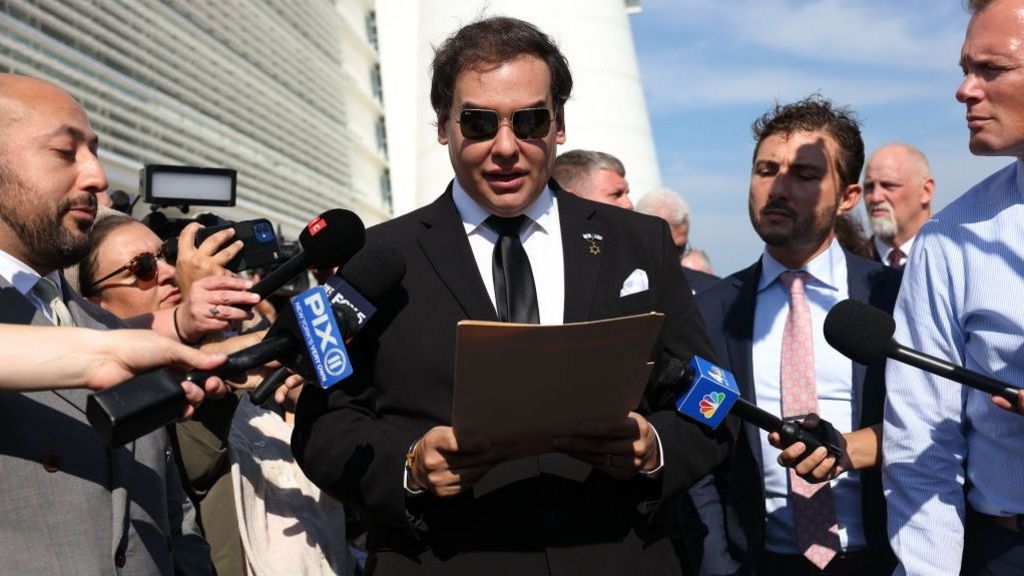
    Leading prediction market operator Kalshi has implemented a permanent trading ban against former U.S. Representative George Santos, following an internal investigation that found evidence of insider trading tied to bets on his own attendance at former President Donald Trump’s 2026 State of the Union address, the company announced in a formal disciplinary notice.

    Santos, a disgraced ex-lawmaker who was expelled from Congress in 2023 over multiple felony fraud and identity theft convictions, placed the series of controversial bets on the attendance outcome back in February. According to Kalshi’s compliance review, Santos held non-public information about his own plans that allowed him to manipulate the market for profit. The platform took proactive, independent action to issue the ban without waiting for external regulatory enforcement, marking one of the highest-profile penalties for misconduct in the fast-growing prediction trading sector.

    In a post on social platform X, Santos responded flippantly to the ban, thanking Kalshi and challenging the company’s long-term viability. The BBC has reached out to Santos for additional comment on the ruling, but has not received a formal response as of reporting.

    The current disciplinary action is the latest in a string of legal and regulatory consequences for Santos following his 2024 conviction on wire fraud and aggravated identity theft charges. Santos was sentenced to seven years in federal prison, but only served three months before former President Trump issued a full commutation of his sentence in 2025. Just two months prior to Kalshi’s permanent ban, Santos agreed to pay a $35,000 settlement to resolve a federal probe into the same State of the Union trades conducted by the U.S. Commodity Futures Trading Commission (CFTC).

    Alongside the lifetime ban, Kalshi has imposed a financial penalty of $71,356 (equivalent to roughly £38,000) connected to the misconduct. The company confirmed it flagged Santos’s suspicious account activity to federal law enforcement authorities earlier this summer, after internal monitoring systems picked up irregular trading patterns.

    Kalshi’s investigation laid out clear details of the alleged scheme: the market in question let users wager on whether Santos would attend Trump’s State of the Union speech, an outcome Santos could directly control. Between February 2 and February 25, Santos placed multiple large bets on the outcome, and made false public statements about his attendance plans that moved contract prices on the platform. In the end, Santos walked away with $17,839.57 in illegal profits from the trades, per Kalshi’s findings.

    Santos has consistently denied wrongdoing in most public matters related to his conduct, though he has admitted to stealing the identities of nearly 12 people, including deceased family members, to advance his political career and personal finances. He pleaded guilty to the federal felony charges in 2024. Ahead of his 2022 election to Congress, Santos fabricated nearly all details of his professional and personal biography, including false claims of employment on Wall Street and family ties to the Holocaust. He became only the sixth sitting member of Congress in U.S. history to be expelled from the legislative body.

    The Santos case comes as the entire prediction market industry faces growing regulatory scrutiny. Prediction markets, which let users place wagers on outcomes ranging from federal elections to key economic indicators, have seen a surge in mainstream user adoption in recent years, but have also drawn increased attention from regulators over market manipulation and compliance risks. Both Kalshi and its top competitor Polymarket have reported a rise in unusual, potentially manipulative trading activity in recent months, pushing platforms to upgrade their monitoring systems and take stricter action against rule-breakers.

    Industry observers note the Kalshi ruling underscores the mounting compliance burden facing prediction markets as they edge closer to becoming mainstream financial products. U.S. regulators have already signaled that platforms will be held to stricter conduct and oversight standards as the industry matures, particularly for markets tied to high-stakes political and economic events.

  • New York Liberty lead the WNBA with 7 players headed to the FIBA World Cup

    New York Liberty lead the WNBA with 7 players headed to the FIBA World Cup

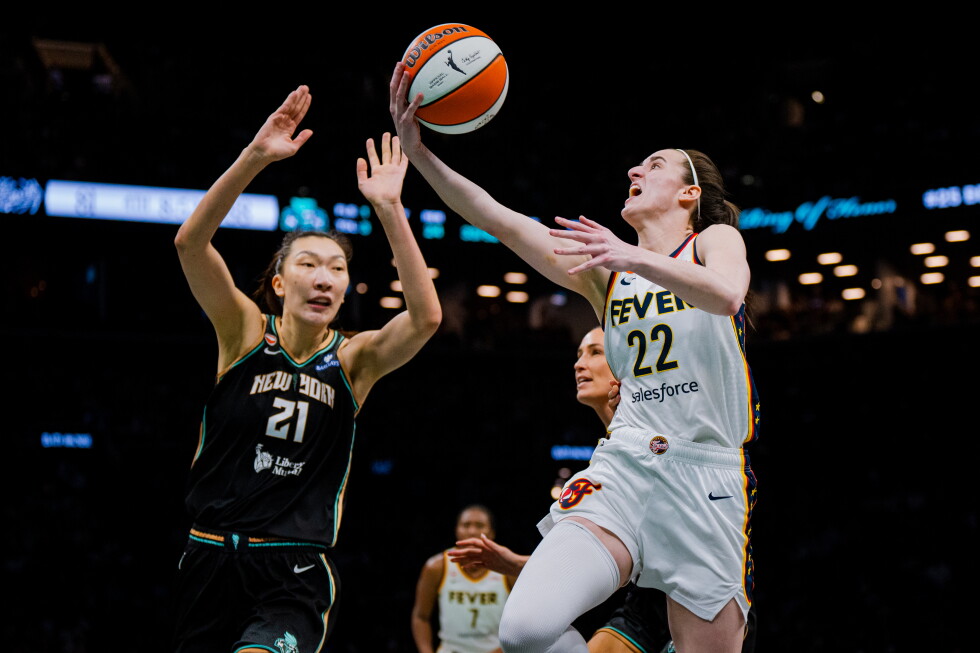
    As the WNBA pauses its regular season to allow players to compete in the 2024 FIBA Women’s Basketball World Cup, one franchise stands out for its unprecedented international presence: the New York Liberty. No other WNBA club will send more players to the tournament, kicking off September 4 in Berlin, than the Liberty, whose roster has become a microcosm of global basketball talent mirroring the cultural diversity of its home city.

    Currently, the Liberty’s active roster features athletes hailing from eight different nations across four continents: France, Nigeria, China, Germany, Australia, Spain, the Bahamas, and the United States. Of these, seven players have earned spots on their respective national teams for the World Cup. The only exception is Germany’s Satou Sabally, who remains sidelined from the tournament as she continues recovering from a concussion sustained earlier this season.

    Describing the team’s uniquely international makeup, star forward Breanna Stewart compared the Liberty’s locker room to a global diplomatic body. “It truly is like the United Nations here,” Stewart said of the diverse backgrounds of her teammates.

    The team’s current multicultural composition marks a stark shift from even a decade ago, according to Australian forward Rebecca Allen, the Liberty’s longest-tenured player who first joined the franchise back in 2015. When Allen first arrived in New York, she was the only international player on the entire roster. While she recalled being embraced by her teammates and staff immediately, the current depth of global representation is a transformative change for the organization.

    “I was the only foreigner on the team back then. Everyone made me feel welcome, but now it’s different with so many countries represented here,” Allen explained.

    For first-year WNBA forward Pauline Astier, who will suit up for France alongside Liberty teammate Marine Johannes at the World Cup, this built-in global community has made the transition to playing professional basketball in a new country far smoother than expected. Astier noted that the inclusive, diverse environment within the Liberty has helped her adapt to cultural changes and new on-court dynamics without the isolation that many international rookies experience when joining North American leagues.

    The Liberty’s standout World Cup delegation is more than just a fun team fact—it underscores a broader, ongoing shift across the entire WNBA: the league’s rapid growth into a truly global competition that attracts top talent from every corner of the world. To celebrate this unique identity, Allen has already floated a lighthearted idea for when the team reunites after the World Cup concludes: a team potluck where every player brings a traditional dish from their home country to share.

    Beyond the New York roster, the AP’s latest weekly WNBA power poll and player awards brought new updates to the 2024 regular season narrative. The Golden State Valkyries climbed to the top spot in the power rankings after a perfect 4-0 road week, which included a statement win over the previously top-ranked Minnesota Lynx. Minnesota dropped to third place, with the Las Vegas Aces moving into second. The top five was rounded out by Atlanta and Indiana, followed by New York at sixth, Dallas at seventh, and Washington at eighth. Portland, Los Angeles, Phoenix, Chicago, Connecticut, Seattle, and Toronto closed out the 13-team rankings.

    The week also saw Atlanta Dream rookie Angel Reese continue her historic inaugural season, breaking a new WNBA single-season record. After notching 26 rebounds to set a single-game franchise record just days earlier, Reese earned her 29th double-double of the 2024 season against Minnesota, surpassing the previous single-season record of 28 set by Alyssa Thomas back in 2023. Finally, Golden State Valkyries guard Veronica Burton was named the Associated Press Player of the Week for her dominant performance in the team’s four undefeated road wins. Burton averaged 11.3 points, 8.8 assists, and 2 steals per game over the stretch, earning the award over other notable nominees including Indiana’s Caitlin Clark, Atlanta’s Angel Reese, Los Angeles’ Nneka Ogwumike, and Washington’s Kiki Iriafen.

  • By the numbers: A look at Lionel Messi’s 21 years with Argentina

    By the numbers: A look at Lionel Messi’s 21 years with Argentina

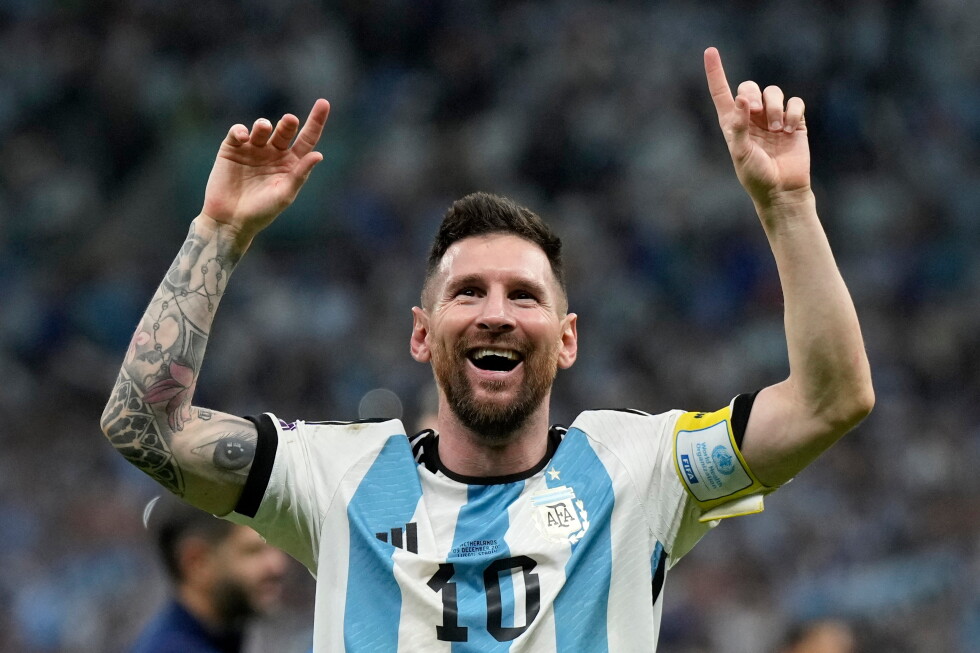
    After two decades of donning Argentina’s iconic Albiceleste jersey and rewriting men’s international soccer record books, Lionel Messi — widely regarded as the greatest player to ever step onto a football pitch — has played his final match for his national team. The 39-year-old announced his retirement from international competition on Monday, closing the book on an unparalleled 21-year career representing his home country. To honor his historic legacy, we break down his extraordinary run with Argentina through the numbers that defined it.

    One World Cup title stands as the crowning achievement of Messi’s international career, claimed in a dramatic 2022 tournament in Qatar where he cemented his status as a global sporting icon. He also led Argentina to two additional World Cup finals, falling short against Germany in 2014 and Spain in 2026. That three total final appearances mark one of the most impressive World Cup resumes in the history of the sport.

    Messi competed in six consecutive World Cup tournaments spanning 2006 to 2026, a feat that ties him with his long-time rival Cristiano Ronaldo for the most World Cup appearances by any male player in history. Across those six tournaments, the Argentine legend found the back of the net 21 times. That goal tally puts him in second place on the all-time World Cup scoring leaderboard, just one goal behind France’s Kylian Mbappé — who has accumulated 22 goals across only three World Cup appearances to date.

    Messi’s international journey began in August 2005, when he made his Argentina debut as a teenager in a friendly match against Hungary. In a fittingly unforeseen start to a legendary career, he was sent off less than a minute after entering the game, penalized for elbowing an opposing player. From that inauspicious beginning, he built a legacy that will stand for generations, announcing his retirement 21 years after that debut at the age of 39.

    Across his entire international career, Messi scored 125 goals for Argentina — more than double the previous national record of 54 goals set by Gabriel Batistuta, who played for the Albiceleste from 1991 to 2002. On the global all-time men’s international scoring list, Messi sits second once again, trailing only Ronaldo, who has notched 146 goals for Portugal to date.

    Messi also holds Argentina’s all-time record for senior international appearances, with 207 caps across his 21-year career. Like his goal tally, this mark places him second on the all-time global men’s rankings, again behind Ronaldo, who has earned 233 caps for Portugal throughout his own career.

    This retirement brings an end to one of the most celebrated international careers in soccer history, leaving behind a legacy of records, memorable matches, and a long-awaited World Cup title that completed Messi’s journey to sporting immortality.