博客

  • Trump posts AI slop of Iran bombing

    Trump posts AI slop of Iran bombing

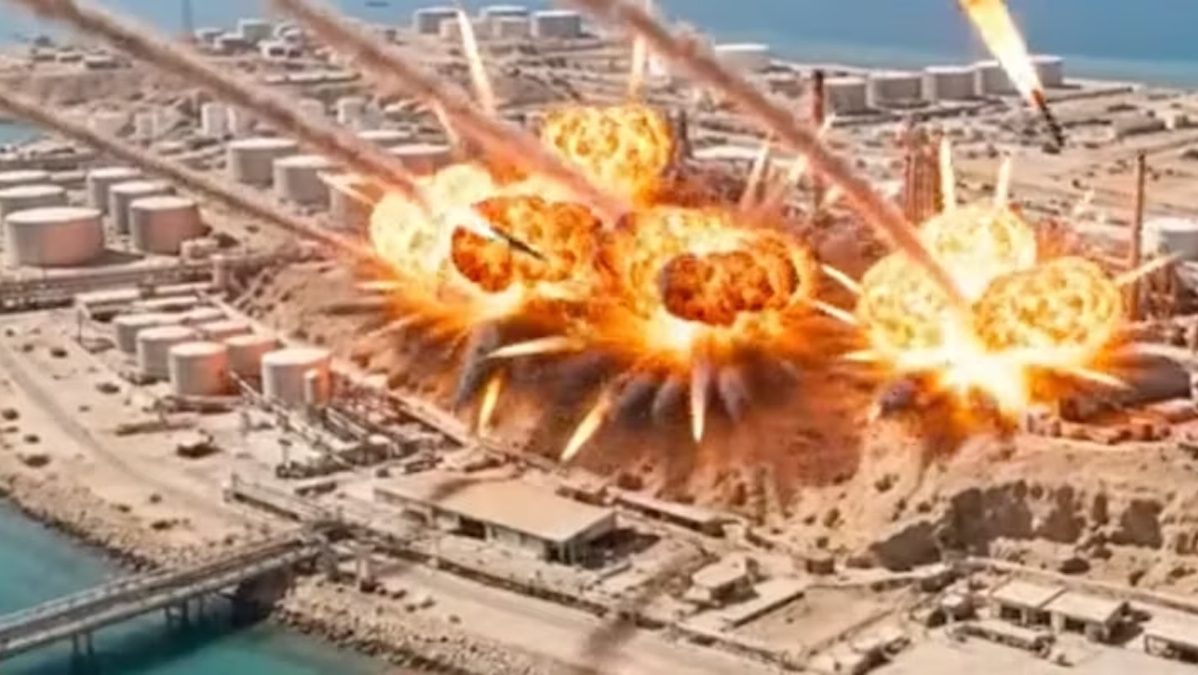
    Over a 24-hour period spanning late Sunday and early Monday, former and current U.S. President Donald Trump posted a series of erratic messages on his Truth Social platform, one of which featured an artificial intelligence-generated deepfake video falsely claiming to show U.S. military forces destroying Kharg Island—Iran’s central export hub for crude oil. This inflammatory post came only hours after U.S. military forces carried out a targeted strike on Larak Island, a position located hundreds of kilometers to the east of Kharg Island within the strategic Strait of Hormuz.

    In the caption accompanying the deepfake, Trump declared “Kharg Island being blown to smithereens!!!” The U.S. leader, who regularly shares nonsensical AI-generated content with his 13 million followers on the platform, has a long history of public threats to seize or destroy Kharg Island, leading political analysts to speculate whether he intentionally misidentified the target of Sunday’s strike or confused the two Iranian sites.

    Shortly after Trump’s post circulated online, an anonymous senior U.S. official confirmed to Reuters that no U.S. attack targeting Kharg Island had been carried out during Sunday’s operations. The head of Iran’s state-owned national oil company, Hamid Bovard, dismissed the false post as absurd, confirming that operations on Kharg Island remained “calm and appropriate” with no disruptions to oil export activity.

    The incident has escalated already heightened tensions between the two nations: in response to the U.S. strike on Larak Island, Iran launched a retaliatory drone attack against two U.S. military bases located in Jordan, and formally denounced the latest U.S. aggression as a clear violation of the United Nations Charter. In an official statement, the Iranian Foreign Ministry placed full blame for any future escalation on the U.S. government, noting that Washington’s ongoing economic war, maritime blockade, and military strikes against Iranian territory are illegal under international law, and that any parties complicit in these actions would bear responsibility for the consequences.

    This direct military exchange between U.S. and Iranian forces marks the first major escalation in weeks, amid stalled diplomatic efforts to end the ongoing conflict launched by Trump and Israeli Prime Minister Benjamin Netanyahu in late February. The war, which remains broadly unpopular globally, triggered a severe international energy crisis that drove up domestic gasoline prices across the U.S. and sparked widespread international warnings of an impending global food security emergency.

    In a separate early Monday Truth Social post, Trump doubled down on his aggressive rhetoric, claiming Iran is “officially a Failed Nation” and shouting in all capital letters, “IT IS DEAD!” He went on to list alleged failures of the Iranian government, claiming the country no longer has functional naval or air forces, its currency has collapsed, it cannot pay military and police personnel, inflation has surged to 300%, and national leadership is in complete disarray. Trump also called for Iranian leaders to be tried for alleged war crimes against humanity—a demand that carries notable irony, as the U.S. president himself has faced credible, well-documented accusations of committing war crimes in Iran and other global conflict zones.

    Trump’s bombastic claims of total U.S. military victory over Iran directly contradict internal assessments from top U.S. national security officials. Earlier this month, senior defense advisors reportedly warned Pentagon Secretary Pete Hegseth that continuing large-scale combat operations against Iran is unsustainable long-term, and puts U.S. national security at risk by eroding Washington’s ability to respond to other threats, including those targeting the U.S. homeland. U.S. intelligence assessments have also confirmed that, contrary to Trump’s public claims, the Iranian government remains fully functional after six months of continuous U.S. bombing campaigns.

    Domestic political opponents have seized on the incident to criticize Trump’s mental stability and judgment. Representative Ted Lieu, a California Democrat who has backed congressional efforts to end the unauthorized war, wrote in a social media post Monday that “The president of the United States is mentally unwell and has been for quite some time. He fantasized blowing up Iran’s Kharg Island. Except it didn’t happen.” Lieu also highlighted a clear contradiction in Trump’s public claims: “And why would Trump need to blow it up if, as Trump claims, the U.S. has total control of the Strait?”
  • Thailand’s Pattaya anticipates USS Abraham Lincoln visit following its Middle East deployment

    Thailand’s Pattaya anticipates USS Abraham Lincoln visit following its Middle East deployment

    The coastal Thai city of Pattaya is preparing to welcome thousands of U.S. military personnel, as the USS Abraham Lincoln, a nuclear-powered American aircraft carrier, makes a scheduled port stop this week en route back to the United States after a months-long deployment supporting U.S. military operations against Iran in the Middle East. The massive warship passed Singapore over the weekend, with current navigation placing it on track to dock in Thailand’s Chonburi Province, according to confirmation from Thai government authorities. A second U.S. vessel, the destroyer USS Frank E. Petersen Jr., will dock at a separate Thai port as part of the same stopover.

    Onboard the Abraham Lincoln are more than 5,000 active-duty service members, and Pattaya’s city leadership projects that a large share of the crew will take leave to visit the city’s famed beachfront and tourism districts. Pattaya Mayor Poramet Ngampichet has framed the visit as a rare and much-needed opportunity to revitalize the city’s struggling tourism sector, which has been hit hard by a global drop in international travel spurred by skyrocketing fuel prices linked to ongoing Middle East tensions. For years, Pattaya has worked to reframe its global reputation from a destination known primarily for nightlife to a top family-friendly natural and cultural vacation spot, and city officials see repeated military port calls as a way to solidify its standing as a key international travel hub. Poramet emphasized that the city welcomes future U.S. military stops, whether for training exercises or rest and relaxation for troops heading back to the U.S.

    To ensure the visit proceeds smoothly, Thai authorities have put in place a series of rules and security measures. Poramet confirmed after a Monday meeting with U.S. diplomatic and military officials that all visiting service members will be barred from participating in specific recreational activities such as parasailing, as well as from using marijuana. The ban is particularly notable after Thailand legalized medical cannabis in 2022, leading to a rapid expansion of licensed dispensaries across major Thai cities including Pattaya. Local law enforcement has also increased patrols across high-traffic tourist areas, including Pattaya Beach and the iconic Walking Street entertainment district, and the Thai government has issued a formal warning to local businesses against price gouging visiting sailors. City Police Chief Anek Srathongyoo confirmed that any U.S. service member who violates Thai law will face full prosecution under local regulations. The heightened security is designed to prevent incidents that could harm the city’s reputation and discourage future visits.

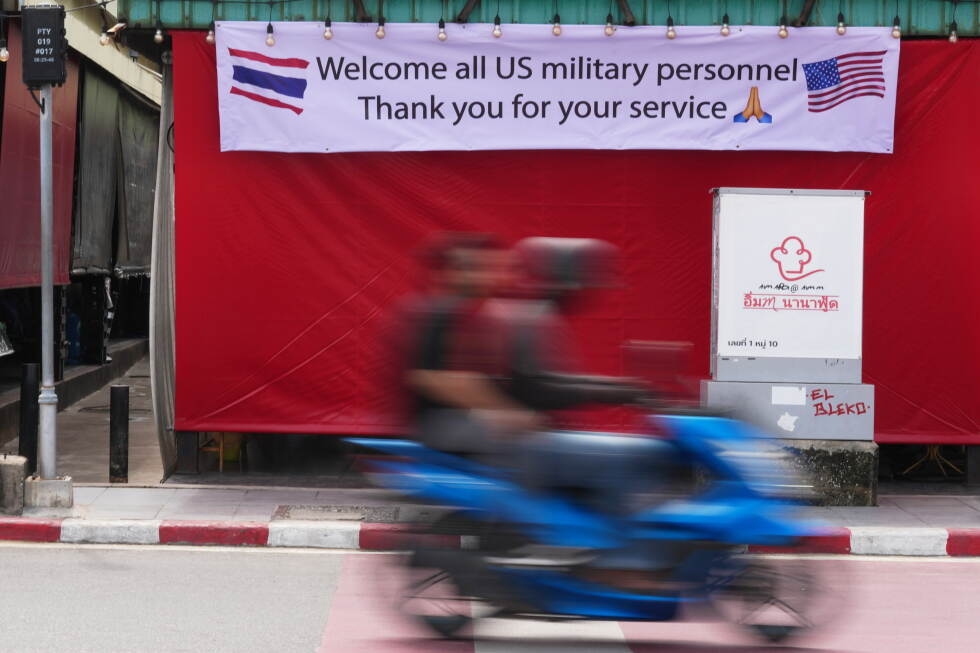
    Local business owners have mixed reactions to the upcoming port call, echoing broader uncertainty about the potential economic impact. Many businesses struggling from the tourism downturn linked to the Iran conflict have openly embraced the visit, with one beachfront bar hanging a large banner reading “Welcome all US military personnel Thank you for your service.” But other local operators are far more cautious. Souvenir shop owner Somkiet Noree, who operates on Walking Street, noted that Pattaya’s tourism sector remains far quieter than pre-tension levels, and while he hopes the visiting troops will boost his sales, he is not counting on a major windfall. Bualuang Ponok, a bar employee on the same street, echoed that skepticism, pointing out that even with 5,000 service members in the area, it remains unclear how many will actually visit the downtown entertainment and shopping districts where small local businesses operate. She noted that past visits saw only a small share of troops venture into the area, leading to little tangible increase in local spending.

    The port call comes after an unprecedented deployment for the Abraham Lincoln. Normally based in the Asia-Pacific region, the carrier was relieved of its Middle East duties in early August by the USS George Washington. Its deployment stretched to more than 250 uninterrupted days at sea, marking a new record for U.S. Navy deployments. The extended time at sea sparked widespread public concern over reports of deteriorating crew mental health and critical shortages of essential supplies including food and hygiene products. Former U.S. President Donald Trump downplayed these concerns at the time, telling reporters the deployment was “not nearly long enough.” After completing its stop in Thailand, the Abraham Lincoln will continue its journey home to the United States, according to Thai official statements.

  • Russian strike hits rail workers in new deadly attacks on Kyiv

    Russian strike hits rail workers in new deadly attacks on Kyiv

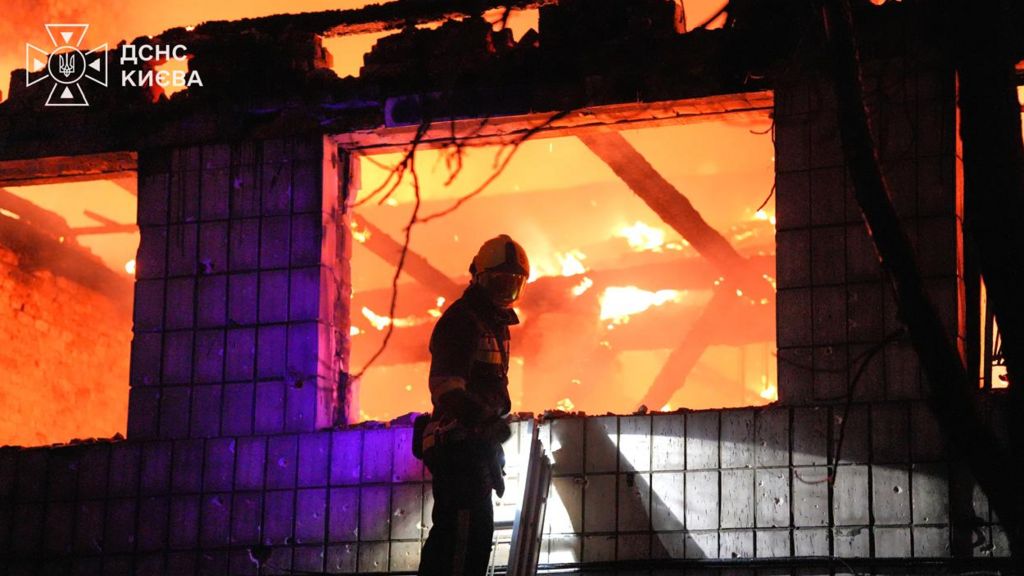
    Fresh wave of Russian overnight airstrikes targeting Ukraine’s capital Kyiv and its surrounding areas has left at least 12 civilians and infrastructure workers dead, with another 17 people wounded—including two minors, local Ukrainian authorities confirmed Monday. The deadly attack is the second major escalation against the Kyiv region in less than a week, coming on the heels of a previous strike that claimed 38 lives last Friday.

    Among the fatalities recorded in Kyiv proper, six were employees of Ukrzaliznytsia, Ukraine’s state-owned railway operator, who were at a city rail depot when it sustained a direct hit. Four additional deaths were recorded in Boryspil, a major town located just outside Kyiv that is home to one of the country’s busiest international airports. Vitali Klitschko, mayor of Kyiv, confirmed that the strikes damaged multiple civilian sites and residential buildings, igniting large blazes that spread across three of the capital’s administrative districts. Emergency response teams were deployed immediately to contain the fires, extract survivors from rubble, and provide urgent medical care to the injured.

    In an official statement following the attack, Russia’s ministry of defense claimed the operation was a “massive strike” deployed with advanced high-precision weapons, and that targets were limited to Ukraine’s military-industrial complexes and fuel-energy infrastructure. However, the attack’s impact has fallen heavily on non-military sites and workers, contradicting Russia’s stated targeting parameters.

    Friday’s prior strike in the Kyiv region hit a Ukrainian weapons depot, triggering a series of secondary detonations from stored shells, mines, and unmanned aerial vehicles that drove the death toll to 38. The repeated attacks on the Kyiv area are part of Russia’s ongoing full-scale invasion of Ukraine, which was launched by Russian President Vladimir Putin in February 2022 and has entered its fifth year of active conflict.

  • How catastrophic flash flood unfolded at remote Nepal-China border point

    How catastrophic flash flood unfolded at remote Nepal-China border point

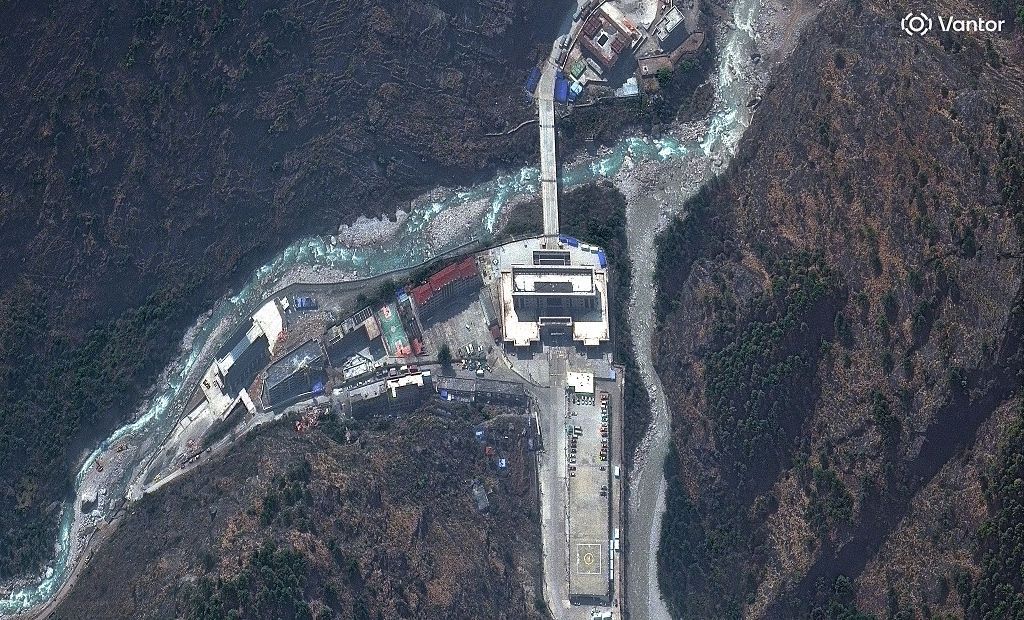
    On August 26, a catastrophic glacial outburst flood tore through the high-altitude border region between Nepal and China, wiping out infrastructure, destroying the iconic cross-border Friendship Bridge, and leaving hundreds of people unaccounted for in one of the deadliest natural disasters to hit the Himalayas in recent years. Visual evidence captured through pre- and post-disaster satellite imagery and local CCTV footage has begun to reveal the full scale of the destruction that unfolded in mere minutes.

    A few seconds of chilling CCTV footage from Gyirong, the Chinese side of the border crossing, captures the moment disaster struck: what first resembles a dark, foreboding cloud sweeping over the ridgeline behind border buildings rapidly resolves into a churning mass of water, mud, ice, boulders, and rock surging down the valley at deadly speed. The footage is timestamped 10:59:53 local Tibet time, just seven minutes after a glacial collapse triggered the torrent high in the mountains, per Chinese disaster assessments, and less than 10 minutes after Nepal’s immigration system logged its final transaction at the Rasuwagadhi crossing.

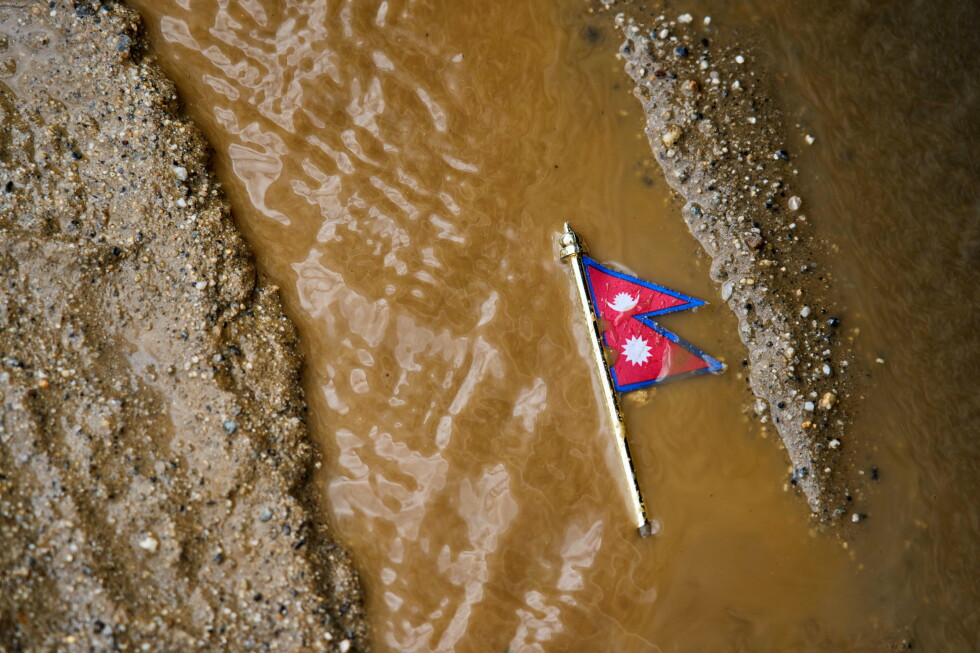
    In the wake of the surge, large swathes of the border’s built infrastructure simply vanished. Most of the Gyirong border complex was swept clean off the valley floor, while across the international frontier in Nepal’s Rasuwa district, the destruction was equally severe. The Friendship Bridge, the decades-old structural link between the two nations, was torn from its foundations and washed away, alongside Nepal’s entire immigration and customs compound. Timure, the small mountain trading settlement that had grown up around the busy crossing, was left in ruins.

    Geographically, this key trans-Himalayan route has long been recognized as a high-risk zone. Ajay Dixit, a leading Kathmandu-based hydrologist, explains that the corridor is a historic travel link between Kathmandu and the Tibet Autonomous Region of China, defined by steep gorges, fast-flowing sediment-heavy rivers prone to carrying massive debris downstream, and inherent geological instability that makes flash floods a persistent threat. Today, the crossing remains a vital economic and cultural gateway, traversed daily by Mount Kailash pilgrims, cross-border traders, truck drivers, customs officials, tourists, and local border communities.

    In the hours before the flood hit, the crossing was unusually busy. Electronic immigration records from Nepal confirm that 89 foreign and Nepali nationals had cleared exit checks to enter Tibet, while four people had registered for entry into Nepal. That count, however, only captures a fraction of the people present in the border zone. Tika Ram Pokharel, a senior immigration assistant at Rasuwagadhi who was the only office staff member to survive—he had traveled to Kathmandu to take a mandatory work exam that morning—told reporters that between 300 and 400 people were waiting to cross into Tibet, with additional travelers from the Chinese side also in the area.

    The full extent of the human toll remains uncertain, weeks after the disaster. India’s foreign ministry confirms that at least 275 Indian nationals are missing across Nepal, with more than 100 of those unaccounted for believed to have been at the Rasuwagadhi crossing when the flood hit. Among the missing are 32 Indian nationals who cleared Nepali exit checks that morning, as well as 77 pilgrims with the Isha Foundation returning from Mount Kailash who were at the Chinese border facility. Four senior Nepali immigration staff, including the head of the Rasuwagadhi office, are also missing; his body was recovered days later far downstream, while the female officer who logged the final immigration transactions remains unaccounted for. Pokharel, who lost 40 to 50 close friends in the disaster, estimates the actual death toll could be far higher than official counts, suggesting between 2,000 and 2,500 people may have been caught in the surge—an estimate that has not been independently verified.

    The geologic timeline of the disaster has left many questions about why so many people were trapped. Seismic sensors detected glacial movement above the border just two minutes after the final immigration transaction was logged, at 8:37 a.m. Nepal local time. Researchers confirmed the seismic shift marked the collapse of a section of mountain glacier that triggered the outburst flood. Once travelers cleared Nepali immigration, it took 15 to 20 minutes to walk the 3.5-kilometer stretch from the immigration office at Ghatte Khola Bazar to the Friendship Bridge, meaning most of the 89 people who cleared exit checks that morning would still have been en route when the flood hit. Ghatte Khola itself, which was home to 50 to 60 local houses, hotels, shops, four hydropower facilities, and a bus terminal for Kathmandu-bound travelers, was completely submerged, with floodwaters surging higher than the 100-meter elevation of the immigration office itself.

    Personal accounts from families of the missing underscore the suddenness of the disaster. For many pilgrims, the morning began as a routine wait to cross the border. Sudipto Bhattacharya received final updates from his wife Subhrasree Chakraborty, who was traveling with a group of 60 pilgrims: at 7:57 a.m., she sent a photo of her exit stamp, confirming Nepali immigration was complete. At 8:03 a.m., she sent one last message: “We are waiting to enter China.” Communications cut out moments later, and she has not been heard from since.

    When Chinese rescue teams reached the devastated Gyirong border area on August 28, they found a landscape of total destruction. “As far as the eye could see, there was nothing but ruins,” one rescuer told Reuters. The disaster comes just 18 months after a separate major flood shut the crossing for nearly six months, which only reopened on January 1 after Chinese engineers constructed a temporary replacement bridge. By June of this year, cross-border traffic had returned to pre-flood levels, with Chinese authorities recording more than 100,000 crossings through Gyirong in the first half of 2026, and Nepali immigration recording 53,742 total arrivals and departures in the 12 months to mid-July.

    Beyond the human cost, the disaster has major economic implications for Nepal, which relies heavily on the Rasuwagadhi crossing for trade with China. Posh Kumar Pandey, chairman emeritus of the Kathmandu-based South Asia Watch on Trade, Economics and Environment, notes that Rasuwagadhi is one of Nepal’s only two major land trade ports with China, accounting for roughly one-third of Nepal’s total $2.95 billion in annual trade with its northern neighbor. Up to 70 cargo trucks crossed the border daily, carrying Chinese electronics, machinery, vehicles, clothing, and fruit into Nepal, and the route handles an estimated 80% of all of Nepal’s electric vehicle imports from China.

    With both Rasuwagadhi destroyed and Nepal’s second major trade crossing at Tatopani temporarily closed by Chinese authorities due to ongoing landslide risks, Nepal is currently left with no active major land trade routes with China. Pandey warns that the disaster exposes the risks of Nepal’s overreliance on a small number of high-risk border corridors. “We have put all eggs here,” he said. “We need to develop an alternative border port.” He added that Nepal should also reconsider its strategy of concentrating dozens of hydropower projects along the same geologically unstable river system.

    For the few survivors like Pokharel, the disaster carries a deeply personal weight. He recalled that after the 2025 flood, his colleagues were acutely aware of the ongoing flood risk, often checking the river at night after feeling seismic vibrations and discussing emergency escape routes uphill if another flood struck. “But my friends could not get that chance,” he said. Search and rescue operations are still ongoing in the region, with Chinese helicopters delivering emergency supplies to cut-off areas and recovery teams working to locate missing persons amid the mud and debris.

  • Police officer admits to closing missing person cases to avoid work

    Police officer admits to closing missing person cases to avoid work

    A damaging institutional scandal has rocked South Korea’s law enforcement community, after a senior police officer on the popular tourist island of Jeju admitted to intentionally closing dozens of missing person investigations without completing required work to avoid additional workload pressure. The officer, identified only by his surname Bu, was taken into custody earlier this month following allegations that he falsified records to shut down active cases and lied to grieving family members of missing individuals.

    In the wake of growing public outrage over the revelation, Jeju Provincial Police launched belated search operations for the long-neglected missing persons, recovering four dead bodies in recent weeks. Investigations have confirmed Bu deliberately prematurely closed at least two high-profile cases, for which he now faces three formal criminal charges: forgery of public electronic records, obstruction of official duties, and gross dereliction of duty.

    Court documents and police statements detail that in both confirmed cases, Bu falsely recorded that he had made contact with the missing individuals, then closed the cases without ever verifying their locations or confirming their safety. During interrogation, Bu told investigators his decision stemmed from workload and administrative pressure: he stated, “The missing person was a typical adult so I thought about it carelessly. If the case was not closed, there would have been a lot to take care of, and out of a sense of pressure over the case handover, I falsely closed it.”

    One of the falsified cases involved 37-year-old Jang Mi-ran, who went missing in May after her boyfriend filed a missing person report. Bu told Jang’s boyfriend that he had spoken to her, and that she explicitly refused to meet with police or have any contact with her boyfriend – a claim authorities have confirmed was entirely fabricated. Bu entered the false narrative into official police records, even logged that Jang had been killed in a traffic collision, before permanently closing the case. Last week, search teams found Jang’s remains near a palm tree plantation on Jeju.

    The second confirmed case involved a man in his 60s reported missing in July. Bu repeated the same pattern, falsely claiming he had contacted the man and that the man requested no further contact. The man’s body was discovered earlier this month.

    Investigators now suspect Bu may have improperly closed as many as 25 additional missing person cases, though officials note that some of those individuals have since been independently confirmed alive and unharmed.

    Contextual data on missing persons in South Korea frames the severity of the scandal: while violent crime rates are extremely low across the country, South Korea has one of the highest suicide rates in the developed world. More than 70,000 adults are reported missing every year, and 99% of those cases are officially marked as resolved within 30 days – a statistic that has now come under renewed scrutiny following Bu’s admission.

    The scandal has erupted at an extraordinarily sensitive political juncture for South Korean law enforcement. Just weeks before the arrest, the national government passed landmark legislation shifting full investigative authority from public prosecutors to the national police, a reform designed to reduce prosecutors’ outsized influence over political affairs. However, the transfer of power has already faced widespread public pushback, as many South Koreans have long raised concerns about systemic corruption and institutional incompetence within police ranks.

    In response to the growing outcry over the Jeju scandal, South Korean President Lee Jae Myung has publicly pledged to implement sweeping police reforms. In a formal address Tuesday, Lee expressed regret over the incident, noting that a small number of unethical officers “who muddy the well water” are eroding public trust and damaging the reputation of the vast majority of hardworking, honest law enforcement personnel across the country.

  • More than 1,000 dead from catastrophic Nepal-China floods

    More than 1,000 dead from catastrophic Nepal-China floods

    On Tuesday, disaster management authorities confirmed that the combined death toll from catastrophic flash flooding triggered by a Himalayan glacial collapse has exceeded 1,000 across Nepal and southern Tibet, China, as rescue crews race against time to reach thousands of missing people trapped in cut-off, disaster-ravaged communities. As of the latest official update from Nepal’s national disaster management agency, the country has recorded 987 confirmed fatalities, with another 3,916 people still unaccounted for – a figure that includes 583 foreign nationals. China’s most recent official update, released Sunday, reported 16 confirmed deaths in the Tibetan region affected by the disaster.

    The unprecedented disaster unfolded on August 26, originating high in the Himalayan mountain range in a sequence of catastrophic natural events. The crisis began when a glacial formation experienced a full collapse, sending massive volumes of broken ice, displaced rock, and glacial meltwater surging into lower river valleys, which rapidly triggered powerful downstream flash floods that swept through both Nepalese and Tibetan communities. Researchers analyzing satellite imagery of the disaster site have determined that the collapse was tied to the failure of the bedrock supporting the glacial formation. The force of the resulting massive rockfall was powerful enough to be detected as a magnitude 5.2 seismic event by global monitoring networks.

    The enormous surge of water and debris pushed into transboundary rivers that flow through Tibetan and Nepalese valleys, causing water levels to skyrocket in a matter of hours. Floodwaters and debris wiped out entire residential structures, public buildings, highway networks, and bridge crossings, leaving entire regions isolated with no overland access for emergency response. To date, Nepalese authorities confirm that more than 11,814 people have been pulled from danger and evacuated, with emergency teams relying heavily on helicopter and fixed-wing aircraft operations to reach stranded communities after landslides and flooding destroyed most overland routes.

    The most urgent priority for rescue teams right now is locating roughly 900 missing workers from 12 damaged hydropower development projects across the affected region. Officials estimate that around 500 of these workers may still be trapped inside flooded project tunnels, cut off from outside contact. Footage released by the Nepalese Army shows rescue teams navigating narrow, debris-clogged tunnels, wading through chest-deep muddy floodwater, and climbing over piles of broken rock and rubble in the search for any surviving trapped workers.

    Bimal Sharma, a helicopter pilot who has flown continuous rescue missions since the disaster struck, described the profound scale of destruction to Timure, a remote Nepalese border town near the Tibetan boundary that he has flown to for years. “It felt like I was flying over an entirely different landscape,” Sharma said. The pilot added that while he has had little time to speak at length with the survivors he airlifts to safety, their unspoken grief is impossible to miss. “I can see the pain in their eyes. It’s heartbreaking,” he said.

    As rescue operations continue, teams are also working to deliver food, clean water, medical care, and emergency shelter to thousands of survivors who remain in isolated regions with damaged or destroyed transportation infrastructure. The disaster has already drawn attention to the growing risks of glacial hazard events in the Himalayas, a region that has accelerated glacial melt and retreat driven by rising global temperatures.

  • ‘I’ve never been to Afghanistan’: Six million deportees forced to start over under the Taliban

    ‘I’ve never been to Afghanistan’: Six million deportees forced to start over under the Taliban

    At the Torkham border crossing, dubbed “Zero Point” between Pakistan and Afghanistan, the air shimmers with 41-degree Celsius heat that hangs heavy over a sprawling makeshift transit camp of tattered tarpaulin and plastic shelters. Here, one chapter of displacement closes for millions of Afghans, and another, far more uncertain, begins. Among the first to step across the frontier this week was 35-year-old Nazia, who had lived her entire life in Pakistan, where she was born to a displaced Afghan family. Minutes after crossing into a country she had never seen, she carried a faint sense of bittersweet relief: “It feels good to be in my own country,” she said, her two young children clinging to her hands as she walked toward Taliban-run registration counters draped in the movement’s black and white flag. But the relief quickly faded. “Many people here don’t even have enough bread to eat,” she sighed. Nazia is far from alone. Nearly her entire extended family—eight sisters and all their children—have been deported to Afghanistan from Pakistan and Iran this year alone, part of the largest cross-border population movement on the planet today.

    For decades, millions of Afghans fled decades of conflict, invasion, and political upheaval to seek refuge and work in neighboring Pakistan and Iran. After the Taliban seized control of Kabul in August 2021, that outflow accelerated, swelling the population of Afghan migrants in the two neighboring states to more than 8 million combined. But in recent years, both countries have launched sweeping crackdowns targeting undocumented Afghan migrants, and those operations have expanded far beyond unregistered people to include even Afghans with official refugee documentation, the United Nations and human rights organizations confirm. Pakistan has publicly acknowledged that even holders of longstanding Proof of Registration cards are not exempt from deportation, and there is no sign the expulsions will slow.

    By the end of August this year, more than 1 million Afghans had already been forcibly repatriated from Pakistan and Iran, according to the Office of the United Nations High Commissioner for Refugees (UNHCR). “In a little under three years, we’ve seen six million people return to Afghanistan—That is the size of an entire small country,” said Charlie Goodlake, UNHCR’s Afghanistan spokesperson, speaking from the baking heat of the border transit camp. “We have never documented a return movement of this scale in recent modern history,” he emphasized.

    Many returnees have not set foot on Afghan soil for generations. 60-something Sarwar, who crossed the border just days earlier in a convoy of 40 family members packed into a rickety Pakistani lorry along with all their worldly possessions, left Afghanistan during the 1979 Soviet invasion, and all seven of his brothers were born and raised in Pakistan. “We built a life there over 45 years. It’s heartbreaking to be forced out of the home you knew,” he said. Still, like nearly every other returnee the BBC spoke with at the crossing, he shared a small silver lining: “I’m happy to be free of constant harassment by Pakistan’s police.” Every family interviewed by the BBC reported systemic prejudice and arbitrary harassment at the hands of Pakistani authorities. Pakistan’s government has not responded to formal requests for comment from the BBC, but a foreign ministry spokesperson told a recent Islamabad briefing that the government “undertakes necessary measures to prevent any instance of harassment or maltreatment of Afghan nationals. If such incidents occur, they are sporadic and dealt with fully in accordance with the law.”

    The crackdown gained new momentum after a major escalation in cross-border fighting between Pakistan and the Taliban-led Afghan government in October 2024. In February 2025, Human Rights Watch documented widespread human rights abuses including door-to-door raids, late-night warrantless home searches, and arbitrary mass arrests. In Iran, which has hosted more than 4 million undocumented Afghans in recent years, mass deportations accelerated sharply after the 12-day 2025 war between Iran, Israel, and the United States. The New York-based Centre for Human Rights in Iran has accused Iranian authorities of leveraging post-war national security tensions to target Afghan migrants, branding many as potential Israeli spies and detaining hundreds on baseless espionage charges.

    Both Pakistan and Iran have defended their deportation campaigns, arguing that it is long past time for Afghans to return to their home country. They claim that a portion of Afghan migrants pose domestic security risks, and that the large migrant population places an unsustainable financial strain on national infrastructure and social services. The UN has long maintained that any repatriation of refugees must follow core humanitarian principles: it must be voluntary, safe, and dignified. For the tens of thousands of Afghans now arriving at the border every month, none of those conditions hold.

    Inside the sweltering transit tent at Torkham, 40-year-old Zarina—who crossed with her family just days earlier as part of this year’s 1 million returnees—sits huddled with a group of other anxious women and children. She summed up the precarious future that waits for most arrivals: “We have no money to start a business, no way to earn a living, and we don’t even have a tent to put up to call our own.” When asked if she fears for the future of her daughters, who will be barred from secondary school and university under Taliban edicts, she gestured to the cluster of young girls beside her: “Look at them. Of course I’m worried.”

    For some returnees, that worry curdles into outright terror. A former Afghan government security guard, who was first deported from Iran then pushed across the border from Pakistan, spoke to the BBC from a safe house hundreds of kilometers from the border, asking to remain anonymous for his protection. “None of us leave the house anymore. My wife and children are too afraid to even go outside,” he said. He rejected the amnesty the Taliban announced immediately after seizing power in 2021, which promised no retaliation against former government officials, security personnel, and civil servants. “I do not trust their amnesty. So many of my former colleagues have been killed,” he said. He had registered his case with the UN for resettlement to a third safe country, but was deported before his application could be processed.

    Widespread systemic financial collapse amplifies every other crisis. Deep global cuts to foreign aid have hit Afghanistan particularly hard, as the Taliban government remains locked out of the global financial system by sweeping US and European sanctions tied to terrorism and human rights abuses. While Pakistan recently announced a temporary 16,000-person exemption from deportation for vulnerable Afghans on humanitarian grounds—a move the UN has welcomed—UN and independent sources estimate that as many as 250,000 Afghans currently living in Pakistan remain at severe risk of harm if deported, including thousands of women and girls who face systematic exclusion from education and public life under Taliban rule.

    In Kabul, at the walled, tree-lined foreign ministry compound, Taliban Foreign Minister Amir Khan Muttaqi struck a defiant, optimistic tone when asked about the crisis. “There is no doubt we need international support,” he admitted. “The mass return does create pressure right now, but in the long run, this will benefit both the returnees and Afghanistan.” This marks a shift from the early days of Taliban rule, when some officials downplayed the unfolding humanitarian crisis and claimed divine provision would meet the population’s needs. Today, the UN estimates that 21.9 million Afghans—nearly half the country’s entire population—require life-saving humanitarian assistance this year just to survive. UNICEF warned last week that 1 million Afghan children face life-threatening severe acute malnutrition.

    “No country in the world could handle a crisis of this scale on its own,” Goodlake said, while acknowledging that the Taliban government has taken limited steps to accommodate arriving returnees. But he added a key caveat: “We also know that many of the restrictions and edicts the Taliban has put in place, particularly those limiting the rights of women and girls, make it far harder for us to mobilize the international support this crisis demands.”

    Muttaqi has repeatedly defended the Taliban’s restrictive gender policies as internal Afghan affairs that do not require international interference. Those policies have left the Taliban diplomatically isolated: five years after seizing power, only Russia has formally recognized the Taliban government. Muttaqi pushed back on that isolation, pointing to deepening economic and diplomatic ties with neighboring powers including China, India, and Central Asian states. When asked about the lack of formal relations with Western nations, he answered with a blunt question of his own: “What have those who refused to engage with us over the past five years achieved?” He answered immediately: “Nothing.”

    That same word “nothing” echoes across the Torkham crossing, but in a far grimmer context. Every family arriving at Zero Point carries with them only the few possessions they could pack onto a lorry, and they leave behind the lives they built over decades. For millions, the long-awaited “homecoming” is actually the start of rebuilding everything from scratch—with almost nothing.

  • In a scorching Spain, the traditional folding hand fan is having a moment

    In a scorching Spain, the traditional folding hand fan is having a moment

    Across Spain’s packed metro carriages, sunbaked public squares, open-air festivals and crowded event venues, one iconic traditional accessory has made a striking resurgence this summer, driven by a string of record-breaking heat waves that have pushed temperatures across Western Europe to dangerous, sweltering highs. The abanico, Spain’s classic handheld folding fan, is compact enough to tuck into a purse or jacket pocket, and with a single flick of the wrist, it unfurls into a wide semicircle that generates a surprisingly cool, refreshing breeze without relying on batteries or electricity.

    This summer, as successive heat domes sent temperatures climbing above 38 degrees Celsius (100 Fahrenheit) across much of the Iberian Peninsula, the abanico has cemented its status as an essential summer staple, embraced by people of all ages and genders both locally and among visiting tourists. Where once it was largely seen as a women’s accessory, more men are now carrying the fans, pulling them out to cool down on crowded public transit, at outdoor music concerts, and beneath the beating sun at summer festivals. During Madrid’s vibrant annual Pride celebrations in July, rainbow-patterned abanicos were ubiquitous across the city’s parade routes and gathering spaces.

    On a sweltering August day in central Madrid’s Puerta del Sol, 20-year-old Ana Feliu spoke with the Associated Press while shielding herself from the sun with a lightweight paper abanico she received as a gift at a festival in Valencia. She carries one with her everywhere she goes during the summer months, noting that this particular fan is her favorite, but she maintains a large collection of different designs for different occasions. The Spanish capital had forecast highs of 39 degrees Celsius (102 Fahrenheit) for that Thursday and Friday, making constant cooling a daily necessity. Nearby, 53-year-old David González fanned himself with a vibrantly hued fan decorated in shades of pink, purple, and red. “At first, I felt a little self-conscious, because it’s something that’s mainly associated with women, but I have to admit it serves a purpose — and it brightens my day,” he explained.

    The history of the folding fan in Spain stretches back hundreds of years, with deep global roots. Historians trace the accessory’s arrival in Europe to 15th and 16th-century Portuguese maritime trade routes connecting the continent to Asia, where handheld folding fans had been used for millennia. As folding fans grew fashionable among royal courts across Western Europe, Spain developed its own robust fan-making industry: Madrid emerged as an early production hub, and by the 18th century, Valencia had become the country’s undisputed fan-making capital. By the 1800s, the abanico was so deeply woven into Spanish aristocratic culture that women developed a subtle nonverbal “language of the fan,” using different movements and positions to discreetly communicate flirtation, romantic interest, or disapproval to others in social settings.

    From Spain, the abanico traveled across the Atlantic to Latin America, and by the 19th century, it had become a core expressive prop for flamenco dance, shaped in part by Cuban musical and dance traditions like the guajira that influenced flamenco’s evolution. Over time, the fan’s close connection to flamenco turned it into one of the most recognizable quintessential symbols of Spanish culture. “The fan is a perfect element because, on the one hand, it evokes the heat and humidity of Cuba — that heavy, oppressive feeling,” explained Carmen Torres, a 44-year-old flamenco dancer based in southern Spain. “And at the same time, it gives us a way to bring out the seductive, coquettish quality that defines so much of the performance.”

    For long-standing fan businesses across Spain, this summer’s heat waves have been a major boon, boosting sales to levels not seen in decades. At Casa de Diego, a wood-paneled fan shop in central Madrid that has been operated by the Llerandi family for more than 150 years, business has been booming this season. “We live from the heat,” said Javier Llerandi, the shop’s current owner. The store sells exclusively Spanish-made abanicos, ranging from simple two-tone wooden models priced around 30 euros ($35) to elaborate, hand-painted luxury pieces crafted from mother-of-pearl with intricate floral designs that can cost as much as 6,000 euros (nearly $7,000). Llerandi explains that prices shift dramatically based on the materials used, and even more so on the level of hand workmanship required for each piece. As Madrid has grown into a top global tourist destination, foreign visitors have become some of the shop’s most enthusiastic customers, drawn to the fan’s reliability compared to modern battery-powered portable coolers. “Battery-run items eventually run out of power, and always at the worst possible moment,” Llerandi said with a smile. “Without a doubt, heat waves are good for this business.”

    For budget-focused shoppers and casual users, low-cost printed plastic or paper abanicos are available for just a few euros at street souvenir kiosks and market stalls across the country, and vendors across Madrid reported similarly strong sales this summer. Outside Madrid’s iconic Las Ventas bullring, for example, vendor Juani Duran sells wooden abanicos decorated with traditional floral patterns for five euros apiece ahead of bullfights, which take place in open-air stadiums where spectators often wear formal, layered attire. “You’ll usually find a hand fan in any woman’s pocket — and in some men’s, too,” Duran said ahead of a late-August bullfight. Acknowledging the more affordable quality of her stock, she added, “They’re not the best quality, but they’ll get you through the summer.”

  • Can pineapples thrive in Africa’s Sahel? A Burkina Faso farmer says the answer is yes

    Can pineapples thrive in Africa’s Sahel? A Burkina Faso farmer says the answer is yes

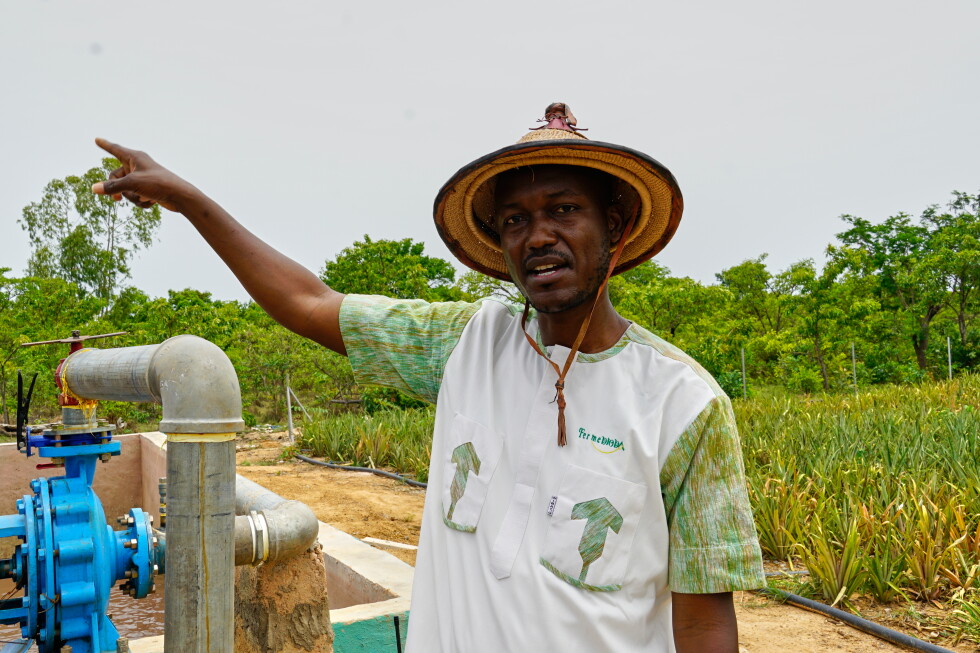
    In the sun-scorched, sandy-stony plains outside Bobo-Dioulasso, western Burkina Faso, Oumarou Compaoré has defied long-held agricultural conventions to build one of the Sahel region’s first large-scale commercial pineapple operations – a project that has become a centerpiece of the landlocked West African nation’s growing push for food sovereignty amid climate volatility and economic instability.

    For generations, conventional agricultural wisdom held that Burkina Faso’s dry, harsh Sahel climate could only support staple crops like cotton, maize and sorghum. Pineapples were widely seen as an exotic luxury import, grown exclusively by wealthier coastal neighboring countries and far out of reach for most local households compared to the ubiquitous mango that grows around many Burkinabe homes. But when border closures during the COVID-19 pandemic cut off supply chains and left fruit markets starved of stock, Compaoré – who had previously cultivated low-profit papayas – saw an opening. He launched his pineapple farm in 2018, branding himself the “Pioneer in pineapple production in the Sahel,” and the operation has since expanded to 50 hectares (124 acres) of productive farmland.

    Compaoré’s unexpected success has captured the attention of Burkina Faso’s ruling military leadership, which has made expanding domestic agricultural production and cutting import dependence a core pillar of its national economic agenda under Captain Ibrahim Traoré, who took power in a 2022 coup. Traoré’s government has framed food production as a critical national sovereignty issue: it suspended rice imports in April 2024 to boost local output, inaugurated two domestic tomato paste factories that same year, and even launched a “buy local” campaign in major Ouagadougou supermarkets, where shelves dedicated to domestic goods – from shea butter and cassava flour to mango juice – bear the slogan “Let’s consume what we produce.”

    These policy shifts come as Burkina Faso grapples with overlapping crises that have threatened food security for millions. Decades of reliance on imports have left the country vulnerable to global transport cost spikes and price shocks, while a 10-year long jihadi insurgency has seized control of large swathes of farmland, displaced hundreds of thousands of people, and disrupted market access. The United Nations estimates that 2.7 million Burkinabe face acute food insecurity during the annual lean season, when leftover harvest stocks run out and market prices hit their peak.

    Against this backdrop, Compaoré’s pineapple initiative has inspired a growing wave of new farmers to enter the sector. While official national production data has not yet been published, regional agricultural director Adanabou Eric Pascal confirmed that total pineapple cultivation across the Houet administrative region – which includes Compaoré’s farm – had reached roughly 100 hectares (248 acres) as of November 2024. Kola Jean, an agricultural engineer who trains new growers at Compaoré’s farm, estimates more than 100 smallholder farmers have now launched their own pineapple operations.

    One of those new entrants is Kaba Séré, a former nonprofit worker who switched to pineapple farming in 2023 after international aid cuts forced her out of her previous role. “We saw what Oumarou was doing and thought: It is possible, why not?” she said, after completing Compaoré’s cultivation training program. She has now expanded her operation to 60,000 seedlings, and says the profitable crop has allowed her to fully support her family. With pineapples still a relatively scarce commodity in local markets, growers report consistent demand, with many buyers purchasing fruit before it even reaches full maturity for harvest.

    Still, the sector faces significant growing pains. Pineapples require up to two years to reach full harvest, and depend on consistent access to water and upfront investment in inputs like fertilizer, irrigation systems and reliable transport – costs many low-income smallholder farmers cannot cover. Compaoré relies on well water to irrigate part of his farm, but digging new wells is out of reach for most new producers. The Sahel’s increasingly harsh, hot and dry climate also creates growing challenges, though local agronomists have begun developing adaptation strategies, including evening irrigation with cool water to protect plants during extreme heat waves, according to Pascal Bazongo, a soil science professor at Burkina Faso’s University of Fada N’Gourma who advises Compaoré’s project.

    Despite these hurdles, Compaoré remains optimistic about the future of domestic pineapple production. On recently acquired adjacent plots, 30 workers recently planted 60,000 new seedlings to expand his operation. He projects the new acreage will yield 60 to 75 metric tons of fruit, generating roughly $62,000 in revenue. Looking ahead, he says the potential for growth is far from exhausted: “We could even make the country self-sufficient in this fruit,” he said.

  • Nepal flood survivors fear loss of culture and community

    Nepal flood survivors fear loss of culture and community

    In a makeshift emergency shelter carved out of a Buddhist monastery in Kathmandu, Nepal’s capital, Tsering Gelbu Lama sits on the cold stone floor, brushing away unbidden tears. His 4-year-old daughter sits at his feet, unaware that her mother was swept to her death just days earlier when catastrophic floodwaters burst through mountain valleys along the Nepal-Tibet border. As he coaxes a spoonful of rice into the young girl’s mouth, his biggest fear reaches far beyond the loss of his wife and the home his family built on ancestral land: he has no idea how he will carry forward their centuries-old Indigenous cultural traditions to raise her in their faith and customs.

    For Lama and hundreds of other flood survivors evacuated from remote Himalayan villages in Nepal’s northern Rasuwa district, the disaster has amplified a slow-burning crisis that was already eroding their community identities. Decades of outmigration of young people seeking education and work in Nepal’s cities have already weakened intergenerational transmission of local traditions. Now, the catastrophic floods have erased entire villages, swept away irreplaceable cultural heirlooms, destroyed restored religious sites, and killed dozens of community elders who carried oral knowledge of rituals, languages and customs — leaving displaced survivors questioning whether their unique way of life can survive at all.

    “We’ve become homeless not only because we’ve lost our land — we’ve become homeless with our culture and tradition,” explained 36-year-old Tsering Sherpa, a Rasuwa native now staying at the Kathmandu monastery shelter, as he leaned against the stone steps of the building.

    Nepal is one of the most ethnically diverse nations in South Asia, home to more than 120 distinct Indigenous and ethnic groups, many of which have preserved unique languages, ritual practices, and community festivals passed unchanged through hundreds of generations. Rasuwa district, tucked into the high Himalayan peaks along Nepal’s northern border with the Tibet Autonomous Region of China, is renowned for its tight-knit Indigenous Buddhist communities, whose unique cultural practices have even drawn international tourists to the region’s popular Tamang Heritage Trail, a trekking route that showcases local life and sacred traditions.

    Survivors sheltering in Kathmandu still carry vivid memories of life before the floodwaters arrived. They describe villages nestled between steep forested hills teeming with bears, deer, and brightly colored butterflies, where rivers cut through lush green valleys. In shared photos and videos captured before the disaster, they show moments of daily cultural life: groups of women gathering to chop juniper for ritual incense, community members crafting new decorations for a local monastery that was being rebuilt, and men and women in vibrant handwoven traditional clothing dancing together during annual religious festivals.

    “Now all of it is finished,” said 20-year-old Tenzin Dolma Ghale, a young survivor from Rasuwa.

    When the floodwaters surged following heavy seasonal rains, residents described scrambling up steep hillsides to escape the rushing current, many finding temporary refuge in local monasteries that had only been rebuilt a year earlier — replacing structures that were completely destroyed in the devastating 2015 Gorkha earthquake that shook the Nepalese Himalayas. Most survivors had no time to grab belongings from their homes before evacuating; many were airlifted out by rescue helicopters with nothing more than the clothes on their backs. Others lost centuries-old family heirlooms that were meant to be passed down through generations, objects that carried both cultural and personal meaning for their communities.

    The crisis of cultural preservation predates this year’s devastating floods, according to Alina Lama, a 26-year-old Rasuwa native who now volunteers at the Kathmandu shelter. For years, young people have left remote mountain villages for Nepal’s urban centers to access better education and job opportunities, drawn to the promise of more “modern” lives. This slow outmigration has already broken many intergenerational cultural ties: Alina Lama herself notes that she never learned many small, core details of her community’s traditions because she spent most of her young adulthood away from her village studying and working.

    Now, the disaster has created an urgent new set of concerns, particularly for children who lost their parents in the floodwaters. “We don’t know who will teach them,” Alina Lama said.

    International aid group Save the Children estimates that thousands of children across flood-affected regions are in need of urgent humanitarian assistance, though no official data has been released on how many children have been orphaned by the disaster.

    For religious communities, the loss runs even deeper. With local Himalayan monasteries destroyed by floodwaters and many senior community monks — who carry specialized, localized knowledge of ritual practice — dead or displaced, key annual traditions are already at risk of disappearing. Tsering Sherpa points to the region’s important autumn Buddhist festivals, which for centuries have been held in local village monasteries, as an example of what the community stands to lose.

    “We used to celebrate these festivals in our monasteries. Right now we don’t even have a monastery,” he said. “Culture and tradition are passed generation to generation by practice. If I can’t follow the tradition now, how can I pass it on to the next generation?”

    This reporting on climate and environmental impacts on communities is supported by private philanthropic funding, with The Associated Press retaining full editorial control over all content.