博客

  • Woman killed in Times Square stabbing, suspect shot dead by police

    Woman killed in Times Square stabbing, suspect shot dead by police

    One of the busiest tourist hubs in the United States, New York City’s Times Square, was the site of a shocking random violence incident on a Wednesday afternoon that left two people dead and one injured, city officials have confirmed.

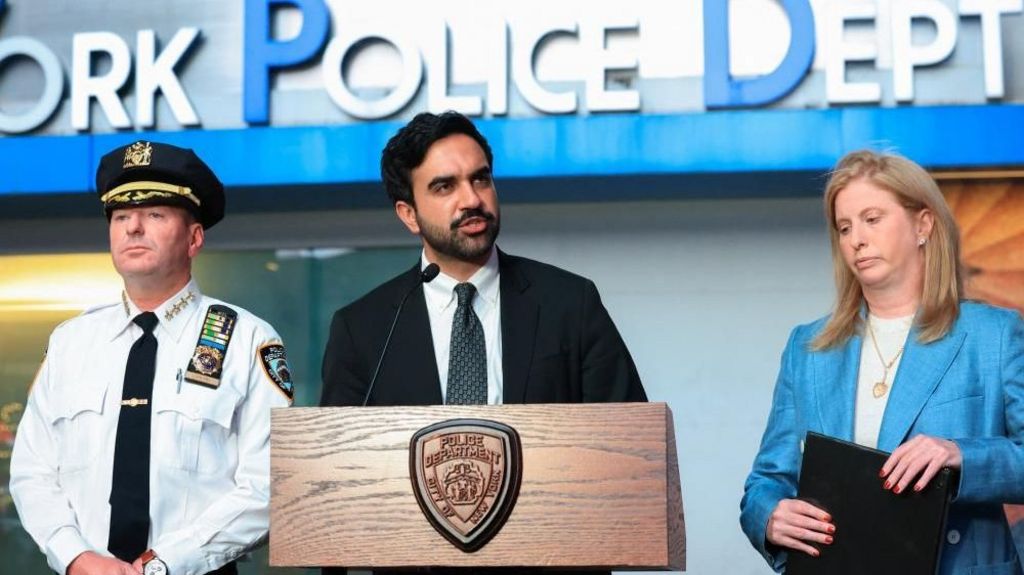
    At a press briefing shortly after the attack, New York City Mayor Zohran Mamdani confirmed the details of the incident, outlining that a 32-year-old female bystander and the 49-year-old female attacker both died after being transported to a local hospital. The third person involved, a 68-year-old man who was also stabbed, remains in stable condition, Mamdani added.

    NYPD Commissioner Jessica Tisch expanded on the timeline of the rapidly unfolding attack, which she described as an unprovoked act of random violence. According to preliminary investigation data, the city’s 911 emergency call center began receiving multiple reports of the stabbing at approximately 4:24 p.m. local time. Witness accounts collected by investigators indicate the incident started near the intersection of West 41st Street and Seventh Avenue, when the suspect pulled two knives from a red Target bag before approaching her first victim.

    That first victim, the 68-year-old man, had just exited a nearby subway station and was waiting to cross the street with his wife when he was attacked. The suspect stabbed him in the right abdomen, and he was quickly transported to Bellevue Hospital, where his condition has been updated to stable.

    After the initial assault, the suspect continued moving north along Seventh Avenue toward 42nd Street, where she carried out a second stabbing that claimed the life of the 32-year-old female victim. Responding NYPD officers encountered the suspect moments later and attempted to de-escalate the situation for four minutes, ordering her repeatedly to drop her weapons. According to Tisch, the suspect refused all commands, telling officers “I’m not dropping anything, I’d rather kill both of you” and repeating threats to take their lives.

    When the suspect advanced on officers while brandishing her blades, officers first attempted to stop her with a Taser. However, the less-lethal weapon proved ineffective, and the suspect continued moving toward the responding team. Faced with an immediate threat to their safety and the safety of nearby bystanders, officers opened fire, striking the suspect. She was rushed to Bellevue Hospital alongside the other victims, where she was later pronounced dead.

    Investigators have since identified the attacker as Pamela Cisneros, a 49-year-old Queens resident. Tisch confirmed that Cisneros had no prior criminal arrests, but NYPD records show she had documented interactions with police related to mental health incidents in both 2018 and 2019.

    Witnesses who were in the area during the attack described the chaotic scene that unfolded. Melinda Puzon, a tourist visiting New York from Boston, told reporters she heard the gunshots and immediately saw crowds of people scrambling in response. “It’s very shocking,” Puzon said of the incident in one of the city’s most crowded public spaces.

    In his remarks, Mayor Mamdani extended his gratitude to the first responders who acted quickly to contain the threat, noting that their fast intervention “prevented a horrific attack from becoming even worse.”

  • Sexual assaults happening almost every day in Ceuta, prosecutors say

    Sexual assaults happening almost every day in Ceuta, prosecutors say

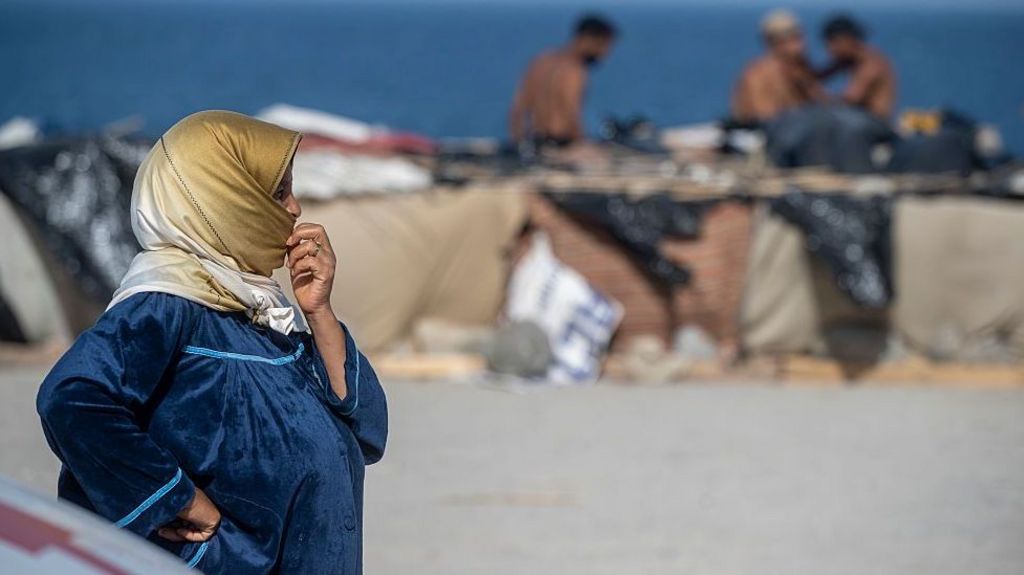
    Nearly two months after an unprecedented mass migrant crossing into the Spanish North African exclave of Ceuta, the territory remains mired in a deep humanitarian, political and security crisis, with thousands of migrants still stranded and rising tensions between local communities, national political leaders and regional neighbors.

    Between July 30 and 31, more than 72,000 migrants crossed the border from Morocco into Ceuta, one of two Spanish autonomous territories on North Africa’s coast that Morocco has long claimed as its own. While the vast majority of arrivals have since returned to Morocco, official estimates indicate as many as 5,000 migrants remain in the exclave — a figure that includes between 1,400 and 1,600 unaccompanied minor children. The unplanned, sustained population surge has upended daily life in Ceuta, stoked violent clashes between migrants and long-term local residents, and created one of the most pressing political challenges for Spanish Prime Minister Pedro Sánchez’s government in recent years.

    Among the most alarming developments to emerge from the ongoing crisis has been a sharp rise in reported sexual assaults across Ceuta. Chief prosecutor Silvia Rojas confirmed to local media that 23 sexual assault cases have been formally recorded since the mass influx began in late July, a rate of roughly one incident per day. Nine of these recorded assaults targeted minor children. Rojas emphasized that migrant girls and young women face disproportionate risk in the current environment, noting that their irregular legal status leaves them particularly vulnerable to exploitation. Many additional assaults are believed to have gone unreported, Rojas added, with victims deterred from coming forward by fear of repercussions and their unstable living situation in Ceuta. So far, eight suspects have been identified in connection to the cases: four Moroccan citizens, three Spanish nationals and one Belgian, according to Spanish news agency Efe. The Spanish Society of Epidemiology has publicly warned that gender-based violence in this context cannot be dismissed as an isolated collection of unconnected incidents.

    In response to mounting pressure, the Sánchez government has taken a series of steps to address the crisis. Spain’s cabinet has approved a multi-million euro emergency aid package designed to expand access to essential public services and fund care for the hundreds of unaccompanied migrant children remaining in Ceuta. On Tuesday, Sánchez convened his second national security council meeting in one week to coordinate a whole-of-government response to the unrest. In a move widely interpreted as an effort to reassert Spanish sovereign authority over the exclave, Sánchez announced earlier this week that King Felipe VI would visit Ceuta “as soon as conditions allow.” The announcement carried significant diplomatic weight: the last visit by a Spanish monarch to Ceuta, in 2007, prompted Morocco to recall its ambassador from Madrid in protest, and a new royal visit is expected to reignite diplomatic friction between Madrid and Rabat.

    Sánchez’s handling of the announcement has already drawn domestic criticism. Political commentators have highlighted that the prime minister’s public remark — noting that no Spanish king had visited Ceuta in 20 years — was factually inaccurate: current King Felipe has only occupied the throne for 12 years, and the 2007 visit was conducted by his predecessor, Juan Carlos I. The comment was widely read as an implicit criticism of the monarch, even as Sánchez met with the king later the same day. The prime minister also noted that he is the only sitting Spanish prime minister to have made an official visit to Ceuta while in office, having traveled to the territory on July 31 as the crisis unfolded.

    Beyond domestic pushback, the Sánchez government faces widespread condemnation from political opposition over its management of the entire crisis. The conservative mayor of Ceuta, Juan Jesús Vivas, has called for nationwide demonstrations across mainland Spain on Wednesday, timed to coincide with Ceuta’s annual public holiday, to demand stronger government action. Main opposition party the People’s Party (PP) has accused Sánchez of improperly exonerating Morocco of involvement in the crisis. Hard-right party Vox has gone even further, claiming that Sánchez has not merely lost control of Ceuta — he has intentionally ceded Spanish authority over the territory. Local business leaders echo the frustration: Arantxa Campos, president of the Ceuta Employers’ Confederation, told the BBC that local authorities and businesses have received no clear plan from the national government, leaving them unable to plan for or address the ongoing strain on public services and local infrastructure. “We don’t even know when they’re going to finish screening everyone,” Campos said.

    A core point of political contention is the question of who bears responsibility for the unprecedented mass crossing. Sánchez has deliberately avoided blaming Moroccan state authorities, stating that no available intelligence reports point to any official Moroccan involvement in organizing or encouraging the surge. Morocco has repeatedly denied any role in orchestrating the crossing, and PP spokesperson Borja Sémper has questioned this narrative, arguing that tens of thousands of people could not have mobilized to the Ceuta border without the knowledge of Moroccan authorities.

    Instead, Sánchez has pointed to disinformation campaigns on social media as a key driver of the crisis, claiming that false content has been spread by actors linked to Russia, Israel and an international far-right movement, which has long weaponized migration to destabilize European governments. He clarified that the disinformation campaign did not necessarily originate with a state actor, but his allegations have already drawn fierce pushback from both countries. Israeli Foreign Minister Gideon Sa’ar called the claim “a blatant lie”, while Russia’s foreign ministry spokeswoman has demanded concrete evidence to support the allegations. Both nations have outright denied any involvement in the crisis.

    Spanish fact-checking organization Maldita has confirmed that in the weeks leading up to the July 30 crossing, encouraging messages circulated widely on Moroccan social media platforms, urging people to attempt the crossing after a June ruling from Spain’s Supreme Court. Multiple posts in August falsely framed the Ceuta border fence as easy and safe to cross, despite the high human cost: Ceuta’s mayor confirms that at least 100 people died attempting to swim around the border barrier during the mass influx.

  • Zambia president inaugurated for second term after disputed vote and opposition arrests

    Zambia president inaugurated for second term after disputed vote and opposition arrests

    LUSAKA, Zambia — In a ceremony drawing thousands of cheering supporters to the capital’s National Heroes Stadium, Hakainde Hichilema was officially sworn in Tuesday for his second five-year term as President of Zambia, an inauguration that comes against a backdrop of deep electoral controversy, detained opposition figures, and restricted access to legal challenges against the poll outcome.

    According to Zambia’s Electoral Commission, Hichilema secured a decisive victory in the August election, capturing roughly 60 percent of the national presidential vote. His main challenger, opposition leader Brian Mundubile, garnered approximately 38 percent of ballots cast. Almost immediately after the results were announced on August 18, Mundubile rejected the outcome, leveling claims of widespread voting irregularities across the southern African nation.

    Zambia has a three-decade history of largely peaceful electoral competition since it restored multiparty democracy in 1991, a track record that has been called into question by the chaotic aftermath of this year’s poll. In the weeks following the election, multiple opposition leaders have been taken into custody, and the country’s courts were temporarily closed to prevent the opposition from filing formal legal appeals challenging the election results.

    The controversy deepened after Mundubile and his running mate Makebu Zulu were taken into custody. The opposition leader told reporters he had gone into hiding immediately after disputing the results, after security forces raided his residence the day after the election, saying he feared for his personal safety. The pair eventually surrendered to law enforcement on August 24, after seeking temporary shelter in a United Nations facility in Lusaka. Local Zambian media has confirmed the two are currently being held at Mukobeko Maximum Security Prison, located in central Zambia.

    The United Nations’ top human rights official has already issued public statements expressing concern over the arrests of opposition figures following the election, and Mundubile now faces additional accusations of treason, a charge that carries severe legal penalties in Zambia.

    Several regional heads of state attended Tuesday’s inauguration to signal diplomatic support for Hichilema’s new administration, including Kenyan President William Ruto, newly inaugurated Botswana President Duma Boko, and Zimbabwean President Emmerson Mnangagwa.

    In his inaugural address to the gathered crowd, Hichilema struck a unifying tone, acknowledging the voices of voters who supported opposition candidates despite the contested outcome. “We receive your support with humility and with a clear understanding of the responsibility it places upon our shoulders. To those who chose other candidates or other parties, we say with equal sincerity, we have heard you,” he told the audience, framing his new term as a mandate to govern for all Zambians regardless of their vote.

  • PSG cashes in again as Ibrahim Mbaye joins Aston Villa as part of a $460 million summer sell-off

    PSG cashes in again as Ibrahim Mbaye joins Aston Villa as part of a $460 million summer sell-off

    PARIS – On the final day of the 2025 summer transfer window, French Ligue 1 giant Paris Saint-Germain (PSG), a two-time European champion, confirmed its latest high-profile outgoing deal: promising Senegalese forward Ibrahim Mbaye will make a permanent move to English Premier League side Aston Villa. The transfer marks another milestone in the Parisian club’s dramatic strategic shift, moving away from its decades-long identity as soccer’s biggest spender to a new model focused on generating massive revenue through player sales.

    This summer, PSG has outperformed every other top European club in transfer revenue generated from outgoing player moves, with cumulative earnings surpassing 400 million euros ($464 million). That figure puts it ahead of fellow big spenders Aston Villa and Manchester City of the Premier League, capping a wildly successful window for the club’s new commercial strategy.

    Contrary to some fan concerns that PSG is selling off its core talent, club insiders emphasize that every player moved out this window, including Mbaye, was a rotational substitute under head coach Luis Enrique. Even the summer’s largest outgoing deal, the 145 million euro transfer of Bradley Barcola, fits this deliberate framework: the club has only offloaded players not central to Enrique’s starting XI plans, allowing it to cash in on valuable assets while keeping its core competitive squad intact.

    A product of PSG’s renowned youth academy, the 18-year-old Mbaye has already built an impressive resume on and off the pitch for club and country. He has earned 15 senior international caps for Senegal, and earlier this summer at the World Cup, he made history as the youngest African player ever to score at the men’s World Cup, finding the back of the net in Senegal’s 3-1 group stage defeat to host nation France. Back in 2023, Mbaye became the youngest player in PSG history to make a Ligue 1 debut, stepping onto the pitch at just 16 years, six months and 23 days old. Over his time in the first team, Mbaye lifted eight major trophies with PSG, including two Champions League titles, two European Super Cups and two Ligue 1 crowns. Mbaye’s transfer package is valued at up to 60 million euros ($69 million), adding to PSG’s massive summer haul.

    Beyond Mbaye and Barcola, PSG has offloaded a host of other squad players this window, including defender Noham Kamara, South Korean midfielder Lee Kang-In, striker Randal Kolo Muani and Portuguese forward Gonçalo Ramos. The club used less than 210 million euros ($243 million) of its transfer sales revenue to bring in new signings: Ferran Torres, Maghnes Akliouche, Mika Godts, Lucas Lucas, Lucas Digne and Alessandro Longoni. The result is a net capital gain of nearly 200 million euros ($232 million) from this summer’s transfer activity alone.

    This strategic shift is a dramatic departure from the club’s approach for more than a decade. Since Qatar Sports Investments (QSI) completed its takeover of PSG in 2011, ownership spent lavishly to attract global superstars including Zlatan Ibrahimovic, Lionel Messi and Neymar, turning a mid-tier French club into one of the richest and most competitive sides in European soccer. The turning point came after Kylian Mbappe’s high-profile departure to Real Madrid in 2024, when Enrique pushed for a new recruitment model focused on signing less high-profile but high-potential talent to build depth across every position, creating healthy competition for starting spots and flexible squad rotation.

    The overhaul has already delivered tangible on-pitch results: PSG has won consecutive Champions League titles under the new structure. Off the pitch, the financial results are equally impressive. PSG reported last October that it closed the 2024–25 season with a record 837 million euros ($970 million) in total revenue, a milestone that came on the back of the club’s first ever Champions League title. Since QSI’s 2011 takeover, the club’s annual turnover has increased ninefold, underscoring the long-term success of its evolution.

  • Submersible joins search for 20 missing in deadly Cypriot ferry disaster

    Submersible joins search for 20 missing in deadly Cypriot ferry disaster

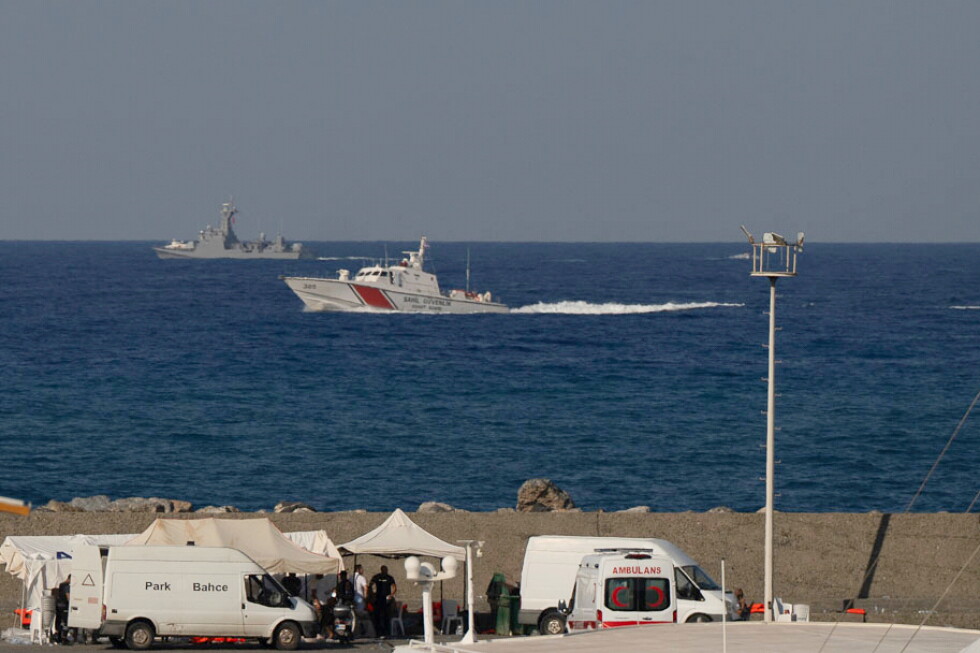
    Two full days have passed since the passenger ferry Filo Jet capsized and sank off the northern coast of Cyprus, and search operations have entered a new critical phase with a specialized submersible deployed Tuesday to locate 20 people still unaccounted for. The disaster, which unfolded Sunday afternoon as the catamaran ferry departed the northern Cypriot port of Kyrenia (called Girne in Turkish) en route to Tasucu, Turkey, has already left eight people dead.

    Carrying a total of 267 passengers and crew, most of whom were Turkish tourists returning from holiday, the Filo Jet quickly keeled over and sank after passengers reported hearing multiple loud bangs from below deck. Survivor accounts describe immediate panic as water rushed into the vessel, trapping dozens of people in the main passenger seating area as the ship tipped onto its side.

    According to Unal Ustel, Prime Minister of the Turkish Republic of Northern Cyprus (TRNC), Turkey’s specialized search-and-rescue ship TCG Isin has now reached the wreck site, located roughly 7.5 kilometers off the Cypriot coast. The sunken ferry rests at a depth of more than 500 meters (over 1,600 feet), far beyond the range of standard diving operations. To address this extreme depth, the TCG Isin carries a remotely operated submersible capable of descending up to 1,000 meters (3,280 feet), fitted with high-resolution cameras to map the seabed and robotic arms to recover debris and evidence. The vessel also hosts a team of 15 specialized divers to support operations.

    “Once the wreck is identified, salvage operations will begin at a significant depth of 500 meters,” Commander Ulas Cesur, head of the mission aboard the TCG Isin, told reporters. “Detailed search and investigation activities will be carried out around and on the wreck using a remotely operated underwater vehicle.”

    Ustel emphasized that authorities are committing all available resources to the operation, backed by full support from the Turkish government. “We will continue our search and rescue operations and technical work uninterrupted for as long as needed,” he stated in remarks published by TRNC newspaper Kibris.

    As search efforts press forward, three of the eight confirmed victims were laid to rest across Turkey on Tuesday. Fourteen-year-old Nisa Torer, who was returning from vacation with her widowed father and two younger brothers, was buried in the southern Turkish city of Gaziantep. Her father remains among the missing. Fifty-six-year-old Nihat Balyemez was also interred in Gaziantep, while 60-year-old Huseyin Ozdemir was buried in Silifke, Mersin province. Ozdemir had traveled to Cyprus for a family wedding; his wife is still missing, but their two daughters were pulled from the water alive.

    Since the disaster was reported, a massive multi-domain search effort has been mounted. Overnight Monday, air and sea crews combed the area for any signs of surviving passengers, and to date, the operation has involved one fixed-wing aircraft, seven helicopters, five drones, and 17 surface vessels, according to Turkey’s state-run Anadolu Agency.

    In the wake of the sinking, authorities have launched a formal investigation into the cause of the disaster. Eight crew members and a senior director of the ferry’s operating company, Filo Denizcilik, are currently in police custody. An additional five people, including other Filo Denizcilik employees and northern Cypriot port officials, remain under formal investigation.

    The incident takes place against a long-standing geopolitical backdrop: Cyprus has been divided along ethnic lines since a 1974 Turkish invasion, following a Greek nationalist coup attempt. Turkish Cypriots declared independence as the TRNC in 1983, a move recognized only by Ankara, which maintains more than 35,000 troops on the northern portion of the island.

  • South Africa reappoint Mosimane as head coach

    South Africa reappoint Mosimane as head coach

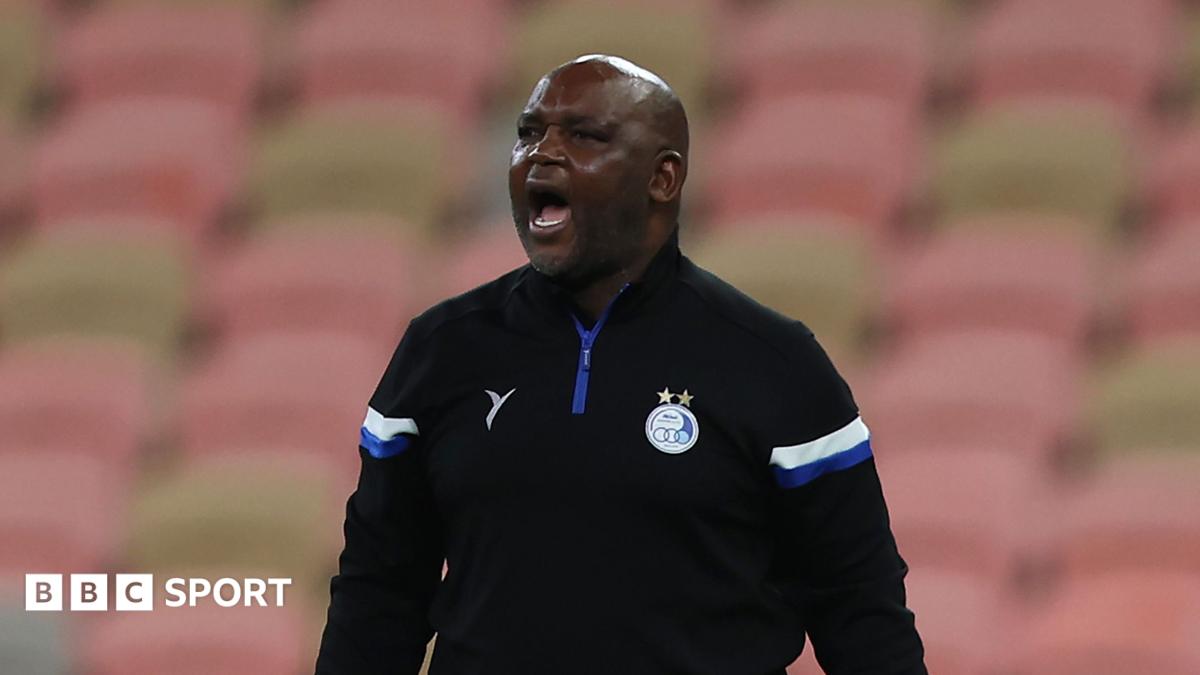
    Veteran South African football manager Pitso Mosimane has been formally unveiled as the new head coach of the country’s men’s senior national side, Bafana Bafana, marking a surprise return to the role he left more than a decade ago. The 62-year-old, whose decorated career spans club and continental success across Africa and the Middle East, steps into the vacancy left by Belgian manager Hugo Broos, who departed the post in late July after his five-year contract reached its natural expiration.

    Broos leaves behind a notable legacy during his tenure, guiding South Africa back to the FIFA World Cup finals for the first time since the nation hosted the tournament in 2010, and securing a third-place finish at the 2023 Africa Cup of Nations (Afcon) — one of the team’s strongest continental performances in recent years. While Mosimane’s first spell in charge of Bafana Bafana, which ran from July 2010 to June 2012, ended in disappointment, his subsequent club track record has cemented his reputation as one of the most successful managers in African football.

    During his first national team tenure, Mosimane’s side infamously missed out on qualification for the 2012 Afcon after incorrectly assuming a draw in their final group match against Sierra Leone would secure their spot in the tournament finals. His departure came just two years into his first contract, following a 1-1 home draw against Ethiopia in the opening qualifier for the 2014 World Cup. In the 12 years since he left the post, Mosimane has collected an impressive array of silverware, including three African Champions League titles — two with South African powerhouse Mamelodi Sundowns and one with Egyptian giant Al Ahly. Most recently, he held a managerial role at top Iranian club Esteghlal, with previous stints also including roles in Saudi Arabia and Abu Dhabi.

    The South Africa Football Association’s executive committee approved Mosimane’s reappointment on 8 August, but the official public reveal was delayed until Tuesday in Johannesburg, as the club worked to finalize contract details and assemble Mosimane’s supporting technical team. As of the announcement, the length of Mosimane’s new contract with the national federation has not been disclosed to the public. Football fans and analysts across the continent are now watching closely to see whether the decorated club manager can translate his decades of continental success to the international stage, and lead Bafana Bafana to continued progress after the team’s recent breakthrough under Broos.

  • Schools resume classes in Congo’s Ebola epicenter despite concerns from parents and teachers

    Schools resume classes in Congo’s Ebola epicenter despite concerns from parents and teachers

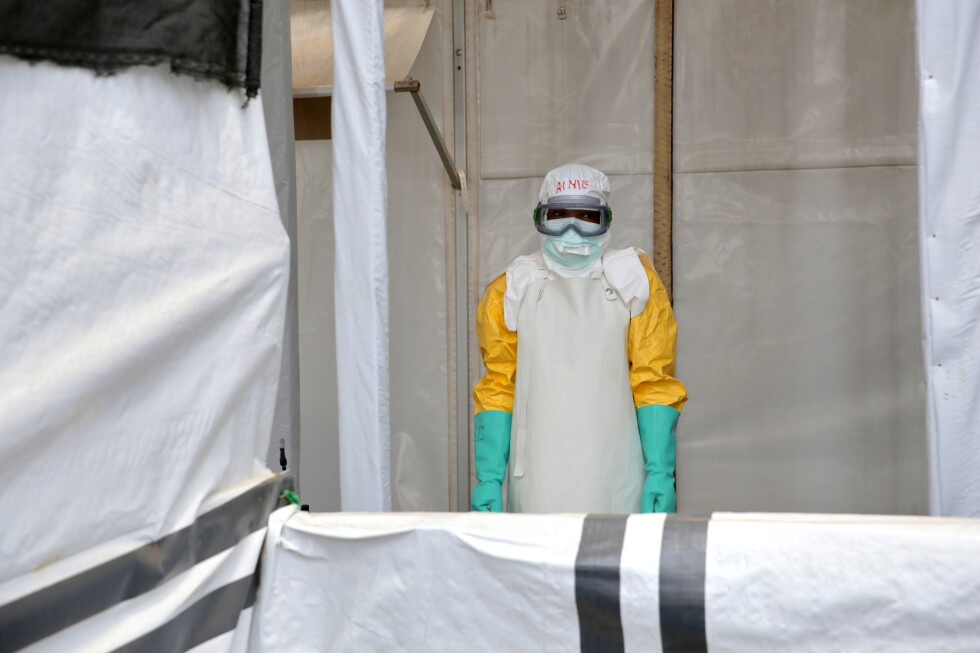
    The Democratic Republic of Congo kicked off its new academic year nationwide this Tuesday, drawing widespread concern from parents and educators over ongoing Ebola transmission risks in the outbreak’s eastern epicenter. The decision to resume in-person classes comes as the country grapples with one of the most devastating Ebola outbreaks in recorded history, which has spread at an unprecedented pace across affected regions.

    Latest official data released by the Congolese government confirms that as of Tuesday, the virus has infected more than 6,100 people and claimed 2,950 lives since the first detected cases emerged last May. Health researchers trace the current outbreak to the rare Bundibugyo Ebola strain, which experts confirm has spread faster than any previous outbreak on record. The virus has already reached more than 60 distinct health zones, and public health investigators believe it circulated undetected in local communities as early as February of this year. The World Health Organization has warned that current trends put the outbreak on pace to surpass the 2014–2016 West African Ebola epidemic, the deadliest occurrence of the disease to date.

    Ituri province, located in eastern Congo, sits at the center of the outbreak. The provincial teachers’ union formally requested a delay to the start of the academic year to implement adequate safety measures, but the national government moved forward with the original schedule. Early reports show notably low student attendance at public schools across the province, and Ituri regional authorities have not responded to requests for details on planned classroom safety protocols.

    Aimerance Vahweka, a parent based in Bunia, Ituri’s provincial capital, says the early resumption of classes caught her and many other local families off guard. She has chosen to keep her own child home for the time being, citing a visible lack of enhanced Ebola prevention measures in local schools. “I do not really see an increase in prevention measures,” Vahweka noted in an interview.

    Some local education representatives, however, say that preparations are underway to protect students and staff. Private schools in Bunia have begun rolling out basic safety infrastructure, including non-contact infrared thermometers, alcohol-based hand sanitizer, and dedicated hand-washing stations. “We also raise student awareness about adhering to hygiene protocols, particularly regular handwashing and the use of hand sanitizer,” explained Etienne Ndjabu, a teacher at a Bunia private school.

    Despite these small-scale efforts, international aid organizations warn that major systemic gaps remain. Many schools across affected regions lack consistent access to clean running water, a critical requirement for regular hand hygiene, and public funding for outbreak safety measures has fallen far short of needed targets. Greg Ramm, country director for Save the Children in Congo, noted that logistical barriers compound these issues, particularly in hard-to-reach rural areas. “There are also significant logistical challenges, particularly in remote areas, where the delivery of equipment and learning materials may be delayed,” Ramm explained.

    Health data from the outbreak underscores the severity of the risk to young children. Available statistics show that children under the age of four face the highest case fatality rate of any age group, with roughly 60% of confirmed cases in this demographic resulting in death.

    Ebola response efforts across eastern Congo have faced a cascade of additional barriers that have fueled the outbreak’s spread. Ongoing armed conflict between government forces and rebel groups in the region, repeated targeted attacks on frontline health workers, and large-scale population displacement have all made containment efforts far more difficult. In recent months, health workers in affected provinces have held multiple strikes over delayed hazard pay, which has further disrupted outbreak response operations.

    While there is no universally approved, fully licensed treatment or vaccine for the current strain of the virus, Congolese health authorities have begun rolling out thousands of doses of the experimental Ervebo vaccine, which the WHO has confirmed may offer partial protection against infection for at-risk groups.

  • Why did Modi urge Putin to end Ukraine war – and will he listen?

    Why did Modi urge Putin to end Ukraine war – and will he listen?

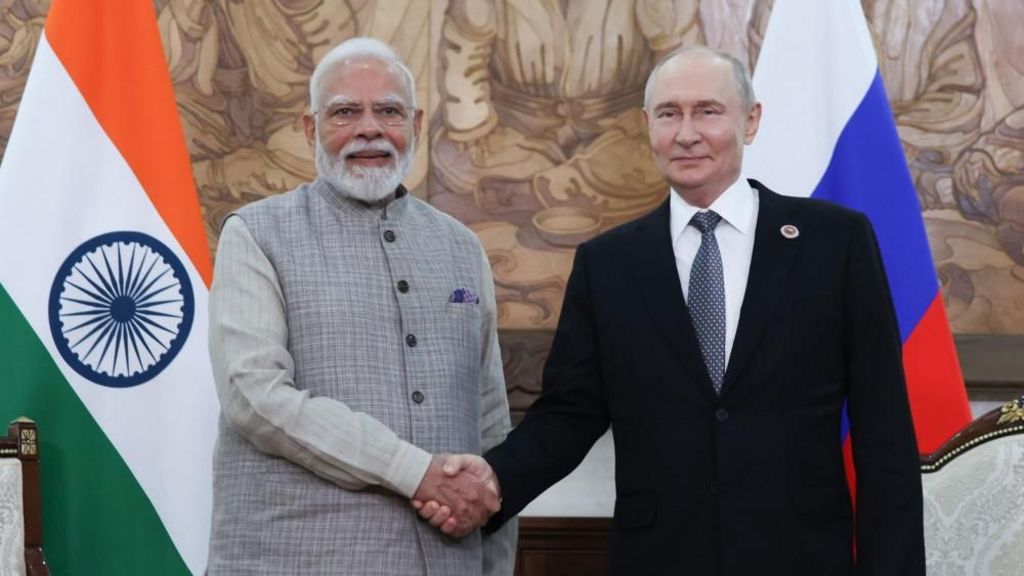
    On a recent Monday, Indian Prime Minister Narendra Modi, a long-standing close ally of Russian President Vladimir Putin, issued a renewed public call for Moscow to bring its full-scale military campaign against Ukraine to a close. “Every day spent in war pushes humanity back, and every step taken towards peace fills humanity with new hope and enthusiasm,” Modi stated, doubling down on a message he has delivered repeatedly since Russia launched its invasion of Ukraine in early 2022. For India, a major economy that relies heavily on discounted Russian crude oil to meet its growing energy needs, this public appeal aligns with a long-held diplomatic position — not a sudden shift. This was not Modi’s first public urging of Putin: during a 2022 regional summit, less than a year into the conflict, he publicly told the Russian leader that “now is not the time for war.”

    Contrary to some interpretations, neither this latest statement nor previous remarks from Modi constitute a direct rebuke of Putin or Russia’s broader strategic goals. Western powers have long pressured New Delhi to take a clear, condemnatory stance on the war, but India has maintained a deliberate policy of neutrality, consistently calling for diplomatic dialogue to resolve the conflict rather than aligning with either bloc. This neutral stance has frustrated many Western capitals, but geopolitical and economic realities have forced Western leaders to continue engaging with India: as one of the world’s fastest-growing major economies with a population of over 1.4 billion, India is simply too strategically and economically important to isolate.

    In fact, Modi’s latest appeal is fully consistent with India’s core policy of strategic autonomy, which has allowed the country to maintain ties with competing global powers. For decades, India has balanced deep, long-standing partnership with Russia with growing strategic and economic ties to the United States, Europe, and other Indo-Pacific powers. India is a founding member of the BRICS bloc alongside Russia and China, and a participating state in the Shanghai Cooperation Organization, two forums where Russia holds significant influence. At the same time, New Delhi is also a core member of the Quad, a strategic security grouping that includes the U.S., Japan, and Australia — a partnership that has drawn criticism from the Kremlin.

    Despite these competing alignments, Moscow and New Delhi have consistently worked through their differences. Russia remains one of India’s largest defense suppliers, accounting for roughly 40% of India’s total defense imports, and has served as a stable provider of energy to meet India’s fast-growing demand. Analysts agree that Modi’s public statement is not expected to create a lasting rift in bilateral ties, and the message was unlikely to have come as a surprise to Putin or his diplomatic team. Critics both in the West and within India, however, argue that Modi should have issued a far more direct criticism of Russia’s military campaign.

    From Moscow’s perspective, this public call for peace is far from unprecedented. Just five weeks before Modi’s appeal, Kazakh President Kassym-Jomart Tokayev publicly suggested Putin freeze the conflict and return to negotiations. Putin did not take that step, and there is no indication that public appeals from allied leaders have shifted his core strategic calculations.

    In response to Modi’s call for an end to hostilities, Putin offered only a polite, vague, and non-committal reply: “Thank you very much, prime minister. We are moving forward along this path.” The ambiguity of the response leaves critical questions unanswered: how fast will progress be, and what “path” is Russia actually pursuing? All available evidence suggests that Russia’s leadership remains committed to achieving military victory on the battlefield in Ukraine, framing their current military campaign as “moving toward peace” on terms dictated by Russian military success.

    As of now, this means active fighting continues, more than four and a half years after the full-scale invasion began. Despite massive Russian military losses and Ukraine’s growing ability to strike targets inside Russian territory — including recent long-range drone attacks on Russian oil refineries that have sparked widespread fuel shortages and long queues at petrol stations across the country — the Kremlin has yet to achieve its core military goals. In recent weeks, Russia has ramped up its own strikes against Ukrainian military industrial facilities and critical infrastructure. Russian business daily Kommersant reported recently that the Kremlin is convinced that time is on Moscow’s side in the military confrontation, working against Kyiv. As long as Putin holds that belief, he is unlikely to pause his “special military operation” or enter into meaningful peace negotiations.

  • RSS globalised: Inside the Hindu nationalist paramilitary leader’s carefully staged NYC celebration of ‘universal oneness’

    RSS globalised: Inside the Hindu nationalist paramilitary leader’s carefully staged NYC celebration of ‘universal oneness’

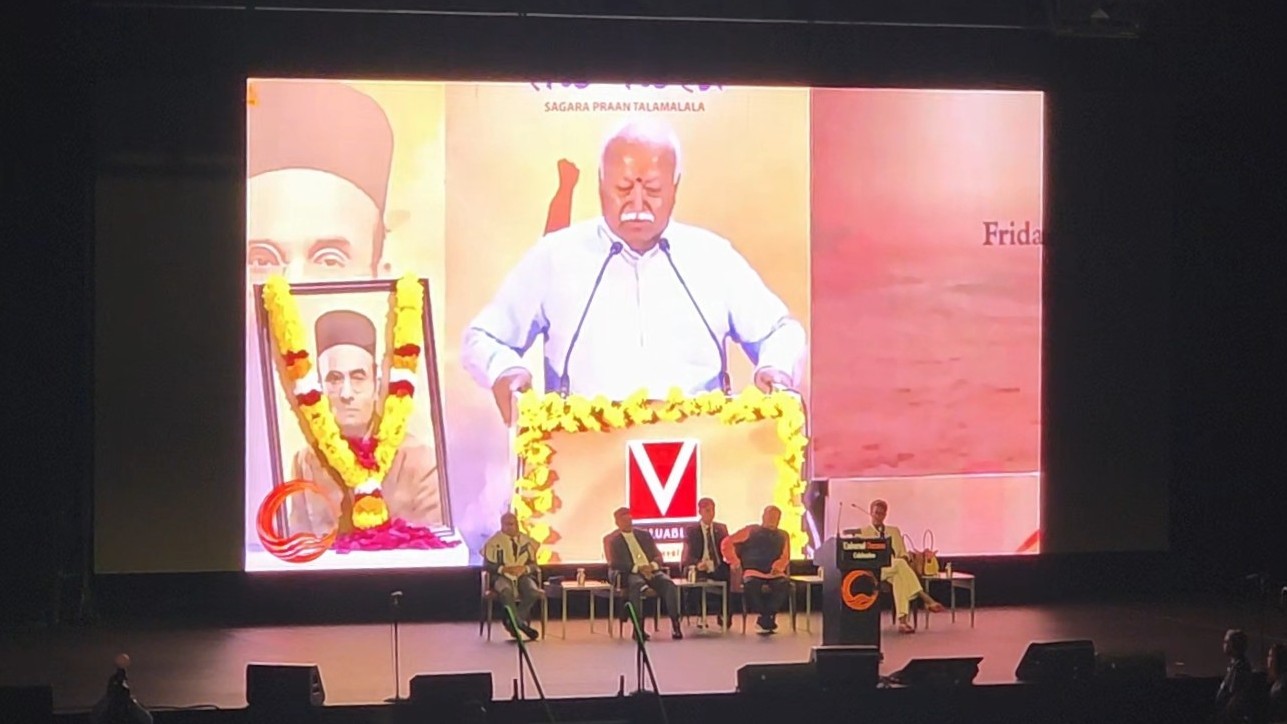
    For over 140 years, New York City’s Madison Square Garden has stood as the world’s most iconic arena, hosting everything from championship NBA games to blockbuster sold-out concerts for global superstars. But on a recent Saturday afternoon, this legendary venue played host to a far different gathering: thousands of Indian and Hindu Americans, dressed in vibrant saffron accessories and traditional cultural garments, traveled from across the United States to hear from Mohan Bhagwat, the head of the Rashtriya Swayamsevak Sangh (RSS), a far-right Hindu nationalist paramilitary organization whose affiliate groups have been linked to escalating violence against religious minorities in India.

    Organized by a group called American Hindus for Engagement And Dialogue (Ahead), the gathering was branded as the “Universal Oneness Celebration,” marketed as an afternoon of interfaith dialogue, shared cultural expression, and collective unity. As a correspondent for Middle East Eye, I gained access to the event after passing a strict identity-based vetting process — a requirement that contradicts the event’s public framing of radical inclusion. To receive a free ticket, attendees were required to list an affiliated Hindu temple or organization, provide a unique five-digit code for that group, and submit a reference from within the organization. Unlike many other prospective guests who received follow-up screening calls or were denied entry entirely, I was approved without question, a outcome I attribute to my clearly Hindu Brahmin surname — a detail that aligns with the RSS’s long history of Brahmin dominance within its leadership ranks.

    Founded in 1925, the RSS boasts more than 5 million members worldwide and is built around the political ideology of Hindutva, a project that seeks to transform India, a constitutionally secular state, into a ethnically homogeneous Hindu nation. The movement’s earliest ideologues openly drew inspiration from authoritarian exclusionary projects: MS Golwalkar, the RSS’s second supreme leader, once framed Nazi Germany’s ethnic cleansing of European Jews as “a good lesson for us in Hindustan to learn and profit by,” explicitly targeting India’s Muslim community. VD Savarkar, widely considered the founder of Hindutva, held up the Zionist project in Palestine as a model for his exclusionary vision for India.

    India’s current ruling party, the Bharatiya Janata Party (BJP), emerged directly from the RSS’s ideological coalition, the Sangh Parivar, and nearly all of its top leaders — including Prime Minister Narendra Modi — hold active membership in the organization. In recent years, senior BJP cabinet ministers have delivered public hate speeches calling for the killing of Indian Muslims, labeling the community “green snakes” that must be eliminated.

    Even before entering the venue, the demographic homogeneity of the crowd — carefully curated to align with the RSS’s core values — was unmistakable. As more than 5,000 attendees waited in line to enter MSG’s Infosys Theater, the crowd broke out into repeated chants of “Jai Shri Ram,” a phrase that originated as a Hindu religious greeting but has since become a battle cry for perpetrators of anti-minority violence in India. The slogan was politicized in the 1980s to rally support for the construction of a Hindu temple on the site of the 16th-century Babri Masjid, a mosque demolished by Hindu mobs led by prominent BJP leaders in 1992.

    Attendees also chanted repeatedly “Vande Mataram,” India’s national song, whose full version — championed exclusively by the RSS and affiliated groups — includes references to Hindu deities that secular Indian leaders have long argued contradict the country’s secular constitutional identity. The final stanzas of the full version call for 70 million people to “lift swords” and “drive out every invader who came from land and sea,” a clear dog whistle targeting India’s Muslim and Christian minority communities. Just weeks before the MSG event, the BJP-led national government passed legislation criminalizing any disruption or insult to the full version of the song, codifying the RSS’s preferred framing into national law.

    Conversations with attendees made clear the deep ties between the gathering and the global Sangh Parivar network. One woman traveling with her young son said they had come from a local shakha — or local chapter — of the Hindu Swayamsevak Sangh (HSS), the RSS’s official international wing, near Edison, New Jersey, which is one of more than 250 HSS chapters across the United States. Other attendees identified as members of Sangh-affiliated groups ranging from the campus-based Hindu Students Council to Hindu Yuva, another youth organizing project tied to the movement. According to research from Savera, an anti-Hindutva advocacy organization, Ahead’s leadership has direct, extensive ties to both the RSS and BJP, and the group listed more than 250 partner organizations from across the U.S. that sent delegates to the New York event.

    Outside the arena, dozens of activists from organizations including the Anti Imperialist South Asian Alliance Philadelphia (AISA Philly) and South Asian Left (Salam) gathered to protest the event. Rishi Arun, a member of both protesting groups, told Middle East Eye that the MSG gathering was the culmination of a decades-long project to legitimize Hindutva ideology among the South Asian diaspora in the United States. “These organisations have covertly pushed Hindutva propaganda while masquerading as cultural organisations, and using the language of universality, spirituality, and often inclusion,” Arun explained.

    Inside the venue, the event opened with a showcase of three South Asian drumming traditions, but the crowd only erupted into excitement when performers took up the Maharashtrian Dhol Tasha — a style organizers explicitly noted has military origins. As the drums played, an image of Chhatrapati Shivaji Maharaj, a 17th-century Maratha king, was projected onto the main stage; while many mainstream historians dispute this framing, Hindu nationalists have rebranded Shivaji as an early icon of armed Hindu resistance against Muslim rule in India.

    After short informational videos about “Hindu Dharma” and the nation of “Bharat” — the name Hindu nationalists insist on for India, rejecting both the “Hindustan” and “India” labels imposed by Muslim and British rulers respectively — the program continued with a regional cultural dance showcase. The crowd’s loudest cheers came during a segment celebrating the Middle East, performed to “Fa9la” by Bahraini artist Flipperachi — the viral entry theme for the Pakistani villain in the 2025 Bollywood film *Dhurandar*, which has been widely described as a Hindu nationalist revenge fantasy against Pakistan. Through carefully curated cultural programming, the event evoked core Hindutva sentiments without ever explicitly stating its exclusionary political goals.

    The tone shifted after the cultural portion of the event, as organizers convened what they framed as an interfaith summit “One World, One Humanity,” with Bhagwat standing center stage flanked by clergy from Jewish, Muslim, Christian, and other major global faith traditions. Bawa Jain, founder of the World Council of Religious Leaders, introduced a centennial call to action for the RSS, reaffirming the organization’s stated commitment to global interfaith harmony. In opening remarks to the summit, Bhagwat told the crowd, “if any Hindu thinks there should be no Muslims in India, he will not remain Hindu” — a statement critics dismiss as tailored for a Western audience, even as the RSS continues to fuel anti-minority violence back in India.

    Human rights monitoring group Genocide Watch has explicitly warned that India is currently in the precursor stages of an anti-Muslim genocide, and has directly linked the RSS to arming and training Hindu nationalist groups to carry out organized communal violence. In his 40-minute closing speech, Bhagwat told attendees that “every nation has a destiny to fulfil” and that the destiny of “Bharat” is to “make the world realise” the idea of “unity in diversity.”

    A day after the event, RSS leadership praised the New York gathering on social media platform X, framing it as a key global outreach initiative during Bhagwat’s multi-city tour of the U.S., Canada, and the United Kingdom. But critics of the event say Bhagwat’s moderate, inclusive rhetoric for American audiences stands in stark contrast to the daily violence carried out by RSS affiliates in India.

    “Bhagwat’s words are one thing. And the bloodshed that the RSS commits on a near-daily basis in India is entirely another,” said Safa Ahmed, board member of the Indian American Muslim Council and a co-organizer of the external protest. Ahmed referenced Golwalkar’s original writing, which argues that religious minorities must be “wholly subordinated to the Hindu Nation” — a standard that Ahmed says represents the RSS’s true vision for minority communities in India.

    Just one week before the MSG event, the U.S. Commission on International Religious Freedom called on the Biden administration to impose sanctions on the RSS for its role in “violent attacks against religious minorities, including Christians, Dalits, Muslims, and Sikhs,” and urged the State Department to revoke Bhagwat’s travel visa to the United States.

    As the event drew to a close, attendees closed out the gathering with a new, globalized twist on the traditional RSS closing chant. While RSS shakhas in India traditionally end with “Bharat Mata ki jai” (“Victory to Mother India”), the New York crowd chanted “Vishwa dharma ki jai” — “Victory to universal dharma” — a clear signal that the RSS is actively expanding its ideological project beyond India’s borders into the U.S. diaspora.
  • Norway’s King Haakon pledges an oath of allegiance to the constitution as his father lies in state

    Norway’s King Haakon pledges an oath of allegiance to the constitution as his father lies in state

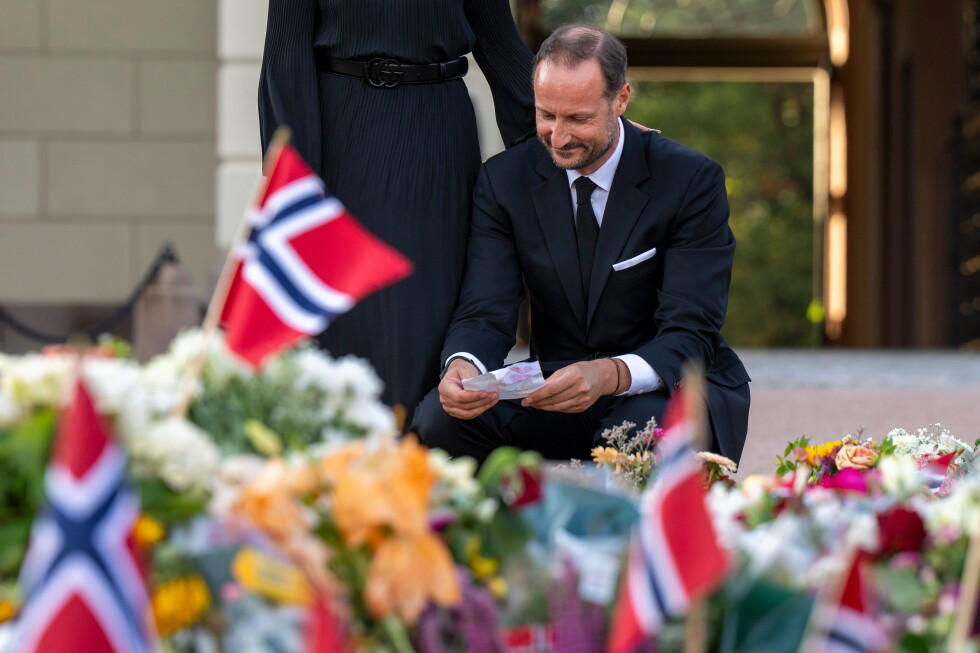
    OSLO, Norway – In a historic moment marking the start of a new era for the Norwegian monarchy, King Haakon VIII formally pledged allegiance to Norway’s constitution during a ceremony in Parliament Tuesday. The symbolic step comes just days after the passing of his father, King Harald V, who ruled the Scandinavian nation for 35 years and died last Friday at the age of 89.

    Haakon, who ascended to the throne immediately following Harald V’s death, has chosen the motto “All for Norway” – a phrase that traces its origin back to his great-grandfather, reflecting continuity with the nation’s long royal legacy. On Tuesday morning, the 53-year-old new monarch traveled the short distance from the Royal Palace to the Storting (Norway’s Parliament) in an open vehicle, where the day’s formal proceedings got underway.

    Masud Gharahkhani, the Speaker of the Storting, opened the ceremony by making the official announcement of King Harald V’s death and Haakon’s succession to the throne. After the announcement, Haakon took the historic oath of office, stating: “I promise and swear that I will govern the Kingdom of Norway in accordance with its Constitution and Laws; so help me God, the Almighty and Omniscient.”

    The Norwegian monarchy is one of the oldest continuing institutions in Europe, with roots stretching back to King Harald Fairhair in the 9th century. When Norway regained full independence from Sweden in 1905, a national referendum saw three-quarters of voters support the restoration of the monarchy. Today, while the monarchy holds a largely ceremonial role with all governing power vested in the elected parliament and government, the royal family remains a key cultural and diplomatic asset that helps promote Norway’s interests and image around the globe.

    In the days leading up to the oath-taking ceremony, the late King Harald V’s coffin was transported to the Royal Palace chapel in central Oslo on Monday. The coffin will remain at the chapel ahead of King Harald V’s funeral scheduled for September 9. From Tuesday afternoon through September 8, the chapel will be open daily to allow members of the public to pay their final respects by walking past the coffin. The Royal Palace has issued guidelines for visitors: no photography or videography is permitted inside the chapel, and guests are asked not to leave flowers or other tributes at the site.

    The procession bringing the coffin to the palace chapel on Monday marked the first official public appearance of Haakon’s wife, Queen Mette-Marit, since she assumed her new title. The queen had largely stayed out of the public eye after undergoing a lung transplant in June of this year. However, just ahead of Tuesday’s swearing-in ceremony, the palace announced that Queen Mette-Marit would be unable to attend the event due to post-transplant complications.

    In a statement, the palace shared a comment from Are Holm, a pulmonologist at Oslo University Hospital, who explained that post-transplant complications are not unusual, and that the queen has experienced these complications on multiple occasions, including on the day of the ceremony. “As a result, the Queen must remain under observation throughout the day. Unfortunately, the Queen will therefore be unable to attend the swearing-in ceremony at the Storting today,” Holm said.