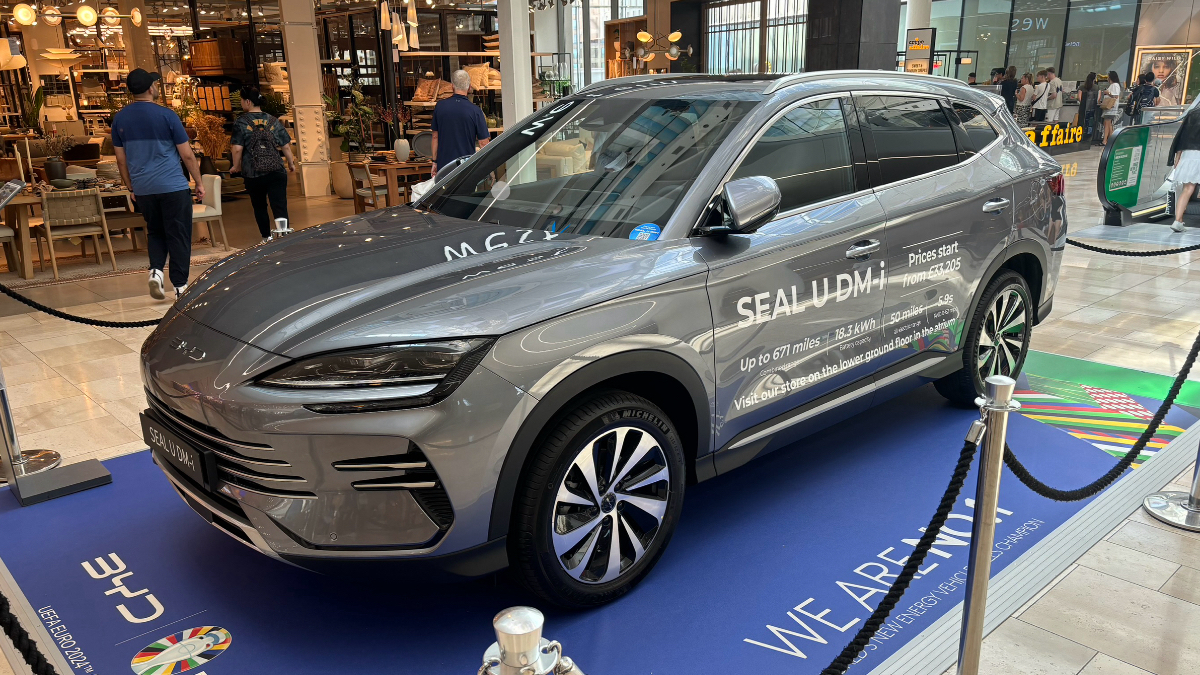
A major new flashpoint has emerged in EU-China trade relations, after Beijing rejected a European Union demand to voluntarily cap Chinese hybrid vehicle exports to the bloc, raising the immediate prospect of steep new EU tariffs on hybrids that have until now avoided the extra duties applied to pure electric vehicles from China.
According to reporting from the *Financial Times*, China turned down Brussels’ proposal that Chinese automakers limit their collective share of the EU’s hybrid market to roughly 15%, down from the current level of more than 33%. Following Beijing’s refusal, the European Commission is now evaluating the imposition of temporary safeguard tariffs — a measure that does not require formal proof of unfair trade practices, two unnamed diplomats told the outlet. Under the draft plan, Chinese hybrid imports within a fixed quota would enter the bloc under standard existing terms, but any shipments exceeding that cap would be subject to steep additional duties.
Bloomberg reported Wednesday that Brussels views new hybrid trade restrictions as a test case that could eventually be expanded to other sectors running large bilateral trade imbalances with China. On Thursday, October 8, European Trade Commissioner Maros Sefcovic began two days of negotiations with Chinese Commerce Minister Wang Wentao in Beijing, in a last-ditch effort to resolve the standoff before EU leaders take up the issue at the European Council summit in Brussels scheduled for October 15 and 16. The summit meeting comes as EU officials characterize the bloc’s daily bilateral trade deficit with China, which hits roughly €1 billion (US$1.15 billion), as economically unsustainable.
The current dispute follows the EU’s October 2024 decision to impose five-year countervailing duties ranging from 7.8% to 35.3% on Chinese-made battery electric vehicles (BEVs), added on top of the bloc’s standard 10% import tariff. In response to that move, Beijing implemented retaliatory anti-dumping measures targeting European brandy, pork, and dairy products. Critically, the EU’s 2024 BEV probe and subsequent tariffs excluded hybrid models, which remained subject only to the baseline 10% tariff. Over the past two years, leading Chinese automakers including BYD and Chery shifted their European export strategy toward hybrid electric vehicles (HEVs) and plug-in hybrid electric vehicles (PHEVs), rapidly capturing market share in the bloc while BEV shipments faced punitive new levies.
To clarify, HEVs are non-plug-in hybrids that recharge their small onboard batteries via the gasoline engine and regenerative braking, while PHEVs feature larger batteries that can be charged directly from the power grid and allow for longer all-electric driving ranges. Eurostat data underscores the explosive growth of Chinese hybrid imports into the EU: imports of Chinese PHEVs rose from 56,706 units in 2022 to 217,764 units in the first seven months of this year alone. Over the same period, Chinese HEV imports jumped from just 659 units to 160,662 units. This growth has accelerated sharply in recent months: monthly Chinese HEV imports to the EU climbed from 23,711 units in May to 32,797 units in July, with the total monthly value of these shipments rising from €335.6 million to €489.4 million.
Chinese trade and automotive analysts have roundly criticized the EU’s request for a voluntary export restraint (VER), arguing that it is fundamentally unfair and a violation of global trade rules. “The EU’s so-called voluntary export restraint tramples on international trade rules, and China will not accept it,” wrote a Zhejiang-based columnist writing under the pen name “Automobile Observe.” “Brussels is playing word games. An outright ban or unilateral tariff hike would clearly violate World Trade Organization rules, so it is instead pressuring China to voluntarily limit its own exports.”
She noted that Chinese PHEV exports to Europe grew 155% year-on-year in 2025, far outpacing the 12% growth recorded for pure electric models, a trend that reflects European consumers choosing high-value Chinese hybrids over less competitive European offerings. Financial institutions including Morgan Stanley have already predicted that the EU will extend its anti-subsidy duties from pure EVs to HEVs and PHEVs. “The EU wants to extend the tariffs on pure EVs to hybrids and give its slow-moving legacy automakers more time to catch up,” she added. “Chinese automakers can easily bypass these new tariff barriers by setting up local assembly plants within the EU.”
In March of this year, the European Commission unveiled the Industrial Accelerator Act (IAA), a sweeping “Made in Europe” industrial policy proposal. Under the IAA, all publicly funded or subsidized EVs and PHEVs sold in the bloc would be required to be assembled in the EU, with at least 70% of non-battery components sourced from local European suppliers. The legislation also introduces screening for non-EU investments exceeding €100 million in strategic sectors, tying regulatory approval to requirements for technology sharing and increased local sourcing. Investors from designated EU free trade partners are exempt from these screening rules, but China is not included on that list. If approved by the European Parliament and EU member states, the EV and PHEV local content rules will take effect around mid-2027, with the remaining provisions entering into force on January 1, 2029.
Another Chinese industry commentator, writing from Liaoning under the pen name Xingwan, argued that new EU export quotas or tariffs will not stop Chinese automakers, as many have already begun building production facilities within the bloc. For example, BYD’s €4 billion Hungarian manufacturing plant is targeted to produce 300,000 vehicles annually and is set to begin mass production in the fourth quarter of 2026. “EU policymaking moves far too slowly to keep up with Chinese industry,” Xingwan wrote. “Brussels makes policy on a yearly timetable, while Chinese firms can adjust their production and supply chains every month. Chinese automakers have spread their production capacity across Europe, Mexico, and Turkey, so no single EU measure can stop their expansion.”
Even so, Xingwan acknowledged that the IAA’s 70% local content requirement and foreign investment restrictions do create new headwinds for Chinese brands. If Chinese-built vehicles no longer qualify for EU consumer subsidies, they could lose their key competitive price advantage. In the long term, Xingwan added, Chinese automakers that operate factories within the EU will become increasingly integrated into the bloc’s production ecosystem, facing growing pressure to share proprietary technology and source more components from European suppliers.
This is not the first time that major Asian automakers have faced Western market access restrictions over rapid export growth. From the mid-1970s onward, Japanese automakers faced similar squeeze measures in Western markets: Britain capped Japanese auto market share at roughly 11%, while France limited it to around 3%. The US pressured Tokyo to voluntarily curb auto shipments and maintained a 25% tariff on imported light trucks. In 1981, Japan agreed to a voluntary cap on auto exports to the US that remained in place until 1994, and in 1991, Tokyo and Brussels reached a similar agreement that capped Japanese auto exports to the European Community until 1999. Those restrictions ultimately expired as Japanese automakers built local plants and hired local workers in Western markets, and Japan still exports conventional gas-powered vehicles and hybrids to the US and EU today.
China has repeatedly pushed back against the EU’s new trade push, reaffirming its commitment to fair open trade. “China-EU economic and trade relations are mutually beneficial in nature, not a zero-sum competition,” Chinese Foreign Ministry spokesperson Guo Jiakun said on September 18, when asked about the EU’s request to cap Chinese hybrid market share at 15%. “We hope the EU will honor its commitments to market openness and free trade and observe WTO rules. We will closely follow the EU’s moves and take all necessary steps to protect the legitimate and lawful rights and interests of Chinese businesses.”
This trade standoff between the EU and China comes as the US has already implemented far stricter restrictions on Chinese vehicle imports. Washington imposed a 100% tariff on Chinese EVs in 2024 and has since banned Chinese software and hardware in connected vehicles on national security grounds. In a September 11 Fox News interview, US President Donald Trump said, “We don’t allow Chinese cars into the US, and we never have. If China wanted to come in and open a plant to build their cars here, I’d be okay with it — Japan does it, and they hire our people. But I don’t want Chinese automakers building cheap cars in Mexico and shipping them across the border.” Ahead of Chinese President Xi Jinping’s September 24 visit to the White House, Ford, General Motors, and the United Auto Workers union all urged Trump to maintain restrictions blocking Chinese automakers from full access to the US market.