博客

  • Wall Street rises as tech stocks climb and oil prices, bond yields hold relatively steady

    Wall Street rises as tech stocks climb and oil prices, bond yields hold relatively steady

    After a gloomy opening to the trading week, Wall Street staged a broad comeback on Wednesday, lifted by strong gains across major technology names and a period of relative stability for both oil prices and Treasury bond yields.

    Big-cap tech and semiconductor stocks led the upward charge, with market heavyweight Nvidia jumping 3.3% — a move that carried outsize influence on broader indexes thanks to the chipmaker’s massive market capitalization. Other tech and communications names also notched solid gains: Meta added 2.2%, Netflix climbed 1.8%, and memory chip producer Micron Technology rose 1.5%. The standout performer of the session was Dell Technologies, which surged 13% to become the top gainer in the S&P 500 after reporting stronger-than-expected second-quarter profits fueled by booming demand for AI-capable computing hardware. The firm also upwardly revised its full fiscal year revenue forecast, sending shares higher. In a counterpoint, cybersecurity firm Palo Alto Networks beat second-quarter earnings expectations thanks to a robust market for AI-powered security solutions, but its stock still tumbled 10.9% in Wednesday trading. The financial sector also contributed to gains, with credit card issuers Capital One Financial and American Express climbing 2.5% and 1.6% respectively.

    By the closing bell, the Dow Jones Industrial Average gained 0.6%, while both the S&P 500 and Nasdaq Composite posted 0.5% increases, putting the benchmark S&P 500 on track to break a three-day losing skid.

    Geopolitical unrest linked to the ongoing six-month conflict between the U.S. and Iran continued to hang over global energy markets, but prices stabilized somewhat after early-week swings. Following U.S. strikes on Iranian targets over the weekend that broke a period of calm in major hostilities, and subsequent Iranian retaliation across Gulf sites, oil prices posted modest gains. International benchmark Brent crude settled 1% higher at $95.63 per barrel, while U.S. domestic crude climbed 0.9% to close at $91.01 per barrel. The conflict has disrupted shipping through the Strait of Hormuz, a chokepoint through which roughly 20% of the world’s daily oil supply transits, triggering a spike in global gasoline and shipping costs that has put additional upward pressure on already stubborn inflation. Energy stocks traded mixed on the session: Chevron edged 0.3% higher after the firm confirmed plans to expand its operational footprint in Venezuela.

    Treasury bond yields, which climbed sharply through the start of the week to put pressure on equities, stayed nearly flat on Wednesday. The 10-year Treasury yield, a key benchmark that influences mortgage and other consumer lending rates, dipped slightly to 4.78%, down one basis point from Tuesday’s close. The 2-year Treasury yield, which moves closely in line with market expectations for Federal Reserve interest rate policy, held steady at 4.39%. Both yields have climbed significantly since the start of 2026, when the 10-year yield sat as low as 4.20% and the 2-year yield hit 3.50%, as investors price in expectations of persistent inflation and future rate hikes.

    Global markets traded lower on the day, with European indexes closing in negative territory and Asian markets finishing lower in overnight trading.

    The rebound comes after a rocky start to September, which follows a mostly positive August that saw every major U.S. stock index post monthly gains. Still, broad anxiety persists across Wall Street, as investors grapple with persistent high inflation, growing government debt loads, and the spillover risks of global conflict to both the U.S. and global economies. Inflation has already squeezed household and business budgets alike, and the previously resilient U.S. labor market has begun to show early signs of softening: payroll processor ADP reported a small dip in private-sector employment in August, though the reading comes on the heels of a Tuesday government report showing unexpected growth in U.S. job openings in July.

    All eyes are now on the U.S. government’s comprehensive monthly employment report for August, scheduled for release Friday, followed by key inflation data next week. These two data releases will play a critical role in shaping the Federal Reserve’s next interest rate decision at its September policy meeting, according to industry analysts.

    “Friday’s employment report, and perhaps even more importantly next week’s inflation data, will play a significant role in determining whether policymakers decide to raise rates in September,” Angelo Kourkafas, senior global strategist in investment strategy at Edward Jones, wrote in a research note.

    The Federal Reserve is caught in a delicate balancing act: it has a dual mandate to support full employment and pull inflation back down to its 2% target, which currently remains stuck well above 3%. Raising the benchmark interest rate would help cool inflation by increasing borrowing costs and slowing overall economic activity, but the move risks further weakening a labor market that is already showing early signs of contraction. As of Wednesday, CME FedWatch data shows investors are pricing in a 64% chance of a rate hike at the central bank’s September meeting.


  • Historic rugby quadruple-header set for Sydney, capped by Wallabies against All Blacks

    Historic rugby quadruple-header set for Sydney, capped by Wallabies against All Blacks

    SYDNEY – One of the biggest calendar highlights in Southern Hemisphere rugby is set to unfold in Sydney this October, with the iconic Bledisloe Cup test between Australia’s Wallabies and New Zealand’s All Blacks scheduled to close out a historic four-match rugby festival on October 17. The groundbreaking event will feature four Australian national teams competing across two major formats of the sport on the same day, a first for the country’s rugby community.

    The packed match schedule gets underway with Australia’s women’s national XV side, the Wallaroos, kicking off their WXV Global Series journey against a tough Scottish squad. Next up, Australia’s men’s sevens team will face off against Fiji, the only nation to claim men’s Olympic sevens gold at both the 2016 Rio de Janeiro and 2020 Tokyo Games. Following that matchup, Australia’s own world-title holding women’s sevens squad will go head-to-head with New Zealand’s two-time defending Olympic women’s sevens champions, setting the stage for the main event.

    Rugby Australia Chief Executive Phil Waugh emphasized the unprecedented nature of the occasion during Wednesday’s official announcement, calling it a watershed moment for the sport in Australia. “This is an historic moment for Australian rugby, with all four of our teams in gold competing on the same pitch, on the same day,” Waugh said. “The day will showcase the very best of rugby with our elite male and female players across the XVs and Sevens formats taking on famous rivals from around the world.”

    The high-profile October showdown comes as both headline teams are already in strong form ahead of their mid-season test commitments. The Wallabies, now led by newly appointed head coach Les Kiss, carry a four-match winning streak into their second test against Argentina this coming weekend. Across the Indian Ocean, the All Blacks currently hold a 1-1 draw in their four-test “greatest rivalry” series against South Africa’s Springboks, keeping their own momentum building ahead of the Sydney clash.

    The quadruple-header is poised to draw rugby fans from across the globe, offering a full day of elite competition that highlights both XVs and sevens rugby, as well as the depth of talent across both men’s and women’s programs in the region.

  • Zelensky says airlines should avoid Russian airspace as Ukraine escalates drone operations

    Zelensky says airlines should avoid Russian airspace as Ukraine escalates drone operations

    As Ukraine ramps up its cross-border drone campaign targeting Russian territory, Ukrainian President Volodymyr Zelensky has issued a stark public warning to all commercial airlines and aviation insurers that continue to operate in Russian airspace: the skies over Russia are rapidly becoming unacceptably dangerous, and will effectively be closed to civilian traffic by Kyiv’s sustained military operations.

    Zelensky delivered the caution in his regular Tuesday nightly video address, making clear that Ukraine’s military action does not target civilian aircraft intentionally, but the growing scale of drone operations across Russian territory creates unavoidable risks that carriers cannot ignore. “We want to warn every airline that uses Russian airspace, every insurer, everyone who still uses key Russian airports: the Russian sky is becoming completely dangerous,” Zelensky stated. “Ukraine does not threaten civilian aviation as such — not a single civilian aircraft. There will simply be drones in Russia’s skies on a scale that has to be taken into account. The war started by Russia is closing its skies.”

    His warning was specifically directed at airlines that still maintain regular service to major Russian aviation hubs including Moscow and St. Petersburg. In recent months, Ukraine has expanded its strike operations deep into Russian territory, hitting critical energy infrastructure, retail facilities and other key sites far beyond the immediate conflict border zone.

    Following the warning, Russian President Vladimir Putin issued a sharp rebuke during a press appearance at the Shanghai Cooperation Organization summit held in Kyrgyzstan. Putin dismissed Zelensky’s statement as an open declaration of state terrorism, and doubled down on Russia’s own commitment to intensifying attacks on Ukraine. “They are asking us to resume negotiations… but you don’t negotiate with terrorists,” Putin told reporters.

    Independent aviation risk analysts have backed up Zelensky’s assessment of growing danger for civilian flights over Russia. Osprey Flight Solutions, a leading global aviation risk advisory firm, noted in a recent client alert that while most Ukrainian strikes have occurred within 300 kilometers of the Russia-Ukraine border, deep cross-border attacks are almost certain to continue at daily frequency through 2025, and strike rates could even increase in the near term. The firm warned that the dense air activity linked to the conflict raises significant risks of accidental misidentification or operational miscalculation that could threaten civilian aircraft.

    The current standoff over Russian airspace comes amid a wider escalation of the two-year full-scale invasion. On Monday, a new wave of heavy Russian strikes across Ukraine killed 12 civilians, and Russian military officials have publicly confirmed they are preparing for massive coordinated strikes targeting Ukraine’s national power grid ahead of the winter season.

    Putin acknowledged that Ukrainian cross-border strikes have caused damage to Russian infrastructure, but downplayed the impact, claiming that only 10 percent of damaged oil refining capacity remains to be repaired.

    Following the 2022 full-scale invasion, nearly all Western commercial airlines suspended operations over Russian territory, but a small number of carriers from China, Turkey, and Gulf Cooperation Council states continue to use the airspace to cut travel time and fuel costs on long-haul routes between Asia and Europe. Ukraine has kept its own airspace completely closed to civilian traffic since the start of the full-scale invasion.

    The renewed debate over aviation safety over Russia also follows two high-profile past civilian air disasters linked to the conflict. In 2014, Malaysia Airlines Flight MH17 was shot down over eastern Ukraine, killing all 298 passengers and crew on board. A 2024 ruling from the United Nations’ aviation agency confirmed the downing was the responsibility of Russia, a conclusion the Kremlin has repeatedly rejected. More recently, in 2024, Putin issued a formal apology to Azerbaijan’s president after a Azerbaijani civilian airliner was downed in Russian airspace, killing 38 people. Putin stated at the time that the crash occurred when Russian air defense systems were intercepting incoming Ukrainian drones.

  • Pattaya, once Thailand’s ‘Sin City,’ beckons weary sailors from the USS Abraham Lincoln

    Pattaya, once Thailand’s ‘Sin City,’ beckons weary sailors from the USS Abraham Lincoln

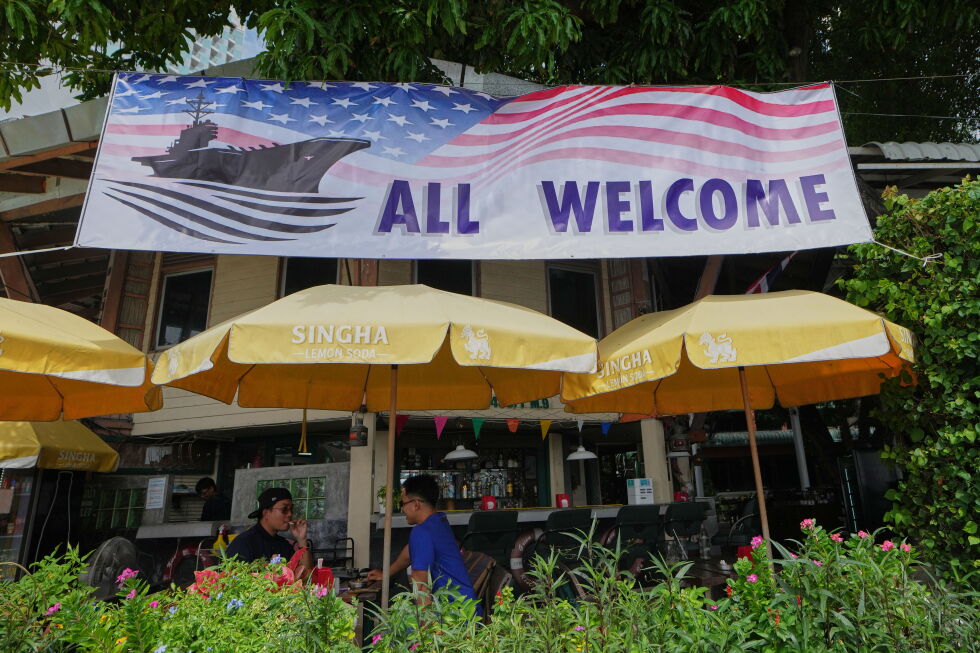
    Decades after it rose from a quiet fishing village to an infamous global hub for sex tourism during the Vietnam War, Thailand’s sun-soaked coastal resort city of Pattaya is gearing up to welcome around 5,000 sailors and Marines from the USS Abraham Lincoln strike group, who are seeking much-needed rest and recreation after a lengthy, high-tension deployment in the Middle East.

    The upcoming shore leave continues a decades-long tradition of U.S. military personnel visiting the city, located just 100 kilometers southeast of Bangkok. Long before this port call, millions of civilian tourists and thousands of service members have traveled to Pattaya annually, many for joint land and sea military exercises conducted alongside the Royal Thai Armed Forces. Most U.S. Navy vessels dock at nearby deep-water ports, including Laem Chabang Port and Sattahip Royal Thai Navy Base, both of which are less than an hour’s drive from the city’s central tourist districts. While social media has already been flooded with old jokes and jabs about sailors seeking the city’s historic adult entertainment, recent visitors and local development efforts tell a different story: a decades-long rebranding that has gradually pushed the city’s seedy reputation into the background in favor of family-friendly attractions.

    Local economies have long benefited from the shore leave tradition, with service members’ off-base spending injecting millions of baht into local businesses ranging from restaurants to retail shops each year. Beyond economic activity, U.S. military visits often include structured community outreach initiatives, such as providing free specialized medical care to rural villagers near the city and completing volunteer work at local orphanages. To mitigate potential disruptions during large groups of sailors’ onshore liberty, the U.S. Navy deploys specialized Shore Patrol teams that work alongside Thai law enforcement to de-escalate conflicts and address any misconduct. All service members are reminded before leaving their ships that while Thailand’s formal ban on prostitution is rarely enforced, purchasing sex remains a criminal offense under Article 134 of the U.S. Uniform Code of Military Justice, punishable under U.S. military law.

    Pattaya’s deep ties to U.S. military visits date all the way back to the Vietnam War era, when as many as 50,000 American service members were stationed across Thailand to support air operations over Indochina. U.S. military bases were spread across the country, and each drew a thriving nightlife industry around its perimeter. Pattaya’s prime location — close to both the Sattahip naval base and U-Tapao airfield, which hosted U.S. Air Force B-52 bombers — made it an ideal rest stop for off-duty troops. As author Elizabeth Becker notes in *Overbooked: The Exploding Business of Travel and Tourism*, what was once a quiet fishing community was quickly transformed into a raunchy seaside playground for visiting GIs.

    A 1966 Thai law regulating entertainment venues created a legal gray area that allowed the sex trade to operate semi-openly in bars and massage parlors, despite a 1960 national law that formally criminalized prostitution. This framework allowed the industry to grow rapidly, with thousands of young workers from Thailand’s impoverished northeastern Isan region migrating to Pattaya to earn wages far higher than what they could make farming back home, sending much of their earnings back to extended family. While sex work remains a cultural taboo in Thailand, it has quietly existed in Thai society for centuries, with a large domestic market that has long outstripped the more visible trade for foreign tourists.

    After U.S. military forces withdrew from Thailand in 1976, Pattaya was well-positioned to transition to a civilian tourist destination. Its existing infrastructure of entertainment venues, beautiful beaches, and relative proximity to Bangkok made it a popular stop for the growing global package tour industry, which boomed as low-cost air travel made international vacations accessible to more people. Sex tourism became a deeply entrenched part of the city’s identity and global reputation through the final decades of the 20th century.

    The 1990s brought another major shift to Pattaya after the collapse of the Soviet Union in 1991. A new wave of Russian tourists began visiting the city, taking advantage of a 30-day visa-free agreement and direct charter flights from Russian provincial cities to U-Tapao’s newly expanded civilian airport. Local businesses quickly adapted, adding Cyrillic signage and Russian-language services to cater to the new market. Along with legitimate tourists, the city’s permissive regulatory environment and relaxed law enforcement attracted transnational criminal groups and fugitives from across the globe, including Russian and Eastern European gangs, Western European organized crime networks, and outlaw motorcycle gangs involved in drug trafficking from Australia.

    In the 21st century, Pattaya has made a concerted push to rebrand itself as a mainstream, family-friendly tourist destination, and the effort has seen measurable success. New attractions including a Cartoon Network-themed water park, the sprawling Nong Nooch Tropical Botanical Garden, the 100-meter-tall all-wood Sanctuary of Truth Museum, dozens of championship golf courses, and new luxury residential resorts and shopping malls have drawn millions of Thai tourists and visitors from other East and Southeast Asian countries. The city still retains echoes of its past: Walking Street, the historic heart of Pattaya’s adult nightlife district, still operates for visitors seeking that side of the city. But for many modern travelers, the new, more diverse Pattaya has fully overshadowed its old reputation.

  • Italians enter uneasy truce with invasive blue crabs, exporting crustaceans they won’t eat

    Italians enter uneasy truce with invasive blue crabs, exporting crustaceans they won’t eat

    For two years, fishermen in Italy’s Po River Delta, south of Venice, took a straightforward approach to the rampant invasion of non-native Atlantic blue crabs: incinerate every single one they caught. The aggressive invasive species had decimated the region’s lucrative Manila clam beds, and few domestic consumers had any appetite for the predator that had destroyed the local fishing industry’s most valuable product. Now, after failed eradication efforts and ecological interventions that showed little promise, local fishing groups are rewriting their playbook, turning the unwanted crustacean into an unexpected export commodity to salvage battered livelihoods. This new strategy is already putting revenue back in fishermen’s pockets, and some advocates believe it could even reshape the much-maligned invader’s reputation among Italian consumers over time.

    The invasion has hit generations of local fishermen hard. Second-generation fisherman Federico Zago, like all members of his local cooperative, watched his income collapse after blue crab populations exploded in 2023. The Polesine Fishermen’s Cooperative Consortium, which represents the region’s fishing industry, saw its annual revenues plummet 75% to 15 million euros ($17 million) between 2024 and 2025, while the number of active working members dropped from 1,500 to just 850. “We needed to change strategy, and create an opportunity from this disaster,” explained Paolo Mancin, the cooperative’s president. Desperate to protect the remaining Manila clam and mussel populations that had delivered decades of prosperity to the shallow lagoons of Veneto and Emilia-Romagna, the group pivoted to building new export markets for the excess crabs rather than destroying them.

    Today, Zago pulls up cage after cage full of blue crabs from his traditional stilt fishing cabin over Scardovari Lagoon, and the cooperative’s new strategy is already exceeding expectations. In 2025, every crab caught by the consortium has been sold, eliminating the need for the mass incineration that was standard practice just months ago. The group now projects full-year revenue will hit 20 million euros ($23 million) in 2025, with the vast majority of that sum coming from blue crab sales. “Since we’re going to have to live with these crabs, I hope they become an opportunity,” Zago said. “I hope the market continues to grow.”

    To understand how the invasion reached crisis levels, experts point to a perfect storm of human activity and climate change. Atlantic blue crabs first arrived in the Adriatic Sea as early as the 1940s, carried in the ballast water of transoceanic commercial vessels, according to Piero Genovesi, an invasive species specialist with Italy’s national environmental protection institute. For decades, populations remained small and contained, with fishermen only reporting occasional catches. That all changed in 2023, when populations exploded almost overnight. The crabs ripped through fishing nets, devoured native mollusk populations at alarming rates, and displaced the native green crab, a popular local soft-shell delicacy.

    Genovesi notes climate change was a core driver of the population boom. Warmer Adriatic water temperatures create ideal conditions for blue crab reproduction, but the immediate trigger was a severe drought that pushed water levels in the Po River down sharply. Low freshwater flows allowed saltwater from the Adriatic to infiltrate inland tributaries and delta lagoons—where commercial clam and mussel farms offered an endless supply of prey. “Climate change may therefore have favored reproduction through both temperature and salinity, because it changed the salinity of the water,” Genovesi explained.

    Facing widespread industry collapse, the Italian government launched a large-scale eradication program in 2024. Over two years, the state paid the Polesine consortium to catch and incinerate nearly 2.3 million kilograms (5 million pounds) of blue crabs, with fishermen in neighboring Sacca di Goro lagoon and Tuscany’s Orbetello lagoon following the same protocol. But the cull barely made a dent in blue crab numbers: a single female blue crab can produce up to 8 million eggs per breeding season, making population control through culling functionally impossible. The eradication program has since been shelved, according to Enrico Caterino, the government’s extraordinary commissioner for the blue crab emergency.

    In a separate experimental intervention, scientists from the University of Bologna released 150,000 baby octopuses—one of the blue crab’s natural predators—into the Adriatic off the Riviera Romagnola, around two hours south of the Po Delta. The project gained viral attention for footage showing an adult octopus catching and consuming a blue crab, but both fishermen and independent experts remain deeply skeptical. Most of the juvenile octopuses are not expected to survive to adulthood, and blue crabs prefer the same open sandy lagoons that octopuses avoid, while the crabs’ extreme reproductive rate means even a thriving octopus population is unlikely to control overall numbers. “If an animal with such high reproductive potential finds suitable environmental conditions, predators may not be able to keep it under control,” Genovesi said.

    Today, the majority of blue crabs caught by Italian fishermen are bound for processing overseas. Every morning, fishermen unload 100 to 150 kilograms of live crabs from trucks and cars for shipment. While crab sales are currently keeping many fishermen afloat, earnings still lag far behind the industry’s glory days of clam fishing. A kilogram of blue crab sells for just 1.30 euros, compared to 10 euros per kilogram for Manila clams—once the source of 90% of the region’s fishing income, now just 10%.

    The crabs are steamed, frozen, and shipped to Sri Lanka, where workers manually extract the meat in a joint venture between Sri Lankan seafood firm Taprobane Seafoods and the Scardovari cooperative. The operation produces a full range of blue crab products, from whole claw meat to mixed minced meat and fillets, most of which are exported to global markets, with only a small volume currently returned to Italy. Taprobane is already planning large-scale retail expansion of blue crab products across Italy and Western Europe, which Mancin hopes will help win over skeptical domestic consumers who have so far rejected the region’s “If you can’t beat ’em, eat ’em” public outreach campaign launched in 2023.

    Changing long-held cultural attitudes toward the invasive crab remains the biggest barrier to growing domestic demand. The FIPE Venice restaurant federation reports that blue crab is still almost entirely absent from top Venice restaurants that specialize in native green crab dishes, held back by both the extra labor required to process the invasive species and its lasting negative reputation as a pest.

    One notable exception is Yogi, a small restaurant and bar in Porto Tolle in the Po Delta, which has fully embraced blue crab out of both necessity and passion. After the invasion left the restaurant without its traditional supply of local seafood, owner and chef Stefania Marchesini—who worked as a professional fisherman for 11 years before opening the restaurant—chose to build an entire menu around the invasive species. She pays a premium to local fishermen for fresh crabs, especially soft-shell blue crabs known locally as moeche, and offers a range of preparations from fried crab balls to creamed crab served over polenta, whole soft-shell crabs, and sectioned crab in the shell designed to highlight the species’ delicate flavor. “At first, the customer is very skeptical. But then the reaction is completely positive, and they want to try the entire range of products,” Marchesini said.

    Marchesini also runs a small separate workshop where she pre-processes blue crab for other restaurants, offering individually packed soft-shell crabs and vacuum-sealed pre-cut whole crabs designed to cut down on preparation time and mess for home and restaurant cooks. Even when her products sell out at partner restaurants, however, most owners refuse to reorder, a trend Marchesini attributes to deep-seated cultural resistance to the invasive species. Undeterred, she has begun taking her blue crab menu to international food industry events, including Barcelona’s Alimentaria, one of the world’s largest food and beverage trade fairs, to build global demand. “We are all angry because it invaded our seas,” Marchesini said. “But we also have to eat. Once people understand how it should be prepared, they will realize it is an excellent product.”

  • America’s story intertwined with its military history, but a military-civilian disconnect persists

    America’s story intertwined with its military history, but a military-civilian disconnect persists

    NEW YORK — Twenty years ago, when Qwynn Galloway-Salazar left the Army Reserves and stepped into a civilian job interview, the weight of misunderstanding hit her hard. As a Black woman veteran, she immediately recognized that she did not align with the narrow, outdated stereotypes the interview panel held of people who had served in the U.S. military. To them, a veteran was exclusively a white male who had fought in Vietnam. Sitting in that room, Galloway-Salazar understood the panel had no framework to engage with her experience. She left in tears, driving away wondering how she would ever bridge the gap between her military service and the civilian world she was trying to join. Today, decades later, she has built her entire career around advancing veteran advocacy and expanding public awareness of the gaps that still separate military and civilian life in America. Her story lays bare two under-examined, critical questions facing the nation as it marks 250 years of democratic experiment: How have military and civilian life drifted so far apart, and what can be done to close that persistent divide?

    Military history has been inseparable from the story of the United States since its founding. From the 1776 Revolutionary War that birthed the nation, to the territorial expansion that shaped its borders, to its modern role as a global superpower shaping international political and economic order, military service is woven into the fabric of everyday American life. It appears in the history lessons taught in K-12 classrooms, in the public monuments that dot city squares and national parks, in the pre-game ceremonies at professional sporting events, and in the national holiday commemorations that bring communities together. Most pervasive of all is the common cultural refrain, automatically offered to anyone in uniform or any veteran: “Thank you for your service.” But despite this pervasive cultural acknowledgement, many threads of that interwoven fabric have begun to fray.

    Even as the nation collectively celebrates the idea of military service, the vast majority of American adults have never served themselves, nor do they maintain close personal connections to service members or their families that would give them real insight into military life. Modern military service increasingly concentrates within interconnected networks: multigenerational military families, specific regional communities, and a handful of states that contribute a disproportionate share of recruits. This concentration means the burdens, risks, and sacrifices of military life fall disproportionately on a small subset of the population, while most civilians remain disconnected from those realities. Public attention typically only turns to military issues when high-profile crises emerge — such as the well-documented mental health crisis among sailors aboard the USS Abraham Lincoln, during an extended deployment tied to the U.S. campaign against Iran that has left 18 service members dead and more than 750 injured in just six months.

    Just as fraying threads create holes in fabric, this lack of connection has created a tangible military-civilian divide: a gap in mutual understanding that carries real consequences for public policy, for the daily logistics of military family life, and for the persistent stereotypes that shape how each group sees the other.

    Scholars note that tension over the relationship between the U.S. government and its military dates back to the nation’s founding. Peter Feaver, a political science professor at Duke University, explains that the Founding Fathers were deeply preoccupied with striking the right balance between national security and democratic governance. One of the core grievances that sparked the Revolutionary War was British forced quartering of soldiers in private colonial homes without homeowner consent. While the new nation recognized the need for a military force to defend its borders, the idea of a large standing professional army was deeply unpopular among early leaders. “From the very beginning, the country has wrestled with … the need to have a military to protect you from threats, but the need for that military not to become a threat to the republic itself,” Feaver explains. That tension led to the creation of a small, focused professional army tasked primarily with border protection, with state militias handling local defense needs.

    Conscription was a core part of major U.S. military conflicts through the 20th century, used to fill troop ranks when volunteer numbers fell short during the Civil War and both World Wars. But the Vietnam War sparked widespread public opposition to the draft, leading to its elimination in 1973. Since that year, the U.S. armed forces have operated as an all-volunteer force. Today, roughly 2 million Americans serve on active duty, or in the National Guard and Reserves — a tiny fraction of the more than 230 million adult citizens and legal permanent residents living in the U.S. While the benefits of a professional, highly trained all-volunteer force are widely accepted, and there is no serious movement to reinstate active conscription (adult men are still required to register for the Selective Service in case a draft is ever reintroduced), the shift has also widened the gap between military and civilian life.

    During World War II, nearly every American family had a member serving in uniform, Feaver notes. “If not themselves, if not their dad or mom, certainly they had an uncle or an aunt or somebody,” he says. “And the military was widely distributed geographically throughout society.” That widespread representation is no longer the case, says Kathy Roth-Douquet, co-founder and CEO of Blue Star Families, a nonprofit that advocates for military households. Her organization’s Do Your Part initiative calls on civilian industries and communities to develop policies that support military families without requiring civilian enlistment. “Military service kind of became a cul-de-sac, where it was people who served beget people who served, who married people who were from families who served,” she explains.

    Data from the U.S. Army Recruiting Command bears this out: More than 75% of new Army recruits come from families with a history of military service. In fiscal year 2025, roughly half of all Army recruits came from just seven states. U.S. military leaders have repeatedly highlighted the need to broaden recruitment pools to draw from a more diverse cross-section of young Americans across all regions and backgrounds.

    Jason Higgins, an assistant professor of history at Virginia Tech who specializes in the Vietnam War, says this concentrated representation means the harms and sacrifices of military conflict are not shared equally across American society. He points to the Iraq War as a stark example: repeated deployments became routine for many service members, leading to higher rates of post-traumatic stress disorder (PTSD), permanent physical injury, and intense strain on families forced to repeatedly adapt to long absences and difficult reintegrations that were cut short when service members were called to deploy again. “You have this small group of American families who are the only ones who directly experience the consequences of war,” he says.

    This widespread public lack of familiarity with military life also reinforces harmful stereotypes about who serves and what their needs are when transitioning back to civilian life, Higgins argues. Pop culture depictions almost exclusively center grizzled, white male combat troops armed and in fatigues, erasing the huge range of roles that exist within the U.S. military. While combat troops are a critical part of the force, millions of service members work in administrative, logistics, mechanical, and technical roles that have no direct connection to combat. “There are millions of jobs in the military that are not related to killing people,” he notes. These narrow portrayals have even left many veterans uncomfortable with the ubiquitous “Thank you for your service” greeting. Higgins explains that many veterans feel reduced to symbolic “statues,” rather than recognized as full, complex human beings. While the gratitude is well-intentioned, the constant valorization makes many feel like outsiders in civilian society, he says: “not every veteran wants to be called a hero.”

    The divide extends beyond wartime experiences, shaping public understanding of the mundane, daily challenges that military families navigate. Military children must repeatedly transfer to new school districts as their families move to follow service assignments, disrupting their education and social connections. Military spouses struggle to build consistent, fulfilling careers when they are forced to relocate every few years, often having to start over job searching in a new market.

    Sheila Rupp, a military spouse of more than 20 years who has moved multiple times to follow her husband’s assignments, says closing the divide does not require all civilians to enlist. Instead, it requires ordinary Americans to build personal connections with military families and seek to understand the realities of their lives. “I think the average American really wants to support military families, but they often don’t know how,” said the 43-year-old Rupp. “If people were more connected and they actually knew their friends and neighbors that do serve or have served recently, I think it would impact a lot of things.”

    Rupp added: “I just wish that there were more opportunities for people to get to know us … because obviously the civilian population brings support to our networks. And I think that there’s a lot that military families bring to the communities in which they live and serve too. So I think relationship is really important.”

    This report is part of a series exploring American life as the nation marks its 250th anniversary.

  • Israel-Greece air defence deal to be ‘scaled up’ with UAE as contender, sources say

    Israel-Greece air defence deal to be ‘scaled up’ with UAE as contender, sources say

    Israel has set its sights on scaling up exports of its advanced layered air defence systems, with the United Arab Emirates emerging as its next key target following a landmark $3.5 billion agreement with Athens, two unnamed U.S. officials with direct knowledge of ongoing negotiations told Middle East Eye in an exclusive report.

    Tripartite talks involving Israel, the UAE and the U.S. are currently centered on closing a critical gap in the Emirates’ multi-tiered defence capabilities, according to the serving U.S. official. The recently finalized Greek deal is being framed by Israeli defence officials as a blueprint for future international exports of the country’s cutting-edge defence technology and design frameworks.

    Calling the burgeoning air defence export sector a “profit machine” for Tel Aviv, the former U.S. official noted that Israeli systems hold a distinct competitive edge over U.S.-manufactured alternatives: they are not only more affordable, but also far easier to export to third-party countries.

    The UAE stands out as the most viable candidate for the next major sale due to deepening existing defence cooperation between Abu Dhabi and Tel Aviv. Earlier this year, amid heightened tensions between Israel and Iran, the U.S. confirmed that Israel deployed Iron Dome missile defence batteries and accompanying technical personnel to the Emirates to bolster regional security. Additional reporting has confirmed Israel also supplied the UAE with a specialized drone detection platform, and the two countries signed a formal agreement in May to jointly develop and procure new weapons systems.

    Currently, the UAE operates U.S.-built Patriot and Terminal High Altitude Area Defence (THAAD) air defence systems, and acquired Israel’s Barak air defence system back in 2022. Even with these platforms in place, the country still lacks a fully integrated layered air defence network that can counter a full spectrum of modern threats, the serving U.S. official explained.

    These ongoing talks highlight Israel’s broader strategy to weave its defence technology into a growing network of regional and global strategic partners. At present, the alliance stretches from Greece and the Republic of Cyprus in the eastern Mediterranean to the UAE and India in the Persian Gulf and South Asia respectively. This emerging network comes as a new bloc, led by Saudi Arabia and including Turkey and Pakistan, recently announced the Mecca Pact, a mutual defence agreement widely viewed as a potential counterweight to Israel’s expanding partnerships. While Riyadh has framed the pact as an effort to deepen collective defence cooperation, it has yet to announce major arms or infrastructure deals under the agreement, and neither Ankara nor Islamabad has publicly confirmed their commitment to supporting Saudi Arabia against Houthi attacks from Yemen.

    Unlike simpler single-function defence systems, layered air defence networks are highly complex, integrating multiple interconnected components including command and control infrastructure, advanced sensors, radar systems, interceptor missiles, and launch platforms. The system sold to Greece is even more sophisticated, engineered to counter everything from long-range ballistic missiles to cruise missiles, manned aircraft, and hostile unmanned aerial vehicles.

    Under the agreement with Athens, Israel will provide both design expertise and core components for Greece’s nationwide integrated air defence initiative, dubbed the Achilles Shield. This marks the first time Israel has exported a complete, multi-domain defence array capable of countering such a broad range of threats, according to a statement from Israel’s defence ministry.

    Greece’s purchase includes Israel’s David’s Sling and SPYDER systems, manufactured by Rafael Advanced Defense Systems, as well as the Barak MX system developed by Israel Aerospace Industries (IAI). The deal also includes IAI subsidiary ELTA Systems’ MMR multi-mission radars designed for persistent air surveillance. Greece will become only the second operator of David’s Sling, following Finland — a NATO member that shares a border with Russia. Meanwhile, Greek media reports confirm the Republic of Cyprus completed its purchase and took delivery of Israel’s Barak defence system in December 2024.

  • As climate change warms the Himalayas, disasters like the Nepal floods are becoming more frequent

    As climate change warms the Himalayas, disasters like the Nepal floods are becoming more frequent

    High in Nepal’s remote Himalayan villages, Pema Tamang’s life was upended once again last week when a towering surge of water, rock and mud ripped through her community. In a stroke of fate, she and her neighbors found safe refuge in a Buddhist stupa that had only been reconstructed 12 months earlier, after being leveled by the devastating 2015 Nepal earthquake. The harrowing escape is just one example of the relentless cycle of disaster now gripping the world’s highest mountain range, driven by accelerating glacial melt tied to climate change.

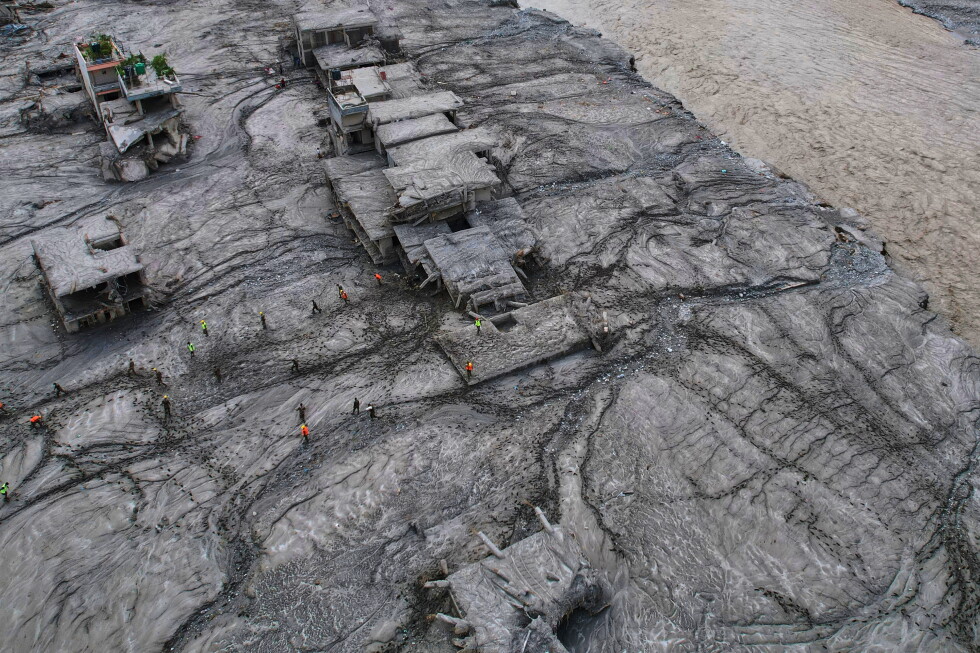
    The catastrophic flash floods on August 26 have left more than 1,000 people dead across Nepal and neighboring China, with thousands more still unaccounted for. Hundreds of those missing are feared trapped inside tunnels at under-construction hydropower projects, where rushing debris and water swept through work sites. The disaster was triggered when a massive block of glacial ice and bedrock collapsed, sending a destructive surge cascading through multiple river systems that cut through the Himalayan slopes.

    While scientists caution it is too early to draw a direct causal link between this specific extreme event and anthropogenic global warming, the broader trend is unambiguous. As planetary temperatures rise faster than ever due to the continued burning of fossil fuels, the likelihood of similar catastrophic events increases dramatically — especially across the Himalayas, a region that is warming far faster than the global average.

    “Climate change has been playing a large role in the Hindu Kush Himalayas, causing these kinds of complex disasters which have really impacted downstream communities and investments,” explained Saswata Sanyal, a disaster risk resilience specialist based at the International Centre for Integrated Mountain Development in Kathmandu. Sanyal notes the region is now facing a growing pattern of interconnected hazards: rising temperatures melt high-altitude ice, which in turn triggers more frequent rockslides, avalanches, and outburst floods. An avalanche can temporarily block a river before releasing a catastrophic flash flood, while unseasonal heavy rainfall can compound destruction after an initial disaster.

    This cycle of back-to-back disasters is already wearing down local communities. Flash floods in the same region of Nepal last year killed nine people and caused hundreds of millions of dollars in damage. Across the wider Hindu Kush Himalayan region, a string of deadly events including the 2013 Kedarnath floods, 2021 Chamoli disaster, and 2023 South Lhonak glacial lake outburst flood have killed thousands of people and caused hundreds of billions of dollars in total damage. “People in Nepal were still recovering from last year’s floods, and before they could fully adapt, the next one came,” Sanyal added.

    Spanning eight countries across South and Central Asia, the Hindu Kush Himalaya holds the largest volume of ice outside the Earth’s polar regions, and its river systems supply water to nearly 2 billion people across the continent. Data from Sanyal’s intergovernmental climate research group confirms glacial ice loss in the region has accelerated sharply since 2000. Beyond glacial melt, thawing permafrost — long-frozen ground that is now warming — is weakening mountain slopes, increasing the risk of catastrophic collapse.

    Analysis of satellite imagery from last week’s collapse confirms a massive block of glacial ice and bedrock plunged into the valley below, generating a wall of mud and water several stories high that traveled for kilometers downstream, wiping out entire communities in its path.

    Climate experts warn that for the most at-risk high-altitude communities, adaptation has already reached its limits. In some locations, the frequency and severity of disasters have become so extreme that rebuilding villages and infrastructure is no longer practical, forcing mass relocation of long-standing communities. The crisis also casts new uncertainty over regional development plans focused on building roads, bridges, and hydropower projects to lift local economies.

    “The adaptation threshold has been crossed in some areas,” said Manjeet Dhakal, a Nepali climate policy expert and United Nations climate negotiator. Dhakal explained that unlike earthquakes, which often leave property and land salvageable, catastrophic floods can erase entire settlements: they destroy not just homes, but the underlying land, public infrastructure including roads, water grids, schools, and power networks. Going forward, he said, all planned resettlement projects must integrate climate risk assessment from their earliest stages.

    Dhakal added that the catastrophic consequences of these disasters can be reduced through targeted action: stricter land-use regulations that bar development in high-risk zones, more rigorous multi-hazard assessments before approving new infrastructure, expanded cross-border disaster monitoring, and more accessible, effective early warning systems.

    Even with early warning systems in place, however, gaps remain. Of the 670,000 people who received text alert warnings for the August 26 floods, many were migrant workers or tourists who could not read Nepali, while others dismissed the risk as overstated. Some river monitoring stations were overwhelmed by the surge or washed away entirely before they could transmit updated data. Chanda Lal Chitrakar, a 62-year-old resident of Nuwakot, told the Associated Press he paid little attention to the warning he received, only fleeing uphill when he saw the waters rising.

    Experts say warnings need to be more actionable, clearly outlining what steps people should take to get to safety. They also recommend prioritizing development in lower-risk regions, retrofitting existing infrastructure to withstand multiple hazards, and centering Indigenous traditional knowledge of local terrain and disaster patterns in formal planning.

    For Nepal and other low-emission Himalayan nations, the disaster underscores a profound climate injustice. Nepal accounts for less than 0.1% of global greenhouse gas emissions driving climate change, yet it faces some of the most severe and frequent impacts. “We should blame those who are responsible for increasing the global temperature, those who have benefited from the fossil fuel economy for such a long time,” Dhakal said. “We can at least use this devastating example as an inspiration to urgently reduce carbon emissions.”

    This reporting was produced by the Associated Press, with climate coverage supported by private philanthropic foundations. AP maintains full editorial control over all content, with public transparency standards for philanthropic partnerships available on AP.org.

  • Jailed HK activist Joshua Wong pleads guilty to foreign collusion

    Jailed HK activist Joshua Wong pleads guilty to foreign collusion

    One of the most high-profile figures of Hong Kong’s pro-democracy movement, Joshua Wong, has entered a guilty plea to a charge of collusion with foreign forces — an offense that can carry a maximum penalty of life imprisonment under China’s widely debated National Security Law (NSL) for Hong Kong.

    The 29-year-old activist, who became the global face of organized political dissent in the semi-autonomous region, is already in custody serving a four-year-and-eight-month sentence for a separate subversion conviction, another violation of the NSL, handed down in late 2024. That existing sentence was originally set to conclude in early 2026.

    Wong first rose to international prominence as a leading organizer of the 2014 Umbrella Movement, and later stood at the forefront of the large-scale 2019 pro-democracy protests that swept across Hong Kong. According to court documents reviewed by Reuters, the latest collusion charge accuses Wong of conspiring with fellow pro-democracy campaigners — including exiled activist Nathan Law — to lobby foreign governments and international entities outside China to impose sanctions or economic blockades against Beijing and the Hong Kong Special Administrative Region government.

    Court documents indicate the alleged activities occurred between July and late November 2020, the same year Beijing enacted the NSL following the 2019 unrest. The legislation has remained deeply controversial since its introduction: critics of the law argue it has eliminated political pluralism, crushed all forms of dissent, and created a pervasive climate of fear in Hong Kong, effectively eroding the city’s long-promised autonomy under the “one country, two systems” framework. For their part, Beijing and Hong Kong’s governing authorities maintain the NSL is an essential tool to restore public stability, safeguard national sovereignty, and reject claims that it has undermined the city’s independent governance.

    On Tuesday, approximately 40 of Wong’s supporters — including fellow activists and close personal friends — gathered outside the courtroom to show their backing. Some called out words of encouragement, shouting “Hang in there, Joshua!” to the defendant. Photographs and witness accounts show Wong, wearing a dark blue shirt, smiled and nodded from the defendant’s dock in response to the show of support.

    Tsang Kin-shing, a former leader of the now-disbanded League of Social Democrats, a pro-democracy political group, called on the court to issue a lenient sentence, pointing out that Wong has already spent more than 2,000 days behind bars across multiple prison terms related to his political activity. Another fellow activist, Louis Lee, expressed disappointment that Wong was hit with a second NSL charge while already serving time for a separate political offense, saying the news had left Wong and his supporters deeply disheartened.

    Despite his imprisonment, Lee added that Wong has continued to pursue new personal activities behind bars, including learning to play the guitar and maintaining a regular fitness routine. “I hope everyone can learn from his resilience,” Lee said.

  • US aircraft carrier docks near Thai beach resort Pattaya after record 250 days at sea

    US aircraft carrier docks near Thai beach resort Pattaya after record 250 days at sea

    After completing an unprecedented 250 consecutive days at sea without a single port call, the U.S. Navy’s nuclear-powered aircraft carrier USS Abraham Lincoln has arrived at its scheduled rest stop in Thailand, bringing nearly 5,000 exhausted crew members ashore for their first extended break in nine months. The vessel is anchored a short 40-minute drive from the iconic coastal resort town of Pattaya, a destination whose global identity has been deeply shaped by decades of U.S. military R&R visits stretching back to the Vietnam War era.

    What is now one of the world’s most famous entertainment hubs began as a quiet fishing village, transformed starting in the 1960s when hundreds of thousands of U.S. troops deployed to Southeast Asia arrived for rest and recuperation between tours of duty. Those visits turned Pattaya into a frenetic, neon-lit party town known worldwide for its raucous nightlife and sex tourism, a reputation it still carries decades after the end of the Vietnam conflict.

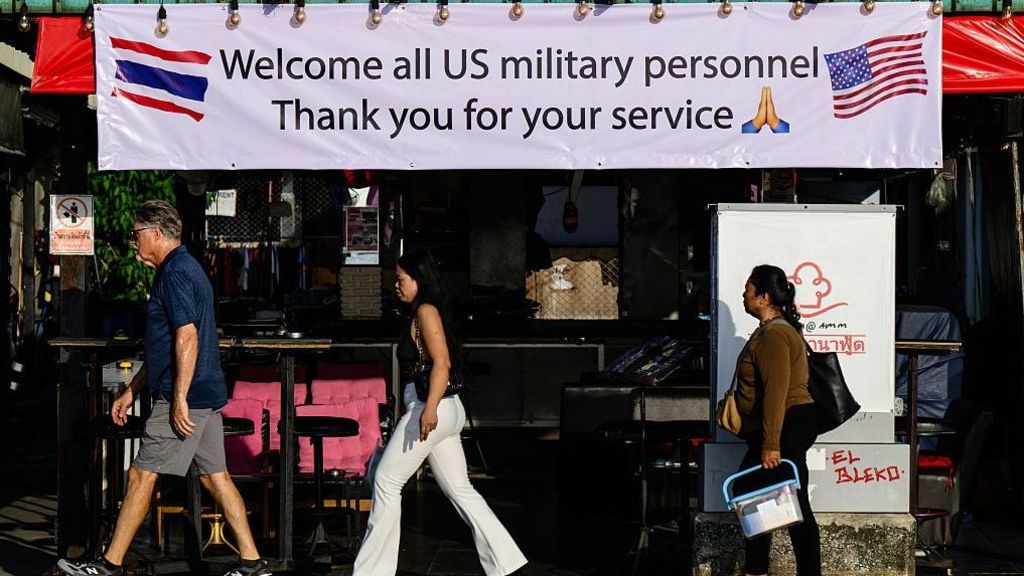
    Today, however, Pattaya’s normally crowded beachside alleys and famous Walking Street are far quieter than they were before recent global and regional conflicts. The ongoing war between the U.S.-Israeli coalition and Iran has gutted international tourism across Southeast Asia, crimping consumer spending and pushing many local businesses to the brink of collapse. For struggling proprietors, the arrival of 5,000 U.S. sailors, who have not had a chance to spend their nine months of accumulated pay during their time at sea, represents a rare lifeline for their bottom lines.

    Near Walking Street, gem seller Anon Saiteer already has hung a large welcome sign for U.S. crew members, advertising exclusive discounts for visiting service members. “This visit could be our best hope,” Saiteer told reporters. “We have nothing to lose – we just hope they will spend some money here.” The welcome is not unlimited, however: both U.S. and Thai authorities have worked to structure the visit to avoid the salacious headlines that have long dogged Pattaya’s reputation.

    Thai officials have designated several zones off-limits for U.S. service members, including Soi 6, the beachside lane notorious for its high concentration of go-go bars and sex workers. While prostitution is technically illegal under Thai law, an estimated 25,000 to 50,000 sex workers operate in Pattaya, many concentrated in the restricted lanes. U.S. crew members are also barred from entering local cannabis shops and from participating in high-risk recreational activities including paragliding and jet skiing.

    “The US military have done their homework,” Pattaya Mayor Poramase Ngampiches told the BBC, emphasizing that the off-limits designation was a joint decision between the two governments. To keep order during the visit, Thai authorities have deployed hundreds of additional police officers to patrol entertainment districts, and have issued warnings to local businesses against overcharging visiting American sailors. The U.S. Navy has also set up daily shuttle bus service from the port to Pattaya running from 5 a.m. to 2 a.m. daily, and has pre-approved two hotels for crew members seeking an overnight stay on shore.

    The extended deployment that brought the carrier to this point was not originally planned. The USS Abraham Lincoln departed San Diego last November for a scheduled six-month operational deployment to the Pacific and South China Sea. But in late February, the vessel was rerouted to the Gulf of Oman to support U.S. and Israeli military operations against Iran, extending its time at sea far beyond initial projections.

    The unplanned extension drew scrutiny from U.S. lawmakers in recent weeks, after reports emerged of substandard living conditions including food shortages, broken sanitation infrastructure, and rising mental health strain among the 5,000-person crew. The U.S. Navy has acknowledged that working conditions have been unusually difficult during the extended deployment, but has pushed back against claims that the crew lacks sufficient support, and declined to comment on the Pattaya port call to the BBC, citing operational security requirements.

    While Thailand maintains close economic and diplomatic ties with China, it remains a longstanding treaty ally of the United States, and port calls by U.S. Navy vessels are a regular occurrence in Thai waters. Even so, this visit marks the largest contingent of U.S. military personnel arriving directly from an active war zone to Pattaya since the fall of Saigon in 1975, at the end of the Vietnam War.

    For Pattaya’s local government, the visit also offers an opportunity to rebrand the city beyond its outdated mid-century reputation. Mayor Poramase acknowledged that the city’s historic association with adult entertainment cannot be erased, but highlighted efforts to diversify Pattaya’s tourism offerings to attract family travelers, wellness visitors, and business conference groups. “We have to be frank, the city has a reputation for bar girls. We understand the stereotypes. We can’t stop that,” he said. “What we can do is to show that Pattaya has changed, that we now have other things, such as sports, seminars, wellness and family-friendly activities. It’s a mixture of everything.”

    Both U.S. and Thai officials expect the carrier to conclude its rest and refit period and depart for its journey back to the United States across the Pacific on September 6, with the goal of sending the crew home rested and recovered after their grueling nine-month deployment.