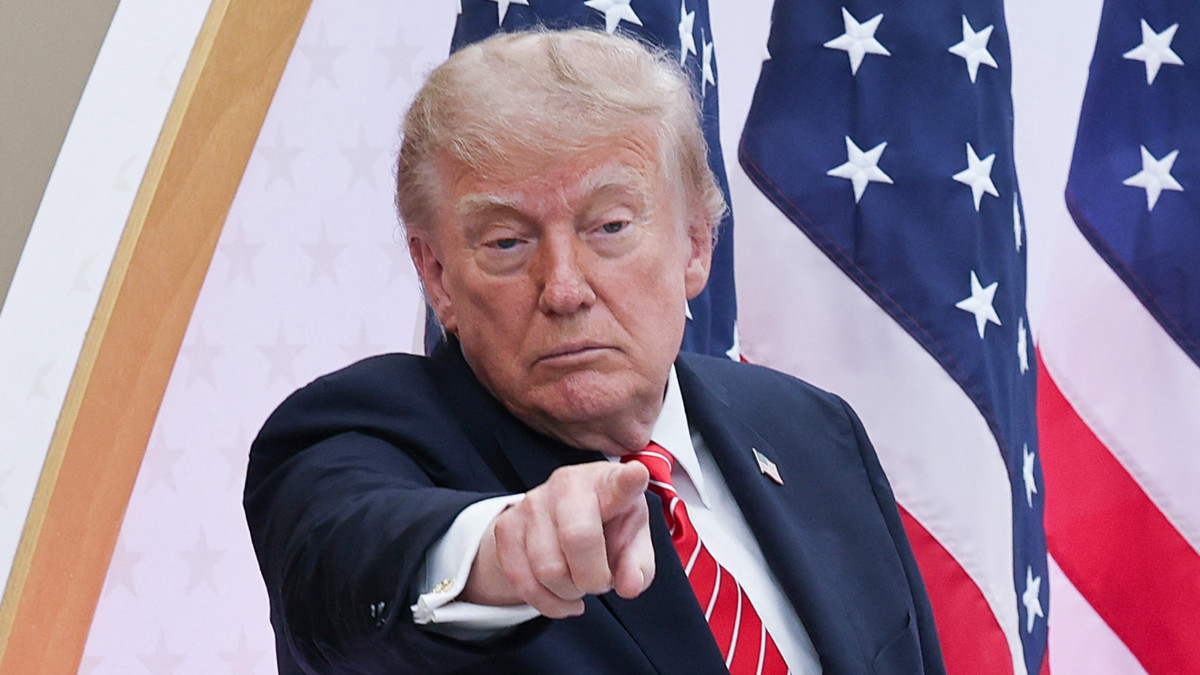
Amid swirling speculation of impending American military escalation against Iran, former U.S. President Donald Trump announced Thursday that no new attacks on the Islamic Republic will occur before the country’s November 3 midterm congressional elections. The announcement came via a post on his Truth Social platform, where Trump also noted that ongoing diplomatic talks with Tehran are yielding productive progress.
Trump’s public clarification followed multiple media reports fueling fears of imminent conflict. Axios, an outlet widely viewed as having close ties to Trump and his inner circle, was among the first to claim the U.S. Pentagon was drawing up plans for a new wave of high-intensity strikes against Iranian targets. The Atlantic separately reported that Trump was actively weighing a pre-election military attack to shift the political landscape ahead of the critical vote that will decide which party controls Congress.
As rumors of conflict spread, and following confirmation of fresh vessel attacks in the Persian Gulf, global energy markets reacted sharply. Brent crude, the global benchmark for oil prices, jumped 4.5% in trading on Thursday. Two commercial tankers were targeted in attacks Wednesday: one off the coast of Qatar, roughly 500 kilometers west of the Strait of Hormuz, and a second off Oman’s coast outside the key shipping waterway.
While direct armed confrontation between the U.S. and Iran has largely calmed in recent weeks, the two nations remain locked in a tense struggle over control of critical global energy chokepoints including the Bab el-Mandeb Strait. On this front, the U.S. has thus far held the upper hand: energy analytics firm Kpler reported that total oil flows through the Strait of Hormuz returned to nearly 90% of pre-conflict levels by late September. However, supplies of refined petroleum products remain constrained, with refined fuel flows through Hormuz stuck at roughly half their pre-war volume. This supply squeeze has driven sharp price increases for U.S. consumers, creating major political risk for Trump ahead of the midterms. Over the past month alone, U.S. diesel prices have surged 14% to an average of roughly $6 per gallon, placing additional strain on household budgets and business operations across the country.
The regional crisis, sparked by the U.S.-Israeli attack on Iran, has now escalated into a broader conflict centered on Yemen, where Saudi Arabia and a coalition of allies are working to push back Houthi forces following a sweeping Houthi offensive along the Red Sea coast last month. The Houthis, who control large swathes of northern Yemen, are backed by Iran with arms and training, and oppose Saudi Arabia’s support for Yemen’s internationally recognized government. This week, Riyadh activated a new joint defense pact with two new regional partners, Turkey and Pakistan, marking a major shift in regional security alliances.
Middle East Eye was the first outlet to report that Turkey would deploy advanced weapons systems including air defense batteries, along with military personnel, to support Saudi defense operations. Pakistan separately confirmed to CNN that it would also send weapons to bolster Saudi security. The involvement of Ankara and Islamabad has raised urgent questions about how deeply the two countries will commit to the conflict against the Houthis. Both nations have clear strategic goals: they aim to strengthen bilateral ties with Saudi Arabia and position themselves as reliable guarantors of a new regional security framework, amid growing global uncertainty over long-term U.S. commitment to the Middle East. At the same time, both countries are cautious about becoming trapped in a protracted conflict with an Iranian-aligned group that controls territory along one of the world’s busiest international trade routes.
The U.S. has so far declined to join open combat operations against the Houthi movement. On Thursday, The New York Times published a report claiming Pakistani warplanes had conducted airstrikes against Houthi targets in Yemen. The Pakistani government quickly issued a formal denial, clarifying that it would only provide defensive support to Saudi Arabia and would not engage in offensive operations inside Yemen.
Tensions around the Yemeni front spiked further this week following a series of cross-border attacks. Saudi Arabia has blamed the Houthis for strikes on the Islamic holy cities of Mecca and Medina, claims the group has repeatedly denied. The Houthis have garnered broad sympathy across much of the Arab and Muslim world for their strikes targeting Israeli shipping, which the group says are a protest against Israel’s military campaign in Gaza that began after the October 7, 2023 Hamas attacks on southern Israel. The Gaza assault has killed more than 74,000 Palestinians to date, a death toll that has led the United Nations and multiple genocide scholars to label the campaign a genocide.
Most regional states including Qatar, Syria and Somalia have publicly condemned Houthi strikes against Saudi territory. Turkish Foreign Minister Hakan Fidan reiterated Thursday that Turkey supports Saudi Arabia’s backing of Yemen’s legitimate government against the Houthis, but emphasized the new defense pact is strictly defensive in nature. “When a country party to the pact comes under attack, you stand by it in its defence. This is not an offensive agreement. Turkey will not send troops to another country to carry out attacks on its territory,” Fidan stated.
Despite Riyadh’s ongoing offensive against Houthi positions in Yemen, the group has continued to launch powerful retaliatory strikes deep into Saudi territory. On Wednesday, the Houthis claimed responsibility for coordinated attacks on Abha International Airport in southern Saudi Arabia and King Khalid International Airport in the capital Riyadh, which left at least three people dead. The group launched a second strike on Riyadh’s main airport on Thursday, with social media video footage showing at least two drones striking the facility. Regional officials speaking to Middle East Eye confirmed that at least one commercial Saudi aircraft suffered severe damage in the attack.
The cross-border strikes have dealt a significant blow to Saudi Arabia’s efforts to position itself as a stable global business and tourism hub. While neighboring Gulf states including Qatar, Kuwait, Bahrain and the United Arab Emirates suffered widespread disruption and attack damage after the U.S.-Israeli strike on Iran, Saudi Arabia had thus far remained largely unscathed. Following this week’s attacks, Germany’s flagship carrier Lufthansa announced Thursday it would suspend all flights to Riyadh until October 16, the most high-profile international business reaction to the escalating instability.