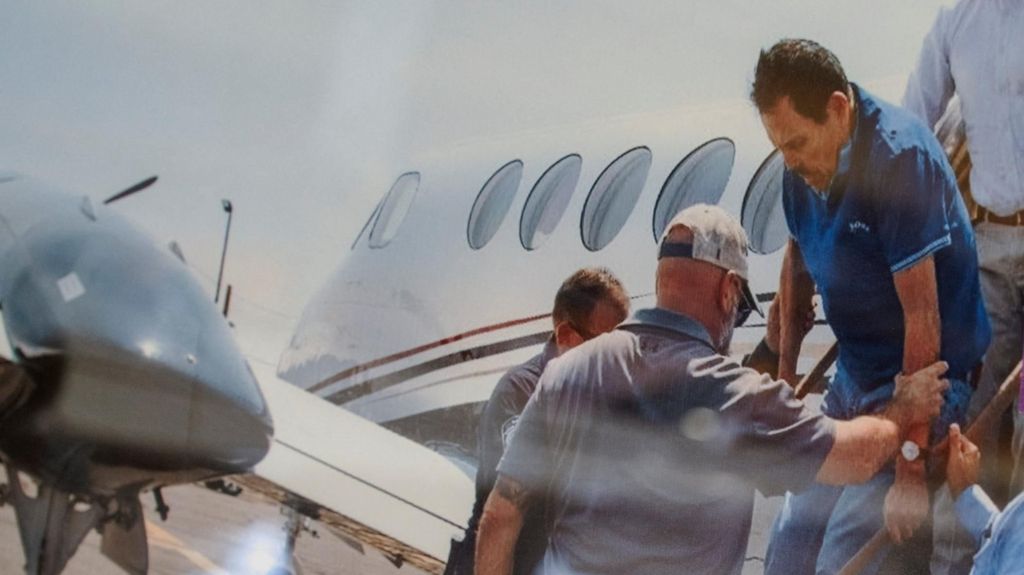
Nearly two years after a complex cross-border sting operation pulled one of the world’s most infamous drug kingpins into US custody, a federal judge has handed down a permanent life sentence to Ismael “El Mayo” Zambada, co-founder of Mexico’s powerful Sinaloa Cartel. The 76-year-old defendant, who built one of the most expansive drug trafficking networks in modern history alongside the equally notorious Joaquin “El Chapo” Guzmán in the late 1980s, learned his fate during a sentencing hearing held Monday at Brooklyn federal court, overseen by US District Judge Brian Cogan.
Zambada’s arrest, which unfolded in July 2024, was a carefully engineered operation led by Joaquin Guzmán López, El Chapo’s own son, who convinced the cartel leader they were traveling to northern Mexico to inspect secret airstrips for drug shipments. Instead, their aircraft diverted and landed in Texas, where US law enforcement immediately took Zambada into custody. Guzmán López was also arrested during the same operation, and has since entered a guilty plea on federal drug trafficking charges, though his sentencing has not yet been scheduled.
Following his arrest, Zambada struck a plea deal with federal prosecutors in 2025, confessing to charges of drug smuggling and criminal conspiracy in exchange for the US government removing the possibility of a death penalty. Under the terms of his guilty plea, a mandatory life sentence was already required, a detail confirmed by Reuters reporting on the hearing. Through his plea agreement, Zambada formally acknowledged his central role in building the Sinaloa Cartel, a criminal enterprise that has flooded the United States with hundreds of tons of cocaine and other illicit narcotics for more than three decades.
Prosecutors have described Zambada as one of the most prolific and powerful narcotraffickers to ever operate, according to statements shared by CBS News, the US partner of the British Broadcasting Corporation. His conviction and sentencing have already triggered massive upheaval in the criminal underworld he helped build. Since his arrest in 2024, the Sinaloa Cartel has fractured into warring factions, triggering a wave of deadly violence that has spread across the northwestern Mexican state of Sinaloa. Hundreds of people have been registered as missing amid ongoing factional fighting, a pattern that mirrors the chaos that erupted after El Chapo’s 2016 arrest and extradition to the US, where he is also serving a life sentence. That earlier power vacuum sparked bloody clashes between rival groups vying for control of lucrative smuggling routes and territory.
A major unresolved question remains: where will Zambada serve his life sentence? The cartel leader has formally requested placement in a federal prison medical facility, arguing that his advanced age and age-related chronic health conditions require regular, specialized medical care. But federal prosecutors have pushed back against this request, urging authorities to place Zambada in a high-security federal correctional facility. They argue that even in incarceration, Zambada retains enough influence and connections to continue directing illegal drug operations from behind bars, posing a ongoing threat to public safety. The final decision on his placement will be made by the US Federal Bureau of Prisons.
The conviction comes amid a sharp escalation of US pressure on Mexican drug cartels, enacted shortly after US President Donald Trump returned to office. Trump has announced new measures to increase pressure on both the Mexican government and cartel organizations, including a plan to formally designate these criminal groups as foreign terrorist organizations. The US administration has also leveled accusations of conspiracy with drug traffickers against the governor of Sinaloa state. In response to rising cross-border tensions and ongoing cartel violence, the Mexican government has also ramped up its own counter-cartel operations, deploying thousands of military troops to Sinaloa to regain control of unstable regions.