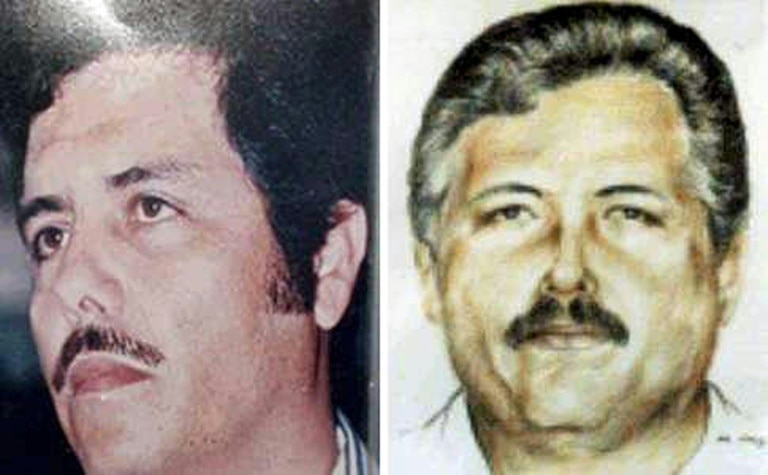
In a landmark ruling that caps decades of pursuit of one of the world’s most notorious drug traffickers, 76-year-old Ismael “El Mayo” Zambada, co-founder of Mexico’s powerful Sinaloa Cartel, was sentenced to life imprisonment by a United States federal court on Monday. The conviction closes a major chapter in the global fight against transnational drug trafficking, following a years-long investigation and a controversial 2024 arrest that sent shockwaves through Mexican criminal networks.
Zambada, long the top partner to infamous Sinaloa leader Joaquin “El Chapo” Guzman—who is already serving a life sentence in a Colorado maximum-security prison—was taken into custody under murky circumstances in July 2024 at a Texas airport. Allegations have circulated that he was kidnapped by Joaquin Guzman Lopez, one of El Chapo’s sons, before being transported across the border on a private jet, a claim that has never been formally confirmed by US authorities. His arrest, paired with the detention of Guzman Lopez just weeks later, triggered brutal internal conflict within the cartel, pitting factions loyal to the Guzman family against those aligned with Zambada. The infighting has left more than a thousand people dead or disappeared across Mexico, deepening the country’s ongoing cycle of organized crime violence.
During Monday’s sentencing in a packed New York federal courtroom, the white-haired, frail Zambada, dressed in a tan correctional jumpsuit, made a rare public acknowledgment of his wrongdoing. Speaking through a prepared statement delivered in Spanish, he called on young people to reject the life of crime that shaped his own decades-long career. “I stand before you today knowing that my actions caused harm,” he told the court. “I chose this path and I understand that today I’m being held accountable for those decisions. I grew up in an environment where violence and crime seemed normal, but now I know that is no excuse. To the next generation I say this: Choose a different path.”
In addition to the life sentence, Judge Brian Cogan—who also presided over the 2019 trial of El Chapo—ordered Zambada to forfeit $15 billion in illicit profits earned from nearly 40 years of drug trafficking. The judge ruled that the staggering volume of drugs trafficked by the cartel under Zambada’s leadership, paired with the hundreds of killings linked to the organization, made the life sentence fully justified. Zambada had pleaded guilty to multiple conspiracy and trafficking charges in August 2025 under a plea deal that spared him from the possibility of the death penalty, a deal that did not require him to cooperate with authorities by providing information on other cartel members or complicit Mexican officials, a point his defense attorney Frank Perez emphasized during the hearing. Perez also noted that the elderly former drug lord suffers from multiple chronic, unspecified health conditions.
US law enforcement officials framed the sentencing as a major victory against the transnational criminal networks fueling the ongoing opioid crisis in the United States. The Sinaloa Cartel, founded in the 1980s, is one of Mexico’s oldest and most powerful criminal organizations, infamous for its ability to infiltrate high levels of the Mexican government and build a global supply chain for illicit narcotics. The cartel was formally designated a global terrorist organization during the administration of former US President Donald Trump, and US authorities have repeatedly blamed it for flooding the country with deadly fentanyl, a synthetic opioid that contributes to tens of thousands of overdose deaths across the US each year. “Ismael Zambada Garcia spent nearly four decades poisoning American communities to make billions of dollars in profit and ordering the murders of anyone who stood in his way,” Joseph Nocella Jr., US Attorney for the Eastern District of New York, said in a statement following the sentencing.
The outcome of the case leaves a major power vacuum at the top of the Sinaloa Cartel, experts say, and is likely to fuel further violence as competing factions fight to seize control of the cartel’s lucrative drug trafficking routes and markets.