In the conflict-wracked eastern region of the Democratic Republic of the Congo, a devastating Ebola outbreak driven by the rare Bundibugyo virus has reached a grim milestone, with confirmed cases climbing to 2,011 and total deaths hitting 754, according to newly released official government data. World Health Organization (WHO) officials confirm this is the fastest-expanding Ebola event ever recorded, outpacing containment efforts at every turn.
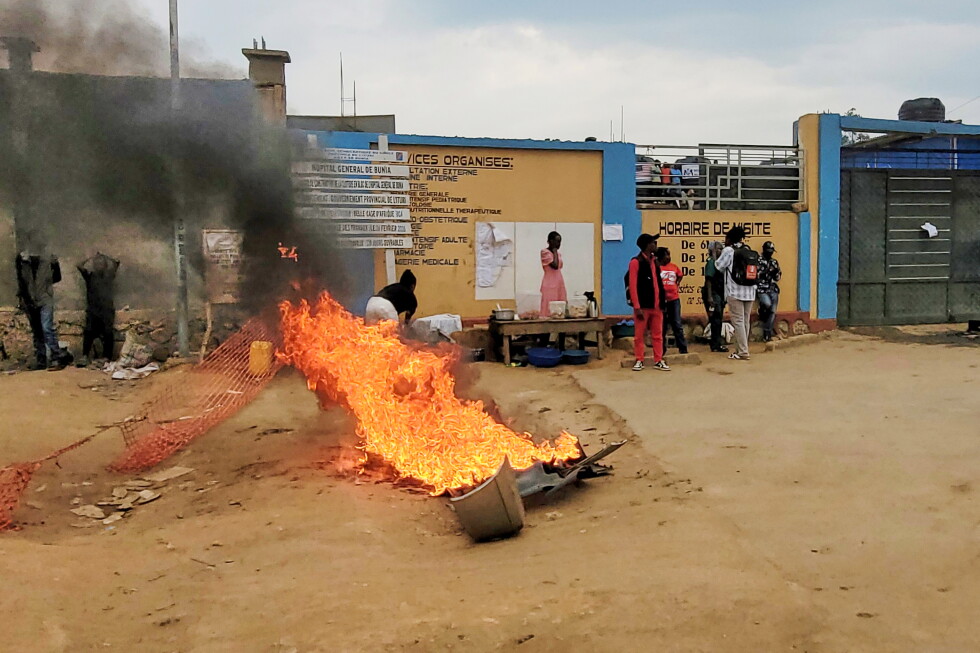
The crisis has been compounded by growing unrest among frontline medical teams, who have walked off the job over unmet pay promises. On Wednesday, staff at Bunia General Hospital — the largest medical facility in the outbreak’s epicenter — launched a strike, barricading the hospital entrance to demand long-delayed wages earned while working in high-risk, resource-strapped conditions. This industrial action follows a similar strike just two days earlier at an Ebola treatment center in Rwampara, another Ituri Province hotspot that has borne the brunt of the outbreak. That strike ended after workers secured a government commitment to issue back pay within 72 hours, but many frontline staff report they have not received any compensation since the outbreak began in mid-May, leaving deep lingering frustration.
Public health experts warn multiple overlapping barriers are making the outbreak extremely difficult to contain. The most pressing issue is the unprecedented rate of spread: roughly 80% of all new confirmed cases stem from unknown transmission chains that officials have been unable to map. To date, authorities have only successfully traced 67% of known close contacts of infected patients, a rate far too low to halt transmission. Complicating tracing efforts further, health teams have still not identified the outbreak’s index case (patient zero), while widespread population displacement from ongoing armed conflict and frequent cross-community movement of artisanal miners have scattered thousands of potentially exposed people across the region.
Unlike previous Ebola outbreaks in Congo that were caused by the more common Zaire strain — for which effective, approved vaccines and treatments already exist — there are no licensed medical countermeasures for the Bundibugyo virus driving this current event. In a small glimmer of hope for the response, enrollment for a clinical trial testing two promising investigational treatments has recently launched in Ituri, though results will not be available for months.
Additional systemic challenges continue to undermine response work: a critical funding gap has left operations under-resourced, repeated attacks on health facilities have forced care closures in high-risk areas, ongoing armed violence in eastern Congo prevents teams from reaching remote communities, and deep-seated mistrust between local populations and public health workers has reduced cooperation with contact tracing and isolation efforts.
As of the latest data release, 753 patients remain in isolation care at hospitals across the region, while 366 people have recovered from infection so far. More than 100 frontline healthcare workers have already contracted the virus since the outbreak began, according to WHO figures. WHO’s emergencies chief Dr. Chikwe Ihekweazu, who recently completed an assessment visit to Bunia, noted that many of the newly recorded deaths are people who never accessed care, dying in their home communities before medical teams could intervene.