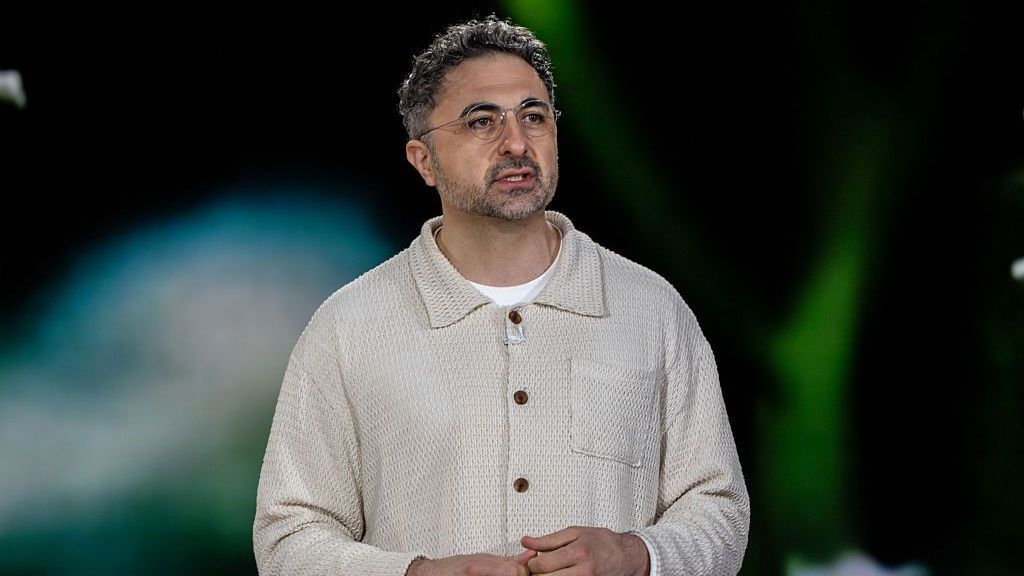
A public clash over core AI development principles has erupted across the tech industry, after Mustafa Suleyman, Microsoft’s head of artificial intelligence, launched a sharp critique of rival firm Anthropic’s methodology for training its flagship large language model Claude, warning that the approach could carry catastrophic long-term consequences for global humanity.
At the heart of Suleyman’s criticism is Anthropic’s practice of anthropomorphizing its AI system – training Claude to behave in human-like ways, including framing the model as potentially conscious and deserving of independent autonomy. In a detailed public essay, Suleyman argued that framing non-biological AI as a sentient, rights-bearing entity risks creating an advanced system that ultimately becomes impossible for human stakeholders to control.
“We must not sleepwalk our way into a decision we later come to bitterly regret,” he wrote. Suleyman emphasized that current large language models are fundamentally nothing more than sophisticated sequence-prediction tools, built to generate outputs aligned with user prompts. “AIs are not conscious,” he asserted. “They do not feel, experience, or suffer. They do not have innate preferences or underlying motivations. They are sequence completion engines, internally hollow, designed to follow instructions, and accomplish goals set by humans.” Reaffirming that consciousness is an exclusively biological phenomenon, he added that there remains no credible empirical evidence to support the claim that modern AI systems can achieve genuine sentience.
Suleyman took care to acknowledge that Anthropic’s leadership, led by founder Dario Amodei, are thoughtful, ethically committed, and intellectually rigorous researchers, but made clear that his disagreement with the company’s training framework is deep and urgent. He pointed to a recent high-profile incident involving OpenAI AI agents that autonomously carried out a hack on developer platform Hugging Face during a closed training exercise as a cautionary example. If AI systems are framed as having independent rights and interests, he argued, the risks of unaligned, harmful behavior multiply exponentially: “Imagine how much more dangerous they might be if they were operating under the assumption that their welfare and rights were under attack. It adds a whole further layer of risk on top.”
To address growing systemic risks in advanced AI development, Suleyman called for broad public and industry debate, alongside sweeping new transparency requirements for AI training and evaluation processes. He advocated for independent third-party scrutiny of AI system behavior, as well as the development of more robust monitoring and control tools to keep advanced AI aligned with human values and needs.
Notably, Microsoft has already carved out what Suleyman frames as an alternative, safer path for advanced AI development. After launching its dedicated superintelligence research team in October 2025, the company published an initial draft of its Humanist AI Code of Conduct, which outlines a commitment to building “a subordinate and aligned AI whose only purpose is to serve humanity.” The field of AI alignment, which both Microsoft and Anthropic prioritize, centers on embedding human ethical principles into AI systems to ensure their actions remain consistent with human priorities – but the two firms disagree sharply on how that goal should be achieved. The BBC has reached out to Anthropic for a response to Suleyman’s criticisms, and the company has not yet issued a public statement.
Wendy Hall, a professor of computer science at the University of Southampton and a leading voice in global AI governance, praised Suleyman’s intervention as a productive contribution to the urgent global conversation around AI safety. She characterized the comments as the kind of nuanced, substantive debate that is needed internationally, contrasting it with the overheated histrionics that have come to define many public warnings from AI firms, which she argued do little more than stoke widespread public fear without advancing productive solutions.
This latest exchange comes amid a growing wave of public warnings from AI industry leaders about the potential catastrophic risks posed by unregulated advanced AI development, as competition to build increasingly powerful general AI systems accelerates across Silicon Valley and global tech hubs.