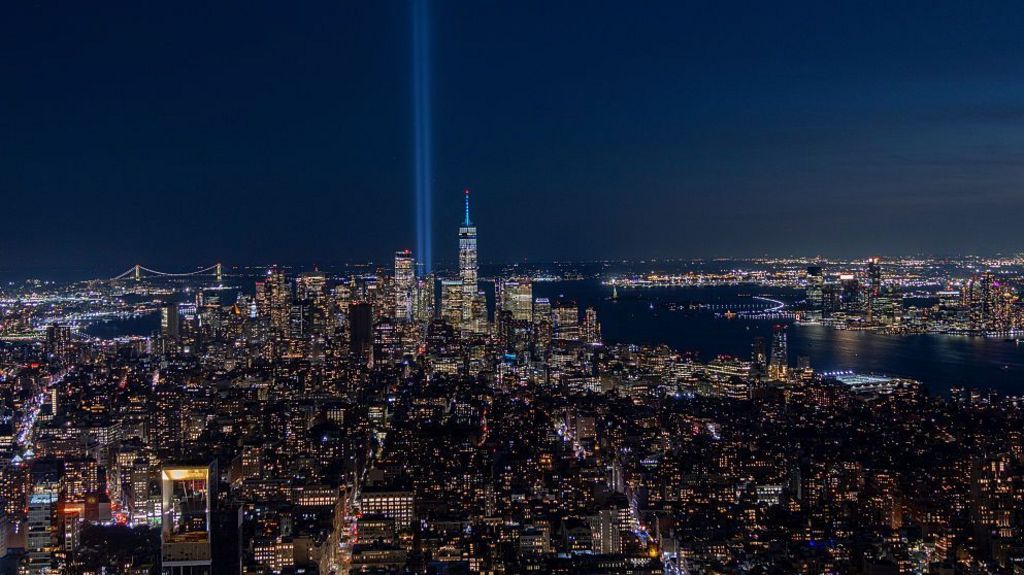
A quarter-century has passed since the horrific September 11, 2001, terrorist attacks that left nearly 3,000 people dead and reshaped the trajectory of American life forever. For most Americans who were alive at the time, the memories of that crisp autumn morning remain seared into their consciousness—they can recall exactly where they stood, what they saw, and how they felt as four hijacked planes crashed into the World Trade Center, the Pentagon, and a rural field in Pennsylvania. But for the youngest cohort of American adults, members of Generation Z born between 1997 and 2012, the attacks are not a first-hand memory, but a historical event learned about long after the smoke cleared. Their connection to 9/11 is built not on lived experience, but on the moments they first heard the story from families, teachers, and their own independent research.
Avery Black, a 20-year-old journalism student at the University of South Carolina, told the BBC her first introduction to 9/11 came during elementary school lessons. After class, she rushed home to ask her mother about the event, and watched as her mother shared her own first-hand memory of the attacks before breaking down into tears, recounting the story of firefighters who rushed into the burning towers and never returned. Though Black was too young to fully grasp the magnitude of the tragedy as a child, two haunting details have stuck with her to this day: the iconic, devastating “falling man” photograph of a person plummeting upside down from the North Tower, and footage of then-President George W. Bush learning of the attacks while visiting a Florida elementary school.
For 26-year-old Annie Erickson, who grew up in North Carolina, personal family stories shaped her understanding of 9/11 far more than classroom instruction. Her mother was raised in New York City, and lost a friend from her apartment building in the collapse of the twin towers. Erickson says what struck her most when learning about the attacks in school was that it was one of the only modern historical events where every teacher could share their own personal, lived memory of the day.
Unlike many core historical events, there is no federal mandate requiring U.S. public schools to teach the history and impact of the 9/11 attacks, resulting in wildly inconsistent instruction across the country. A recent analysis from The Associated Press found that just 25 states require or expect public schools to include 9/11 in their curricula, 13 states leave instruction optional, and many states that require teaching do not provide specific curriculum guidance for educators.
That inconsistency has left many Gen Z adults with gaps in their early knowledge of the attacks. Allegra Tashjian, now 28 and a PhD student who grew up in Wisconsin, first learned of 9/11 in first or second grade, when her teacher asked the class to name why the day was historically significant. After a classmate answered that it was the day planes crashed into the New York towers, Tashjian left class confused—she had never heard of the event at all. When she asked her mother about it that afternoon, her mother paused mid-laundry and said she had never heard of the attacks, choosing not to discuss the tragedy with her young daughter. It was only years later, when Tashjian was between 9 and 12 years old, that she gained a full understanding of the attacks through independent reading online.
Across the board, Gen Z interviewees told the BBC that they only learned the full scope of the 9/11 attacks through their own independent research, after receiving fragmented, age-appropriate introductions from schools and families. Black, for example, did not learn the attacks were an act of terrorism until she sought out extra information on her own—an omission educators made because the concept of terrorism is difficult to explain to young children.
Despite the lack of first-hand experience, interest in the history and legacy of 9/11 remains high among young American adults. David Schanzer, a professor at Duke University who teaches a popular course titled “9/11 & Its Aftermath,” wrote in a recent campus commentary that a decade ago, he expected student interest in the topic to fade over time, assuming he would eventually need to shift his teaching focus. Today, his course is consistently full, with dozens of students adding their names to the waitlist each semester. Schanzer argues that ongoing global instability has only made young people more curious about the attacks, which he calls the first global catastrophe of the 21st century—preceding the 2008 Great Recession and the COVID-19 pandemic. “If you want to understand what has gone wrong over the past couple of decades it makes sense to learn about 9/11,” he wrote.
Still, many Gen Z adults approach conversations about 9/11 with dark humor or deflection, a trend that has not gone unnoticed by educators. Thomas Schwartz, a professor of history and political science at Vanderbilt University, noted that in a recent class discussion, his senior students—born in 2004 and 2005—acknowledged their generation’s tendency to joke about the attacks. He added that students from the Northeast, whose parents hold direct personal memories of the tragedy, tend to be more careful about deflection, out of respect for family sensitivities.
Erickson explains this tendency as a common coping mechanism: many young people downplay large-scale tragedies either because they cannot fully wrap their minds about the scope of the loss, or they use humor to avoid confronting the deep, persistent anxieties that events like 9/11 raise about the modern world. Even as an adult, Tashjian says she still struggles to process the scale of death from the attacks, and relies on individual personal stories to grasp the human toll of the tragedy.
Schanzer emphasizes that learning about 9/11 remains a critical part of understanding modern America for young people who never witnessed the event. “Like most significant historical events, one can’t fully understand our world today unless you understand why 9/11 occurred and how the United States responded to it,” he said. On the 25th anniversary of the attacks, as communities gather at memorials to lay flowers and honor the lost, a new generation is continuing to build its own relationship to a tragedy that continues to shape American life decades later.