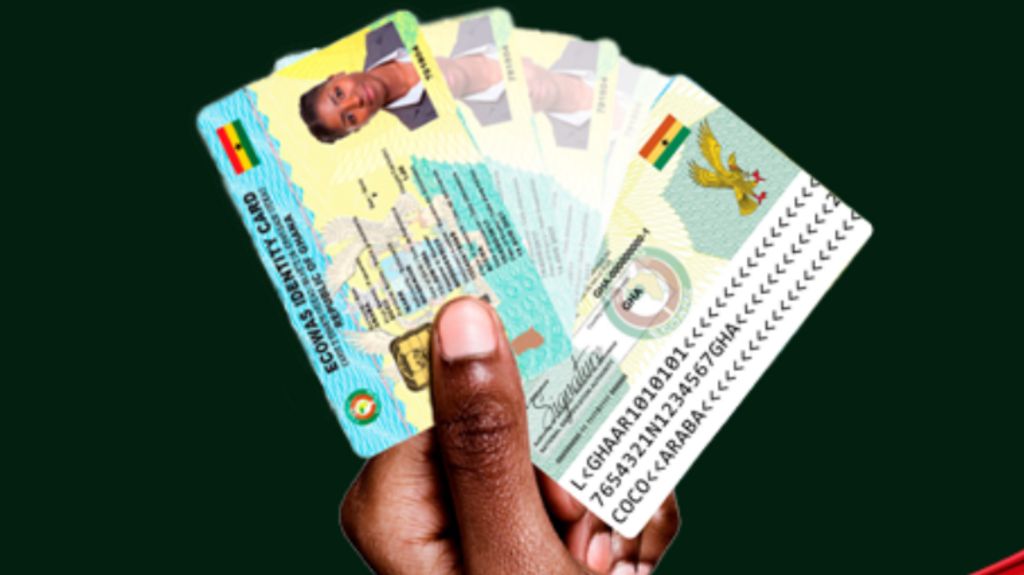
Ghana has implemented sweeping new regulations requiring all businesses and public institutions across the country to verify the Ghana Card, the nation’s official biometric national identity document, through a dedicated mobile biometric scanning application, in a major push to strengthen national security and crack down on widespread identity-related fraud.
Previously, most organizations relied on superficial visual inspections or simple photocopying of the national ID card to record customer or visitor information. This lax verification system created critical loopholes that allowed criminal actors to successfully carry out identity impersonation, enabling fraudulent activities ranging from financial scams to unauthorized access to public and private services.
Under Ghana’s national identification framework, all citizens and legal foreign residents are required to hold the plastic biometric Ghana Card, which was rolled out progressively over the past 10 years. Today, the document has become an indispensable part of everyday life for Ghanaians: access to banking services, mobile SIM card registration, passport applications, and driver’s license issuance all require a valid Ghana Card.
The card stores detailed biometric information collected by Ghana’s National Identification Authority (NIA), including all 10 fingerprints, high-resolution iris scans, a portrait photograph, and the cardholder’s official signature. The new regulation replaces the outdated verification process with a mandatory digital check: any entity processing ID-based transactions must now use the official NIA mobile app to scan the card and cross-validate its embedded biometric data against the card’s presented details.
In an official statement, NIA Chief Wisdom Yayra Koku Deku confirmed that the old practices of photocopying or visually inspecting Ghana Cards for transaction verification are now criminal offenses. “Biometric verification is now mandatory,” Deku emphasized.
Penalties for non-compliance are strict: organizations that continue to rely on the old verification methods face prosecution and fines as high as 24,000 Ghanaian cedis, equivalent to approximately $2,100 or £1,550. Individual violators will face fines of up to 6,000 Ghanaian cedis, around $525 or £390.
The NIA has called on all institutions that have not yet completed onboarding to the official digital verification system to begin the registration and integration process immediately. Deku added that the Ghanaian government will host public briefings in the coming days to outline implementation timelines for the amended regulations and outline support measures to help organizations achieve full compliance.
This report was supplemented with additional on-the-ground reporting by Thomas Naadi in Accra. For more coverage of news across the African continent, visit BBCAfrica.com, and follow BBC Africa on Twitter, Facebook, and Instagram.