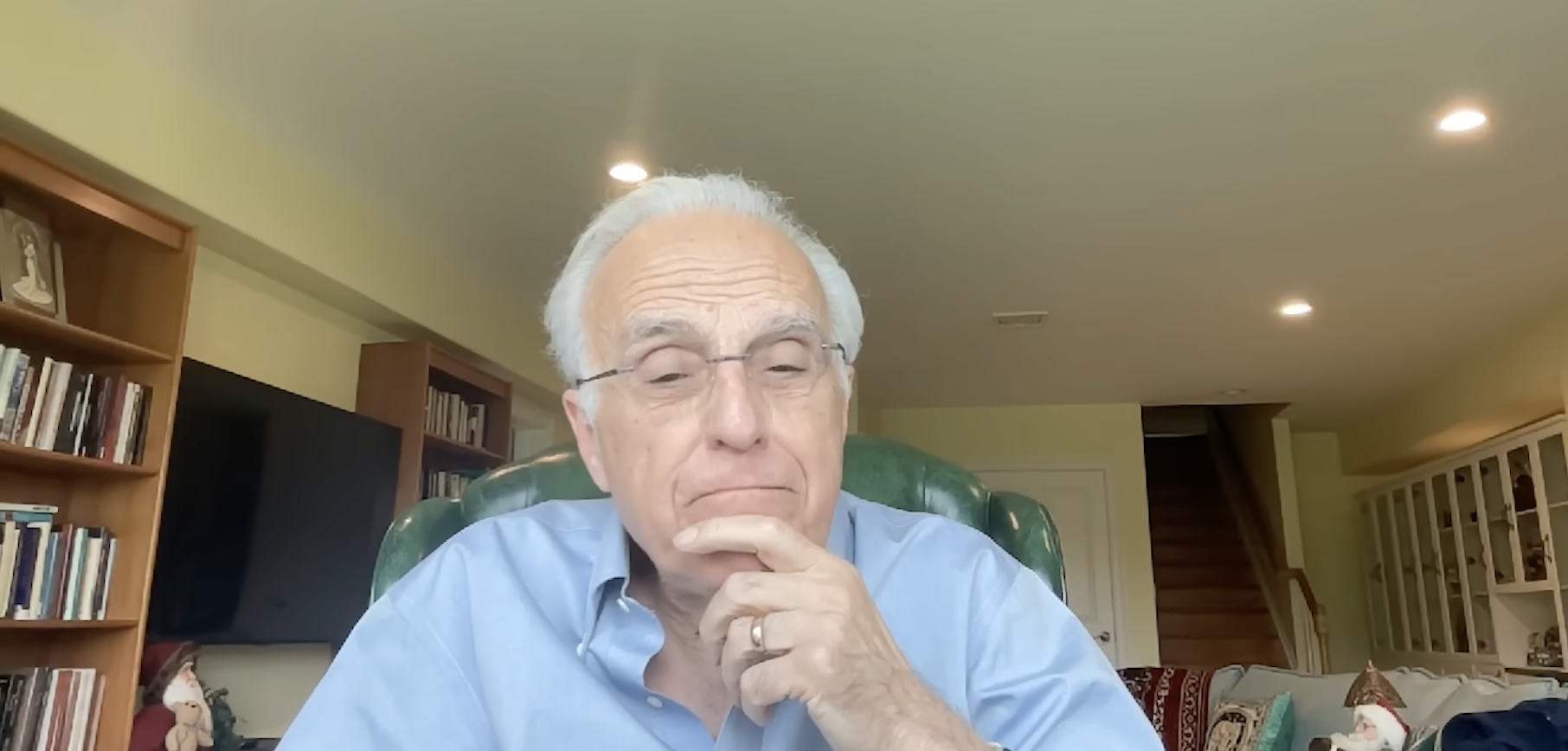
John Esposito, a globally celebrated American scholar, professor and author whose lifelong work upended pervasive Western stereotypes of Islam and Muslims, passed away at 86 on July 15 due to complications from heart surgery. His death was announced this week by colleagues at Georgetown University, his long-time academic home in Washington, D.C.
Born to an Italian Catholic family in Brooklyn, New York, Esposito never set out to become one of the world’s foremost voices on Islamic studies. He initially planned to become a Franciscan priest, but a required year of study in world religions while pursuing a PhD in Catholic theology at Temple University changed the trajectory of his life and career. It was there that he met pioneering Palestinian-American Islamic scholar Ismail al-Faruqi, who took Esposito on as his first doctoral student and encouraged him to study Arabic.
Immersed in a classroom majority made up of Muslim students from across the globe, from Egypt to Malaysia and Indonesia, Esposito quickly developed a deep fascination with Islamic life, religious law and its intersection with global politics that would shape his 50-plus year career. He completed his PhD in 1974, when academic positions and publishing opportunities in Islamic studies were virtually non-existent — a landscape that shifted dramatically after the 1979 Iranian Revolution, a turning point he later joked launched his entire career.
Over decades of work, Esposito wrote, edited and contributed to nearly 55 books on Islam, the vast majority of which pushed back against what he identified as widespread misinformation and manufactured narratives about Muslim communities, particularly in the period following the 9/11 attacks. One of his most influential works, *Who Speaks for Islam? What a Billion Muslims Really Think*, co-authored with American Muslim scholar Dalia Mogahed, drew on years of large-scale global Gallup survey data to deliver a factual counter-narrative to the damaging negative stereotypes that dominated Western media coverage of Muslims at the time.
In 1993, Esposito founded Georgetown’s Prince Alwaleed Center for Muslim-Christian Understanding with a $20 million grant from Saudi royal Alwaleed bin Talal, establishing a permanent institutional home for interfaith dialogue and rigorous Islamic scholarship in the United States. He also played a key role in securing a permanent place for Islamic studies within the American Academy of Religion, a milestone that solidified the field’s standing in mainstream U.S. academia. Beyond his institutional work, he was an unflinching critic of government and societal crackdowns on Muslim groups across the globe, and a vocal advocate for causes including Palestinian rights and the release of imprisoned former Pakistani Prime Minister Imran Khan.
News of Esposito’s death drew an outpouring of tributes from academics, global leaders, and public figures across the world, who hailed his intellectual courage, generous mentorship, and lifelong commitment to bridging divides. Georgetown professor of Islamic civilization Jonathan Brown, who counted Esposito as a mentor, wrote on X that Esposito never wavered from advocating for the right of all people to practice their faith freely, and that he “instinctively knew it was wrong to condemn others just because the mob was shouting for it.”
Nihad Awad, executive director of the Council on American-Islamic Relations, noted that Esposito dedicated his career to advancing accurate understanding of Islam and Muslims at a time when prejudice and misinformation dominated public discourse, educating generations of students, policymakers, journalists and religious leaders globally. Hady Amr, the Biden administration’s former top diplomat for Palestinian affairs, called Esposito a “visionary,” adding that the world is “better off for the contributions of Dr Esposito’s mind, heart and spirit.”
Malaysian Prime Minister Anwar Ibrahim, who knew Esposito since the 1970s and often sought his counsel, praised his personal generosity and intellectual rigor, noting he “stuck with me through thick and thin.” Former Turkish President Abdullah Gül added that Esposito’s introduction of Islam to Western audiences was “beautiful and graceful.”
For his groundbreaking work advancing cross-cultural understanding, Esposito was awarded seven honorary doctorates from academic institutions across the world. He remained an active scholar and contributor to Middle East Eye up until his death, leaving a lasting legacy of intellectual courage and radical empathy that has shaped the study of Islam for decades.