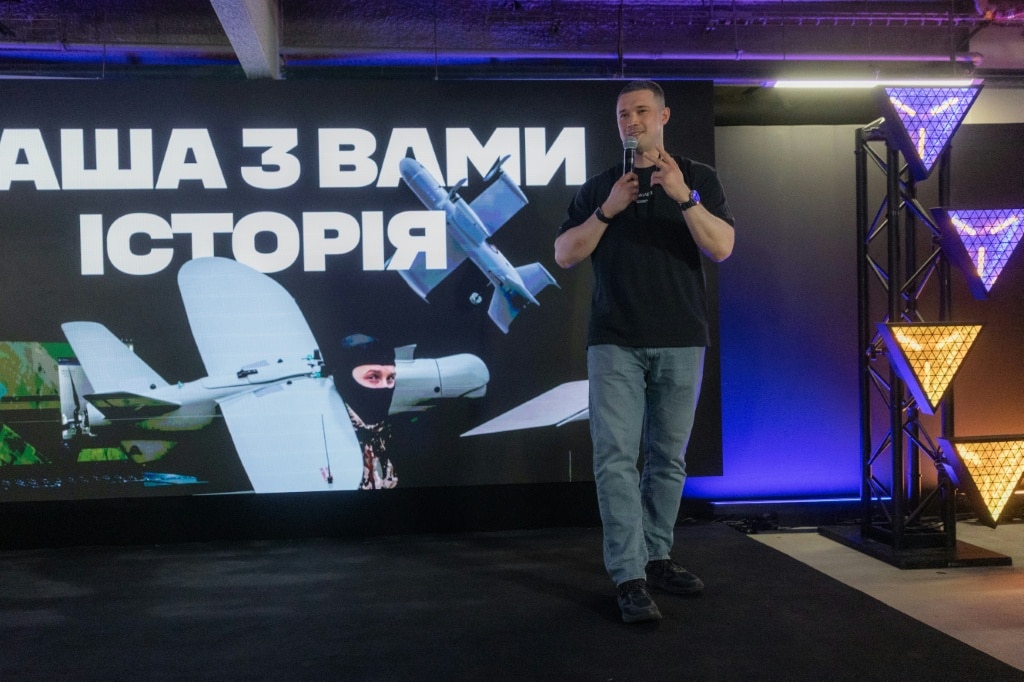
Four years into Russia’s full-scale invasion of Ukraine, a sudden political shakeup by President Volodymyr Zelensky has sparked rare public unrest across the war-torn nation, as thousands took to the streets this Thursday to denounce the ousting of popular reformist Defence Minister Mykhailo Fedorov.
Fedorov, who was appointed to the defence portfolio just six months prior, had quickly built a reputation as an agent of change for Ukraine’s beleaguered military. Tasked with rooting out long-standing graft and modernizing armed forces strained by years of combat, crippling manpower shortages, and widespread fatigue, he led sweeping overhauls of military digitization, implemented open, transparent procurement processes, and accelerated the development and deployment of long-range drone capabilities that have recently become one of Ukraine’s most effective asymmetric tools against Russian forces. Under his leadership, the Ukrainian government also raised frontline soldiers’ salaries and introduced landmark plans for phased demobilization, a long-sought reform for troops who have been deployed for years.
But his aggressive push to upend entrenched systems put him on a collision course with top military leadership, culminating in his removal as part of a broader cabinet reshuffle announced by Zelensky this week. In a fiery post-ouster press conference in Kyiv, Fedorov delivered a blistering public rebuke to Ukraine’s newly appointed Commander-in-Chief Oleksandr Syrsky, accusing the top general of sowing national division and issuing a formal ultimatum to Zelensky demanding his firing.
“Instead of focusing on how to defeat Russia through asymmetric tactics — that is the commander-in-chief’s core job — he has focused on splitting this country,” Fedorov told reporters, standing in front of a display of images of military drones. “In this configuration, I personally don’t know how to win the war.”
By late Thursday, thousands of Fedorov’s supporters had gathered in public spaces across major Ukrainian cities to protest the decision. In central Kyiv, AFP correspondents counted more than 1,000 demonstrators, who sang the Ukrainian national anthem, waved national and European Union flags, and chanted calls for Fedorov’s reinstatement and slogans decrying the decision as shameful.
“I believe that his dismissal is a slap in the face of the Ukrainian people,” 30-year-old Kyiv business owner Vlada Roman told AFP at the rally. “Zelensky is afraid of effective people. I hope after today’s rally, he will change his mind.”
Unrest was also reported in other major population centers including Lviv, Odesa, and Dnipro, a rare development in wartime Ukraine, where broad national unity in the face of invasion has mostly quelled public dissent against Zelensky’s leadership. In recent months, however, growing public frustration over high-profile corruption scandals, mismanagement of military mobilization and conscription, and the prolonged stalemate of the war has sparked intermittent waves of public outcry.
The political aftershocks of Fedorov’s ouster quickly spread, with Ukraine’s deputy air force commander Pavlo Yelizarov announcing his resignation in protest of the decision. Political analysts have framed the reshuffle as a clear win for Syrsky and entrenched military interests, noting that Zelensky opted to side with the uniformed leadership over an outsider minister pushing for systemic change.
“He fell out with various generals and with different established drone suppliers. In other words, he really did start implementing many useful reforms that threatened certain vested interests,” said political analyst Anatoliy Oktysiuk. He added that Zelensky’s decision to remove Fedorov has “undermined himself politically” at a critical moment in the conflict.
Supporters of Fedorov have described his removal as political retribution for his anti-corruption and modernization efforts. The shakeup also comes at a particularly sensitive moment for Ukraine’s war effort: after months of Russian territorial advances, Kyiv’s forces have recently managed to halt Russia’s momentum, and have launched consistent long-range drone strikes targeting Russian energy infrastructure and military positions, putting Ukraine in one of its strongest operational positions in months. Fedorov’s removal has cast uncertainty over the future of the military reforms that have supported these recent gains.
International observers and Ukrainian stakeholders have also raised questions about how the change will be received by Ukraine’s key Western backers, who have long pushed for greater anti-corruption and military modernization reforms in Kyiv. On Thursday, the European Union Ambassador to Ukraine publicly praised Fedorov, crediting him with securing a “victory in cognitive warfare” for Ukraine.
Current Interior Minister Igor Klymenko is widely regarded as the most likely candidate to replace Fedorov, though it remains unclear whether he will secure enough votes in Ukraine’s parliament to confirm the appointment. In a separate move Thursday, Ukraine’s parliament also confirmed Sergiy Koretsky, the former head of state energy firm Naftogaz, as the country’s new prime minister as part of the broader cabinet reshuffle.